If you're a founder, the problem usually shows up before the title does. Your calendar is full, every cross-functional issue still comes back to you, and the company keeps losing time because nobody owns the work between strategy and execution. If you're a candidate, you see the opposite side of it. Startups post a chief of staff jobs description that sounds half operator, half assistant, and you can't tell what the job is.
That confusion is expensive. Founders hire the wrong profile and get an overqualified scheduler or an underpowered COO. Candidates apply to roles that have the title but not the scope. The fix is a sharper definition of the work, tied to startup stage, founder needs, and scaling with limited process.
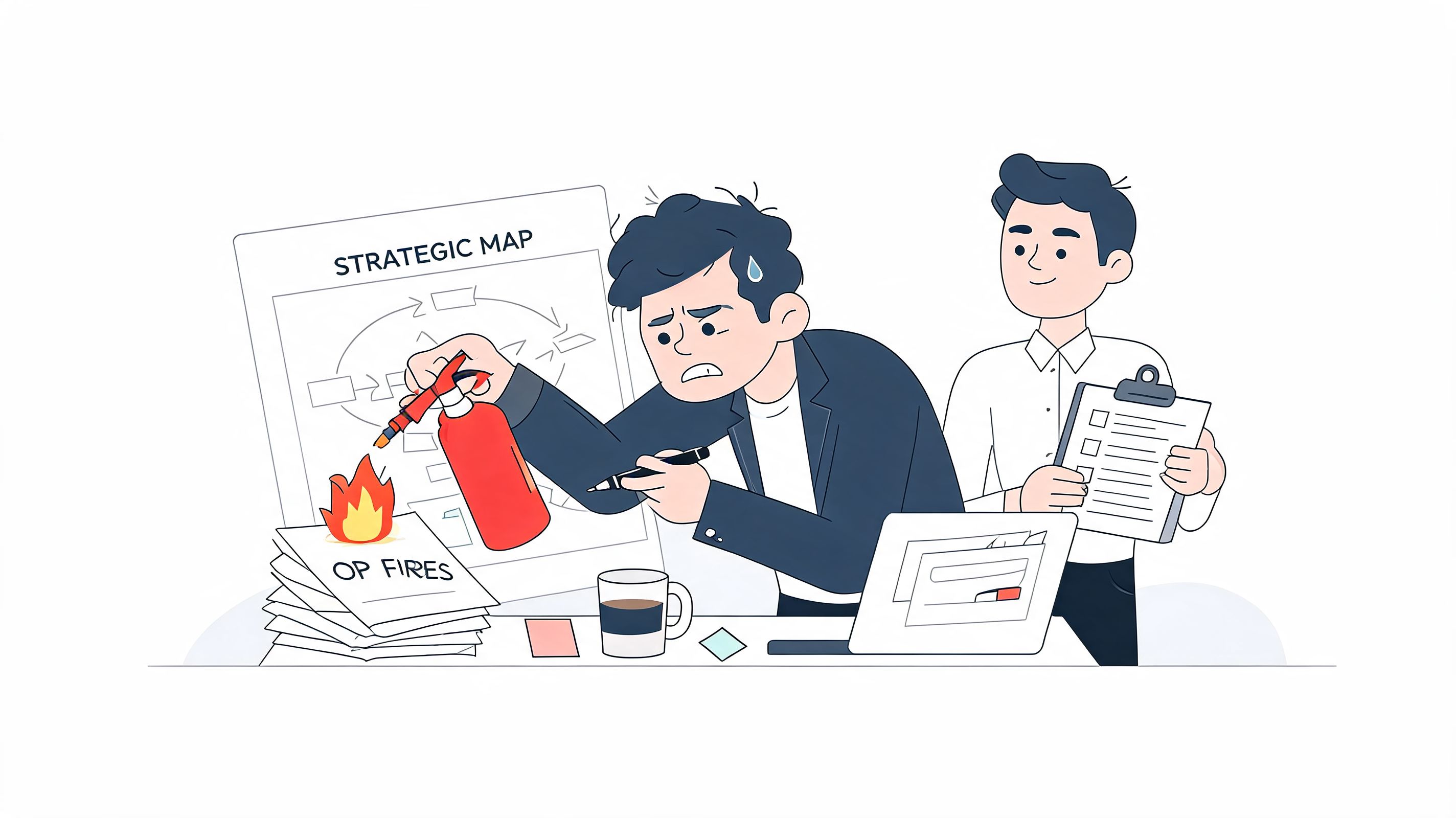
Founders usually don't ask for a Chief of Staff because they want another executive title on the org chart. They ask for one because they're becoming the bottleneck. Every decision needs context. Every meeting needs follow-up. Every important initiative crosses product, recruiting, finance, and go-to-market, but no single leader naturally owns the seams.
That gap is where a strong Chief of Staff earns their keep. Not by "helping out." By increasing executive effectiveness. The role works when it removes drag from the founder, sharpens prioritization, and keeps the company from confusing motion with progress.
The market context matters here. The role is already tied to startup and tech ecosystems. The Chief of Staff role is most concentrated in tech, accounting for 25.7% of all positions, and these roles cluster in hubs like New York City at 16.1% and the Bay Area at 7.7%, according to the 2024 State of Chief of Staff jobs analysis.
Early teams run on founder energy. That works until it doesn't. Once the company has enough people, enough customers, and enough competing priorities, the founder needs someone who can:
Practical rule: Hire a Chief of Staff when the business has become too complex for founder-only coordination, but not so mature that every cross-functional problem already has a clear owner.
Much of the generic advice treats the role like a prestige hire. In startups, it is much more practical than that. It is a strategic force multiplier hire. If you are actively trying to hire a chief of staff for your startup team, the useful question isn't "Do other startups have one?" It is "Where does execution break when the founder steps away for two days?"
A startup Chief of Staff manages executive priorities so the company works on the right problems in the right order, with clear decisions and follow-through. In practice, that means converting founder intent into operating discipline across teams that do not report to the CoS but still need to move together.
That position is powerful and uncomfortable at the same time. The CoS usually has broad context, limited formal authority, and a front-row seat to every messy trade-off in the business. In healthy startups, that is the point. The role exists to reduce drag around the CEO and keep important work from stalling between functions.
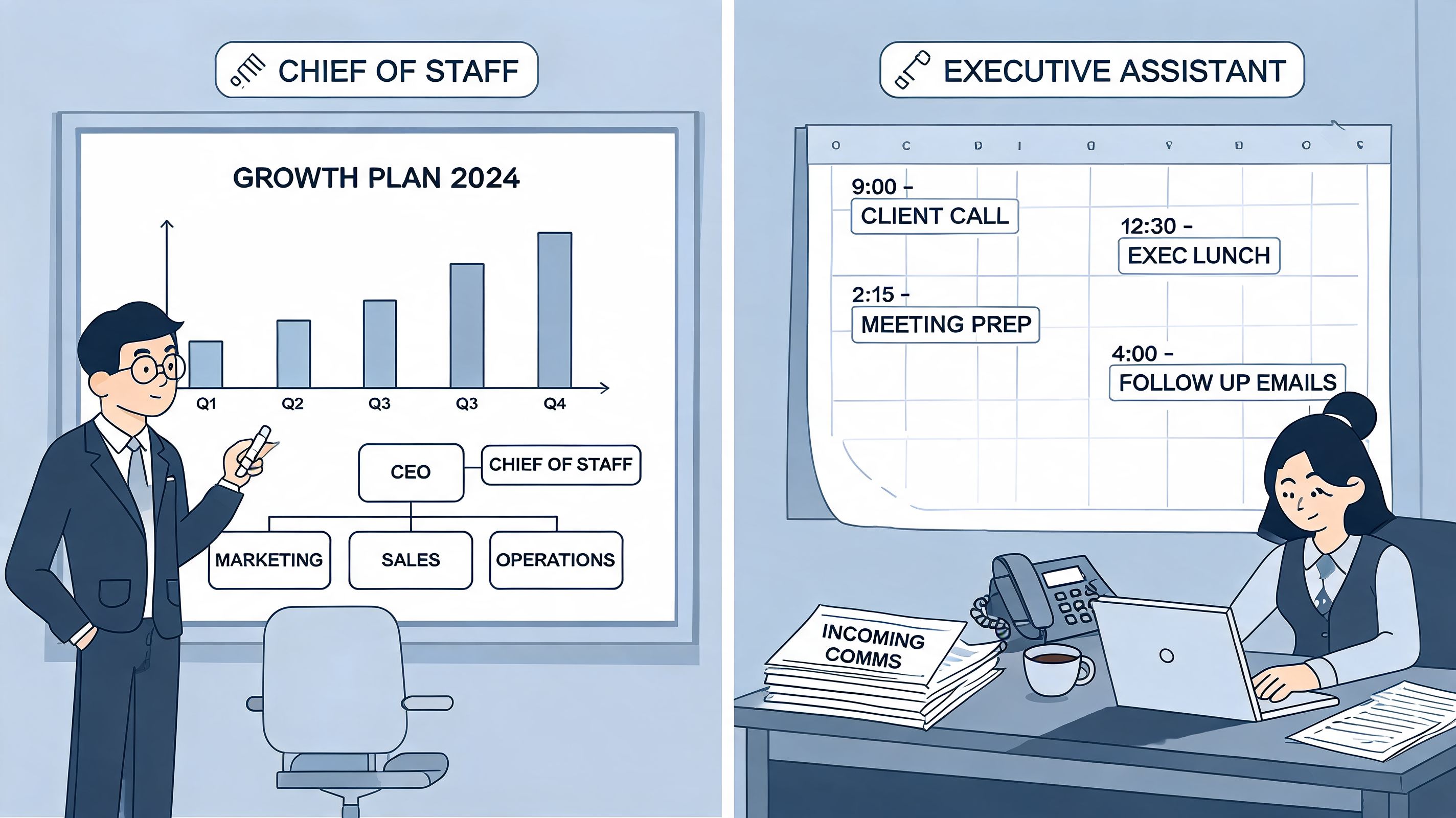
Founders make expensive hiring mistakes when they use "Chief of Staff" as a catch-all title for work that belongs somewhere else.
| Role | Core value | What goes wrong when mislabeled |
|---|---|---|
| Executive Assistant | Administrative support and time management | You hire a CoS title for a job that is mostly scheduling and logistics |
| Chief of Staff | Strategic coordination, executive support, cross-functional execution | The person gets pulled into admin work or asked to own outcomes they cannot control |
| COO | Direct operational ownership and management authority | You expect a CoS to run a function without the team structure or decision rights to do it |
A strong Executive Assistant may handle calendars, travel, and inbox triage better than a CoS ever will. A COO may be the right answer once the company needs direct operational ownership. The startup CoS sits between those roles. They tighten decision quality, drive coordination, and keep high-priority work from getting lost in founder bottlenecks.
If you are comparing role scopes, this breakdown of jobs in chief of staff roles across startup teams is useful because titles vary a lot from company to company.
Research on Chief of Staff roles points to four recurring areas: strategic planning and implementation, operational leadership, administrative and calendar support, and project management, as outlined in this Chief of Staff job description research summary.
In startups, those work streams usually look like this:
Strategic planning and implementation
The CoS helps turn company goals into a working plan. That includes annual planning, quarterly priorities, board prep, leadership offsites, metric reviews, and hard calls about what will not get done.
Operational leadership
This is the operating rhythm layer. Leadership meetings, decision logs, escalation paths, cross-functional handoffs, ownership clarity, and lightweight process all tend to land here.
Administrative and calendar support
Good startup CoS hires often touch agendas, meeting prep, and follow-ups because those shape decisions. If the role is mostly calendar coverage, travel booking, and inbox management, the title is wrong.
Project management
The CoS often runs initiatives that are too sensitive, too cross-functional, or too undefined to fit neatly into one department. Common examples include org changes, KPI cleanup, hiring process redesign, launch coordination, and postmortems after a miss.
The failure mode is predictable. The company labels every loose end "strategic," gives the CoS no real authority, and then wonders why the role turns into reactive cleanup.
A good startup CoS spends very little time doing polished strategy work and a lot of time fixing execution problems before they become leadership problems.
One hour might go to rebuilding a weekly exec meeting that keeps ending with vague decisions and no owners. The next might go to preparing a CEO for a board discussion where growth is strong but margins are slipping. Later in the day, the CoS may be pushing product, sales, and finance toward a decision on a launch that each team is defining differently.
Some of the work is visible. A lot of it is not.
The CoS writes the memo no one wants to draft because the decision cuts across politics, headcount, or missed targets. They chase updates from teams that are all busy and none fully aligned. They build just enough process for the company to scale without burying a fast-moving startup under approval layers and meeting debt.
That is why the role is hard to write and harder to hire for. A strong Chief of Staff is not there to look important. They create clarity, absorb noise, and make sure the founder's priorities survive contact with the rest of the company.
A strong startup CoS usually looks more like a disciplined operator than a classic executive aide. They can think strategically, but they also know how to make meetings useful, documents decision-ready, and cross-functional work harder to ignore.
The seniority question matters because many founders overhire or underhire. They write a role for a future executive when they need someone who can build process in the messy middle. Or they hire a highly organized junior person and expect them to influence senior leaders without enough judgment or range.
According to McKinsey, the average Chief of Staff enters with just over 12 years of experience, but there are also peak entry points for professionals with 5 to 10 years of experience, often from strategy and operations backgrounds, as outlined in McKinsey's anatomy of the Chief of Staff role.
That lines up with what works in startups. You don't always need a near-executive. You need someone with enough scar tissue to handle ambiguity, enough judgment to manage sensitive information, and enough confidence to push work across teams without formal authority.
For candidates trying to understand how startups frame the path, Underdog's guide to jobs in chief of staff roles is useful because it maps the role to startup hiring reality rather than generic corporate ladders.
The best startup CoS candidates tend to have a mix of the following:
Executive judgment They know what needs escalation, what needs context, and what should die instead of becoming a leadership discussion.
Written synthesis
Most startup friction is partly a communication problem. A good CoS can turn scattered Slack threads, meeting notes, and conflicting opinions into a one-page decision memo.
Data fluency
They don't need to be a finance lead or data scientist, but they do need to work comfortably in Excel, Google Sheets, dashboards, and KPI reviews.
Political awareness
Not office politics in the cynical sense. More the ability to read incentives, understand who needs to be involved, and spot where resistance will come from.
Low-ego execution
Some days are strategy. Some days are note-taking, chasing dependencies, and fixing a process nobody appreciates. If the candidate needs visible ownership of every win, the role usually breaks.
A startup CoS has to be comfortable being central to outcomes without always being central to credit.
Product managers often fit because they already work through influence, ambiguity, and trade-offs. Strategy and operations candidates fit because they can structure messy work. Consultants can fit if they've learned how to operate, not just advise. Early startup generalists fit if they've already built systems instead of just surviving chaos.
The common thread isn't title. It's whether the person has repeatedly turned fuzzy priorities into coordinated action.
Most chief of staff jobs description pages are too vague to be useful. They list generic responsibilities, ask for "excellent communication skills," and leave both founders and candidates guessing about the actual mandate.
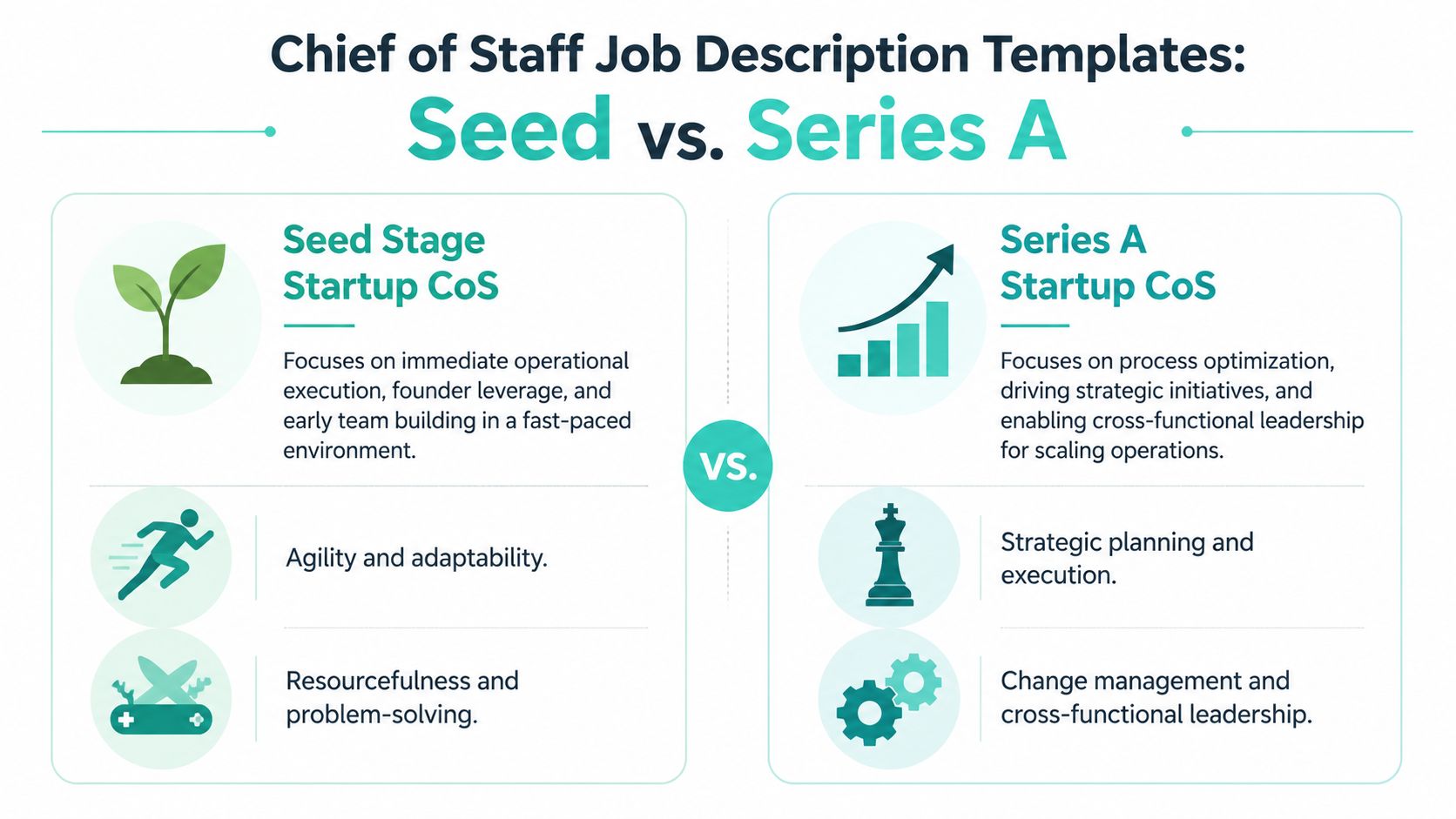
The startup version should be much tighter. Stage changes the job. A Seed or Series A company usually needs range, urgency, and tolerance for unfinished systems. A growth-stage company needs more planning discipline, stronger executive communication, and someone who can run larger cross-functional initiatives without creating noise.
If you're benchmarking open roles, browsing current Chief of Staff startup job listings helps calibrate scope, title, and market language before you publish your own description.
Use this when the company is still building core operating muscle and the founder needs a high-trust generalist.
Title: Chief of Staff to the CEO
About the role
We're hiring a Chief of Staff to work directly with the CEO on the highest-priority strategic and operational work across the company. This role is for an operator who can move from planning to execution quickly, build lightweight systems, and help the company stay aligned as we scale.
What you'll do
What we're looking for
What success looks like
This version is intentionally broad, but not fuzzy. It attracts people who like range and won't panic when the answer is "figure it out." It also signals that the role is embedded with the CEO, not acting as a backup operations executive.
Use this when the company already has functional leaders and now needs coordination, planning, and decision support at a higher level.
Title: Chief of Staff to the CEO
About the role
We're hiring a Chief of Staff to help the CEO and leadership team operate with greater clarity, speed, and accountability. This role is best suited for a strategic operator who can lead planning cycles, support executive decision-making, and drive cross-functional initiatives in a growing organization.
What you'll do
What we're looking for
What success looks like
The early-stage template hires for elasticity. The growth-stage template hires for orchestration. Problems start when a founder mixes the two and writes a role that expects an all-purpose fixer, senior strategist, board advisor, recruiter, and operations owner at once.
If the role needs broad utility, say so. If it needs executive-level synthesis and planning discipline, say that instead. A precise description improves the applicant pool more than a flashy title ever will.
Monday morning, the founder is juggling a board update, two hiring decisions, and a product launch that slipped over the weekend. By Thursday, the essential question is obvious. Do you need a polished generalist, or do you need someone who can step into ambiguity, impose order, and keep the company from losing a week to executive thrash?
That is the hiring test.
A startup Chief of Staff interview process should be built to answer one thing clearly: can this person reduce executive drag while improving decision quality? If the loop is vague, every interviewer fills in the blanks with their own version of the job. One person evaluates strategy. Another evaluates operations. A third evaluates founder chemistry. You end up with consensus around a candidate, but no agreement on what they were hired to do.
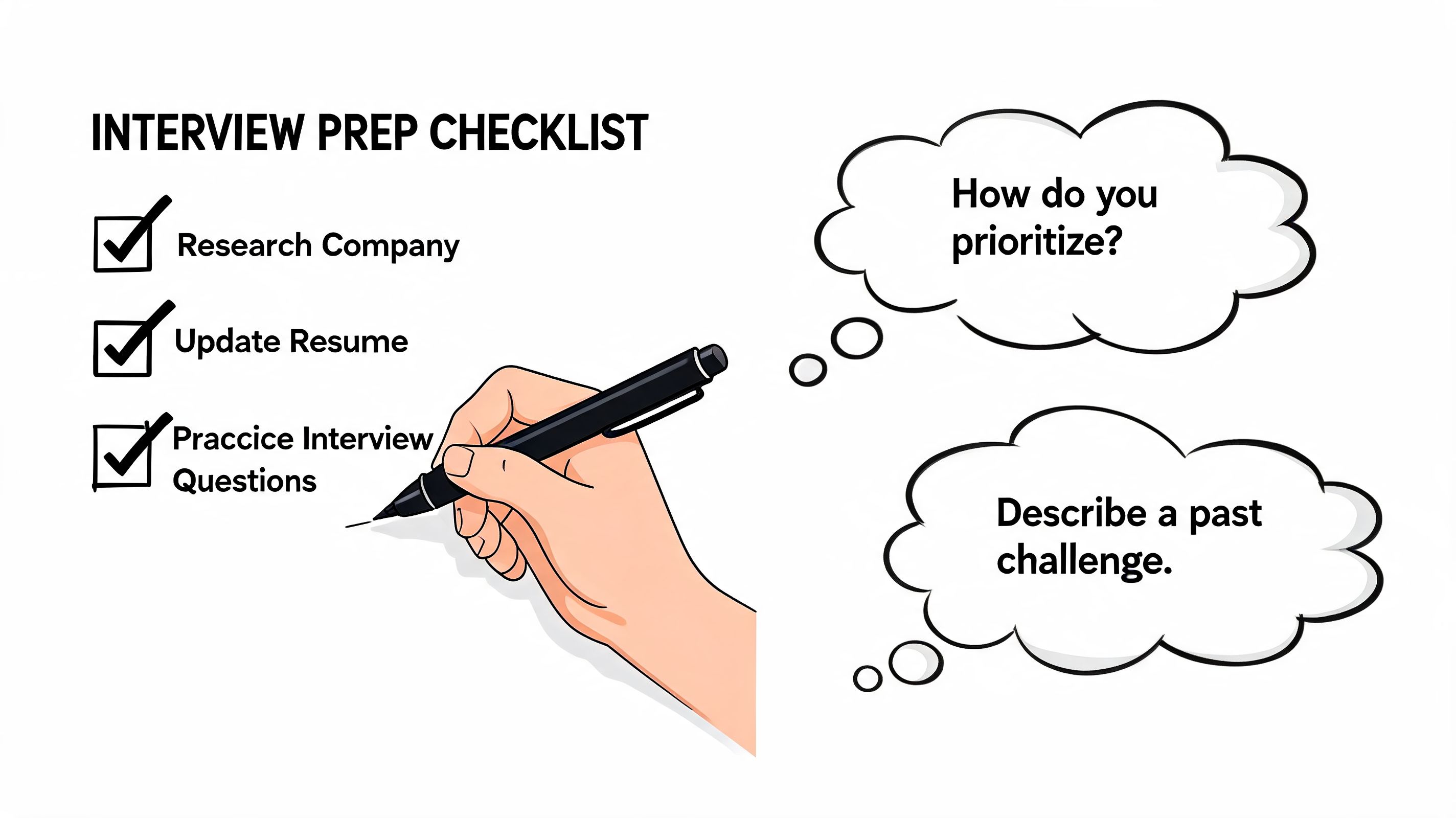
Before the first interview, lock down these decisions in writing:
Name the problem the founder needs solved
Be specific. Is the pain point weak follow-through, poor staff meeting quality, scattered board prep, constant priority collisions, or a lack of ownership across cross-functional work? A good CoS search starts with operational pain, not title aspiration.
Match the hire to the stage of the company
This matters more than founders usually expect. An early-stage CoS often needs range, speed, and comfort doing messy work personally. A growth-stage CoS usually needs stronger planning discipline, executive communication, and the ability to coordinate through functional leaders. If your team is still deciding between those profiles, revisit the Chief of Staff hiring page for startup teams and compare your role against actual market expectations.
Define the first 90-day outcomes
Write down the visible wins. Better leadership meeting prep. Cleaner board materials. A working decision log. Fewer dropped cross-functional priorities. If you cannot describe early success in concrete terms, the candidate will default to generic "support the CEO" language.
Build interviews around situations they will face
One conversation should test structured thinking under pressure. One should test communication with senior stakeholders. One should test execution without formal authority. The founder interview should focus on trust, pace, and how the person handles shifting priorities without becoming passive.
Use a work sample
Weak candidates often become apparent with this approach. Give them a realistic scenario, a messy packet of information, or a planning problem with conflicting stakeholder goals. Ask for a written recommendation or a live walkthrough. Resume polish matters less once you see how someone sorts signal from noise.
For founders who are still building your startup team, this role should be treated as an org design decision. It changes how the founder works, how the leadership team coordinates, and where important issues get surfaced.
The best questions force the candidate to choose, prioritize, and explain trade-offs. A Chief of Staff should not sound good only in retrospect. They should be able to make a messy situation clearer in real time.
A planning process has become a political fight between product, sales, and finance. How would you reset it?
Strong candidates ask who owns the final call, where incentives are misaligned, what decisions need to be separated, and which inputs should be standardized before the next meeting.
The CEO has a board meeting next week and the company missed an important target. How do you prepare them?
Look for honesty, judgment, and message discipline. Good answers usually include a clear narrative, clean metric framing, likely board questions, and a recovery plan that does not sound defensive.
Tell me about a project you drove without direct authority. What moved it forward?
Useful answers get specific about stakeholder mapping, sequencing, pressure points, and how the candidate handled resistance once alignment broke down.
A founder keeps changing priorities midweek. How would you support them without becoming a bottleneck or a note-taker?
Strong candidates usually introduce lightweight systems. Decision logs, explicit trade-offs, or tighter weekly planning. Weak ones talk vaguely about "staying flexible."
What work should not sit with a Chief of Staff?
This question matters because role sprawl is one of the most common hiring mistakes. Good candidates know the difference between filling temporary gaps and becoming the permanent owner of everything no one else wants.
One answer pattern is worth watching closely. Candidates with real operating judgment explain what they would do first, what they would postpone, and what risk they would accept. Candidates without it often give tidy frameworks with no clear point of view.
The right hire makes hard weeks more manageable, not more impressive on paper. If the feedback is only that the candidate is smart, polished, and ambitious, keep pushing. For this role, clarity beats charisma.
Compensation for a startup CoS gets messy because the title covers a wide range of scope. Some roles are close to business operations. Others are closer to executive strategy support. That's why cash alone rarely tells the whole story.
One verified benchmark is useful as a floor, not a final answer. Salary benchmarks for a Chief of Staff can start around $75,000 to $85,000 in non-Bay Area markets, while equity is the primary differentiator at high-growth startups, according to this Chief of Staff compensation overview. The same source notes that the role can enable up to 2 to 3 times faster decision cycles through better information synthesis and stakeholder alignment.
A workable startup package usually has three parts:
Base salary
This should reflect scope, founder proximity, and how much independent judgment the role requires.
Equity
Equity is important because the CoS is often helping shape decisions that affect the whole company, not just one function. It aligns the person with long-term outcomes when the day-to-day work is often invisible.
Performance framing
Even if you don't use a formal bonus structure, the offer should define what success looks like. Better planning cadence, stronger executive influence, and cleaner cross-functional execution are more useful than vague language about being a strategic partner.
Founders sometimes try to discount the role because it doesn't own a revenue line or engineering team. That misses the point. A good CoS improves the quality and speed of executive decision-making, which changes how the rest of the company operates.
Candidates should also read the package carefully. If the role is broad, high-trust, and closely tied to company outcomes, the equity conversation shouldn't be treated as optional.
For founders, a good Chief of Staff is one of the few hires that can increase your own effectiveness across almost every part of the business. The role won't replace a missing executive team, and it won't fix poor strategy. What it can do is make sound strategy executable, visible, and harder to derail.
For candidates, this role is valuable for the same reason it's difficult. You get unusual access to executive context, trade-offs across the whole business, and the mechanics of how companies make decisions under pressure. Few roles give you that range.
A Chief of Staff isn't a status hire. It's a hire for strategic advantage. The role works when the mandate is specific, the founder trusts the person, and success is measured by better decisions and cleaner execution.
Don't frame yourself as someone who wants exposure. Frame yourself as someone who can reduce drag. If you're coming from product, strategy, consulting, operations, or another cross-functional role, show evidence that you've already done the hard part. Turning ambiguity into forward motion.
The startups that hire well for this role are usually clear-eyed about what they need. They don't chase the title. They define the pain, match the stage, and hire someone who can create order without draining speed.
If you're exploring Chief of Staff hiring or looking for startup roles in that lane, Underdog.io is a curated marketplace where vetted candidates and high-growth startups can connect around roles that are often hard to source through broad job boards.