Most sourcing tool for recruiters demos start the same way. A vendor types in a senior engineer search, thousands of profiles appear, and everyone nods at the size of the database. That number tells you almost nothing about your pipeline. It doesn't tell you who is current, who would consider a startup, who trusts the outreach, or who will reply before your hiring manager changes the brief again.
A big database is reach, not results. Real sourcing has to survive five tests. First, can the tool reach people who aren't applying. Second, is it specialized enough for the roles you fill. Third, does it vet candidates or just aggregate profiles. Fourth, does it fit your ATS, CRM, and outreach workflow without duplicate records. Fifth, does it work for startup tech hiring, where a small team needs qualified conversations, not a larger pile to screen.
That's why the basics still matter. In HR.com's 2025-26 research, 78% of HR professionals reported using an applicant tracking system, while only 35% used recruitment analytics and 31% used video interviewing or skills-assessment tools. An ATS stores applicants. A sourcing tool has to find people beyond that pool and move them cleanly into it.
I've judged the ten tools below on those five dimensions, not on feature counts. If you hire startup tech talent, one option separates itself on vetting and response quality.
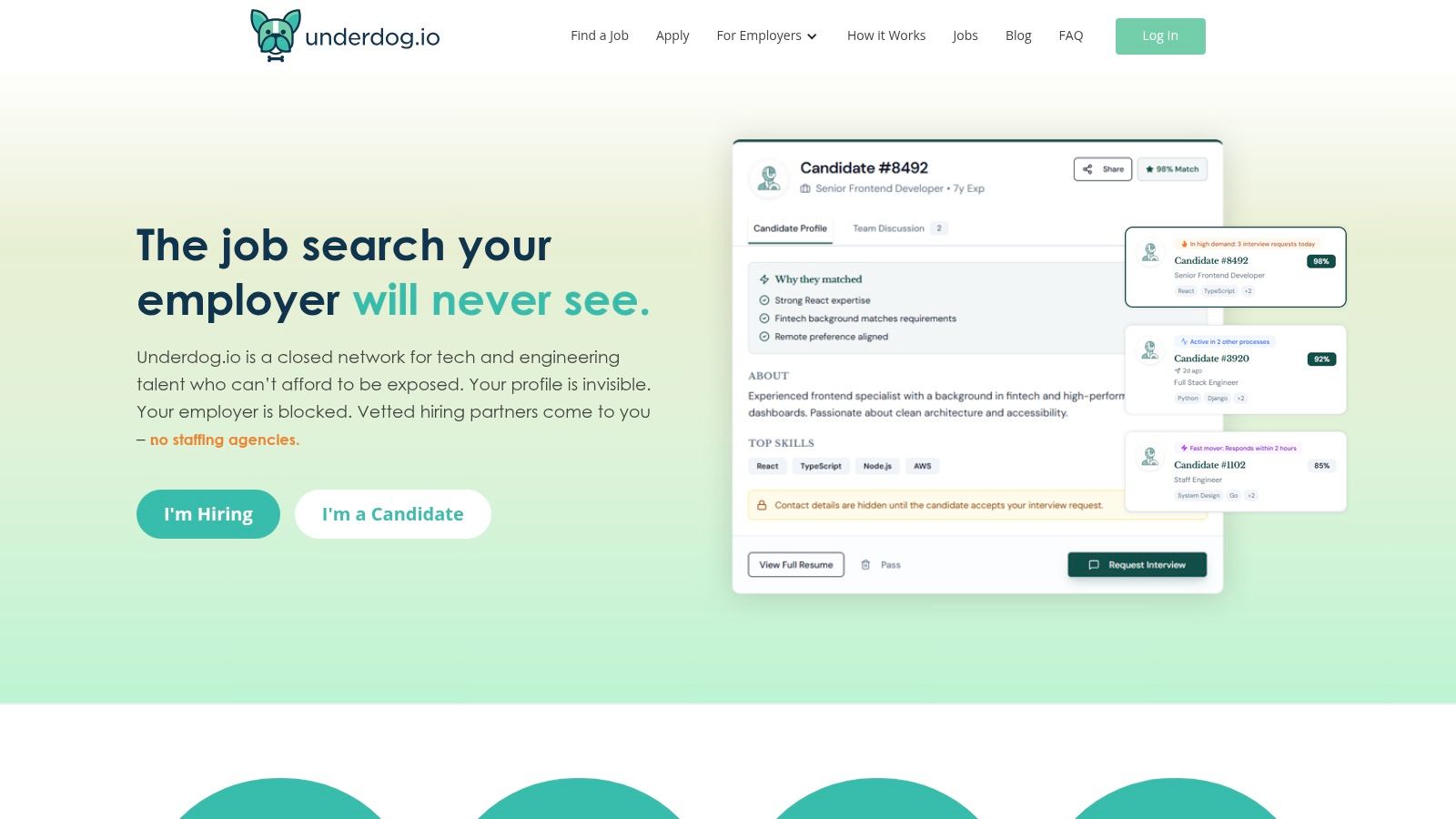
Underdog.io runs in the opposite direction from a searchable database. It's a curated, candidate-first marketplace connecting tech job seekers with early-stage and high-growth companies in New York City, San Francisco, and throughout the US. Candidates submit one free, 60-second application, and interested companies come to them. Every profile is screened before employers see it, and hiring teams receive a new vetted batch every week.
That structure changes who replies. Profiles stay anonymous until interest is mutual, which protects the roughly 85% of candidates who are already employed and exploring discreetly. Matches are made by people rather than keyword filters, so introductions arrive as selective, personalized outreach instead of cold volume. Pricing runs pay-per-hire or subscription, and the subscription covers unlimited seats plus a full year of unlimited hires.
For startup tech hiring, I put Underdog first because screened, mutual-interest matching solves the actual bottleneck. You get fewer names and more replies worth a recruiter's time.
If your candidates maintain their professional identity anywhere, it's probably LinkedIn. LinkedIn Recruiter gives you advanced search and filters across that network, InMail outreach, candidate projects for organizing lists, team collaboration, and AI-assisted recommendations depending on plan. For passive candidates in mainstream professional roles, it's still the most familiar starting point for recruiters and candidates alike.
The limits are structural. Search stays centered on LinkedIn rather than cross-source discovery, pricing is quote-based and varies by plan, seats, and contract, and recruiters still need other tools for CRM, multichannel outreach, and analytics. You also do the evaluation work yourself. A strong profile isn't proof someone will answer.
Use LinkedIn's own measurement rules when you test it. Its benchmark reporting uses median values across data points grouped by industry or company size, rather than one universal response-rate standard. Compare your results to a relevant peer group, such as software engineering or startup recruiting, and track acceptance separately from any reply.
Teams comparing it with a curated model should read this breakdown of the best LinkedIn Recruiter alternative before renewing seats out of habit.
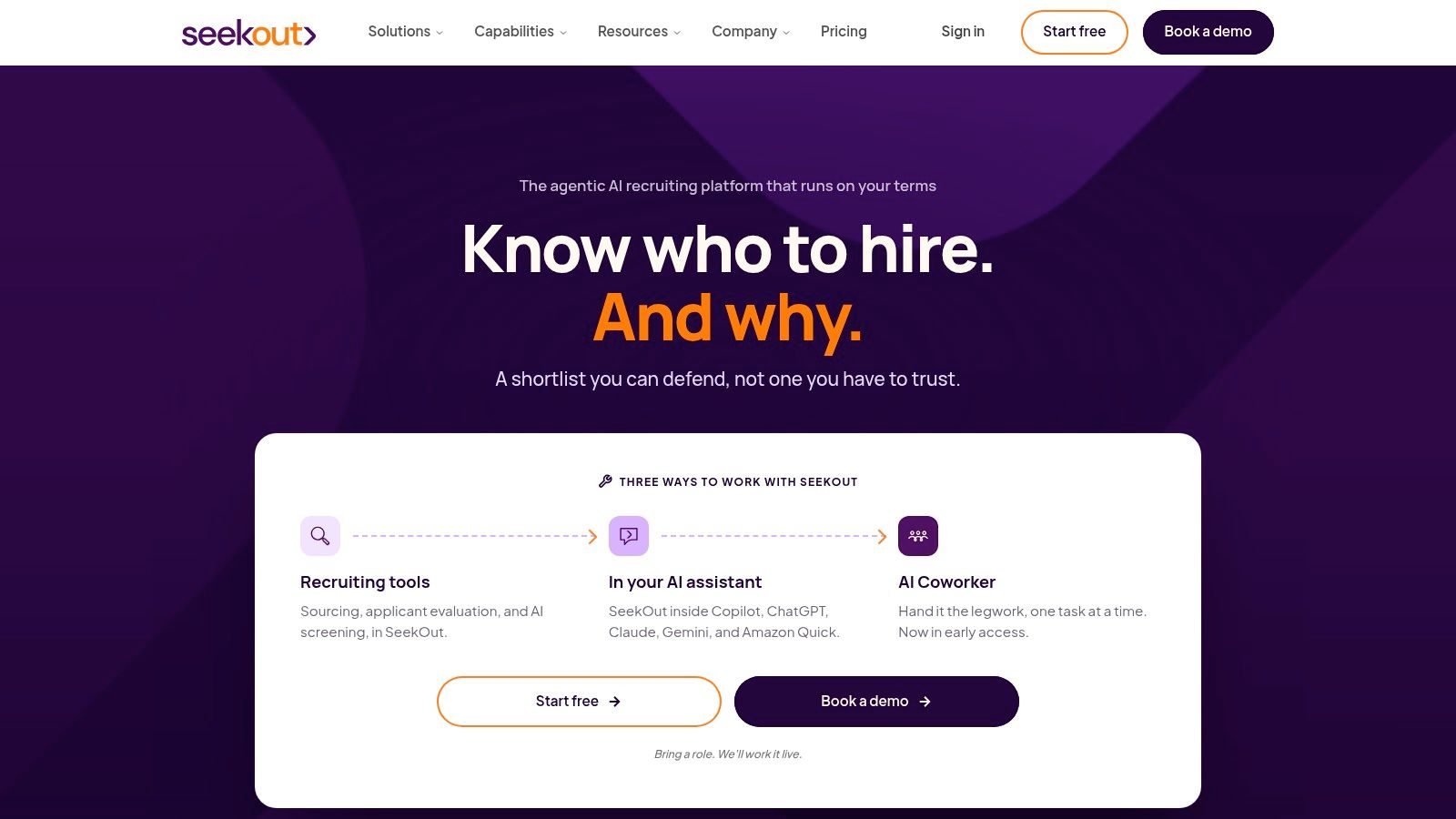
SeekOut is what you add when LinkedIn alone stops returning new names. It searches across more than one billion candidate profiles, according to SeekOut, with AI-assisted filters, technical sourcing tools, diversity filters, outreach campaigns, and contact credits. Higher-tier packages add ATS rediscovery and market insights, so you can revisit past applicants alongside external prospects.
Pricing is partly transparent. SeekOut lists a Recruit Core plan at $149 per month with annual billing or $179 month-to-month, plus a free trial. Team and integration packages are custom-priced. That self-serve entry point makes it easier to run a real search test than with most enterprise platforms.
Run the same hard role in SeekOut and your current tool for one week. Count qualified replies, not profiles found. Duplicate and stale profiles should count against the tool, not for it.
The trade-offs follow the breadth. Contact credits and exports are limited by plan, and a small team may pay for capability it never configures. Aggregated profiles still need verification before outreach. If you're weighing a leaner route, this guide to the best SeekOut alternative lays out the curated option. For specialized technical searches at scale, SeekOut remains a strong number three.
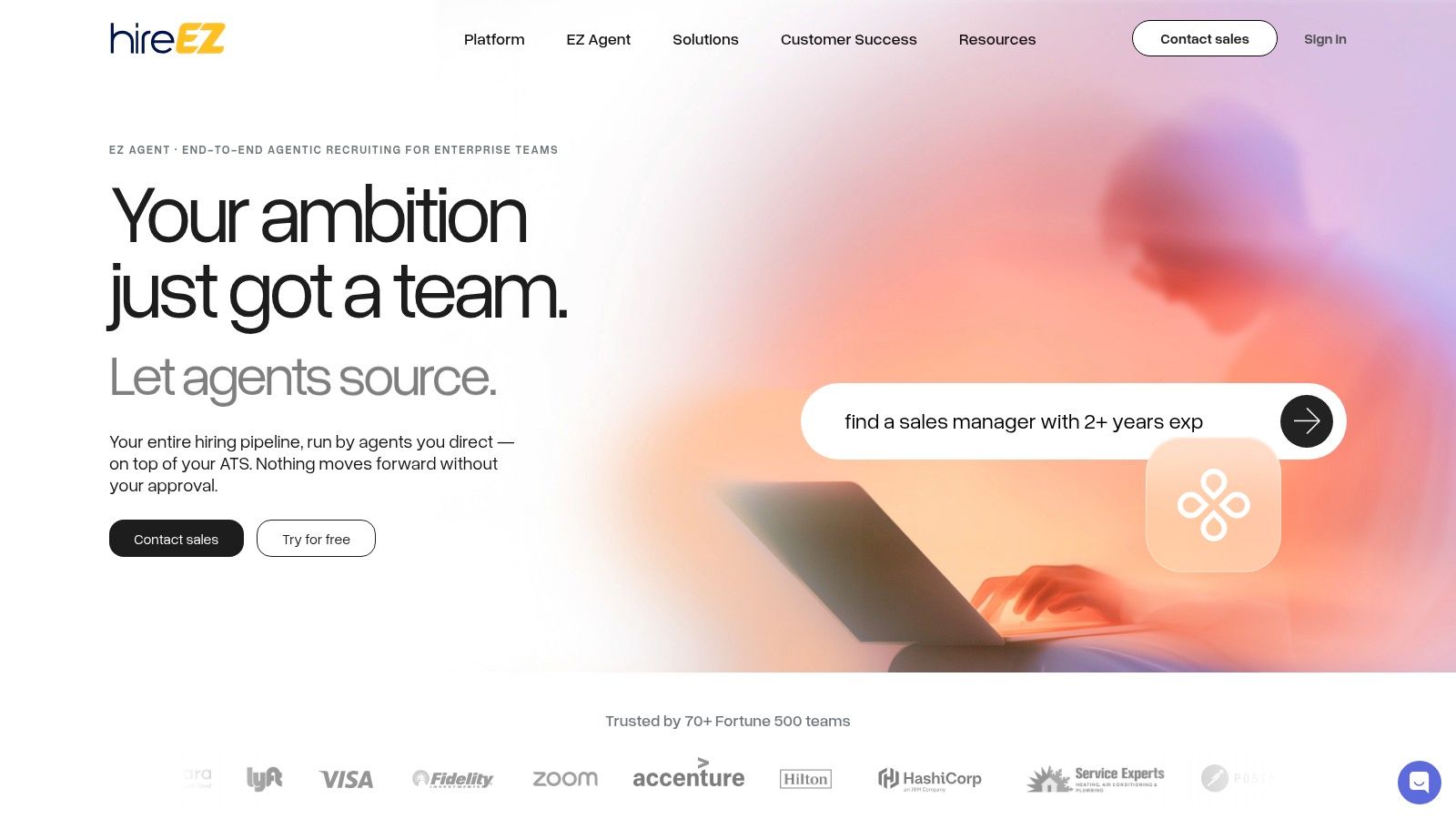
Say your team already has years of applicants sitting in an ATS and still can't fill a backend role. hireEZ is built for that problem. It combines open-web sourcing across partner networks and platforms with deep search, AI-assisted matching, ATS rediscovery, outreach, CRM, screening, and analytics. Instead of treating external search and internal history as separate jobs, it puts both in one pipeline view.
That breadth suits an established recruiting operation. Integrations with recruiting systems help you move prospects into existing stages, and rediscovery can surface a past finalist who is now a fit for a different team. For a two-person startup team, the same breadth can become overhead. You'll spend time configuring modules you bought for a search problem.
Pricing is sales-led, with trial and demo options and details dependent on product and team. Nothing is publicly listed, so get the quote in writing with seat, export, and integration terms spelled out.

Gem tries to solve fragmentation. It combines AI sourcing across a database of more than 800 million profiles, according to Gem, with talent pools, saved-search automation, multistep outreach, ATS synchronization, a recruiting CRM, analytics, scheduling, and an optional ATS. You can run it alongside your existing ATS or consider the all-in-one version.
Workflow fit is where Gem earns its place, and the industry gap is real. A 2025/2026 recruiting-technology benchmark reports that 78% of organizations operate an ATS, while only 21% use a recruiting CRM, and only 39% say their recruiting tools integrate effectively. If your relationship history lives in spreadsheets, consolidating sourcing, outreach, and CRM removes real manual work.
Standard pricing is custom and based on company size, though Gem offers a startup program with free or discounted access subject to eligibility. Confirm whether AI sourcing is included or is an enabled or purchased capability in your setup. Then measure the sync, not the demo. Track the percentage of records successfully synced, the duplicate rate, and how long it takes to move a matched candidate into your hiring workflow. If you only need candidate search, Gem is more platform than you need.
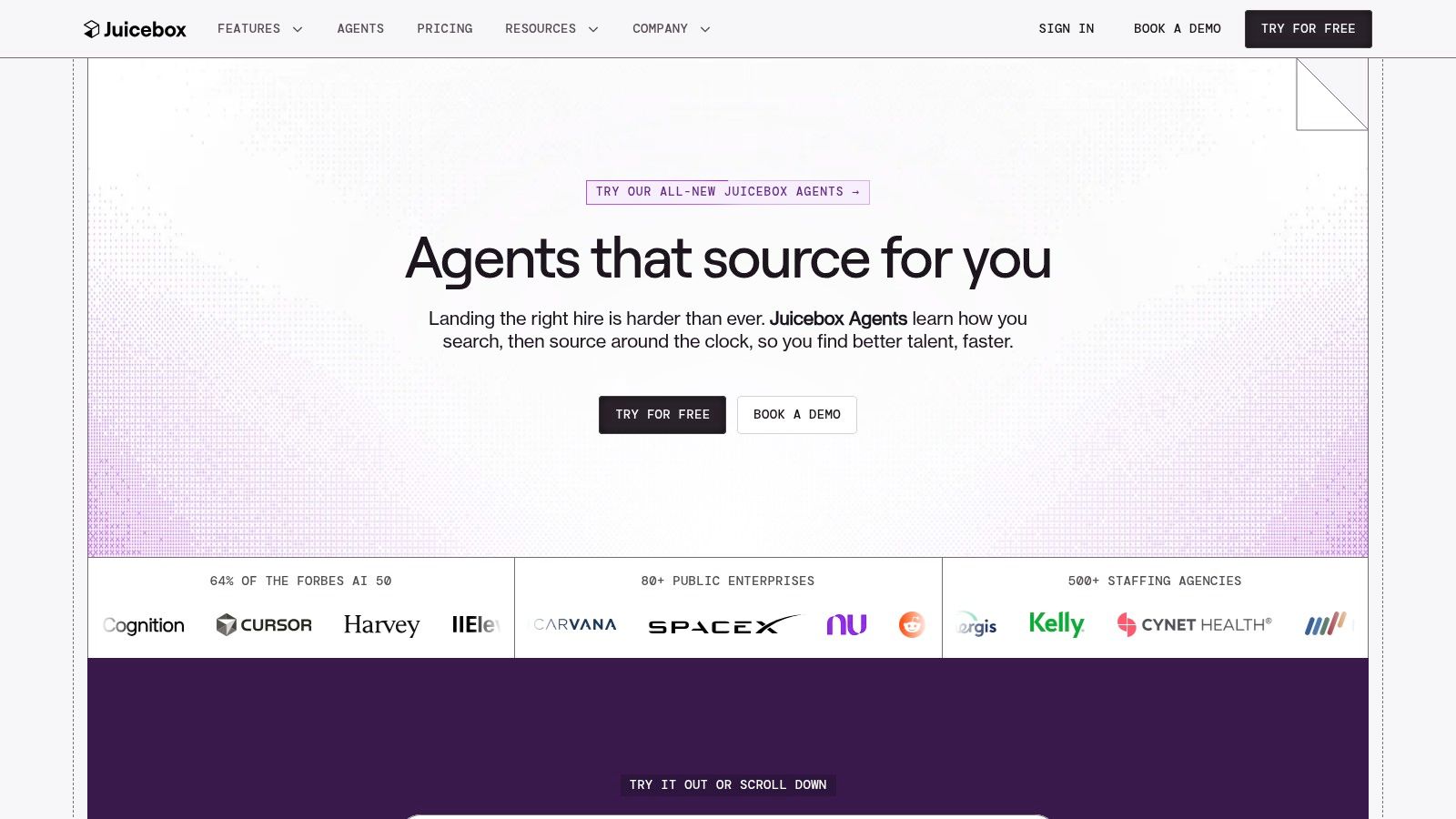
Natural-language search is Juicebox's main pitch. Describe the candidate in plain English, and the platform searches a large profile index, then helps you build projects and shortlists, find contact details, and run email outreach on eligible plans. For recruiters who dislike constructing long Boolean strings, that removes a real setup chore.
Speed is not the same as trust in the result. A 2026 TestGorilla survey of 1,428 US talent professionals found that 72% said AI had made finding candidates faster during the preceding 12 months, while 67% spent at least one hour manually checking a single AI-identified candidate. Budget that verification time into any Juicebox workflow. The tool can get you to a shortlist faster. It does not qualify anyone.
Access is easy to test. The Juicebox website lists a free plan with limited searches, Starter at $99 per seat per month, Growth at $179 per seat per month, and custom business pricing. Lower tiers cap contact and export credits, while ATS or CRM integrations and some team features require higher-tier access.
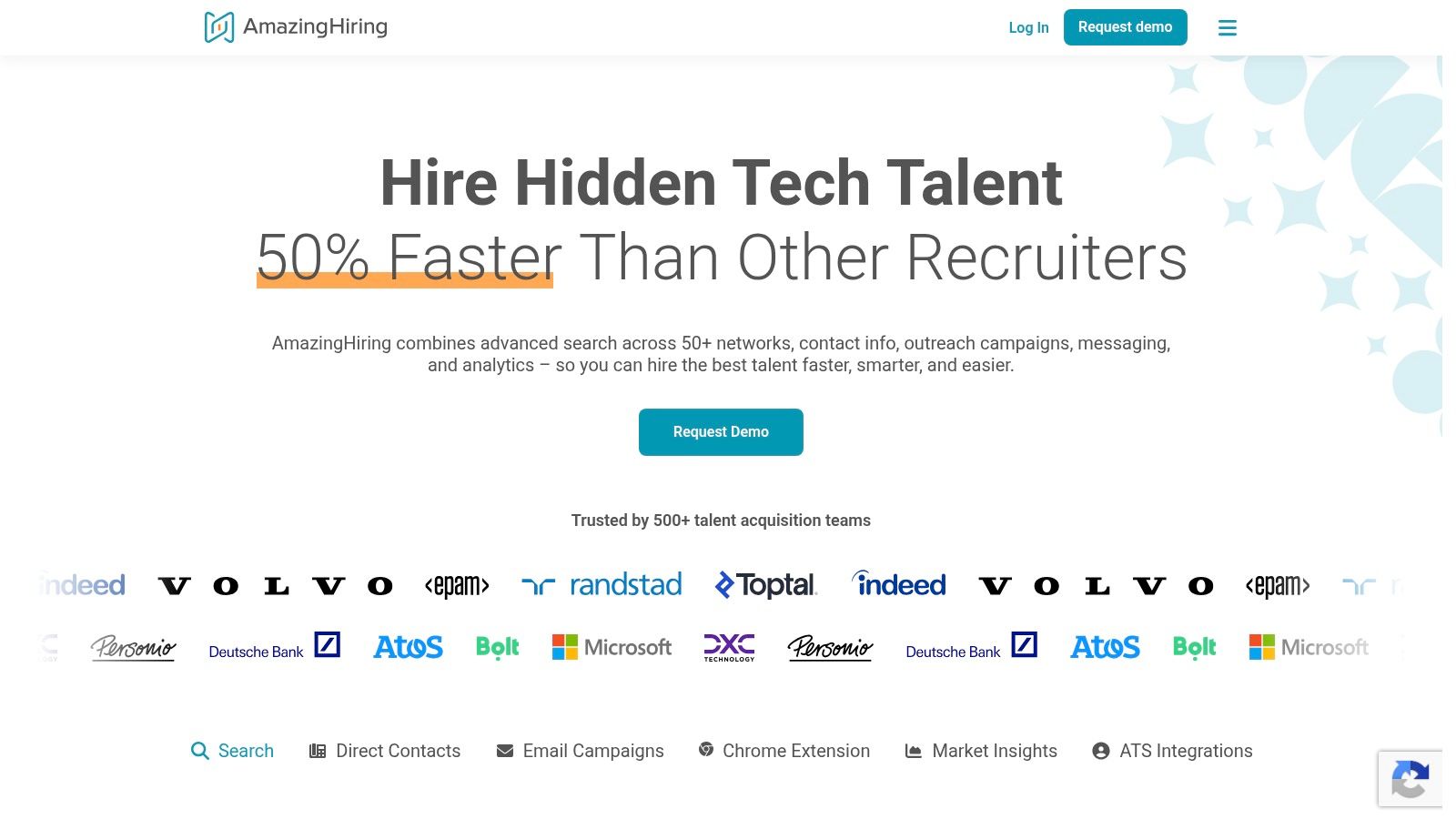
Some engineers barely touch LinkedIn but leave a rich trail in developer communities. AmazingHiring is built to find them. It searches more than 50 networks, including technical communities, with filters for skills, experience, and location, plus contact discovery, email campaigns, a browser extension, and ATS integrations.
That specialization is the point, and also the limit. For software and data roles, multi-source search can surface candidates a single-network search overlooks, and technical signals give you something concrete to open a conversation with. For general or nontechnical hiring, the same focus adds little over a broader tool. Don't buy it as your only sourcing layer unless engineering dominates your requisition load.
Practical rule: When a profile is assembled from several sources, verify current employer and location on the most recently updated source before you write the first message. Aggregated profiles go stale quietly.
Pricing is available by quote only, so there's no published figure to budget against. Ask what a single technical sourcer seat costs with contact discovery included, because that's the configuration many teams use. Then judge the trial on how many surfaced engineers you couldn't have found in your existing tool.
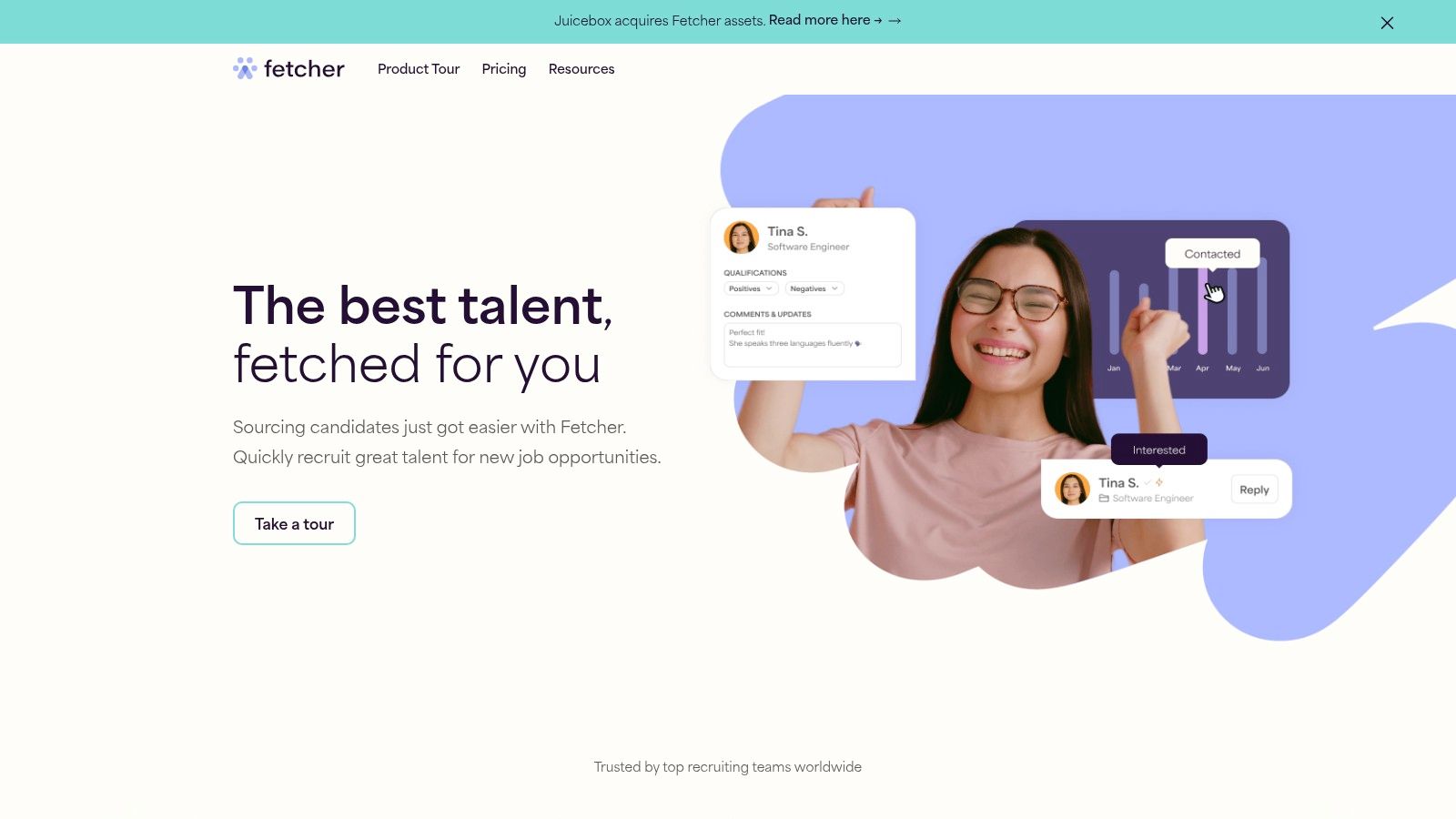
Fetcher sells reduced manual work. It pairs a candidate database and sourcing recommendations with a LinkedIn sourcing plugin, candidate relationship management, email outreach, and ATS integrations. Tiers run from Self-serve through Growth, Amplify, and Enterprise, with higher levels adding volume and operational support.
Automation deserves a clear-eyed test, because adoption is uneven. Aptitude Research found that only 18% of surveyed companies used automation for sourcing, while 33% combined AI with human expertise. That split tells you where Fetcher works best. Let it handle discovery, list building, and follow-up mechanics. Keep human approval on who gets contacted and what the first message says, especially for senior technical roles.
Terms need attention before you sign. Annual lead and sourced-talent allowances vary by plan, pricing isn't clearly stated in the plan details, and high-volume teams should pin down overage and upgrade terms in writing. Confirm current pricing and volume terms with the vendor, then model your busiest quarter, not your average one.
If hands-off volume isn't your bottleneck, compare the model against the best Fetcher alternative, where human review happens before any introduction is made.
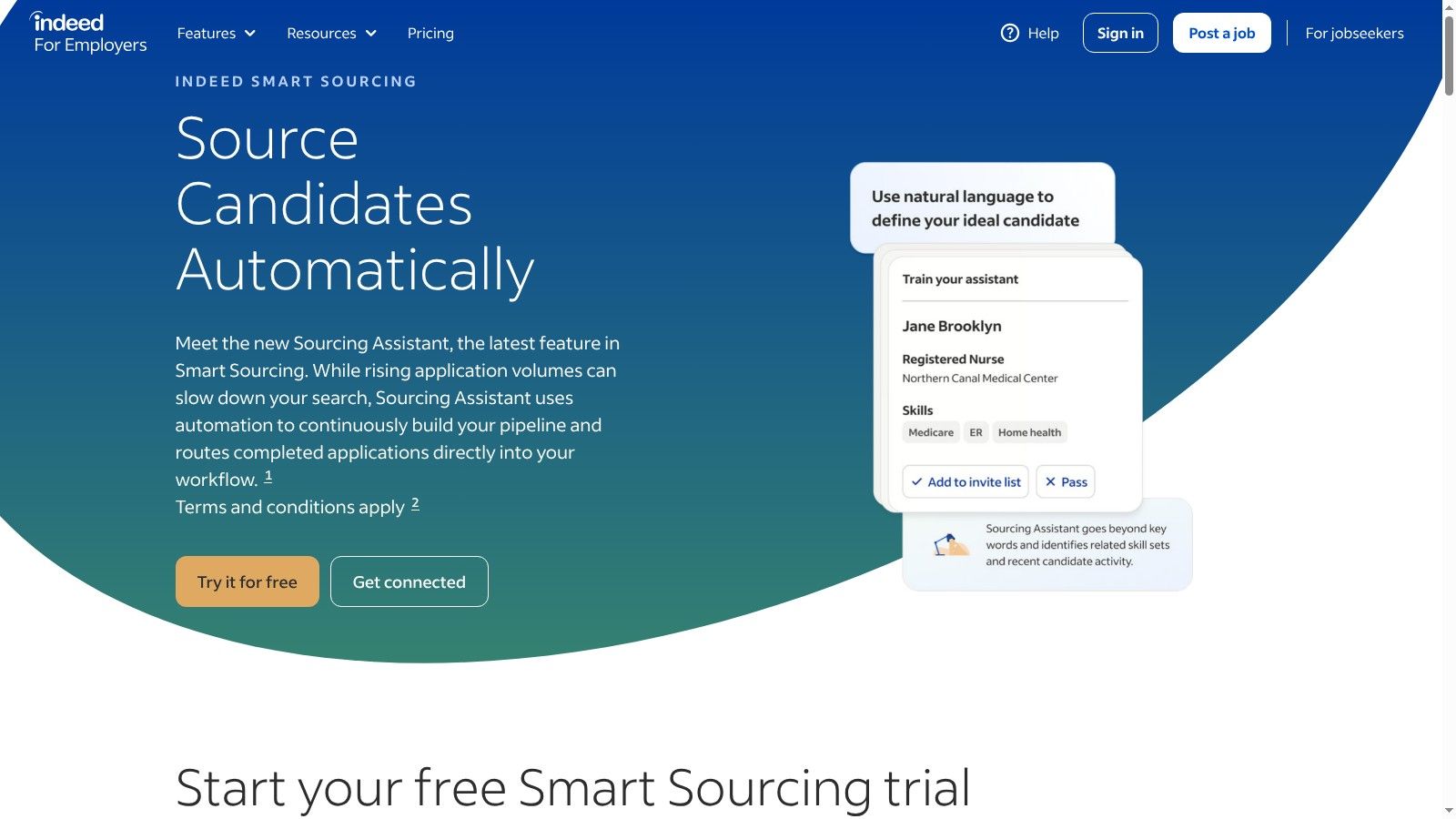
Indeed Smart Sourcing is the straightforward option on this list. Built for US employers, it offers resume search with filters such as location, job type, and relocation willingness, bulk messaging, personalized AI-generated outreach, and a Sourcing Assistant for automated candidate discovery on eligible plans.
Its value depends entirely on who you're hiring. If your target candidates use Indeed and keep searchable resumes there, you get search and outreach in one familiar place. If you're chasing senior startup engineers, product leaders, or designers, that pool thins out fast. Resume databases also skew toward active job seekers, which cuts both ways. People may reply quickly, but you're competing with every other employer messaging the same profiles.
Indeed advertises a 14-day trial for US employers and lists its Professional plan at $520 per month or $4,992 per year. Check offers and terms before subscribing, since pricing and offerings may change by market and over time. For a small team, that's a significant monthly spend, so use the trial on a live role and count conversations started, not resumes viewed. If the trial doesn't produce interviews, the list price won't either.
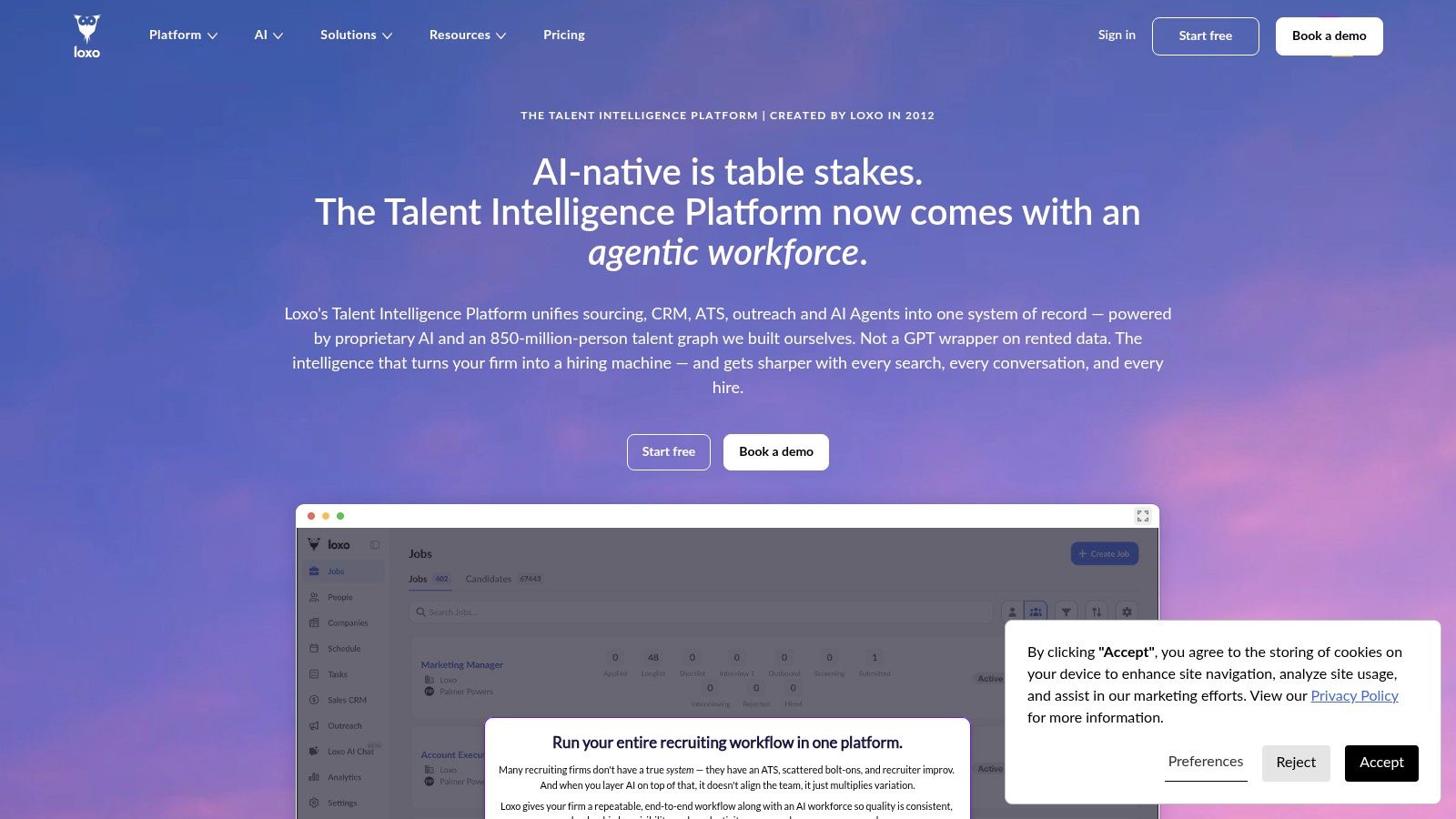
Loxo is less a sourcing tool than a replacement stack. It combines an ATS and recruiting CRM with email and calendar sync, natural-language relevance-ranked search, and, on the Professional plan, Loxo Source talent-graph search, AI agents, contact information, and outreach. Recruiting firms are the clearest audience, though in-house teams tired of patching systems together may value one login.
The appeal is real consolidation. Search results and candidate records live in the same platform, so you don't maintain a separate sourcing database that drifts out of sync. The cost is commitment. Core starts at $149 per user per month billed annually, but that starting price doesn't include Loxo Source. Professional is quote-based and billed annually, with a seven-day Professional trial advertised.
That pricing structure creates the main decision. If you already run an ATS you're keeping, buying Loxo mainly for sourcing means paying to replace infrastructure that works. If your stack is fragmented and you're ready to migrate, the unified workflow can justify it.
No single spec separates these ten tools. What separates them is how they perform on five things: candidate reach, specialization, vetting depth, pricing structure, and fit for startup tech hiring. The table lays them side by side.
| Tool | Best For | Candidate Reach | Pricing Model | Vetting & Quality Control |
|---|---|---|---|---|
| Underdog.io (Recommended) | Startup and tech hiring; discreet job searches | Curated startup network across New York City, San Francisco, and throughout the US | Free for candidates; employers choose pay-per-hire or subscription pricing | Candidate profiles are screened before employers see them; companies are screened for funding, team, and product viability |
| LinkedIn Recruiter | Finding and contacting passive professionals | LinkedIn's large professional network | Quote-based; varies by plan, seats, and contract | Profiles are maintained by members; no separate vetting details provided |
| SeekOut | Broad and specialized candidate sourcing | More than one billion profiles, according to SeekOut | Core: $149/month annually or $179 month-to-month; team plans custom | Search filters include technical and diversity criteria; no specific candidate vetting process listed |
| hireEZ | Cross-source sourcing and recruiting workflows | Open-web sources and partner networks | Sales-led, quote-based | AI matching and ATS rediscovery; verify candidate relevance and contact data |
| Gem | Sourcing, outreach, and candidate relationship management | Database of more than 800 million profiles, according to Gem | Custom pricing; eligible startups may receive free or discounted access | AI sourcing and saved searches; no specific candidate vetting process listed |
| Juicebox | Natural-language candidate sourcing | Large profile index; exact reach not specified | Free limited plan; paid plans from $99 per seat/month; business pricing custom | Verify aggregated matches and contact details |
| AmazingHiring | Technical recruiting, especially software and data roles | More than 50 professional and developer-oriented networks | Quote-based | Technical filters and multi-source discovery; profiles may need freshness and accuracy checks |
| Fetcher | Building outbound candidate pipelines | Candidate database and LinkedIn sourcing | Tiered plans from Self-serve to Enterprise; quote-based for higher tiers | Candidate recommendations and sourcing workflows; plan allowances vary |
| Indeed Smart Sourcing | US employers sourcing candidates on Indeed | Indeed resume search, focused on US employers | Professional plan: $520/month or $4,992/year; 14-day trial advertised | Search filters and AI-assisted outreach; fit depends on candidate presence and searchable resumes |
| Loxo | Recruiting firms seeking an integrated ATS, CRM, and sourcing platform | Loxo Source talent graph on the Professional plan | Core from $149 per user/month billed annually; Professional pricing by quote | Relevance-ranked search and contact information; no specific candidate vetting process listed |
The last column is the dividing line. Nine of these tools index profiles and hand the screening work to you. Underdog.io is the only row where both sides of the market are screened before contact, and where hiring managers reach out to candidates directly rather than competing for replies in a crowded inbox. The trade-off is a smaller, curated pool against the open-web reach of SeekOut or LinkedIn Recruiter, which return far more names with far less qualification done.
For teams hiring startup tech talent, that trade favors the curated side. A vetted cohort of active candidates typically converts faster than a long list of profiles you still have to screen, contact, and qualify yourself.
Start with the role, not the vendor list. High-volume roles with plentiful active candidates reward reach, so a resume database or broad aggregator can work. Scarce technical roles reward specialization and vetting, because your constraint is getting a qualified, employed person to trust the approach enough to reply. That trust problem is measurable. Only 26% of surveyed job applicants said they trust AI to evaluate candidates fairly, while 66% of respondents in a Pew Research Center survey said they would not want to apply to an employer that uses AI in hiring, according to a summary of AI tools in talent acquisition. Blasting more automated outreach into that sentiment does not fix it.
Team size cuts the list next. A solo recruiter or a founder hiring directly needs fast time-to-value, low setup, and candidates who arrive pre-screened. A larger talent team with sourcing specialists can absorb platforms like hireEZ or Gem and get value from rediscovery, CRM, and analytics. Governance belongs in that calculation too. Recent skills-based hiring research in the TestGorilla State of Skills-Based Hiring 2025 report found that 32% of employers cite the cost and complexity of integrating AI, while 30% cite data-security and privacy risks as reasons for not adopting it. For a small team, integration work, compliance review, false positives, and recruiter checking time can outweigh the subscription price.
Whatever you shortlist, run the same measurement loop. Record introductions or messages sent, any response, qualified interest, interviews, and hires, using a fixed window. High response is achievable in narrow, well managed efforts, but the denominator decides what the number means. A 2025 LinkedIn outreach audit reported 2,393 InMails and a 59.8% average response rate in one practitioner's campaign. Treat that as a comparison point from a single campaign, and demand the same denominator and stage definitions from every vendor.
On the five dimensions that opened this list, Underdog.io is the strongest fit for startup tech hiring. Reach is curated rather than scraped, specialization is early-stage and high-growth tech, candidates and companies are screened, workflow fit is direct because hiring managers reach out to a candidate's inbox, and the startup-tech use case is the core product. Reply quality follows from intent: candidates join by choice, companies can apply to them, and profiles stay anonymous until interest is mutual. Employers can also engage Hunt by Underdog.io, a team of vetted tech recruiters working on a contingent basis, when a role needs dedicated search effort on top of the marketplace.
Two practical complements round out a stack. Teams sourcing engineers where they already talk in public can add recruiting campaigns on X. When the bottleneck is search capacity rather than software seats, contingent recruiting help is the cleaner spend. Pick the tool that produces qualified conversations in your next live search. Everything else is demo metrics.
If you're hiring engineers, product managers, designers, or data talent for a startup, Underdog.io gives you a curated marketplace of screened candidates, weekly vetted batches, and confidential introductions until interest is mutual. Candidates join free with one 60-second application, and employers can choose pay-per-hire or subscription pricing. Post the role, then spend your sourcing hours on conversations instead of searches.