12 Best Job Sites for Software Engineers in 2025

12 Best Job Sites for Software Engineers in 2025

December 2, 2025
No items found.

The software engineering job market is noisy. Submitting dozens of applications into a "resume black hole" only to be met with silence is a frustratingly common experience. Generic job boards often list stale or irrelevant positions, and sifting through the chaos can feel like a full-time job in itself. The truth is, the most compelling opportunities-whether at a stealth-mode startup or a top-tier tech giant-aren't always found on the largest, most saturated platforms.

This guide cuts through the clutter. We've compiled and analyzed the 12 best job sites for software engineers to help you target your search effectively. Instead of just listing features, we provide actionable insights on how to leverage each platform. For example, you'll learn how to use boolean search on Indeed to filter out irrelevant technologies or how to analyze a company's interview section on Glassdoor to prepare for specific technical questions. We'll explore everything from curated marketplaces like Underdog.io that connect you directly with hiring managers, to niche boards like Built In and Levels.fyi that focus on specific tech hubs and compensation data.

Our goal is to give you a strategic advantage, helping you choose the right tools to find a role that aligns with your skills and ambitions. We'll break down the pros and cons of each site, so you can stop wasting time on platforms that don't serve your needs. While this list covers several excellent remote-focused options, for a broader comparison of platforms specializing in remote opportunities, you can also refer to the top remote job websites for 2025. Let's dive into the platforms that will actually help you find your next great engineering role.

Job Platform Types Comparison
Platform Type How It Works Best For... Key Examples
Curated/Vetted Marketplaces
Platforms that screen both candidates and companies for quality matches.
Engineers seeking high-signal opportunities with startups and tech companies.
Underdog.io WTTJ Cord Arc.dev
Specialized Tech & Startup Boards
Niche sites focused on the tech ecosystem, often with salary/equity transparency.
Those specifically targeting startups or tech roles with clear compensation data.
Wellfound Underdog.io Y Combinator Job Board Dice
Community & Remote-First Hubs
Boards tied to developer communities or dedicated to remote work.
Engineers prioritizing remote roles or wanting to tap into peer networks.
We Work Remotely Relocate.me
Major Aggregators & Networks
Large-scale platforms with vast reach but less curation.
Casting a wide net and leveraging professional networks for opportunities.
LinkedIn Indeed

1. Underdog.io

Underdog.io distinguishes itself from the vast sea of job boards by operating as a curated, candidate-centric marketplace. Instead of the typical spray-and-pray application process, Underdog flips the model: software engineers submit one concise, 60-second application and gain discreet exposure to hundreds of hand-picked startups and high-growth tech companies. This approach transforms the job search from an active, time-consuming hunt into a passive, efficient pipeline of high-quality opportunities.

The platform is designed for engineers who value their time and privacy, particularly those who are passively looking while currently employed. It's a standout option on any list of the best job sites for software engineers due to its rigorous, human-powered vetting process for both candidates and companies.
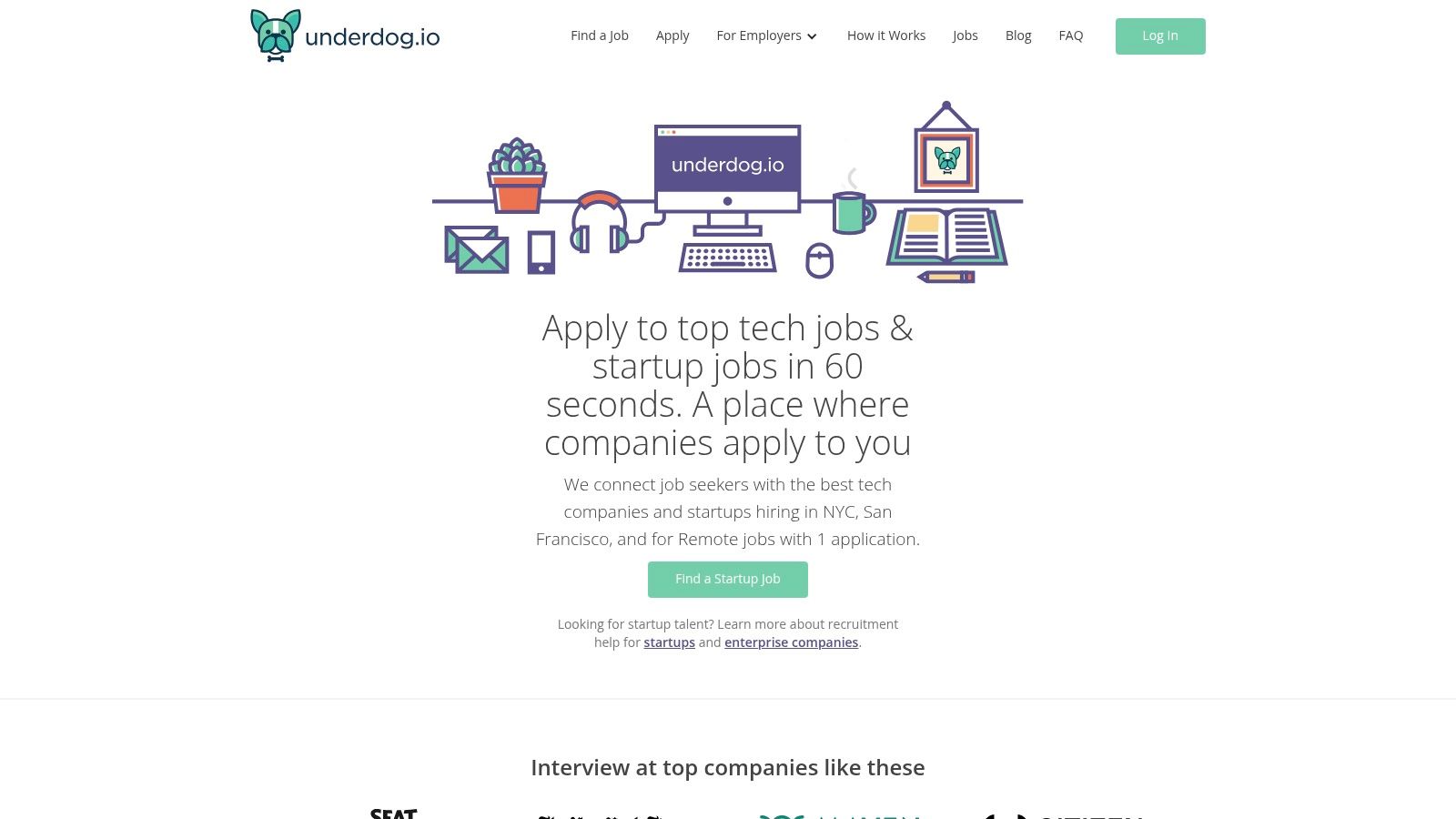
A screenshot of the Underdog.io homepage, showcasing its clean design and value proposition for job seekers.

Why It Excels for Engineers

Underdog.io’s core strength is its extreme curation. The platform reportedly accepts only about 5% of candidate applications and rejects over half of the companies that apply to join. This dual-sided selectivity creates a high-signal, low-noise environment. For an accepted engineer, this means the 1-3 introductions received per month are not from random recruiters but from founders and hiring managers at vetted, mission-driven startups who are genuinely interested in their profile.

This model directly combats resume spam and ghosting. Your profile remains anonymous until mutual interest is established, protecting your confidentiality. Furthermore, the focus on early-stage to Series B companies ensures roles often come with transparent equity information and a direct line to key decision-makers, bypassing multiple layers of HR.

Key Features and Practical Use

  • Single, Efficient Application: A one-time application puts your profile in a curated talent pool, saving dozens of hours compared to applying to companies individually.
  • Human-Powered Matching: Unlike algorithm-only platforms, human curators review profiles to ensure high-fit introductions, increasing the likelihood of meaningful conversations.
  • Confidentiality by Default: Anonymized profiles protect your identity, which is crucial for currently employed engineers exploring the market without alerting their employer.
  • Startup-Centric Roles: The platform specializes in connecting talent with high-growth startups in hubs like NYC, San Francisco, and remote roles across the U.S.

Actionable Insight: To maximize your chances of acceptance, treat the 60-second application with care. Instead of just listing technologies, frame your achievements around impact. For example, instead of "Built REST APIs," write "Architected and deployed a new API service using Go and Postgres, reducing latency by 30% and supporting a 50% increase in user traffic." You can learn more about software engineering opportunities on Underdog.io to see if its model aligns with your career goals.

Underdog.io Feature Analysis
Feature Analysis Underdog.io
Best For Passively-looking engineers, startup enthusiasts, those seeking roles with significant equity and impact.
Primary Focus Curated matching for startups (early-stage to Series B).
Cost for Job Seekers Free
The business model is success-based fees from employers.
Key Differentiator Extreme Curation. A human-in-the-loop approach for both companies and candidates, ensuring high-quality connections.
Main Limitation High Selectivity. The low acceptance rate means it's not a guaranteed entry point for all applicants.
Geographic Specialty NYC, San Francisco, and Remote (U.S.)

2. LinkedIn Jobs

Best For: Networking into a role and leveraging professional connections.

LinkedIn Jobs is more than just a massive job board; it's an integrated part of the world’s largest professional network. Its primary advantage over other platforms is the ability to fuse your job search with active networking. Instead of just applying into a void, you can see who posted the job, find connections at the company, and reach out directly to recruiters or hiring managers. This makes it an indispensable tool for engineers who want to go beyond the standard application process.

The platform’s search and recommendation algorithms are powerful, surfacing relevant software engineering roles based on your profile, skills, and past activity. The "Open to Work" feature privately signals to recruiters that you're available, often leading to a steady stream of inbound opportunities.

Key Features & Actionable Tips

  • Integrated Networking: Before applying, use the platform to find the hiring manager or a team member. Send a concise, personalized connection request mentioning your interest in the role. Example: "Hi [Name], I saw the opening for a Senior Backend Engineer on your team. My experience scaling Python services at [Previous Company] seems like a strong fit. Would be great to connect."
  • Easy Apply vs. Direct Apply: While the one-click "Easy Apply" is convenient, it attracts a high volume of applicants. Prioritize roles that redirect to the company’s career page, as this often indicates a more serious application process.
  • Premium Insights: A LinkedIn Premium subscription (starting at ~$29.99/month) unlocks valuable data, such as applicant insights, competitive intelligence on other candidates, and access to InMail credits for contacting anyone on the platform.

Pros:

  • Unmatched scale and volume of job postings.
  • Direct access to recruiters and hiring managers.
  • Company pages provide deep insights into culture and teams.

Cons:

  • High competition, especially for "Easy Apply" roles.
  • Some of the most useful features are behind a paywall.
  • The signal-to-noise ratio can be low without careful filtering.

Website: https://linkedin.com/jobs

3. Indeed

Best For: Casting the widest possible net with powerful search filters.

Indeed is the Google of job boards, operating as a massive search engine that aggregates millions of software engineering roles from company career pages, other job boards, and direct postings. Its sheer volume makes it an essential tool for comprehensive market research and finding opportunities that might not appear on more niche platforms. If a company is hiring engineers, the role is almost certainly indexed on Indeed.

The platform excels at allowing engineers to conduct highly specific, saved searches. You can filter by technology stack, title, location, salary expectations, and company ratings, then set up email alerts to get new, relevant postings delivered directly to your inbox. This makes it one of the most efficient tools for monitoring the entire job market in one place.
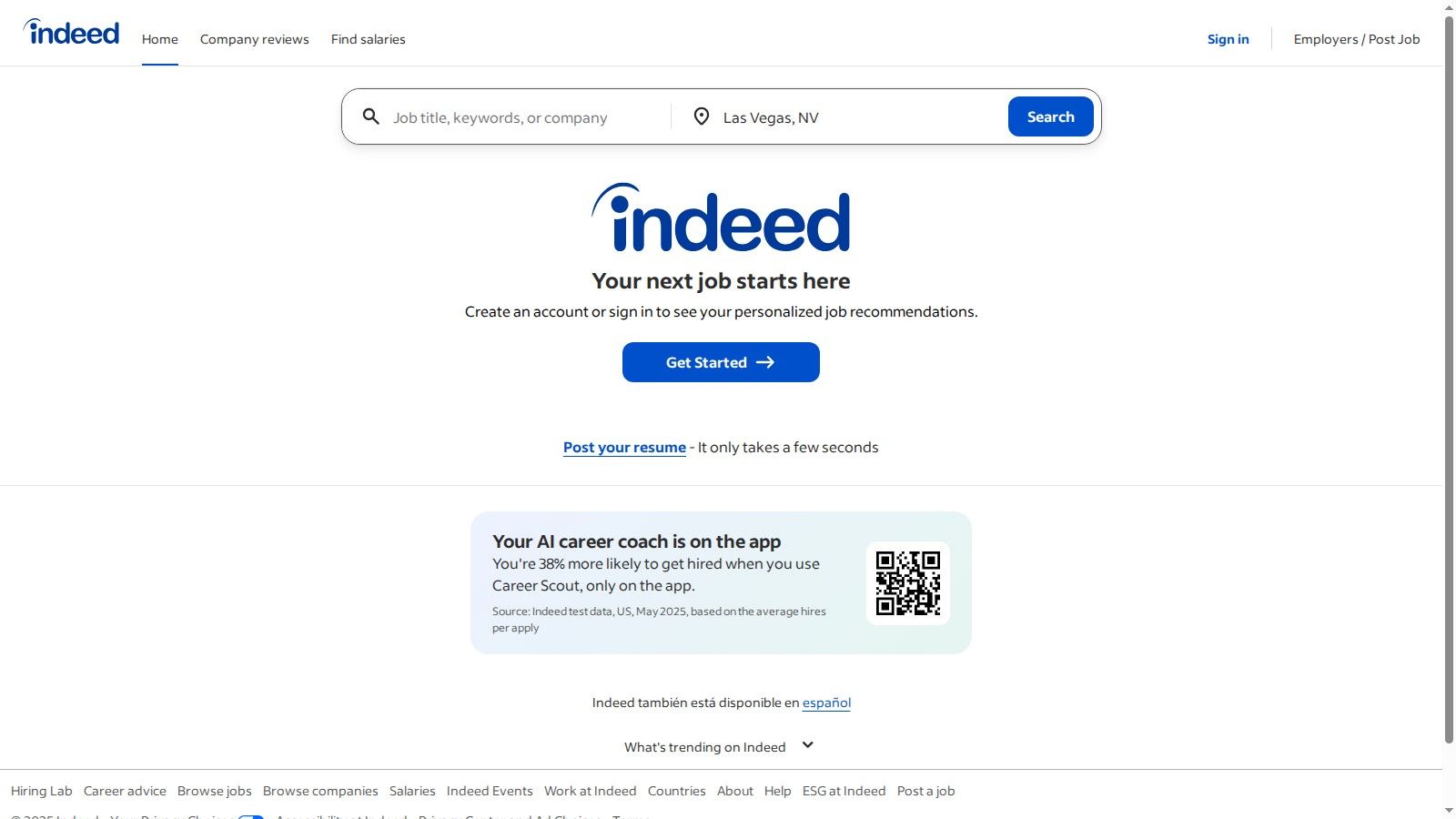
Indeed

Key Features & Actionable Tips

  • Advanced Search Queries: Use boolean search operators to refine your results. Example: Search "Senior Software Engineer" AND (React OR Vue) NOT (Java OR ".NET") to find frontend roles while excluding backend technologies you’re not interested in.
  • Company Reviews & Salary Data: Before applying, check the company's reviews and salary data sections. This provides valuable, crowd-sourced intelligence on company culture and compensation benchmarks, helping you vet opportunities and prepare for negotiations.
  • Resume Visibility: Upload your resume and set it to "Public" to allow recruiters to find you. Practical Tip: To reduce spam, create a job-search-specific email address for your public resume and use a Google Voice number. This keeps recruiter outreach organized and separate from your personal inbox.

Pros:

  • Unparalleled volume of job listings from across the web.
  • Powerful and specific search filters for targeted searches.
  • Completely free for job seekers, with no features behind a paywall.

Cons:

  • High volume can lead to a lower signal-to-noise ratio.
  • Sponsored listings can clutter results and sometimes show duplicate roles.
  • The generic nature of the platform means competition is extremely high.

Website: https://indeed.com

4. Glassdoor

Best For: Researching company culture and salary expectations before you apply.

Glassdoor’s unique value proposition is its fusion of job listings with a massive, user-generated database of company reviews, salary data, and interview experiences. While it's a powerful job board in its own right, its primary strength lies in providing the context needed to evaluate an opportunity holistically. For software engineers, this means you can validate a role's compensation against real-world data and get a candid look at a company's engineering culture before investing time in the application process.

This platform empowers you to move beyond the polished career page and understand what it’s really like to work somewhere. You can read detailed accounts of technical interviews, discover the pros and cons cited by current and former employees, and assess a company's commitment to diversity and inclusion through its ratings. This makes Glassdoor an essential due-diligence tool in any modern job search.

Key Features & Actionable Tips

  • Salary & Compensation Research: Before an interview, search for "Software Engineer" salaries at that specific company and location. Use this data to anchor your salary expectations and confidently negotiate your offer.
  • Interview Intelligence: Dive into the "Interviews" section for a company. Look for recent software engineering interview posts to understand the format, typical technical questions (e.g., "Was asked to solve a two-pointer array problem on a whiteboard"), and overall difficulty. This is your best source for pre-interview prep.
  • Filter by Culture Ratings: Don't just search for jobs; filter companies by overall rating, work-life balance, or senior leadership approval. This helps you proactively discover employers that align with your values.

Pros:

  • Invaluable salary data helps set realistic compensation targets.
  • Candid reviews provide deep insights into company culture and management.
  • Interview feedback offers a significant competitive advantage.

Cons:

  • Some data can be outdated or skewed by a few highly positive or negative reviews.
  • The user experience can sometimes feel cluttered with ads and prompts.
  • Access to full reviews and salary data often requires you to contribute your own.

Website: https://www.glassdoor.com

5. Dice

Best For: US-based tech professionals, including those seeking contract or security-cleared roles.

Dice has been a staple in the tech recruiting world for decades, carving out a niche as a dedicated hub for technology professionals. Unlike generalist job boards where engineering roles can get lost in the noise, Dice is built from the ground up for tech talent. Its longevity means it has deep-rooted relationships with established US tech employers, from Fortune 500 companies to government contractors, making it a reliable resource for finding a wide range of software development, data science, and DevOps positions.

The platform’s strength lies in its focused approach. The entire ecosystem, from its search filters to its career advice content, is tailored specifically to the needs of technologists. This makes the search experience more efficient for software engineers looking for roles that match a specific tech stack or skill set.

Dice

Key Features & Actionable Tips

  • Tech-Specific Filtering: Go beyond simple keyword searches. Use Dice’s filters to narrow down roles by specific programming languages, frameworks (e.g., React, .NET), cloud platforms, or security clearance requirements to find a precise match.
  • Profile Visibility: A well-completed profile acts as your resume for recruiters actively sourcing on the platform. Actionable Step: Instead of just listing skills, rate your proficiency (e.g., "Python - Expert," "Terraform - Intermediate") and specify years of experience for each to attract better-matched inbound opportunities.
  • Salary Predictor Tool: Before applying or interviewing, use Dice's salary tool to benchmark your market value based on your role, skills, and location. This data is crucial for negotiating your compensation package effectively.

Pros:

  • Tech-only focus significantly reduces non-relevant job postings.
  • Strong presence in the contract and government-cleared job market.
  • Free for candidates and hosts a large pool of established US tech employers.

Cons:

  • The user interface can feel dated compared to newer platforms.
  • Can have a higher concentration of staffing agency and third-party recruiter posts.
  • Primarily focused on the US market, offering limited international opportunities.

Website: https://dice.com

6. Wellfound (formerly AngelList Talent)

Best For: Engineers targeting high-growth, venture-backed startups with transparent compensation.

Wellfound, which rebranded from AngelList Talent, is the definitive marketplace for startup jobs. It strips away the corporate formalities of larger job boards and focuses on what matters most to engineers exploring the startup ecosystem: transparent salary and equity data. The platform connects you directly with founders and hiring managers at early-stage companies, creating a more direct and efficient application experience than many other job sites for software engineers.

The platform is built around a detailed candidate profile that acts as your primary application, minimizing the need for repetitive cover letters. Companies apply to you as much as you apply to them, with many recruiters actively sourcing candidates and initiating conversations. This two-way street makes it an excellent place for discovering innovative companies you may not have found otherwise.

Key Features & Actionable Tips

  • Transparent Compensation: Don't waste time on roles with misaligned compensation. Use the salary and equity filters to narrow your search to opportunities that meet your financial goals from the very beginning. This transparency is a key differentiator.
  • Profile-First Approach: Invest significant time in your Wellfound profile. It replaces the traditional resume and cover letter. Practical Tip: Under your experience section, use the STAR method (Situation, Task, Action, Result) to describe your accomplishments. Quantify your impact with metrics (e.g., "Reduced page load time by 40%").
  • Targeted Filtering: Go beyond just "software engineer." Use the specific filters for company stage (e.g., Seed, Series A), size, and market to find the exact type of startup environment where you'll thrive.

Pros:

  • Unmatched transparency on salary and equity compensation.
  • Direct line of communication with founders and key decision-makers.
  • Profile-based matching system reduces application fatigue.

Cons:

  • Narrowly focused on the startup world; very few enterprise or corporate roles.
  • Compensation can be highly variable depending on a startup's funding stage.
  • Less geographic diversity compared to larger, global job boards.

Website: https://wellfound.com

7. Built In

Best For: Discovering roles in major US tech hubs and researching company culture.

Built In carves out a unique niche by combining a tech-specific job board with rich editorial content and detailed company profiles. It focuses heavily on major US tech ecosystems like Austin, NYC, and San Francisco, alongside a robust remote job section. This makes it an excellent resource for software engineers who want to understand a company's culture, tech stack, and employee benefits before they even consider applying.

Built In

Unlike massive aggregators, Built In’s curated nature means the quality of listings is generally higher. Many job posts include salary ranges upfront, providing critical transparency. The platform’s strength lies in its ability to give you a 360-degree view of a potential employer, making it one of the best job sites for software engineers who prioritize cultural fit and deep company research.

Key Features & Actionable Tips

  • Explore Company Profiles: Before applying, dive into a company's Built In profile. Look for their "tech stack" section, employee interviews, and lists of perks. Practical Use: During your interview, reference something specific you learned, like, "I read that the team uses event-driven architecture with Kafka; I'm curious to learn more about that implementation." This demonstrates genuine interest.
  • Utilize City-Specific Hubs: If you're targeting a specific city, use the localized hubs to see which companies are hiring and what the tech scene is like. This is also useful for understanding salary benchmarks in different regions.
  • Filter by "Salary Disclosed": Save time by using the search filter to only show jobs with compensation details. This helps you focus on opportunities that align with your financial expectations from the start.

Pros:

  • High-quality, tech-focused job listings.
  • In-depth company profiles with culture and tech stack details.
  • Strong emphasis on salary transparency for many roles.

Cons:

  • Fewer total listings compared to larger, general job boards.
  • Primarily focused on major US tech hubs, with less coverage elsewhere.
  • Some applications redirect to external company sites, adding steps.

Website: https://builtin.com/jobs

8. Levels.fyi Jobs

Best For: Compensation-focused job searching and level benchmarking.

Levels.fyi has long been the go-to resource for salary transparency, and its job board is a natural extension of that mission. The platform’s primary differentiator is its direct integration with compensation data, often displaying explicit salary ranges and target levels directly on the job postings. This makes it an invaluable tool for experienced engineers who prioritize pay transparency and want to avoid the guesswork common on other platforms.

Instead of browsing endless roles with vague compensation details, you can filter for opportunities that align with your financial expectations and career level from the start. This high-signal approach saves significant time and empowers candidates to enter the interview process with strong, data-backed salary knowledge, making it one of the best job sites for software engineers focused on maximizing their earning potential.

Key Features & Actionable Tips

  • Filter by Compensation: Use the salary filter to immediately narrow your search to roles that meet your financial requirements. This is the platform's killer feature, so leverage it to avoid wasting time on underpaying positions.
  • Level-Specific Search: Search for jobs matching your target seniority (e.g., L4, Senior, Staff). Before applying, cross-reference the company's leveling guide on Levels.fyi to ensure the role's responsibilities match your experience.
  • Integrate with Salary Research: Don't just look at the job posting's salary range. Dig into the main Levels.fyi site to see verified, crowdsourced compensation data for that exact role and company to calculate your target salary range and prepare for negotiation. Example: If a role is listed at $180k, but you see verified reports of similar engineers at that company making $200k, you have a solid data point for negotiation.

Pros:

  • Unmatched transparency with salary bands on many postings.
  • Helps align applications with appropriate career levels.
  • Low-noise experience focused on high-quality, high-paying roles.

Cons:

  • Significantly fewer listings than large, general job boards.
  • Primarily focused on US-based tech hub and remote roles.
  • Crowdsourced data, while powerful, can have occasional inaccuracies.

Website: https://www.levels.fyi/jobs/location/united-states

9. Upwork

Best For: Securing contract roles, side projects, and building a freelance career.

Upwork is the world's largest freelance marketplace, making it a critical resource for software engineers interested in contract work, fractional roles, or supplementing their income. Unlike traditional job sites, its focus is on project-based or hourly engagements, allowing developers to build relationships with multiple clients. It offers an end-to-end ecosystem for a freelance business, handling proposals, contracts, time-tracking, and secure payments.

For engineers testing the waters of independent work or bridging a gap between full-time roles, Upwork provides immense flexibility. The platform’s reputation system, including the Job Success Score (JSS), allows skilled developers to differentiate themselves and command higher rates over time, making it one of the best job sites for software engineers seeking autonomy.
Upwork (freelance)

Key Features & Actionable Tips

  • Build a Strong Profile: Your profile is your primary marketing tool. Detail your tech stack, link to your GitHub, and include portfolio pieces that demonstrate your expertise in solving specific business problems. This attracts higher-quality clients.
  • Master the Proposal: Avoid generic, copy-pasted proposals. Address the client's problem directly in the first two sentences, explain your proposed solution, and ask clarifying questions to show genuine engagement. Example: Instead of "I am a Python expert," write "I see you need to scrape data from multiple sources. I've built similar scrapers using Scrapy and can deliver the data in a clean JSON format. Do you have a preference for data storage?"
  • The Connects System: You use "Connects," Upwork's internal currency, to submit proposals. This system rewards targeted, high-quality applications over a spam approach. A basic Freelancer plan is free, but paid plans (starting at ~$20/month) offer more Connects and profile perks.

Pros:

  • Massive volume and variety of software development projects.
  • Platform-managed payments and escrow provide financial security.
  • Excellent for building a freelance practice or finding interim work.

Cons:

  • High competition, especially for entry-level or generic projects.
  • Platform fees (starting at 10%) cut into earnings.
  • Requires proactive client vetting to avoid scope creep and difficult clients.

Website: https://www.upwork.com

10. Toptal

Best For: Top-tier freelance engineers seeking high-rate, long-term contracts.

Toptal positions itself as an exclusive network for the "top 3%" of freelance talent, and it's one of the best job sites for software engineers who prefer high-stakes contract work over traditional employment. Unlike open marketplaces, Toptal's value proposition is its rigorous, multi-stage screening process. Engineers must pass language and personality tests, timed algorithm challenges, and live technical interviews before being accepted. This exclusivity attracts enterprise-level clients willing to pay premium rates for pre-vetted talent.

The platform is less a job board and more a talent-matching service. Once accepted, Toptal’s team works to match you with clients whose needs align with your expertise, often for engagements lasting several months. This white-glove approach removes the need to constantly bid on projects, allowing engineers to focus on high-impact work.

Toptal

Key Features & Actionable Tips

  • Rigorous Screening Process: Prepare for a comprehensive evaluation. Treat the screening like a series of interviews for a top-tier company; study data structures, algorithms, and system design, and be ready to articulate your professional experience clearly. Actionable Prep: Practice medium-to-hard LeetCode problems and be prepared to discuss a complex system you've designed from scratch.
  • Talent Matching Service: Be extremely detailed and honest about your skills and project preferences in your Toptal profile. The more information the matching team has, the better the quality of opportunities they can bring you.
  • Trial Periods: Toptal offers clients a no-risk trial period. Use this time not only to demonstrate your technical ability but also to showcase your communication and collaboration skills, which are crucial for securing the long-term engagement.

Pros:

  • Significantly higher average pay rates compared to other freelance platforms.
  • Access to serious, long-term projects with major enterprise clients.
  • Pre-vetted client demand eliminates the need for bidding and marketing.

Cons:

  • Extremely difficult to get accepted; the screening process is highly selective.
  • Less autonomy in choosing projects compared to open marketplaces.
  • The model is built for clients with premium budgets, not small businesses.

Website: https://www.toptal.com/top-3-percent

11. We Work Remotely

Best For: Filtering out the noise to find exclusively remote software engineering jobs.

We Work Remotely is one of the original and largest remote-specific job boards, making it a go-to resource for engineers committed to a location-independent career. Its key advantage is its strict remote-only policy, which eliminates the need to sift through hybrid or location-specific roles that often clog general job sites. This focus makes it a highly efficient platform for finding opportunities with companies that have a mature remote culture.

The platform is particularly strong for roles aligned with US time zones, attracting a wide range of product-focused companies, from startups to established tech firms. The straightforward interface and dedicated engineering categories ensure you can quickly find relevant, high-quality listings.
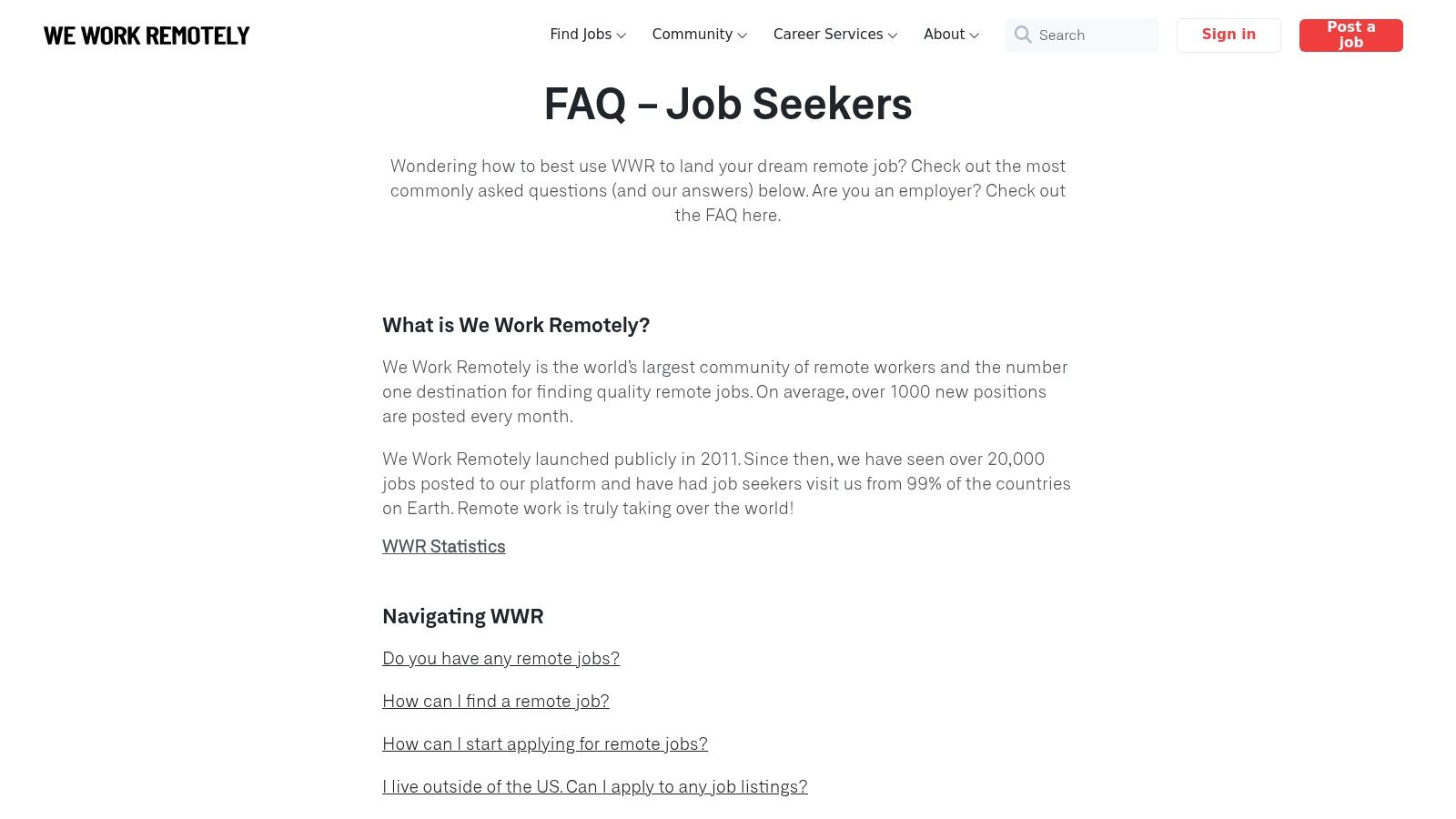
We Work Remotely

Key Features & Actionable Tips

  • Curated Categories: Don't just browse the main feed. Use the "Programming" and "DevOps and Sysadmin" categories to narrow your search. Set up email alerts for these specific categories to get new, relevant roles delivered to your inbox.
  • Verify Cross-Postings: Since employers pay to post, you can be sure the roles are active. However, always click through to the company’s official careers page to apply. This ensures you are following their preferred application process and can verify the role details directly.
  • Job Seeker Account: A job-seeker subscription is now required to view job details (pricing starts low for the first month, then moves to a monthly fee). Practical Strategy: Consider a short-term subscription during an active job search. Use that time to apply to all relevant roles, then cancel if you enter an interview-heavy phase.

Pros:

  • Exclusively remote jobs, saving significant search time.
  • High concentration of roles at product-focused companies.
  • Clean, simple interface without distracting features.

Cons:

  • Viewing full job details requires a paid job-seeker subscription.
  • Smaller volume of jobs compared to massive aggregators like LinkedIn.
  • Some listings are cross-posted from other platforms.

Website: https://weworkremotely.com/job-seeker-faq?utm_source=openai

12. Remote OK

Best For: Engineers who are exclusively seeking remote roles and want a high-velocity, real-time feed of opportunities.

Remote OK has carved out a niche as one of the most reliable and straightforward job boards dedicated entirely to remote work. Its no-frills, feed-style interface is designed for efficiency, presenting a constantly updated stream of software engineering jobs from around the globe. Unlike generalist sites, every listing is guaranteed to be remote, saving engineers the time of filtering out hybrid or on-site positions.

The platform's strength lies in its simplicity and powerful tagging system. It allows for quick filtering by technology stack, experience level, and even specific keywords like "4-day week," making the search process highly targeted. For those committed to finding the perfect remote software engineer job, Remote OK is an essential daily stop.

Remote OK

Key Features & Actionable Tips

  • Powerful Filtering and Alerts: Use the extensive tag system to zero in on roles matching your stack (e.g., react, python, devops). Set up free email alerts or an RSS feed for your specific search query to get a daily digest of new, relevant openings.
  • Verify Regional Restrictions: Pay close attention to tags like "USA Only" or "Europe Only." Before applying, confirm the company's time-zone requirements to ensure they align with your location and work preferences. This simple check can save you from applying to a role you aren't eligible for.
  • Go Beyond the Board: Remote OK links directly to company application pages. Treat it as a discovery engine, but complete your due diligence by researching the company on other platforms and tailoring your application on their native careers site.

Pros:

  • 100% focused on remote positions, eliminating noise.
  • Strong filtering and tag system for precise searches.
  • High volume of fresh, relevant postings from startups and tech companies.

Cons:

  • Not all listings provide salary information upfront.
  • As an open job board, you must vet each company and role independently.
  • Interface is functional but lacks the deep company insights of other platforms.

Website: https://remoteok.com

Top 12 Job Sites for Software Engineers — Comparison

Job Platform Comparison
Platform Target Audience Curation & Vetting User Experience / Quality Pricing & Value
Underdog.io Recommended Early-stage → Series B Engineers PMs & Designers Human-reviewed
~5% candidate acceptance; screens >50% of companies
60‑sec application; anonymous until mutual; 1–3 curated intros/month; direct to decision-makers Free for candidates
Success-based employer fees; optional contingent recruiting
LinkedIn Jobs Broad professionals Network-driven roles Algorithm + recruiter-posted
Varied vetting depending on employer
Massive reach; networking tools; Premium AI insights; high applicant volume on Easy Apply Free basic
Premium subscription for job seekers; employers pay for posts/recruiter tools
Indeed Broad job seekers All industries Aggregated listings
From many sources; sponsored duplicates possible
Powerful search filters; heavy competition; many one-click applications Free for candidates
Employers pay for sponsored listings
Glassdoor Research-focused Culture researchers Job listings + reviews
Paired with employee reviews and salary data
Useful compensation & culture context; interview insights; occasional UX friction Free for candidates
Employers pay for enhanced profiles/ads
Dice Tech-focused Software/Data/DevOps Tech-specific filters
Industry-focused listings
Good for targeted tech searches; needs well-optimized profile Free for candidates
Employers pay for targeted postings
Wellfound (AngelList) Venture-backed startups Early hires Startup-centric
Salary & equity shown upfront
Profile-based one-click apply; founder/recruiter outreach Free for candidates
Employers pay to post/recruit
Built In Tech hubs Local markets Curated city hubs
With editorial/company profiles
Localized discovery; salary ranges; strong employer insights Free for candidates
Employer-paid listings & branding packages
Levels.fyi Jobs Senior engineers FAANG-adjacent Compensation focus
Curated company-level data
Clear pay bands and level targets; low-noise browsing Free for candidates
Employer posting terms vary (often free)
Upwork (freelance) Freelancers Contractors Gig work Marketplace vetting
Via reputation (JSS) and client reviews
Escrow payments, proposal tools, high demand; platform fees apply Freelancers pay fees
Optional paid plans for visibility
Toptal Elite freelance Consultants Rigorous screening
Multi-step; highly selective
White-glove matching; higher-rate, long-term enterprise engagements Premium pricing
Talent earns higher average rates
We Work Remotely Remote-first roles US-time-zone teams Remote-only curated
Listings and categories
Strong remote feed; curated engineering section; some cross-posting Employers pay per post
Job-seeker subscription required (recently)
Remote OK Remote developers Global product teams Tag/filter-driven
Mixed vetting depending on employer
Fast, frequent postings; RSS/alerts; good filtering by tech/time zone Free for job seekers
Employers pay to post/top listings

Choosing the Right Platform for Your Career Goals

Navigating the landscape of job boards can feel overwhelming, but as we've explored, the key to a successful search isn't being everywhere at once. It's about being in the right places with a clear, strategic approach. The most effective job search is a targeted one, where you invest your time and energy on platforms that directly align with your professional ambitions.

The journey to finding the best job sites for software engineers starts with self-assessment. Are you a senior engineer targeting a leadership role at a FAANG company, or a mid-level developer eager to make a significant impact at a high-growth startup? Your answer drastically changes which platform should be your primary focus.

Synthesizing Your Strategy: From Broad Search to Targeted Applications

Let's distill the core insights from our list into a practical, actionable framework. Instead of treating these platforms as a simple checklist, think of them as specialized tools in your career toolkit. You wouldn't use a hammer to turn a screw, and you shouldn't use a generalist job board when you need a curated, specific set of opportunities.

Consider these final takeaways when building your job search plan:

  • For Curated Startup Access: If your goal is to join a vetted, high-growth startup and bypass the noise of traditional job boards, a marketplace like Underdog.io is your most efficient path. The curation saves you time and connects you directly with decision-makers at companies actively and urgently hiring.
  • For Corporate and Enterprise Roles: LinkedIn and Dice remain dominant for targeting large, established tech companies. Use LinkedIn's "Alumni" tool to find connections within a target company for a warm introduction. Use Dice's specific filters for roles requiring security clearance or experience with legacy enterprise systems.
  • For Salary and Compensation Data: No platform comes close to Levels.fyi for salary transparency. Use it not just to find jobs but to benchmark offers, understand compensation bands, and negotiate with confidence.
  • For Remote and Freelance Flexibility: If you're committed to a location-independent career, specialized boards like We Work Remotely and premium freelance platforms like Toptal are essential. They filter out the noise, presenting only opportunities that fit the remote-first or high-end contract lifestyle.

Beyond the Application: Optimizing Your Presence

Simply signing up is not enough. Your success on these platforms hinges on how you present yourself. A generic, one-size-fits-all profile will yield generic results. Invest the time to tailor your resume and profile for the 2-3 platforms you've chosen as your primary targets. Highlight projects and skills relevant to the types of companies featured on that site.

Furthermore, diving deeper into specific tooling, understanding the landscape of AI coding assistants can give you a significant edge. For a comprehensive look, check out the top GitHub Copilot alternatives for developers. Mastering these tools can be a powerful talking point in interviews and a significant productivity booster in your next role.

Ultimately, your job search is a project. It requires a plan, the right tools, and focused execution. By moving away from a high-volume, low-quality application strategy and toward a targeted, high-quality approach, you transform the process from a stressful grind into a confident step forward in your career. Select your platforms wisely, build a compelling profile, and engage meaningfully.

Ready to skip the endless scrolling and connect directly with innovative startups? Underdog.io provides a curated, personalized job search experience, matching you with top tech companies actively hiring software engineers. Create your free profile in minutes and let the best opportunities find you.
Looking for a great
startup job?

Join Free

Sign up for Ruff Notes

Underdog.io
Our biweekly curated tech and recruiting newsletter.
Thank you. You've been added to the Ruff Notes list.
Oops! Something went wrong while submitting the form.

Looking for a startup job?

Our single 60-second job application can connect you with hiring managers at the best startups and tech companies hiring in NYC, San Francisco and remote. They need your talent, and it's totally 100% free.
Apply Now