Joining the most heavily funded company isn't a career strategy. A startup can look impressive on a funding chart and still offer an engineer narrow ownership, exhausting incident work, or equity that's difficult to evaluate. The best startup is the one you can explain in an interview, including why its technical problems fit your experience and what you want to learn.
Start with the work itself: distributed systems, AI infrastructure, developer tools, fintech platforms, autonomy, or web deployment. Then compare team stage, location flexibility, compensation, equity terms, and the decisions you'd own. An exciting product doesn't automatically mean an exciting engineering role.
Choose the engineering problem before you choose the company logo.
The best startups for software engineers aren't interchangeable. Temporal, Replit, Together AI, Zipline, Ramp, Mercury, and Vercel are equally worthwhile options to investigate, but they appeal to different working preferences. Deep systems work, rapid product iteration, functional programming, hardware exposure, and developer impact each require a different shortlist.
Treat these companies as starting points for a two-way evaluation, not guaranteed openings or endorsements of every team. Confirm current vacancies, location requirements, and offer terms directly before investing heavily in interviews.
A payment workflow times out after an external service accepts the transaction. Should the application retry, wait, or compensate for an operation that already happened? That kind of ambiguity makes Temporal interesting for engineers who enjoy reasoning about failure rather than just implementing the successful path.
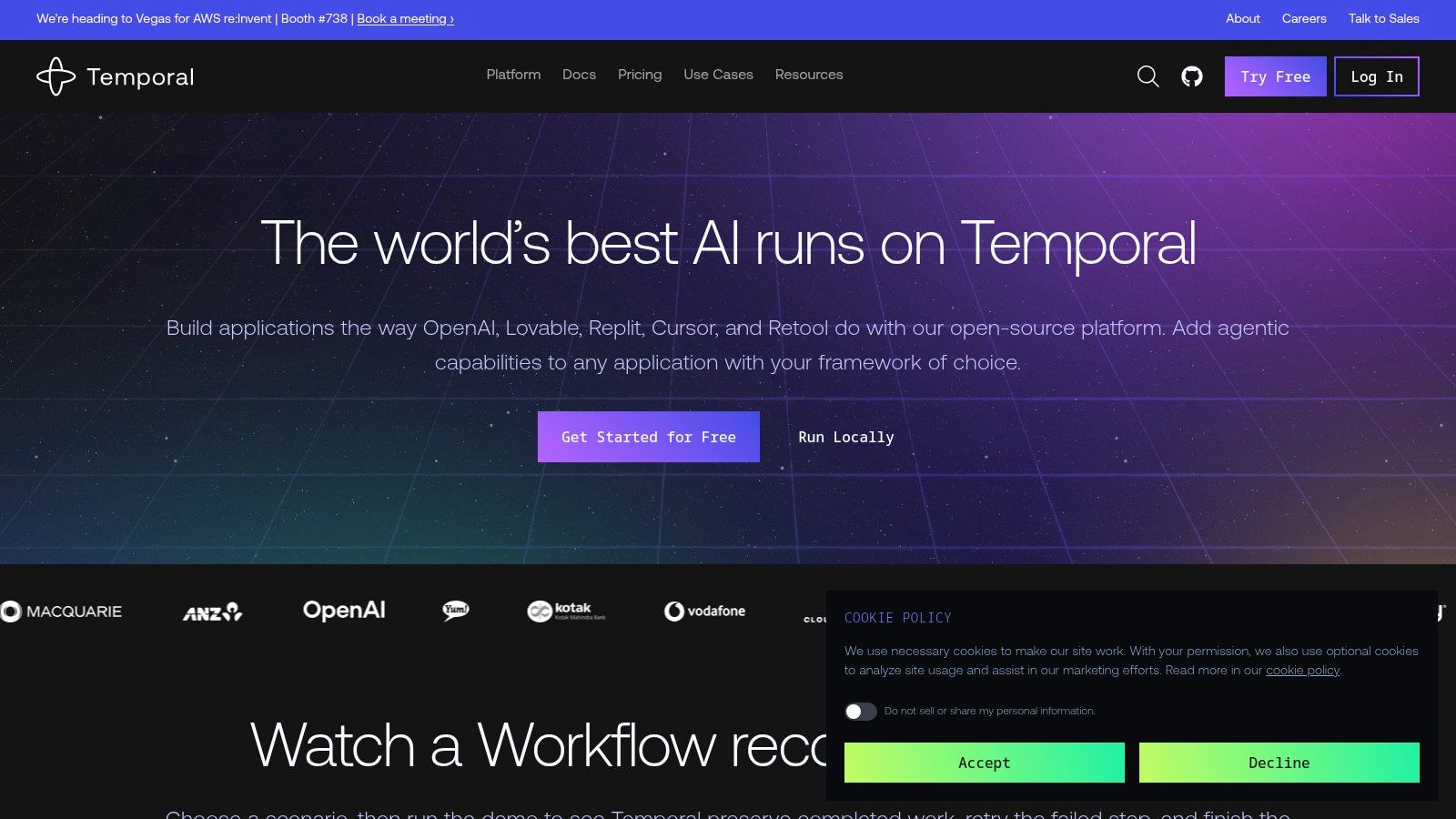
Temporal's durable-execution platform combines an open-source core with managed Temporal Cloud. Built by the creators of Uber Cadence, it supports SDKs including Go, Java, and TypeScript, with durable state, timeouts, heartbeats, and retries for long-running workflows.
The appeal is foundational distributed-systems and API-design work. Infrastructure used across industries also creates opportunities to understand how different customers model reliability, while an active open-source community exposes engineers to feedback beyond their immediate team.
The trade-off is conceptual depth. Workflow semantics and distributed guarantees can require substantial learning, and an open-source-plus-cloud business can involve enterprise support, migration questions, and customer-specific integration work.
A strong interview example isn't a service you built. It's a situation where you identified a failure mode, decided which guarantees mattered, and made recovery understandable to operators. Ask how the team reviews changes that could affect those guarantees and how much production responsibility comes with the role.
Replit suits engineers who want the distance between building a feature and seeing someone use it to be short. Its product spans the editor, application runtime, deployment experience, collaboration, and AI agents, so choosing the specific team matters more than choosing the platform in general.
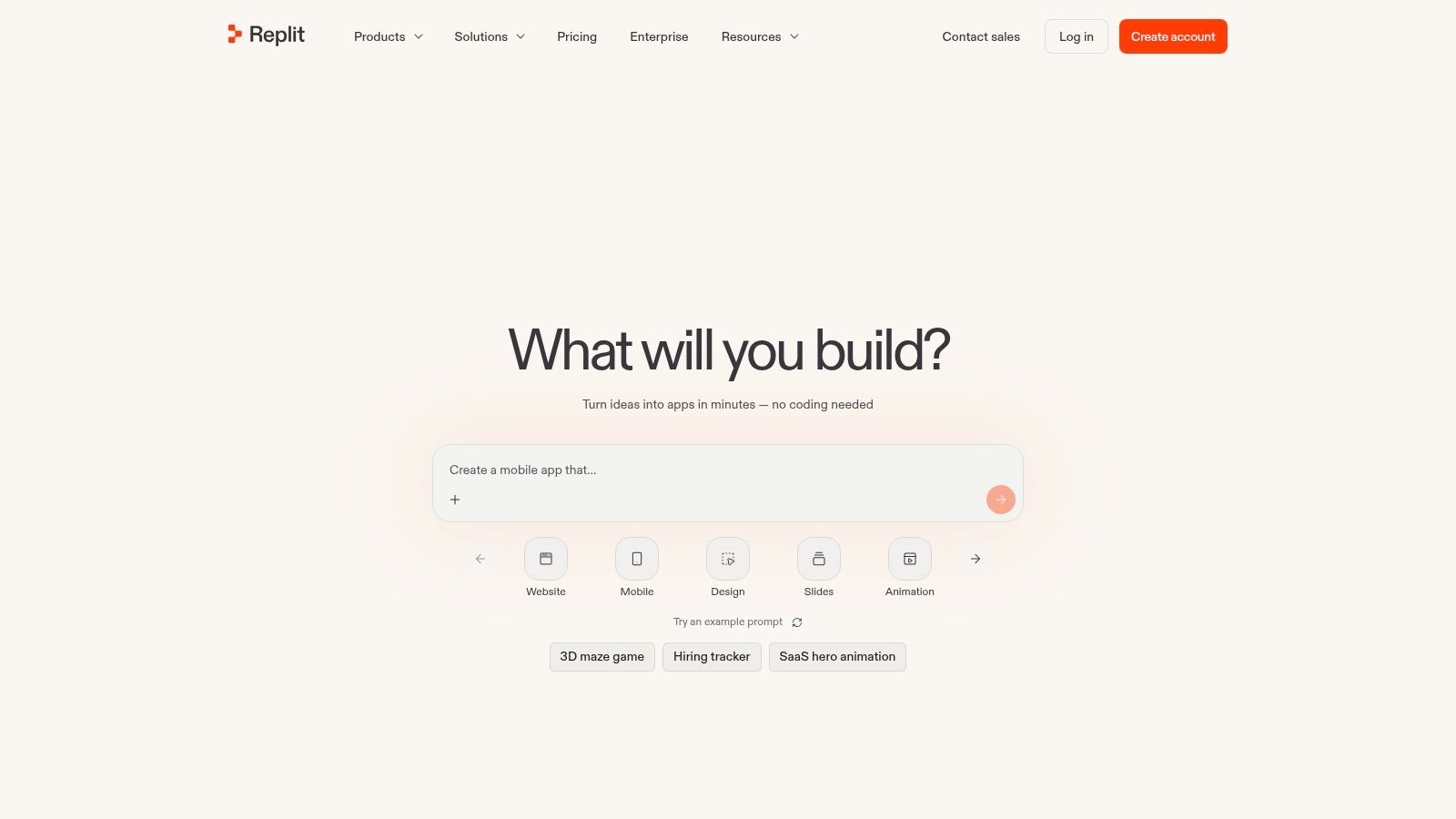
Replit's cloud development platform lets users code, run, and deploy applications in a browser, with collaborative development, one-click deployment, and enterprise features. Its audience includes learners, startups, and enterprises, creating different demands around usability, isolation, reliability, and administration.
The company's substantial funding and growth ambitions create room for product development, but candidates should investigate what those ambitions mean for delivery expectations. Replit sets explicit expectations for fast shipping, and multi-tenant, real-time infrastructure can involve performance pressure and demanding on-call work.
AI quality deserves particular attention. In Stack Overflow's developer survey, 45% of respondents say debugging AI-generated code can take more time than writing it manually, making verification a useful interview topic rather than an afterthought (Stack Overflow's AI workflow findings).
Interview lens: Ask what happens after an agent produces a plausible application, not just how quickly it produces one.
Prepare a project story that combines user experience with operational judgment. A browser-based collaboration feature, deployment pipeline, or isolated execution environment is useful material if you can explain permissions, failure handling, and monitoring.
For Foster City and San Francisco roles, establish the actual office cadence; some positions offer remote options. Also ask how the team balances shipping targets against maintenance, incident recovery, and time to improve the development platform itself.
An AI infrastructure role can mean optimizing inference, scheduling workloads, improving model APIs, or building developer-facing products. Together AI is worth investigating if you want those systems problems, but the title alone won't tell you which layer you'll own.
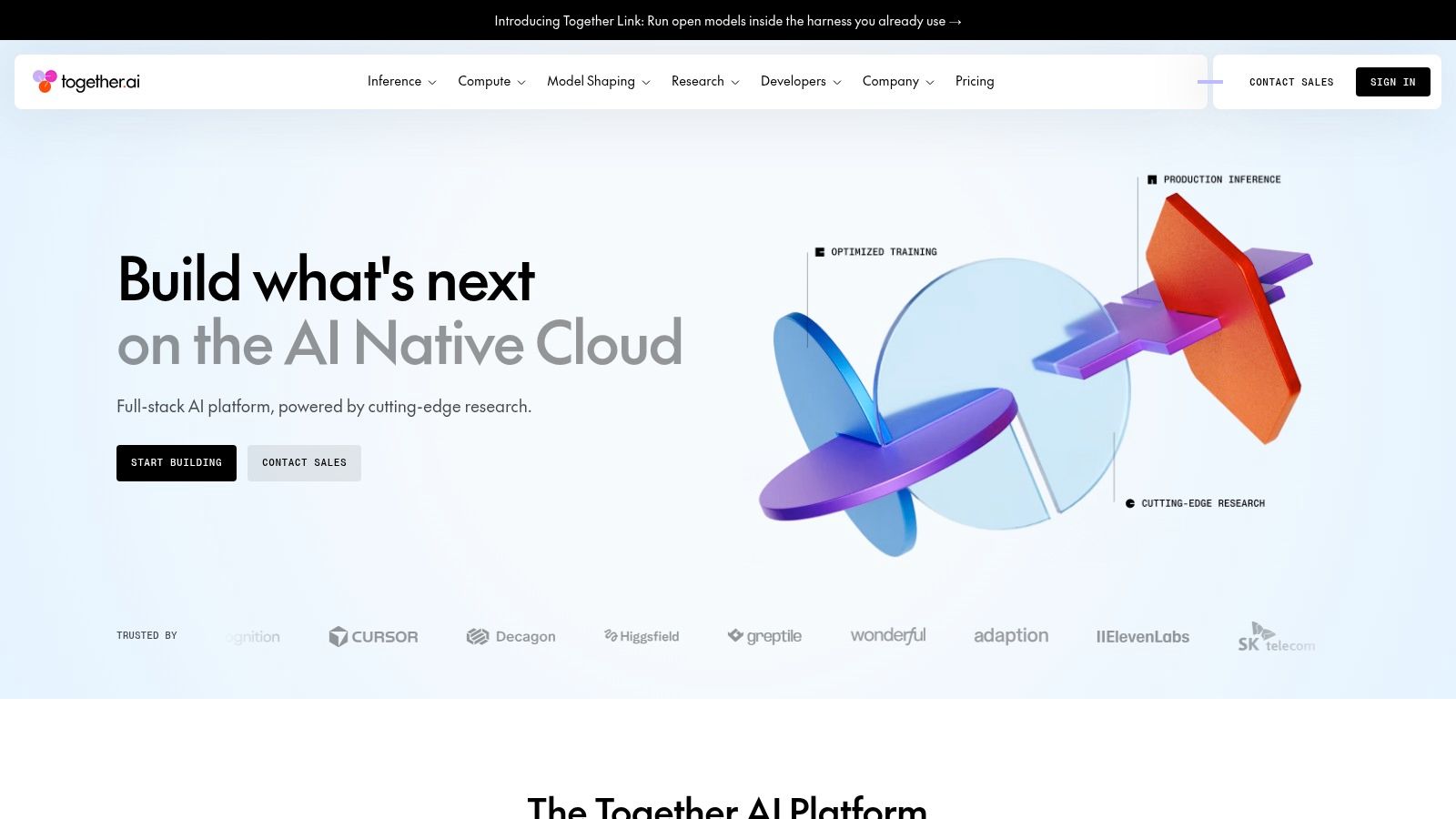
Together AI's infrastructure platform provides model training, inference, APIs, and developer tooling within an open-model ecosystem. Engineering opportunities span research, infrastructure, and product, with San Francisco and hybrid role options.
Together AI offers an opportunity to help shape open-model infrastructure. The downside is that priorities may shift as customers, models, and infrastructure requirements change. Operating production AI services against service-level targets can also create demanding on-call responsibilities.
Positive early employee sentiment is encouraging, but it isn't a substitute for a conversation with the team you'd join. Ask engineers what they've stopped working on, how priorities changed, and whether reliability improvements receive dedicated attention.
For interview preparation, explain a constrained resource-allocation problem you've handled. Describe the workload, bottleneck, scheduling decision, and validation method without implying experience you don't have.
Clarify whether the role expects existing accelerator or inference expertise, or whether strong distributed-systems experience is sufficient. Finally, verify hybrid attendance requirements and who owns incidents involving infrastructure, model behavior, and customer integrations.

Zipline offers something a web-only startup can't: software decisions that interact directly with aircraft, physical environments, and delivery operations. That's compelling for engineers who want tangible outcomes, but it also changes what responsible iteration looks like.
Zipline's autonomous delivery platform spans aircraft design and manufacturing, autonomy, logistics software, and operations. Its US expansion and Uber Eats delivery partnership sit alongside work in retail and healthcare delivery.
Engineers can investigate autonomy, embedded systems, platform engineering, and backend roles. Those tracks require different preparation: an autonomy discussion may focus on uncertainty and validation, while a backend discussion may center on delivery state, operational visibility, and reliable coordination.
The advantage is a close relationship between engineering and real-world operations. Engineers can learn whether a design works outside a controlled development environment, rather than relying only on application telemetry.
A slower release can be the right engineering decision when failure affects physical operations.
Regulated airspace and safety requirements can slow iteration, and many hardware or embedded positions require on-site work. That isn't automatically a disadvantage, but it should be compatible with your preferred working model before you begin the interview process.
Ask how the team moves from simulation to controlled testing and operational deployment. Investigate how software engineers collaborate with hardware specialists and operators, and who can stop a release when evidence is incomplete.
Prepare an example involving verification under constraints. Explain how you handled uncertain inputs, diagnosed an operational failure, or designed a safe fallback. Engineers coming from conventional SaaS should explicitly connect their reliability experience to the role without treating aircraft software as just another backend service.
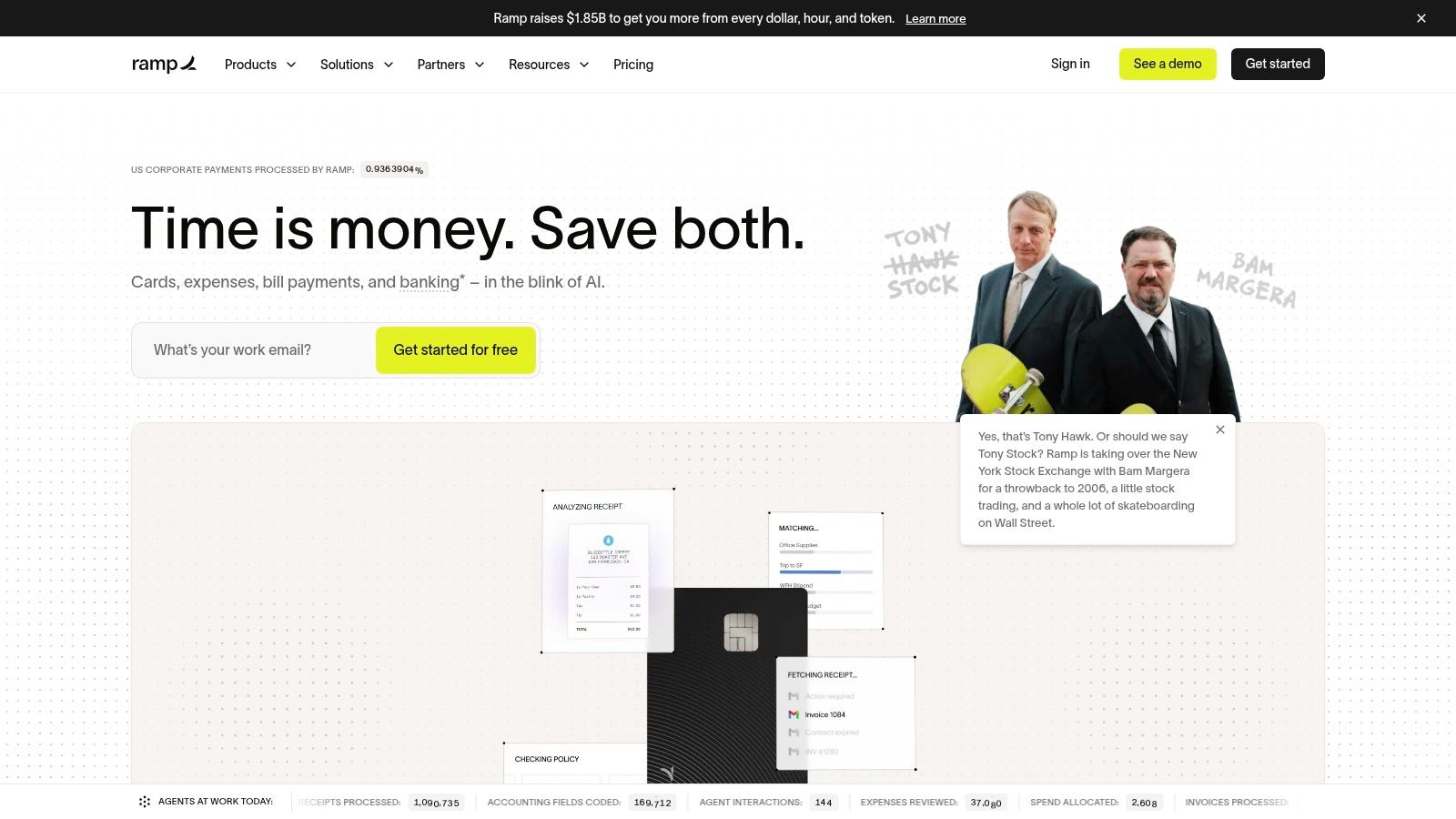
Ramp is a strong candidate for engineers who like product breadth but don't want to leave correctness behind. Financial workflows require decisions about permissions, reconciliation, integrations, and failure recovery, not just polished interfaces.
Ramp's spend-management platform covers corporate cards, bill pay, reimbursements, travel, procurement, and accounts payable and receivable. Policy automation, multi-currency capabilities, and AI-powered workflows create opportunities across infrastructure, production engineering, data, and platform teams.
Fast deployment isn't enough by itself. A GitLab survey found that 82% of respondents deploy to production at least weekly, while 60% use more than five software-development tools, a useful reminder to investigate workflow coherence rather than tool count (GitLab's DevSecOps survey findings).
Ask how Ramp's prospective team handles integration failures, duplicate requests, authorization changes, and reconciliation. Financial regulation can introduce additional process and quality requirements, so establish which decisions engineers can make independently and which need broader review.
For interview preparation, bring a project involving sensitive data, transactional correctness, or external dependencies. Explain how you distinguished a recoverable failure from an ambiguous outcome. Then ask how the team allocates time between new financial products, reliability, and technical debt.
For an engineer interested in functional programming, Mercury deserves a closer look than a generic fintech employer. Its Haskell-first backend makes language and type-system choices part of the company's engineering identity.
Mercury's business financial platform provides banking services for startups and modern businesses through its banking partnerships, alongside cards, treasury, and payments products. Its backend makes extensive use of Haskell across millions of lines of code, creating a substantial environment for correctness-critical financial engineering.
The appeal is rigorous functional-programming practice applied to financial systems rather than isolated language experimentation. Engineers interested in type safety, explicit domain modeling, and careful handling of side effects may find that combination particularly attractive.
The learning curve matters. If you're new to Haskell, ask whether the team evaluates general engineering judgment or expects immediate fluency, and how onboarding supports the transition. Banking partnerships and regulation can also slow change management even when an implementation is technically straightforward.
Career-stage fit deserves investigation: internship and early-career opportunities sit alongside senior roles. Don't assume an opening provides mentorship because the company hires less-experienced engineers elsewhere.
Mercury is most compelling when the actual role offers the engineering practices you want to develop. Ask for an example of a recent design disagreement and how the team resolved it, particularly when correctness, delivery speed, and integration constraints pointed in different directions.
Vercel appeals to engineers who care about the developer experience from local change to production deployment. The interesting work isn't limited to frontend features: runtimes, networking, release tooling, and observability all shape whether developers can ship confidently.
Vercel's web deployment platform combines global edge and serverless infrastructure with preview deployments, rollbacks, and observability. As the creator and steward of Next.js, it also offers framework-facing work alongside an expanding AI toolchain that includes AI SDK and agent workflows.
The upside is influence over a widely used web development stack, with varied engineering challenges across infrastructure and developer tools. The trade-off is operational intensity: major framework releases can create demanding platform work, and fast pace and high expectations may mean long hours on some teams.
Use software engineering job opportunities to compare role scope rather than assuming every developer-platform opening involves the same work. Framework maintenance, runtime engineering, and AI application tooling call for different evidence of fit.
Remote policy is another practical screen. HackerRank reports that 79% of developers prefer hybrid or remote work, but preference alone doesn't establish how a specific team operates (HackerRank's Developer Skills Report).
Ask about geographic eligibility, overlap hours, release coordination, and whether remote engineers have equal access to ownership and promotion. Prepare a project example involving deployment safety, caching, runtime behavior, or developer tooling.
A polished application demo can help, but explain what happens when deployment fails or a release introduces incompatible behavior. That demonstrates platform judgment rather than familiarity with Next.js alone.
| Company | Engineering Complexity | Resource and Skill Focus | Expected Outcomes | Ideal Fit and Key Advantages |
|---|---|---|---|---|
| Temporal | High; durable workflows and distributed-systems guarantees | Distributed systems, APIs, workflow SDKs, reliability engineering | Reliable long-running workflows with retries and durable state | Engineers interested in foundational infrastructure, open source, and cross-industry use |
| Replit | High; fast-moving product with multi-tenant, real-time systems | Cloud runtimes, editor tools, collaboration, AI, infrastructure | Browser-based coding, collaboration, and application deployment | Engineers seeking broad product scope and work across AI, infrastructure, and developer tools |
| Together AI | High; production model serving and compute infrastructure | AI systems, inference, cluster scheduling, APIs, developer tooling | Model training and inference services for AI applications | Engineers interested in open-model infrastructure and a rapidly evolving AI ecosystem |
| Zipline | High; software integrated with autonomous hardware and safety requirements | Robotics, autonomy, embedded systems, logistics, backend systems | Physical delivery operations with real-world feedback and impact | Engineers motivated by mission-driven work combining hardware, software, and operations |
| Ramp | High; large-scale financial products with regulatory requirements | Fintech, data, infrastructure, security, compliance, AI workflows | Automated corporate spending, payments, and procurement processes | Engineers seeking high-throughput financial systems and a broad product surface |
| Mercury | High; correctness-critical banking systems and a specialized backend | Haskell, functional programming, payments, banking, type safety | Banking, cards, treasury, and payment services for businesses | Engineers who value rigorous functional programming and financial-system correctness |
| Vercel | High; global web infrastructure and fast-paced platform operations | Edge and serverless systems, networking, developer experience, AI tools | Web application deployment and tooling for modern development workflows | Engineers interested in Next.js, global infrastructure, and developer-facing products |
Choose two or three companies based on technical fit, then investigate the specific team before applying. Temporal and Together AI may appeal to systems specialists; Replit and Vercel offer developer-product breadth; Ramp and Mercury emphasize financial workflows; Zipline connects software to physical operations. These are starting hypotheses, not substitutes for reading the role.
Map your experience to the problems the team is likely to own. Prepare a concrete project example covering the original constraint, your decision, the alternative you rejected, and how you verified the result. Use genuine outcomes from your work, not impressive numbers you can't defend.
Ask about engineering scope, on-call expectations, cash compensation, equity, location policy, and the company's next hiring milestone. Connect hiring plans to product milestones, paying customers, and financing rather than treating an expanding team as proof of stability.
Equity needs terms, not just a headline value. A common arrangement uses four-year vesting with a one-year cliff, with 25% vesting at the cliff and the remainder generally vesting monthly afterward, subject to the plan's terms (Carta's share-option guidance). Request the option count, fully diluted share count, exercise price, vesting start date, departure exercise window, and acceleration provisions.
Engineers seeking a confidential, low-volume search can use Underdog.io's curated marketplace to discover vetted early-stage and high-growth opportunities in New York City, San Francisco, and across the US. A selective introduction still requires your own due diligence; it doesn't guarantee that any company in this shortlist has a matching opening.
Treat every conversation as a two-way evaluation. The right startup should offer work you want to own, risks you understand, and operating conditions you can sustain.
Underdog.io connects tech candidates with vetted startups and high-growth companies through a single application and selective introductions. Visit Underdog.io to share your engineering experience, preferred technical problems, and location requirements so you can explore relevant startup opportunities without relying solely on broad job-board searches.