The phrase 'best startups to work for' means something different to everyone. For some, it’s about groundbreaking tech and massive equity upside. For others, it’s about a mission-driven culture and a close-knit team. But beneath the hype, the real challenge is navigating the noise to find a role that truly aligns with your career goals, financial needs, and work-life philosophy. This guide cuts through the generic advice to provide a practical framework for your job search.
We've curated a list of the most effective platforms to help you identify, vet, and land a job at a top-tier startup, whether you're looking in NYC, San Francisco, or for a remote-first opportunity. Instead of just listing popular companies, we focus on how to use these tools to uncover the actionable insights you actually need. We'll show you where to find critical data on funding stability, cultural signals, equity transparency, and leadership quality.
This roundup is designed for engineers, product managers, designers, and other tech professionals ready for their next move at a high-growth company. Each platform review includes specific details, screenshots, and direct links to help you evaluate which tools are the right fit for your search. Our goal is to equip you with the resources to look beyond the surface-level perks and find the best startups to work for you, where your contributions will have a significant impact and you can genuinely thrive. Let's get started.
For candidates serious about finding a role at one of the best startups to work for, Underdog.io offers a fundamentally different approach. It’s a curated talent marketplace designed to reverse the traditional job search dynamic. Instead of applying to countless companies, you complete a single 60-second application, and vetted startups apply to you. This model is exceptionally well-suited for passive, experienced tech talent who value discretion and efficiency.
Underdog.io distinguishes itself by prioritizing quality over quantity, a philosophy that benefits both candidates and employers. It’s a human-powered platform, meaning real recruiters, not just algorithms, review every candidate profile and company application. This hands-on curation ensures that the opportunities presented are highly relevant and meet stringent criteria for funding, team quality, and product viability.
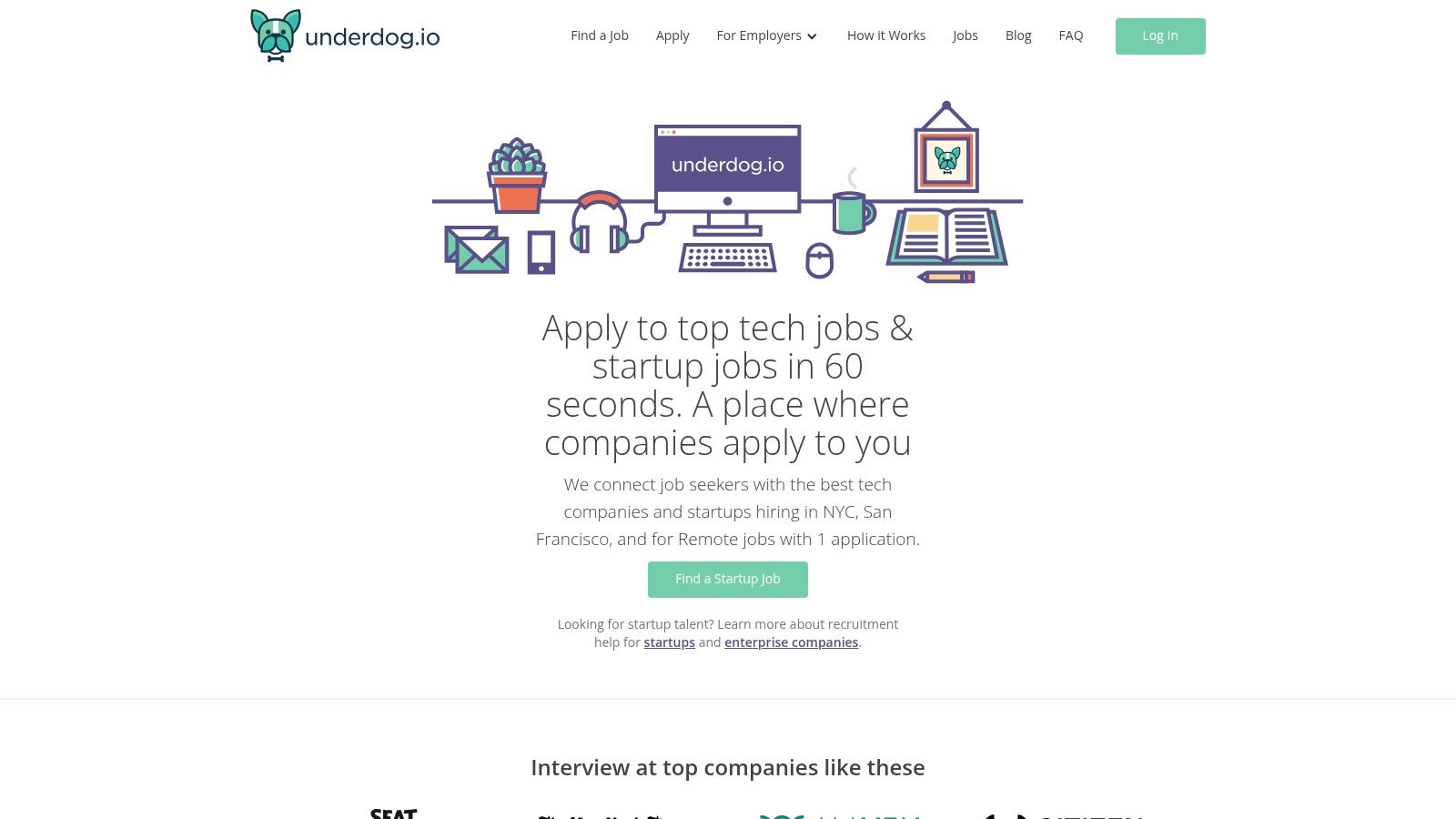
The platform’s core strength lies in its candidate-first model. Your profile remains anonymous until you express mutual interest in a company that has reached out. This protects your privacy, which is critical if you are currently employed. For candidates, the service is completely free. Underdog.io’s revenue comes from success-based hiring fees paid by the companies, aligning their incentives with making successful, long-term matches.
This focus on quality is rigorous. The platform is highly selective for both sides of the marketplace:
Actionable Insight: Frame your Underdog.io profile to highlight specific, quantifiable achievements. Since human recruiters review it, a narrative focused on impact (e.g., "Led a team of 3 to refactor our checkout API, reducing latency by 150ms and cutting cart abandonment by 12%") will perform much better than a generic list of skills like "JavaScript, React, Node.js."
While its high selectivity can be a barrier for entry-level candidates, for experienced tech professionals in product, engineering, design, and data, Underdog.io is an unparalleled tool for accessing top-tier startup roles with minimal effort and maximum discretion.
Website: https://underdog.io
Website: https://wellfound.com
Wellfound, the platform that evolved from AngelList Talent, is an essential resource for anyone serious about finding a role at the best startups to work for. It has carved out a niche as the premier job marketplace dedicated exclusively to the startup ecosystem, from early-stage ventures just finding their footing to rapidly scaling, later-stage companies. Its core value proposition is transparency, cutting through the noise of traditional job boards by putting salary and equity data front and center.
For job seekers, Wellfound’s interface is designed for efficient, targeted searching. You can filter opportunities by role, location (including a robust selection of remote-first and remote-friendly roles), company stage, funding amount, and even specific tech stacks. This granular control allows candidates to zero in on startups that precisely match their career goals and risk tolerance.
What truly sets Wellfound apart is its commitment to transparency. Nearly every listing includes a clear salary and equity range, a non-negotiable feature for many tech professionals today. This eliminates the guesswork and prolonged back-and-forth negotiations that often bog down the hiring process, ensuring you only spend time on opportunities that align with your financial expectations.
The platform also facilitates direct lines of communication. Instead of submitting your resume into a corporate black hole, Wellfound often connects you directly with founders, hiring managers, and key team members. This direct access provides a much clearer view into a company’s culture and vision.
Actionable Tip: Enhance your Wellfound profile with a detailed "About Me" section that shows, not just tells. Instead of saying you're a "team player," describe a specific project where you collaborated with design and product to ship a feature under a tight deadline. Hiring managers look for evidence of startup-compatible behaviors.
To make the most of the platform, candidates should leverage its unique features:
For job seekers, Wellfound is free to use. Employers, however, have access to paid tiers (Recruit Pro, Curated) that provide advanced sourcing tools and greater visibility, meaning companies that invest in these tiers are often more serious about hiring. This structure makes Wellfound a high-signal, indispensable tool for anyone navigating the dynamic landscape of startup employment.
Website: https://www.workatastartup.com
Y Combinator's "Work at a Startup" platform is a direct pipeline into one of the most prestigious and influential startup ecosystems in the world. This job board isn't just a list of random companies; it's a curated collection of roles exclusively from YC-backed ventures. This built-in vetting process means that every company listed has met YC's rigorous standards, giving job seekers a powerful signal of quality, potential, and ambition right from the start.
The platform is designed to connect talented individuals with a wide range of YC alumni, from fledgling seed-stage teams building their MVP to more established, fast-growing companies that have graduated to Series A and beyond. It serves as a centralized hub, making it one of the most efficient ways to explore opportunities within the YC network, a community known for producing some of the tech industry's biggest success stories.

The primary advantage of "Work at a Startup" is the trust signal associated with the Y Combinator brand. Getting into YC is incredibly competitive, so the companies on this platform have already passed a significant diligence check. This curation saves you time and reduces the risk of joining a venture with a weak foundation or a questionable business model.
Furthermore, the platform is built for speed and direct access. Founders and early employees are highly active, often reaching out to candidates directly. This creates a more personal and streamlined hiring experience compared to navigating complex HR systems at larger companies. The focus is on matching talent with the right high-growth environment, making it an essential resource for those looking for the best startups to work for.
Actionable Tip: On your profile, don't just list your skills. Frame them in the context of early-stage challenges. For example, instead of "proficient in AWS," write "experience building and deploying a scalable backend on AWS from scratch for a product with 0 to 100,000 users." YC founders look for this "builder" DNA.
To maximize your chances of landing a role through the platform, make full use of its unique functionality:
The "Work at a Startup" platform is completely free for job seekers. Its value lies in providing exclusive access to a vetted, high-potential pool of startups. While it's limited to the YC ecosystem, the quality and breadth of companies within that network make it a top-tier destination for anyone serious about joining an ambitious, early-stage venture.
Website: https://builtin.com
Built In operates as more than just a job board; it's a comprehensive tech community and news hub that provides invaluable context for anyone looking for the best startups to work for. It combines a powerful job search engine with rich editorial content and curated annual "Best Places to Work" lists, making it a premier destination for discovering and vetting opportunities in major U.S. tech hubs and remote-first environments. Its unique value is its blend of discovery and direct application, allowing you to read about a rising star startup and apply for a role there in one seamless experience.
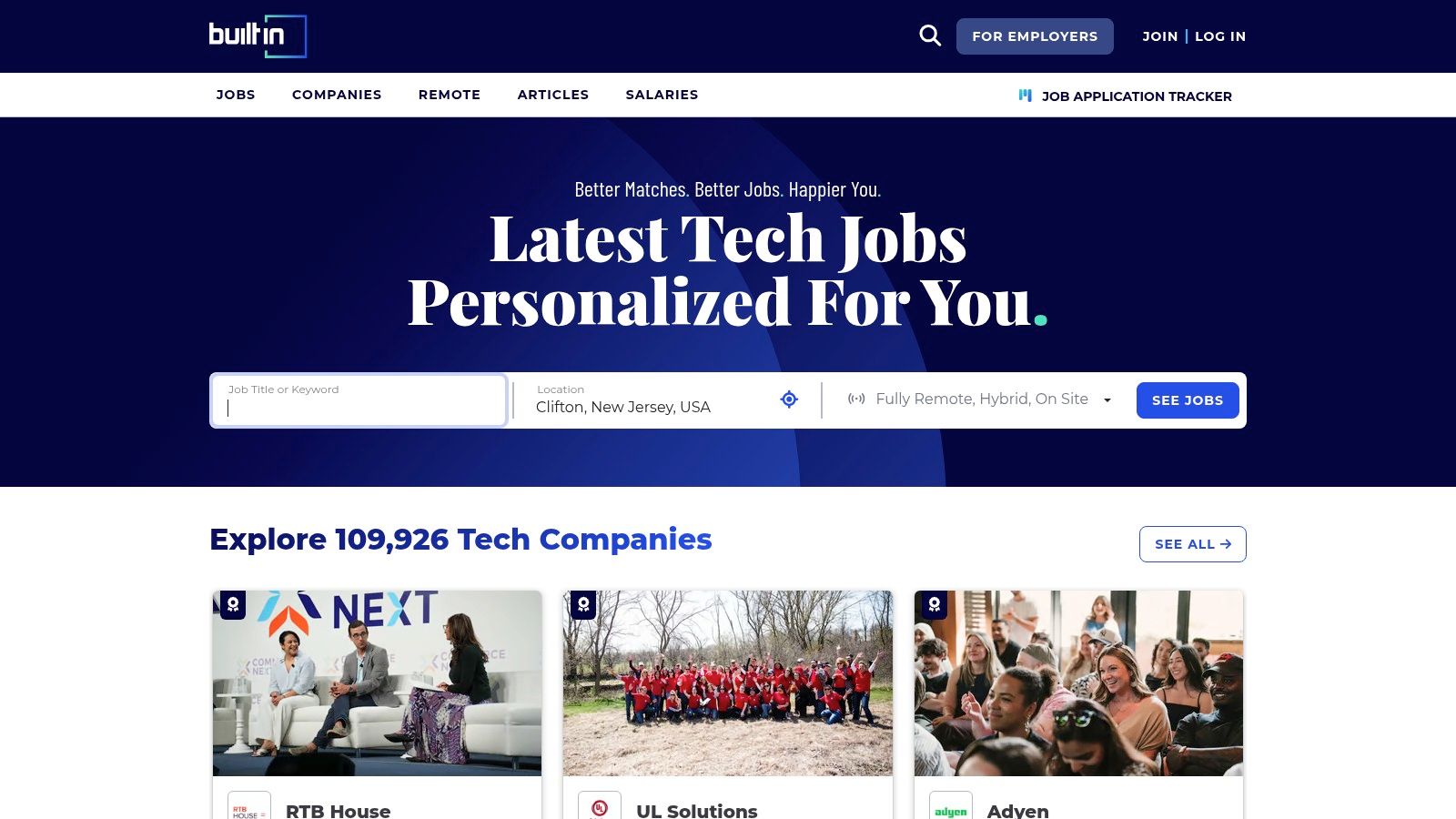
For job seekers, Built In provides localized content for markets like NYC, SF, Austin, and Chicago, alongside a national platform for remote roles. You can filter by company size, tech stack, industry, and funding stage, giving you granular control over your search. This local-plus-national focus helps candidates find companies that are not only a great career fit but also a strong cultural fit for their preferred location or work style.
What truly distinguishes Built In is its annual "Best Places to Work" awards. These lists, which include categories like "Best Startups to Work For" and "Best Remote Companies," are data-driven and based on employer-provided information about compensation, benefits, and culture. This provides a vetted, third-party signal that can help you quickly identify top-tier employers, cutting through the self-promotion common on other platforms.
The platform also provides a deep dive into company culture through detailed profiles. These often go beyond job descriptions to showcase a company's mission, values, diversity and inclusion initiatives, and employee perks. This holistic view is crucial for evaluating if a startup's environment aligns with your personal and professional priorities. If you're looking for a Built In alternative that offers a more curated and personalized job matching experience, consider exploring other specialized platforms.
Actionable Tip: Use the "Best Places to Work" lists as a prospecting tool. Go to the list for your target city, sort by "1-100 Employees" to find early-stage startups, and open the profiles of the top 10 companies in new tabs. Systematically review their open roles and company mission to quickly build a high-quality application list.
To maximize your search on Built In, focus on its distinct features:
Built In is free for job seekers. Companies pay for enhanced profiles and job listings, which means the startups actively recruiting on the platform are serious about their hiring efforts and investing in attracting top talent. This dual-focus on content and jobs makes Built In an indispensable resource for both discovering and landing a role at a leading startup.
Website: https://www.linkedin.com
While LinkedIn is a behemoth in the professional world, its annual "Top Startups" list offers a focused, data-driven lens for anyone looking for the best startups to work for. This curated ranking isn't based on opinion but on hard data, analyzing factors like employee growth, jobseeker interest, and the ability to attract top talent from major companies. It effectively serves as a pre-vetted list of high-momentum ventures, directly integrated with LinkedIn's massive job board and professional network.
For job seekers, the value is twofold. First, the list itself provides a reliable signal of which startups are gaining significant traction and scaling their teams. Second, each company profile on the list links directly to its open roles and current employees, creating a seamless path from discovery to application and networking. This integration transforms a simple ranking into a powerful and actionable job-seeking tool.
LinkedIn’s primary advantage is its sheer scale combined with a data-backed curation process. Unlike niche boards, LinkedIn's Top Startups list leverages billions of data points to identify companies with proven momentum. This gives you a high-confidence starting point, backed by evidence of growth and talent magnetism.
The platform's unparalleled networking capabilities are also a key differentiator. After identifying a promising startup from the list, you can immediately research its team, find connections who work there, and reach out for informational interviews. This ability to warm up a lead before applying is a significant advantage over applying cold through other platforms. If you are a recruiter looking for an alternative, you can learn more about LinkedIn Recruiter alternatives to find other powerful sourcing tools.
Actionable Tip: Don't just apply. Create a "warm intro" workflow. 1) Find a promising company on the Top Startups list. 2) Identify the hiring manager or a potential teammate for the role you want. 3) Find a 2nd-degree connection you have in common. 4) Ask your mutual connection for a brief, positive introduction. This can increase your response rate by over 5x.
To maximize LinkedIn for your startup job search, focus on these integrated features:
While the core lists and job search are free, some advanced features like seeing all profile viewers or detailed applicant insights require a Premium subscription. However, even with a free account, the combination of the data-backed Top Startups list and the platform’s powerful networking tools makes LinkedIn an indispensable resource for any serious startup job seeker.
Website: https://www.glassdoor.com
While not a startup-exclusive job board, Glassdoor is an indispensable due-diligence tool for anyone evaluating the best startups to work for. It provides a transparent, employee-powered look behind the curtain, offering unfiltered reviews, salary data, and interview insights that a company's career page will never show you. This makes it a critical resource for validating a startup's culture, leadership, and overall health before you invest time in the application process.
For job seekers, Glassdoor's value lies in its crowdsourced data. You can access detailed company profiles that include an overall rating and specific scores for categories like Culture & Values, Work/Life Balance, and Senior Management. This allows you to cross-reference the exciting mission statement on a startup’s website with the day-to-day reality experienced by current and former employees, a crucial step when assessing early-stage companies where culture is paramount.
What sets Glassdoor apart is its role as a truth serum for the startup ecosystem. Startups are adept at selling a vision, but Glassdoor provides the social proof (or lack thereof) to back it up. Its annual "Best Places to Work" awards, which include a list for Small & Medium Companies, are particularly valuable. These lists are based entirely on employee feedback, often highlighting high-growth startups with genuinely outstanding cultures that might otherwise fly under the radar.
The platform helps you move beyond the hype and evaluate a startup based on real experiences. Reading through interview reviews can reveal the types of questions asked, the difficulty of the process, and how candidates were treated, giving you a significant advantage in your preparation.
Actionable Tip: Don't just look at the overall rating. Search reviews for specific keywords related to your concerns. For example, search for terms like "burnout," "micromanagement," "pivot," or "runway" to surface potential red flags. Conversely, search for "mentorship," "autonomy," and "growth" to find positive signals.
To effectively vet a startup on Glassdoor, focus on these features:
Glassdoor is free for job seekers, typically requiring you to contribute an anonymous review or salary data point of your own to gain full access. This give-to-get model ensures a continuous flow of fresh data. While reviews for very small, early-stage startups can be sparse, for Series A and beyond, Glassdoor is an essential platform for making an informed career decision.
Website: https://www.crunchbase.com
While not a job board, Crunchbase is an indispensable intelligence tool for anyone serious about vetting the best startups to work for. It’s a comprehensive database that tracks the startup ecosystem, providing critical data on funding rounds, investors, leadership teams, and overall growth signals. Think of it as your private detective, helping you look behind the curtain of a startup's pitch to see the objective financial and operational reality before you apply or accept an offer.

For job seekers, Crunchbase answers crucial questions: How much runway does this company have? Are they backed by reputable investors? Have they been growing their team? This information empowers you to assess a startup's stability, growth trajectory, and the potential value of its equity offer, moving beyond the company’s own marketing and into hard data.
What makes Crunchbase essential is its role as a source of objective truth. While a startup’s career page will highlight its mission and perks, Crunchbase provides the raw data to validate its claims of momentum and stability. You can see exactly when they last raised money, who their key investors are (a strong signal of quality), and if there have been any recent leadership changes.
This data is invaluable for comparing multiple opportunities. A Series A startup with $15M from a top-tier VC like Andreessen Horowitz presents a different risk profile than one with $3M from a less-known fund. This platform helps you make an informed, data-driven career decision, not just an emotional one.
Actionable Tip: Before an interview, use Crunchbase to formulate intelligent questions. For example: "I saw on Crunchbase you raised your Series B about 18 months ago. What key milestones have you hit since then that will be important for your next fundraise?" This shows you're a strategic thinker, not just a candidate for a job.
To make the most of the platform, candidates should focus on these analytical features:
The core data on Crunchbase is free to access. However, advanced features like saved lists, alerts for specific companies, and deeper search filters are part of the paid "Pro" tier. For a dedicated job search, the free version provides more than enough information to vet your top choices effectively.
We've explored a powerful toolkit for finding the best startups to work for, from curated marketplaces like Underdog.io and Wellfound to comprehensive databases like Crunchbase and Built In. But simply knowing the tools isn't the finish line; it’s the starting block. The true value lies in how you synthesize the information from these platforms to create a personalized, strategic, and highly effective job search.
The concept of a "best" startup is deeply personal. Your ideal role won't be found on a generic, one-size-fits-all list. It will be discovered at the intersection of your unique career goals, cultural preferences, and risk tolerance. The platforms we've covered are the raw materials; your critical evaluation is the craftsmanship that builds a career-defining opportunity.
Instead of browsing aimlessly, approach your search with a system. The key is to layer insights from different sources to build a complete, multi-dimensional picture of each potential employer. This prevents you from being swayed by a slick careers page or a single glowing review.
Here’s a step-by-step workflow you can adopt:
This multi-platform strategy transforms you from a passive applicant into a proactive career architect. You're no longer just looking for a job; you're identifying and targeting the specific environments where you can do your best work and achieve your professional goals. The ultimate list of the best startups to work for is the one you build for yourself, grounded in data, validated by social proof, and aligned with your personal definition of success.
Ready to move from research to results? Instead of just reading about the best startups to work for, let them come to you. Create your free profile on Underdog.io in minutes, and get privately matched with hiring managers at hundreds of venture-backed tech companies actively looking for talent like you.