In the hyper-competitive tech landscape, the battle for top talent is won or lost on the candidate experience. For startups, where every hire is critical, a clunky, impersonal, or opaque hiring process isn't just a minor inconvenience; it's an existential threat. Top engineers, designers, and product managers have endless options. A poor experience is the fastest way to push them toward your competitors. But what does a truly exceptional process look like? It’s more than just polite emails and quick responses. It’s about building a system that respects a candidate's time, provides genuine transparency, and treats them like a valued partner from the very first click.
This guide moves beyond generic advice to provide actionable checklists, practical implementation tips, and real-world examples to help you build a hiring engine that doesn't just fill roles, but elevates your employer brand with every single interaction. We will break down 10 essential candidate experience best practices tailored specifically for high-growth companies. From streamlining the initial application to establishing clear communication norms, these strategies are designed for immediate impact.
Moreover, a great process adapts to the specific talent you're seeking. For specific roles prevalent in the startup world, such as no-code developers, understanding effective interview strategies for No-Code Developers is key to identifying top talent and enhancing the overall candidate experience. This comprehensive checklist will equip you with the tools to create a hiring process that attracts, engages, and ultimately wins the talent you need to scale. Let’s dive into the practices that will transform your approach and ensure your next great hire doesn't slip away.
The first interaction a potential hire has with your company is often the job application. A cumbersome, multi-page form is the fastest way to lose top talent, especially passive candidates who have little patience for friction. A streamlined, single-step application process is a critical candidate experience best practice that respects their time and significantly boosts completion rates. Think of your careers page as a landing page; every field you add is a reason for a candidate to drop off, similar to how web developers learn how to improve website conversion rate for business success.
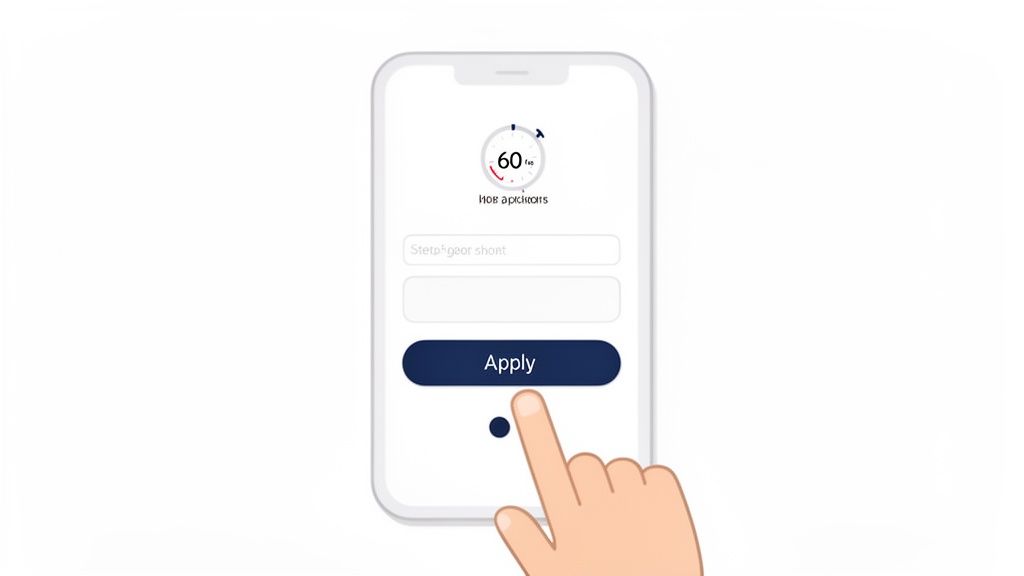
The goal is to create a form that can be completed in under two minutes, gathering only the most essential information needed for an initial screening. Companies like Underdog.io have perfected this with their 60-second application model, demonstrating that brevity can attract high-quality candidates without sacrificing crucial data. An actionable example: instead of asking for a full address, simply ask for "City, State" to gauge location. The rest can be collected later during onboarding.
In an era dominated by keyword-matching algorithms, one of the most impactful candidate experience best practices is reintroducing the human element. Instead of relying on automated systems that screen out a great software engineer because their resume says "React" instead of "React.js," a human-curated process ensures candidates receive opportunities that are genuinely aligned with their skills, career goals, and cultural preferences. This approach replaces high-volume, low-relevance outreach with thoughtful, selective introductions, building trust from the very first interaction.
This high-touch model treats candidates as individuals, not just data points. Platforms like Underdog.io have pioneered this by having real specialists review candidate profiles and hand-select a small number of highly relevant startup roles. A practical example: a human reviewer can understand that a candidate's side project building a mobile game in Swift shows strong iOS aptitude, even if their professional experience is in a different language. You can learn more about how Underdog.io approaches curated job matching to deliver a superior candidate experience.
The most sought-after talent is often already employed and not actively looking. For these passive candidates, the biggest barrier to exploring opportunities is the fear of their current employer finding out. Providing a hiring process built on anonymity is a powerful candidate experience best practice that removes this risk, creating the psychological safety needed for top-tier professionals to engage. A practical example: a senior manager at a large tech company won't apply on a public job board but will engage through a confidential platform where their profile isn't visible to their current employer.

This method involves keeping a candidate's profile and identifying information completely confidential until they explicitly approve sharing it with a specific company. Platforms like Underdog.io have pioneered this with their confidential careers model, where over 85% of their talent base consists of passive candidates. This system allows high-performers to discreetly explore startup roles without jeopardizing their current position, ensuring you attract candidates who wouldn't otherwise apply.
Working at a startup is fundamentally different from a corporate role. One of the most impactful candidate experience best practices for startups is to provide proactive, transparent education on the realities of startup life: equity structures, funding status, and realistic growth trajectories. This honesty builds trust and ensures you attract candidates whose career goals and risk tolerance align with your environment. A concrete example is providing a simple spreadsheet that lets a candidate model their potential equity value at different exit valuations.
This approach moves beyond a simple job description to serve as a career resource. Companies like Carta offer extensive equity education platforms that demystify stock options, while resources from communities like Y Combinator provide a transparent look into the startup journey. By preemptively answering the tough questions, you filter for those who are genuinely excited by the unique challenges and opportunities a startup offers.
In a world saturated with notifications, overwhelming candidates with daily job alerts is a quick way to cause fatigue. Intelligent throttling, or the strategic management of communication frequency, is a crucial candidate experience best practice that respects an individual's attention. Instead of blasting every potential match, this approach focuses on curating and delivering only the most relevant opportunities at a controlled pace. An actionable example: send a single, high-quality match once a week instead of five mediocre ones spread across the week.
Platforms like Underdog.io have built their entire model on this principle, limiting introductions to just one to three highly curated matches per month. This "less is more" strategy transforms the interaction from spam into a valuable, personalized service. By intentionally limiting contact, you signal that your opportunities are selective and that you have a deep respect for the candidate's time, which significantly boosts engagement with each message you send.
Generic job descriptions are a relic of a bygone hiring era. Top candidates are seeking a compelling narrative they can see themselves in. Providing detailed role and company context before a formal introduction is a powerful candidate experience best practice that transforms a bland job post into a persuasive opportunity. An actionable example: instead of saying "develop new features," say "In your first six months, you will own the development of our new AI-powered analytics dashboard, from initial architecture to public launch."
This strategy moves beyond bullet points to answer the crucial "why" questions: Why does this role exist? Why is it important now? Companies like Figma excel at this, weaving mission, team dynamics, and project-specific challenges directly into their job descriptions. They don't just list what a designer will do; they paint a picture of the problems they will solve and the impact their work will have.
A static hiring process quickly becomes outdated. To create an exceptional candidate journey, you must listen to the very people experiencing it. Enabling feedback loops is a powerful candidate experience best practice that involves systematically collecting, analyzing, and acting on input from applicants at every stage. A practical example: if multiple candidates mention that the technical take-home assignment took much longer than the estimated 3 hours, you know you need to revise it.
This isn't just about sending a survey after a rejection; it's about creating touchpoints to understand the candidate's perspective. Platforms like Glassdoor have built their entire model on interview feedback, demonstrating the immense value this data holds. By actively soliciting this input, you not only gain insights to fix weak spots but also show candidates that their opinion matters, fostering goodwill even if they don't get the job.
For any platform connecting candidates with companies, the quality of the opportunities presented is a cornerstone of the candidate experience. Candidates invest significant time into their job search; encountering unstable companies or toxic work environments erodes trust instantly. Implementing a rigorous, transparent company vetting process is a powerful candidate experience best practice that protects talent from negative outcomes. A practical example: rejecting a company from your platform because they have a pattern of negative Glassdoor reviews about work-life balance.
This commitment to quality control assures candidates that every opportunity has met a baseline standard of legitimacy. Platforms like Y Combinator have built their reputation on the high caliber of their portfolio companies, creating an ecosystem where candidates trust the inherent quality of the opportunities. A thorough vetting process ensures you are an active curator of high-quality career moves, building long-term candidate loyalty.
The period between application, interview, and offer is often a black box for candidates. Leaving applicants in the dark is a surefire way to sour their perception of your company. Establishing clear communication norms and proactively setting response time expectations is a fundamental candidate experience best practice that replaces ambiguity with trust. A simple, actionable example: ending every interview with, "You can expect to hear from us with an update on next steps by the end of day Friday."
This practice involves being transparent about your hiring process, including how long each stage typically takes. Companies like Basecamp are known for their transparent communication principles, a philosophy that extends to how they treat applicants. By communicating openly and honestly about timelines, you build a foundation of trust before a candidate even joins the team.
Transforming your role from a simple job gateway to a long-term career partner is one of the most impactful candidate experience best practices. Instead of just matching candidates with roles, provide them with exclusive access to premium resources that help them succeed in the startup ecosystem. This positions you as an invaluable advisor, building loyalty long before an offer is extended. A practical example is offering candidates in your pipeline a free, 30-minute consultation with a startup compensation expert to review any offers they receive.
The goal is to provide tangible value that enhances a candidate’s career prospects. This is crucial for candidates transitioning into the startup world who need guidance on everything from equity to career paths. Platforms like Candor offer extensive salary and negotiation guides, demonstrating how resource-sharing builds a powerful brand and a dedicated talent network.
We’ve journeyed through ten foundational pillars that transform a standard hiring funnel into a powerful, reputation-building engine. From streamlining the initial application to providing exclusive resources, each practice is a deliberate step away from transactional recruiting and toward relational talent acquisition. The core message is clear: in today's competitive landscape, especially for high-growth startups and tech companies, the how of your hiring process is just as important as the who you hire.
Implementing these candidate experience best practices is not about checking boxes; it's a fundamental shift in mindset. It’s about recognizing that every applicant, whether they receive an offer or not, is a potential future candidate, a customer, or an advocate for your brand. A disjointed, impersonal, or opaque process doesn't just lose you a single great hire; it risks damaging your employer brand in a world where a single Glassdoor review or a frustrated post on social media can reach thousands. Conversely, a process built on respect, transparency, and efficiency becomes a self-sustaining magnet for top-tier talent.
The list of best practices can feel daunting, but the path forward is incremental. You don't need to overhaul your entire system overnight. Instead, focus on making targeted, high-impact changes.
Start by auditing your current process from the candidate's perspective.
For example, a startup struggling with ghosting after the first interview might realize their pre-interview context is too thin. Their immediate action item could be to create a simple, one-page "Interview Prep Guide" that details the role's challenges, the team's structure, and includes links to the interviewers' LinkedIn profiles. This single change, rooted in the principle of providing detailed context, can dramatically improve engagement and demonstrate respect for the candidate's time.
Ultimately, investing in the candidate experience is an investment in your company’s future. The benefits extend far beyond a higher offer acceptance rate. A superior process builds a pipeline of "silver medalists" who remain warm to future opportunities and speak highly of your company. It strengthens your employer brand, making it easier and less expensive to attract talent over the long term. Most importantly, it sets a cultural precedent; a company that values people during the hiring process is more likely to value its employees once they’re on board.
The principles we’ve discussed, from human-led review to rigorous company vetting, are designed to build trust and mutual respect. They ensure that even when the answer is "no," the candidate leaves the interaction feeling valued and informed. In the fierce competition for engineering, product, and design talent in hubs like NYC and San Francisco, this positive sentiment is your ultimate competitive advantage. Don't just fill roles; build relationships. The best candidates have options, and they will consistently choose the company that demonstrated its commitment to them before they even signed an offer letter.
Ready to see these principles in action? Underdog.io was built from the ground up to deliver an exceptional, candidate-first experience. By curating opportunities and connecting top tech talent with innovative startups, we eliminate the noise and ensure every interaction is transparent, respectful, and valuable. Join a platform that prioritizes your career goals and connects you with companies that truly respect the hiring process. Explore roles on Underdog.io.