Most advice about a chief of staff jobs description starts from the wrong end. It starts with prestige, proximity to the CEO, and a recycled list of corporate duties. That's how startups end up posting roles that read like a mashup of strategy consultant, executive assistant, board secretary, and fixer.
That approach fails because the role isn't standard. A chief of staff at a tiny startup and a chief of staff at a later-stage company may share the title, but they don't share the same operating reality. If you write one generic description for both, you'll either hire the wrong person or confuse the right one.
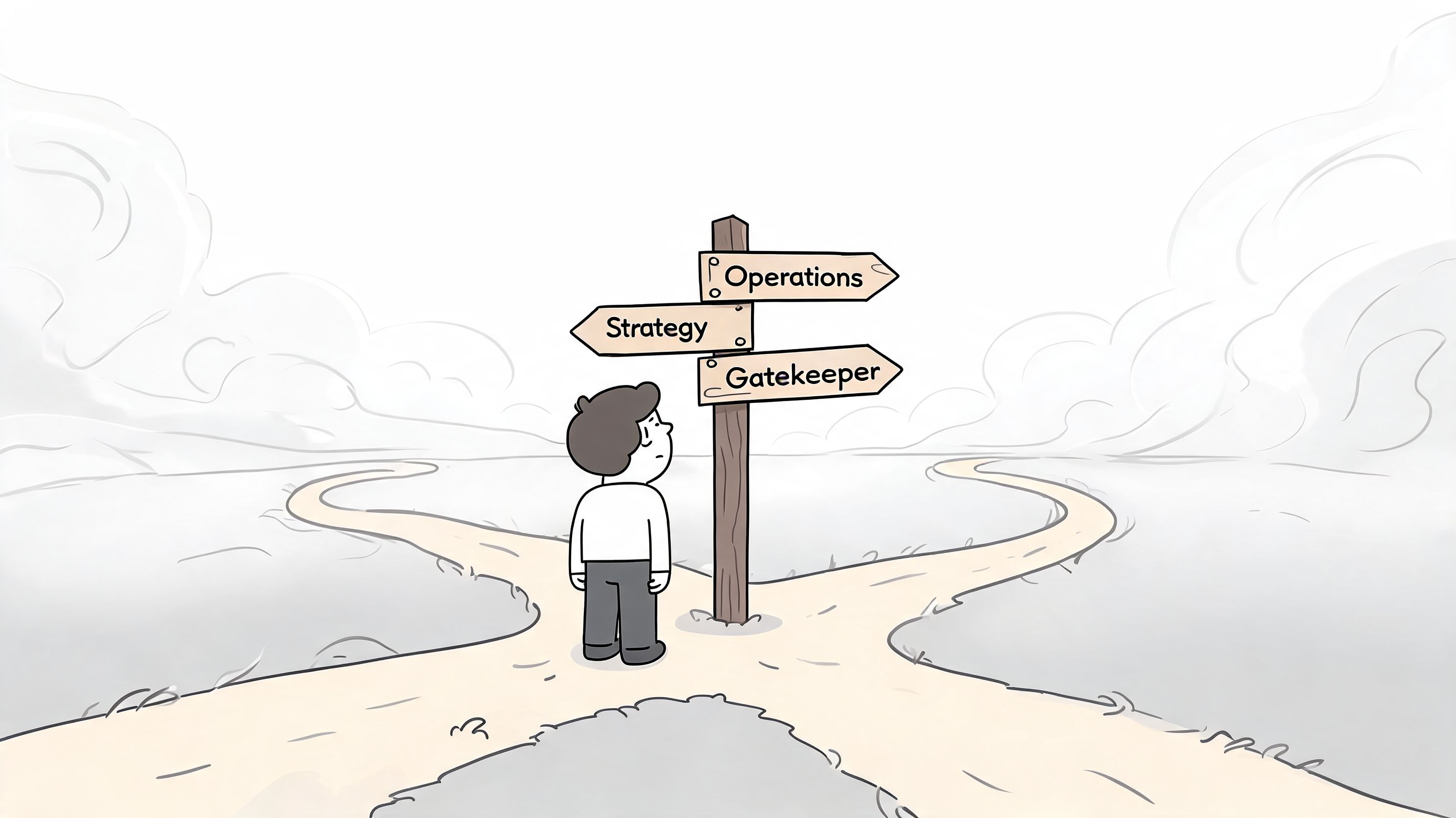
Startup founders often borrow job descriptions from bigger companies. That's the first mistake. Those descriptions assume a mature executive team, formal board processes, and stable departmental boundaries. Early-stage startups usually have none of that.
The result is predictable. The posting says “board communications,” “manage multiple C-suite stakeholders,” and “prepare executive materials,” while the actual job is more like: clean up the weekly leadership meeting, turn founder ideas into a decision process, and make sure product, go-to-market, and hiring don't drift in different directions.
According to Bain & Gray on chief of staff job descriptions, existing descriptions often create confusion for startups because they emphasize responsibilities that don't exist in early-stage companies, and 10-20% of a CoS's duties are typically left undefined until the role begins. That ambiguity is manageable in a large company. In a startup, it can wreck hiring.
“Chief of Staff” sounds senior, but title inflation hides the underlying issue. Founders usually aren't buying a title. They're trying to solve one of three problems:
A strong startup chief of staff overview on Underdog's blog becomes useful when you stop treating the role as universal and start defining it by company stage, founder gaps, and business bottlenecks.
The fastest way to write a bad chief of staff jobs description is to describe an impressive person instead of a specific business problem.
A 10-person company doesn't need someone to manage executive bureaucracy. It needs an advantage. A 500-person company may need someone to formalize planning, run a company operating rhythm, and push accountability across functions.
That difference matters for both sides of the market. Founders need a role that matches the company they run. Candidates need to know whether they're applying for a strategic operator role or a vaguely titled catch-all position.
The cleanest definition is simple. A startup chief of staff is a force multiplier for an executive, usually the CEO. The role exists to increase leadership throughput, improve decision quality, and keep critical work moving.
That's why the role shows up so often in tech. The Chief of Staff role is most concentrated in tech, accounting for 25.7% of all positions, and job descriptions emphasize strategic duties, with 95% of roles acting as strategic advisors, 90% driving initiatives, and 80% managing executive time, according to The Chief of Staff Network's 2024 market analysis.
A real CoS helps the CEO think. They don't just manage the calendar around the thinking.
That can include pressure-testing priorities, preparing decision briefs, identifying trade-offs between competing initiatives, and making sure the CEO enters key meetings with the right context. If the founder changes direction every week, the CoS often becomes the person who asks, “What are we stopping so this new priority can happen?”
Practical rule: If the role spends most of its time reacting to the executive's inbox, it's not a strong chief of staff design.
The best startup CoS acts like air traffic control for priorities. They don't own every team, but they do watch the full system.
That means they track dependencies, surface collisions, and force clarity on who decides what. In practice, this often looks like running leadership syncs, maintaining decision logs, cleaning up ownership gaps, and following unresolved issues until they close.
A good CoS also improves meeting quality. Founders and leadership teams lose a lot of time in poorly prepared meetings with unclear outcomes. Teams that want to tighten prep work can borrow useful tactics from optimizing meeting productivity with SpeakNotes, especially around pre-reads, agenda discipline, and capturing decisions instead of just discussion.
Every startup has work that matters but doesn't fit a single function. Pricing changes. Headcount planning. Fundraising prep. New planning cadences. A customer escalation that touches product and sales. A chief of staff often owns those projects because they can cut across boundaries without defending a department.
This is also where many candidates get fooled. “Special projects” sounds strategic, but it can hide a poorly scoped role. The test is whether those projects tie directly to company priorities and lead to durable systems, not just executive convenience.
For candidates exploring open chief of staff roles at startups, the strongest jobs usually make this explicit. They define what the executive needs multiplied, which processes need building, and where the CoS has authority to drive outcomes.
A useful chief of staff jobs description starts with the company stage. In startups, I've found two archetypes matter more than any generic definition: the Founder Multiplier and the Scale Operator.
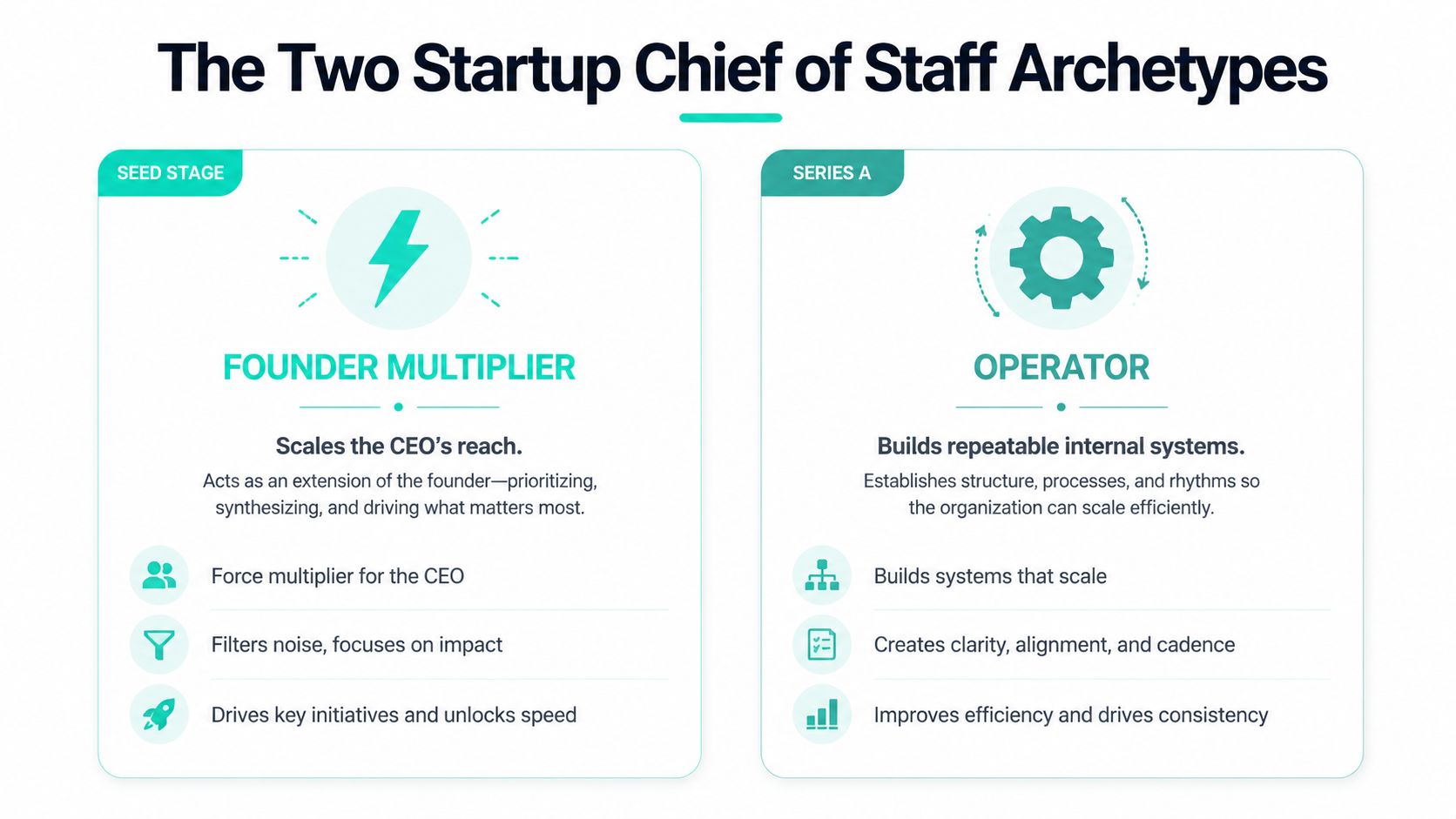
This archetype fits a Seed or early Series A company. The startup is still founder-heavy. Context lives in the CEO's head. Important work is urgent, messy, and often under-defined.
The Founder Multiplier extends the founder's reach. They convert instinct into process without turning the company into a bureaucracy experiment.
Typical work includes:
This role works best when the CEO is strong on vision, product, or fundraising but weaker on operating cadence and internal alignment.
A Founder Multiplier succeeds when the CEO becomes less reactive and the rest of the team stops waiting for permission on every cross-functional issue.
This archetype fits a later Series A moving into Series B, or a true Series B company. The startup has more managers, more handoffs, and more recurring complexity. At this stage, the company doesn't just need support and efficiency around the founder. It needs a system.
The Scale Operator professionalizes execution. They bring consistency to planning, accountability, and decision-making across teams.
Here's the contrast in practice:
| Area | Founder Multiplier | Scale Operator |
|---|---|---|
| Primary goal | Extend founder capacity | Increase organizational operating discipline |
| CEO relationship | High-touch, daily, often reactive | Structured, recurring, focused on leverage and escalations |
| Typical scope | Special projects, founder priorities, early processes | OKRs, operating cadence, planning, cross-functional accountability |
| Success signal | Founder bottlenecks shrink | Teams execute with fewer collisions and less executive intervention |
Founders often hire for the wrong archetype because they overestimate company maturity. They write for a Scale Operator when they really need someone who can thrive in founder chaos. Or they hire a Founder Multiplier long after the business needs someone to standardize planning and execution.
The role changes because the company changes. Early on, ambiguity is the job. Later, reducing ambiguity becomes the job.
A strong candidate should also know which environment they prefer. Some people are excellent at making order from chaos around a founder. Others are better at installing repeatable systems once the company has enough structure to support them. Neither is universally better. The wrong match just looks disappointing faster.
A usable Chief of Staff job description does one thing generic templates usually avoid. It makes the company stage explicit.
If the posting treats a Seed startup and a Series B company as the same operating environment, it will attract the wrong candidates and create the wrong expectations. The best descriptions tell people what kind of mess they are walking into, what authority they will have, and how success will be judged after six to twelve months.
Use the templates below as starting points, then adjust scope, decision rights, and reporting lines to match your company.
Role summary
We're hiring a Chief of Staff to work directly with the CEO as a strategic and operational partner. This role fits an early-stage startup where priorities change fast, information sits close to the founder, and important work often falls between functions. You'll help convert founder priorities into execution, run high-stakes projects, and build enough structure for the company to move faster without adding bureaucracy.
Responsibilities
Qualifications
What success looks like
Role summary
We're hiring a Chief of Staff to help our leadership team run with more discipline as we scale. This role fits a company with growing functional depth that now needs tighter planning, better cross-functional coordination, and clearer accountability. You'll work with the CEO and leadership team to run operating cadence, oversee strategic initiatives, and improve how the company plans, communicates, and executes.
Responsibilities
Qualifications
What success looks like
A strong posting removes the common ambiguity around this role. Candidates should know whether they are being hired to extend the founder, install operating discipline, or handle a mix of both during a transition period.
A few additions improve almost every Chief of Staff posting:
One practical rule matters more than founders expect. If you cannot explain what this person will own in plain language, you are probably not ready to hire a Chief of Staff yet. You may need an executive assistant, a head of operations, or a program manager instead.
That distinction should show up in the job description. It saves time for the company and for the candidates.
The strongest chiefs of staff usually aren't just organized. They combine strategic judgment with operating discipline. That mix is why the role attracts ambitious operators.
McKinsey's analysis found the average Chief of Staff enters the role with just over 12 years of experience, often from strategy or operations, and 66.7% are promoted after their tenure, making the role a meaningful career accelerator for people aiming at broader leadership paths, according to McKinsey's anatomy of the Chief of Staff role.
I'd group the skills into two buckets.
These are the abilities that keep the role from collapsing into coordination work:
This is the part that makes strategy executable:
Strong chiefs of staff don't just organize work. They reduce friction between decisions and execution.
For teams that want a broader library of role formats beyond this article, Talantrix tech job description templates can be a useful comparison point when pressure-testing scope and qualifications.
The only specific compensation data provided for startup CoS roles in major tech hubs is for high-growth firms in SF and NYC. Because of that, the cleanest way to present the market is as a startup range rather than inventing stage-by-stage numbers.
| Stage | Total Cash Comp | Equity Range |
|---|---|---|
| Startup Chief of Staff in NYC or SF | $250K-$400K TC | 0.5-1% equity |
That compensation benchmark comes from the startup-focused CoS template cited earlier in this article. Use it carefully. Scope changes comp fast. A founder-adjacent generalist role and a later-stage operator with planning ownership may share a title but command very different expectations around strategic impact, influence, and accountability.
Founders usually know they need help before they know what help to hire. That's where chief of staff searches go sideways. They start with pain, then write a role around relief. The better move is to hire only when the pain points are strategic and recurring.
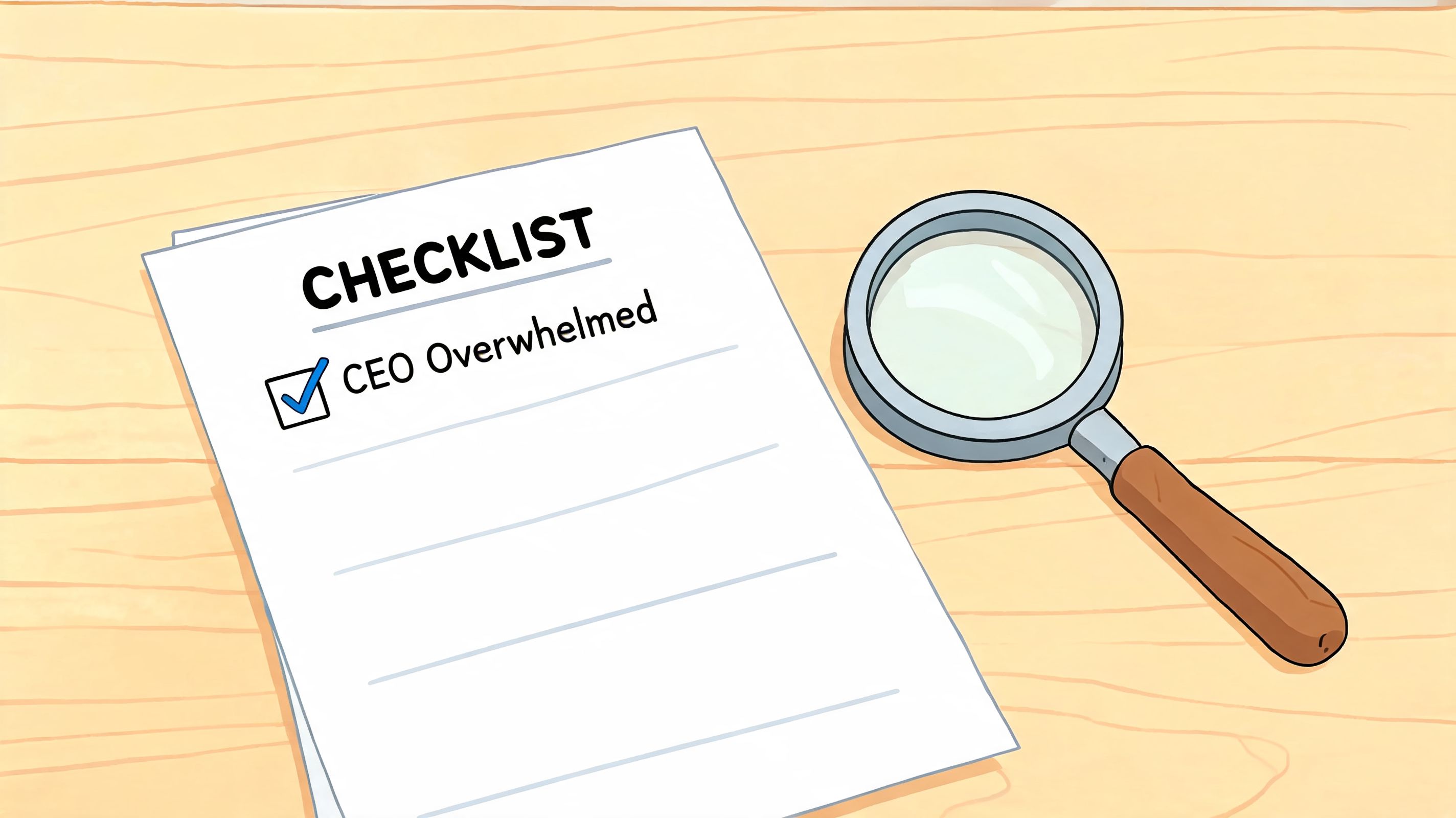
Bridgespan's guidance is useful here: its piece on the Chief of Staff role notes that hiring a Chief of Staff often signals founder self-awareness about operational gaps, and candidates should evaluate whether the CEO wants a strategic thought partner or just someone to “free up time.” That distinction usually predicts whether the role becomes a growth opportunity or a cleanup assignment.
Before opening the role, ask these questions:
A CoS interview should test judgment, structure, and trust. Resume screens won't do much on their own.
Use questions like these:
Tell me about a cross-functional project you led with no clear owner.
Listen for how they created clarity, not just how busy the project was.
How would you structure the CEO's first ninety days working with you?
Strong candidates talk about cadence, expectations, priorities, and decision rules.
Describe a time you had to push back on a senior leader.
You want backbone without ego.
What would you do if three executives all believed their initiative was top priority?
Good answers show prioritization logic and conflict management.
How do you know whether a meeting should exist at all?
This is a simple test for operating taste.
For inspiration on evaluating structured thinking in process-heavy roles, even outside startup ops, Steingard Financial's AP interview tips offer a helpful example of how targeted questions can expose rigor, follow-through, and judgment.
If the checklist points to a real need, and the role is scoped as a strategic amplifier position rather than an executive buffer, founders can hire a chief of staff through Underdog with a clearer brief and a much better chance of finding the right match.
A good chief of staff jobs description isn't generic. It matches the startup's stage, the founder's gaps, and the type of support the business really needs. Early companies usually need a Founder Multiplier. Scaling companies usually need a Scale Operator. Confusing the two is where most bad hires begin.
If you want to move into this role, don't pitch yourself as “willing to do anything.” That sounds helpful, but it reads as undefined. Frame your experience around strategic impact. Show where you aligned teams, drove ambiguous projects, improved executive decision-making, or built operating cadence.
Product managers can emphasize prioritization and cross-functional leadership. Operators can emphasize systems and execution. Engineers can emphasize structured problem-solving and clarity under complexity. The strongest candidates make one thing obvious: they don't just support leadership. They make leadership more effective.
If you're exploring startup roles or hiring for one, Underdog.io connects tech talent and high-growth startups through a curated marketplace built around vetted opportunities rather than broad job board volume.