Choose signal before you choose scale. Early-stage engineering hiring is still constrained by a market where the Job Postings Index sat at 101.8 in August 2026, while new postings were still about 3% below the pre-pandemic baseline, and the U.S. hiring process remained slow enough that the hiring rate was 3.4%, quits 2.0%, and layoffs 1.1% in June 2026, according to the labor data summarized by NU's hiring statistics review. That is why a generic database rarely works well for seed and Series A teams. You need relevant startup context, credible outreach, manageable screening volume, and a way to reach engineers who aren't refreshing job boards every day.
The best hired alternatives for startup engineering teams fall into a few buckets, curated marketplaces, startup ecosystems, employer-brand channels, broad databases, and remote talent services. The differences show up in candidate quality, startup fit, sourcing control, pricing visibility, and how much work your team still has to do after the first intro. Underdog.io is the candidate-centric benchmark in this group because it combines confidential, human-reviewed matching with startup-first filtering instead of open-ended applicant volume.
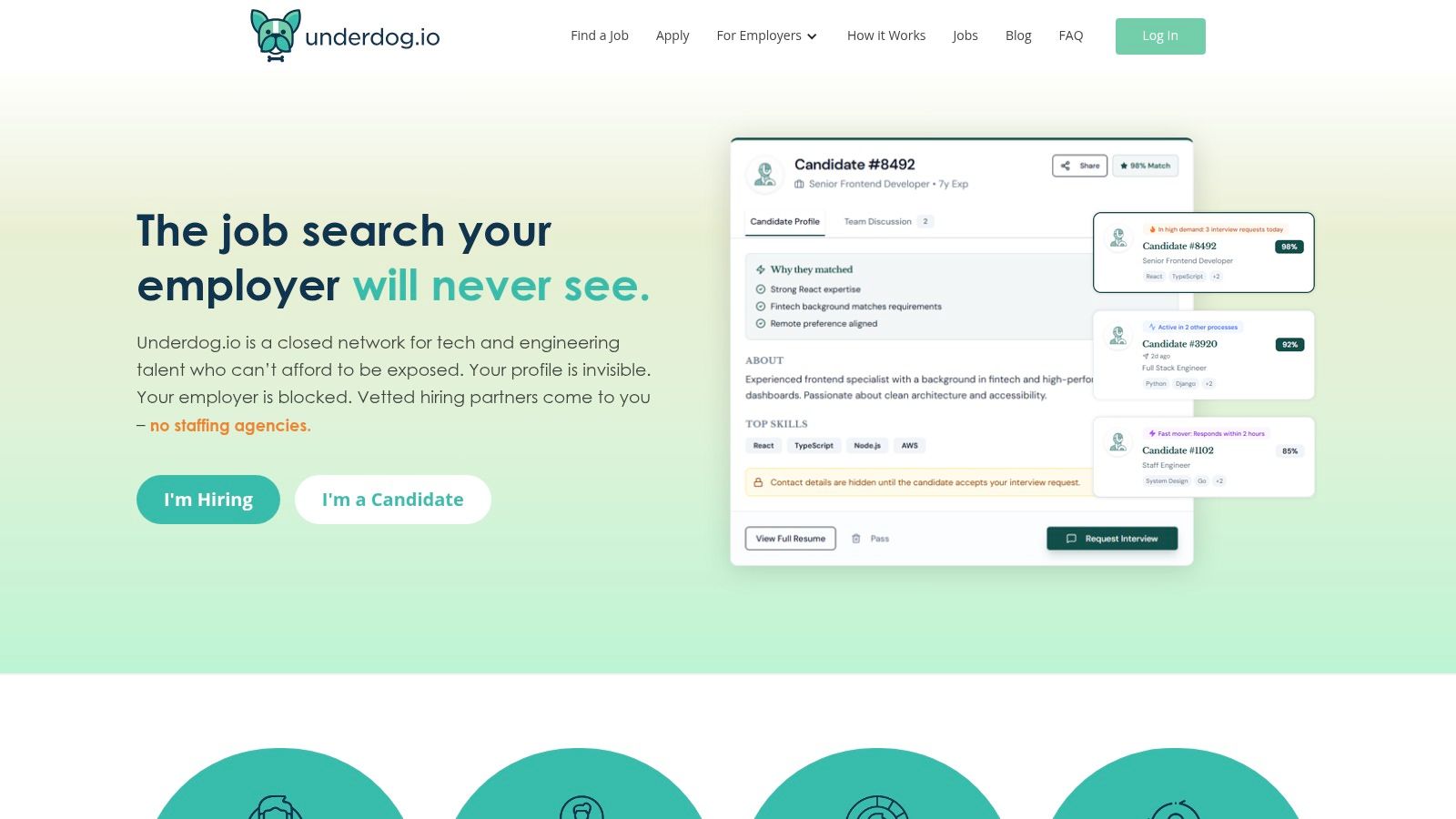
Underdog.io is a strong fit for teams that want startup-relevant signal instead of raw volume. The platform is invite-first, confidential, and built around a single short application, then human review decides whether a candidate enters the marketplace. For engineers who are already employed and only exploring, that privacy layer matters because it keeps employer visibility muted until there is mutual interest.
For seed and Series A hiring, the main value is context. You get exposure to early-stage and Series A-B startups, not a mixed pool of enterprise roles, staffing firms, and low-context listings. That makes the channel useful when the core question is who wants startup work, equity, and speed, not who is merely available.
The candidate flow is also different from broad job boards. The experience is low friction, the candidate stays free, and the platform favors selective introductions rather than pushing everyone into the same inbox. For founders, that usually means fewer unqualified conversations and less time spent sorting through inbound that never had startup intent.
The trade-off is selectivity. It is not a mass-distribution channel, so teams that need raw applicant volume will feel constrained. Employer pricing and recruiting services are paid, and the startup focus makes it a poor fit for enterprise hiring or roles outside that context.
For a side-by-side view, see the Hired alternative comparison.
Wellfound still has one of the strongest startup brands in tech hiring. It sits in the middle ground between a marketplace and a sourcing tool, which makes it useful when you want startup-specific discovery without giving up employer-side control. For engineering teams at seed and Series A, the appeal is that candidates already arrive with startup expectations, so conversations tend to start from a more relevant baseline.
The platform also helps candidates evaluate companies through funding, size, and team context, which matters when early-stage engineers are weighing risk, equity, and product stage. Salary transparency is another practical advantage, because candidates who can see compensation context are more likely to engage seriously instead of browsing casually.
For founders, Wellfound is strongest when the role is clearly startup-shaped. A backend engineer joining a small team, a full-stack generalist, or a platform engineer who cares about mission and scope can all be good fits. The marketplace breadth helps if you're hiring across engineering, product, design, and data, but the utility comes from the startup framing rather than the size of the database.
The trade-off is signal variability. Because the marketplace is broader than an invite-only system, role quality and applicant quality can vary more than they do in a tightly curated product. Pricing for premium and Curated services also isn't publicly listed, so budgeting usually requires a sales conversation.
Website, Wellfound.
Y Combinator's job platform is useful for a simple reason, it gives you immediate context. Candidates know they're looking at YC companies, so the signal around stage, ambition, and startup culture is built in before the first message goes out. For engineering hiring, that reduces one layer of education you'd otherwise have to do yourself.
The platform works best when the role is clearly tied to a YC-backed company and the company story is strong enough to carry its own weight. That makes it a natural choice for seed and Series A teams that want to borrow from the YC ecosystem's credibility and discoverability.
Unlike a broad job board, the platform is wrapped around company identity. That can help a younger startup attract attention even if it doesn't yet have strong brand recognition of its own. It also gives candidates a straightforward way to compare opportunities across the YC network, which is helpful if your company is competing for engineers who care about batch history, momentum, or founder quality.
The downside is competition. The pool is motivated, but it's also crowded with highly desirable companies, so you're often fighting for the same high-intent candidates. The volume can also create mismatches if you need a very specific skill set or a more confidential search.
YC brand helps open doors, but it doesn't replace strong role design. If the scope, compensation, and mission aren't crisp, strong engineers will move on fast.
Website, Y Combinator Work at a Startup.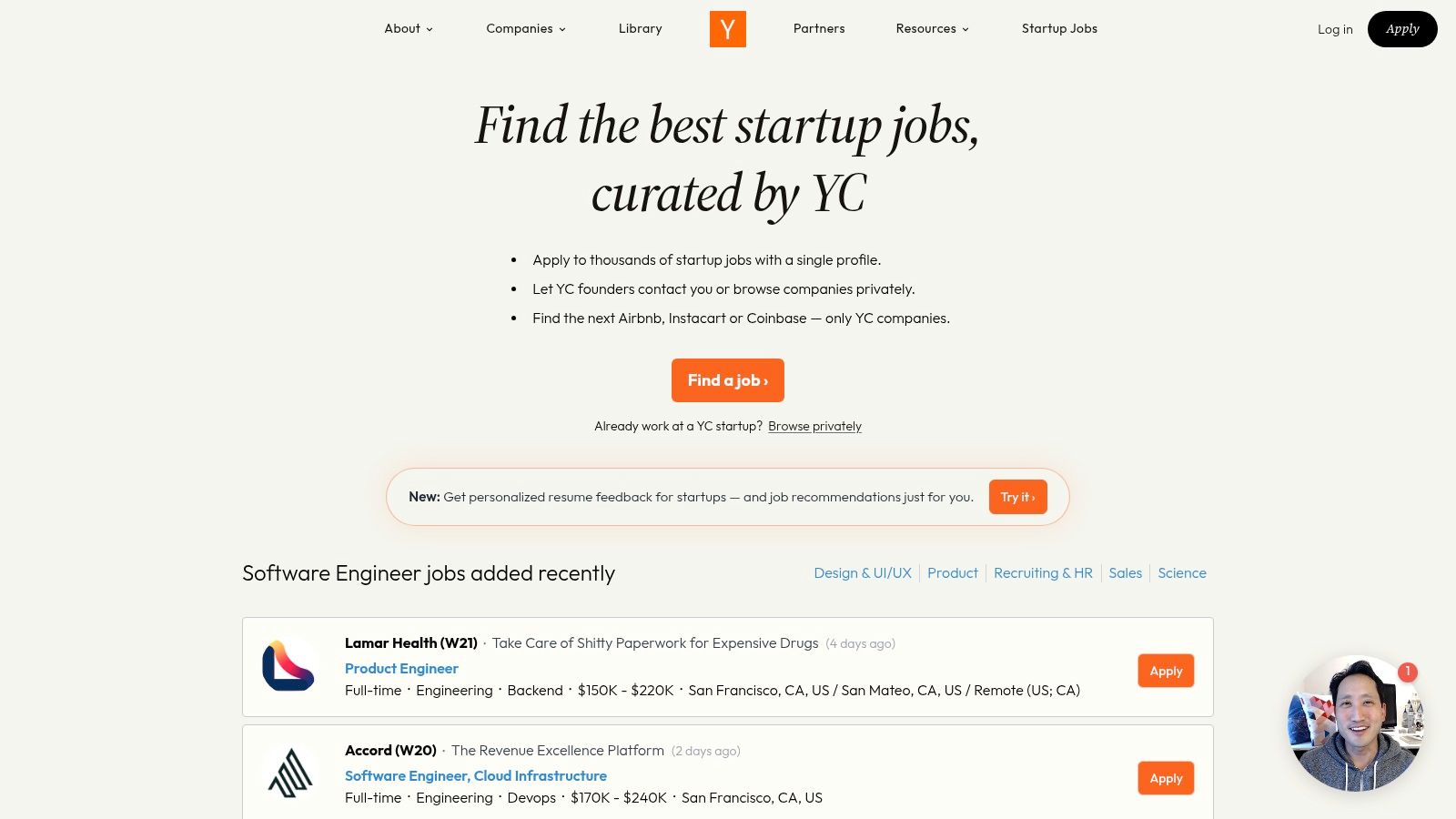
Built In is less of a pure marketplace and more of a startup and tech employer-brand channel. That makes it useful when your biggest problem isn't just finding engineers, but convincing them to take a look. The local hub model works well in major U.S. tech markets, and the editorial layer can support reputation-building before your recruiter ever sends a message.
For seed and Series A teams, this matters because small companies often lose candidates early, not because of skill mismatch, but because they don't look familiar enough. Built In's company profiles, editorial content, and salary guides can reduce that friction by giving candidates more context up front.
Use it when your hiring team wants to create a stronger inbound story around the company. A clear employer brand can improve response rates, especially if your startup has a compelling product and a coherent technical mission. That's especially relevant for roles in competitive hubs such as New York, San Francisco Bay Area, Chicago, Austin, and remote.
The limitation is curation. Built In is broader and less selective than invite-only marketplaces, so you'll still need to manage screening and qualification carefully. Pricing also tends to be sales-led, which makes the total spend less transparent than self-serve products.
Website, Built In. For a direct comparison point, see the Underdog.io alternative guide for Built In.
hackajob is a better fit than a conventional job board when you want a matching-first experience. The platform's appeal is that it routes qualified candidates into employer workflows instead of forcing recruiters to sift through a flood of open applications. That makes it especially relevant for technical hiring where speed matters but quality still has to hold up.
For startup teams, the candidate-friendly model is important. Candidates use the platform for free, privacy controls are part of the experience, and the platform has built its reputation around helping technical roles move faster. That aligns well with engineering searches where passive candidates are open to a conversation but don't want to be blasted with low-fit outreach.
The main advantage is that the process is designed to reduce recruiter legwork. If you're hiring a full-stack engineer, a backend specialist, or a data-heavy generalist, a matching layer can help narrow the field before the first interview. Published hiring and diversity reporting also gives teams more visibility than many closed marketplaces provide.
The trade-off is inconsistency at the niche edge. Match volume can vary by seniority and specialization, so the platform may feel strong for some openings and thinner for others. Employer pricing is also custom, so it's less straightforward to model before a sales conversation.
Website, hackajob.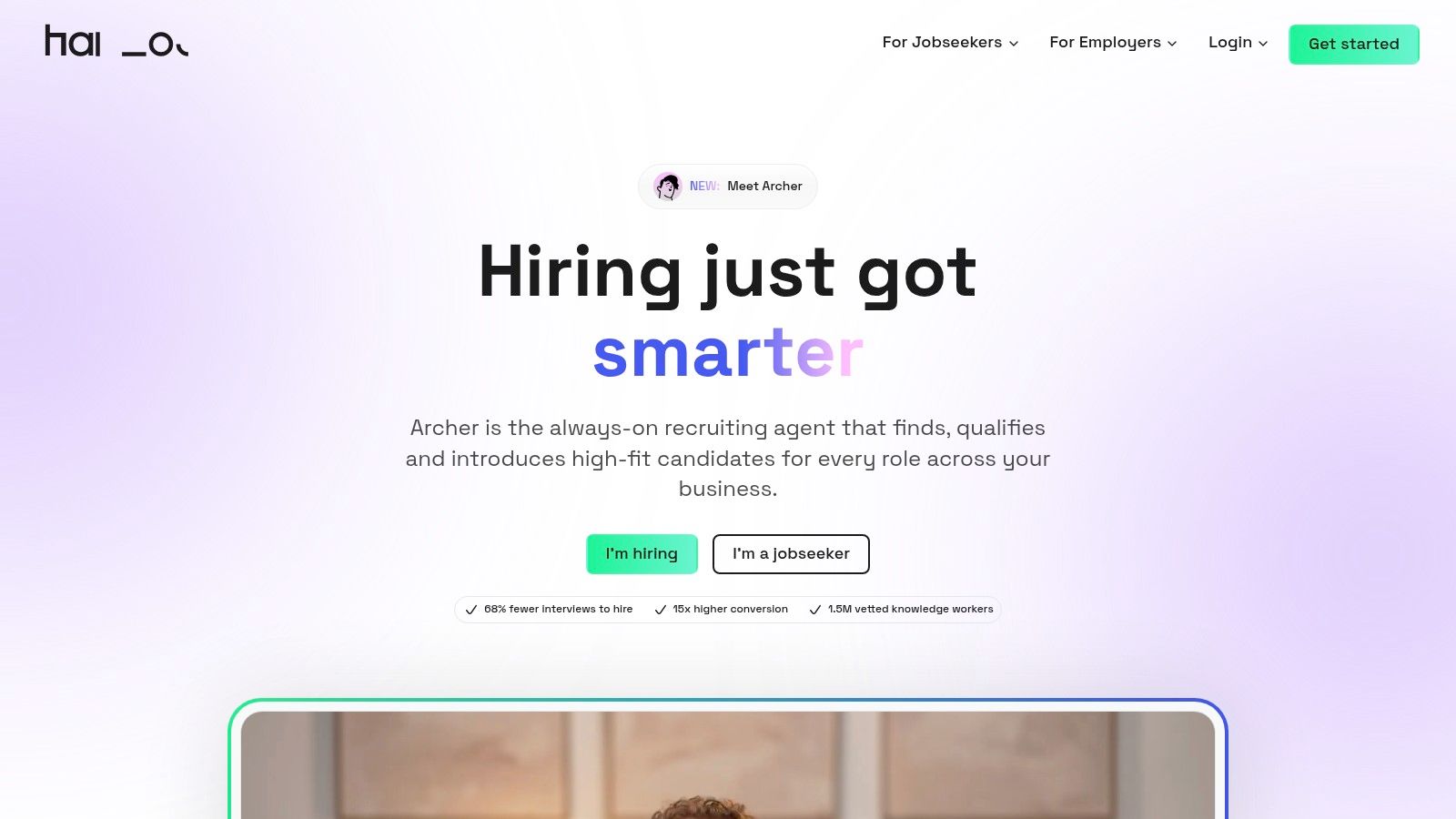
cord is built around direct conversation, which makes it useful for teams that want to shorten the path from discovery to interview. Instead of waiting for a long application cycle to play out, employers can open a messaging-based interaction with software engineers and start qualifying fit earlier. That approach works well when your recruiting team is small and every extra round of screening hurts.
The other practical benefit is contractual clarity. cord publishes employer terms and pricing references, which helps teams that want more visibility before committing. That's a real advantage over products where the commercial conversation stays opaque until late in the sales process.
For seed and Series A engineering searches, cord is strongest when the hire needs to move fast and the team is willing to do direct outreach. The messaging format can help create momentum with candidates who are already open to hearing about new roles. It also gives hiring managers and recruiters a more immediate way to assess interest than a broad inbound pipeline does.
The catch is geographic density. The platform's origins in the UK and Europe mean the U.S. market may feel thinner for some searches, especially if you need a very specific local candidate set. Subscription conversation caps can also limit how aggressively you can source if you're running multiple searches at once.
Website, cord.
Dice is one of the most recognizable tech hiring databases in the U.S., and that familiarity still matters. If your team wants broad reach across active tech job seekers, Dice gives you a straightforward way to put engineering openings in front of a large audience. For some seed and Series A companies, that can be enough to keep the pipeline moving.
The platform's strength is breadth, not tight curation. You get job posting, resume database access, employer branding tools, and amplification options, which can be useful when you need to build awareness quickly. If your startup is hiring several technical roles at once, that wider net can reduce the pressure on any single channel.
Dice works best when you need a familiar, tech-specific source of candidates and don't mind doing more screening yourself. It can also be helpful if you're trying to reach people who are actively looking and already comfortable with tech job boards. For less specialized roles, the scale can be useful.
The downside is signal quality. Mixed user reports around duplicates, agency postings, and older profiles mean recruiters often have to work harder to separate real prospects from noise. It's a database first, not a curated marketplace, so the burden of qualification stays with your team.
Website, Dice hiring pricing.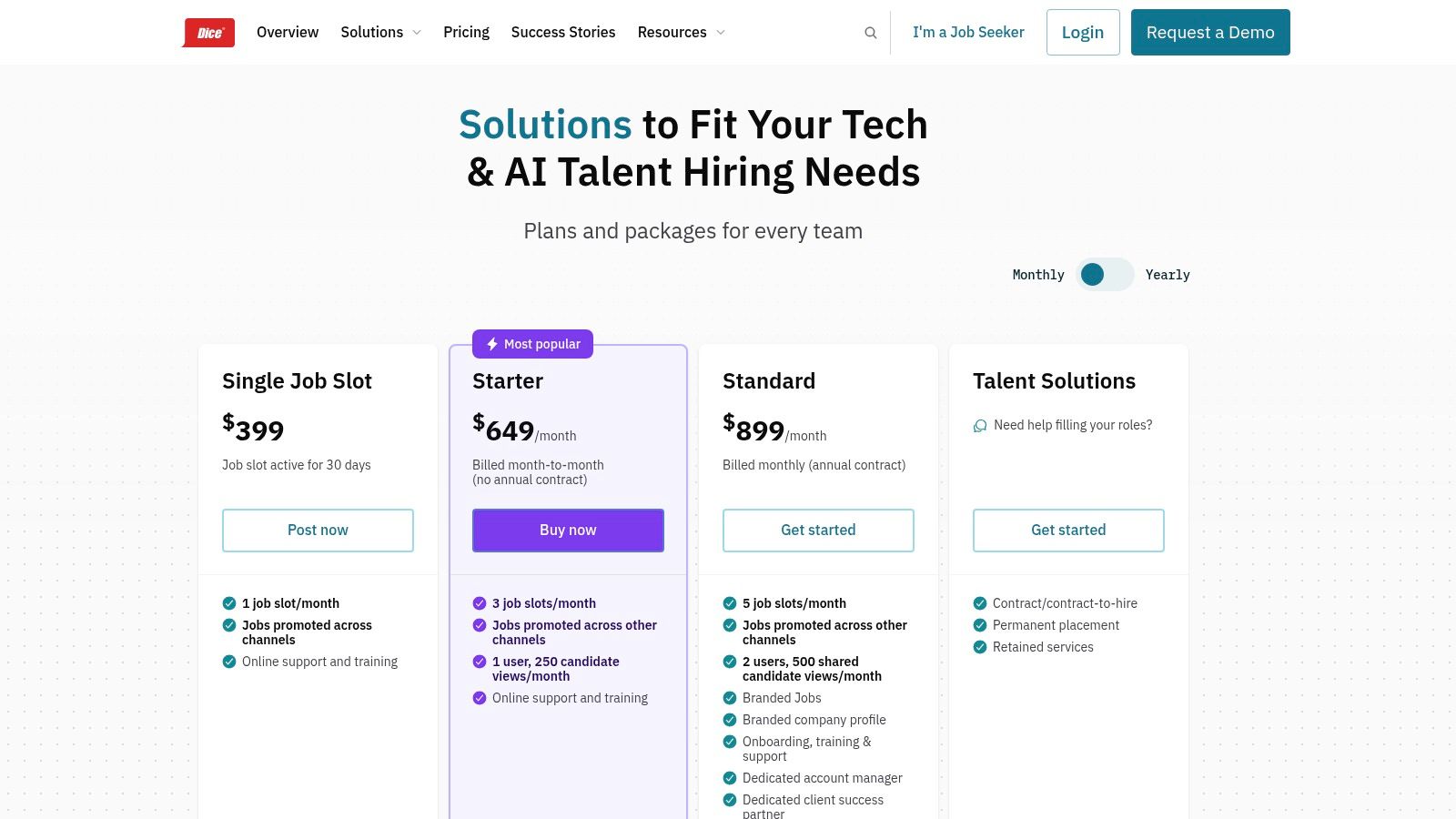
LinkedIn Talent Solutions is still the broadest all-purpose sourcing layer for startup recruiting. If you need reach, profile depth, and direct outreach in one place, it's hard to avoid. For engineering teams, it remains the default infrastructure for finding passive candidates, especially when the search needs to cross multiple geographies or role levels.
That said, it's not curated in the way a startup marketplace is. LinkedIn gives you a lot of control, but it also gives every other recruiter the same access. That means candidate fatigue is real, especially in competitive engineering markets where the same people receive constant messages.
Use LinkedIn when you need to expand the top of the funnel and manage your own sourcing process. Recruiter and Recruiter Lite make sense for teams that want advanced search and InMail, while sponsored jobs can support broader visibility. It's especially strong when paired with a clear employer story and a sharply defined engineering brief.
For seed and Series A teams, the commercial model can be the sticking point. At scale, it gets expensive, and the fully self-serve workflow often pushes small teams into a lot of manual refinement. The upside is reach, but the cost is more recruiter time.
LinkedIn is strongest when you already know who you want and you're disciplined about outreach. Without that discipline, it becomes a very large, very noisy database.
Website, LinkedIn Talent Solutions. For a direct comparison point, see the Underdog.io alternative guide for LinkedIn Recruiter.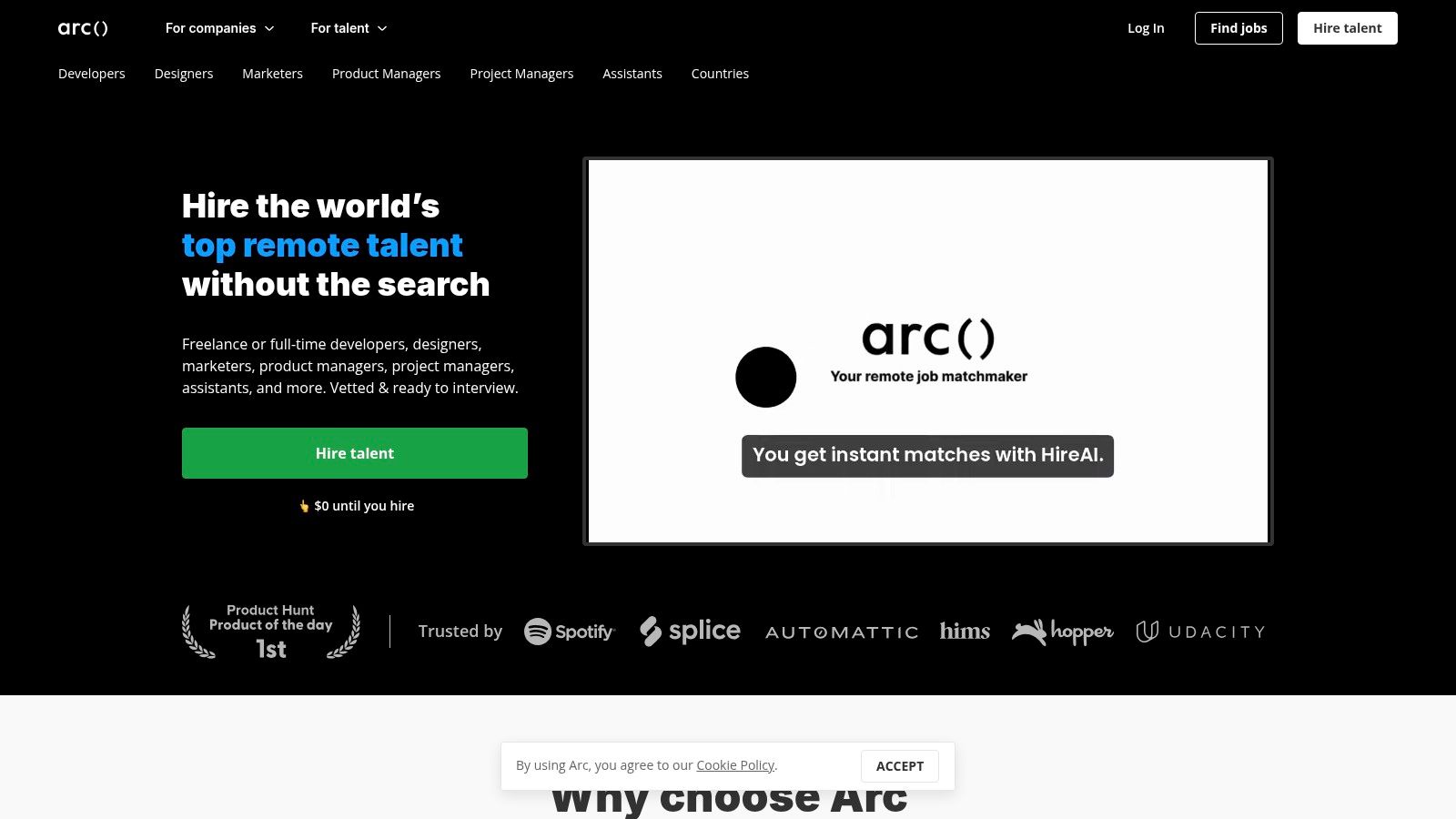
Arc.dev makes the most sense when remote hiring is part of the plan from day one. The platform centers pre-vetted remote candidates and supports both full-time and freelance work, which gives founders more flexibility if their engineering team is distributed or if they want to test scope before committing to a permanent hire.
For startup teams, the major advantage is speed and role alignment. Remote marketplaces can be useful when geography would otherwise shrink the talent pool too much. That matters especially for specialized engineering roles where the right candidate might not be in your local market.
Arc.dev is strongest when the role is remote by design and the team is comfortable managing time zones and distributed communication. The direct messaging workflow reduces friction, and the pre-vetted talent pool can shorten the path to interview if your brief is clear.
The trade-off is operational. Global distribution means more coordination, and not every startup is ready for that. Employer pricing also requires a sales conversation, so you'll need to compare it against the true cost of internal sourcing and remote onboarding.
Website, Arc.dev.
Levels.fyi Jobs works best for candidates and employers who care about compensation transparency. Because the brand is already associated with leveling and pay data, the job marketplace inherits that trust. For startup engineering hiring, that can be a powerful advantage when you're trying to persuade senior candidates to take a risk on an earlier-stage company.
The platform is not an invite-only marketplace, so the curation is lighter than a specialist startup product. But for roles where compensation clarity is central, that can still be a smart channel. Engineers comparing multiple offers often want to know not just the title, but how the package stacks up against market expectations.
Use Levels.fyi Jobs when your team can be explicit about level, compensation, and growth path. The audience is already thinking in those terms, which can improve the quality of inbound interest. Employer services around talent pools and compensation benchmarking can also help teams sharpen their offer.
The limitation is that it's not built around selective introductions. You still need to do the work of screening, and posting or promotion often involves a more hands-on commercial process. For fast-moving startup searches, that makes it better as a supporting channel than as the only sourcing strategy.
Website, Levels.fyi Jobs.
| Platform | Target audience | Core features / Matching | Quality & candidate experience | Employer model & pricing | Key differentiator |
|---|---|---|---|---|---|
| Underdog.io (Recommended) | Early-stage → Series B startups; startup-minded tech talent | 60s confidential app; human-reviewed matches; curated startup listings | ~5% acceptance; 1–3 intros/month; anonymous until mutual; 65%+ response rate | Candidate-free; employers pay success-based/contingent fees | Highly curated, human-powered, candidate-first confidentiality |
| Wellfound (formerly AngelList Talent) | Startups across stages; founders & candidates | Company profiles, AI sourcing, curated talent pools | Large startup audience; salary transparency tools | Curated/paid hiring options; premium pricing not public | Widely known startup marketplace with AI sourcing |
| Y Combinator, Work at a Startup | Candidates targeting YC-backed companies | Centralized YC company/candidate profiles; role discovery | Strong YC signal; very competitive applicant pool | Free for candidates; employer posts for YC startups | Direct access to YC-backed, high-growth startups |
| Built In | Tech companies in US hubs (NYC, SF, Austin, etc.) | Local hub sites, editorial content, employer branding packages | Good hub reach and engagement; less curated than invite-only | Branding packages and listings via sales | Employer brand & community-focused recruiting |
| hackajob | Tech hiring in US/UK/India; diversity-focused roles | AI matching + AI agent “Archer”; sourcing and routing | Candidate-free with privacy controls; published hiring/diversity metrics | Employer-paid; custom/scoped pricing | AI-driven sourcing with transparency metrics |
| cord | Employers seeking fast, direct candidate conversations | Direct messaging platform; subscription tiers with conversation caps | Fast inbound conversations; transparent US/UK terms | Subscription-based with conversation limits per tier | Direct-message-first hiring workflow |
| Dice | US IT & engineering recruiters; active job-seekers | Tech-only job board, resume DB, employer branding & amplification | Large applicant flow; mixed lead/quality due to volume | Multiple posting & package options for SMB→enterprise | Long-standing, broad-reach tech job marketplace |
| LinkedIn Talent Solutions | Broad professional talent; enterprise & SMB recruiters | Advanced search, InMail, sponsored jobs, employer branding | Unmatched reach/profile depth; candidate outreach fatigue possible | Multiple SKUs (Recruiter Lite → enterprise); pricing via sales | Unrivaled network scale and candidate data |
| Arc.dev | Remote-first companies hiring developers/designers/marketers | Pre-vetted remote candidates; FT & freelance; direct messaging | Claims fast placements; candidates use platform free | Employer plans via sales; pricing on inquiry | Remote-first, pre-vetted developer marketplace |
| Levels.fyi Jobs | Candidates prioritizing pay transparency & leveling | Job search tied to compensation & leveling database | Trusted salary data attracts transparency-minded candidates | Employer services & benchmarking via contact | Integrated compensation transparency and benchmarking |
Seed and Series A teams should choose sourcing channels based on the kind of signal they need, not just on how many profiles they can access. Use curated marketplaces when passive-talent access and fit matter most, because the market is still structurally slow and candidate experience remains inconsistent, as shown by the hiring and candidate-experience data from NU and SmartRecruiters. Use startup ecosystems when company context is central, especially if the YC brand or startup-only framing helps you establish credibility faster. Use broad networks when reach is the main problem, and use remote marketplaces when geography or working style shapes the search.
The most effective engineering searches start with a hard definition of what counts as evidence. State the required stack, stage exposure, product context, and seniority band before you post anywhere. If you're hiring for a seed founding engineer or a Series A platform role, be clear about compensation and equity up front, because the startup compensation benchmarks in the research show that stage changes the package materially.
That clarity matters even more in a market where AI is already part of recruiting infrastructure. SHRM-linked reporting says 43% of organizations used AI for HR and recruiting tasks in 2025, up from 26% in 2024, and another synthesis says 69% of organizations use AI somewhere in talent acquisition, which means the open pipeline is getting noisier, not cleaner. In that environment, the channels that win are the ones that improve judgment, confidentiality, and response quality rather than just adding more applications. The sourcing benchmark data makes the same point another way. Broad workflows can generate huge applicant counts, while tightly pre-qualified channels can compress time to a shortlist and reduce recruiter waste.
For hiring managers, the practical move is to measure qualified conversations, not raw applications. Compare platform fees against recruiter hours, interview churn, and how often the channel surfaces people who can code, ship, and collaborate in a startup environment. For candidates, the right channel depends on whether you care most about confidentiality, company context, compensation transparency, or the quality of the introduction. The best choice is the one that matches your stage, your role scope, and how quickly you need the search to turn into real interviews.
If you want a confidential, startup-first path to engineering candidates, Underdog.io is built for exactly that use case. It gives candidates a private way to explore roles and gives employers a curated pool instead of a noisy pile of resumes. Visit Underdog.io to see whether its matching model is the right fit for your next seed or Series A engineering search.