That job offer from a startup feels good, doesn't it? It’s tempting to fire back a quick "Yes!" and celebrate. But hold on. A fast acceptance can be a huge misstep, especially in the volatile startup world.
Before you even think about popping the champagne, you need to systematically evaluate the offer, negotiate the key points, and then give your formal acceptance. This isn't about being difficult; it's about making a well-informed decision that truly aligns with your career path and your financial reality.
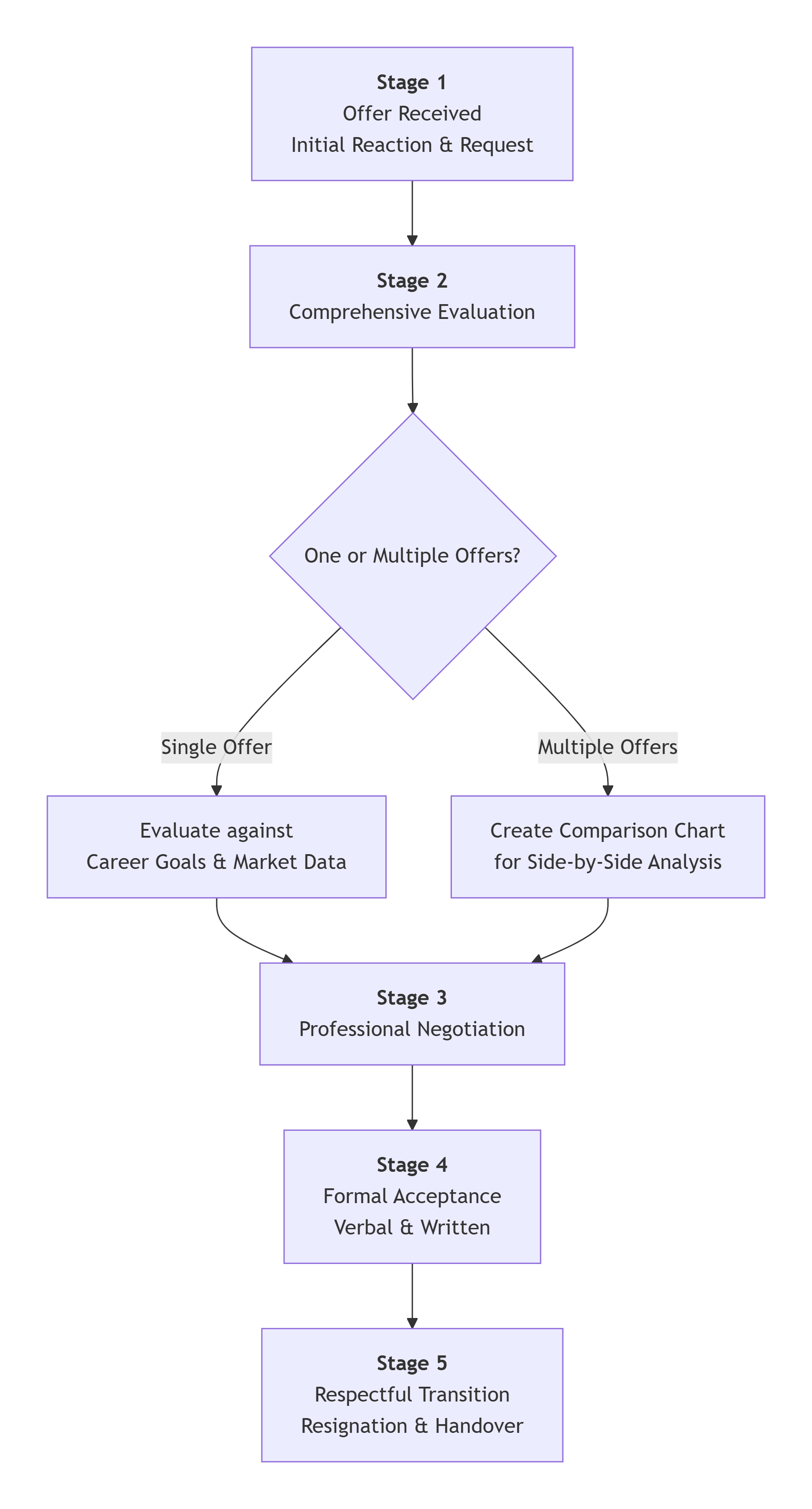
This timeline visualizes the end-to-end process, from the initial reaction to your first day at the new job.
Getting that offer feels like you've crossed the finish line. In reality, you're just starting the most critical lap: your final due diligence. Rushing this part can lock you into a role—and a company—that doesn't live up to what was promised in the interviews.
Think of this period as your last chance to look under the hood. It’s about more than just the salary. It’s your opportunity to get the full picture of the role, the team, and the company's health before you sign on the dotted line. A thorough, thoughtful evaluation is just smart career management, and it signals to your potential new employer that you’re a serious professional.
The whole process really breaks down into three actionable phases: evaluate, negotiate, and accept. In that order.
As you can see, saying "yes" is the final piece of the puzzle, not the first move you make. It comes after you have all the facts.
First things first, let's talk money. But at a startup, "compensation" is a lot more than a single number. It’s a blend of base salary, potential bonuses, and that all-important equity. Each piece needs a close look.
A fantastic salary at a company that’s about to run out of money is a trap. When you join a startup, you aren't just an employee; you're an investor—you're investing your time and talent. You have to vet the business itself.
What’s the company's funding stage? Who are the investors? A well-funded Series B startup carries a very different risk profile than a seed-stage company that’s burning through its initial cash.
Beyond the financials, you need to be honest with yourself about the culture. The interview process only gives you a polished snapshot. Now's your chance to get the real story. Actionable step: Ask the recruiter, "Would it be possible to have a 15-minute informal chat with a potential teammate without a manager present? I'd love to get a sense of the day-to-day." This is where you'll get a feel for the real work environment.
A job offer is more than a transaction; it's an invitation to invest your time and talent. Before accepting, ensure the company's vision, financial health, and culture provide a foundation where that investment can grow.
The job market today really underscores the need for this kind of diligence. While offer acceptance rates did climb to 84% in 2025, companies are also getting pickier. A recent report showed that 54% of employers now prioritize cultural fit over raw technical skills. It’s a two-way street—the fit has to be right for both sides.
Knowing what to look for is one thing, but asking the right questions is how you get the answers you need. To help you structure these crucial conversations, we’ve put together a detailed list in our guide on questions to ask before accepting a job offer. Make sure you cover your bases before making a final decision.
To simplify your evaluation, here’s a quick-reference checklist covering the most critical components of any startup offer.
Use this checklist as your guide to ensure you’re not just accepting a job, but making a strategic career move that sets you up for success.
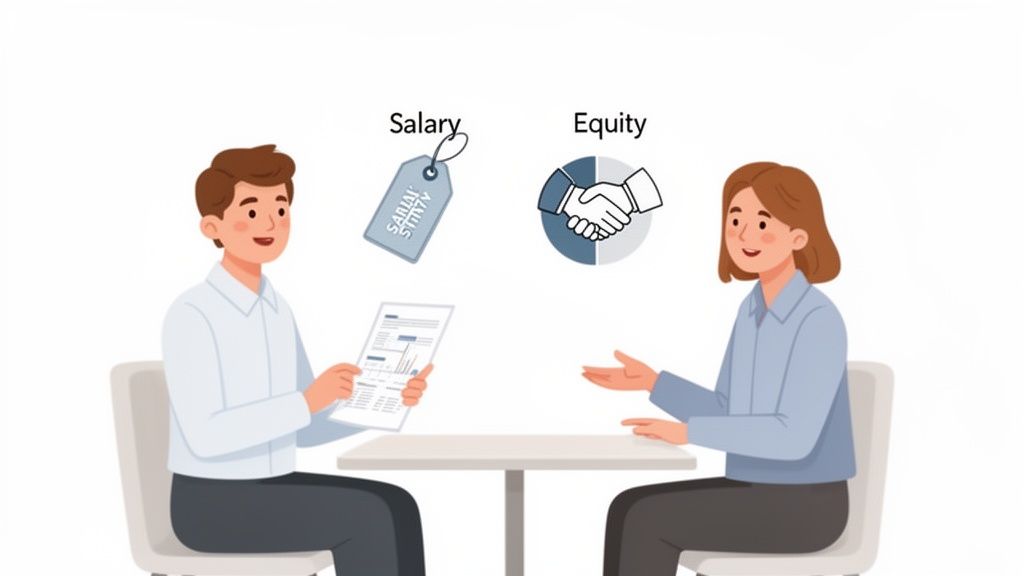
Let's get one thing straight: negotiation isn't a confrontation. It's a completely normal, expected conversation about your value. At a startup, where your impact is immediate and roles are constantly shifting, failing to negotiate can set the wrong precedent from day one.
Think of it this way: this is your first real act as a future team member, advocating for your worth. They’ve already sunk a ton of time and resources into getting you to this point. They want you on the team, which means the door is open for a discussion that gets you both to a happy "yes."
You absolutely cannot walk into this conversation unprepared. Arming yourself with data, not just feelings, is the only way to play this game effectively. The mission is to build a logical case for why your requested compensation is fair market value for the role, your skills, and the company's location.
Actionable step: Create a simple document with three sections.
Strategic Negotiation Script for a Low Offer: "I was expecting a base salary closer to [Number]. Is there any flexibility to meet that?" If the salary is firm, pivot: "Could we explore... a signing bonus or an increase in the equity grant?"
We recommend a 24-48 hour period to consider a final offer after negotiation, which maintains professionalism and avoids rushed decisions.
Negotiation is a data-driven dialogue, not a debate. The more evidence you have supporting your market value, the more collaborative and successful the conversation will be.
Once you have your number, get your talking points in order. This isn't about reading from a script, but about having clear, concise reasons for your request. If you feel like you need a bit more confidence, seeking professional career coaching can provide some invaluable strategies for framing your worth.
How you frame the conversation is everything. Always, always start with genuine enthusiasm for the offer before you pivot to the numbers.
Here are a few common situations you might run into:
Each of these examples keeps the tone positive and collaborative. You aren't making demands; you're looking for solutions that work for everyone. By preparing thoroughly and communicating professionally, you can make sure the process concludes with a package that truly reflects your value.
You've done the hard work—navigating interviews, weighing the pros and cons, and negotiating the final details. The finish line is in sight, and you’re ready to say "yes." Now it's time to make it official.
The way you accept a job offer is more than just a formality. It’s your first move as a new team member, setting a professional and enthusiastic tone that will carry you through to your first day and beyond. The process usually happens in two parts: a quick, upbeat verbal acceptance followed by a more formal written confirmation.

This two-step approach is standard practice. It allows you to share your excitement in the moment while creating a clear paper trail that confirms the terms. Getting this last step right prevents any future misunderstandings and ensures everyone is on the same page before you hand in your resignation.
Most of the time, the final offer will come over the phone from the recruiter or your future manager. If you've made up your mind and are ready to accept on the spot, you absolutely should. The goal of this call is to convey genuine excitement and quickly re-confirm the key details.
Keep it simple and positive. No need for a long speech—a few clear sentences are all it takes.
You can adapt a simple script like this one:
"Thank you so much for the call! I'm absolutely thrilled to accept the offer for the [Job Title] position. I’ve really enjoyed our conversations, and I can't wait to join the team. I can start on [Your Agreed-Upon Start Date], is that correct?"
This response hits three crucial points:
After the verbal "yes," just mention that you'll follow up in writing. A quick, "I’ll send over a formal acceptance email shortly to confirm everything," is perfect.
Your acceptance email is more than just a polite follow-up. It acts as an informal record of your agreement, protecting both you and the company by putting the most important terms in writing. This simple email ensures there are no surprises when the official onboarding paperwork comes through.
Keep your email professional, friendly, and to the point. The subject line should be direct so the hiring manager can easily find it. Something like "Job Offer Acceptance – [Your Name]" works perfectly.
Here are a couple of examples you can tailor to your situation.
Use this template when you're accepting the offer exactly as it was presented.
Subject: Job Offer Acceptance – Jane Doe
Body:
Hi [Hiring Manager's Name],
I am writing to formally accept the offer for the Software Engineer position at [Company Name]. I'm incredibly excited about this opportunity and eager to start contributing to the team.
As we discussed, my start date will be August 19th, and my starting salary will be $135,000.
Please let me know what the next steps are regarding paperwork or anything else I need to complete before my first day.
Thank you again for this opportunity.
Best regards,
Jane Doe
If you negotiated different terms, it’s critical to restate them clearly in your email. This confirms the new agreement and makes sure everyone is aligned.
Subject: Job Offer Acceptance – John Smith
Body:
Hi [Recruiter's Name],
Thank you again for discussing the offer with me. I'm delighted to formally accept the position of Senior Product Manager.
To confirm the terms we agreed upon, my starting salary will be $160,000, with a $10,000 signing bonus. My start date will be September 3rd.
I truly appreciate you working with me on this, and I can’t wait to join the team. Please let me know if you need anything from my end.
Sincerely,
John Smith
You’ve done it. You’ve accepted a fantastic offer, and you’re ready to move on. But just when you think you’re in the clear, two final hurdles almost always pop up: the dreaded counteroffer from your current job and the resignation process itself.
How you handle this last stage is critical, especially in the tight-knit startup world where everyone seems to know everyone. Your reputation follows you. Nailing this part ensures you leave on good terms and keep your professional network intact for the long haul.
The moment you announce you're leaving, get ready. Your current manager will likely come back with a counteroffer. It might be a tempting salary bump, a shiny new title, or the promise of exciting new projects. It’s flattering, sure, but don't let it cloud your judgment.
Research has shown time and again that a huge percentage of people who accept a counteroffer end up leaving within a year anyway. Why? Because more money rarely fixes the real problems. It doesn't change a culture you don't fit into, it doesn't create growth opportunities where none exist, and it doesn't restore your faith in the company's direction.
A counteroffer is a short-term fix for a long-term problem. It addresses your immediate desire for more compensation but leaves the root causes of your dissatisfaction unresolved.
When the counter comes—and it probably will—be ready to decline it politely but firmly. You don't need a long, drawn-out explanation.
Try something like this:
"I truly appreciate this offer and have valued my time here at [Current Company]. However, my decision is based on a new opportunity that better aligns with my long-term career goals, and I've already committed to them."
This response is respectful, final, and keeps you out of a negotiation you’ve already decided to exit. It closes the door without burning the bridge.
The Resignation Conversation Script to reduce anxiety. For example:
"I want to thank you for the mentorship and opportunities here. I've learned a great deal. I've made the difficult decision to accept a new role that aligns closely with my long-term focus on [e.g., scaling early-stage products]. I am committed to ensuring a smooth handover over the next two weeks."
Your resignation is the final impression you'll leave. The goal here is to be professional, helpful, and straight to the point.
First things first: always tell your manager face-to-face (or on a video call) before you send anything in writing. It’s a sign of respect. After that conversation, follow up with a formal, written resignation letter. This isn't the time for a novel; it should be simple and positive.
Your letter only needs three things:
If you need a hand figuring out exactly what to say, our guide on what to write on a two week notice has some great templates and tips.
Once you’ve given your notice, your job isn't quite done. Actionable step: create a simple transition document. Outline the status of your key projects, list important contacts, and save it in a shared folder. This proactive effort solidifies your reputation as a true professional and ensures you leave on the best possible terms. And for those interested in the finer points of contracts and termination, you can find helpful resources on employment law.
You did it. The offer letter is signed, the acceptance email is sent, and you’re officially in. Congratulations! Now what?
It’s tempting to just kick back and count down the days, but this quiet period between saying “yes” and your first day is a golden opportunity. Think of it less as a waiting game and more as a soft launch for your new role. A few simple, proactive steps now can turn first-day jitters into genuine confidence.
This transitional phase usually kicks off with some housekeeping from the HR or People Ops team. They'll get the ball rolling on a background check and start gathering the paperwork needed for your official onboarding.
Soon after you accept, you’ll likely get an email outlining the next steps. This is mostly about documentation for payroll and a routine background check. Startups, especially the early-stage ones, move fast, so having your documents ready will keep things moving smoothly.
You'll probably need to have these on hand:
The background check is standard practice. It usually just verifies your employment history, education, and criminal record. As long as you were honest during the interview process, you have absolutely nothing to worry about.
This quiet period is your chance to build momentum. A few thoughtful, proactive steps can transform first-day jitters into genuine confidence, showing your new team you’re engaged before you even walk through the door.
Once the admin tasks are handled, you can shift your focus to building a few bridges. A little bit of proactive communication goes a long way, especially in a startup where integrating quickly is a huge plus. It shows you’re genuinely excited to get started.
About a week or two before your start date, think about sending a quick, friendly email to your new manager. You’re not asking for work; you’re just showing initiative. You could ask if there’s any documentation, pre-reading, or even team rituals you could look over.
For example, you could write something like this:
"Hi [Manager's Name], I’m getting really excited to join the team on [Start Date]! To help me prepare, is there any documentation or context you’d recommend I review beforehand? No pressure at all, but I’d love to get a head start if it’s helpful."
It’s a simple gesture that shows you respect the team's time and are eager to contribute. It’s also a great time to connect with your new colleagues on LinkedIn. A personalized request mentioning you’re excited to work with them is a perfect, low-pressure way to start building rapport.
This period is becoming a key part of the hiring process. Offer acceptance rates in tech have climbed to 84%, and with the average time-to-hire sitting at 42 days, companies are more invested than ever in making sure new hires feel like part of the team from the moment they say yes. You can learn more about the latest recruiting benchmarks on Gem.com.
Even after you've navigated the negotiation dance and are ready to send that acceptance email, a few last-minute questions usually pop up. It's totally normal. This final stretch can feel a little tricky, especially in the fast-paced startup world, so let's clear up the most common ones.
There's no single, hard-and-fast rule here, but the standard window is usually two to five business days. Startups, in particular, like to move fast to keep their hiring momentum going, so don't be surprised if they ask for a quicker decision.
What if you need more time? Maybe you're waiting on another offer or just need a weekend to think things through. It's completely fine to ask for an extension. The key is to do it professionally. Reiterate how excited you are about the role, then explain that you want to give the decision the thoughtful consideration it deserves.
Here’s a simple way to phrase it: "Thank you so much for the offer! I am genuinely excited about this opportunity. To make sure I can give you a thoughtful and committed 'yes,' would it be possible to have until Friday to get back to you?"
It’s the nightmare scenario, right? While it's pretty rare, an offer can be rescinded. This almost always happens because of something unexpected and serious—the company's funding suddenly falls through, a background check flags a major issue, or they discover you weren’t truthful on your resume.
The best way to protect yourself is to get the final offer in writing before you even think about resigning from your current job. Make sure that written offer spells out your salary, title, start date, and other key details. It creates a much stronger record of your agreement (even if it's not always a legally binding contract).
First off, congratulations! This is a fantastic position to be in and gives you some real leverage. Here’s a quick game plan to handle it like a pro:
Ready to find a startup role that's worth accepting? At Underdog.io, we connect top tech talent with hundreds of vetted, high-growth companies. Stop searching and let the best opportunities find you. Get started with Underdog.io today.