Forget the corporate job hunt playbook. Landing a role at a fast-moving startup isn't about ticking boxes on a generic job description—it’s about proving you can solve problems, adapt on the fly, and get behind a mission you actually believe in.
This isn't your typical job search. Applying to a startup is less about perfectly matching a keyword-stuffed resume to a rigid spec and more about connecting with founders who need versatile, high-impact players.
The key is to think more like an investor than a passive applicant. You need to get proactive, hunting for high-growth companies before they hit the mainstream. It’s all about finding opportunities through funding announcements, tapping into niche communities, and building a personal brand that speaks directly to founders.
This guide is your new strategy. We're moving beyond the black hole of massive job boards and showing you how to become the kind of candidate that founders and hiring managers actively seek out. It’s built for the software engineers, product managers, and designers ready to do work that matters.
The big shift is in your mindset. You're not just looking for a job; you're looking for a mission to join. Founders hire people who show genuine passion and a deep understanding of the problem they’re trying to solve.
Sure, this approach takes more upfront effort than just blasting out resumes. But this targeted strategy is the most reliable path to securing a high-impact role in the startup world. You now have the blueprint—it’s time to start building.
The best startup jobs almost never show up on the huge, generic job boards. If you want a role with real impact, you have to become a bit of a startup detective, learning to spot promising companies long before they become household names. This means looking beyond the obvious and knowing how to read the signals of rapid growth.
Instead of just waiting for a company to post a "We're Hiring" sign, your search should start by following the money. Funding announcements are one of the most reliable clues that a startup is about to go on a hiring spree. A fresh round of capital, especially a Series A or B, almost always translates into an immediate need to scale the team.
Before you even think about sending out an application, you need a clear picture of what you’re actually looking for. A generic search for "startup jobs" is a recipe for frustration and wasted time. The smart move is to develop a "startup thesis"—a set of criteria that defines your ideal company.
Start by asking yourself a few key questions:
Building this framework turns your search from a random walk into a targeted mission. You're no longer just looking for a job; you're looking for the right company at the right time.
This is where you put on your detective hat. Platforms like Crunchbase and PitchBook, along with tech-focused news outlets, are your best friends. Think of them as treasure maps pointing you to companies that are actively pouring cash into growth. A great first step is to set up alerts for recent funding rounds in your chosen industries and locations.
For instance, a product manager interested in AI could filter for B2B SaaS companies that have raised a Series A of $5 million to $20 million in the last six months. That simple search would instantly give you a high-quality target list of 10 to 15 companies that are almost certainly looking to hire for product and engineering roles.
The chart below shows how early-stage tech teams are typically structured, giving you a good idea of where the immediate hiring needs pop up after a funding round.
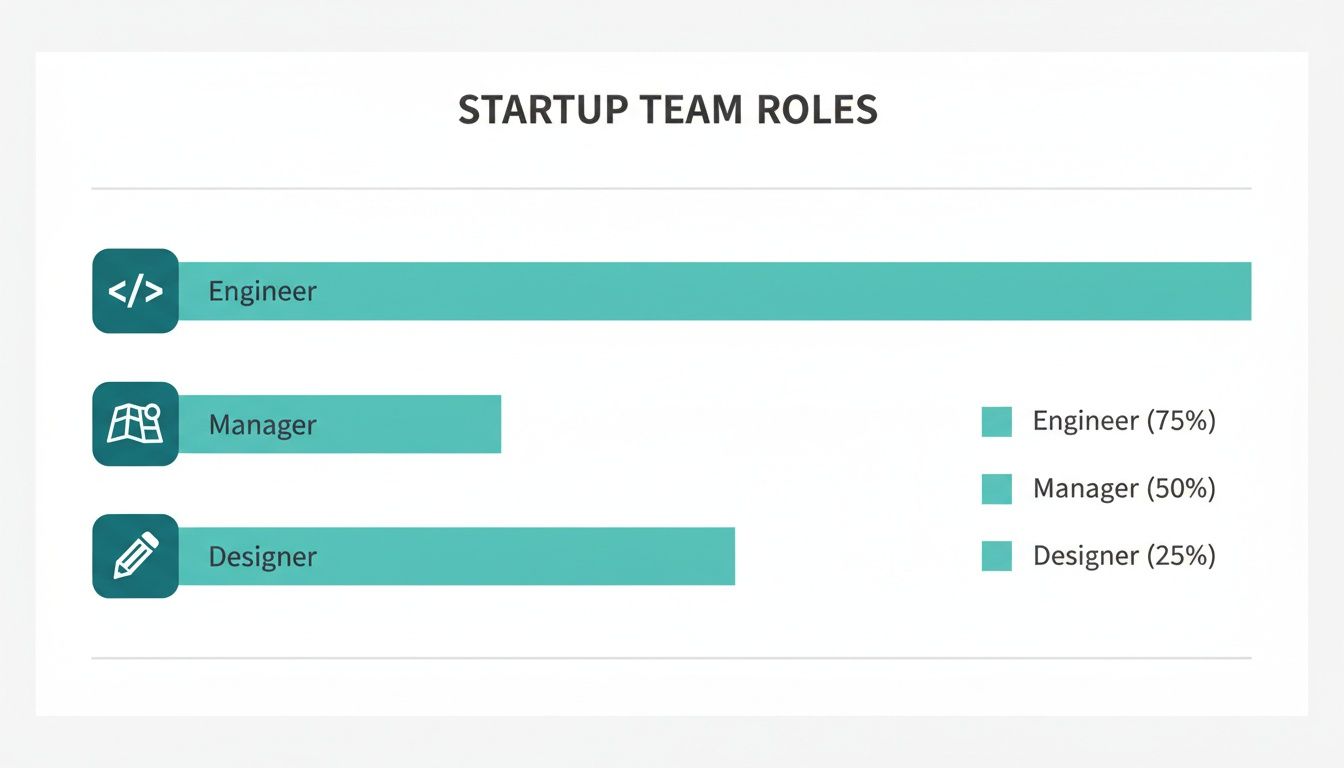
As the data shows, engineering roles make up the foundation. But right after funding, product management and design become critical for scaling the product and perfecting the user experience.
While remote work has changed the game, innovation and funding are still heavily concentrated in specific geographic areas. Targeting these high-growth ecosystems is one of the most effective ways to find a great startup role, especially in hot fields like AI.
For a look at the most active global startup hubs and what makes them tick, check out the table below. It breaks down the leading ecosystems, their core industries, and why they might be the right place for your next move.
Silicon Valley is still the undisputed leader, especially for AI. In 2023 and 2024 alone, over $30 billion was poured into AI-native startups there. But cities like New York and London are right behind. Together, the U.S. and China make up 56% of the total global Ecosystem Value, making them hotspots for opportunity.
Don't just look at where startups are now; look at where the talent and capital are flowing. A city with a sudden surge in VC funding or an influx of experienced tech talent is often a breeding ground for the next wave of breakout companies.
When you combine your personal thesis with data-driven research on funding and geography, you create a powerful, focused approach. This method ensures you spend your time talking to companies that actually have the resources and the intent to hire for the kinds of roles you want. To dig deeper into spotting these opportunities, check out our guide on how to find early-stage startup jobs.
Let's be blunt: startup founders don't read resumes. They scan them. They have maybe 15 seconds to figure out one thing: can you solve their most painful, urgent problems?
A corporate resume filled with vague phrases like "managed projects" or "collaborated with teams" is a one-way ticket to the "no" pile. It tells them nothing. Your job is to build a resume that reads less like a list of duties and more like a highlight reel of your biggest wins.
Founders are hunting for builders, problem-solvers, and people who get things done. Your resume is the first piece of evidence you have to prove you're one of them.

This is the single most powerful change you can make. Reframe every single bullet point around a measurable outcome. The classic STAR method (Situation, Task, Action, Result) is useful here, but you need to live and breathe the "Result" part.
Here’s what that looks like in practice.
See the difference? The second version tells a founder exactly what you can do for them. It proves you can drive growth and contribute directly to the bottom line—which is all that matters in a startup.
A great startup resume answers one simple question: "If we hire you, what problems will disappear?" Every bullet point should be a tiny case study proving you can make a real difference from day one.
The current market makes this even more critical. New grad hiring at startups is down a staggering 30% from 2019, while demand for experienced, specialized talent is through the roof. Founders are betting on people who bring immediate value, not just potential. For more on this, check out SignalFire's 2025 State of Tech Talent Report.
While showing impact is universal, how you show it changes depending on your role. Founders are looking for different signals from an engineer than they are from a PM or a designer.
For Software Engineers
Your job history is only part of the story. Your GitHub, side projects, and open-source contributions often speak louder than your last job title.
For Product Managers
Your resume needs to scream product sense and a deep obsession with the user. Every point has to connect your work to a business outcome.
For Designers
Your portfolio is critical, but your resume is what gets them to look at it. Position yourself as a strategic problem-solver who uses design to hit business goals.
By framing your experience this way, you're not just applying for a job. You're making a business case for why you're the best person to help that startup win. For a deeper dive, check out our guide on startup resume best practices.
Let's be honest: blasting your resume across massive, generic job boards is a great way to get ignored by startups. Founders and small teams simply don't have the bandwidth to sift through a mountain of applications. They live on curated platforms and rely on direct, meaningful connections to find talent.
If you really want to land a role at a startup, you need to stop acting like you're applying to a Fortune 500 company. It's time to trade the megaphone for a laser pointer. Less noise, more precision.
The single biggest mistake I see people make is treating their startup search the same way they'd look for a corporate job. It's a completely different game. Your dream role isn't buried on Indeed; it's waiting on a platform built specifically for high-growth tech companies. These sites are all about quality and fit, not just volume.
Instead of spreading yourself thin, focus your energy on these essential platforms:
If you're curious about what goes into building these platforms, checking out insights from Saas Design Agencies for Job Boards can offer a peek behind the curtain. For a deeper dive on developer-specific tools, our guide on the best job sites for software engineers breaks down even more options.
"Networking" can sound transactional and gross. For startups, it's really just about building genuine relationships. Founders want to hire people they know and trust, or at the very least, people recommended by someone they trust. Your goal isn't to ask for favors; it's to get on their radar by adding value first.
The mindset shift is simple but powerful: move from "what can I get?" to "what can I give?" It’s about joining the conversation long before you ever ask for a job.
Today, the digital town square for the tech world is on platforms like X (formerly Twitter) and in niche Slack or Discord communities. This is where ideas are born, problems are debated, and talent is regularly discovered.
Follow the founders, lead engineers, and VCs at the companies you find interesting. But don't just be a lurker—engage thoughtfully. For example, if a founder of a FinTech startup you admire posts asking for feedback on a new feature, don't just "like" it. Write a thoughtful reply: "Love the direction. Have you considered adding X to solve Y user problem? Saw Revolut do this and it really streamlined their flow." This adds value and gets you noticed.
A single, well-thought-out reply to a founder's post on X can be more powerful than a hundred cold applications. It shows you're engaged, you understand their challenges, and you think critically about their space.
Sometimes, the most exciting opportunities aren't posted anywhere. This is where a sharp, well-crafted cold email can open doors that no job board ever could. There's a right way and a very, very wrong way to do this. The wrong way is a generic, self-serving template that gets deleted on sight.
The right way makes it about them, not you. A great cold email is short, specific, and shows you've actually done your homework. It proves you have a genuine interest in their company and a clear grasp of the problems they're trying to solve.
Here’s a practical example for a software engineer emailing a seed-stage AI company:
Subject: Idea for your API documentation
Hi [Founder Name],
Big fan of what you're building at [Company Name]. I was particularly impressed with your recent launch of the new summarization model—the speed is incredible.
As a dev who loves clean documentation, I noticed a small opportunity to make your API reference even more accessible for new users by adding interactive code snippets. At my last role, I built a similar solution that cut developer onboarding time by 30%.
Not sure if this is a priority, but I'd love to chat for 15 minutes about your current roadmap if you're open to it.
Best,
[Your Name]
This approach instantly reframes you. You're no longer just another applicant; you're a proactive problem-solver who took the initiative. That’s a classic startup trait, and believe me, founders notice.
The startup interview process is a different beast entirely. It’s less about reciting algorithms from a textbook and more about showing how you think, adapt, and solve messy, ambiguous problems. Founders aren’t hunting for a perfect answer; they’re looking for a thought partner who can handle the beautiful chaos of building something from the ground up.
This is your shot to showcase more than just your technical chops. It's about proving you have a genuine passion for their mission and what's often called a 'founder mentality'—a readiness to take ownership, move fast, and think critically about the business itself.
Forget rigid, structured interrogations. Startup interviews often feel more like dynamic conversations, especially when you're speaking directly with a founder or senior leader. The discussion can pivot from your past projects to their biggest business challenges in a heartbeat. The whole process values practical demonstration far more than theoretical knowledge.
This usually leads to a take-home assignment. While some people groan at the thought, they're actually a golden opportunity to shine.
The take-home isn't just a test of your skills; it's a test of your commitment and ability to deliver high-quality work without someone holding your hand. Knock it out of the park, and you’ll immediately separate yourself from the pack.
Getting an offer is a huge win, but now the real due diligence begins. A startup offer is more than a salary—it’s a complex package with a significant equity component. Getting your head around this is absolutely critical to making a smart career move.
Your offer will almost certainly include stock options, which give you the right to buy company shares at a predetermined strike price. These options don't become yours all at once. They unlock over time through a process called vesting, which is typically a four-year schedule with a one-year "cliff." In plain English, you have to stick around for at least one year to get your first chunk of options.
Before you even think about accepting, you need to put on your investor hat. After all, you’re investing your most valuable asset—your time and talent—in this company's future. That means asking direct, pointed questions about the company’s financial health.
Don't be shy. Any founder worth their salt will respect your diligence. Here's your essential checklist:
This financial insight is just as important as the company culture. It's also smart to keep an eye on broader hiring trends. For instance, data from Ravio shows that while hiring at early-stage startups in Europe has cooled to 27%, the UK still leads overall tech hiring at 32%, making it a strong market. You can dig into these European tech hiring trends to get a better sense of where the opportunities are.
Landing a role at a great startup isn't about sending out a hundred résumés and hoping for the best. It’s about running a deliberate, repeatable system. The whole game changes when you shift from being a passive applicant to an active hunter, searching for the right mission to join.
This playbook gives you that system. It starts with learning to think like a startup detective—spotting high-growth companies by tracking funding rounds and getting laser-focused on a niche that excites you. From there, it’s all about crafting a résumé that screams impact and results, not just listing responsibilities.
The candidates who consistently land the best startup roles treat their job search like a strategic campaign. They're proactive, they're persistent, and they know exactly what they're looking for.
Here’s a quick rundown of the core moves:
Beyond just a solid résumé, learning how to build your personal brand is what will really set you apart and help you forge meaningful connections in this competitive space.
A targeted approach takes more effort upfront, but it’s the only reliable path to landing a role where you can actually help shape a company's future. You’re not just finding another job; you’re making a strategic investment of your time and talent.
You've got the framework. The playbook is in your hands—now it's time to get started.
Jumping into the startup world can feel like learning a new language. You're going to have questions. Here are some of the most common ones I hear from talented tech folks, along with some straight-up, practical advice to help you navigate your search.
This is a huge one. But here's the secret: coming from a big, corporate environment isn't a liability if you know how to talk about it. Founders couldn't care less about the logo on your last paycheck. What they really care about is your ability to get things done and solve problems without a 10-person support team.
The trick is to reframe your experience.
Instead of listing formal job duties, you need to highlight your "bias for action." Think about the times you took the initiative, worked with little to no supervision, or built something from the ground up. Did you write a script to automate a painful, manual process for your team? That’s exactly the kind of scrappy, founder-like thinking they want to see.
And don't forget your side projects—they're your ace in the hole. A personal app you built, a clean GitHub repo, or a sharp blog post breaking down a market trend can be way more impressive than a decade at a Fortune 500 company. These things prove you're a builder at heart, someone who creates just for the sake of it. To a founder, that's pure gold.
Founders don't hire résumés; they hire problem-solvers. Reframe your corporate experience by highlighting every project where you acted like a founder within your role—taking ownership, moving quickly, and delivering tangible outcomes.
The potential upside of a startup is massive, but let’s be real—the risks are, too. Your job during the interview process is to vet them just as hard as they're vetting you. Spotting the warning signs early can save you from joining a company that’s already taking on water.
A few red flags are almost impossible to ignore:
Ah, the classic startup negotiation. It’s all about balancing cash in your pocket now (salary) with the potential for a big payday later (equity). There's no magic formula here; the right mix is completely personal and depends on your financial situation and how much risk you're willing to stomach.
Here’s a simple framework to guide you.
First, figure out your "cash floor." This is the absolute minimum salary you need to cover your bills, live comfortably, and not stress about money. This number is your non-negotiable. Don't let the dream of a massive equity grant trick you into accepting a salary that will keep you up at night.
Once you’ve got your cash needs covered, then you can start thinking about the trade-off. As a general rule, the earlier the startup, the lower the salary but the bigger the potential equity upside. A seed-stage company might offer less cash but a grant that represents a meaningful chunk of the company. A Series B company, on the other hand, will probably offer a salary closer to market rate but a smaller slice of equity.
Ask yourself: "Am I in a financial position to bet on this company's long-term success?" If the answer is yes, then optimizing for more equity can be a massive wealth-building opportunity.
Ready to find the perfect startup role without the noise? Underdog.io is a curated marketplace that connects you directly with top, vetted startups. Stop blasting out resumes and let the best opportunities come to you. Create your free profile today.