The global restaurant technology market is projected to reach USD 27.05 billion by 2035, up from USD 6.9 billion in 2026, according to Business Research Insights on restaurant technology market growth. That kind of expansion is why restaurant technology companies are hiring across product, data, infrastructure, payments, and AI.
This isn't a market for people who only want polished consumer apps. It's a market for people who can handle messy real-world systems, unreliable connectivity, hardware constraints, payment flows, kitchen operations, and software used by teams who don't have time for a bad interface. If that sounds appealing, restaurant tech can be one of the more interesting career paths in vertical SaaS.
This guide looks at restaurant technology companies as employers, not as vendor picks for operators. The useful question isn't just which platform has more features. It's which company is building durable infrastructure, which one is boxed into a narrow niche, and where your skills will matter most. If you're also mapping the broader funding environment, it helps to search for restaurant sector investors.
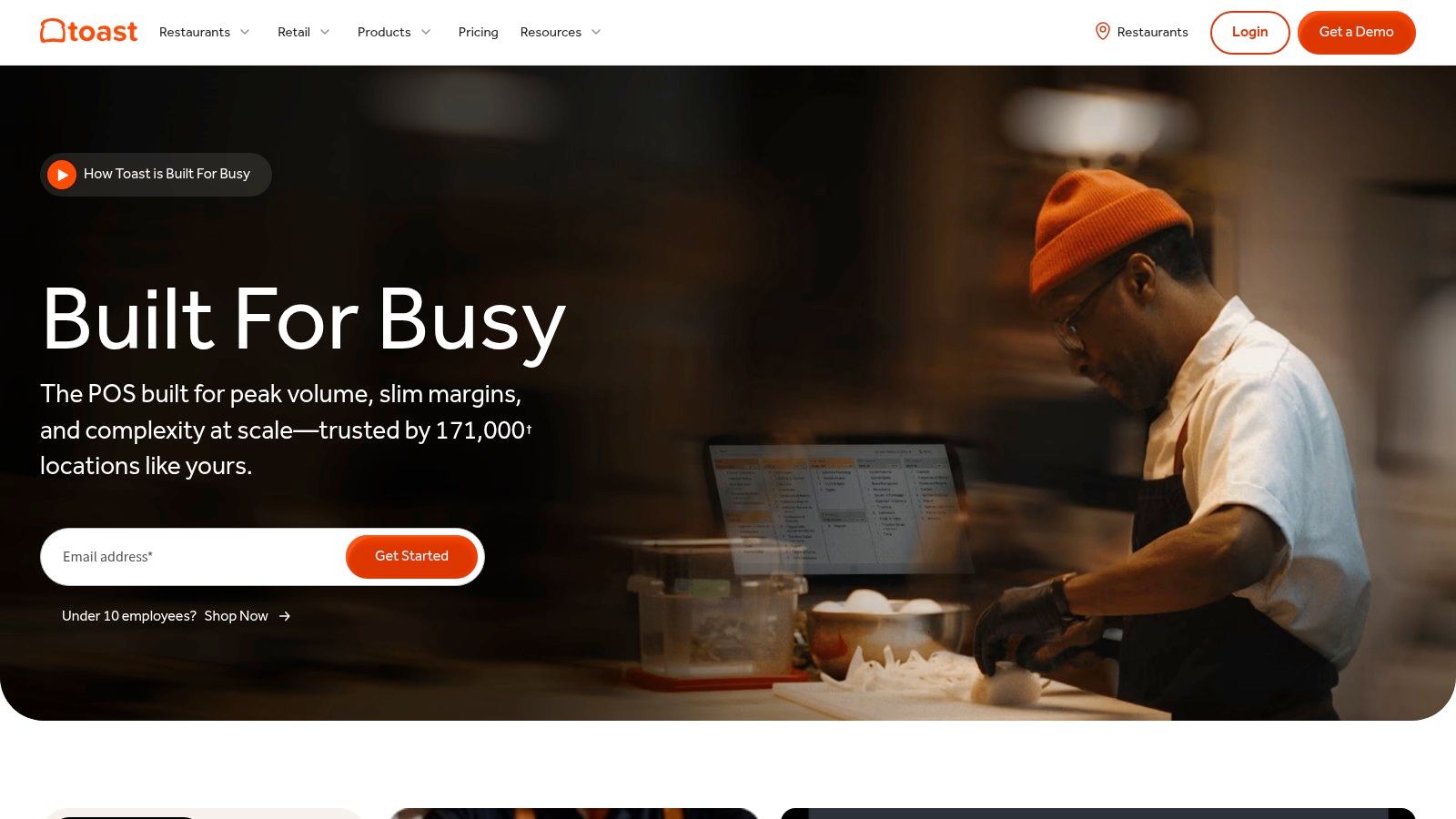
Toast is one of the clearest examples of a company that turned a point solution into a broad operating system. The platform spans POS, online ordering, delivery, payroll, reservations, guest marketing, and back-office workflows through products like xtraCHEF and Toast Tables. For a tech professional, that breadth matters because it creates career paths across multiple product surfaces without leaving the same company.
Scale changes the kind of work you get to do. Toast serves more than 156,000 locations globally and added 8,000 new venues in the second quarter of 2024, according to Landbase's analysis of fastest-growing restaurant POS tech firms. That usually translates into hiring demand for distributed systems, payments, hardware-software integration, support tooling, and data platform roles.
Engineers at a company like Toast usually work closer to operations than they would at a generic SaaS firm. Offline mode, handheld hardware, kitchen display systems, and kiosk flows all create edge cases that don't show up in clean web-only environments. Product managers need to prioritize reliability over novelty more often than they'd expect.
A few practical trade-offs stand out:
Practical rule: If you want to work on software that has to survive dinner rush conditions, Toast is a stronger bet than a restaurant-adjacent marketing tool.
The product site is Toast's restaurant platform.
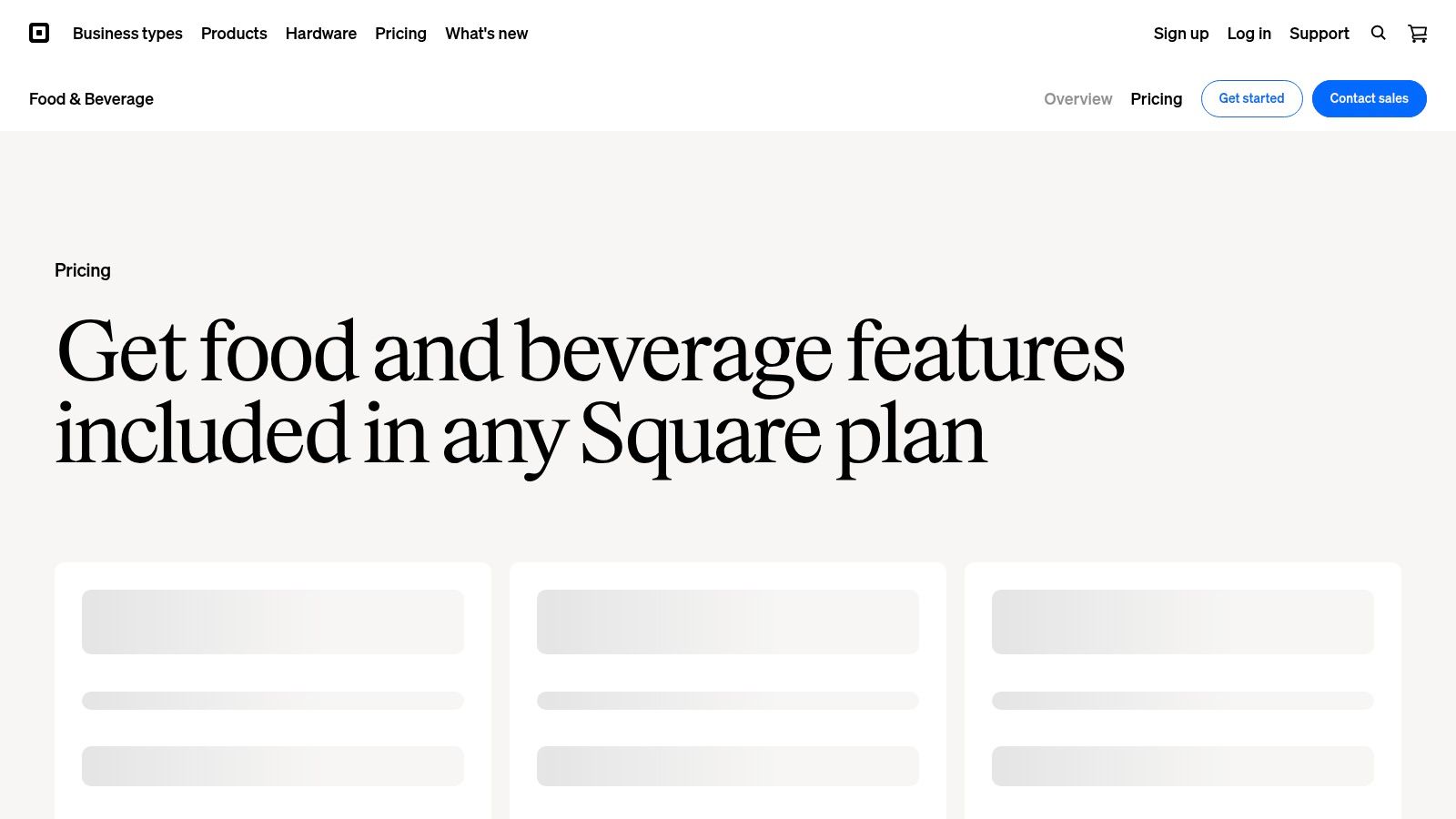
Square for Restaurants sits at a different point in the market. It's easier to onboard, easier to understand, and usually more approachable for smaller operators. That positioning makes it a useful employer for people who like product simplicity, self-serve growth, and commerce infrastructure more than highly customized enterprise rollouts.
The product combines restaurant POS, payments, kitchen display tools, kiosks, online ordering, payroll, and inventory add-ons inside the broader Square ecosystem. That ecosystem matters because it lets teams work across adjacent financial products, not just restaurant workflows. If your background is in fintech, risk, or developer platforms, Square can be a cleaner bridge into hospitality tech than a restaurant-only company.
The advantage is clarity. The pricing model is more transparent than much of the category, deployment is relatively quick, and the hardware options are broad. For product and growth teams, this usually means less time fighting bespoke implementations and more time improving activation, conversion, retention, and multi-product adoption.
The downside is just as clear. Some advanced functionality comes through added modules, so the hardest product work often lives in packaging, integration quality, and keeping the experience coherent as more capabilities get layered in.
Square is a good career choice if you want restaurant exposure without committing your entire career to restaurant-specific workflows.
For engineers and PMs, likely role families include payment systems, mobile app development, POS experiences, small-business onboarding, inventory integrations, and internal tools for support and operations. The product site is Square for Restaurants pricing and platform details.
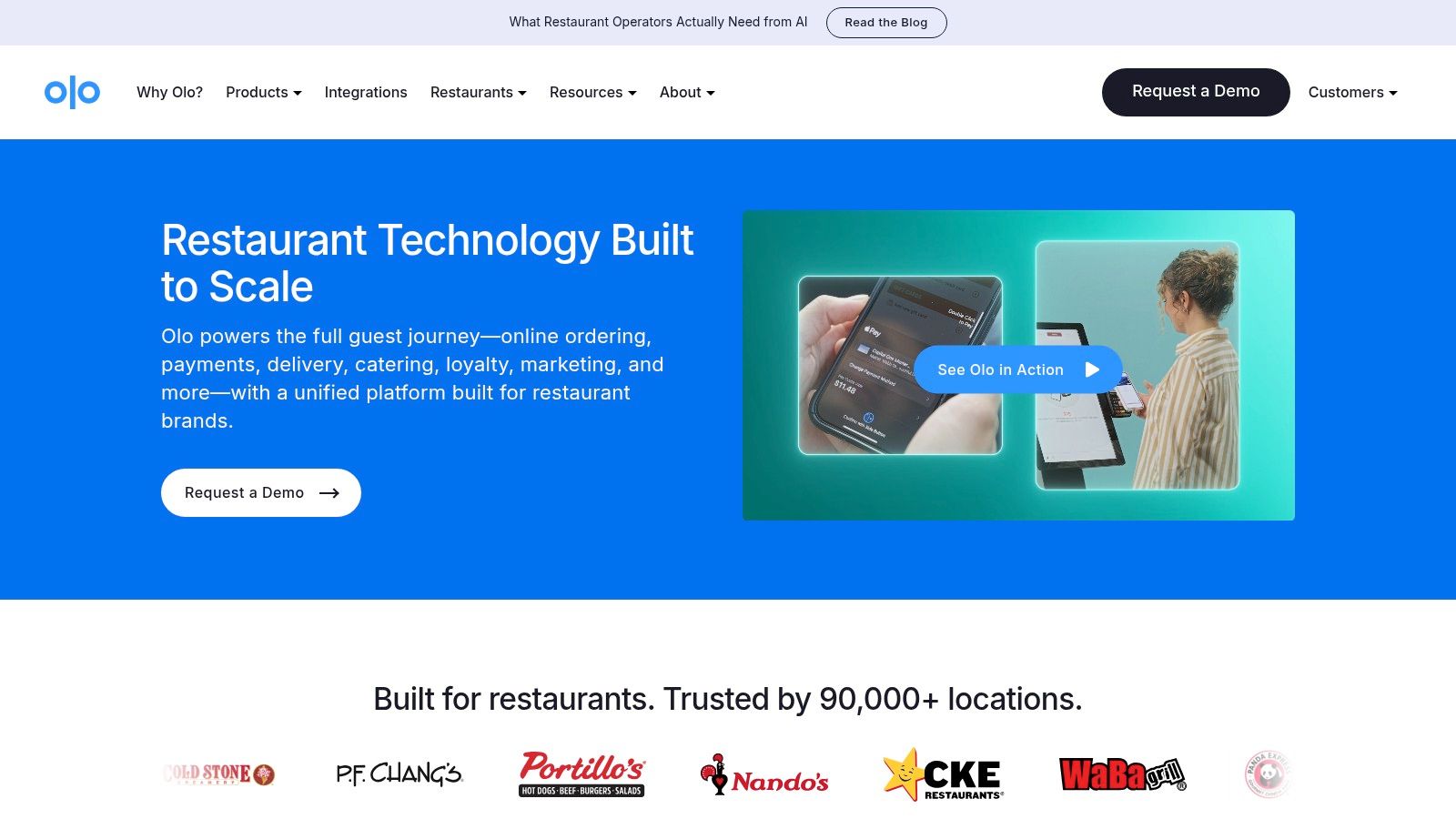
Olo is one of the clearer enterprise bets in restaurant tech. Its core work sits around direct ordering, delivery dispatch, marketplace integrations, payments, kiosks, loyalty, and guest engagement for large restaurant brands that operate across many locations and ordering channels. For tech candidates, that usually means fewer small-business constraints and more work on scale, interoperability, and operational reliability.
The company is strongest where restaurant systems get messy. Orders have to pass cleanly between first-party web and mobile experiences, third-party delivery platforms, POS vendors, payment layers, and store-level menu logic. That creates real engineering depth. Teams working on APIs, middleware, event processing, observability, and failure recovery will recognize the appeal quickly.
The trade-off is just as real. Enterprise restaurant software rarely ships with the speed of a consumer app startup. Product decisions often carry account-level implications, implementation timelines are longer, and integration quality matters as much as net-new features. Candidates who want greenfield product work every quarter may find that frustrating. Candidates who like hard platform problems and high switching-cost software often will not.
Career fit is usually strongest in a few role families:
Olo makes the most sense for people who want restaurant exposure through infrastructure rather than front-of-house workflows. The company site is Olo's digital ordering and guest engagement platform.
SevenRooms sits closer to a guest data and revenue platform than a traditional restaurant system. That distinction matters for candidates. Engineers, PMs, and data scientists evaluating employers in restaurant tech will find a company shaped around identity, retention, and front-of-house operations, not payment rails or accounting workflows.
The product surface is broad. Reservations, waitlists, table management, guest profiles, messaging, and marketing automation all connect to one operating model. That creates a specific kind of technical and product challenge. Teams have to connect behavioral data with real service constraints, then turn it into software that hosts, managers, and marketers can use during live operations.
Career fit is strongest for people who like applied data products and operational software at the same time.
There is a real trade-off. Guest experience software sounds consumer-adjacent, but the buyer and daily user are still business operators under pressure. Product teams cannot optimize only for engagement metrics. They also have to reduce friction at the host stand, preserve brand control for hospitality groups, and avoid turning personalization into noise.
That makes SevenRooms a better fit for candidates who like software with visible business impact and messy real-world inputs. It is a weaker fit for people who want pure consumer product loops or infrastructure work far removed from end-user behavior.
You can explore the platform at SevenRooms guest experience software.

Restaurant365 is a back-office company first. That's exactly why it deserves attention from engineers and PMs who prefer operational depth over flashy consumer surfaces. Accounting, inventory, scheduling, payroll, AP automation, and financial reporting are the core workload here.
A lot of restaurant software still breaks down at the handoff between front-of-house activity and actual financial controls. Restaurant365's value is in connecting those layers. If your background is ERP, workforce tech, accounting automation, or finance systems, this is one of the more direct matches in the restaurant technology companies category.
Cloud-based restaurant management software held more than 54.0% market share in 2024, and the market is projected to grow from $6.6 billion in 2025 to $24.1 billion by 2033, according to Grand View Research on restaurant management software. That tailwind favors software businesses that own critical operational records, not just engagement layers.
The trade-off is implementation weight. ERP-style rollouts are slower, change management is harder, and product teams have to think carefully about migrations, permissions, auditability, and reporting accuracy. Some people find that exhausting. Others build excellent careers on exactly that complexity.
A few role patterns stand out:
The company site is Restaurant365 restaurant management software.
BentoBox sits closer to the digital storefront. It helps restaurants turn their own websites into revenue channels through online ordering, QR order and pay, catering, gift cards, events, and merchandise. For tech professionals, that means the work often blends CMS tooling, conversion design, SEO-aware architecture, and restaurant commerce.
This is a good employer type for people who like tangible business outcomes. A menu update, a checkout flow improvement, or a cleaner catering funnel can affect revenue quickly. Compared with deeper operational platforms, BentoBox-style companies often let teams ship user-facing improvements with shorter feedback loops.
Restaurants increasingly want first-party channels they control. The product thesis behind BentoBox is simple. Don't send guests somewhere else if your own site can take the order, sell the event ticket, and capture the customer relationship.
That creates interesting work for:
The limitation is scope. If you want to work on labor forecasting, inventory intelligence, or deep accounting systems, this isn't the center of gravity. It's a commerce and brand platform, not a full restaurant operating system.
The product site is BentoBox restaurant websites and ordering tools.
Popmenu sits at the intersection of restaurant marketing software, guest messaging, and AI-assisted campaign execution. For tech professionals, that makes it more interesting than a standard website vendor. The company has to solve for merchant onboarding, content generation, conversion tracking, messaging compliance, and integrations that keep menus and ordering flows current.
That mix creates a specific employer profile.
Teams here are likely to value engineers and PMs who can ship features that save operators time while still protecting brand quality. In practice, that means workflow design matters as much as model quality. A restaurant does not need impressive AI output in isolation. It needs tools that draft a promotion, let staff edit it quickly, send it to the right audience, and show whether it drove orders.
Popmenu is a stronger fit for people who want to work on applied AI and growth systems for SMB restaurants. It is less compelling for candidates who want products focused on operational aspects such as labor planning, accounting automation, or kitchen analytics. The product challenge is different. Success depends on adoption, retention, and measurable revenue impact at the merchant level.
Ask hard questions in the interview process:
Those answers reveal a lot about product maturity. The best restaurant AI teams are disciplined. They treat automation as assistance inside an existing workflow, not as a replacement for operator judgment.
From a career standpoint, Popmenu makes sense for full-stack engineers, growth product managers, data scientists focused on targeting and experimentation, and applied ML teams working on practical generation and recommendation problems. The company site is Popmenu restaurant marketing and ordering platform.
| Solution | Implementation complexity | Resource requirements | Expected outcomes | Ideal use cases | Key advantages |
|---|---|---|---|---|---|
| Toast | Moderate, multi-module setup with hardware provisioning | Subscription plus approved Toast hardware, staff training, ongoing support | Unified FOH/BOH operations, fewer integrations, fast feature velocity | Full-service restaurants and multi-module operations wanting all-in-one POS | Deep restaurant-specific features, broad hardware, frequent updates |
| Square for Restaurants | Low–Moderate, self-serve to add-on complexity as needed | Transparent plans, optional devices and per-device add-ons | Quick deployment, predictable billing, scalable with add-ons | Independents and SMBs needing fast onboarding and clear pricing | Easy start, integrated payments/banking, wide hardware options |
| Olo | High, enterprise-grade integrations and POS coordination | Enterprise budget, integration teams, coordinated vendor work | Centralized direct ordering and dispatch, fewer marketplace tablets | Multi-unit/enterprise brands managing marketplaces and delivery | Proven at national scale, strong menu/marketplace controls |
| SevenRooms | Moderate, CRM and reservation workflow integration | Subscription with CRM/data integration and staff adoption | Rich guest profiles, personalized service, higher repeat visits | Restaurants and hospitality venues prioritizing guest experience | Robust guest CRM, reservations tied to marketing/operations |
| Restaurant365 | High, ERP-class implementation and change management | Implementation team, accounting resources, POS/vendor integrations | Centralized accounting/inventory, accurate COGS, reduced reconciliations | Multi-location operators needing unified back-office finance | Purpose-built restaurant accounting/inventory, multi-unit roll-ups |
| BentoBox | Low–Moderate, website and commerce module deployment | Quote-based subscription, content inputs, POS connector | Commission-free online orders, improved website-driven revenue | Restaurants wanting brand-led sites and commission-free ordering | SEO-optimized sites, conversion-focused commerce modules |
| Popmenu | Low–Moderate, marketing platform and site integration | Subscription, content inputs, optional studio/AI services | Measurable marketing lift, consolidated website/ordering/marketing | Operators needing automated marketing without large in-house teams | AI-driven marketing content, interactive menus, consolidated stack |
The strongest applicants don't pitch themselves as generic SaaS talent. They show that they understand hospitality as an operating environment. Restaurants run on peak-load pressure, thin margins, real-time service expectations, hardware dependencies, and staff who can't stop to decode a confusing interface. If your resume doesn't reflect that kind of empathy, it will feel abstract.
There's real opportunity here. The global restaurant technology market was valued at USD 59.3 billion in 2024 and is projected to reach USD 314.85 billion by 2033, according to Restroworks' market outlook for restaurant technology. But market growth alone won't help you stand out. Hiring teams want evidence that you can ship reliable systems under operational constraints.
Focus your application on experience that maps cleanly to the category:
Another strong angle is showing judgment about automation. The restaurant industry doesn't reward AI theater. It rewards software that helps people do the job better. Industry commentary has highlighted a persistent gap between enthusiasm for automation and instances of AI failures in service settings, especially when the product gets in the way of hospitality, as discussed by NetSuite's review of restaurant technology trends. If you can speak clearly about when to automate and when not to, you'll sound far more credible than candidates who only talk about efficiency.
When you're ready to search, don't rely only on giant job boards. Curated networks can be better for category-specific startup roles. Use platforms like SDR hiring support for growth teams alongside targeted startup marketplaces to get in front of companies where product, data, and engineering leaders are actively building in this space.
If you want a cleaner path into high-growth tech companies, Underdog.io is worth using. It's a curated hiring marketplace built for startup talent, and the model is simple. You apply once, your profile is reviewed, and vetted companies reach out when there's a fit. For engineers, product managers, designers, and data professionals who want roles at ambitious startups without spraying resumes everywhere, it's one of the more efficient ways to get discovered.