You're probably staring at two offers that both look “good enough” on paper. One has the bigger cash number and a vague line about equity. The other pays a bit less now, but the grant is spelled out, the vesting is clear, and the upside might mean something. That gap is where most candidates get confused, and it's why jobs with equity need to be evaluated like investments, not perks.
If you're comparing startup offers, you're not just comparing compensation styles. You're choosing between guaranteed cash today and a probabilistic claim on future company value. That claim can be worth a lot, or nothing, and the difference usually comes down to the exact instrument, the vesting schedule, dilution, and the company's path to a real exit.
A candidate I'd take seriously will often get this comparison wrong on the first pass. They'll see $150,000 in cash plus “equity” on one offer and $135,000 plus a clearly defined grant on another, then assume the higher salary wins. That is lazy math. If the second company is earlier, growing faster, and structured cleanly, the lower-cash role can easily deliver the stronger long-term payoff.
Equity compensation is non-cash pay that gives you an ownership interest in the company, usually through stock options, restricted stock, stock appreciation rights, or an employee stock purchase plan, each with different mechanics and consequences JPMorgan Workplace Solutions. If someone says they're working for equity, the pay package includes shares instead of, or alongside, salary, which shifts part of your compensation from guaranteed cash to future company value that may or may not materialize Indeed.
Practical rule: treat equity as a claim on future company value, not as a signing bonus with better branding.
That matters because equity-bearing jobs are a bet on survival, growth, and liquidity. If the company never raises, never exits, or never creates a marketable event, the equity may never turn into money. The question is whether the grant is large enough, the vesting terms are sane, and the company has a believable path to a real exit.
The market context matters too. In startup and tech hiring, equity has stayed heavily concentrated by gender and race. Carta's 2023 annual equity report found that 76% of equity issued to employees between 2019 and 2023 went to men and about 75% went to white workers Carta. For candidates, that is a reminder that jobs with equity are ownership distribution mechanisms, and the terms behind them deserve real scrutiny.
You need the vocabulary before you can judge an offer. Most candidates hear “equity” and stop there, which is how they end up comparing cash, ownership, and speculation as if they were the same thing.
Stock options give you the right to buy shares later at a fixed price. You do not own the shares on day one, and the value only matters if the company's share price rises enough to make the exercise price worthwhile.
Restricted stock units, or RSUs, vest into shares after you stay employed long enough. They are cleaner, more common in public companies, and they do not hinge on a strike price.
Stock appreciation rights, or SARs, give you the increase in value without transferring shares. You are paid the spread, which makes them feel closer to a cash-settled bonus tied to stock performance.
Employee stock purchase plans, or ESPPs, let you buy company stock through payroll deductions, usually under a formal plan. They are common in public companies and are better for steady accumulation than for startup-style upside.
Here's the comparison I want candidates to use when reading an offer letter:
| Equity Instruments at a Glance | Who Grants It | Liquidity | Tax Trigger |
|---|---|---|---|
| Stock options | Private and public companies | Usually illiquid until exercise and an exit | Often at exercise, depending on type and outcome |
| RSUs | Mostly public companies, sometimes late-stage private firms | Liquid after vesting and trading access | At vesting |
| SARs | Employers that want stock-linked upside without transferring shares | Usually limited until settlement | At settlement |
| ESPPs | Public companies | Liquid after purchase and any holding rules | At purchase or sale, depending on plan design |
The table matters because the instrument decides your real risk. If you do not know which row you are in, you do not know what you are being paid. If you do not know when tax shows up, you do not know what the grant is worth after the government takes its cut.
For a technical or market-structure role, the vocabulary gets narrower. Employers may expect knowledge of execution concepts like VWAP, TWAP, FIX protocol, venue dynamics, and algorithmic order flow when the job sits closer to trading technology than general compensation design jobs24 technical equities analyst posting. That is a different animal from startup equity, but the rule is the same, know the instrument before you price it.
If the options are tax-qualified, the exercise decision can create a separate problem. Read the alternative minimum tax explained before you assume paper gains are free money.
For vesting mechanics, use this equity vesting schedule overview as a reference point. The point is not to memorize jargon. The point is to know when the grant becomes yours, when it can leave with you, and when it gets taxed.

Most bad equity decisions come from ignoring time, ownership shrinkage, and taxes. The offer letter gives you a number. Vesting, dilution, and tax treatment decide whether that number becomes money.
A common structure is a four-year vesting period with monthly vesting in equal installments of 1/48 each month The Skip. That means you don't own the whole grant on day one, you earn it over time by staying employed. If you leave early, you forfeit the unvested portion.
If you want the practical mechanics in one place, I'd also look at this equity vesting schedule overview. The point isn't to memorize legal jargon. The point is to know exactly when the grant becomes yours.
Dilution is what happens when new shares are issued in later rounds, which reduces your percentage ownership. A grant size that looks impressive on paper can mean very little if the cap table expands and your slice gets smaller. This is why the raw share count is almost never the number that matters.
Tax treatment depends on the instrument. ISOs can trigger AMT at exercise, NSOs are taxed as ordinary income at exercise, and RSUs are taxed as ordinary income when they vest. If you want a clear primer on the ISO side of that problem, Parkview Partners Capital Management has a useful breakdown of alternative minimum tax explained.
If you can't explain when your tax bill shows up, you don't understand the grant yet.
The useful sequence is this. Vesting tells you what you own. Dilution tells you what that ownership is worth. Taxes tell you how much of the value you keep. Skip any one of those and you're guessing.
This is the part most advice columns dodge. They talk about “upside” in vague terms, then stop before the math gets uncomfortable. Don't do that. You can size an equity offer in a few minutes if you know the grant, the ownership percentage, and the range of outcomes the company can realistically reach.
The formula is straightforward. Divide the number of granted options or shares by the company's fully diluted shares outstanding, then multiply that ownership percentage by a plausible future company valuation. That gives you the rough pre-tax value of your stake. If you want a fuller explanation of the mechanics, use this stock option valuation guide.
Use this example: 40,000 options on 10 million fully diluted shares equals 0.40% ownership. If the company exits at $500 million, that stake is worth about $2 million pre-tax. If the company exits at $50 million, it's worth about $200,000. If the company goes nowhere, it's worth zero.
Here's the table I'd use when scanning an offer:
| Same Grant, Different Outcomes | Exit Valuation | Ownership After Dilution | Pre-Tax Value |
|---|---|---|---|
| Strong outcome | $500 million | 0.40% | About $2 million |
| Modest outcome | $50 million | 0.40% | About $200,000 |
| Failure | $0 | 0.40% | $0 |
Now change the assumptions. Maybe that same grant gets diluted down to 0.25%. Maybe the exit valuation is lower than you hoped. Maybe the company never gets to a liquidity event. That is why the headline grant is only the starting point.
A better model is a low, middle, and high case. In a low case, the grant may be economically weak after dilution and taxes. In a middle case, it might beat the cash-only alternative. In a high case, it can create real wealth. The hard truth is that most startup equity is a low-probability, high-variance asset, so compare offers by expected value, not by share count.
My rule: if a candidate cannot explain the upside in one sentence and the downside in one sentence, they are not ready to sign.
That gap is where most candidates get confused, and it is why jobs with equity need to be evaluated like investments. For candidates trying to compare equity against cash, the same discipline applies to the rest of the comp stack. If you want a clean salary-negotiation framework to borrow from, use this how to negotiate salary offers guide and apply the same skepticism to the grant.
The labor-market context reinforces why this matters. In New York City, private sector employment reached 4,243,000 in May 2026, with jobs up 44,500 year over year, led by professional and business services, financial activities, and information New York State Department of Labor. In markets like that, equity-heavy compensation is part of the hiring fight, and you should value it like one.
Negotiating equity is not about squeezing one more random number out of a recruiter. It's about moving the levers that matter. If the company won't discuss those levers, that tells you a lot.
Grant size is obvious, but it's not the only variable. Strike price matters too, because a low grant with a favorable strike can be better than a bigger grant with a poor one.
Vesting schedule is another major lever. A four-year schedule with a one-year cliff is standard, and anything longer is a concession you should notice immediately. Acceleration terms also matter. Single-trigger and double-trigger acceleration are not the same, and the difference can change your payout if the company is acquired. Early exercise can help, but only if you understand the tax and liquidity implications before you use it.
If you want a clean salary-negotiation framework to borrow from, Acheloa Wellness, Inc. has a practical guide on how to negotiate salary offers. Use the same discipline for equity, but be more skeptical.
For a public company, the conversation usually changes. Grant size is often more rigid, and the debate shifts toward refresh grants and performance-based RSUs. At a private Series A startup, you still have room to negotiate the package itself, which is where real influence lives.
The hiring market is moving equity language beyond classic startup roles. Jobs now show up in community development, energy, health, and digital inclusion, not just engineering and product BMO community development and economic equity specialist listing. That makes it even more important to know whether the equity part of the offer is real compensation or just a buzzword.
The best source of equity-heavy jobs is still a warm intro. After that, I'd rank curated marketplaces above generic boards, then company career pages, then the broad job boards that bury equity in the fifth line of the posting.
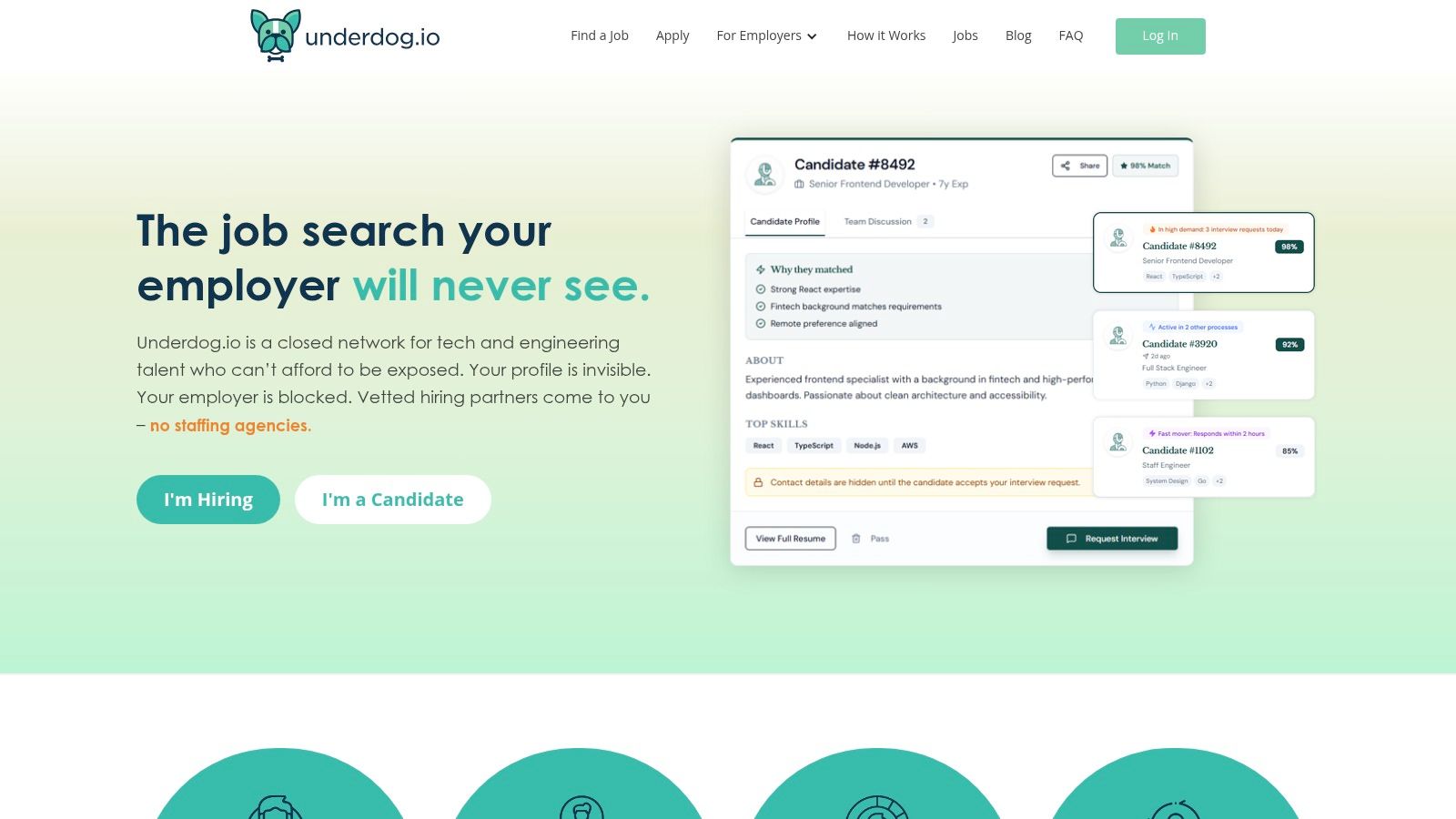
A curated marketplace filters out a lot of noise. Underdog.io is one example. It's designed for early-stage to Series B startups in New York City, San Francisco, and remote roles, and it screens both candidates and companies before making introductions. That matters because jobs with equity are only useful if the employer is real, the role is relevant, and the package is worth reading.
The platform is part of a wider pattern in hiring, where transparency and screening matter more than volume. If you're casually scanning roles, you might also want to browse opportunities at your pace instead of grinding through generic boards that treat equity like a footnote.
Don't trust a board that hides compensation and then asks you to discover the upside later.
If you want a broader view of startup sourcing, Underdog also has a useful roundup of best sites for startup jobs. That's the right lens. You're not looking for any job. You're looking for one where equity is part of the hiring logic, not just marketing copy.
The search strategy should match the offer strategy. If you know how to evaluate the grant, you can afford to be more selective about where you apply. If you don't, you'll waste time on jobs that advertise equity but can't explain what it's worth.
Use this before you sign anything with equity attached.
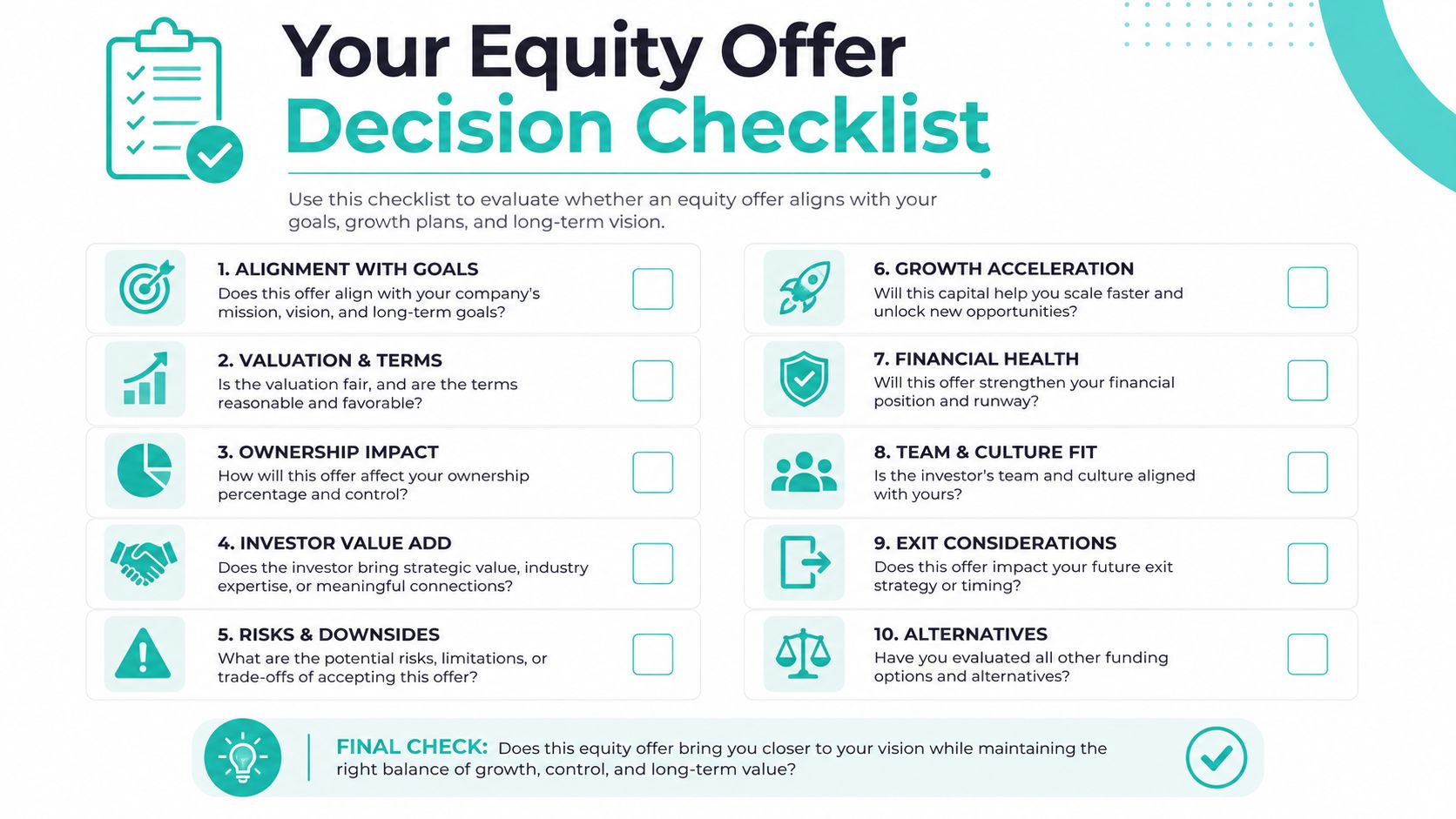
Equity is a probabilistic claim on a future event. The only honest way to compare two offers is to attach a probability to each outcome and compute expected value. Anything else is just comparing storylines.
If an offer looks rich on paper, pressure-test the grant size, the cap table, the strike, the vesting schedule, and the tax hit together. One weak link can wipe out the headline number. A smaller grant with clean terms often beats a bigger grant with unclear dilution or ugly taxes.
Underdog.io connects candidates with vetted startup and high-growth roles, including jobs where equity is a real part of the compensation conversation. If you are ready to stop guessing and start comparing offers like an operator, visit Underdog.io and look for roles where the salary, the grant, and the upside are all on the table.