You’re probably doing some version of the same thing most product candidates do when they start looking at san francisco product manager jobs. One tab has LinkedIn. Another has Indeed. A third has a startup careers page someone sent you. The roles look exciting, the compensation ranges look all over the place, and half the listings seem to ask for a PM who can do strategy, analytics, user research, GTM alignment, and AI prototyping before lunch.
That reaction is rational. San Francisco is still the most concentrated product market in the country, but it’s also one of the easiest places to waste months on the wrong search strategy. Good candidates often lose because they apply too broadly, tell their story too generically, or chase headline companies when their profile would land faster and better at a high-growth startup.
The more effective move is to treat the Bay Area market like a set of sub-markets. Startup PM hiring is different from big tech PM hiring. Series A looks different from Series C. AI product roles screen differently from classic B2B SaaS roles. If you want a grounded view of the broader startup ecosystem first, this overview of startup jobs in San Francisco is a useful companion.
San Francisco still pulls product managers for the same reason it always has. Important products get built here, founders hire aggressively when they find conviction, and strong PMs can reshape their careers quickly if they join the right team at the right stage.
But the market punishes vague positioning. “I can work on anything” sounds flexible. In practice, it reads as unfocused. The candidates who move fastest usually know exactly where they fit: developer tools, fintech infrastructure, applied AI, growth product, enterprise workflows, consumer retention, internal platforms.
A lot of san francisco product manager jobs also look similar on paper while being completely different in the day to day. One company wants a PM to run a tight discovery process with design and engineering. Another wants a mini-GM who can define pricing, partner with sales, and own expansion revenue. Another needs someone to clean up product ops and ship a backlog that got ahead of itself.
The Bay Area rewards specificity. A narrower story usually opens more doors than a broad one.
That’s the frame for the rest of this guide. Not how to spray applications. How to target the startup path in San Francisco with enough precision that founders, recruiters, and hiring managers can immediately see why you belong in the room.
A San Francisco startup opens a PM search on Monday and has a full inbox by Friday. That volume creates a false signal for candidates. It can look like a wide-open market when the real story is tighter. Bay Area companies still hire plenty of product managers, but they hire with narrower mandates, sharper level definitions, and less patience for generic positioning.
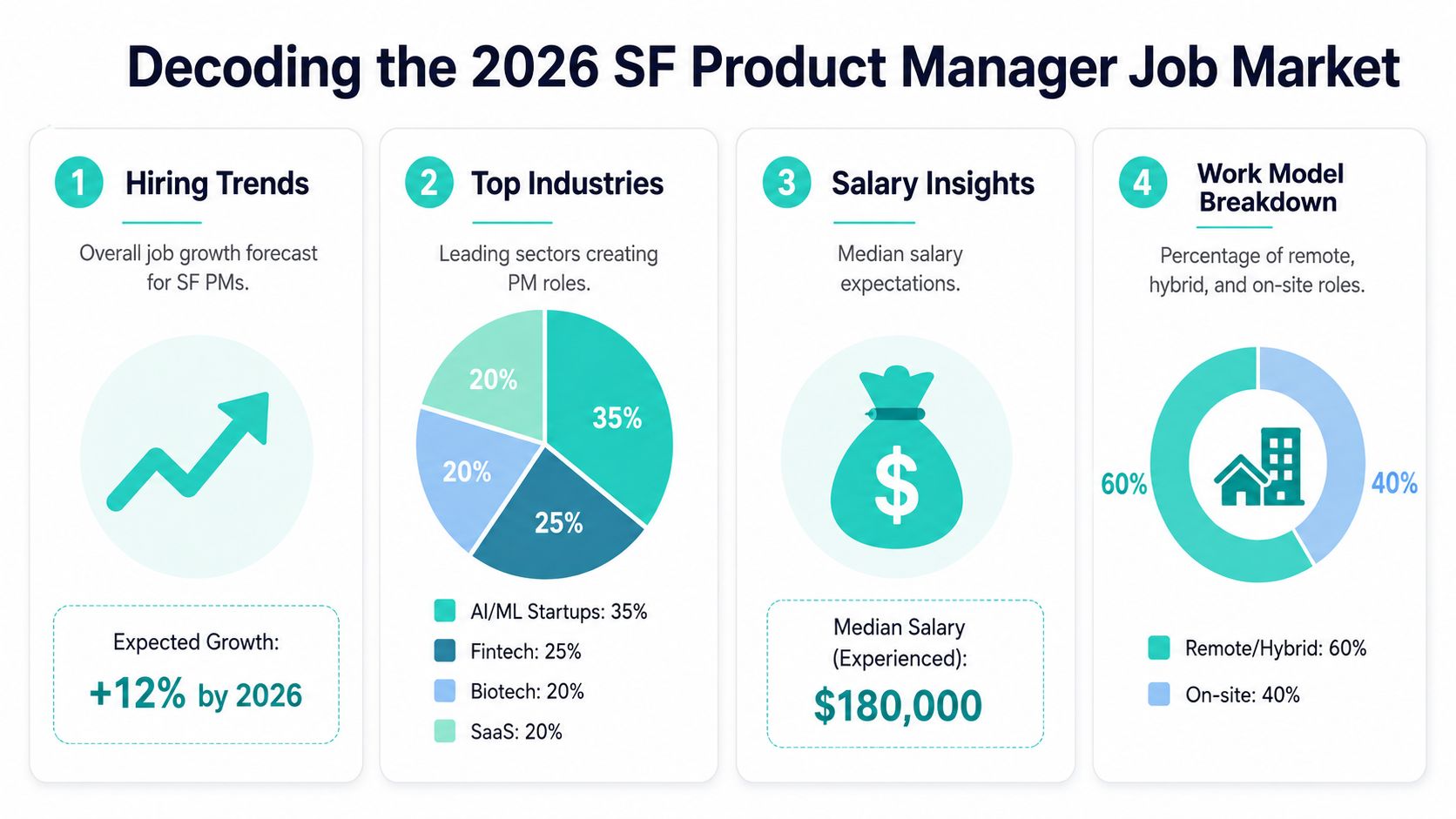
LinkedIn identified 698,945 people listing Product Manager as their primary role as of late 2023, up from about 146,333 in 2014. In San Francisco specifically, Indeed listed 1,552 active PM roles, which points to a large and still highly active market rather than a niche hiring category, as summarized by CPO Club’s product management career statistics.
The useful read on that demand is not raw job count. It is how companies define the problem they need solved.
In San Francisco, the strongest startup teams rarely post for a broad “PM who can do anything.” They post for someone who can fix onboarding friction, stand up product analytics, bring order to a messy roadmap, ship an internal AI workflow, or partner with sales on enterprise expansion. Big tech can absorb more abstraction because the machine is already built. Startups usually cannot. They hire against an immediate operating gap.
Compensation bands also reflect that stratification. Associate Product Managers average $101,031, Technical Product Managers $185,667, Senior Product Managers $192,355, and Chief Product Officers $291,154, according to the same market breakdown noted earlier.
That spread matters for a practical reason. Candidates often over-focus on title prestige and under-focus on level fit. In startup hiring, a mis-leveled application creates doubt fast. If a company needs a senior PM who can set direction with limited oversight, a strong mid-level candidate may still lose the process. If the role is more execution-heavy, a very senior candidate can look expensive, impatient, or mismatched for the work.
Level is only half the screen. Domain fluency is the other half.
A technical PM in infrastructure, data, or AI tooling will usually face harder scrutiny on system thinking, instrumentation, and engineering trade-offs than a PM in a lighter consumer feature role. The reverse is also true. A growth PM may be expected to speak fluently about activation, retention, and experimentation in ways a platform PM is not.
Across the searches I have seen close in the Bay Area, startup PM demand tends to cluster into four buckets:
Many searches go sideways because candidates use one resume, one portfolio story, and one interview script for all four buckets. That approach works poorly in San Francisco startup hiring because each bucket signals a different risk profile to the company.
The Bay Area remains attractive for one reason. The range of bets is unusually good.
A qualified PM can interview with a late-stage infrastructure company, a consumer app trying to restart growth, and a venture-backed AI startup building its first real product discipline, all within the same month. Few markets offer that mix of company stage, product complexity, and career upside in one place.
The candidates who make the most of it search with a thesis. They choose a stage, a product type, and a problem they are credible at solving. That is the startup PM advantage in San Francisco. You do not need to compete for every PM role. You need to be the obvious fit for the subset of high-growth companies that have the problem you already know how to handle.
Those searching san francisco product manager jobs are making two decisions at once. They’re choosing a role, and they’re choosing an operating environment.
Big tech and startups both hire PMs. They don’t hire for the same reasons, and they don’t reward the same behaviors.
In the Bay Area, startup PM compensation and big tech PM compensation can look close at first glance if you focus only on base salary bands. That’s a mistake. For startup roles, the package often hinges on equity and stage. Public salary bands for startup PM roles in San Francisco commonly place mid to senior roles in the $180,000 to $240,000 base range, and startup offers may also include 0.5% to 1% equity at companies with $50M to $250M post-money valuations, as reflected in Built In SF product job listings.
What that means in practice is simple. Big tech tends to optimize for cash predictability, scope clarity, and a defined ladder. Startups tend to optimize for ownership, speed, and upside that’s harder to value cleanly on day one.
| Attribute | Startup Product Manager | Big Tech Product Manager |
|---|---|---|
| Scope | Broad. You may own discovery, prioritization, launch planning, analytics, and customer feedback loops in one role. | Narrower and more defined. Ownership is often scoped to a product area, platform component, or surface. |
| Decision speed | Faster. Founders and small teams can make calls quickly, but priorities may change abruptly. | Slower. More stakeholders, more review layers, more process. |
| Resources | Limited. You often work without dedicated analysts, researchers, or PMM support. | Higher. Specialized partners are more likely to exist. |
| Ambiguity tolerance | Essential. You’re often building the system while trying to improve it. | Still important, but the operating model is usually clearer. |
| Career ladder | Less formal. Growth can be rapid, but title calibration varies by company. | More structured. Promotion criteria are easier to understand, even if harder to achieve. |
| Compensation design | Base plus equity, with stage affecting risk and upside. | Salary, bonus, and equity tend to be more standardized. |
| Product influence | Often direct. A strong PM can shape company direction quickly. | Real, but usually mediated by org structure and existing strategy. |
| Brand value | Depends on company trajectory. Strong if the startup becomes category-defining. | Immediate signaling power for future searches. |
Startup PM roles usually fit people who like messy inputs and direct accountability. If you get energy from figuring things out before the process exists, startup work can be a strong fit.
Big tech PM roles fit candidates who enjoy navigating larger systems, influencing across teams, and operating with more formal product frameworks. That environment can also be better if you want stronger mentorship density, clearer calibration, or a more predictable comp structure.
A practical way to decide is to look at what frustrates you more.
Pick the environment that matches how you like to make decisions under pressure, not just the logo you want on your resume.
One more trade-off is worth saying plainly. Startup PMs often need to create alignment through force of clarity because there isn’t enough structure to lean on. Big tech PMs often need to create alignment through influence because there’s too much structure to ignore. Both are valuable skills. They just develop differently.
The Bay Area startup market has raised the bar on what “strong PM fundamentals” means. Most hiring teams aren’t looking for someone who can talk about prioritization in abstract terms. They want evidence that you can make good decisions with incomplete data, tighten a roadmap using real user behavior, and work effectively with technical teams without hiding behind them.
Job postings from SF startups and AI-focused companies explicitly ask for PMs who can build roadmaps from analytics, user behavior, and funnel metrics. They also increasingly value candidates who use AI in day-to-day work for prototyping and analysis, as shown in Plaid’s San Francisco product manager role expectations.

A startup PM doesn’t need to be a data scientist. But you do need to show that you can reason with data directly.
That usually means being able to talk through:
If you can’t explain a launch beyond “we shipped the feature and users liked it,” you’re underprepared for startup interviews in San Francisco.
Most candidates hear “AI experience” and assume they need to have worked at an AI company. Often that isn’t what the hiring team means.
They may want a PM who already uses AI tools well in the actual job: summarizing research, drafting product requirement skeletons, identifying edge cases, generating prototype flows, or pressure-testing messaging before a user interview. That kind of fluency signals speed and adaptability.
A strong answer sounds grounded: you used AI to accelerate synthesis, not replace judgment.
Practical rule: Never present AI use as magic. Present it as leverage inside a disciplined product process.
Startups hire based on credible evidence, not polished theory. The best interview prep is a small set of tight stories you can reuse.
Build stories around these themes:
A metrics-driven launch
Explain the problem, the metric baseline you cared about, the trade-offs you made, and what changed after release.
A messy cross-functional situation
Show how you aligned engineering, design, GTM, or leadership when priorities conflicted.
A decision made with incomplete information
Founders listen closely for this. They want to know how you reduce uncertainty without freezing.
A technical product conversation you handled well
You don’t need to posture as an engineer. You do need to show that engineers trust you to ask sharp questions.
A few habits consistently hurt otherwise capable candidates:
Startup interviews reward clarity under scrutiny. If your examples get stronger when the interviewer asks follow-ups, you’re in good shape. If they unravel, fix the stories before the next loop.
Public job boards are useful. They are not enough.
The biggest problem with relying only on LinkedIn and Indeed for san francisco product manager jobs is that they flatten too much context. You see title, salary range, maybe a short company description. What you often don’t see is whether the startup has real funding durability, whether the PM role is replacing churn, whether the founding team has product discipline, or whether the equity package is meaningful relative to stage.
That gap matters because general job boards often show broad salary bands without connecting them to funding stage or burn rate, which are central to evaluating startup equity and risk, as discussed in Indeed’s San Francisco Bay Area product manager listings context.

Job boards are strongest at volume. Startup hiring usually benefits from signal.
A PM can spend weeks applying to listings that look promising but fail one of the checks that matter:
That doesn’t mean stop using the major boards. It means stop treating them as your primary strategy.
The strongest startup candidates usually combine several lanes at once.
A productive search usually looks more like account planning than job browsing.
Try this cadence:
The best startup PM searches are driven by company conviction first and job postings second.
This is the part many candidates resist because it feels slower. It isn’t. A focused search creates more interviews from fewer actions because every conversation starts closer to the core need.
Startup hiring loops look lightweight from the outside. They usually aren’t. They’re just compressed.
A company may only have four or five stages, but each one carries a lot of weight. Founders and early product leaders don’t have time to run broad, forgiving processes. They use each touchpoint to answer one central question: can this person create clarity, make good calls, and help us move faster without creating drag?
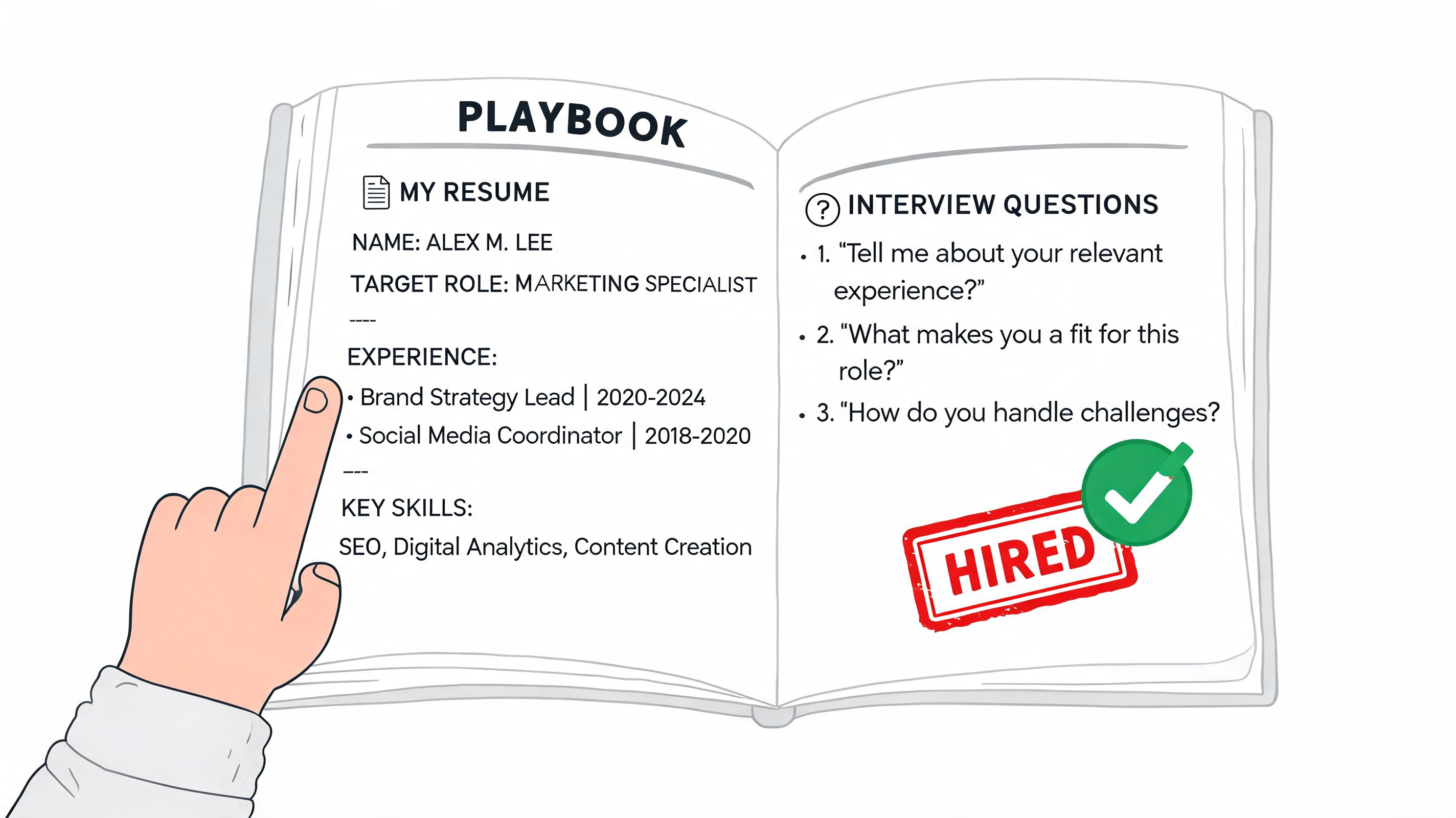
Most PM resumes are too task-oriented. They describe rituals instead of impact.
Weak bullet:
Stronger bullet:
The second version works better because it signals actual operating behavior. Even when you can’t share confidential numbers, you can still show decision quality, scope, and business context.
Focus your resume on:
At startups, the first screen often tests for signal density. You won’t get much time.
Be ready to answer:
Good answers are specific and commercial. Don’t say you love innovation. Say you’ve worked on a similar user workflow, understand the product motion, and see a concrete place where your background lines up.
This round usually reveals whether you can reason clearly. Expect some mix of product sense, prioritization, execution judgment, and metrics.
A reliable structure for answers is:
This works because startup interviewers care less about polished frameworks than about whether you make useful decisions.
A strong PM answer narrows the problem before solving it.
A lot of good candidates lose here because they treat the assignment like a consulting deck. Startup teams usually want judgment, not ornament.
If you get a take-home, aim for:
Avoid adding slides just to look thorough. If the company asks for a strategy, don’t give them twenty pages of feature ideas. Give them a coherent point of view.
At this stage, interviewers are usually checking for three things.
Show that you know how to work with engineering authentically. That means understanding constraints, not pretending they don’t exist.
Good startup PMs don’t wait for perfect information. They move with enough evidence, then adjust.
Ask questions that reveal business maturity:
Those questions do more than impress. They help you avoid joining a company that wants a miracle instead of a PM.
Compensation in San Francisco is where many PMs get seduced by brand names or trapped by incomplete math.
At the top end of the market, San Francisco remains the highest-paying PM location in the US. Levels.fyi reports $310,000 median total compensation for Product Managers in the San Francisco Bay Area, with companies like Meta at $500,000 and Google at $472,500 pulling the market upward, according to Levels.fyi’s Bay Area product manager compensation data. That tells you something important. “San Francisco PM pay” is not one market. It’s at least two.
One tier is large, well-capitalized technology companies with mature compensation systems. The other is startups, where the headline salary may be lower but the package depends much more heavily on equity, stage, and company quality.
That means you shouldn’t negotiate a startup offer as if it were a big tech offer with less cash. You should negotiate it as a different financial instrument altogether.
If you want a practical reference point before a negotiation call, this breakdown of the product manager salary range is a useful benchmark.
When a startup extends an offer, ask for the information that lets you evaluate the equity with clear eyes.
Ask about:
You don’t need to be combative. You do need enough detail to compare one startup package against another in a serious way.
Candidates often fixate on base salary because it feels concrete. That’s understandable, but incomplete.
A startup PM can negotiate around several levers:
If a company can’t move much on salary, it may have more room on equity or on explicit expectations for a compensation review after you’ve established yourself.
Don’t accept “competitive package” as an explanation. Ask what the company optimized for when structuring the offer.
The best startup negotiations are direct and calm. Show that you understand the company’s constraints and your own market value.
A good approach sounds like this:
That framing works because it sounds like how a good PM handles any serious trade-off. You aren’t trying to win theatrically. You’re trying to make a durable decision with eyes open.
| Question | Answer |
|---|---|
| Do I need a computer science degree for startup PM roles? | No. It helps in some technical environments, but what matters more is whether engineers trust how you think. If you can discuss trade-offs, system constraints, instrumentation, and technical dependencies clearly, you can be competitive without the degree. |
| How should I explain a move from design, engineering, or operations into product? | Anchor the story in product work you already did. Show where you made prioritization calls, defined outcomes, gathered user insight, or aligned cross-functional teams. Hiring managers believe adjacent candidates when the product responsibilities are already visible. |
| Do cover letters matter for san francisco product manager jobs? | Usually less than candidates hope. A tailored note can help if it shows specific product insight about the company. A generic letter rarely changes anything. Spend the time on a sharper resume, stronger outreach, or better interview stories. |
| How do I handle a career gap? | Address it directly and briefly. Then move to what stayed sharp: consulting, advising, shipping side projects, coursework, domain research, or caregiving with a clear return-to-work narrative. Confidence matters more than over-explanation. |
| Can I break into PM through a startup more easily than through big tech? | Often, yes. Startups are more willing to hire for slope, domain fit, and evidence of ownership. Big tech usually has tighter calibration and more formal filters. |
| What’s the biggest mistake candidates make? | Applying with the same story to every role. Startup PM hiring rewards relevance. The more your examples match the company’s product stage and current bottleneck, the better your odds. |
If you want a more targeted way to explore startup PM roles, Underdog.io is a curated hiring marketplace where candidates apply once and can be matched with vetted startups and high-growth tech companies. For San Francisco product managers, that can be useful when you want more context on startup quality and a search process that goes beyond public listings.