
The most common advice about Series A startups is that fresh funding means more jobs and a safer place to work. That's too simple. A round marks a financing milestone, not a guarantee of a large team, strong managers, or enough cash to hire everyone on the plan.
For a candidate, the more useful question is what the company's money, product evidence, and hiring plan mean for the actual job. You can use those clues to judge whether a role has a clear purpose, who'll support you, and what might change if growth or fundraising takes longer than expected.
A Series A can mark a company's move toward repeatable growth while leaving it small by design. The round signals that investors are backing the next stage of the business, not that the company plans to build a large workforce.
Seed-stage teams often test which customers want the product and which problems deserve attention. At Series A, the task shifts toward turning promising evidence into a business that can grow more consistently. The company may still be working out what that growth should look like.
Seed can resemble a prototype workshop; Series A can resemble a first production line. The line may still have only a handful of people, each covering several jobs. A candidate should look at the work that needs doing, not assume the company will quickly add layers of managers and specialists.

Two companies with the same funding stage can offer very different jobs. One may have experienced leads and clear ownership. Another may ask a new hire to build processes, talk with customers, and make decisions that a larger employer would divide among several roles. Neither setup is automatically better: the first may offer more support, while the second may give you broader scope.
Funding-stage labels provide context, but they don't describe a company's day-to-day work. A guide to venture capital funding stages explains what the labels generally mean. Use interviews to test what matters for your role: who will guide your work, which decisions you can make, and what the team expects you to own.
“A Series A job is a scope question, not a prestige badge.”
Judge the opportunity by the evidence behind it. Ask what customers continue to use or pay for, what capability your role adds, and how the company will know that the hire is working. Those answers can reveal more about the job than the round label.
A Series A check has to fund the work that turns early product proof into a functioning growth engine. That can mean paying engineers to build the product, covering cloud infrastructure, meeting compliance requirements, hiring salespeople, and supporting international expansion. The same capital may also have to cover recruiting, customer support, and the day-to-day costs of operating the business.
A global dataset of disclosed financing rounds recorded 11,472 Series A rounds totaling about $181.0 billion from 2019 through mid-2026. Across those rounds, the median investment was $12.0 million, with the 25th percentile at $7.0 million and the 75th percentile at $20.0 million. The median round grew from $8.9 million in 2019 to $14.0 million in 2025, an increase of about 57 percent. These are disclosed-round figures, not a complete census, since private companies don't always publish financing amounts. The underlying Series A dataset gives a sense of the scale of this transition, not a promise about any one company's available cash.
The money also needs to be understood alongside the terms of the financing. Carta reported a U.S. median pre-money valuation of $48 million in Q1 2025, up 9 percent year over year, but a valuation isn't the same as cash in the bank. Round size, new preferred shares, and the creation or expansion of an employee option pool all affect how the financing works for the company and its owners. Carta's valuation benchmark is a reference point, not a substitute for asking how much was raised and how the financing was structured.
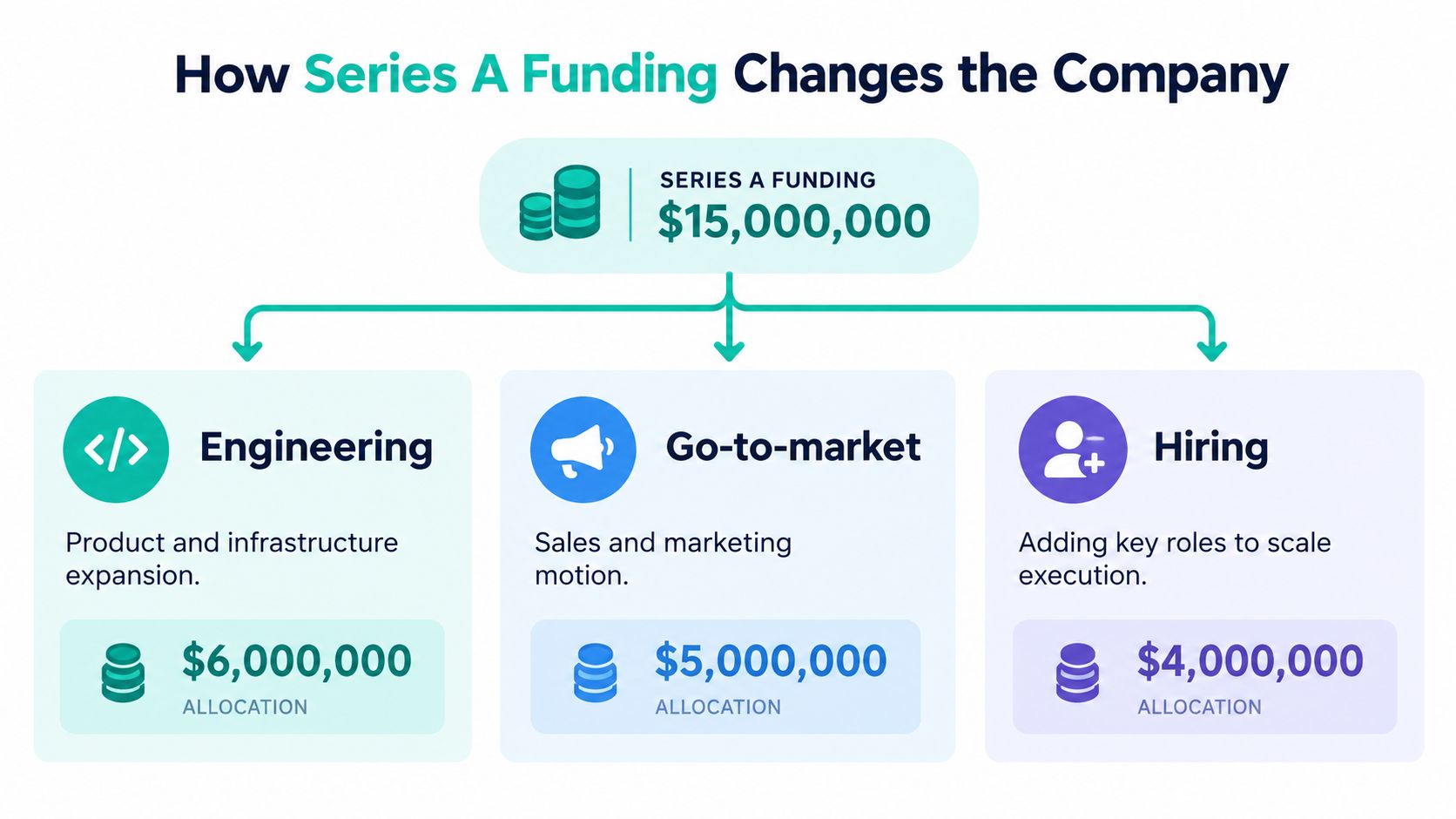
Consider a $5 million investment for 20 percent ownership with a 1x nonparticipating liquidation preference. In general, the investor chooses between receiving the original $5 million before common shareholders receive proceeds or converting to common stock and taking its 20 percent share, whichever is larger. Participating preferred can be less favorable at a modest sale because the investor may receive its preference and then share in what remains. This guide to Series A fundraising terms explains why founders should model different sale outcomes and why employees should ask how much preferred capital stands ahead of their shares.
When assessing a company, ask how much it raised, what ownership the new investors received, whether the option pool changed, what type of liquidation preference applies, and how many months of operating runway the financing is intended to fund. If you're comparing financing stages, key metrics for Series B funding can provide context on what companies may need to demonstrate as they plan for a later round.
A Series A company can choose to stay small. The round itself says little about whether its product is earning repeat use. For a candidate, customer retention offers a clearer clue: do people keep returning after their first try?
A cohort is a group of customers who started using a product around the same time. Track that group's activity over time. If usage falls and then levels off, the company may have found a core group that continues to get value. For recurring-revenue businesses, net revenue retention (NRR) measures how revenue from existing customers changes as they renew, expand, or reduce their spending. At 100% NRR, expansion offsets cancellations and reductions, so revenue from those customers stays level. This guide to product-market fit explains why repeat customer behavior matters when assessing whether a product is meeting a lasting need.
Retention can also clarify why the company is hiring. If customers leave during onboarding or stop using the product, the role may focus on improving activation, product experience, or customer support. If customers renew and expand, a go-to-market hire may have a clearer opportunity to build on existing demand. Ask what evidence led the company to prioritize the role.
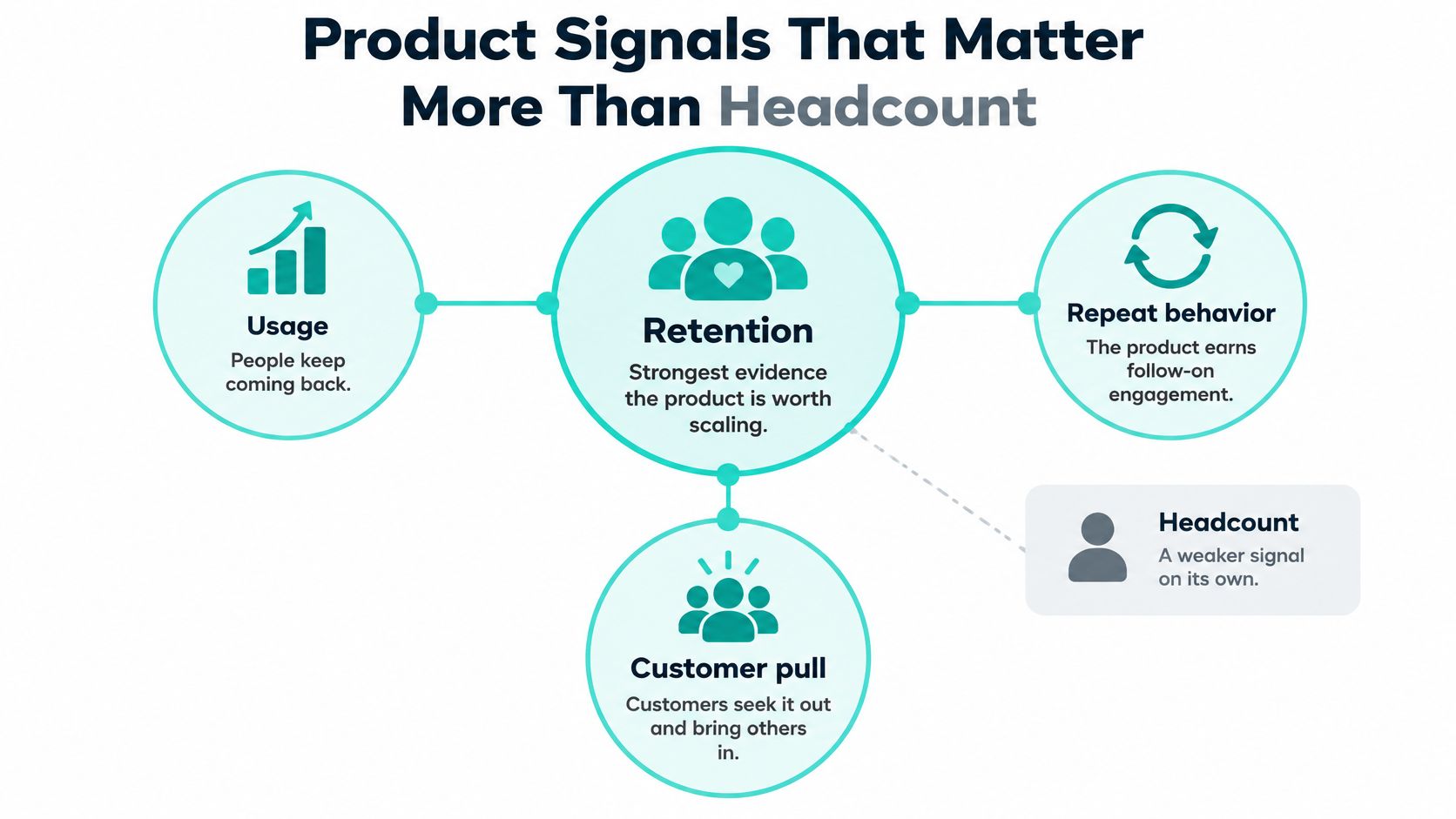
Ask how the company measures retention by signup month, which customer groups leave, and what it has learned from recent product changes. You don't need access to customer records. You should be able to get a clear explanation of what the company learned and how that affects the work you'd do.
Consider two fictional startups with similar funding. At one, customers renew and expand, and the sales team has a process it can repeat. A salesperson may be able to build on that foundation. At the other, many people sign up but stop using the product. Adding sales capacity could bring more customers into a product that hasn't yet given them a reason to stay. The company may need to improve onboarding or the product experience first.
The hiring plan should make sense alongside the customer evidence. A company that can explain what customers do, what it has learned, and how that shapes the role gives you a better basis for judging its scope, regardless of headcount.
A Series A can mark a major change in a company without creating a large organization. Reporting on Series A hiring and fundraising found that companies raising in 2025 averaged about 14 full-time employees, compared with 22 in 2022. The same report put the median time from seed to Series A at 616 days in Q2 2025. These figures offer context, not a template: a company's funding stage alone won't tell you how work is divided or how much support a new hire will receive.
A small team can be like a kitchen where each person covers more than one station. That can give you broad ownership and a direct line to decision-makers. It can also mean fewer specialists to share the work. Ask who you'll work with, which decisions you can make, and what support is available.
A product engineer might own a customer-facing feature, maintain infrastructure, and help resolve customer problems. Clarify what you can decide independently and who reviews your technical work. Ask what the company would count as a serious failure in the next few months. The role may take over work a founder has been doing, or create a capability the company doesn't yet have.
A product manager might conduct customer research, set priorities, and write launch messaging because no marketer is on the team. Ask how founders will help resolve conflicts between customer requests and the product plan. Without that support, you could be accountable for results without having enough authority to set direction.
An early operator might build the company's first hiring or finance process, replacing informal routines managed by founders. Ask what the process needs to accomplish and whether founders will use it once it exists. For practical people-operations questions, a startup guide to talent and compliance can help you prepare.
Ask for a responsibility map: Who owns the work, who approves decisions, and who steps in when priorities collide?
Manager availability shapes how much ownership you can use. Ask who will review your work, how often you'll meet, and what happens when that person is busy with hiring or other urgent tasks. A clear answer gives you a better picture of the job than a promise of autonomy alone.
A Series A can give a company room to grow, yet it does not guarantee a large team or a long stretch without fundraising. Runway is the time a company can keep operating at its current spending rate before it needs more capital or must adjust costs. For a candidate, it works like a fuel gauge: the useful question is not only how much fuel remains, but whether the company's plans fit the distance ahead.
Hiring changes that calculation. The full cost of a role includes salary, taxes, benefits, recruiting, equipment, and management time. Ask whether planned hires are included in the runway estimate and what assumptions the company uses. You do not need to see the entire budget. You do need a clear answer about how the role fits the spending plan.
Fundraising can take longer than a company expects, so ask what progress it needs to show before raising again. Product adoption, customer retention, and revenue may all matter, depending on the business. The company's goals should make sense for its product and customers, rather than relying on the round label as proof that another raise will be straightforward. Recent financing trends offer context, not a forecast for any one startup, as summarized in Series A funding statistics and financing context.
| Question | What a useful answer includes | Risk if it's vague |
|---|---|---|
| How much cash remains after planned hiring? | A runway estimate that includes the hires and their full costs | The role may not fit the current budget |
| What milestones matter before another raise? | Specific evidence, such as product use, customer retention, or revenue | The fundraising plan may rest on unclear goals |
| Is the company prioritizing growth, breakeven, or a sale? | A stated priority and how it shapes spending | Teams may receive conflicting direction |
| What changes if fundraising takes longer than expected? | A practical backup plan, including how hiring or spending would change | The company may have no plan for a longer fundraising period |
A recent round is a starting point for questions, not a stability guarantee. Ask how long the company expects its current plan to last, what evidence it needs to reach its next financing milestone, and what it would change if raising takes longer. The answers help you judge whether the role's scope fits the company's resources.
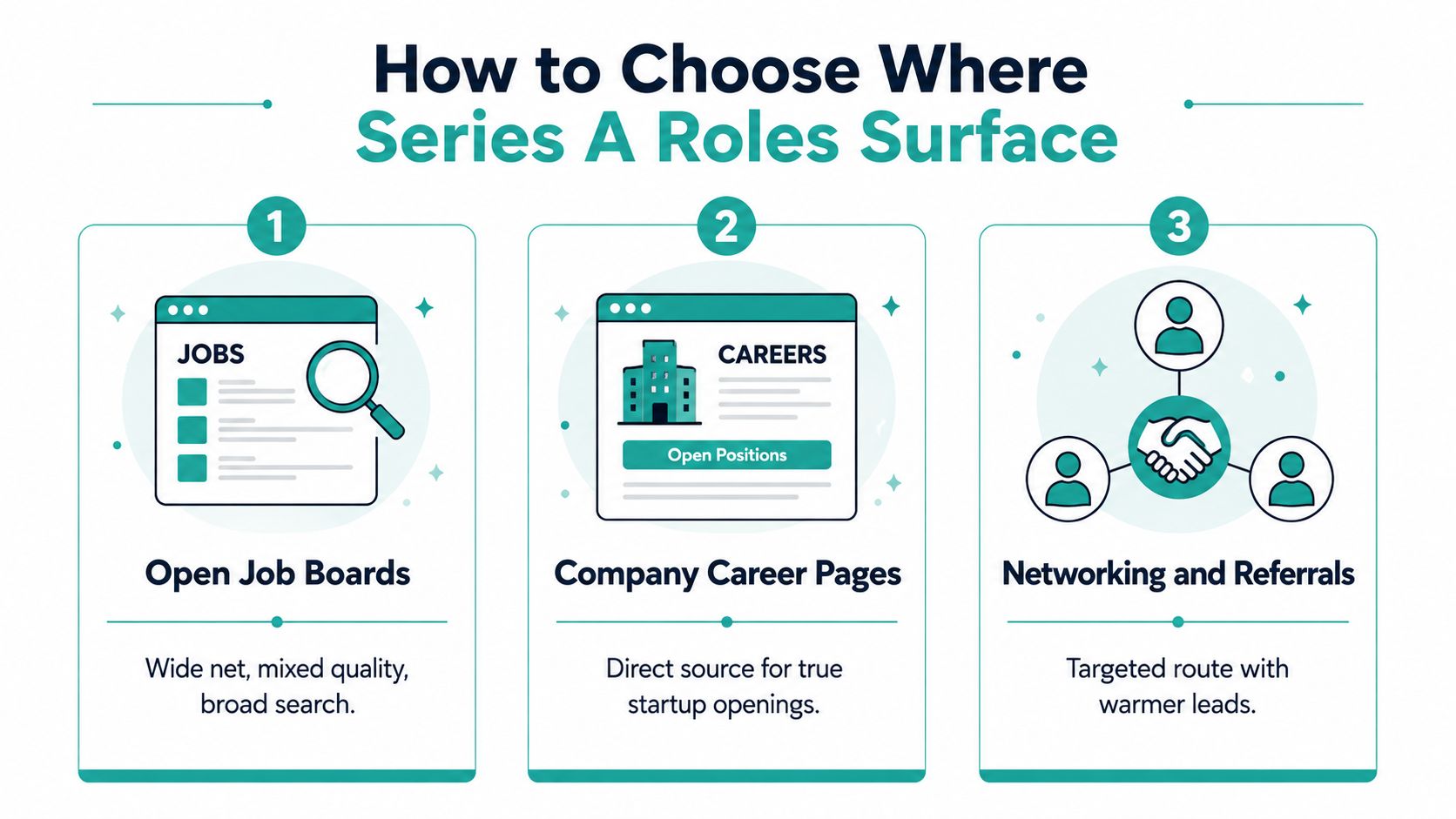
A Series A label won't tell you where a role is advertised, or whether the job fits your goals. Search channels are more like different maps: each shows some routes clearly and leaves others out. Job boards gather openings across company stages, so check each listing for the team's size and the work you would own. Company career pages show a startup's current openings, while referrals can add context about how a team works.
A staffing firm such as nexusITgroup.com may help when its recruiter is filling a role that matches your experience. Its view is limited to the openings it handles. For a look at how hiring teams find candidates, read Fetchin for recruiting and sourcing.
Underdog.io connects tech candidates with early-stage through Series B companies. Candidates apply once, then employers reach out if there may be a match. The marketplace reviews candidates and companies, and introductions are made through people rather than keyword blasts. Profiles remain anonymous until both sides show interest. Candidates do not pay to use the marketplace; companies pay per hire.
Choose a channel based on what you need to learn. Job boards offer a broad view of listings. Career pages and referrals help when you already have specific companies in mind. A curated marketplace can introduce you to startups beyond your existing list. For more ideas on organizing a search, see this guide to finding startup jobs.
A Series A label can open a door, but it cannot tell you what the job will involve or whether the company is stable. Before applying, write a short target brief: the function you want, the locations or remote arrangements you'll consider, and the problems you hope to own in your first six to twelve months. Include the support you need from a manager, such as regular feedback or help setting priorities. This gives you a way to compare the role's actual scope with its title.
Use conversations with hiring managers to test that scope. Ask which founder responsibilities the role will take on, what product or revenue milestone it supports, and how the company plans to fund the work ahead. Look for specific responsibilities and evidence that customers keep using the product. A funding round alone cannot show whether the role has clear goals or whether the business can retain customers.
For a discreet search, you can apply through Underdog.io and keep your profile anonymous until interest is mutual. Treat an introduction as a chance to assess the work and the company, not as a reason to accept an offer. Founders and hiring managers can use the same questions in reverse to find candidates who want broad ownership.
A small team can be a deliberate choice, not a warning sign. Choose a company where the product evidence, role scope, and financing plan fit the level of risk you can accept.


