Read Time: 7 min read
The Silicon Valley ecosystem is dynamic, competitive, and often opaque. Finding the right opportunity requires more than just scrolling through generic job boards; it demands a strategic approach to discovery, research, and outreach. This guide moves beyond simple company lists and instead focuses on the practical tools and platforms you need to identify promising start up companies in silicon valley, understand their growth signals, and connect with the right people. We’ll provide actionable insights for using each resource, helping you cut through the noise and target roles where you can make a real impact.
This curated roundup is designed for tech job-seekers who want a clear, effective path to their next role. We will explore platforms like Underdog.io for curated matches, Crunchbase for deep financial insights, and Wellfound for a direct line to early-stage teams. For each resource, you'll find direct links and specific examples of how to leverage its unique features to your advantage. A practical first step is to complement your platform-based search with direct outreach by finding hiring manager emails. Whether you are actively searching or just exploring, this article will equip you with the essential tools to navigate the startup landscape effectively.
For professionals targeting high-growth start up companies in silicon valley, Underdog.io offers a refined, candidate-centric alternative to traditional job boards. Instead of endlessly scrolling through listings, you submit a single, streamlined application. From there, the platform’s team presents your anonymous profile directly to vetted, high-growth startups seeking top-tier talent. It’s a strategic, low-effort approach designed for discerning professionals who value privacy and efficiency.
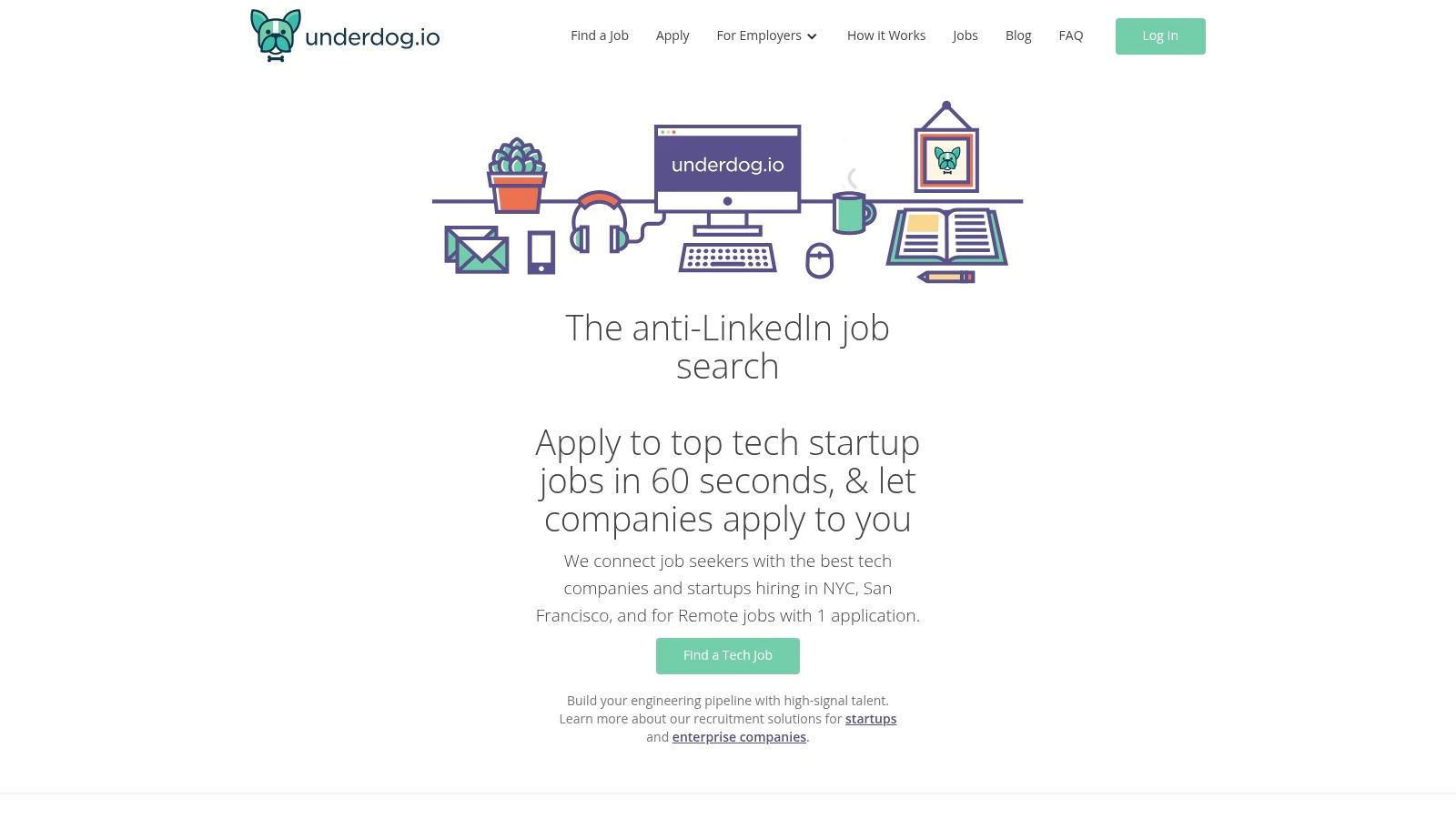
This model flips the conventional job search on its head. Companies apply to you, ensuring that every introduction is intentional and relevant. This curated process is particularly effective for passive candidates (who make up ~85% of Underdog.io's talent pool) who want to explore the market confidentially without broadcasting their search. The platform is entirely free for candidates; companies pay success-based fees upon hiring.
Underdog.io distinguishes itself through a rigorous, human-powered vetting process for both candidates and companies. This commitment to quality over quantity is its core value proposition.
To stand out and make it into the top 5%, focus on clarity and impact in your application.
By focusing on a curated, high-touch experience, Underdog.io provides a direct and efficient channel to some of the most promising start up companies in silicon valley. For those who want to bypass the noise and connect directly with founders and hiring managers at top-tier startups, it's an indispensable tool. If you're exploring other targeted platforms, you can learn more by checking out a roundup of the best sites for startup jobs to complement your search.
For any job seeker serious about researching start up companies in Silicon Valley, Crunchbase is an indispensable intelligence platform. It’s the definitive database for private company data, providing deep insights into funding rounds, key investors, leadership teams, and recent news. Think of it as your private investigator for vetting potential employers before you even apply.
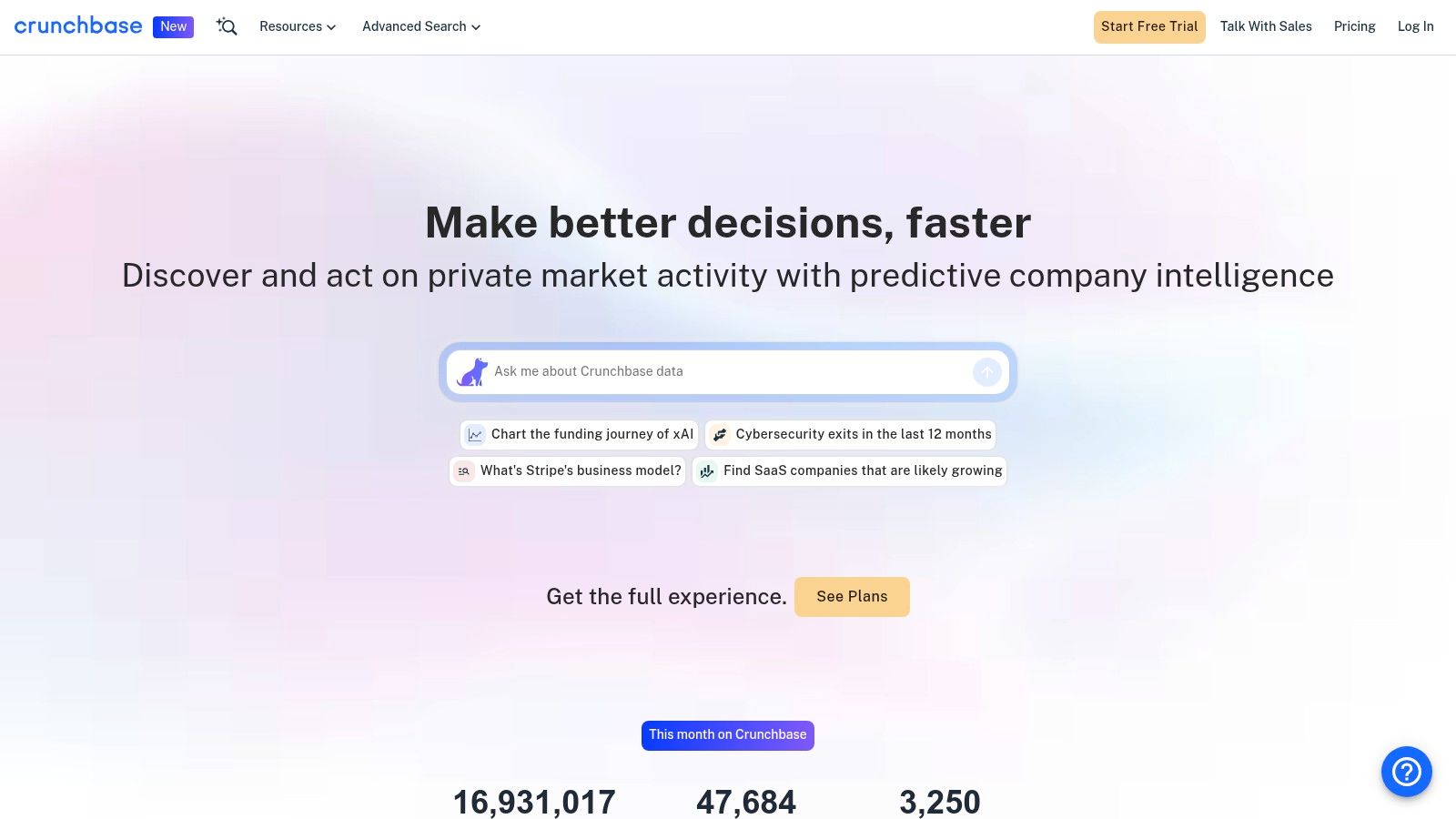
While other platforms might list company names, Crunchbase excels at revealing the story and momentum behind them. Its robust filtering allows you to zero in on companies that match your specific criteria, such as those that just raised a Series A, are in the fintech space, and are based in Palo Alto. This level of granularity helps you move from a vague job search to a highly targeted outreach strategy.
Crunchbase offers a free tier that is perfect for initial lookups and basic research. However, to unlock its true power, including advanced search filters, data exports, and real-time alerts for funding events, you’ll need a paid plan. The "Starter" plan provides core search features, while the "Pro" plan offers more comprehensive tools like CRM integration and contact data.
Website: https://www.crunchbase.com
If you want to go straight to the source, Wellfound is the premier job marketplace dedicated to the startup ecosystem. Born from AngelList, it's a platform built specifically to connect talented professionals with innovative start up companies in Silicon Valley and beyond. It eliminates the noise of corporate listings, allowing you to focus purely on high-growth, venture-backed opportunities.
Unlike traditional job boards, Wellfound operates more like a specialized matchmaking service. Candidates create a single, detailed profile highlighting their skills, experience, and salary expectations, which companies then use to source talent directly. This two-way street means opportunities can find you, often from founders and hiring managers themselves, leading to higher response rates and a more direct application process.
For job seekers, Wellfound is completely free to use. You can create a profile, browse jobs, and apply to an unlimited number of positions without any cost. For companies, Wellfound offers a tiered model. They can post jobs for free with basic features, but paid plans like "Recruit Pro" unlock advanced sourcing tools, unlimited messaging, and better visibility, ensuring they can actively find the best candidates.
Website: https://wellfound.com
When it comes to high-signal opportunities, Y Combinator's ecosystem is a goldmine for anyone looking to join vetted start up companies in Silicon Valley. As one of the world's most prestigious startup accelerators, YC provides a curated directory of its funded companies. More importantly, its "Work at a Startup" platform streamlines the application process, letting you get your profile in front of hundreds of high-growth, venture-backed teams with a single application.
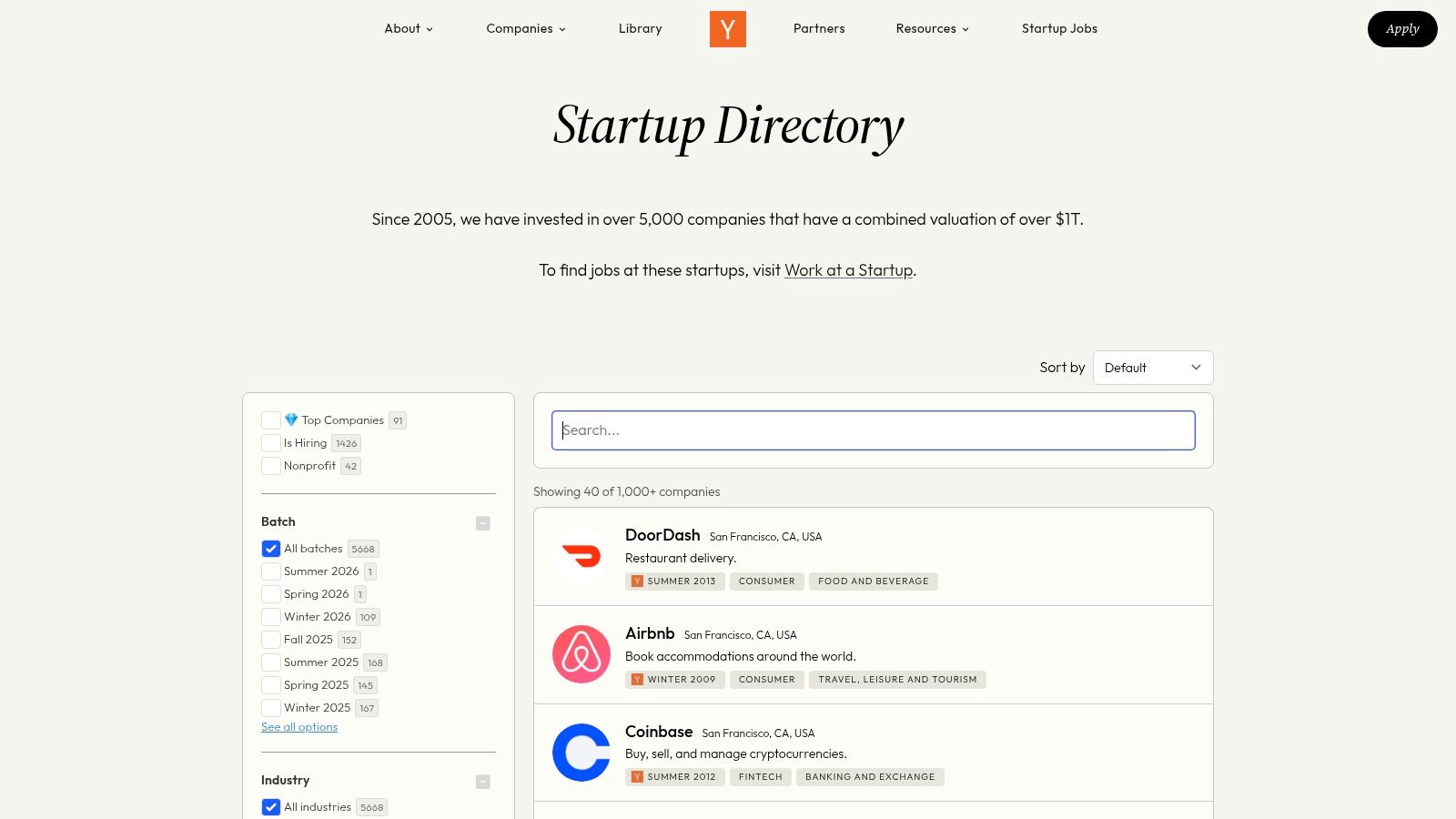
Unlike broad job boards, YC's platform offers a concentrated pool of early-stage startups that have already passed a significant quality filter. Being YC-backed is a strong indicator of potential and ambition. This makes it an incredibly efficient way to discover and connect with emerging leaders in tech before they become household names, especially for those targeting roles in the Bay Area.
The entire platform is completely free for job seekers. You can browse the complete directory of YC companies, create a profile on Work at a Startup, and apply to multiple roles without any cost. This open access makes it an essential and highly valuable resource for anyone serious about breaking into the startup scene.
Website: https://www.ycombinator.com/companies
No search for start up companies in Silicon Valley is complete without leveraging LinkedIn, the world's largest professional network. While it serves the entire job market, its true power for startup seekers lies in its dual function as a research database and a networking engine. It's the place to not only find job postings but also to map out the human connections that can get your resume to the top of the pile.
Unlike a static job board, LinkedIn provides the rich context needed to make a strategic move. You can see who works at a target startup, their career trajectory, and your potential mutual connections. This visibility transforms a cold application into a potential warm introduction, a critical advantage in the competitive Bay Area tech scene.
("VP of Engineering" OR "CTO") AND "Fintech" AND "Mountain View" to find the technical leaders at fintech startups in a specific city. This lets you bypass general recruiters and connect directly with the hiring authority.LinkedIn offers a robust free tier that allows you to create a profile, search for jobs, follow companies, and make connections. For more advanced search capabilities and deeper insights, LinkedIn Premium is necessary. The "Premium Career" plan provides valuable data like applicant insights and InMail credits to message people outside your network, which is essential for direct outreach to hiring managers.
Website: https://www.linkedin.com
For job seekers zeroing in on the heart of the tech world, Built In San Francisco is a specialized community and job board that cuts through the noise of national platforms. It is tailored specifically for the Bay Area, offering a curated look at start up companies in Silicon Valley and larger tech players in the region. This hyper-local focus makes it a powerful tool for discovering roles and companies you might not find on broader job sites.
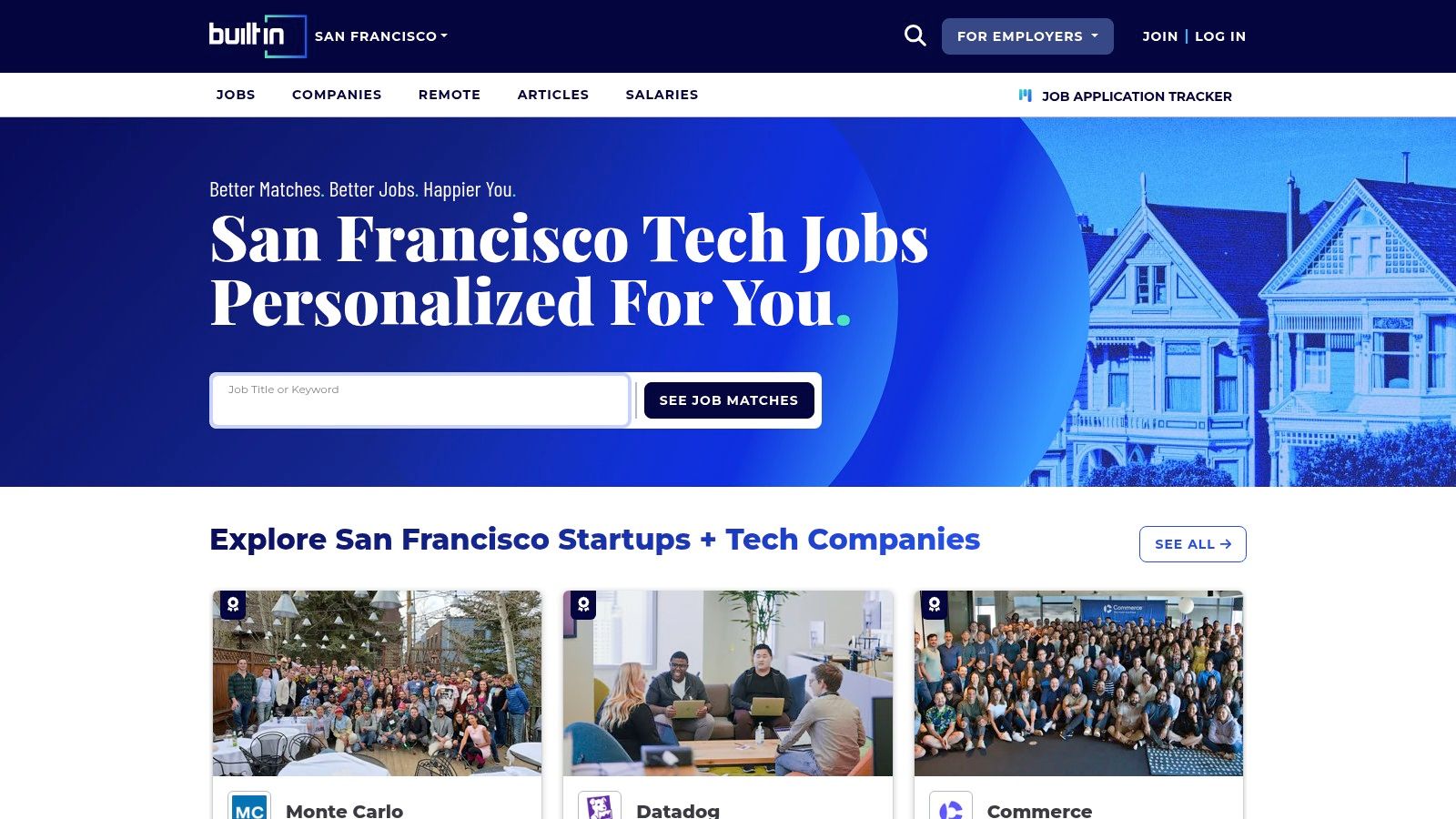
Unlike generic job aggregators, Built In SF provides editorial content that gives you a feel for the local tech scene, including profiles on fast-growing startups and insights into popular tech stacks. The platform's commitment to salary transparency is a major advantage, as many listings include pay bands, empowering you to better evaluate opportunities from the outset. This combination of local jobs and community context is invaluable for anyone serious about landing a role in the Bay Area.
For job seekers, Built In San Francisco is completely free to use. You can browse job listings, create a profile, and apply to roles without any cost. For employers, the platform operates on a premium model, where companies pay to post jobs and get enhanced visibility. While this means you'll see many of the area's top employers, be aware that some smaller, bootstrapped startups may not be represented.
Website: https://www.builtinsf.com
For those who want to conduct institutional-grade due diligence on start up companies in Silicon Valley, PitchBook is the gold standard. While Crunchbase is excellent for broad discovery, PitchBook provides a deeper, analyst-vetted layer of data on venture capital, private equity, and M&A. It's the platform VCs and investment bankers use to understand valuations, deal terms, and investor networks with granular precision.
PitchBook excels at providing the "why" behind the numbers. Its comprehensive profiles, maintained for accuracy by dedicated analysts, give you the context needed to evaluate a company’s financial health and competitive standing. This is invaluable for senior-level candidates or anyone wanting to understand a startup’s cap table and long-term viability before joining.
PitchBook is a premium, enterprise-focused platform, and its pricing reflects that. Access is typically secured through a corporate or institutional license, as individual seats are expensive and require engaging with their sales team. It is not designed for casual browsing; it’s a professional tool for deep financial and market analysis. For serious job seekers at later-stage startups, the investment could be justified for its unparalleled data depth.
Website: https://pitchbook.com
Navigating the vibrant and competitive landscape of start up companies in silicon valley requires more than just a polished resume. As we've explored, success hinges on building a strategic, multi-tool approach that takes you from broad discovery to a targeted, well-researched application. Relying on a single platform is like trying to build a house with only a hammer; you need a full toolkit to do the job right.
The key takeaway is to layer your strategy. Use high-volume discovery platforms like Wellfound and Built In San Francisco to cast a wide net and understand the breadth of what's available. Simultaneously, deploy deep-dive research tools like Crunchbase and PitchBook to vet those opportunities, analyzing funding rounds, team growth, and market position. This intelligence transforms a generic application into a compelling, informed pitch.
Think of your job search not as a series of one-off applications, but as a sales funnel. Your goal is to move from a large pool of potential companies to a small, highly qualified list of dream jobs.
A strategic approach means moving beyond passively submitting applications. When you find an interesting company on a job board, your next step shouldn't be to just hit "Apply." Instead, open a new tab and start your research on Crunchbase. Look up its latest funding round, identify its key investors, and understand its core value proposition.
This research allows you to tailor your cover letter and interview answers with specific, insightful commentary. For example, you can mention, "I noticed your recent Series B funding was led by [Investor Name], and I'm particularly excited about how that capital will accelerate your expansion into the enterprise market, an area where my experience in [Your Skill] can add immediate value." This demonstrates genuine interest and business acumen, setting you apart from the vast majority of applicants.
Ultimately, the most effective job search is an active one. The tools highlighted in this article are your instruments for building a deliberate, informed, and ultimately successful campaign. By combining broad discovery with deep intelligence and targeted outreach, you transform yourself from just another applicant into a strategic candidate that the best start up companies in silicon valley are eager to meet.
Ready to cut through the noise and connect directly with hiring managers at top startups? Underdog.io matches you with curated opportunities at venture-backed companies in Silicon Valley and beyond, sending exclusive roles directly to your inbox. Create your free profile on Underdog.io in minutes and let your next great opportunity find you.
Silicon Valley's enduring strength comes from its unique concentration of venture capital, top-tier engineering talent from universities like Stanford and UC Berkeley, and a deeply rooted culture of innovation and risk-taking. The density of successful tech companies creates a powerful network effect for knowledge, mentorship, and investment that is difficult to replicate elsewhere.
While software remains king, current dominant sectors include Artificial Intelligence and Machine Learning (especially applied AI), climate tech and sustainability, enterprise SaaS, biotechnology and healthtech, and the continued evolution of web3 and fintech. The focus has shifted toward technologies with deep technical moats and potential for significant societal or business impact.
Beyond major job boards, use platforms specialized in startup careers like Wellfound (AngelList Talent) and Built In. Networking remains crucial—attend tech meetups, engage with company founders and employees on LinkedIn or Twitter, and leverage alumni networks. A curated hiring marketplace can also provide direct access to opportunities that match your skills.
The model has diversified. While many have returned to a hybrid schedule, a significant number of "remote-first" startups have emerged, offering flexibility while maintaining their HQ in the Valley for key meetings and networking. The trend is towards flexibility, but being locally based can still provide an advantage for roles requiring close collaboration or in-person culture.
The culture is often characterized by high ambition, a fast pace, and a focus on disruptive innovation. There's a strong emphasis on agility, data-driven decision-making, and a flat hierarchy where ideas can come from anywhere. The intensity is high, but so are the opportunities for impact and growth, with a shared mindset of building and scaling rapidly.
The primary consideration is the high cost of living, especially housing. Weigh the salary and equity offer against local expenses. Research the company's funding stage and runway for stability. Also, consider the network you'll build—being in the Valley provides unparalleled access to investors and future co-founders, which can be valuable for your long-term career.
They are deeply interconnected parts of the same regional ecosystem. While "Silicon Valley" traditionally refers to the South Bay (e.g., Palo Alto, Mountain View), many startups are founded and headquartered in San Francisco, especially in sectors like fintech and consumer tech. Talent, capital, and ideas flow freely between the two, and the entire region is considered a single talent market.