A senior engineer at a small early-stage startup and a senior engineer at a large public company may share a title and almost nothing else. One might own architecture, customer feedback, deployments, and hiring. The other might lead a narrow service inside a large organization with dedicated platform, security, QA, and product teams.
That gap makes tech job titles useful but unreliable. This roundup explains ten core roles across engineering, product, design, data, and growth. For each one, you'll see what the work looks like day to day, how the title changes between a startup and a larger company, and how to translate your experience so founders and recruiters understand it quickly.
The broader labor market reinforces the point. The U.S. Bureau of Labor Statistics' occupational projections group familiar labels such as software engineer, application developer, and backend developer into wider classifications. Candidates who learn to connect titles with responsibilities will search more effectively and interview with more precision.
If you're building or evaluating a career path, it also helps to build dynamic career frameworks that separate title, scope, seniority, and decision ownership.
A software engineer might spend the morning tracing a failed payment and the afternoon deciding how to structure the next release. The role covers application design, coding, testing, code review, production support, and maintenance after launch. Depending on the company, the title may describe a backend specialist, product-focused generalist, or platform engineer.
At an early-stage startup, the boundary is usually wide. You may choose the architecture, build the first version, deploy it, monitor errors, and speak with customers about defects or missing features. That breadth brings context and influence, but also fewer specialists to share operational work. At a large company, the same title may center on one service, language, or domain. A senior engineer can shape architecture across teams without owning the full customer journey.
Common skills include Python, JavaScript, TypeScript, Go, Java, or Ruby, plus Git, APIs, testing, databases, and cloud infrastructure. AI-tool fluency now matters as well. Stack Overflow's 2025 Developer Survey found that 84% of developers use or plan to use AI tools, while 51% of professional developers use them daily. Strong candidates show how they pair faster implementation with review, testing, security, and sound production judgment.
Describe ownership, system scope, and the result, rather than listing features. A backend engineer could explain rebuilding a payment service for higher transaction volume. A junior engineer might show how they shipped customer onboarding, diagnosed its weaknesses, and led a later redesign.
Practical rule: Show the decision behind the code. Startups hire engineers who can explain why they chose a design, not only candidates who can recite a stack.
The BLS projects software developers to add 267,700 jobs from 2024 to 2034, with 15.8% growth over that period, according to its occupational projections. That demand does not replace evidence of scope. Make clear whether you implemented a defined task, owned a service, or set technical direction.
A strong profile should make your stack, product stage, system scope, and level of ownership easy to scan in under a minute.
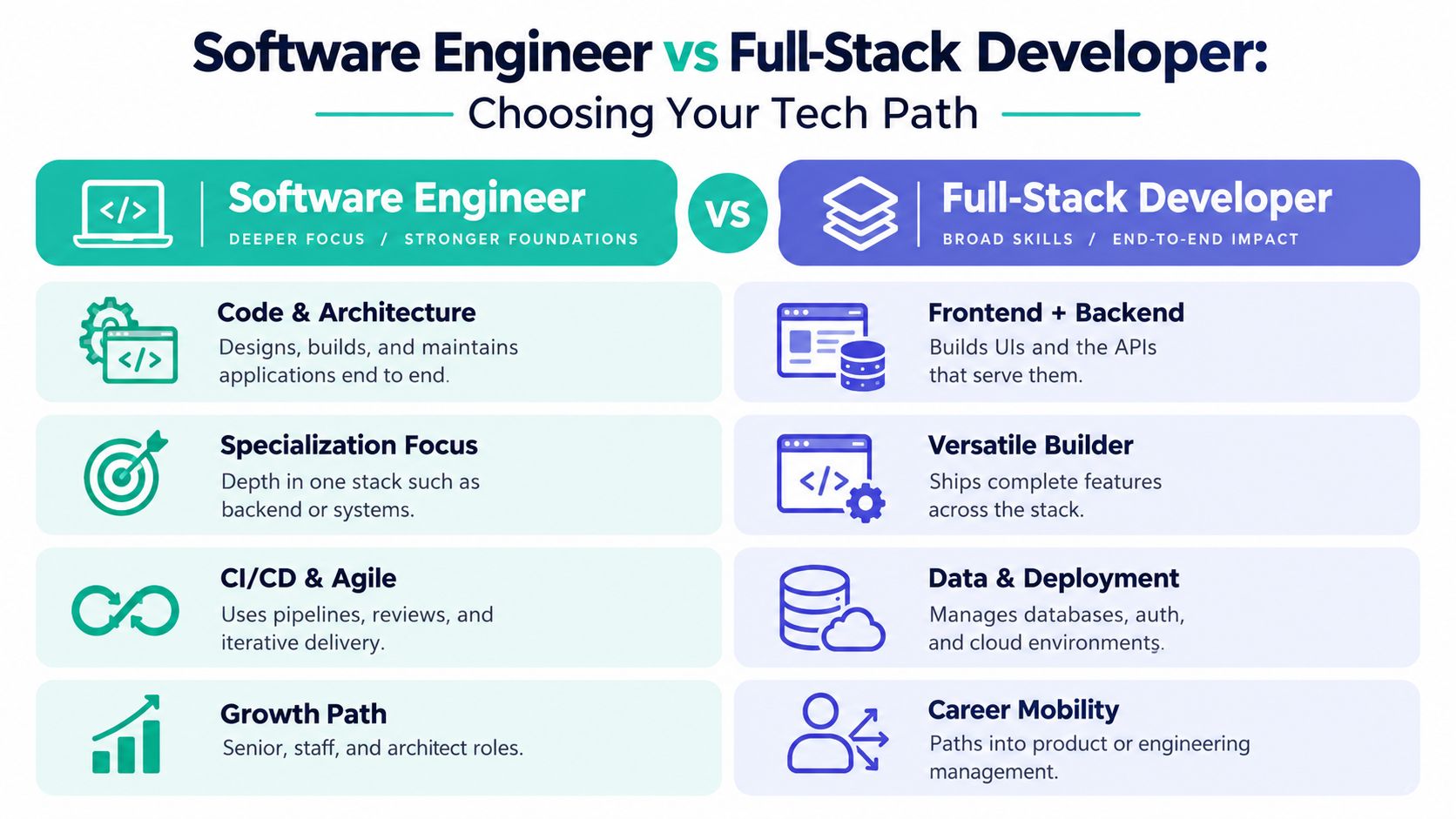
A full-stack developer works across the browser, application server, APIs, and data layer. That might mean building a React interface, writing Node.js or Python services, modeling PostgreSQL data, and connecting the result to a billing provider. The strongest full-stack candidates understand how a front-end choice affects performance, security, and backend design.
Startups often use the title as-is. A solo engineer at a seed-stage SaaS company may build the dashboard, billing integration, authentication, and API. That breadth can create exceptional learning, but it also creates trade-offs. You'll move quickly and see the whole product, yet you may have less time for deep specialization, formal review, or dedicated infrastructure support.
Larger companies tend to split the work. A full-stack developer may still contribute to both sides of an application, but the role often sits inside a product team with specialists in platform engineering, design systems, security, and data. Read the posting carefully. “Full-stack” can mean genuine end-to-end ownership, or it can mean occasional work outside your primary layer.
Breadth alone isn't persuasive. Pair it with a clear anchor, such as strong React experience plus reliable Node.js and PostgreSQL work. A growth-stage marketplace engineer might describe optimizing React rendering and PostgreSQL queries to improve checkout performance. A startup founder will want to know whether you can make sensible trade-offs without waiting for a separate team.
Document one complete project in a README. Explain the architecture, deployment path, data model, testing approach, and compromises. The guide to becoming a full-stack developer can help candidates think through the skill progression without treating every framework as equally important.
Show one feature from interface to database. That proves more than a long list of disconnected technologies.
Founders comparing candidates should define the expected split between frontend and backend work. Candidates comparing offers should ask who owns deployment, observability, security, and technical decisions. A title such as Senior Full Stack Engineer can describe very different levels of autonomy, so ask for examples of recent work rather than relying on the label.
Product managers decide what the company should build, why it matters, and how the team will know whether it worked. They gather customer evidence, define problems, prioritize opportunities, write requirements, and coordinate engineering, design, sales, support, and marketing.
At a startup, a PM may run customer interviews in the morning, write an MVP scope at midday, and review an analytics funnel in the afternoon. The work is less about maintaining a polished roadmap and more about reducing uncertainty. A first-time PM at a fintech startup might cut half of the planned features to protect the launch date. That is product judgment, not administrative scheduling.
At a larger company, the title usually comes with a clearer product area and more established research, analytics, legal, and delivery processes. The PM may own a defined surface, work through multiple approval paths, and influence a larger set of partner teams. The role can offer greater specialization, but decisions may move more slowly.
Write about decisions and outcomes. “Managed roadmap” says little. “Used weekly user interviews to identify a workflow gap, then worked with design and engineering to prioritize the fix” gives the reader a way to assess your judgment. Add the evidence you used and the result, but don't claim a precise lift unless you can support it.
SQL and analytics literacy help PMs answer basic questions without waiting for another team. You don't need to become a data scientist, but you should understand funnels, cohorts, experiments, and instrumentation. The product manager career path guide is useful for comparing expectations as scope grows.
A founder should clarify whether the PM owns discovery, delivery, growth, or all three. A candidate should ask who makes the final call when customer requests, revenue goals, and engineering constraints conflict.
Product designers shape how a product looks, works, and feels. Their work includes research, information architecture, interaction design, prototyping, usability testing, visual design, accessibility, and collaboration with engineers. The title is broader than “UI designer,” although some companies still use the labels interchangeably.
A startup product designer may be the first design hire. That person could interview users, establish a basic design system in Figma, prototype a new workflow, prepare production assets, and sit with engineers during implementation. The benefit is direct influence. The cost is that the designer may spend less time on polished exploration because urgent product problems arrive constantly.
A larger company usually separates design responsibilities more clearly. Product designers may work within a mature design system and partner with user researchers, content designers, accessibility specialists, and design operations. They may own a narrower part of the experience while influencing more users or product surfaces.
A portfolio should show the problem, not only the finished screens. Explain what users struggled with, what evidence changed your direction, which constraints shaped the design, and how you worked with engineering. An intake-form redesign at a healthcare startup, for example, should show the confusing flow, the usability findings, the revised interaction, and how the team evaluated the result.
Use interactive prototypes where possible. Static images make it difficult to judge navigation, states, errors, and empty screens. Also show how you handled accessibility and implementation trade-offs.
Founders should ask whether they need a product designer, a brand designer, or a hybrid first hire. Candidates should ask how design decisions get validated and who owns the final call when visual quality conflicts with delivery speed.
A polished case study earns attention. A clear account of the decisions earns trust.
Avoid reporting unsupported performance claims. If a change reduced confusion or improved completion, explain how the team measured it and what the evidence showed.
Data scientists turn raw information into decisions. They design experiments, analyze behavior, build predictive models, define metrics, and explain findings to people who don't work in statistics or code. The role succeeds when the analysis changes a product or business decision, not when a model looks impressive in isolation.
At an early-stage startup, a data scientist may define the first event taxonomy, repair inconsistent data, build dashboards, and run experiments. The title can overlap with analytics engineer, product analyst, or machine learning specialist. That ambiguity can be productive, but candidates should ask how much time goes to infrastructure, analysis, modeling, and stakeholder support.
Large companies usually provide more specialized teams and cleaner data assets. A data scientist may focus on experimentation for one product area, recommendation systems, forecasting, or risk. The narrower scope supports deeper expertise, but it can reduce exposure to the full business context.
Python or R, SQL, statistics, experimental design, and data visualization remain useful across stages. Communication matters just as much. Practice explaining a project in two minutes to a product leader. State the business question first, describe the method briefly, then explain what decision changed.
A consumer app scientist might analyze onboarding steps and identify a retention opportunity. A logistics scientist might build a demand forecast that helps reduce inventory waste. In both cases, the resume should state the question, data used, approach, and operational consequence.
Use the data scientist jobs and salary guide to frame the role, but don't reduce the profession to a compensation label. Founders need to know whether you can create trustworthy metrics before building complex models. Candidates need to know whether the company has the data quality, experimentation culture, and decision access required to do meaningful work.
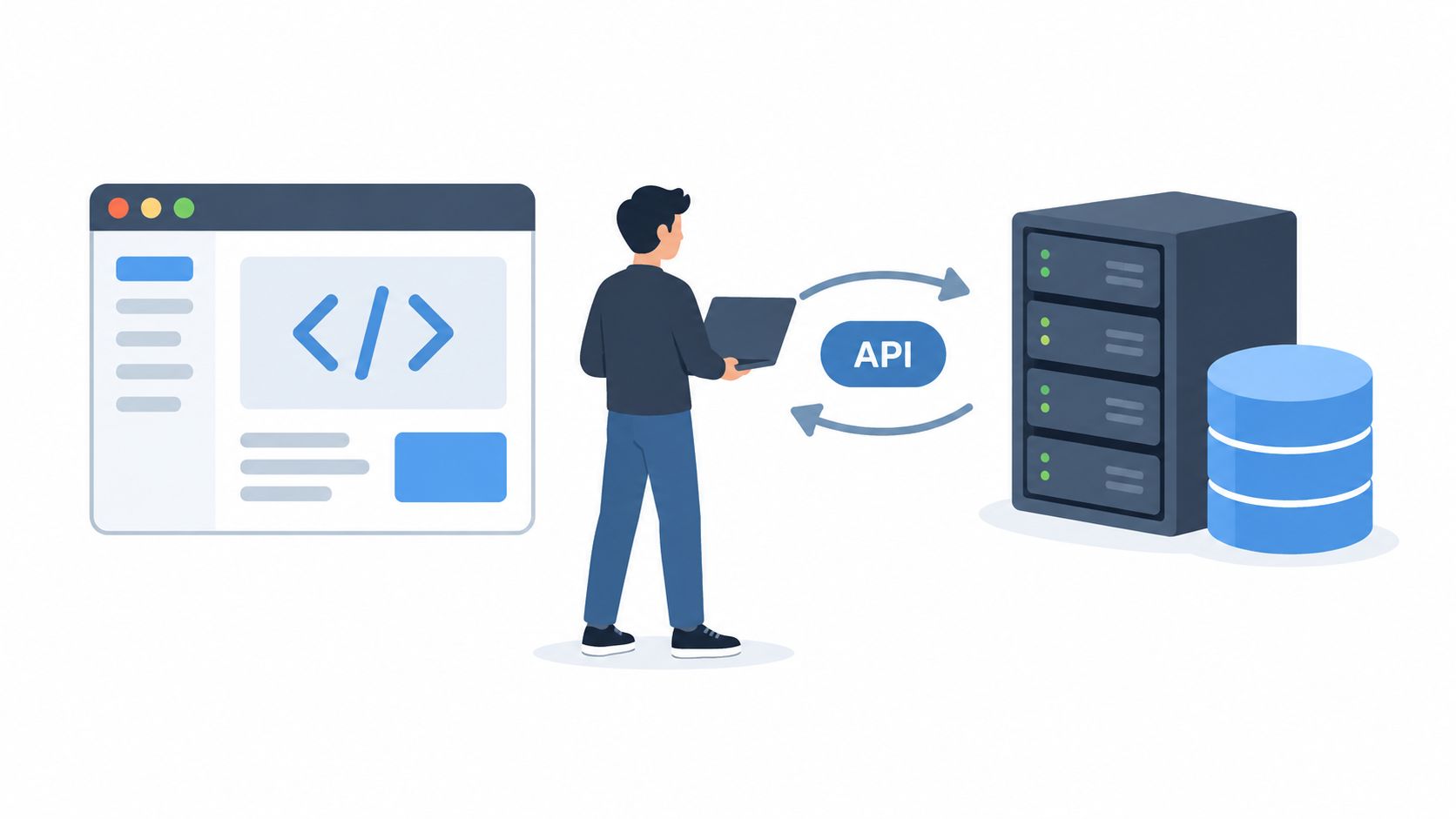
Machine learning engineers turn models into dependable production systems. They build training workflows, data pipelines, serving infrastructure, monitoring, and tools for model versioning. A data scientist may prove that a model works on historical data. The ML engineer makes sure the model can run safely, repeatedly, and observably for real users.
Early-stage companies often combine this role with backend engineering or data science. One person may prepare training data, choose a framework, deploy an endpoint, watch latency, and investigate a drop in accuracy. That creates broad ownership, but the company may lack mature labeling systems, platform support, or clear model governance.
Larger organizations commonly divide responsibilities across applied science, ML platform, data engineering, and infrastructure teams. An ML engineer may own a serving layer or feature platform rather than the entire model lifecycle. The title carries more specialization, while the startup version usually carries more ambiguity.
A notebook proves exploration. A deployed model proves more. Show an endpoint, containerization, model versioning, monitoring, and a clear explanation of what happens when the model is wrong or unavailable. PyTorch or TensorFlow experience helps, but production discipline matters more than framework collecting.
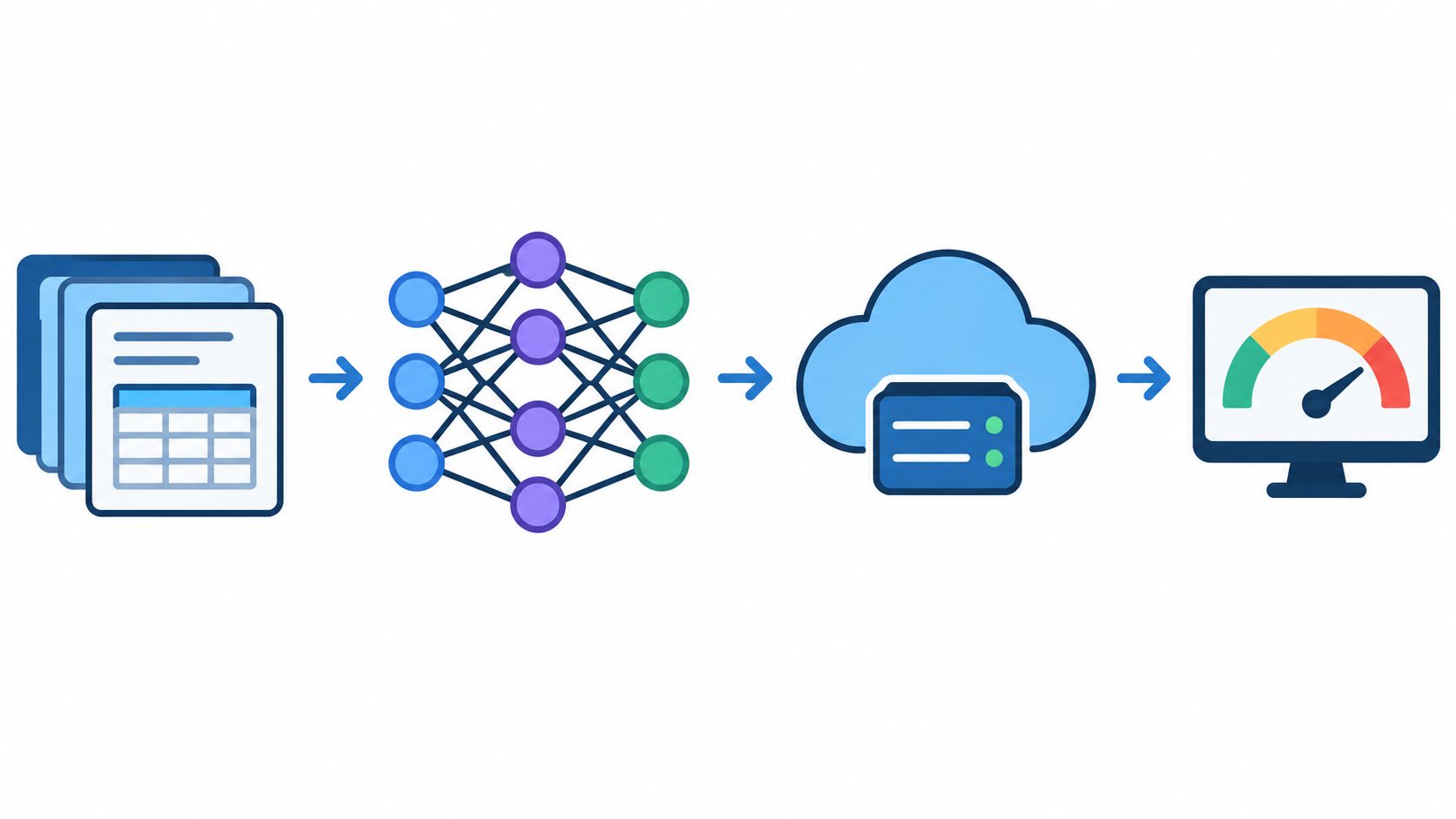
A legal technology engineer might deploy document classification with monitoring that flags accuracy changes. An engineer at a recommendation marketplace might reduce inference latency by moving a model to optimized serving infrastructure. Those examples communicate operational ownership without relying on inflated claims.
Candidates should describe scale, infrastructure, failure handling, and collaboration with product or research teams. Founders should define whether they need model experimentation, ML infrastructure, or an engineer who can own both.
DevOps and site reliability engineers keep software deployable, observable, and available. DevOps usually emphasizes automation across the delivery lifecycle. SRE applies software engineering to operations and often uses service-level objectives, error budgets, incident reviews, and reliability priorities.
At a young startup, one infrastructure engineer may write Terraform, configure AWS or GCP, maintain CI/CD, manage Kubernetes, respond to incidents, and help application engineers instrument services. The role is highly visible because every deployment and outage exposes the quality of the underlying systems. It can also become a catch-all for work that founders haven't assigned elsewhere.
At a larger company, SREs often own a platform, service tier, or reliability program. They may work with dedicated security, networking, database, and developer-experience teams. The environment supports deeper engineering, but the candidate may need to influence teams without directly controlling their application code.
Name the incident or delivery problem, your response, and the prevention step. “Managed cloud infrastructure” is weak. “Automated deployment checks, improved rollback safety, and documented the response process” gives a hiring manager something concrete to assess.
Useful skills include Linux, AWS, GCP, Azure, Terraform, Docker, Kubernetes, CI/CD, Prometheus, Grafana, and Datadog. Tools matter, but context matters more. Explain whether you built a platform, supported developers, reduced operational risk, or improved observability.
Reliability work should appear as engineering ownership, not invisible maintenance.
A Series A company may need someone who can migrate deployments and shorten release cycles. A growth-stage company may need an SRE who can establish SLOs and help teams prioritize reliability during traffic spikes. Candidates should ask how the company handles on-call work, incident learning, and time for preventative engineering.
Cybersecurity engineers protect systems, data, identities, and users. Their work can include secure architecture, access controls, cloud security, threat modeling, vulnerability management, incident response, and security automation. The role overlaps with security engineering, application security, cloud security, and product security, so the job description matters more than the title.
At an early-stage startup, the first security engineer often builds foundations. That may include identity management, secrets handling, logging, secure software practices, vendor reviews, and preparation for customer audits. The engineer needs enough technical range to improve security without blocking every release.
Large companies usually divide security into specialist groups. Application security may review code and tooling. Cloud security may govern infrastructure. Detection and response teams may handle monitoring and incidents. A candidate moving from a startup into a larger organization should translate broad ownership into the specific security domain the target team needs.
Name the control or threat you addressed. “Improved security” is not enough. Explain that you implemented single sign-on and role-based access, created a secrets-management process, ran threat modeling, or investigated an authentication vulnerability.
Python and Bash help with automation. Knowledge of OWASP guidance, network security, cloud controls, and incident response strengthens the technical foundation. Certifications such as CISSP, OSCP, or AWS Security Specialty can support a profile, but they won't replace evidence of sound decisions.
Founders should make security ownership explicit. Candidates should ask whether the role is engineering, compliance, incident response, or a mixture. A startup hiring for customer trust may need someone comfortable with both secure systems and audit preparation. A larger company may prioritize depth in one attack surface.
Engineering managers create the conditions for engineers to do strong work. They hire, coach, set goals, improve planning, remove blockers, manage conflict, and help teams make technical decisions. Their output is the team's health and delivery, not the number of pull requests they personally merge.
At an early-stage startup, an engineering manager may build the interview process, establish the first planning rhythm, mentor several engineers, and still contribute technical judgment. The boundaries are fluid. A manager who expects to spend every day away from technical discussions may struggle in a small company.
At a larger company, the role often has clearer people-management responsibilities and established processes for performance, hiring, promotion, and planning. The manager may lead one team, coordinate with other managers, and influence architecture through staff engineers and technical leads. The scope can be larger even when the direct team is more specialized.
State the team context and the change you led. Good evidence includes engineers you mentored or promoted, interview processes you built, delivery problems you resolved, or team structures you changed after repeated handoff failures. Don't present team outcomes as personal achievements without explaining your contribution.
A Series B manager might create a more structured interview process. A growth-stage manager might reorganize teams after retrospectives reveal coordination delays. In both cases, the resume should explain the problem, intervention, and result.
Founders should define whether they need a player-coach, a people manager, or an organizational leader. Candidates should ask how much authority the role has over hiring, performance, priorities, and team design. The word “manager” doesn't reveal those boundaries.
Growth marketing managers connect acquisition, activation, retention, and revenue. They test channels, analyze funnels, improve lifecycle communication, and work with product teams on experiments. Unlike a role focused mainly on brand campaigns, growth marketing usually carries direct responsibility for measurable customer behavior.
At a startup, the job may cover paid search, content, partnerships, email, analytics, landing pages, and referral mechanics. A growth marketer might launch a referral program for a B2B SaaS company or redesign lifecycle emails after reviewing cohort behavior. The advantage is broad influence. The drawback is constant prioritization across channels with limited budget and incomplete data.
At a large company, growth work often splits into acquisition, lifecycle, product growth, marketing operations, and experimentation teams. A manager may own one funnel stage or channel while relying on specialists for analytics, creative, engineering, and brand. That narrower remit supports depth, but candidates need to show collaboration across a more complex operating model.
Describe experiments as decisions. State the hypothesis, audience, channel, test design, and outcome. A bullet such as “ran growth campaigns” is weaker than an account of how cohort analysis changed an email sequence or how a referral test affected acquisition economics.
Useful tools may include Google Analytics, Amplitude, Mixpanel, SQL, an advertising platform, and lifecycle email software. Tool names should support the story, not replace it. Founders need to know whether you can identify a constraint, form a testable idea, and decide what to do with ambiguous results.
Candidates who want a practical example of experimentation-led acquisition can review this growth scan approach, then adapt the principle to their own work rather than copying startup jargon.
| Role | Implementation complexity | Resource requirements | Expected outcomes | Ideal use cases | Key advantages |
|---|---|---|---|---|---|
| Software Engineer | Moderate–High (feature to system-level work) | Dev tools, cloud platforms, CI/CD, code review processes | Production-quality features and stable services | Building core product functionality and backend systems | Broad technical impact, clear seniority path, high demand |
| Full-Stack Developer | Moderate (frontend + backend integration) | Frontend & backend frameworks, databases, deployment tooling | End-to-end shipped features, faster iteration cycles | Small teams, MVPs, startups needing single-owner features | Versatility, rapid delivery, easier move into product roles |
| Product Manager | Low technical; high coordination complexity | User research, analytics, stakeholder collaboration time | Prioritized roadmap and measurable product outcomes | Defining vision, prioritization, cross-functional alignment | Strategic influence, high visibility, transferable leadership skills |
| Product Designer | Moderate (research, prototyping, system design) | Design tools (Figma), user testing, collaboration with engineering | Improved UX, reduced friction, cohesive interfaces | User-facing flows, early validation, design system creation | Direct user impact, faster validation, retention improvements |
| Data Scientist | Moderate–High (experiments and modeling) | Clean data pipelines, compute, analytics and viz tools | Actionable insights, experiment results, forecasts | Experimentation, metric definition, forecasting problems | Drives data-informed decisions, transferable analytical skills |
| Machine Learning Engineer | High (production ML pipelines and serving) | GPUs/compute, MLOps tooling, model serving and monitoring infra | Deployed, monitored ML models with scalable performance | Building reliable ML features and model-serving infrastructure | Strong demand, competitive pay, production ML expertise |
| DevOps / SRE | High (automation, reliability, scaling) | Cloud, IaC, Kubernetes/Docker, CI/CD, observability tools | Fewer outages, faster releases, scalable infrastructure | Reliability engineering, deployment automation, scaling systems | Critical responsibility, strong job security, leadership path |
| Cybersecurity Engineer | Moderate–High (security architecture & response) | Security tooling, audits, monitoring, compliance resources | Reduced risk, incident response capability, compliance readiness | Protecting data, threat mitigation, preparing audits | High visibility, strong compensation, certification pathways |
| Engineering Manager | Low hands-on; high people/process complexity | Hiring processes, people development, planning and tracking tools | Improved team delivery, hiring outcomes, team growth | Scaling teams, hiring and building engineering culture | Significant influence, career growth into leadership, mentoring impact |
| Growth Marketing Manager | Moderate (experimentation across channels) | Analytics tools, ad budget, A/B testing and acquisition channels | Increased acquisition, activation, retention, revenue | Scaling after product-market fit, funnel optimization | Measurable business impact, fast feedback, growth leverage |
A title gets your resume into the right search. It rarely proves that you can do the work. Employers compare candidates by looking for evidence of scope, judgment, ownership, and outcomes behind the label.
Start by choosing the two or three titles that best match your strongest recent work. Don't select every adjacent title you could theoretically perform. A backend engineer who has owned APIs, data models, and production incidents may target software engineer, backend engineer, and platform engineer. A designer who has led research, interaction design, and implementation can target product designer without diluting the profile with unrelated visual-design labels.
Rewrite your resume for each target family. The work doesn't need to be completely different, but the emphasis should change. For a software engineer role, lead with architecture, systems, testing, and deployment. For a product manager role, lead with customer discovery, prioritization, decisions, and outcomes. For a growth role, lead with hypotheses, experiments, channels, and customer behavior.
Use concrete translation patterns:
Candidates should also separate formal seniority from demonstrated scope. A startup may call someone “senior” because that person can operate independently across uncertainty. A large company may reserve the title for engineers who influence multiple teams or systems. Neither label is automatically more meaningful. Ask what decisions the person makes, what outcomes they own, and how much support surrounds the role.
Founders should do the same before publishing a job description. Define the first six months of work, the decisions the hire will own, the skills that are truly required, and the support already available. Don't combine an engineering manager, staff engineer, recruiter, and product manager into one vague “technical lead” title unless you explain the trade-offs.
The broader labor market makes title translation increasingly important. The BLS reports that computer and mathematical occupations are projected to grow from approximately 5.42 million to 5.96 million jobs between 2024 and 2034, adding 545,600 positions, or 10.1%, compared with 3.1% growth for all occupations in the same projection. Those classifications include software, data, infrastructure, security, and related work, so a search based on one title will miss relevant opportunities.
The distinction between adjacent roles can also be practical. BLS describes programmers as people who write, modify, and test code, while software developers design applications and programs. It projects computer-programmer employment to decline 7% from 2025 to 2035, with about 4,400 openings annually, as repetitive programming work becomes more automated, according to its computer programmer occupational outlook. That doesn't mean programming skills have no value. It means candidates should show broader system, product, testing, or ownership skills when targeting development roles.
The same discipline applies outside engineering. BLS distinguishes web developers, who create and maintain websites, from digital designers, who focus on interface layout, functions, navigation, and usability. Its web developer and digital designer outlook reports 220,100 combined jobs in 2025 and projects 5% growth from 2025 to 2035. Candidates should describe whether they owned implementation, interaction, usability, or a blend of those responsibilities.
Titles open doors, but specific examples persuade hiring teams. Bring one example for every role you target. Explain the problem, your responsibility, the decision you made, and what happened next. Use the same vocabulary in conversations with founders, recruiters, and hiring managers so they don't have to infer your fit from scattered keywords.
Underdog.io can be one option for candidates who want to present a focused profile to startups and high-growth technology companies. Its marketplace covers engineering, data, AI and machine learning, product, design, QA, and DevOps categories, so candidates can frame their experience around the role family that best reflects their actual work.
Underdog.io connects tech candidates with curated startup and high-growth company opportunities across New York City, San Francisco, and the broader U.S. Its single application lets you present your experience by role, scope, and startup fit, so visit Underdog.io and create a profile that makes your strongest tech job title easy to understand.