Atlanta's tech sector contributes $58.6 billion to the local economy and is projected to add approximately 3,800 positions in 2025 — but most coverage focuses on the enterprise names while the startup and growth-stage market goes underreported. This guide covers what the real Atlanta tech market looks like for candidates who want ownership over prestige, which roles and industries are driving startup hiring, how to position yourself to win a startup offer, and how to let the best opportunities find you without mass-applying to everything.
Atlanta gets mislabeled as a market for enterprise tech jobs only. That doesn't tell the full story. The metro’s tech sector is projected to rebound with a 1.7% increase in 2025, adding about 3,800 positions, while the sector contributes $58.6 billion to the local economy and accounts for 7.2% of the workforce, according to CompTIA workforce coverage on Atlanta and Georgia tech employment.
If you’re looking at tech jobs in atlanta through a startup lens, that matters. A market with real scale, durable hiring demand, and a deep talent base gives startups room to build. It also gives candidates more power than they think.
Most guides stop at the big names. Delta. Equifax. Fiserv. Coca-Cola. That’s useful if you want brand recognition and established process. It’s less useful if you want scope, ownership, and the kind of role where your work can change a roadmap instead of filling one slot on it.
Atlanta is one of the few markets where that trade-off is still favorable. You can build a serious career here without following the same coastal path as everyone else.
Tech jobs in Atlanta span a wider range than most people expect from a city associated primarily with enterprise brands like Delta, Equifax, and Fiserv. The metro's tech sector contributes $58.6 billion to the local economy, accounts for 7.2 percent of the workforce, and is projected to add roughly 3,800 positions in 2025 — making it one of the larger and more durable tech labor markets in the country outside the coastal hubs.
At the enterprise level, Atlanta offers structured roles across aviation technology, financial infrastructure, payments, logistics software, cybersecurity, and B2B enterprise systems. These companies produce a steady supply of trained technical talent that understands regulated environments, complex data, and operational constraints at scale.
At the startup level — which most guides undercover — Atlanta is meaningfully active in fintech, healthtech, supply chain software, cybersecurity products, vertical SaaS, and B2B infrastructure. Growth-stage and early-stage companies hire from the same talent pool that larger employers train, which creates a practical career ladder: build expertise and production experience at a recognizable employer, then move into a startup for scope, ownership, and equity upside without leaving the city.
The roles with the most startup demand in Atlanta cluster around software engineering, data science, infrastructure and security engineering, and technical product management. Salary bands are competitive relative to cost of living, and the absence of state income tax creates additional take-home value that candidates often overlook when comparing Atlanta offers against coastal alternatives.
Atlanta sits in the top tier of U.S. labor markets by size. That scale changes the startup equation.
A founder in Atlanta is not hiring from a thin bench. The city has enough engineering, product, operations, security, and go-to-market talent to support companies after the first 10 hires, which is where a lot of young startups get stuck in smaller markets.
Atlanta’s advantage is structure. Large employers, universities, and industry-specific companies keep producing people who know how to ship in complex environments, then a portion of that talent moves into earlier-stage companies for more ownership.
That matters more than headline prestige. Startup teams need people who can work across product, customer, and technical constraints without a lot of hand-holding. Atlanta produces that kind of operator because the local economy has long been shaped by payments, logistics, healthcare, cybersecurity, digital infrastructure, and B2B software.
The result is a talent market with range. Companies can hire a backend engineer who has dealt with scale, a product manager who has worked with regulated data, or a revenue operator who understands long enterprise sales cycles.
For candidates comparing cities, this breakdown of software engineering hubs helps frame where Atlanta fits. The city offers a mix that is hard to find elsewhere: enough company density to create real career options, but still enough room for a startup hire to matter.
Atlanta does not run on hype. It runs on execution.
That is good for job seekers who want substance over branding. In this market, startups often hire people coming out of enterprise, fintech, healthtech, or infrastructure-heavy environments. Those candidates already know how to handle security reviews, customer demands, compliance pressure, and messy cross-functional work. At a startup, that background becomes useful fast.
I have seen this pattern repeatedly in Atlanta hiring. A candidate leaves a recognizable company, joins a startup with a sharper mission, and gains more scope within a year than they would have in three years inside a bigger org. That move works here because the transition is credible to founders and investors. The market understands the value of operators who have seen real complexity.
The practical appeal is not “good culture” or “good vibes.” It’s career geometry.
You can build serious experience at a scaled company, move into a startup without changing cities, and keep compounding the same network. That makes Atlanta unusually strong for people who want upward mobility without starting over every time they switch jobs.
It also creates a better trade-off than many candidates expect. Big companies give the market training ground, process discipline, and experienced managers. Startups give candidates ownership, visibility, and the chance to influence product direction early.
That is why Atlanta keeps producing interesting startup opportunities even though national coverage tends to focus on Delta, Coca-Cola, and other enterprise names. The upside for many strong candidates sits one layer below the obvious brands, inside growing companies that need builders, not placeholders.
If the goal is a safe job, Atlanta has plenty of those. If the goal is a high-impact role where your work changes the company, the startup side of Atlanta is where the market gets interesting.
Atlanta employers are hiring across software, data, cloud, and security, but startup hiring is tighter than enterprise hiring. Founders are not filling seats for coverage. They are paying for people who can remove a bottleneck, ship faster, or stabilize a weak part of the stack.
That changes how candidates should read the market.

The broad demand clusters in Atlanta are familiar. Software engineering stays the largest category. Data roles remain strong, especially when the work ties directly to product, revenue, or operations. Security and infrastructure talent stays hard to hire because companies need judgment, not keyword matching.
Public salary data from employer and job platforms points to a consistent middle band in the market. Software engineers and developers often sit around the high five figures to low six figures. Data scientists usually price a bit higher. Network and security roles stay competitive, especially for candidates with real production ownership. For a broader benchmark beyond Atlanta alone, this software engineering salary guide is a useful reference.
Here’s the practical breakdown.
One hiring note that candidates miss: startups often post a broad title and hire for a narrow problem. A company may advertise for a backend engineer but really want someone who can clean up a shaky data pipeline, improve cloud costs, or build internal tooling in the first 90 days.
Network access and infrastructure-heavy roles are a good example. In Atlanta, companies with complex internal systems, compliance pressure, or distributed teams put real value on engineers who can handle identity, access, DNS, DHCP, IP management, and automation without a lot of hand-holding.
A senior candidate with Infoblox experience, policy orchestration knowledge, and Python or Bash automation can command meaningfully higher pay than a generalist with a similar title. I see this in hiring conversations all the time. The salary is not driven by the title alone. It is driven by how expensive the failure mode is if that work is done poorly.
That same logic shows up across startup hiring. The best-paying roles are usually attached to pain that leadership already feels.
Atlanta hiring teams care less about title purity and more about evidence.
For startup roles, that usually means:
A resume line like “worked with Python” is weak. “Built Python scripts that cut manual access provisioning time” gets attention.
Candidates who want a better read on early-stage openings should also spend time with curated startup listings, not only the major job boards. That is often where narrower, higher-upside roles appear first.
Base salary matters. It just should not be your only filter.
In Atlanta, a later-stage company may offer the cleaner compensation package in year one. A strong startup can still be the better career move if the role gives you wider scope, direct access to product decisions, and faster title growth. That trade-off is real. So is the risk. Some startups will ask for enterprise-level output without enterprise-level support, and the equity never makes up for it.
The right question is not “Which offer pays more today?” It is “Which role gives me stronger signal in 18 months?”
That is how experienced candidates separate a decent job from a high-impact one.
Most public content about tech jobs in atlanta points candidates toward large employers. That creates a blind spot. It teaches people where the logos are, not where the career acceleration is.
That gap is real. Coverage of Atlanta hiring is heavily tilted toward big employers, while startup-specific roles and guidance are often missing, leaving candidates with less visibility into things like equity transparency and how to connect with earlier-stage companies, as noted in Emory’s roundup of Atlanta tech employers.
If you join a large enterprise, you usually get structure. You also get layers.
That can be good early in a career if you need training, brand credibility, or a stable environment. It can be limiting if you already know how to execute and need more room to own outcomes.
A good startup role tends to offer:
The flip side is real too. Some startups are chaotic in the bad way. Some talk about ownership when they really mean poor process. Some offer equity that sounds exciting but lacks context.
That’s why candidates need filters, not just enthusiasm.
I usually tell candidates to stop asking whether they want “startup vs enterprise.” That question is too broad. Ask what operating environment helps you do your best work.
Look at these factors:
The best startup hires in Atlanta usually aren’t people chasing startup status. They’re people who know exactly what kind of work environment helps them perform.
Startup hiring in Atlanta often becomes visible through community density before it becomes obvious on mainstream boards.
That means paying attention to:
The practical move is simple. Build your own target list. Don’t wait for the perfect posting to appear.
For candidates who want startup-specific hiring channels instead of enterprise-heavy boards, this list of startups that are hiring is a useful starting point.
Spraying applications across generic boards almost never works well for startups.
Founders and small hiring teams don’t hire the same way enterprise TA teams do. They look for signs that you understand the product, the stage, and the actual problems behind the role. If your approach looks like it could have gone to a bank, a consultancy, or a healthcare system with no changes, it won’t land.
The startup market in Atlanta rewards precision. A smaller, better-targeted search beats a huge, unfocused one every time.
Atlanta’s tech hiring gets clearer when you sort the market by business problem, not by brand name.
The strongest demand sits in sectors where software affects revenue, operations, fraud, uptime, or compliance. That matters for startup candidates because Atlanta’s best younger companies usually grow next to these industry clusters, not far away from them.
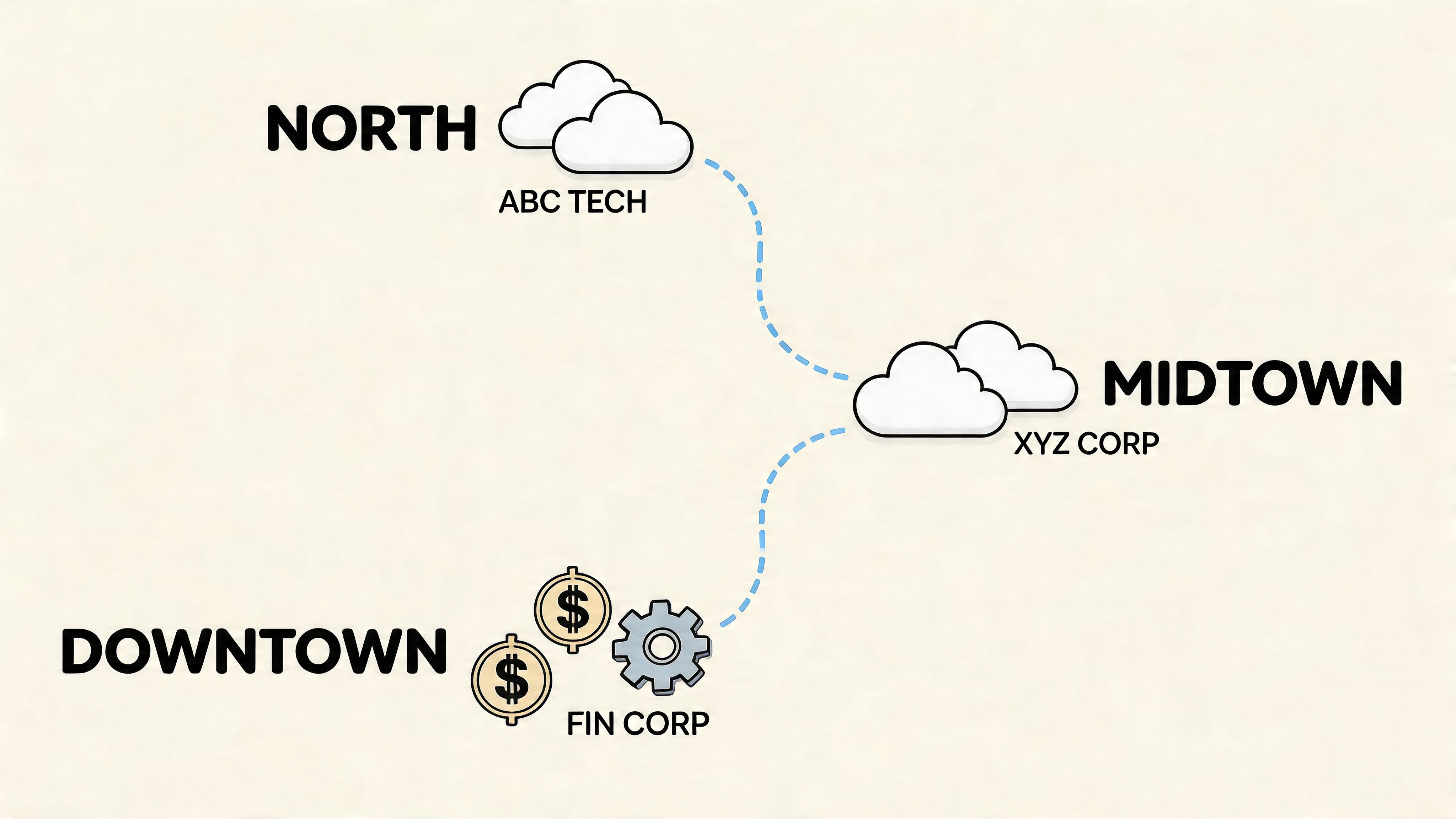
If a candidate asks me which vertical explains the most tech jobs in atlanta, I start with fintech and payments.
Atlanta has deep roots here. Large employers such as Equifax, Fiserv, and NCR have built a steady base of work around transactions, identity, risk, and financial infrastructure. Startups benefit from that talent pool. They can hire people who already understand fraud models, compliance constraints, card systems, reconciliation, and the ugly edge cases that break financial products.
That creates real startup opportunity.
Early-stage and growth-stage fintech teams in Atlanta often want people who can handle regulated complexity without bringing enterprise speed into a small company. Backend engineers, data engineers, product managers, security-minded developers, and implementation people all show up here. The trade-off is straightforward. The work is less flashy than social apps or consumer media, but the business problems are real, budgets are usually stronger, and good operators become valuable fast.
A candidate with experience in banking systems, risk, identity, or workflow automation is often a better startup fit than they realize.
Atlanta’s aviation footprint creates demand well beyond airline jobs.
Delta is the obvious local benchmark, but the bigger lesson is what sits around it. Large-scale scheduling, routing, customer operations, maintenance systems, forecasting, and real-world service delivery all create technical talent that startups can use. Companies building supply chain software, field operations tools, transportation products, and B2B workflow systems hire from the same pool.
Candidates who do well in this part of the market usually bring a few specific strengths:
This is a good lane for people who like software connected to real-world constraints. Startup hiring managers notice that. Someone who has worked on systems where unnoticed failures are unacceptable often adapts well to a product team shipping for demanding business customers.
Security and infrastructure stay under-applied relative to demand.
Atlanta has a long history in network, telecom, enterprise IT, and security-heavy environments. That gives startups access to engineers who know how to keep systems stable, control access, automate repetitive work, and reduce risk without freezing product velocity. Smaller companies may not hire a full security team early, but they still need engineers who care about permissions, auditability, cloud hygiene, and uptime.
I tell candidates to look closely at this category if they want less crowded searches and stronger long-term value. A good product engineer can be replaced. A startup engineer who can ship features and prevent avoidable security mistakes is harder to find.
Here’s a practical fit check:
Use large employers as market reference points, not as the final target list.
They help you read compensation bands, job title inflation, tool stacks, and the language local companies use to describe problems. That context makes it much easier to judge whether a startup role is serious, under-scoped, or priced too low for the work.
A useful Atlanta shortlist includes:
Then look one layer out from those companies. The strongest startup searches usually happen in adjacent categories: payments infrastructure, fraud tooling, logistics software, cybersecurity products, vertical SaaS for regulated buyers, and internal operations platforms for large businesses.
That is where Atlanta gets interesting.
The strongest candidates are specific about the problem they want to solve. “I want to work on payments infrastructure” is stronger than “I want a startup job.” “I want product work in logistics software” is stronger than “I’m open to anything in tech.” In Atlanta’s startup market, that level of precision leads to better conversations and better offers.
Most candidates fail in startup hiring long before the interview. They present themselves like enterprise applicants and assume a smaller company will decode the rest.
It won’t.
Atlanta startups usually hire with less margin for error. They want people who can ramp quickly, make good calls without a lot of ceremony, and contribute beyond a narrow job description.
There’s also a real gap for people trying to move up from lower-barrier technical roles. Atlanta has many entry-level support jobs, but the path from those roles into engineering or product work often isn’t clear, as reflected in Atlanta no-experience tech job listings and commentary.
A startup resume should answer three questions fast.
Can you solve hard problems? Can you work with ambiguity? Can you create value without waiting for perfect instructions?
That means your resume needs to emphasize outcomes and ownership.
Bad startup bullet:
Better startup bullet:
If you’re coming from enterprise, trim the language that hides your work inside committee-speak. Use the names of tools. Name the product area. Name the workflow you improved.
Cold applications aren’t useless. Generic cold applications are.
A startup team will often pay more attention to a short, sharp note than to a polished cover letter. The note should show that you understand what the company does and where you can help.
A useful message usually includes:
If you can’t explain why a startup should hire you without using the phrase “fast-paced environment,” you’re not ready to apply yet.
Startup interviews are two-way diligence. If you only answer questions, you’ll miss critical signals.
Ask about things that reveal how the business operates:
Those questions do two things. They help you evaluate the company, and they show maturity. Strong startup candidates sound like future teammates, not applicants trying to survive a quiz.
Many Atlanta candidates get stuck here.
If you’re in helpdesk, support, implementation, QA, technical ops, or another adjacent path, don’t market yourself as “trying to get into tech.” You’re already in it. Market the technical capabilities you’ve developed.
Here’s what helps:
Courses matter less than artifacts. If you want engineering work, show code. If you want product work, show written thinking, prioritization, and user analysis.
Useful artifacts include:
Support candidates often undersell themselves. If you’ve handled escalations, documented recurring issues, worked with APIs, or partnered with engineering, that’s not “just support.”
Frame it properly:
A lot of people aim one step too far. Don’t force a jump that requires the company to imagine a completely different version of you.
Better first moves often include:
From there, internal mobility can happen much faster than it does in large organizations.
Atlanta networking works best when it’s specific and low-friction.
Don’t ask for “advice” in a vague way. Ask for perspective on a product area, a role transition, or the company’s hiring pattern. Keep the ask small. Show that you’ve done your homework.
Good outreach sounds like this:
Bad outreach sounds like this:
The first gives the other person something concrete to respond to. The second creates work.
Founders and early hiring managers tend to notice three things fast:
If you get those right, you don’t need perfect pedigree. You need credible evidence and a clean story.
Startup hiring in Atlanta rarely rewards the candidate who submits the highest number of applications. It rewards the candidate who is easy to understand, easy to trust, and already positioned for the kind of company they want to join.
That matters more here because many of Atlanta’s strongest opportunities sit outside the big-name employers people already know. Early-stage and growth-stage companies do not always run polished, high-volume recruiting funnels. Founders, startup recruiters, and functional leaders often hire from a narrower pool and move fast when they see a fit.
Your goal is simple. Be discoverable for the right reasons.
For startup roles, a polished profile beats a long one. Hiring teams want enough detail to place you quickly, not your entire career history in paragraph form.
A strong profile usually includes:
At this point, candidates lose traction. They describe responsibilities instead of outcomes, or they position themselves so broadly that no startup can tell where they fit.
“Software engineer with 6 years of experience” is weak. “Backend engineer who has built internal tools, billing workflows, and customer-facing APIs for SaaS teams” gives a startup a reason to reach out.
Mass applying can work for enterprise roles with standardized hiring. It is a poor use of time for startup searches in Atlanta.
A better system is to stay visible in places where startup hiring managers and recruiters already look, keep your materials current, and respond quickly when a relevant conversation appears. That includes LinkedIn, founder and operator communities, talent networks, and curated marketplaces that pre-screen candidates before introductions happen.
Underdog.io is one example of that model. Candidates create one profile and get considered by startups and growth-stage companies that are already hiring against real needs. For Atlanta job seekers who want high-impact roles instead of another enterprise process, that setup can save time and improve fit.
Atlanta startups do not need a perfect candidate on paper. They need someone whose background maps cleanly to the work in front of them.
That means your public profile should answer three questions fast:
If those answers are hard to find, recruiters move on. If they are obvious, you start getting better conversations without chasing every posting.
I have seen this play out over and over in Atlanta. Candidates who tighten their positioning often hear from better startups within weeks, while candidates with stronger raw experience stay stuck because their profile reads like a generic resume dump.
Local context helps. If you are open to hybrid work in Midtown, Buckhead, the BeltLine corridor, or nearby startup hubs, say so. If you have worked in one of Atlanta’s active sectors such as fintech, supply chain, healthcare tech, or security, make that visible near the top of your profile.
That kind of specificity increases response quality. It tells a startup recruiter that you understand the market and are not spraying applications across every city and every role.
The best Atlanta tech jobs do not always go to the loudest candidate. They often go to the person who made the decision easy.
It depends on the company stage and function.
Enterprise employers often run more formal hybrid structures. Startups vary more. Some want people in-market for collaboration, especially for product, engineering, and early team-building roles. Others hire across the U.S. but still prefer candidates who can overlap with Eastern time and visit occasionally.
The practical move is to decide what you want before you start applying. If you’re open to hybrid, say so. If you need fully remote, filter for that early and don’t waste cycles on companies that clearly want office presence.
It’s better for both than many people assume. The difference is what you want from your next role.
Enterprise jobs usually offer clearer process, known brands, and narrower role boundaries. Startup jobs usually offer more ownership, more ambiguity, and more upside if you pick well. If you already know how to operate and want your work to shape product or team direction, the startup route is often the more interesting one.
Yes, but you need proof, not just intent.
Startups are often more flexible about background than large companies. They’re also less patient with vague positioning. If you’re coming from support, implementation, QA, operations, or self-taught technical work, show artifacts and show judgment. A GitHub profile, a shipped side project, strong written product thinking, or internal automation work can all help if they’re relevant and well presented.
Look at the team, the problem, the clarity of the role, and whether the company can explain why this hire matters now.
Pay attention to how leaders answer basic questions. Are they direct about priorities? Do they understand what success in the role looks like? Can they explain how product, engineering, and go-to-market interact? You don’t need perfect certainty, but you do need signs of operational honesty.
They search too broadly.
They apply to corporate roles, startup roles, support roles, product roles, and engineering roles all at once. That creates a muddy story. Atlanta rewards candidates who know what lane they want and can explain why they fit it.
Start with people working in the exact kind of role or company you want next. Keep outreach short. Ask focused questions. Offer context that shows you’ve done real research.
One thoughtful message to the right person is worth more than ten vague networking notes. In this market, clarity travels.
Atlanta's tech hiring spans both enterprise and startup categories. On the enterprise side, companies like Delta, Equifax, Fiserv, NCR, and Coca-Cola consistently hire for technology roles in software engineering, data, security, infrastructure, and product. One layer below those brands, growth-stage and early-stage startups in fintech, healthtech, logistics software, cybersecurity products, and B2B SaaS are actively building out engineering and product teams. The most useful move is to check company career pages directly and monitor curated startup hiring channels, since smaller companies often don't run high-volume recruiting and their openings may not be prominently featured on major job boards.
Tech salaries in Atlanta are competitive relative to the local cost of living, though they typically run below coastal hub benchmarks in absolute terms. Software engineers at the mid-level commonly earn in the competitive six-figure range depending on experience, stack, and whether the role is at a startup or enterprise. Data scientists and specialized infrastructure or security engineers tend to price higher than generalist software roles. Startup offers in Atlanta often include equity components that can represent meaningful additional upside if the company grows, which changes the total compensation calculus meaningfully compared to cash-only comparisons. The absence of a state income tax in Georgia creates additional take-home value that candidates from other states frequently overlook when evaluating Atlanta offers against alternatives.
Atlanta is a strong city for tech careers for candidates who know what they want. It offers enough company density to create real career options across both enterprise and startup environments, a talent market shaped by financially complex industries like fintech, payments, logistics, and healthcare technology, and a cost of living that makes compensation go further than equivalent salaries in coastal markets. For candidates who want broad ownership, proximity to decision-making, and faster career growth than large organizations typically allow, the startup side of Atlanta is underrated and less competitive than equivalent roles in San Francisco or New York. For candidates who want structured process, clear ladders, and recognizable brands, the enterprise side is deep.
Fintech and payments is the most historically dominant vertical — companies like Equifax, Fiserv, and NCR have anchored a broad ecosystem of financial technology work that includes fraud, identity, transactions, compliance, and risk infrastructure. Aviation technology and logistics software represent another strong cluster, built around Delta and the broader supply chain and transportation ecosystem in the region. Cybersecurity and infrastructure roles stay consistently in demand as both enterprise and startup employers require engineers who can handle security, access control, reliability, and cloud operations. Healthcare technology and B2B vertical SaaS are growing, with a meaningful number of growth-stage companies building software for regulated industries and complex enterprise buyers.
The most effective path is to build tangible evidence of technical capability rather than accumulating certificates alone. A shipped side project, a portfolio of automation scripts, a dashboard tied to a real workflow problem, or a product teardown that demonstrates analytical thinking all carry more weight with startup hiring managers than coursework on a resume. For candidates coming from support, QA, implementation, helpdesk, or technical operations, the right move is to translate that work in startup-relevant language — escalation handling maps to debugging and customer insight, QA work maps to product quality and release confidence, and implementation experience maps to systems understanding and technical communication. Targeting the right first startup role — support engineer, technical implementation specialist, junior product operations, or data analyst — is also more effective than aiming immediately at full engineering or senior product positions.
Yes, though the definition of remote varies by company. Some Atlanta startups hire fully remote candidates across the US and simply want someone who can overlap with Eastern time and visit occasionally. Others prefer hybrid arrangements with some in-person presence in Atlanta neighborhoods like Midtown, Buckhead, or areas near Tech Square and Atlanta Tech Village. Enterprise employers often run more formal hybrid structures. The practical move for candidates is to decide whether they need fully remote, prefer hybrid, or are open to either before applying, and to filter for that early rather than investing time in a process only to discover the location requirements don't fit.
Atlanta's startup ecosystem is more active than its national reputation suggests, though it remains less visible than San Francisco or New York. The strongest startup activity clusters around fintech and payments, supply chain and logistics software, cybersecurity products, healthtech, and vertical SaaS for regulated enterprise buyers. The ecosystem is supported by institutions like Atlanta Tech Village, proximity to Georgia Tech, and a deep bench of enterprise-trained talent that provides startups with operators who understand scale, compliance, and complex customer environments. Many of the strongest startup opportunities in Atlanta surface through founder networks, operator communities, and curated hiring channels rather than through high-volume job boards, which is why targeted search strategies outperform mass-application approaches.
Atlanta sits in a distinct position compared to San Francisco, New York, Seattle, and Austin. Salaries in absolute terms are typically lower than coastal hubs, but cost of living is substantially lower and there is no state income tax in Georgia, which improves real purchasing power meaningfully. The startup scene is less dense than San Francisco or New York but is more established than many people expect, with genuine activity in several high-value verticals. The network is smaller and more legible, which can be an advantage for candidates who build relationships deliberately — the right introduction carries more weight in a smaller market. Candidates who want the highest possible total compensation at major tech brands are better served by coastal markets; candidates who want ownership, domain expertise in complex industries, and faster career mobility within a lower-cost environment often find Atlanta a better fit than they anticipated.
The most important factors are team quality, role clarity, and whether the company can explain concretely why this hire matters at this stage. Look at how leaders answer basic questions: are they direct about priorities, do they understand what success in the role looks like in the first 90 days, and can they explain how engineering or product work connects to customer outcomes and business goals. Pay attention to the equity structure — ask for the total number of fully diluted shares, the current valuation, and the vesting terms, because the headline grant number means very little without that context. A red flag at any stage is a mandate defined primarily as "help us move fast" or "own whatever comes up," which often signals poor planning rather than genuine ownership.
If you want a cleaner way to explore startup opportunities without dropping your resume into a dozen generic portals, try Underdog.io. It gives tech candidates a single application path to vetted startups and high-growth companies, which is a better fit for how many strong startup teams hire.