A seed-stage founder posts a senior backend role on a general job board on a Monday. By Friday the inbox is full of résumés from people who have never shipped production code, with a few strong profiles buried in the middle. Three weeks later that founder is still screening, the hiring manager is frustrated, and the candidates worth meeting have already taken other calls.
That gap is what a tech recruiting platform is supposed to close. The right one depends on the role, the stage, and who you need. A seed team hiring its first engineer is not in the same market as a Series B company filling five product seats, or a campus program looking for interns. Active applicants, employed people who will only move for a specific mission, and early-career candidates all show up through different doors.
In 2025, technology employers received a median of 110 applications per hire, 51% more applications per opening than the cross-industry benchmark, according to SmartRecruiters' analysis of nearly 90 million applications. More volume is not a better pipeline. It is more sorting.
I match each option below to a hiring stage and a candidate type, not to logo size. The split is how people get seen: self-serve posting, opt-in matching, curated introductions, or recruiter-led search. Each model spends your time and your money in a different place.
A curated marketplace changes who does the chasing. On Underdog.io, a candidate fills out one application in about 60 seconds and becomes visible to hundreds of vetted startups and high-growth tech companies in New York, San Francisco, and across the U.S., including remote roles. Employers then apply to the candidate. For a Series A founder who needs a product engineer with real startup mileage, the pipeline arrives already screened.
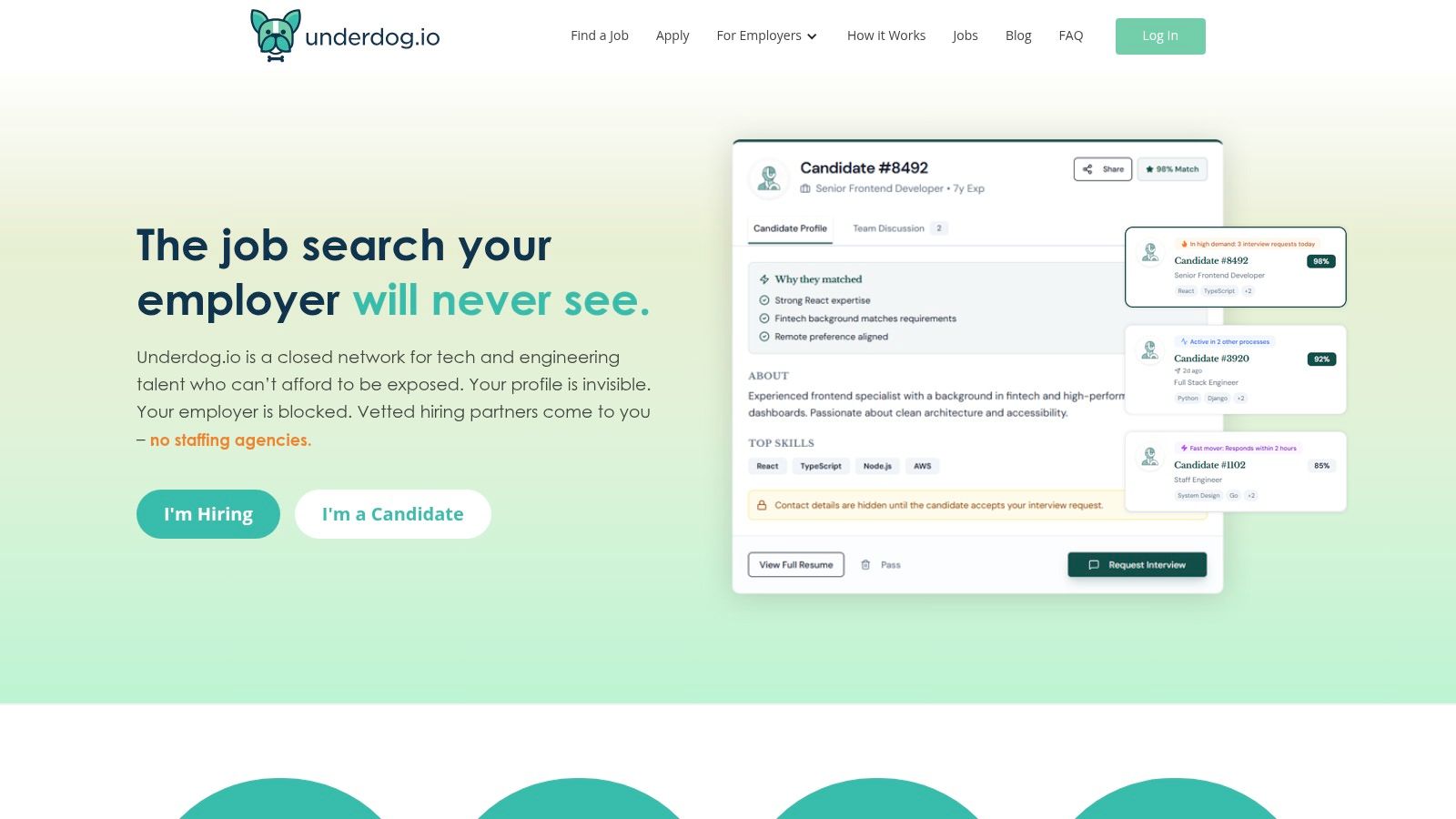
Getting in is the hard part, and it sits on the candidate side. Underdog.io accepts about 5% of applicants, with reviewers checking relevant experience across product, engineering, design, data, and marketing, plus alignment with startup culture. Companies get screened too, on funding status, team quality, and product viability, so the roles on the other end are genuine. Matching is done by people who weigh fit beyond keywords, and candidates typically see one to three introductions a month rather than a flood of messages.
Profiles stay hidden from a current employer and anonymous until interest is mutual. That matters in a pool where most candidates are already employed and cannot post an "open to work" banner. Introductions go straight to founders, hiring managers, and other decision makers, and interview requests land directly in the candidate's inbox. The service is free for candidates. Employers pay per hire or on a subscription, so budget goes toward actual hires rather than a seat license you hope someone answers. A new vetted batch of candidates goes out to hiring companies each week, which keeps the pipeline fresh without a sourcing sprint on your end.
Practical rule: Use a curated marketplace when the cost of a bad screen is a founder-week, not when you need hundreds of public applicants.
It fits the stage where one wrong hire costs a quarter, not the stage where you need fifty applicants by Friday.
A pre-seed team with no recruiter and a single open role should start where startup candidates already browse. Wellfound is that marketplace. Candidates search and apply for free. Employers can post jobs, search profiles, or add recruiter help later.
In 2025, 68.6% of employers surveyed by iHire said they conducted all or most of their hiring through job boards. Wellfound sits in that habit, but the audience is startup-shaped rather than "every industry, every title." You can open with free job posts and a built-in applicant tracking system, then add paid AI sourcing through Wellfound Reach or recruiter-led search through Autopilot, including ATS integrations.
The time cost shows up in the inbox. A free post still means you read what arrives. Paid sourcing and recruiter support are separate products, so the bill grows once free distribution stops producing the right people.
I would run Wellfound beside a curated channel, not as the only source, once the role is senior or very specific.
You are hiring two machine-learning engineers for an AI startup, and a general board keeps returning full-stack generalists. Fonzi is a curated marketplace aimed at software engineers and AI-related talent. Candidates apply once. If accepted, they can receive interview invitations from participating employers through Match Day, with role and compensation context attached. They choose which invitations to accept.
SHL's analysis of 1.9 million coding-simulation responses found recruiters put 65% of the emphasis on programming and algorithms, while an alternative approach could have let 25% more candidates reach the next round. Fonzi's model is closer to a reviewed introduction than a generic coding gate. Someone looks at the candidate before employers see the profile.
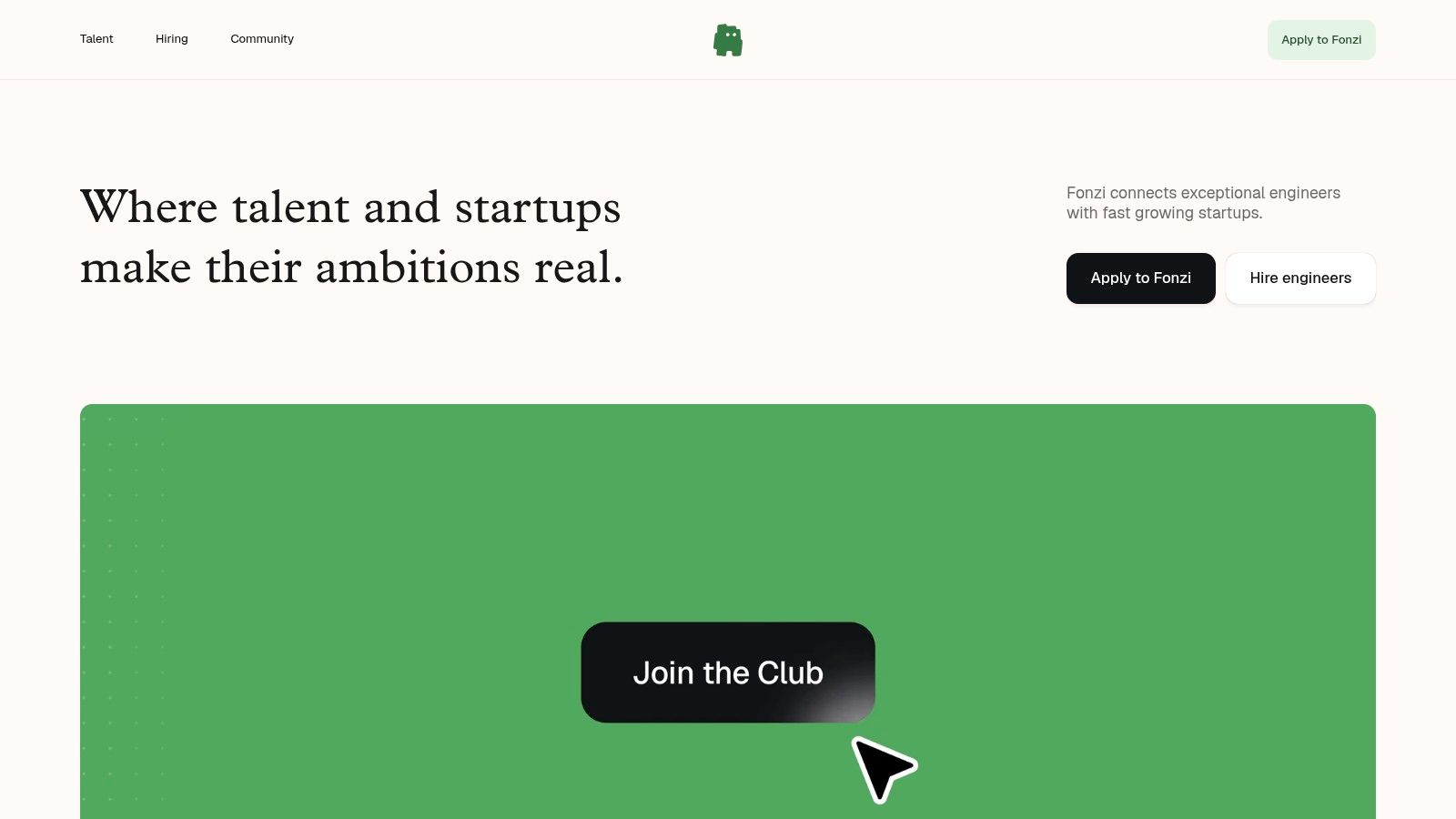
It covers fewer functions than a platform built for product, design, and go-to-market seats. Marketplace depth can vary, and employer pricing is not posted publicly, so budget the sales conversation. I would use it for engineering and AI roles at startups, not as the system of record for a whole company.
An engineering manager needs infrastructure and AI specialists who already spend time in a developer community, and who will ignore a cold InMail. daily.dev Recruiter works as an opt-in channel. You describe the role. The platform matches you with engineers who choose to consider it. Candidates review the role before anyone makes an introduction.
That opt-in step is the trade against a database search. You lose the ability to ping anyone with the right keyword. You gain a conversation the person agreed to have. Matching can include screening questions, and listed plans are monthly per role rather than a percentage of salary, with unlimited recruiter seats and introductions on those plans.
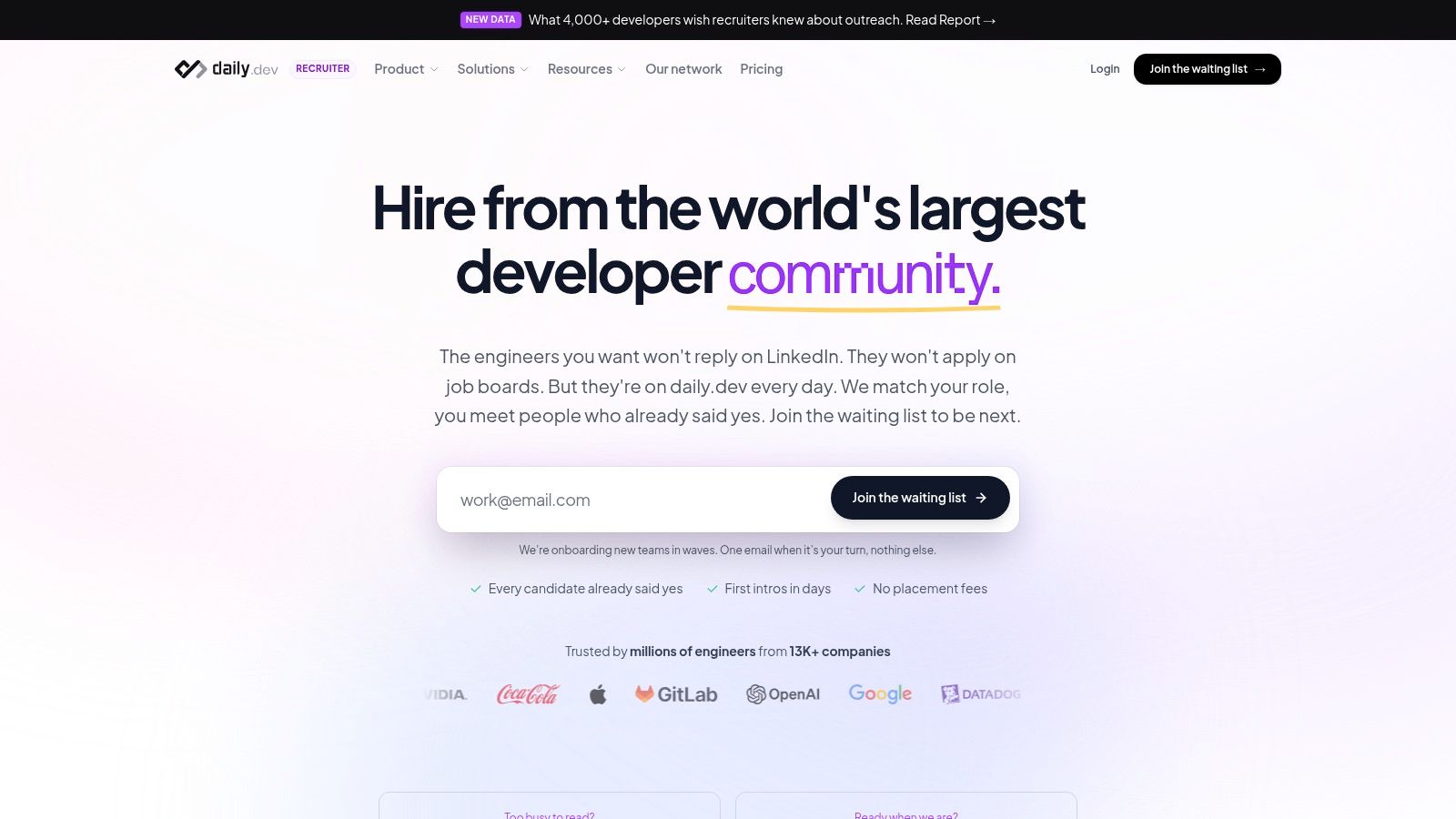
New employer accounts are onboarded in waves, so you may sit on a waitlist. I treat this as an extra engineering lane, not a replacement for how you track candidates.
A Series B company is losing finalists to teams with a clearer story, even when the salary matches. Welcome to the Jungle, formerly Otta, is a job and employer-branding platform with U.S. listings plus recruiting products. Candidates get discovery and matching. Employers get company profiles, sourcing, messaging, and an ATS in the hiring suite, with the option to run pieces next to a system you already use.
HR.com's 2025 talent-acquisition survey found that 73% of organizations use an applicant-tracking system. If you are in that group, the useful question is whether a new tool hands work off cleanly, not whether it invents another pipeline. Welcome to the Jungle can sit beside an existing ATS, which matters more than a pretty career page that nobody's recruiters open.
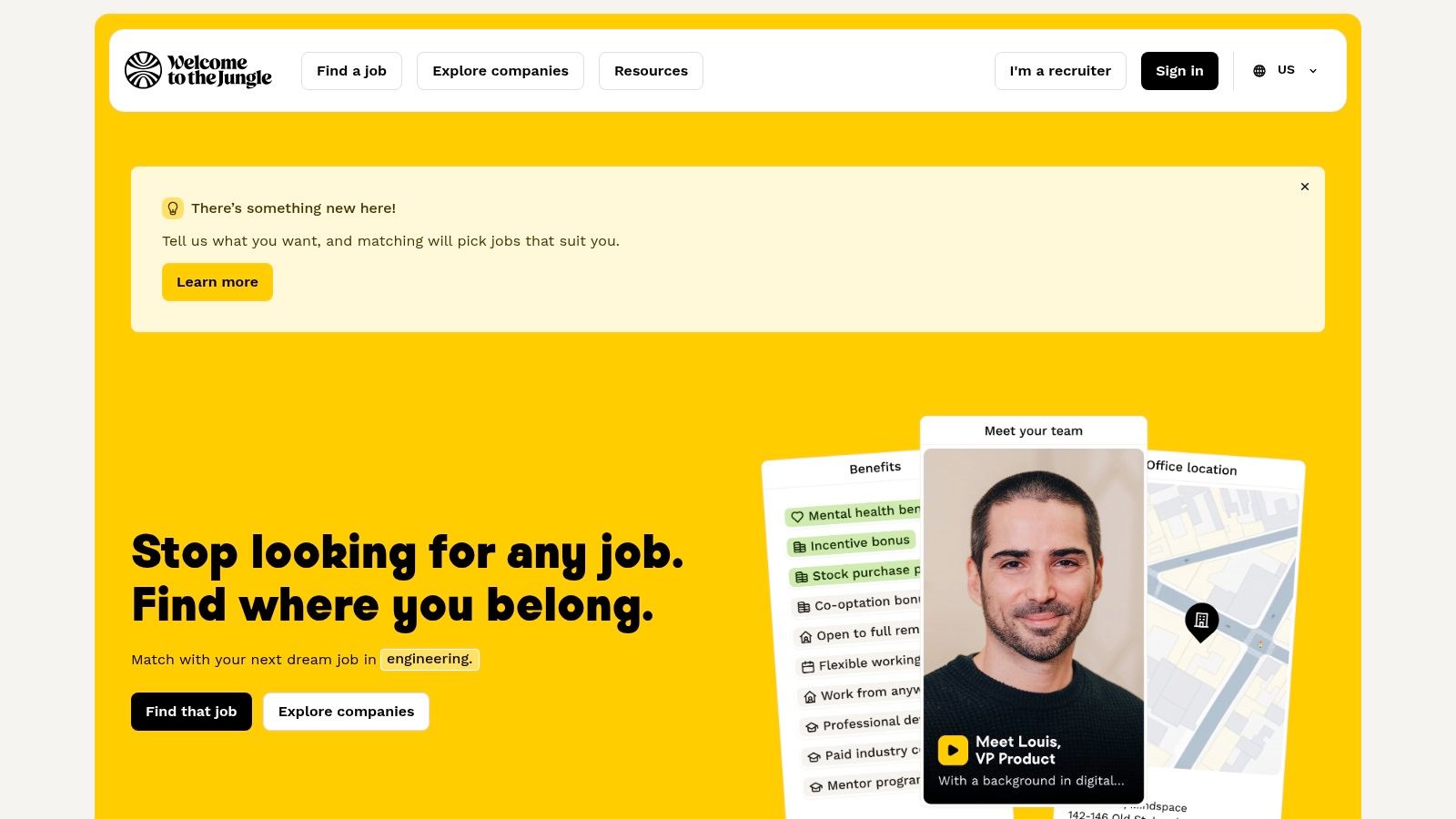
It is not limited to tech or startups, so candidates have to filter. Employer pricing is quote-based. Branding plus sourcing can be more product than a five-person team will use. I would buy it when culture and mission are part of why someone should join, and skip it when you only need three sourced intros this month.
Your roadmap slipped because you need a staff engineer for four months, not a permanent headcount you cannot defend to the board. Braintrust is a marketplace of vetted professionals across engineering, design, product, and other specialties. Engagements include staff augmentation, embedded teams, contract-to-hire, full-time hires, and help with international employment administration.
Carta recorded 27,677 new hires on its platform in January 2024, a 29% decline from the prior January, while average salary and fully diluted equity had largely stayed flat since September 2023. In that kind of market, a contract or contract-to-hire path lets you test the working relationship before you convert. Access to the network is sales-led, and pricing is custom rather than a public flat rate.
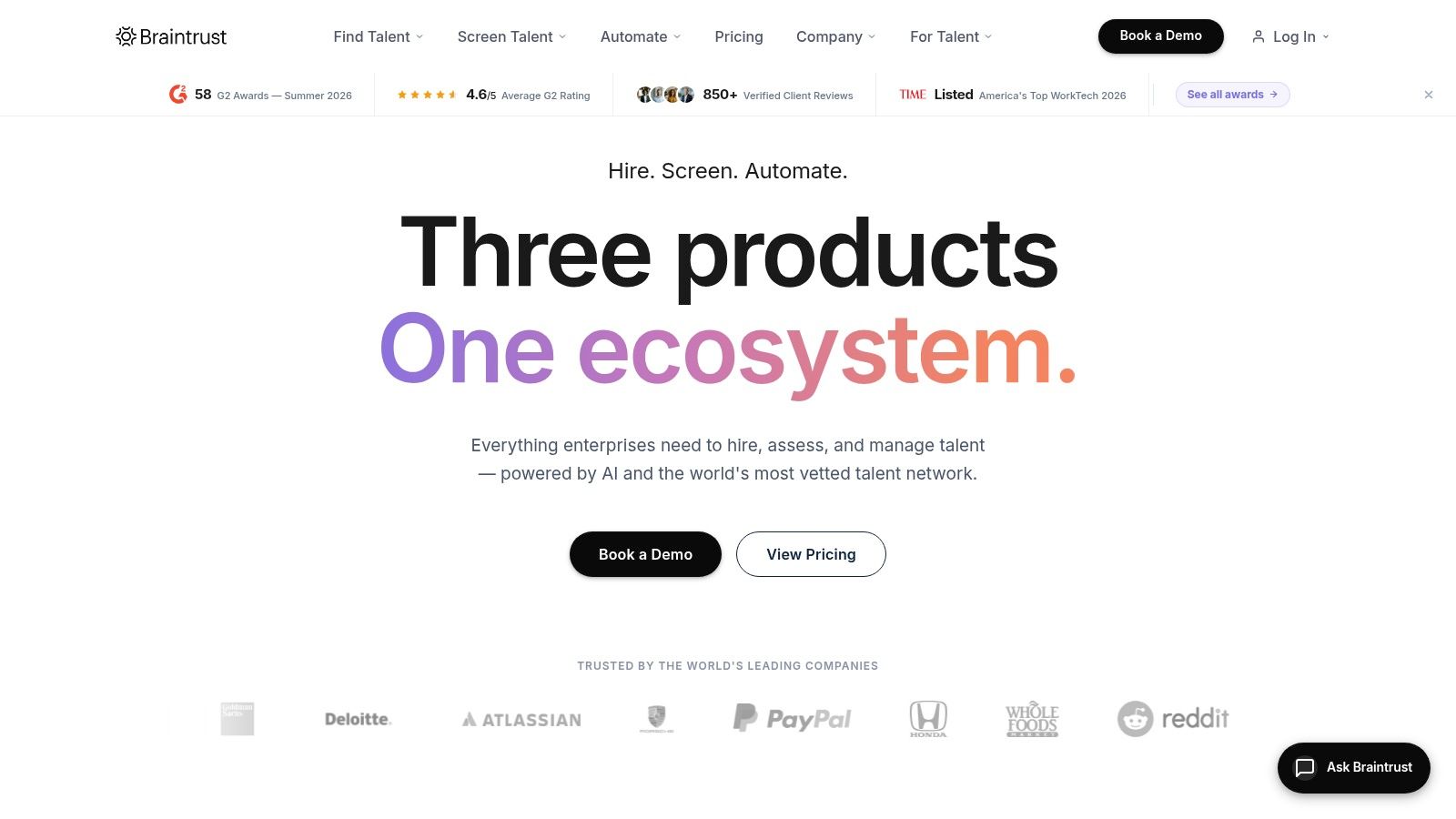
The network is broader than a startup-only community, so you still have to spell out stage, stack, and pace. I would not use it as the only path for a founding hire you expect to stay for years. I would use it when flexible staffing is the actual decision.
You have a U.S. tech req, a modest budget, and you want both a posting and a résumé database with prices you can see before a demo. Dice is that straightforward board. Employers promote jobs, distribute them across partner channels, and search a tech-oriented pool with skill filters and AI-assisted matching. Candidates build profiles and look for technology roles.
A 2025 survey of 212 U.S. technology professionals, covered in Dice's report on the trust gap, found that 68% distrusted fully AI-driven hiring and 92% believed keyword-oriented systems could miss qualified candidates. Treat Dice's matching as a sort aid. A person still has to read the shortlist. If you want a wider map of boards before you buy slots, this comparison of tech job boards is a useful pass.
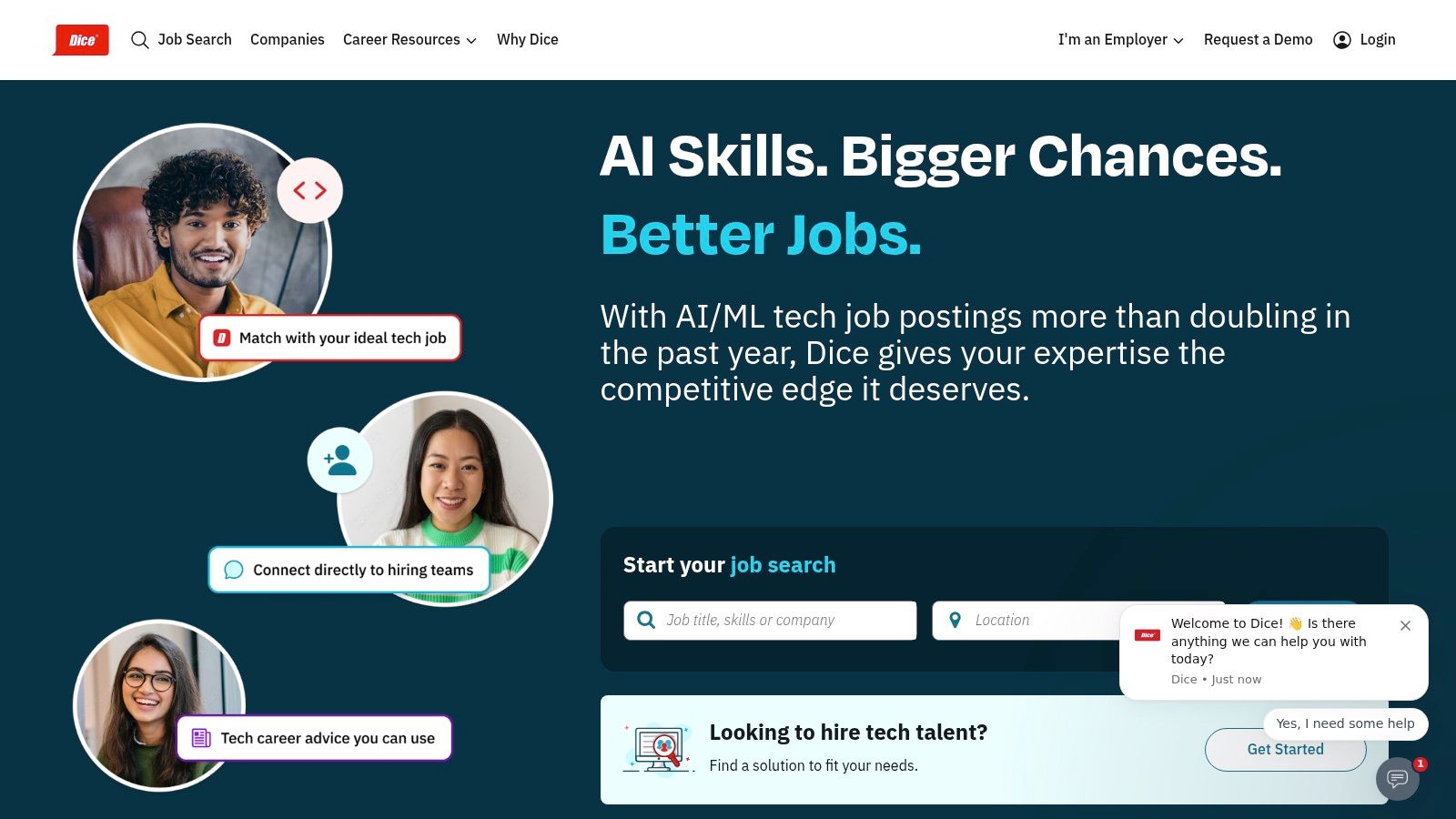
Published plan pricing helps a first budget. Costs rise as you add job slots and database access. It is sourcing and advertising, not a human-curated introduction service. I use it when the role is common enough that a tech-specific board will produce real applicants, and I staff the screening time before I turn the post on.
A senior passive search fails on applicant volume. The right principal engineer is usually employed, busy, and not reading job posts. LinkedIn Recruiter is the broadest net on this list: search by skills, role, and location, send InMail, share projects with the hiring team, post jobs, and connect an ATS. The profile gives work history and mutual context that a bare résumé often lacks.
LinkedIn's 2025 Future of Recruiting research, a survey of 1,271 recruiting professionals across 23 countries, found 37% of organizations integrating or experimenting with generative AI, up from 27% the year before. Recruiters in that group reported saving about 20% of their workweek. The study also linked heavier AI-assisted messaging with better hiring outcomes, so use it for drafts and follow-up while a person owns ranking and fit. If the manual part is sequencing follow-ups, a tool built to automate recruiting email campaigns can carry that load; targeting and judgment stay with you.
The cost is a seat plus hours. Pricing is real and is not one published rate. Its pool is broad and professional, with no startup-only vetting, so you own the outreach and the chase. For a side-by-side on when a curated option beats that workload, see this LinkedIn Recruiter alternative comparison. I keep a Recruiter seat when the search is senior, passive, and cross-market; I expect colder replies than a marketplace where candidates opted in to hear from startups.
Your summer internship slate is empty, and senior sourcing tools are the wrong instrument. Handshake connects U.S. employers with students and recent graduates. You can post jobs, message candidates, host campus events, and build school-specific relationships. Paid tools add tighter targeting, matching, and enterprise recruiting if the free post is not enough.
The audience is early-career by design. That is a strength for intern and junior software or IT hiring, and a mismatch if every req on your list asks for eight years of production ownership. You can start without a sourcing contract. Advanced products usually need a sales conversation, so don't assume the free tier will run a multi-campus program.
I would pair Handshake with a startup marketplace only if the same quarter includes both a junior program and experienced seats. Don't force one channel to do both jobs.
The role has been open for two months. Your team has no time to source, and you will pay when someone starts, not for a software seat you might not use. Recruiting from Scratch is a U.S. recruiting firm, software-assisted, that places technical and product talent at startups and established tech companies. Humans source and screen. Candidates get introductions and interview guidance. Employers pay on successful direct hires under a contingency model, with no retainer or upfront fee according to the company. Candidates pay nothing.
Coverage includes software, hardware, data, product, design, and related roles. It does not recruit for temporary positions, per its FAQ, so this is the wrong call for a three-month contract. Fees and terms sit in a separate agreement. You are buying a search, not a login you can browse at midnight.
If you are comparing search firms rather than software, start with a short list of tech headhunters and ask who has closed your stage and stack in the last year. I bring in a contingency firm when the hiring manager cannot run outreach, and I keep a curated marketplace in parallel so you are not waiting on a single recruiter's calendar.
| Item | Best For | Pricing Model | Startup Focus | Candidate Access |
|---|---|---|---|---|
| Underdog.io (Recommended) | Curated startup hiring with discreet, human-led matching | Free for candidates; employers pay success-based fees | High-growth startups | Selective, vetted candidates; profiles hidden from current employers |
| Wellfound | Startup job listings and flexible employer sourcing | Free job posts; paid sourcing and recruiting options | Startups and early-stage companies | Candidates browse and apply; employers can search profiles |
| Fonzi | Software engineering and AI hiring | Employer pricing not publicly listed | Startups and AI companies | Candidates are reviewed before profiles are shared; interview invitations are opt-in |
| daily.dev Recruiter | Sourcing engineers from a developer community | Monthly per role; listed plans include unlimited seats and introductions | Technical hiring, including startups | Engineers review roles and opt in to introductions |
| Welcome to the Jungle | Employer branding alongside job listings and recruiting tools | Quote-based employer pricing | Not limited to startups | Candidates browse U.S. roles and company profiles |
| Braintrust | Flexible staffing, contract hiring, and global talent | Custom pricing | Broad professional marketplace, including startups | Vetted professionals across technical and other roles |
| Dice | Tech job postings and candidate search | Published employer plans; costs vary by job slots and access | Tech-focused, not specifically startup-focused | Tech candidates searchable through a résumé database |
| LinkedIn Recruiter | Broad professional sourcing across roles and seniority levels | Pricing varies; no single standard rate published | General-purpose, not startup-specific | Broad professional network searchable through profiles and outreach |
| Handshake | Internships and entry-level technical hiring | Free job posting; paid advanced tools | Campus and early-career hiring | Students and recent graduates |
| Recruiting from Scratch | Human-supported direct-hire recruiting for tech roles | Employer pays on successful hires; candidates pay nothing | Startups and established tech companies | Recruiter-sourced and screened candidates with candidate support |
Pick the model from the hire in front of you, then ignore the rest of the catalog for 30 days.
Name the candidate before you name the tool. A first engineering hire at seed wants curated introductions to people who already understand startup pace. A posted role with a clear stack and a founder who can screen nightly can live on a startup board. An employed principal who is not looking needs either a discreet marketplace or a recruiter who will do the chasing. Interns belong on an early-career network. A four-month staff gap belongs on a contract marketplace, not a permanent-only search.
Match stage to effort. Pre-seed and seed teams usually cannot staff a full desk. Opt-in or human-reviewed intros spend money later and time sooner. Series A and B teams that are hiring several functions at once can mix a branded job presence, an ATS you already run, and one high-intent channel. Enterprise talent teams should demand a clean handoff into the system of record. A beautiful shortlist that never lands in your pipeline is a side project.
The U.S. Bureau of Labor Statistics projects about 106,100 annual openings for software developers, quality assurance analysts, and testers from 2025 through 2035, with employment in these occupations projected to grow 10%. Demand at that scale still does not mean every applicant is relevant. It means selective exposure beats applying, or sourcing, everywhere.
Run one test, not ten pilots. Choose one or two platforms. Give them the same role brief, the same must-have skills, and 30 days. Track three numbers only: response rate, interview-to-offer ratio, and time to hire. If a channel fills the top of the funnel and nobody reaches an onsite, stop paying for volume.
Underdog.io is the clear first choice for startups that want fact-based, human-led matching and candidates who respond quickly. One application puts people in front of vetted companies. Pricing is success-based for employers and free for candidates. Hiring decision-makers reach out directly, which is the opposite of a three-week sort through unqualified applications. Start there when the hire is a startup engineer, designer, product manager, or similar operator, then add a board, a community opt-in, or a contingency search only for the gap that channel does not cover.
Underdog.io is a curated marketplace where startup candidates get in front of vetted high-growth teams with one short application, and employers reach out only when the fit is real. If you are tired of sorting boards or chasing people who never reply, start with fact-based matching built for this kind of hire. Visit Underdog.io and put the next role, or the next search, in front of companies and candidates who are in the market.