The popular advice is simple: more interview rounds mean a better hiring decision. It sounds responsible, especially when a company wants several people to validate a candidate. In practice, that logic often creates a slow, repetitive process that drives away the very people the company wants to hire.
The core problem with too many interview rounds isn't the number alone. A focused process can justify several conversations when each one tests a different capability and moves the decision forward. A bloated process asks the same behavioral, technical, and culture questions in different rooms, leaving candidates to repeat themselves while interviewers confuse activity with evidence.
A viral TikTok reopened the debate about interview length, but the sharper question is whether every round adds new information. Repetition without progress breaks candidate trust. Candidates start wondering whether the company is indecisive, disorganized, or comparing them against an undefined standard. Employers lose candidates before they ever make an offer.
The belief that every additional interviewer improves accuracy has a useful historical origin, but companies have stretched it far beyond its practical value. A widely cited benchmark based on Google's interview-data analysis, later popularized in Work Rules!, found that four interviewers predicted a hiring decision with 86% confidence, while each interviewer after the fourth added only about one percentage point of predictive value. The benchmark is summarized in this analysis of why companies use so many interview rounds.
That finding doesn't say every role should have exactly four conversations. It shows that evaluation has diminishing returns. Once several strong evaluators have independently assessed the core requirements, another person often adds less signal than the company assumes. The employer still pays the cost through scheduling effort, interviewer fatigue, delayed feedback, and candidate uncertainty.
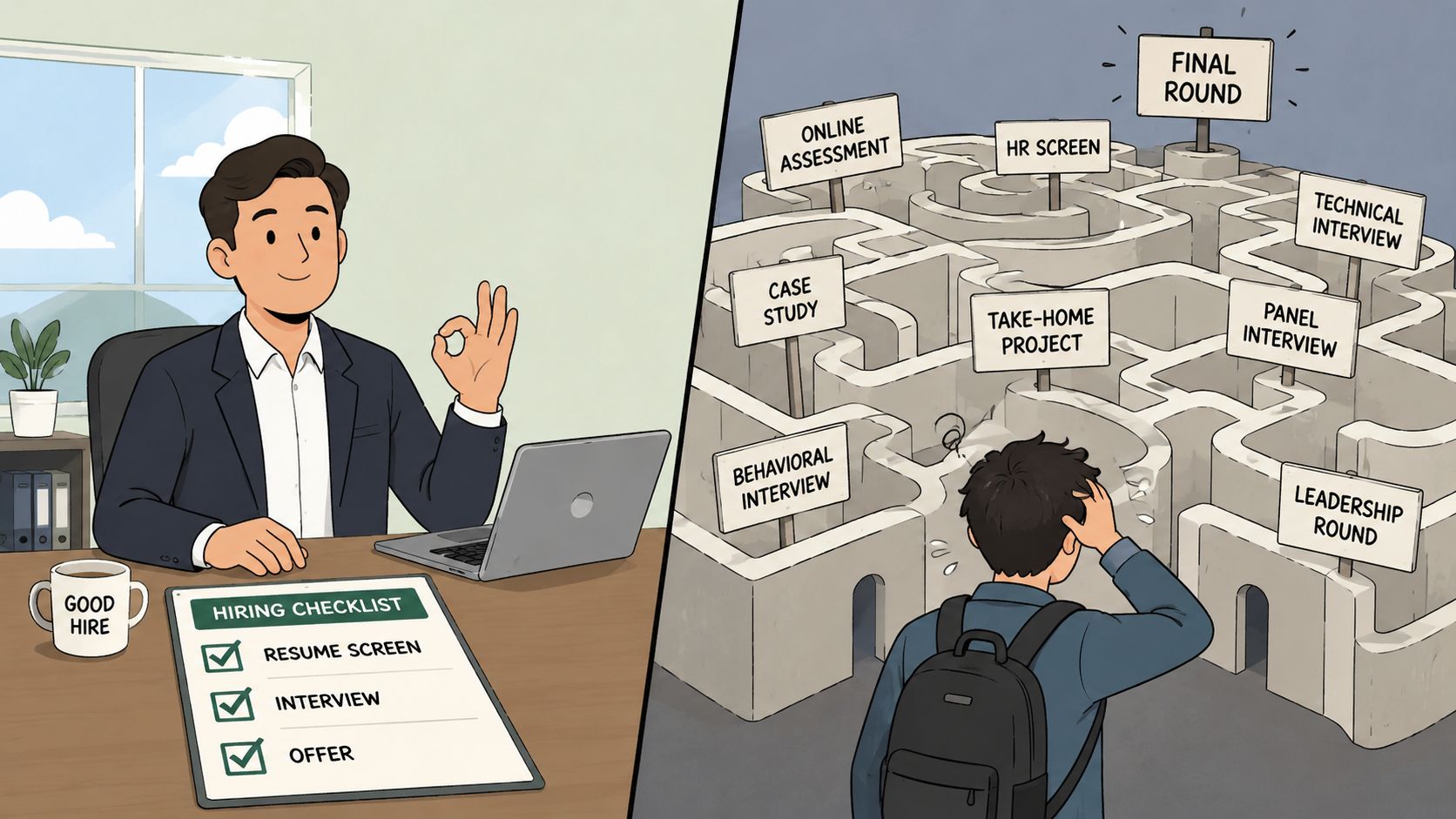
A good interview loop divides responsibility. One conversation can establish baseline qualifications, another can assess technical or functional judgment, and a final discussion can clarify team fit, scope, and mutual expectations. The candidate should know why each person is involved and what new evidence that person is expected to provide.
A bad loop asks five people to evaluate “culture fit” without defining the term. The hiring manager asks about conflict, a peer asks about conflict, an executive asks about conflict, and everyone submits feedback that sounds different but measures the same narrow slice of behavior. The company then treats agreement as additional proof, even though the interviewers may be reacting to the same rehearsed answer.
Practical rule: If a new round can't answer a question that earlier rounds couldn't answer, remove it or combine it with another stage.
This is why later hiring benchmarks commonly describe three to four rounds as a practical ceiling for many professional roles, with five treated as a hard upper boundary for senior or highly specialized hiring, as discussed in the same interview-round benchmark analysis. A company can exceed that range for a defensible reason, but “we want everyone to meet the candidate” isn't a defensible assessment design.
Long processes also measure traits unrelated to job performance. Candidates with flexible schedules, fewer financial pressures, or no competing opportunities can tolerate repeated meetings more easily than equally qualified candidates who need a clear decision. In-demand engineers and product leaders often have several options, so a company that delays without explaining why may lose them to a team with a cleaner process.
For employers, the fix isn't merely setting a lower round count. It's assigning one decision question to each stage, training interviewers not to duplicate coverage, and requiring feedback while the conversation is fresh. For candidates, the fix is learning to evaluate the process before investing unlimited preparation time.
Employers and candidates now operate with sharply different ideas of a reasonable interview loop. A hiring-statistics summary reports that 32% of candidates consider two to three rounds too many, while 52% consider four to five rounds too many. It also reports that 67% of employers require at least four interviews before making a final decision. A separate survey found 63% of candidates believe two interviews is the best number for evaluating fit. These figures appear in BrightHire's analysis of how many interview rounds are too many.
The hidden cost is repetition. Each extra stage can require another preparation cycle, calendar negotiation, and retelling of the same project examples. It also postpones the candidate's answer to a basic question: is this role worth pursuing?
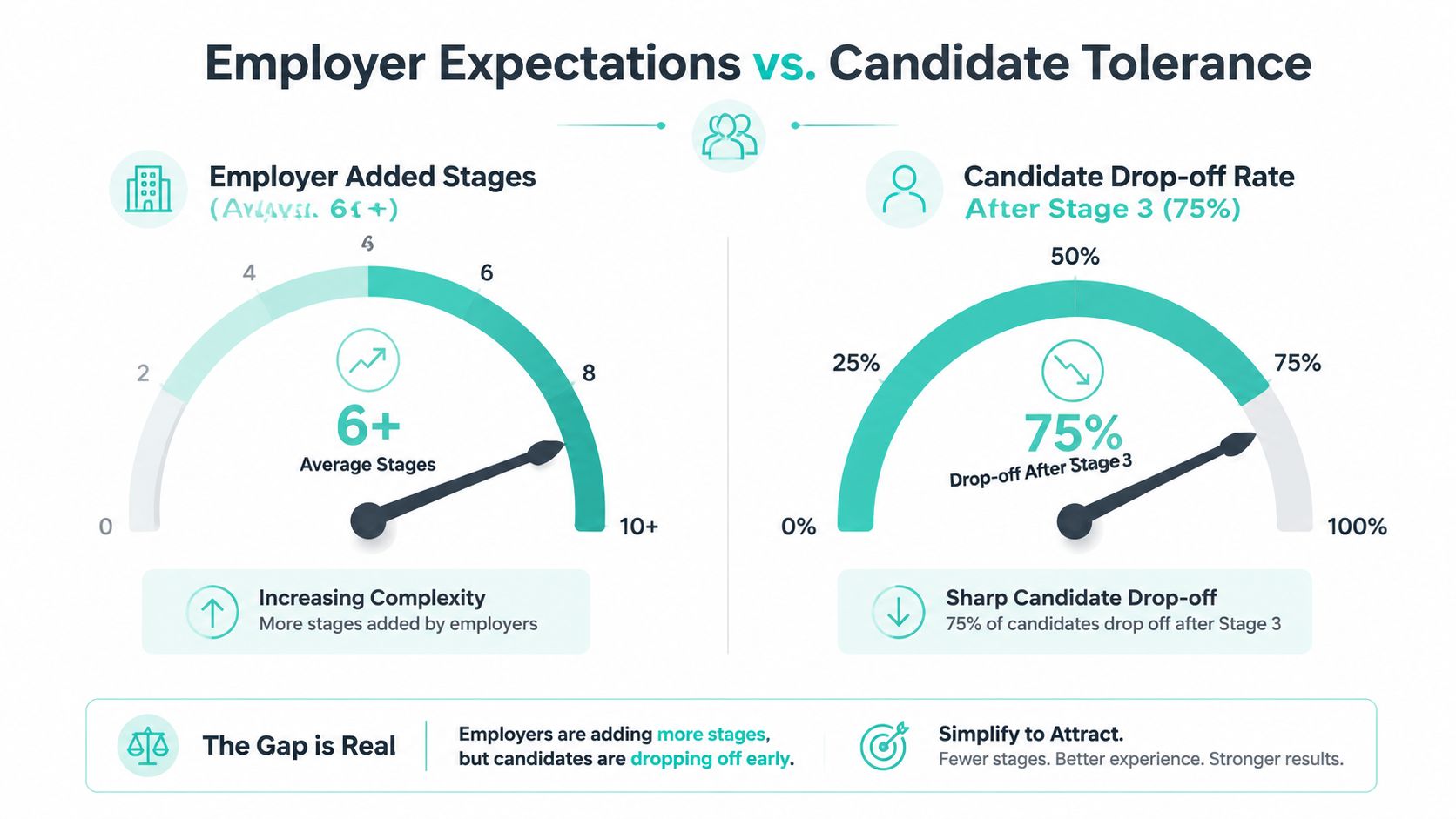
Candidates set limits based on time, competing offers, and how clearly the employer runs the process. A 2025 survey summary cited by Human Resources Online reports that 82% of employed or employable adults in the United States want the entire interview process to take less than a month, while 40% consider less than a week ideal, according to this summary of candidate-experience survey questions.
Candidates can accept a demanding process when the sequence and purpose are clear. A recruiter who outlines the hiring-manager interview, technical assessment, and final team discussion establishes an endpoint. Adding meetings one at a time, without explaining what new evidence each stage will produce, signals internal disorder.
Hiring teams should measure what stage multiplication does to the funnel:
Unexplained repetition is what drives candidates away, not rigor itself. Treat every additional stage without a distinct purpose as a retention risk inside the hiring funnel. Candidates should ask who owns the decision, what new question the round answers, and whether the company can combine overlapping conversations before committing more preparation time.
Don't wait until the fifth conversation to ask how many conversations remain. Ask the recruiter before the first interview, then compare the answer with what happens. A credible process has a defined sequence, named decision-makers, and a reason for each assessment.
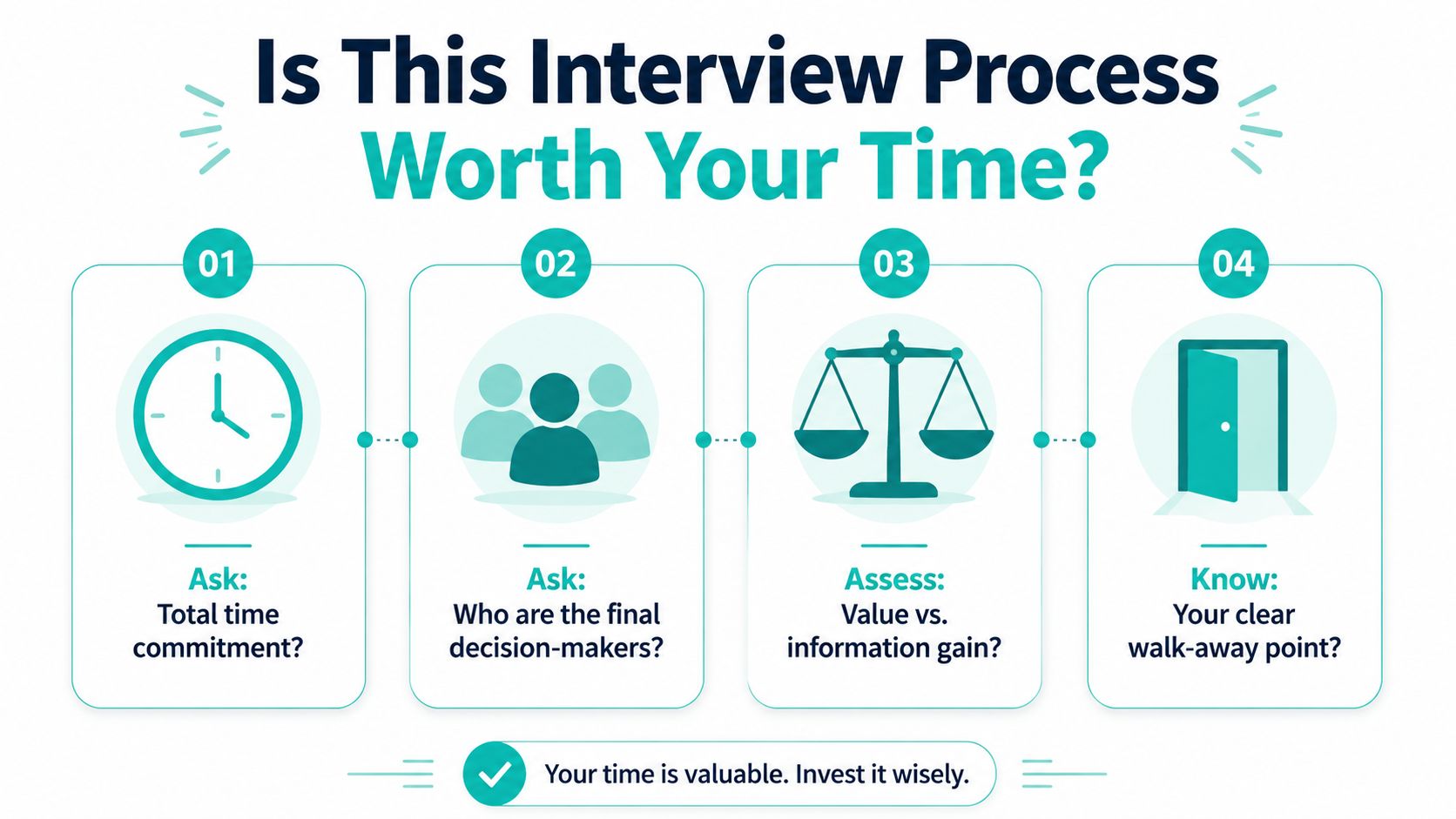
Use direct questions that force clarity without sounding combative:
Pay attention to the quality of the answers. “We'll see how it goes” can signal an unstructured process. “There are three planned stages, and the final decision sits with the hiring manager after feedback from the technical panel” gives you something you can evaluate.
A thorough interview process tests distinct capabilities. A disorganized one keeps adding evaluators because nobody trusts the evidence already collected. Green flags include interviewers who know your background, questions that build on earlier discussions, prompt communication, and a recruiter who explains changes before placing another meeting on your calendar.
Red flags include repeated requests to retell your career history, interviewers who haven't read your resume, vague promises about the next step, surprise assignments, and feedback delays. The Candidate Experience Institute's survey guidance recommends short surveys after application completion, after each interview, and when the decision is communicated. Candidates can apply the same discipline personally by recording what each stage tested and whether it produced new information.
If you can't explain what changed in your understanding of the role after an interview, the conversation may not have earned its place.
Use a simple scorecard after every round:
If the process feels confusing, you can also use resources that help employers diagnose gaps in hiring. As a candidate, you don't need to repair the company's system. You need enough evidence to decide whether continuing is rational.
Repetition is the hidden cost of a bloated interview loop. Each duplicate conversation consumes preparation time, delays your decision, and gives the company another chance to evaluate the same signal without improving its judgment. Frame your request around decision quality and efficiency, not personal inconvenience.
Send this email after the recruiter outlines several separate meetings:
“I'm very interested in the role and appreciate the chance to meet the team. To keep the process efficient, could we combine the technical and cross-functional discussions into one structured panel, or confirm what distinct decision each meeting is intended to support? I'm happy to prepare for a focused assessment, but I'd like to avoid repeating the same topics across separate rounds.”
The message offers two practical options. A combined panel can reduce scheduling friction. A clear explanation can show whether the stages test different skills.
When conversations repeat, name the overlap directly:
“I've discussed system design and incident ownership in the last two conversations. If those remain open questions, I'm glad to address them in one follow-up with the final decision-maker. Could we consolidate the remaining interviews around the areas the team still needs to assess?”
This wording demonstrates preparation and confidence while requiring the recruiter to identify the unresolved question. A generic process should not excuse repeated evaluation.
If you have another offer or a firm deadline, state the facts calmly:
“I'm managing another process that has a decision timeline, and this role remains a serious priority for me. Is it possible to complete the remaining interviews by [date], or combine the final conversations into one session?”
Use genuine constraints only. A false deadline damages trust, and recruiters may verify timing with other employers.
For a scheduling delay, write:
“I'm still interested, but the gap between stages is making it difficult to plan. Could you share the remaining schedule and expected feedback dates? If the team needs additional time, I'd appreciate knowing that before committing to another preparation-heavy round.”
A work sample needs a separate boundary:
“Before I begin, could you confirm the expected time commitment, evaluation criteria, and whether the exercise reflects work the team plans to use? I'm comfortable completing a focused assessment, but I'm not able to produce an open-ended project without clear limits.”
Interviewers can improve the process with structured prompts and consistent follow-ups. Formbricks interview prompt tips help teams design focused conversations instead of improvising another round.
For employers and founders, this guide to avoiding wasted engineering interview time explains the candidate-side cost of poorly designed loops. Ask one question before accepting another meeting: what missing signal will it produce? If the answer is unclear, request consolidation or pause the process.
Candidates usually make one of two costly decisions. They accept every added demand because they have already invested time, or they leave a promising process as soon as the schedule becomes complicated. Judge the next step by the role's value, the information it will produce, and the company's response when you ask for clarity. Repeated interviews carry a hidden cost: preparation time, context switching, and delayed decisions can drain your interest before anyone makes a better hiring judgment.
| Scenario | Your Position | Recommended Action |
|---|---|---|
| The next round tests a distinctly different skill and the role is a strong fit | Moderate | Continue, but request the full remaining timeline and evaluation criteria |
| Two rounds repeat the same topic and you have a competing process | High | Push back and request consolidation or one final decision meeting |
| The recruiter explains a clear reason for an added executive or cross-functional conversation | Moderate | Continue if the meeting has a defined purpose and the schedule remains reasonable |
| The company keeps adding stages without naming the decision-maker | Low to moderate | Set a boundary and request a concrete endpoint before scheduling |
| Feedback is repeatedly delayed and communication becomes vague | Increasing | Treat the process as a warning about internal execution and consider exiting |
| The company demands open-ended unpaid work with no scope or criteria | Variable | Decline the assignment or leave if the employer will not set limits |
| You no longer want the role regardless of the outcome | Irrelevant | Exit promptly and preserve your time for better opportunities |
Pushback works best when it is concise and forward-looking. Say, “I'm enthusiastic about the opportunity, but I can commit to one final structured conversation. If the team needs more evaluation after that, I may need to withdraw.”
If you decide to leave, keep the message brief:
“Thank you for the conversations and for considering my background. The process has extended beyond what I can commit to, so I'm withdrawing my candidacy. I wish the team success with the search.”
You do not owe the company a long explanation. If you want to preserve the relationship, add one useful observation: “The repeated overlap between interviews made it difficult to understand what remained undecided.” Candidates who want a polished exit can use this guide to rejecting a job interview for additional wording.
A company that responds to respectful pushback with clarity may still deserve your time. A company that answers with guilt, defensiveness, or another unexplained stage has provided a clear reason to leave.
Candidates tired of bloated hiring processes can reduce repeated interviews by choosing platforms where employers have already optimized the first connection. Traditional job boards send applicants into separate company funnels, often starting with recruiter screens, technical assessments, panels, and delayed decisions. A curated hiring marketplace introduces candidates to employers that have opted into a more direct matching process.
Underdog.io connects tech job seekers with startups and high-growth tech companies in New York City, San Francisco, and across the United States. Candidates complete one application, while hiring managers can send interview requests directly with salary information included. That early match can save hours spent applying cold and repeating the same background across multiple employer stages.
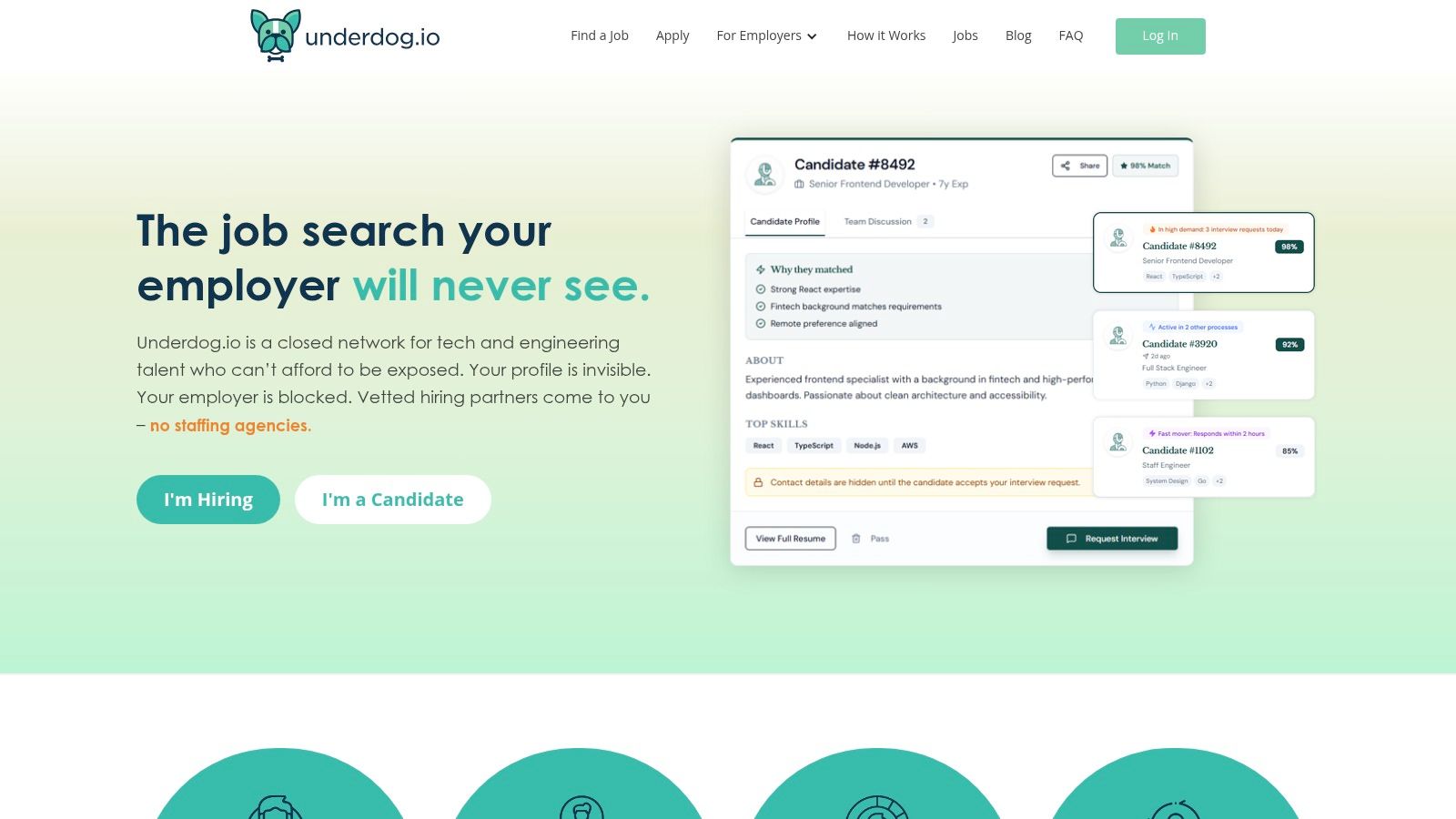
A marketplace does not guarantee a perfect interview loop. It gives you another screening point. Before accepting an invitation, ask how many rounds remain, which skills each conversation evaluates, and whether interviews overlap. If the answers are vague, protect your time. Candidates comparing channels can also review how hiring marketplaces differ from job boards.
For candidates exhausted by repeated rounds, the advantage is practical: evaluate the employer before investing heavily in its process. Choose opportunities where the first interaction respects your time and each stage has a clear purpose.
Underdog.io gives tech candidates a curated way to connect with startups and high-growth companies that are actively hiring, without sending them through endless cold applications. Visit Underdog.io to create one profile, review relevant opportunities, and start conversations where the hiring process can be evaluated before your time is spent.