Which coding website is truly best for the job you need to accomplish, rather than just the one with the biggest name? A beginner who needs first principles, a frontend learner building a portfolio, and an experienced developer preparing for a technical screen shouldn't follow the same path.
The best coding websites serve different outcomes. Some provide guided lessons and immediate feedback. Others are better for portfolio projects, language fluency, university-style theory, or timed interview practice. This ranking compares learning depth, hands-on work, feedback, pricing model, limitations, and the evidence each platform can help you produce.
That evidence matters because online resources remain the leading way developers learn to code, with 82% of developers selecting them in Stack Overflow's 2024 survey (Skillademia's Stack Overflow statistics). A useful path usually moves from fundamentals to projects, then to interview preparation and targeted applications. When you're ready to explore startup roles, a curated marketplace such as Underdog.io can provide another route beyond sending applications into a general job board. Tools for AI auto apply for jobs can also support the application process, but automation doesn't replace a credible portfolio or strong technical communication.
freeCodeCamp is the strongest choice when your priority is building a portfolio without creating a tuition bill. Its curriculum is self-paced and project-based, covering web development, APIs, databases, Python, and related subjects. Instead of stopping after a multiple-choice lesson, you work toward projects and certifications that can give your learning a visible shape.
The platform is completely free and donor-supported, including its broad curriculum and certificates. Its open-source community, forums, and extensive tutorial library, including YouTube content, make it easier to find explanations when a lesson doesn't click. The curriculum also includes more formal assessment elements, with proctored-style exams and verifiable certificates in relevant tracks.
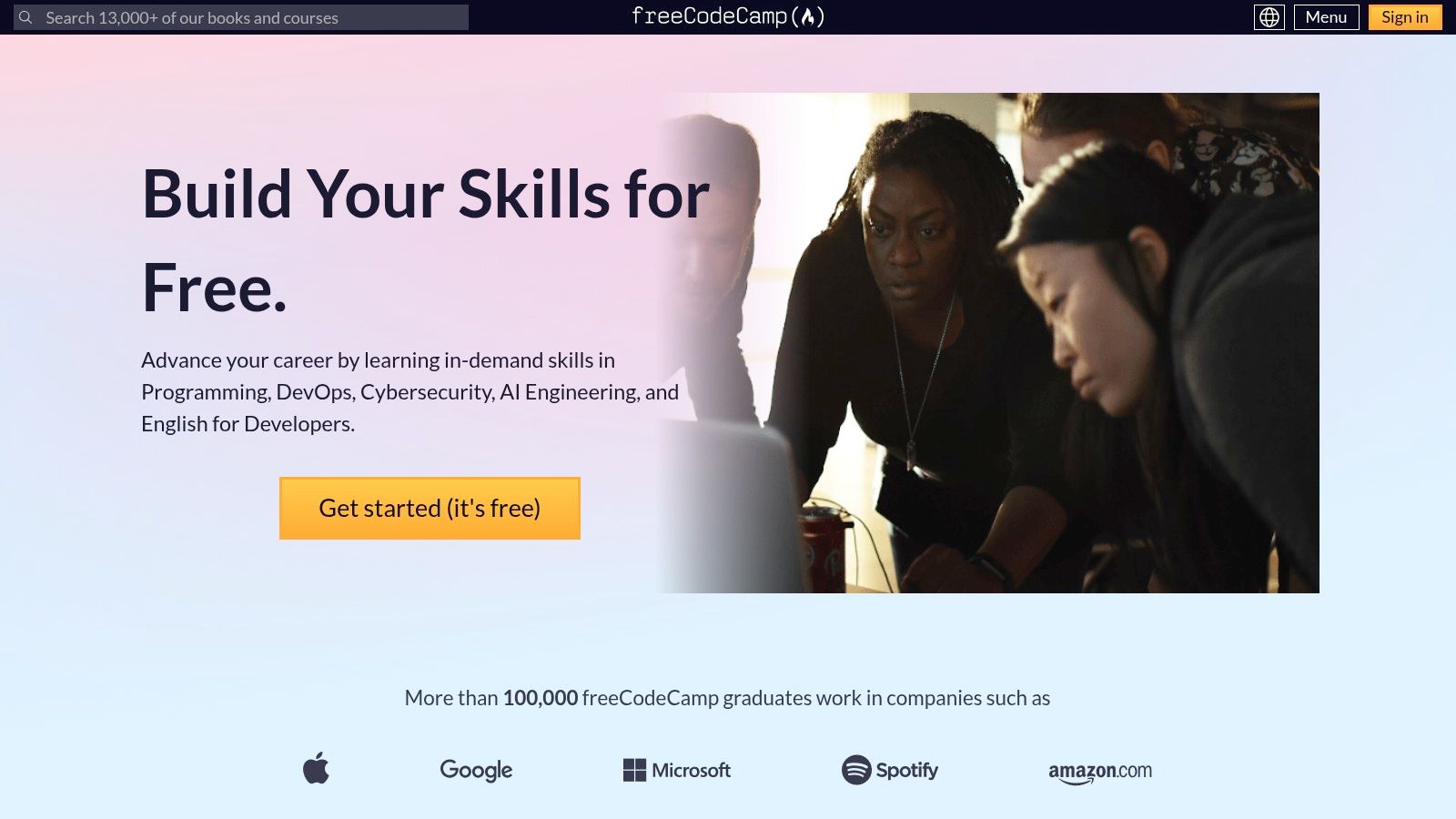
Use freeCodeCamp when you need concrete work to discuss in an application. Publish finished projects, add live demos where appropriate, and document the decisions you made rather than listing certificates alone.
Its main weakness is the same feature that keeps the price at zero. You're responsible for setting the pace, diagnosing confusion, and seeking feedback. There isn't a formal instructor reviewing every implementation, and the job-market value of a certificate can vary. Some certificates also involve time limits, integrity rules, or recertification requirements, so check the current conditions before treating one as a permanent credential.
Practical rule: Treat each freeCodeCamp project as a work sample. A completed curriculum is useful, but a readable repository and a clear explanation of your choices are stronger evidence.
Codecademy is the most approachable option for learners who want a guided route with fewer decisions about what to study next. Its browser-based IDE and workspaces let you write code and receive immediate feedback without spending the first session configuring a local environment.
The platform organizes learning into skill paths, career paths, and certification-preparation paths. That structure helps beginners move from syntax toward a role-oriented sequence, while interview preparation content and assessments create a bridge to job searching. Progress tracking, an AI learning assistant, and a mobile app reduce friction for learners who struggle to maintain a regular practice habit.
Codecademy's consistent user experience is a real advantage. If you don't yet know whether to start with JavaScript, Python, SQL, or another subject, the guided structure can prevent random course hopping. It's also useful for building a baseline before you attempt a larger project.
The trade-off is depth. Advanced or nuanced topics can feel shallow when compared with a university course, a substantial documentation set, or a demanding open-source project. The most powerful features sit behind paid Pro or higher subscription tiers, and access to particular features can depend on the current plan.
Use Codecademy to create momentum, then leave the lesson environment regularly. Rebuild a small application outside the platform, use the language documentation, and explain what changed when your code stopped working. That transition reveals whether you understand the material or are merely completing prompts.
Coursera suits learners who want coding instruction connected to universities, major employers, and broader computer science or technology programs. Its catalog includes courses and professional certificates from organizations such as Stanford, Google, and IBM, with coverage spanning software engineering, data, artificial intelligence, and cloud computing.
The platform's guided projects, graded assignments, and capstones give more structure than a loose collection of tutorials. Shareable certificates can support an application, and some programs map to college credit or industry certifications. Coursera Plus provides access to a broad catalog through a subscription model, while many individual courses offer flexible auditing options.
Coursera's brand recognition helps communicate that you followed a defined program, but the hands-on rigor varies by course and instructor. A certificate from a coding course won't prove that you can design, debug, deploy, or maintain a production application. Read the syllabus for assignments and capstones before enrolling, and inspect whether the course expects you to write substantial code.
For a broader role, Coursera can be especially useful because software jobs often touch cloud services, data pipelines, or AI systems. Pair the academic work with a portfolio project that demonstrates the same skills in a less controlled environment. A learner following a full-stack route can also use this guide to becoming a full-stack developer to connect study choices with the expectations of the role.
The key limitation is cost complexity. Pricing and catalog access differ by plan and region, and multi-course programs can require a sustained commitment. Choose a defined outcome first, then select the smallest program that produces the knowledge and evidence you need.
edX is the better fit for learners who want university-style rigor, formal assessment, and a credential model that separates free access from paid verification. Its courses and programs cover computer science alongside adjacent subjects, which is useful if your target role combines programming with data, mathematics, cybersecurity, or another discipline.
The audit track can provide access to course material without the verified credential. Paid verified tracks add graded assessments and certificates, while Professional Certificates, MicroMasters, and bootcamps create multi-course routes for learners who prefer a defined academic sequence.
edX's strength is also its main limitation for job seekers. Academic depth can help you understand why an algorithm, system, or programming model works, but a completed course may not give you a polished application to show a hiring manager. Its project emphasis is often lighter than a portfolio-first curriculum or bootcamp.
Use the audit option to test the teaching style and workload before paying for verification. If you choose a verified program, save your graded work, notes, and project outputs in an organized portfolio. Then add an independent project that demonstrates decisions the course didn't prescribe.
edX is particularly valuable when you know that shallow tutorials won't answer your questions. It isn't the fastest route for someone who only needs a small JavaScript feature or a short interview refresher. For that learner, a targeted course or practice platform may create better results with less overhead.
Udemy is a marketplace for targeted upskilling. Its catalog covers web development, Python, cloud and DevOps, mobile development, data, machine learning, and specialized frameworks. That breadth makes it useful when you already know the exact gap, such as a need to understand a framework, prepare for a project, or review a stack before an interview.
You can buy individual courses with lifetime access or use the Personal Plan for a subset of the catalog. Individual courses frequently appear in sales and promotions, but the subscription catalog isn't identical to the complete marketplace. Check what your selected course includes before assuming a plan gives you access.
Udemy's quality varies significantly by instructor and course. A highly polished landing page doesn't guarantee clear explanations, current examples, or meaningful exercises. Check the curriculum, recent update information, preview lessons, and student feedback before purchasing.
A practical selection process looks like this:
Udemy is excellent for filling a narrow gap quickly, but it isn't automatically a coherent career path. Assemble courses around a real project, discard irrelevant sections, and keep a record of what you changed independently.
LeetCode is built for a specific job, technical interview preparation. Its library contains more than 3,800 algorithm questions organized by company, difficulty, and topic, and the platform reports over 1.1 million developers using it (DevOpsCube's programming website guide). That depth makes it far more useful for coding screens than a general tutorial site.
The problem bank focuses heavily on algorithms and data structures. Topic filters, company filters, mock interview assessments, discussion forums, and official solution editorials help you review patterns rather than solve every problem in isolation. Premium features add access to more company-specific material, frequency sorting, and editorial content.
LeetCode can help you demonstrate algorithmic fluency, speed, and the ability to reason under interview constraints. It doesn't prove that you can build a maintainable service, work with a product manager, review a pull request, or diagnose a production issue. Day-to-day engineering work often looks different from a timed puzzle.
Use it after you have fundamental programming knowledge. Start with a small set of patterns, explain your solution aloud, test edge cases, and revisit failed problems. Premium access can be useful for a targeted company search, but you can still build an effective routine around the available practice and your own notes.
Interview practice should sharpen your communication as well as your code. Explain complexity, assumptions, trade-offs, and test cases while you solve.
HackerRank is a strong choice when you want practice that resembles employer assessments. Its individual practice environment covers algorithms, data structures, SQL, regular expressions, and other technical domains. Timed assessments and proctored-style practice can make the transition to a hiring screen less surprising.
The platform also offers developer skill certifications that can be shared. Its employer-facing products are separate from the free individual practice experience, and many of the tools designed for companies aren't intended for a job seeker working alone.
HackerRank's practical value comes from its assessment format. Set a time limit, use the permitted language and environment, and practice reading a prompt before writing code. This is different from slowly following a tutorial, and the difference matters when an employer sends a timed challenge.
The explanations and interface can feel terse compared with course platforms. If you don't understand a failed solution, use documentation or another learning resource to close the gap rather than repeatedly submitting guesses. HackerRank is a practice environment, not a complete curriculum.
Its certifications may support a profile, but they shouldn't replace project evidence. A startup hiring for a generalist engineer may care about your ability to ship a feature, work across a stack, and communicate uncertainty as much as your performance on an isolated assessment. Use HackerRank for the screen, then prepare examples that show how you build beyond it.
The Odin Project is one of the best coding websites for learners who want a free, open-source, project-first route into full-stack web development. Its curriculum combines in-house material with selected resources from across the web, creating a roadmap through Foundations, Full Stack JavaScript, and electives.
The projects require more initiative than an interactive exercise. You'll work with Git and GitHub, manage a development environment, and build artifacts that can become part of a public portfolio. The active community and Discord support can help when you get stuck, although you're still responsible for investigating problems and moving forward.
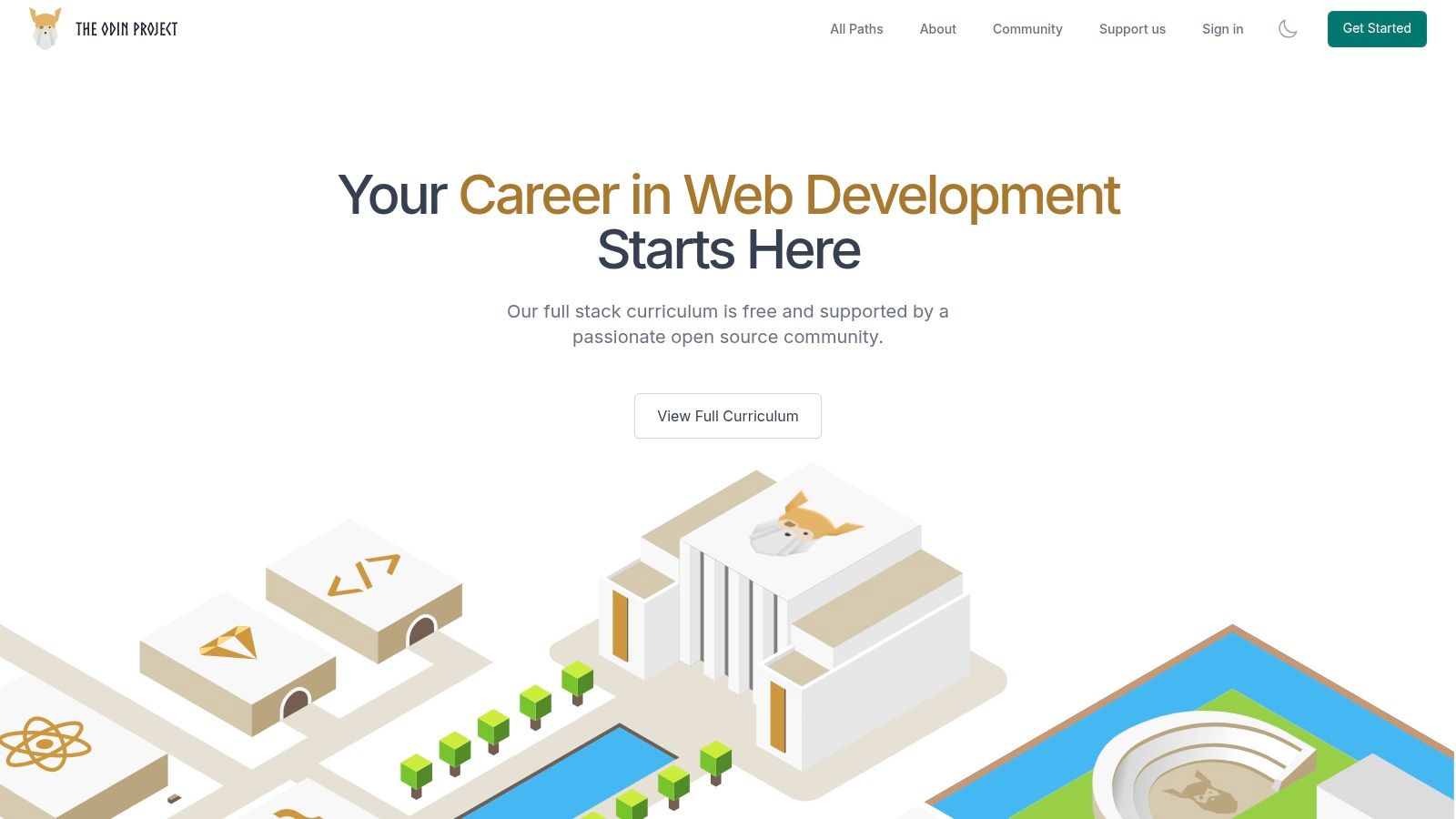
Early-stage teams often need people who can learn unfamiliar tools, make reasonable trade-offs, and show what they've built. The Odin Project's project-driven path gives you opportunities to demonstrate those behaviors. Its beginner coding project ideas can also help you choose a portfolio scope that is large enough to discuss but small enough to finish.
The platform is self-paced and self-supported. There isn't a formal instructor-led experience or university certificate, and its focus remains primarily web development rather than mobile, embedded systems, or low-level programming. That focus is a benefit if you're targeting frontend or full-stack startup work, but it may not fit every role.
Don't hide behind the roadmap. Customize at least some projects, write a useful README, deploy a working version, and describe a problem that the project solves. A hiring manager should be able to see your judgment, not only that you completed the same assignment as other learners.
Scrimba is especially effective for frontend learners who learn by seeing code change immediately. Its interactive screencasts let you pause a lesson, edit the code inside the lesson, and run the result. That see-edit-run loop is more active than watching a conventional video and more guided than starting from an empty editor.
Career paths such as Frontend Developer combine lessons with projects, challenges, and review. Community events and support add a social element for learners who lose momentum when studying alone. The experience is strongest around frontend and web topics, where visual feedback makes each change easy to inspect.
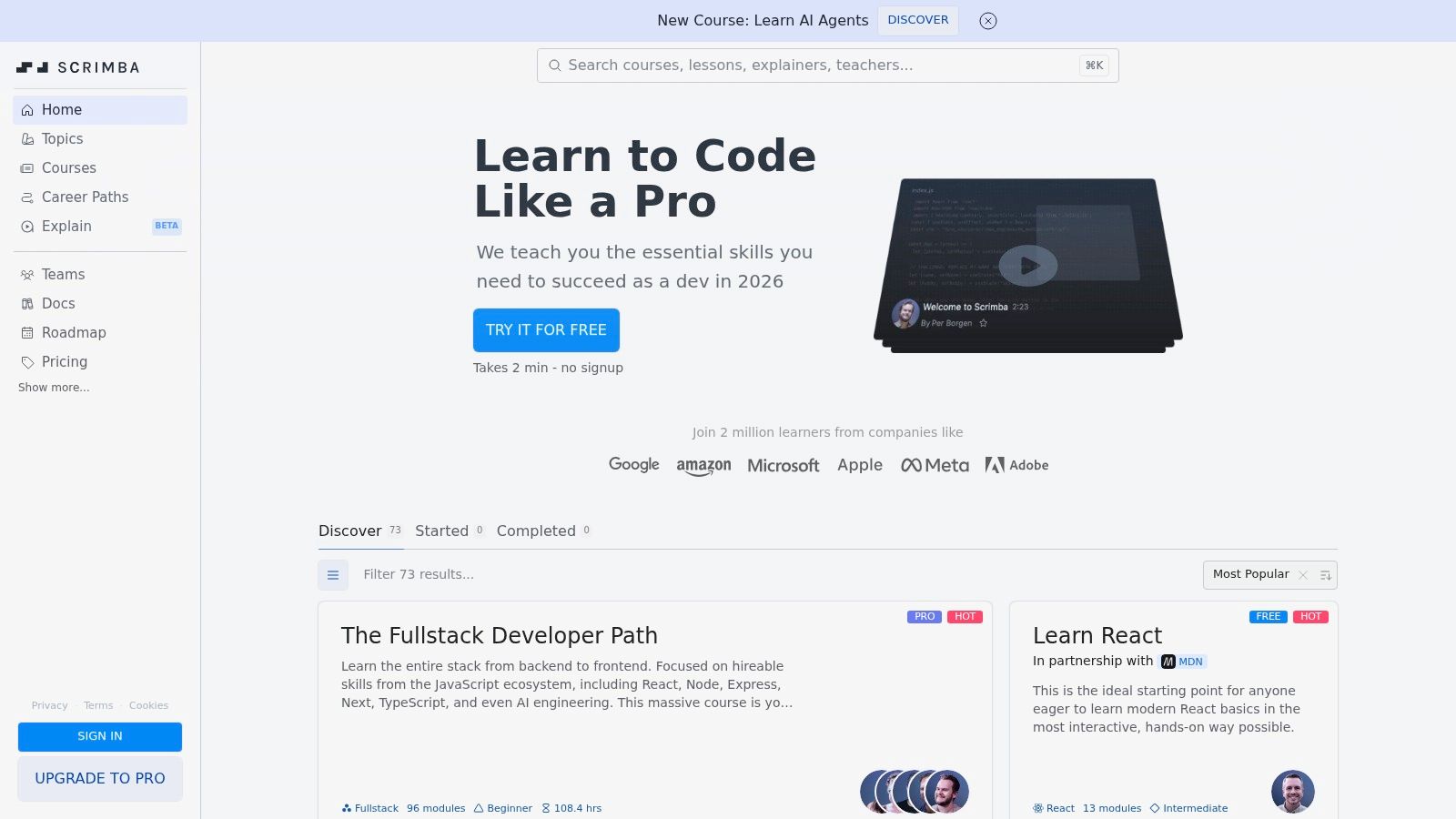
Scrimba's main risk is overreliance on the lesson environment. Editing an instructor's code can feel productive, but job-ready ability requires creating structure, debugging unfamiliar errors, and making design decisions without a completed example beside you.
After each substantial lesson, close the interactive workspace and rebuild the feature in your own project. Change the requirements, add validation, make the layout responsive, and explain the implementation in your repository. Full access requires a Pro subscription, with pricing that varies by region, and the catalog is narrower than broad MOOC marketplaces for advanced or non-frontend subjects.
Choose Scrimba when engagement is your main obstacle and frontend is your target. Move to a more independent project workflow before you describe yourself as job-ready.
Exercism is the best choice for improving language fluency through repeated practice, tests, and feedback. It offers more than 8,521 exercises across 83 programming languages, with automated analysis and optional mentoring (iTechGuides' coding website guide). That breadth makes it useful when you want to explore a language beyond the most common beginner paths.
Exercises can be downloaded and worked on with a local toolchain, while CI-style tests help you verify behavior. Volunteer mentors and code reviews add a feedback loop that most self-study platforms lack. The focus is often on idiomatic, language-specific code, which is valuable when an interview or project expects more than syntax that merely runs.
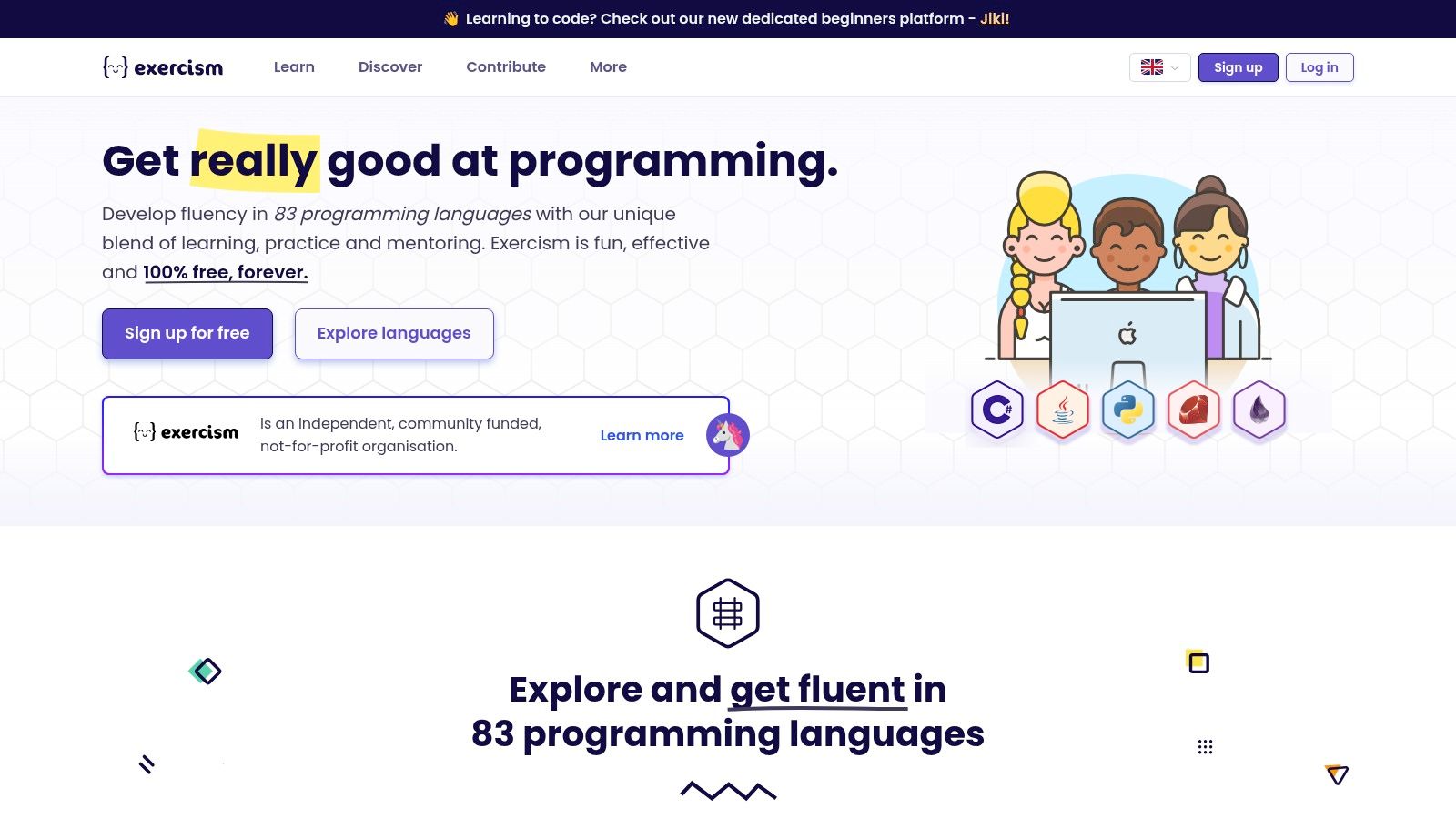
Exercism is free and open, but it isn't a lecture-based course. You need enough foundation to understand the exercises, and mentor response times vary according to the language track and community activity. The platform also doesn't provide the same end-to-end career path as a structured MOOC or bootcamp.
Use it between larger projects. Solve an exercise in Python, JavaScript, Rust, Go, or another target language, then compare your implementation with community approaches. Ask why one solution is more idiomatic, easier to test, or simpler to maintain. Those conversations create useful interview material because they force you to articulate trade-offs.
A learner who only collects completed exercises may still lack deployment and collaboration experience. Pair Exercism with a project repository, issue tracking, and a clear README so language fluency becomes evidence of practical engineering ability.
| Platform | Core focus / Format | Experience & outcomes | Best for (target audience) | Pricing model | Unique strengths |
|---|---|---|---|---|---|
| freeCodeCamp | 100% free, project-based web dev curriculum with verified certs | Build portfolio projects; proctored-style exams; self-paced, no instructor feedback | Self-directed beginners → intermediate web devs on a budget | Free (donor-supported) | Real projects for portfolios; verifiable certificates; large open-source community |
| Codecademy | Interactive browser IDE + structured skill/career paths | Instant feedback, guided progression, progress tracking | Beginners seeking hands-on, guided learning toward job-readiness | Free tier; Pro subscription for full paths & features | Beginner-friendly UX; interactive IDE; AI learning assistant |
| Coursera | University & industry-backed courses, specializations, capstones | Graded assignments & capstones; shareable certificates; varying hands-on rigor | Learners seeking recognized credentials or deeper theory + practice | Per-course pricing; Coursera Plus subscription; financial aid | University/industry partners; recognized certificates; possible college credit |
| edX | University-level courses, MicroMasters, Professional Certificates | Academic rigor with verified (paid) assessments; audit (free) option | Learners seeking formal/academic credentials and structured programs | Audit free; verified paid per course/program | Strong academic credentials; MicroMasters and verified credit pathways |
| Udemy | Marketplace of individual practical courses across many niches | Targeted, project-focused learning; quality varies by instructor | Professionals needing quick upskilling or niche skills | Individual course purchases (lifetime) or Personal Plan; frequent discounts | Massive selection; affordable with sales; flexible topic coverage |
| LeetCode | Algorithm & data-structure problem bank, mock interviews, company tags | High-ROI interview prep; practice for coding screens; community solutions | Candidates preparing for technical interviews (DSA-heavy roles) | Free tier; Premium subscription for company sets & editorials | De facto interview prep standard; company frequency data and mocks |
| HackerRank | Practice domains + timed assessments; employer-facing assessment tools | Mirrors employer tests; free practice and shareable skill certs | Developers preparing for hiring assessments; employers evaluating candidates | Free for developers; employers pay for assessment products | Employer-aligned formats; recognized skill certifications |
| The Odin Project | Free, open-source full-stack web curriculum with roadmaps | Project-first portfolio building, Git/GitHub integration, community support | Self-motivated learners targeting web roles at startups | Free | Transparent, community-driven paths; strong portfolio emphasis |
| Scrimba | Interactive "scrim" videos with in-lesson editable code; career paths | Very engaging see-edit-run workflow; project-based career tracks | Frontend learners who prefer interactive, code-first lessons | Free content; Pro subscription for full career paths | Unique editable screencasts; efficient frontend on-ramp |
| Exercism | Mentor-supported, test-driven exercises across 80+ languages | Idiomatic, language-specific practice with volunteer code reviews | Developers deepening language fluency or exploring new languages | Free (community/mentor-driven) | Wide language coverage; volunteer mentorship and code reviews |
The right choice depends on the gap between your current ability and the job you want. Guided beginners should start with Codecademy or Scrimba, especially when a structured interface and immediate feedback will help them maintain momentum. Codecademy offers broader role and language paths, while Scrimba is a more focused choice for frontend learners who benefit from editing code inside interactive lessons.
Portfolio-focused learners should consider freeCodeCamp or The Odin Project. freeCodeCamp offers a broad, free curriculum with projects and certificates. The Odin Project pushes harder toward independent web development, GitHub workflows, and visible project work. Neither platform provides a substitute for feedback from experienced engineers, so use code reviews, community discussions, and careful self-review to raise the quality of what you publish.
Learners who want theory, institutional context, or credentials may prefer Coursera or edX. Coursera offers university- and employer-backed courses, guided projects, and capstones across software, data, AI, and cloud. edX provides an audit and verified model with academic programs such as Professional Certificates and MicroMasters. In both cases, inspect the actual assignments. A recognizable certificate can't compensate for a portfolio that contains no independent implementation.
For a narrow skills gap, choose Udemy. It can be efficient when you need a focused course on a framework, cloud tool, or programming topic, but marketplace quality varies. Read the syllabus and test the instructor's teaching style before committing. The best result comes when you use the course to build something that wasn't copied from the lessons.
Interview preparation belongs on LeetCode or HackerRank. LeetCode is particularly deep for algorithms, data structures, and company-tagged practice. HackerRank is useful when you need to rehearse timed assessments and domains such as SQL. Neither should become your entire definition of software engineering. Technical screens measure a narrow slice of ability, and startup teams also need people who can ship, collaborate, learn quickly, and explain decisions.
Choose one core path instead of collecting unfinished courses. Complete enough fundamentals to understand the stack, then publish a small set of deployed or clearly documented projects. Each project should include a short explanation of the problem, the architecture, the trade-offs, the testing approach, and what you'd improve next.
A startup application becomes stronger when your evidence reflects startup work. Show that you can work with Git, break work into manageable changes, respond to feedback, and make sensible decisions with incomplete requirements. A polished project doesn't need to be enormous. It needs to be understandable, functional, and specific enough to support a technical conversation.
Use interview platforms after you have something concrete to discuss. Practice coding screens, but also rehearse explaining why you chose a particular approach, how you would monitor it, and what risks remain. Employers need to know how you think when the problem doesn't arrive in a perfectly formatted exercise.
Completion badges alone are weaker signals than demonstrable work and clear communication. The practical sequence is simple: choose one core path, publish evidence, prepare for screens, then seek curated introductions through Underdog.io when your materials are ready. Underdog.io is designed for candidates exploring startup and high-growth tech roles, so it can complement the learning process rather than replace it.
Underdog.io connects tech job seekers with vetted startups and high-growth technology companies through a curated hiring marketplace, including opportunities for software engineers and related technical roles. If your projects are ready to share and you're looking for startup opportunities, visit Underdog.io to explore a candidate-focused path into the market.