Recruiters rarely reject your CV. Mostly they never open it. Thirty professional recruiters spent 10 weeks reviewing resumes and online profiles while eye-tracking software recorded their fixations, and they gave each one about six seconds before deciding fit or no fit (TheLadders eye-tracking study, published by Boston University). Everything after that first pass is a reward for surviving it.
So your profile gets 6 seconds before your CV gets any attention at all. Inside those seconds a recruiter is answering three questions. What does this person do? Are they senior enough for this role? Can they solve the problem we're hiring for? The six items below are ordered the way a skimmer reads them, and each one comes with a rewrite you can adapt today rather than a reminder to "be concise."
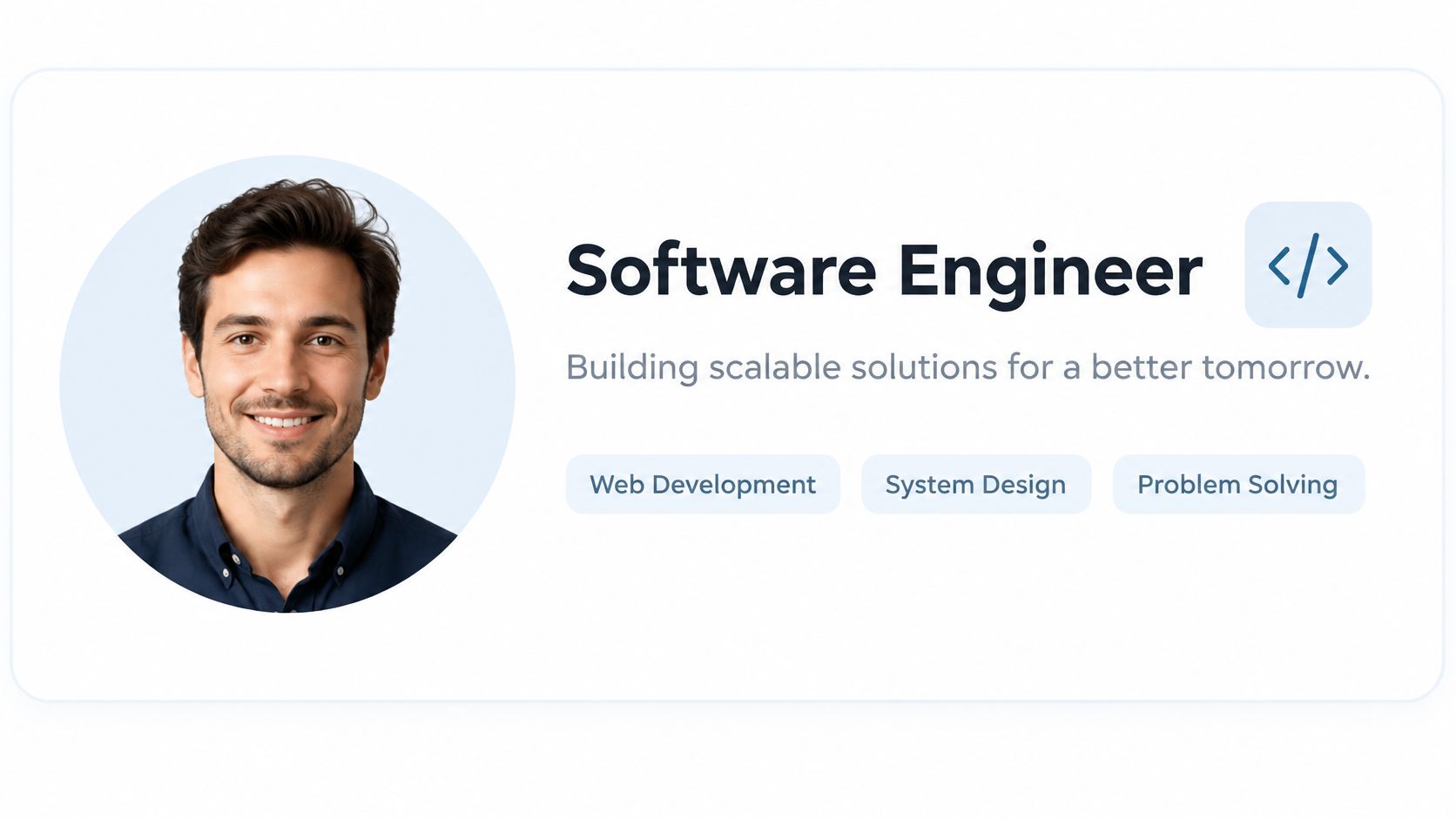
The headline is the most-scanned line in your profile. It sits under your name, it travels into search results, and it's what a recruiter reads while deciding whether to scroll at all. Eye-tracking work shows recruiters land on current job title and company first, then the previous title and company, then employment dates and education (TheLadders). A headline like "Senior Product Manager | B2B SaaS | 0-to-1 launches" pre-answers stop one. "Passionate problem solver" makes the recruiter hunt for the answer, and hunting is what they don't have time for.
Format it as role, then specialty, then one credible proof point:
Two habits matter more than the wording. Mirror the job titles used in the roles you want, without copying the posting word for word, because that's how recruiter searches are built. Then check the headline on a phone, since that's where a lot of first views happen and long titles get truncated mid-specialty.
The test I use: cover the name and photo. If a stranger can't name the job from the headline alone, it's not finished.
Update it when your target role changes, not only when your employer does. Recruiters sort candidates into searches by title, and a stale headline puts you in the wrong pile.

Only the first two or three lines of a summary show before the "see more" click. Treat that space as the whole section, because for most readers it is. The eye-tracking comparisons found professionally organized resumes scored usability ratings roughly 60% higher than ones assembled without that structure, and recruiters looked for keywords tied to the open role only after they had located the basic employment and education facts (eCornell). Fit first, evidence second, personality last.
Take this: "Results-driven professional with a passion for technology and a track record of excellence." Now: "Backend engineer with 7 years building payment and ledger systems. Shipped services handling about 2M transactions per day at a Series B fintech and two earlier-stage startups." The second version tells a recruiter the domain, the scale and the company stage in one breath.
For a growth marketer: "Growth marketer with 5 years in B2B SaaS. Led acquisition from 0 to 40k monthly signups at a seed-stage company, with a focus on lifecycle email and paid channels."
The details that make this work are the ones often left out: years, domain, company stage, and one or two outcomes. Keep sentences short, break lines rather than building a paragraph, and make sure the titles and dates in the summary match the CV exactly. A mismatch reads as either sloppy or inflated. If you want a longer walkthrough, this guide to writing a good professional summary covers structure line by line.
In six seconds, a recruiter is running a checklist: can this person work here, at this level, starting when we need them? In a 2025 survey, all 25 recruiters surveyed used knockout questions covering work authorization, required licenses or onsite availability, while only 2 of 25 had set up automatic rejection based on resume keyword scores (Do The Calculation). What gets a profile skipped at this stage is blank logistics: no stated authorization, no location, no start window.
State the practical constraints in plain language, near the top where the scan lands:
Two or three closely related roles is the ceiling. Past that, a recruiter cannot tell which opening to put you forward for, so they write no introduction at all. A mismatched pitch costs them credibility with the hiring manager, and they know it.
Employed and exploring quietly? Mark it: "open to conversations, discreet." On a platform like Underdog.io, your profile is automatically hidden from current and past employers. On a public profile, that one word does the protecting.
Accessibility sits in the same category. For anyone reading your profile through a screen reader, presentation is functional rather than cosmetic: standard headings, plain text instead of icons, and a logical reading order decide whether the page gets read at all.
Clarity has a second use. If you are targeting a level above your current title, name the level and attach the evidence for it, the way you would when asking for a promotion at work. An unstated target defaults to the level below you.

The arithmetic gets uncomfortable here. Roughly 80% of that six-second review went to objective facts like job titles, dates and education, which leaves about 1.2 seconds of the scan for the information you control, such as accomplishment bullets (HuffPost). You're not writing for a reader. You're writing for a glance.
A glance-friendly line has three parts: action, scope, result. "Rebuilt onboarding flow, raising activation 18% across 40,000 monthly users." Compare that to "Responsible for onboarding improvements and cross-functional collaboration," which tells a recruiter nothing they can compare against another candidate.
Put two or three of these in the summary or a featured block, above the employment history:
Two safeguards. First, every number in the profile must also appear, with context, in the CV, because a recruiter will check during the call. Second, if figures are confidential, give the range or the percentage and say what it was measured against.
My rule for choosing which three: pick the ones a hiring manager would repeat to their co-founder the next morning.
Newer work needs the same treatment. If you've shipped AI-assisted tooling, describe the outcome, not the model name, the way you'd handle agentic AI development on your resume with scope and measured effect rather than vocabulary.
A later round of eye-tracking put the average initial screen at 7.4 seconds and found that an engaged recruiter spent about as much time on a second page as on the first, which is why a two-page guideline survives for more experienced candidates (TheLadders resume study). That's permission to use a second page for relevant depth. It isn't permission to pad.
Startup founders read a profile asking one question: has this person worked with the constraints we have? Company stage answers it faster than any adjective. "Series A, 40 people" carries more signal than "fast-paced environment."
Show it in the line itself:
Say what you set up, not only what you maintained. Founding-team or meaningful equity involvement is worth one accurate line. Short stints need one line of context too, such as the company closing, pivoting or being acquired, because an unexplained eight-month gap reads worse than the truth.
A corporate engineer applying to a Series A can use the second page for exactly this: two projects, the constraints, and what shipped. That's the material a recruiter weighs against a stack of candidates who all list the same enterprise tools.
Your profile has to survive a parser before it reaches a person. A current ATS parsing benchmark reports that 4.5% of 462 submitted resumes failed to produce a usable candidate record, with work-experience extraction the most common failure at 26.2% of submissions (Resume Atlas). The fixes are boring and effective: explicit headings, one employer and one title per role, clear start and end dates, skills as text rather than an image, and no reliance on columns, sidebars or icons.
Keep the list short and attach evidence to the items that matter:
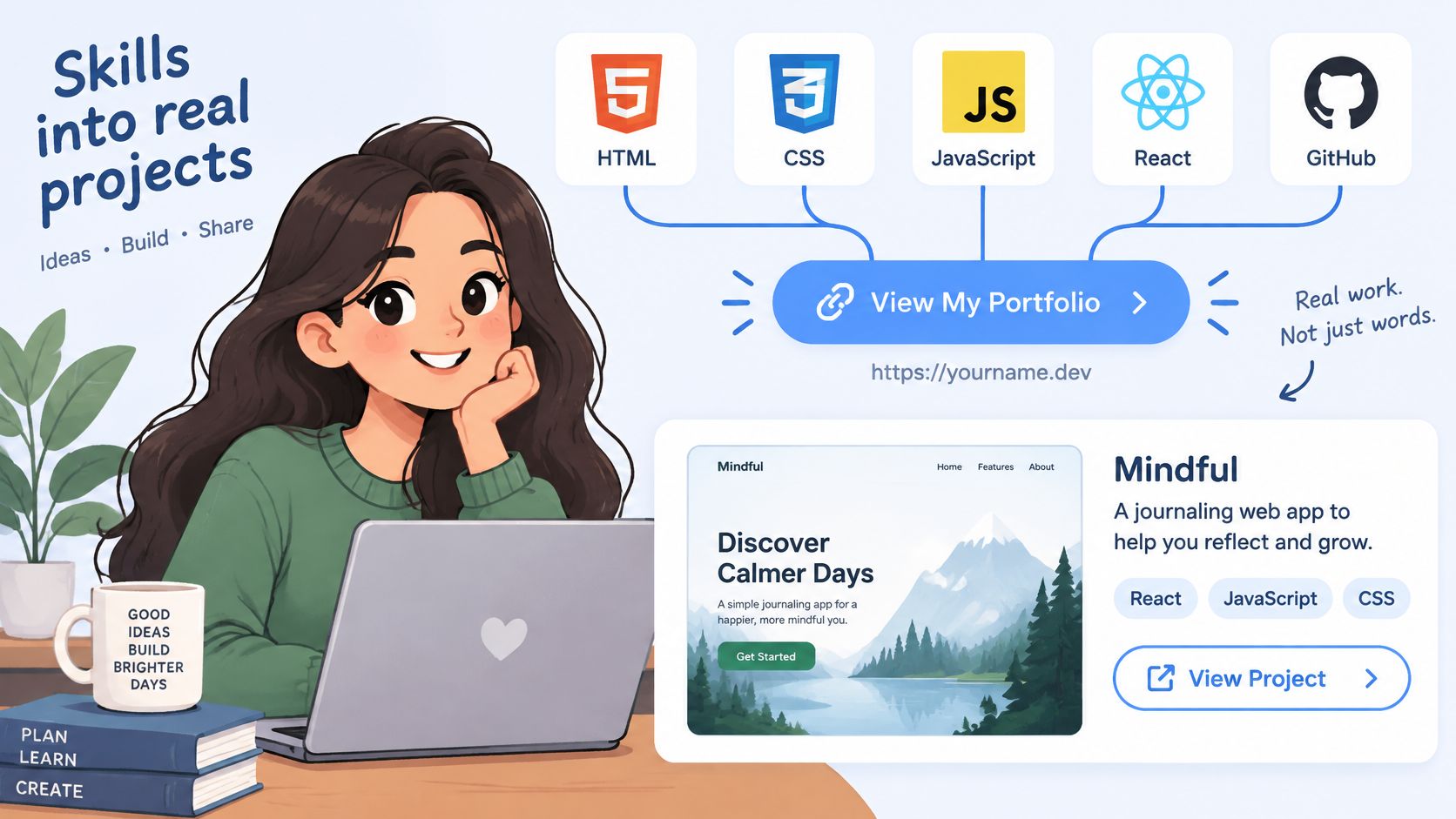
A designer's link should say what you owned in the piece. A developer's link should open without a login prompt. Test every URL in a logged-out browser, because a dead link during the scan is worse than no link, and a live one gives a hiring manager a reason to start the conversation before the call. There's a practical guide to making your GitHub more impressive to employers if your repositories need the same treatment.
Drop any skill you can't defend for ten minutes in an interview. A short list that holds up beats a long one that gets picked apart.
| Profile Element | What It Answers for the Recruiter | Strongest Format | Common Mistake to Avoid |
|---|---|---|---|
| Professional Headline That States Your Role and Specialty | What role, specialty, and seniority do you bring? | Short role + specialty + credible proof point | Using vague buzzwords or a headline that gets truncated |
| A Summary Opening That Leads With Fit and Proof | Do your experience and results match the role? | Two to three concise opening lines with domain, company stage, and outcomes | Starting with generic soft skills or a long personal story |
| Clear Target Role, Seniority, and Work Preferences | What role do you want, and when and where can you work? | Specific target roles, seniority, location preference, and availability | Listing too many roles or leaving preferences outdated |
| Quantified Impact Statements Near the Top | What measurable results have you delivered? | Two or three action + scope + result statements | Inflating unverifiable numbers or crowding the profile with metrics |
| Startup-Relevant Experience Signals | Can you thrive in a fast-moving, resource-limited startup? | Company stage, breadth of ownership, and early-team experience | Overstating your role or omitting context for short stints |
| Skills, Proof of Work, and Verifiable Links | Can your skills be verified through relevant work? | Focused skills list with working links to projects or portfolio pieces | Listing tools without evidence or leaving dead links |
The work is smaller than it feels. Audit your profile against the six items, and expect most of the effort to land on two of them. Rewrite the headline so the role and specialty are unmissable. Rewrite the first three lines of your summary so they carry years, domain, company stage and one outcome. Those two edits change what a recruiter can conclude before they decide to click.
Then do the unglamorous pass. Check that titles and dates match the CV line for line. Confirm your location, remote preference, authorization and availability are stated rather than implied. Fix or remove every link that doesn't open cleanly. If you're refreshing the documents themselves, a builder like the ParakeetAI resume builder can help you keep the CV consistent with what the profile claims.
Platforms like Underdog.io put the profile, not the CV, at the center of matching. Candidates take about five minutes to tell Underdog.io who they are and where they're headed, every profile is reviewed by hand before employers see it, and profiles stay hidden from current and past employers. Staffing firms work the same way when they triage candidates, and nexusITgroup.com is one example of a recruiting team whose first read is the profile summary rather than the attached document.
A recruiter-ready profile is what earns the introduction. A longer CV rarely does.
Underdog.io is a curated hiring marketplace where candidates build one concise profile instead of applying to hundreds of postings. If you want your next role at a startup to start with a recruiter reading a profile that represents you, create yours and let vetted companies in New York, San Francisco and across the US reach out. Start at Underdog.io and see who gets in touch.