Software hiring looks easier from the outside than it feels on the inside. Job postings for software roles fell to a five-year low in early 2025, sitting at 65% of pre-pandemic levels, yet 70% of developers are employed and not sitting on job boards waiting to be discovered, according to Pragmatic Engineer’s analysis of the software engineer job market. That’s the hiring paradox most founders and recruiting leads are dealing with now.
If you want to find software developers, the old playbook fails in predictable ways. Posting a role generates volume, not fit. Broad outbound creates activity, not conversations. The strongest engineers are usually heads-down shipping, mentoring, or cleaning up production issues. They’re not spending Tuesday afternoon refreshing job alerts.
The teams that hire well treat developer recruiting like product work. They define the user, choose the right channels, write targeted messaging, remove friction in the interview loop, and close with a story that matches the candidate’s ambitions.
A lot of companies misread the market. They see fewer postings and assume talent is suddenly easy to access. It isn’t. Lower posting volume doesn’t mean the best developers became available. It often means employers got more cautious while experienced engineers stayed employed and became even more selective.
That’s why “post and pray” breaks down. If your strategy starts and ends with a job board, you’re fighting over the narrow slice of talent that is actively applying. You’re also competing in the noisiest possible environment, where generic descriptions, slow response times, and bloated processes kill momentum.
For founders, this changes how hiring should be run. It needs the same rigor you’d apply to sales pipeline design, candidate experience, and team calibration. Resources on optimizing talent acquisition for founders can help frame that operating model, especially if hiring is still being handled ad hoc by a founder and one overstretched recruiter.
Practical rule: If your hiring process depends on candidates raising their hand first, you’re not reaching the strongest part of the market.
Another problem is false signal. A large inbound funnel can make the team feel productive because there are resumes to review. But resume count isn’t the objective. Interview-to-offer quality is. Offer acceptance is. Long-term fit is.
The companies that consistently find software developers in markets like NYC and SF build around precision. They know what kind of engineer can thrive in their stage, they target that profile directly, and they make it easy for good people to explore discreetly. For a useful snapshot of how conditions have shifted, this breakdown of the software engineer job market in 2025 is worth reading.
Most startup hiring plans lean too hard in one direction. They either rely on inbound and wait for applicants, or they swing to outbound and send a flood of messages with weak personalization. Neither extreme works well.

Inbound means developers come to you. That can happen through a careers page, engineering blog, open-source presence, conference talks, founder reputation, referrals, or a strong product that engineers already respect.
Inbound works best when your company already has some gravity. A known engineering leader, a visible technical challenge, or a product developers admire can pull in good candidates without heavy outreach. The biggest upside is fit. People who discover you and apply often already understand your domain and care about the work.
But inbound has a hard ceiling. An estimated 85% of tech talent is passive, meaning employed and not actively searching, according to JayDevs’ overview of where to find software developers. If your strategy depends on active applicants, you’re structurally missing most of the market.
Outbound means you go find the developers. You identify likely-fit engineers, study their work, and reach out with a specific reason they should care.
This is the faster route when you need to hire into a narrow stack or a specific startup context. It gives you more control over profile quality. It also lets you engage people who would never apply cold, especially senior engineers who are open to the right move but not running a search process.
Outbound has its own failure modes:
If your team is building a more structured motion, some of the mechanics behind optimizing your outbound strategy are surprisingly transferable from revenue teams to recruiting teams. The principle is the same. Targeting and relevance beat volume.
The strongest hiring systems use both approaches, but for different jobs.
Use inbound when:
Use outbound when:
Passive candidates don’t need more job alerts. They need a credible reason to interrupt a stable situation.
For most startups, inbound builds the brand. Outbound fills the seats.
Most channels can work. Very few work well without a clear operating method. The mistake isn’t using LinkedIn or GitHub. The mistake is using them lazily.
When I’m helping a team find software developers, I prioritize channels where engineers leave evidence. That usually means code, technical writing, issue discussions, conference appearances, or sustained participation in developer communities.
Here’s a practical way to think about the main options:
| Channel | Best For | Signal-to-Noise Ratio | Effort Level |
|---|---|---|---|
| GitHub | Open-source contributors, backend, infra, tooling, language-specific specialists | High when reviewed carefully | High |
| Broad discovery, location filters, title history, team mapping | Medium | Medium | |
| Developer Slack and Discord communities | Startup-friendly engineers, niche stack communities, relationship-based sourcing | Medium to high | High |
| Stack Overflow and technical forums | Engineers who communicate clearly and solve practical problems publicly | Medium | Medium |
| Coding challenge platforms | Strong problem-solvers and early funnel sourcing | High when paired with code review | High |
| Referrals | Trust-based introductions and stage-fit candidates | High | Medium |
GitHub is useful when you review substance, not just activity. Commit count alone is a weak filter. Look for clarity in readme files, issue comments, pull request discussions, and the kinds of projects they return to over time. A small but thoughtful body of work often tells you more than a giant contribution graph.
LinkedIn is still useful, but not as a sourcing strategy by itself. It’s better as a map. Search for maintainers of libraries you use, engineers who spoke at meetups, former employees from companies with similar technical complexity, or builders who’ve worked through the exact scaling stage you’re entering.
Community sourcing works when someone on your team already belongs there or can participate credibly. It fails when recruiters show up only to drop job posts.
Good places to look include framework communities, language-specific Slack groups, operator forums, and event attendee lists. The goal isn’t to blast a role. It’s to identify people who consistently help others, ask sharp questions, or explain technical trade-offs well.
A short list of practical filters:
This is one of the more underused channels. Platforms like HackerRank and TopCoder aren’t only for testing candidates who already entered your funnel. They can also help you discover talent upstream.
According to Arc’s guide on how to find developers, sourcing through coding challenge platforms can produce 25% to 30% higher retention rates than traditional job boards, and recruiters can see 15% conversion from leaderboard to hire compared with 5% from LinkedIn when they analyze leaderboard performance alongside code quality. The key phrase is “alongside code quality.” Rankings by themselves are not enough.
Use a simple three-step workflow:
A sourcing channel is only as good as the signal you know how to extract from it.
Bad outreach dies because it sounds interchangeable. It asks for time before earning attention, and it reads like it was sent to two hundred people in the last hour.
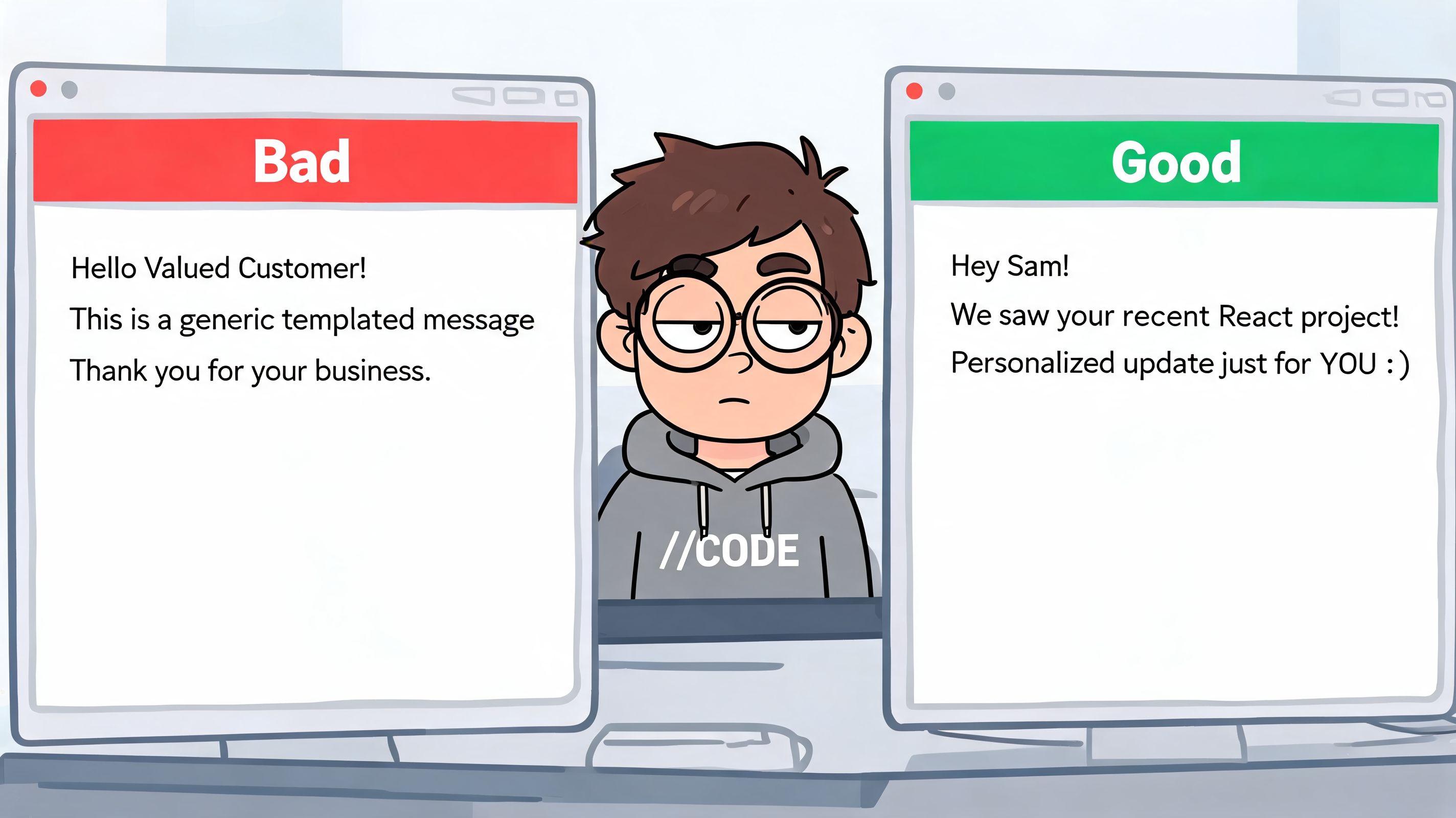
A typical bad note looks like this:
Hi [First Name],
I’m reaching out about an exciting software engineering opportunity at a fast-growing company. We’re building an innovative platform and looking for talented engineers with your background. Competitive comp and great team. Interested in chatting this week?
Nothing in that message proves you chose them for a reason. It says nothing about their work, your actual engineering problem, or why this role is better than their current one.
A stronger note is shorter and more specific:
Hi Maya,
I saw your work on distributed job processing and read your write-up on retry handling. We’re hiring a backend engineer to rebuild a queueing layer that’s under load from customer growth. The work is messy in the right way: reliability, observability, and migration trade-offs.
If that kind of problem is interesting, I can send a brief overview and comp range by email. No pressure to jump on a call.
That version works better because it respects how engineers evaluate opportunities. It signals that you did the homework. It frames a problem worth solving. It offers a low-friction next step.
If you want more examples of message structure and tone, this cold email example is a useful reference point. For recruiting-specific patterns, this guide on how to write recruiting outreach that works is also practical.
I coach teams to write outreach with TPV in mind.
Start with something specific to the developer. Mention a project, pull request, conference talk, architecture decision, or blog post. Not flattery. Relevance.
Good tailoring tells the candidate, “I know why I’m contacting you.”
Bad tailoring tells them, “I pasted a token into a template.”
Most senior developers don’t move for perks language. They move for scope, learning, ownership, team quality, and timing.
State the problem cleanly:
Explain why the conversation might be worth their time. That could be direct scope, a stronger product mission, a better manager, equity, technical ownership, or a more suitable stage.
Keep the ask small:
Good outreach feels like an informed invitation, not a demand for calendar time.
A lot of hiring teams spend weeks finding software developers, then lose them in an interview loop that feels confused, repetitive, or adversarial. That’s avoidable.
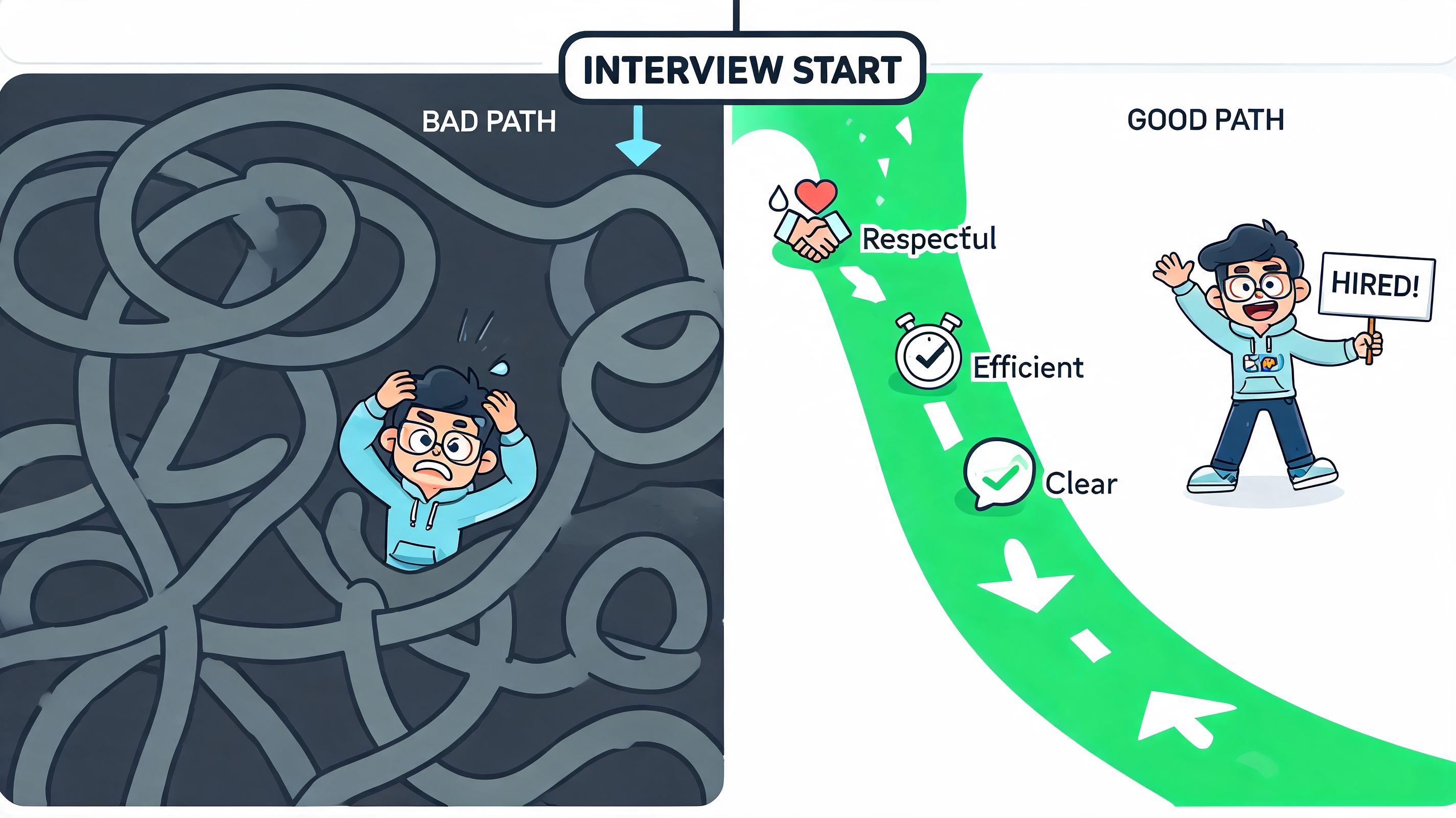
Good engineers don’t need a perfect process. They need a process that feels intentional. They want to know what you’re evaluating, who they’ll meet, how long it will take, and whether the work reflects the actual job.
The fastest way to repel strong candidates is to make every stage feel disconnected. A recruiter asks one set of questions. The hiring manager repeats them. The panel asks abstract puzzles unrelated to production work. Nobody can explain the roadmap. The candidate leaves thinking the engineering org is disorganized.
A developer-friendly process usually includes four parts.
A short recruiter screen
Focus on logistics, motivation, and top-level fit. Don’t burn technical depth here if the recruiter can’t assess it well.
A hiring manager conversation
This should cover real work: what the team is building, constraints, roadmap, collaboration style, and where the candidate could have impact.
A practical technical assessment
Pair programming, architecture discussion, or a scoped take-home tied to the role all work better than trivia. The point is to observe how the person thinks, communicates, and makes trade-offs.
A final sell and alignment round
In this round, founders, future peers, or senior leaders answer the deeper questions. Top candidates are evaluating you just as hard.
You don’t need to eliminate rigor. You need to eliminate waste.
Avoid:
A strong technical exercise should feel like a compressed version of the job. If the role involves backend systems, discuss service boundaries, debugging, reliability trade-offs, or code quality decisions. If it’s a product engineer role, assess implementation thinking in the context of user and product constraints.
Candidates read your process as evidence about how your team works day to day. Sloppy scheduling suggests weak execution. Hostile interviewers suggest a hard-to-work-with culture. An unrealistic assignment suggests the team doesn’t respect engineering time.
Use a simple rubric after each stage. Decide what each interviewer owns. Write feedback before group discussion. Keep the loop moving.
The best interview process doesn’t feel easy. It feels fair.
That fairness matters more in startup hiring than many founders realize. Developers joining early-stage teams are already taking on uncertainty. If your process is messy, they assume the company is messy too.
Closing starts before the offer goes out. It starts the first time a candidate learns whether your team knows who it wants, why the role matters, and what kind of career move this could become.
In the US, the median salary for software developers was $133,080 as of May 2024, and 7.9% of full-time developers earned over $200,000, according to iTransition’s roundup of software development statistics. In NYC and SF, candidates already know the market is expensive. If your salary is below what they can get elsewhere, the rest of the package has to be unusually strong and clearly explained.
That doesn’t mean every startup has to win on cash. It means you need a coherent package:
Senior developers usually decide on a combination of four things.
They want confidence in the people around them. Strong peers, thoughtful product leadership, and competent founders matter. If your team is sharp, let candidates meet them.
Ownership closes people. Not vague ownership, but concrete responsibility. What will they own in the first six months? What important systems or product surfaces will have their fingerprints on them?
Candidates look for honesty. If there’s technical debt, say so. If the roadmap changed twice this quarter, explain why. Candor builds more trust than polished recruiting language.
A clean process suggests a functioning company. If you moved quickly, communicated clearly, and gave them useful context at every step, that helps close the deal.
There’s a point where doing all of this internally becomes expensive in founder time or recruiter bandwidth. That’s especially true when the team needs passive talent, tight profile matching, and faster top-of-funnel quality.
In those cases, curated hiring platforms can help. Underdog.io’s startup recruiting overview outlines one model built around vetted startup talent and selective introductions, which is different from broad applicant marketplaces. That kind of platform is useful when you don’t need more resumes. You need fewer, better conversations.
The trade-off is straightforward. You give up some raw funnel volume in exchange for tighter fit and less sourcing overhead. For startups, that’s often a good trade when hiring managers are drowning in low-signal applications or recruiters are spending too much time on cold outreach.
A final closing tip. Don’t wait until the offer call to sell the role. Every interaction should answer one question clearly: why should this developer leave a stable job for your team right now?
If you need help reaching startup-ready engineers who aren’t actively applying, Underdog.io is one option to explore. It’s a curated hiring marketplace focused on tech roles at startups and high-growth companies, with a model built around vetted candidates and discreet introductions rather than high-volume job board traffic.