Hiring product designers demands both clarity and speed. When you nail down the outcomes you expect and map out the right sourcing channels, you start drawing in UX and AI-fluent experts. This guide lays out the five pillars that accelerate your search and land you the right talent—fast. Each section ends with actionable insights you can apply immediately.
Startups today are up against intense competition for designers who pair empathy with a sharp product vision.
Demand has rebounded since 2023, reaching 4,900 active design openings in mid-2025—a 13% jump year over year. Learn more about design job market growth
In practice, one fintech team tapped AI study groups and local meetups to fill two key designer roles in under five weeks.
I’ve distilled that experience into five pillars you can apply today to turn vague wishlists into targeted searches.
Actionable Insight:
I once advised a lean startup to link their new design hire to a 15% uplift in prototype completion rates. Within six weeks, applications poured in.
Clear role outcomes narrow the search scope and align expectations across your team.
That same company used a KPI—raising Net Promoter Score by 10 points—to shape every line of their design brief.
Check out what tech candidates want in 2024 for insights on how to match your specs with candidate motivations.
Actionable Steps:
Passive talent often hangs out on platforms like Dribbble, Behance, and AI-focused Slack workspaces. Outreach that references a candidate’s portfolio or highlights project impact can lift response rates by 30% in just two weeks.
Tracking those touchpoints in a shared dashboard also pays off. Two startups I know cut ghosting by half once they monitored each email, DM, and follow-up.
Actionable Steps:
A bloated interview process can chase away top designers. We’ve seen teams trim their loops to three stages—a portfolio review, a hands-on design challenge, and a final culture-fit chat—and slash time-to-hire from 45 days to 18.
Keep each stage tightly scoped and communicate the next steps immediately. Speed wins.
Quick Wins:
Competitive salary bands get you noticed, but pairing them with equity stakes secures commitment. One Austin fintech firm saw offer acceptance climb after tacking on an extra 0.1% equity to their package.
Actionable Tip:
Below is a quick reference to the five pillars that make designer hiring both efficient and impactful.
Five Pillars of Effective Designer Hiring
A thoughtfully structured offer signals respect for a designer’s craft—and keeps them engaged even in tough markets.
Clear timelines and prompt, constructive feedback ease candidate anxiety. Confidential screening processes and well-defined NDA policies build trust from the first conversation.
Best Practices:
These five pillars give your startup a repeatable, data-informed playbook for hiring product designers who will move the needle.
A great role description sparks a designer’s imagination by tying day-to-day work to real results. When you spell out how this hire will lift usability scores or hit specific A/B test targets, you cut through vague expectations and invite passionate candidates to picture themselves on your team.
We’ve all noticed how AI talk has crept into product roles. In fact, mentions of AI in U.S. job posts jumped 56.1% year-to-date, underscoring the appetite for designers fluent in human-centered design for AI-driven features.
Read the full research on AI job listing shifts
One B2B startup I know rewrote its spec to include a 10-point NPS improvement goal—and saw passive inquiries double in just a fortnight. Over at a health-tech company, framing the role around slashing navigation friction by 20% made that position irresistible for designers eager to track progress in real analytics dashboards.
Actionable Outline:
Begin by linking every responsibility to a clear metric—think “cut task completion time by 15%” or “drive retention up by 10 points.” At a SaaS startup I advised, we attracted top talent simply by promising a hands-on role redesigning onboarding flows to achieve a 25% adoption bump.
Spotlight stories where past hires took interfaces from 60% task success to 85%. These concrete anecdotes paint a vivid picture and help applicants imagine their own impact. Steer clear of jargon-filled checklists; instead, share real scenarios that bring the day-to-day to life.
One edtech team I coached split their requirements into core skills and stretch goals. That small tweak prompted a surge in applications from designers hungry for growth.
Actionable Steps:
Designers notice when you map out clear development paths. Drop in phrases like “mentorship program,” “conference budget,” or “dedicated learning time” to signal investment in their future.
Calling out career support in your spec makes international and growth-focused designers take notice.
A marketplace I worked with added a note about relocation packages and visa sponsorship. Applications from overseas talent shot up 40%, instantly expanding their talent pool.
Writing in a friendly, conversational tone can transform your spec from a dry list into an invitation. Mention team rituals—think design show-and-tell or hack hours—to give candidates a peek at your culture. A brief note on your mission or a recent win adds a personal touch that makes designers want to dive in on day one.
Actionable Checklist:
When your spec ties responsibilities to measurable goals and reflects your team’s personality, you attract designers who are ready to move the needle.
Pull in examples from your own wins. Track how many resumes convert to interviews, tweak your language, and watch small edits produce outsized improvements in pipeline quality. Over the last three startups I’ve advised, this continuous iteration has been the secret sauce for landing top design talent.
Clear specs lead to better matches and faster hiring of top designers.
Use these tactics to craft your next job description and see your candidate funnel blossom.
Most product designers aren’t browsing job boards; they’re casually scrolling through LinkedIn. Targeted outreach, however, reveals a pool of talent you won’t find in public listings.
In our experience, mixing FidForward filters with invites to niche communities uncovers hidden gems. Dribbble Collectives and Behance Groups overflow with portfolios begging for a personal note. Even alumni networks can surface designers who share your startup’s mission—and are eager to learn about yours.
Check out how a narrow filter for “Figma” plus “AI design” surfaced 73% more relevant profiles in minutes.
Actionable Steps:
Slack and Discord aren’t just for memes—they’re talent goldmines.
A health-tech startup jumped into a Dribbble Collective and, within 48 hours, connected with three designers. They spun up a private Slack channel for mockup feedback and locked in two interviews.
How to Get Started:
Numbers keep us honest. We’ve tracked trial API calls and GitHub stars to gauge early interest.
One team’s design AMA on Twitter drove a 20% bump in profile views overnight. From there:
Action Items:
A generic “Hi there” rarely lands a response. Custom notes, though, feel genuine.
Spacing follow-ups two days after the first touch and again a week later cut ghosting by 40%.
“Personalized context drives a 30% lift in outreach responses.”
Copy-and-Paste Action:
Showing you’ve done your homework builds trust instantly.
Mention metrics—like a 15% usability gain—from their past projects. Call out shared connections or former employers to add credibility.
Step-by-Step:
A fintech team swapped “Hello” for “Your UI Wizardry” and watched opens climb from 38% to 63%. Tightening follow-up intervals from four days to two lifted replies an extra 5%.
That’s a 30% net boost in meaningful conversations.
Actionable Change:
Your CRM is your runway. Keep an eye on opens, clicks, and replies. Use a simple 1–5 rubric for each interaction.
Daily Routine:
Over time, this data-driven loop becomes your secret weapon for landing top-tier product designers. Try these tactics today and watch your candidate pool expand.
Evaluating a product designer’s portfolio isn’t just about eye-catching visuals. You want a clear picture of their process, the outcomes they drive, and the ethical choices they make along the way.
When you shine the spotlight on these factors, it becomes easy to spot candidates who can hit the ground running and move the needle from day one.
Start by zeroing in on what really moves the needle for your product. If your mobile app’s north star is engagement, lean into retention numbers over pixel-perfect screens. Then, tie your rubric to the features you’re actually building. Chasing churn reduction? Hunt for case studies that talk through user feedback loops and boast 10%+ retention wins.
Actionable Rubric Setup:
A well-crafted rubric breaks down each portfolio into consistent buckets. That way, every candidate gets evaluated against the same yardstick. You’ll quickly see which submissions shine on research, functionality, or ethics.
Rate each area on a scale from 1 to 5. Tally those scores and you’ve got a single impact score that marries design skill with business results.
Discover more about market dynamics and why competition for product designer roles remained elevated in 2024–2025 due to sustained candidate supply and selective hiring practices, producing an oversupply of applicants and lengthening time-to-hire. Learn more about these findings on Lenny’s newsletter
These prompts cut through the fluff and force candidates to share hard numbers:
Drop these into your portfolio review or design challenge kickoff and watch the data roll in.
I worked with a fintech startup that blitzed through 30 portfolios in just 10 minutes using this rubric. By grouping candidates into high, medium, and low tiers, they pinpointed two designers within a week. Those hires drove a 12% jump in signups within their first month.
A candidate who scores 90% on process but only 60% on outcomes? That’s a red flag for execution over strategy. Plot scores by role or experience level to catch those patterns—juniors vs. seniors often tell very different stories.
Lean on your impact scores to narrow in on the top 20% of portfolios. This focuses interview time on your most promising prospects and keeps everyone aligned on what “great” looks like.
Focus on metrics and process to shortlist hires who can deliver ROI quickly.
Put this framework into practice and watch your hiring speed climb by 30%. Run a pilot review today and compare notes at your next hiring sync.
Finding the right product designer means striking a balance between thorough evaluation and a swift, respectful process.
This three-stage loop, battle-tested in lean startups, keeps candidates engaged and lets you compare apples to apples—fast.
Kick things off with a 30–45 minute video call where the candidate guides you through two or three of their strongest case studies.
You’re listening not just for aesthetics, but for design thinking, metrics, and the rationale behind every decision.
“A structured walkthrough builds trust and sets a collaborative tone early,” says a design lead at a San Francisco startup.
Scoring:
Actionable Takeaway:
Next, invite them to tackle a 60-minute challenge reflecting your real product constraints.
By handing over your actual style kit and user personas, you see how naturally they slot into your workflow.
The UI UX loop often feels broken, but you can fix it by aligning exercises with real product needs. Read our deep dive on why the UI UX Design Interview Process is Broken.
Quick Setup:
Finally, run a 45-minute workshop where PMs, engineers, and the candidate riff on the timed exercise output.
This isn’t a critique session—it’s a live demo of cross-functional give-and-take.
Keep it tight—three total touchpoints usually uncover strengths without burning out anyone.
Actionable Framework:
We craft two concise, goal-driven briefs pulled straight from recent sprint work:
These exercises map directly to your roadmap, so performance comparisons feel grounded in reality.
Combine scores from all stages into a composite “impact ranking.”
Share written feedback within 48 hours—speed and transparency keep top candidates locked in.
Quick, clear feedback is critical to keeping high-value designers engaged.
Treat every proprietary brief under NDA and restrict drafts to essential reviewers.
Clarity around next steps and timing eases candidate nerves.
Loop in design leads only when their perspective moves the needle.
Batch interviews and debriefs back-to-back to respect everyone’s calendars.
Efficient loops accelerate decisions and signal respect for a designer’s time.
Implementing this three-stage structure brings consistency, speed, and a dash of real-world context. Candidates feel seen, your team stays focused, and you close hires faster.
Closing and keeping great product designers hinges on one thing: honesty in your offer. If you share clear salary bands and equity ranges up front, you build trust—and cut down on long, drawn-out negotiations.
But compensation alone won’t solve everything. Pairing transparent offers with a culture of growth is what really locks in talent. Think onboarding sprints, peer mentorship, and regular design guild meetups from week one.
Below is a snapshot of typical salary ranges and equity stakes across junior, mid, and senior designer roles. We combined public benchmarks with real startup offers to give you a realistic framework.
Use these ranges as a starting point. Tweak them for your location, funding stage, and the specific skills you need.
Sharing these numbers in your job postings and during first calls lets candidates self-select. That clarity speeds up hiring and prevents wasted time on mismatches.
Data shows that when companies keep their interview loops brief—no more than three touchpoints—offer acceptance jumps. Short, focused processes make candidates feel valued and prioritized.
We also mapped out where most teams spend their time in the interview loop. Here’s the breakdown:
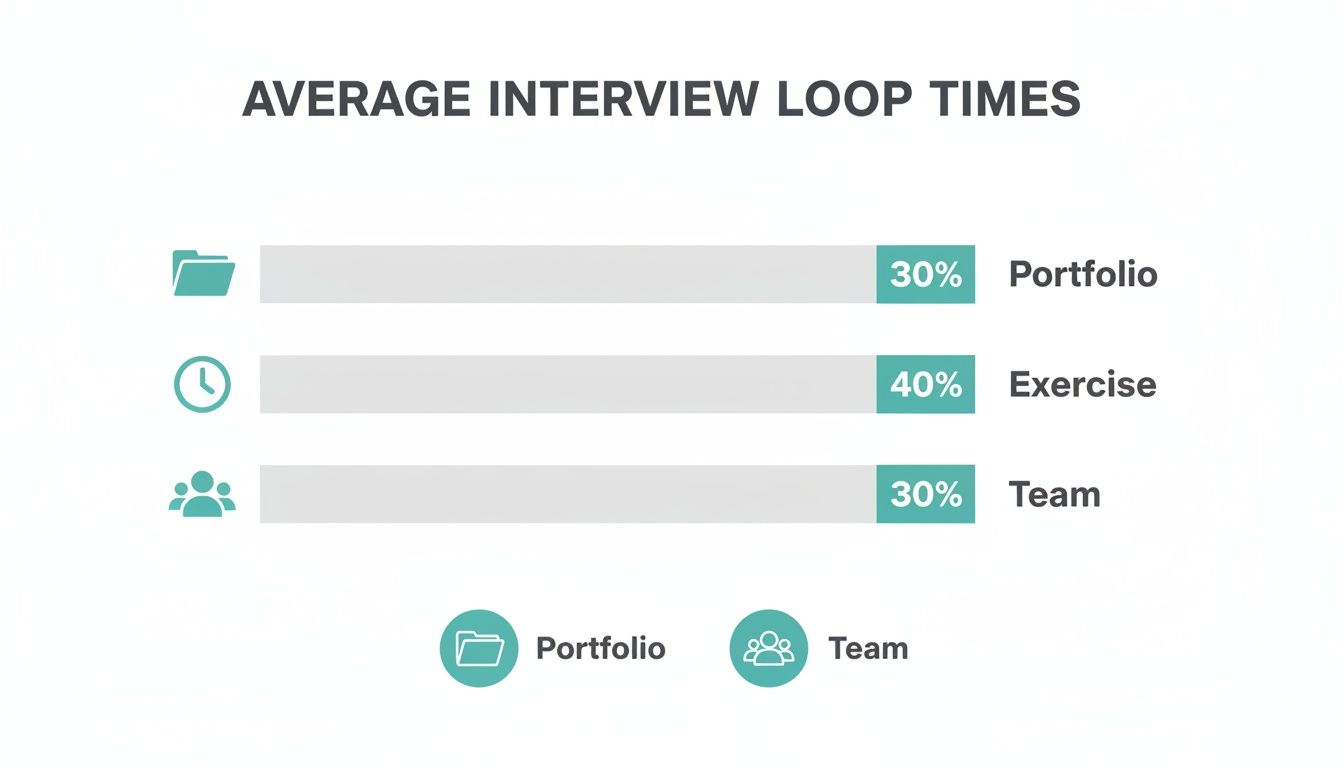
Design exercises claim 40% of the process, portfolio reviews take 30%, and team sessions fill the last 30%. Visualizing this helps you decide where to invest—and where to trim.
Actionable Takeaway:
Nothing derails a hiring sprint like last-minute counteroffers. Instead, head off haggling by framing the discussion around three pillars:
Being crystal-clear on vesting schedules also prevents surprises later. And don’t forget to highlight perks—flexible schedules and learning stipends matter to designers just as much as cash.
One seed-stage startup I advised hit 95% retention after tying small equity boosts to quarterly targets. That nudge kept designers engaged all through Year 1.
After three-month surveys, they discovered people wanted clearer docs on benefits. A handful of learning stipends later, and new hires felt even more invested.
Retention isn’t a checkbox. Regular one-on-ones and open conversations about compensation tweaks are what keep folks from drifting away.
To dive deeper into overcoming common salary benchmarking pitfalls, check out our guide on three compensation intelligence challenges and how to address them.
95% retention rates often stem from aligning equity incentives with clear performance milestones.
By blending competitive pay bands, smart equity structures, transparent negotiation, and ongoing culture-building, you’ll not only land top product designers—you’ll hold onto them. Use this playbook to craft offers your team celebrates and candidates can’t refuse.
When you’re scaling a product team, certain hiring hurdles pop up again and again—speed, compensation, AI chops, retention.
Below, you’ll find real startup examples and straight-to-the-point tactics to tighten your process, elevate candidate quality, and dodge costly missteps.
Key Insight: A tight feedback loop and transparent metrics can cut time-to-hire by up to 40% while boosting candidate quality.
In one seed-stage startup, we ran portfolio reviews alongside mini design challenges—shaving nearly a week off the funnel. Automating the initial screen with a lean rubric ensures only portfolios hitting your core KPIs land in front of the team.
Then, lock in decision checkpoints—calendar invites with set agendas keep everyone aligned and prevent meeting drift.
Here’s a snapshot of current market data:
Benchmark against Levels.fyi and tweak these figures based on your region, funding stage, and any niche skills you need.
Look for case studies that walk through user research methods, outline model constraints, and share measurable outcomes—think accuracy gains or adoption rates.
Give extra weight to designers who articulate ethical trade-offs and demonstrate at least two rounds of AI feature iterations.
Start with a 30-60-90 day plan that maps out clear milestones—this sets mutual expectations from day one.
Pair new hires with peer mentors for weekly check-ins, and host monthly design critiques to keep feedback flowing. One founder I worked with tied equity vesting to project goals and saw 95% retention at their seed stage.
Ready to transform your hiring funnel? Visit Underdog.io to connect with top startups and land your next role in minutes.