You're probably in one of two situations right now. A recruiter just messaged you with a vague “great opportunity,” or you've decided to reach out to recruiters and want to avoid becoming another resume in a crowded inbox.
Both situations look simple from the outside. They aren't.
Knowing how to work with a recruiter is less about being likable and more about being operationally easy to represent. In tech hiring, speed, clarity, and signal quality matter. Recruiters increasingly work through digital channels, with 92% using social media, and high-demand roles now average 44 days to fill according to TalentMSH's recruiting trends roundup. That means the candidates who get traction are usually the ones who remove friction fast.
The mistake most candidates make is treating recruiters as gatekeepers to impress. A better approach is to treat the recruiter relationship like a working partnership. You need to be prepared, specific, and selective. You also need to know when a recruiter is helping your search and when they're just adding noise.
A recruiter can only move as fast as your materials allow. If your resume is outdated, your LinkedIn headline is fuzzy, and your story changes depending on the conversation, you create drag. In a fast-moving funnel, drag costs interviews.
That's why strong candidates build a recruiter-ready toolkit before replying to messages.
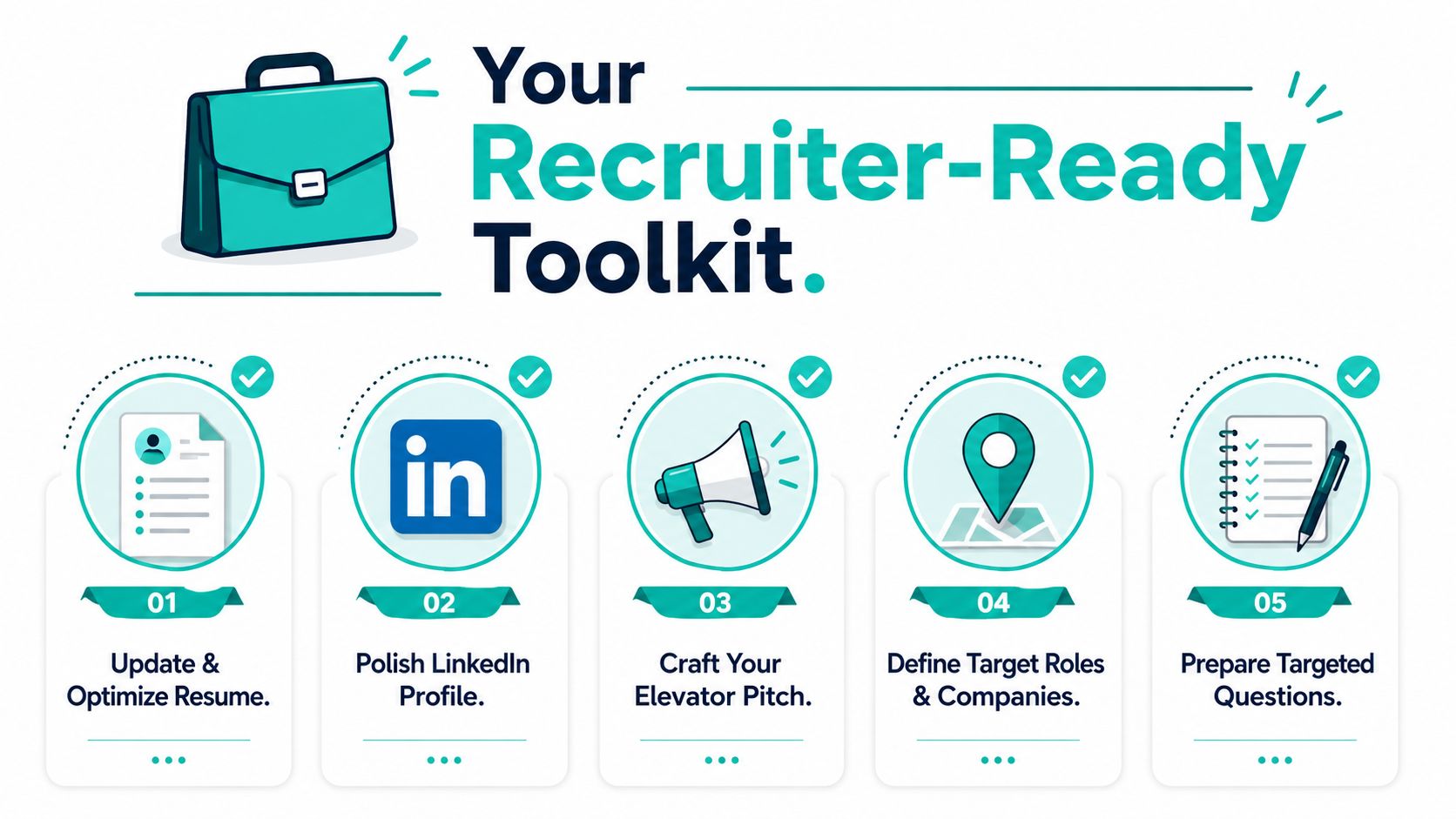
You don't need twenty versions of your resume on day one. You need one strong base file and a few modular supporting assets.
Keep these ready:
Practical rule: If a recruiter asked for your resume, target role, location, and compensation range right now, you should be able to send all of it in under ten minutes.
Most candidates describe responsibilities. Good recruiter-ready candidates describe marketable evidence.
A backend engineer shouldn't just say “worked on platform scalability.” A stronger version is: supported a migration from a monolith to services, owned API reliability work, and improved a performance bottleneck in a high-traffic path. That gives a recruiter something they can repeat to a hiring manager.
This is also why it helps to learn how recruiters and hiring teams parse technical experience. A resource on reading developer CVs effectively is useful because it shows what signal gets noticed and what gets ignored.
Recruiters ask variations of the same things because they need to classify fit quickly. Have clear answers ready for:
You don't need rigid scripts. You need consistency.
A messy answer sounds like this: “I'm open to a lot, maybe staff or senior IC, maybe product-heavy, maybe infra, maybe startup, but I'm flexible.”
A usable answer sounds like this: senior backend or platform roles, ideally at Series A to C, hands-on IC, not people management, remote or NYC, and only worth pursuing if the scope is meaningful and compensation is aligned.
That level of specificity helps a recruiter act on your behalf instead of guessing.
The first recruiter call isn't small talk. It's an intake meeting. If you treat it casually, you'll get casual results.
That matters because misalignment at the start breaks searches later. 73% of search failures stem from misaligned role definitions, and candidates who respond with feedback within 48 hours and explain their work through a technical narrative are shortlisted far more often, based on the verified guidance provided in your brief. The lesson is simple: define fit early, then keep the loop moving.
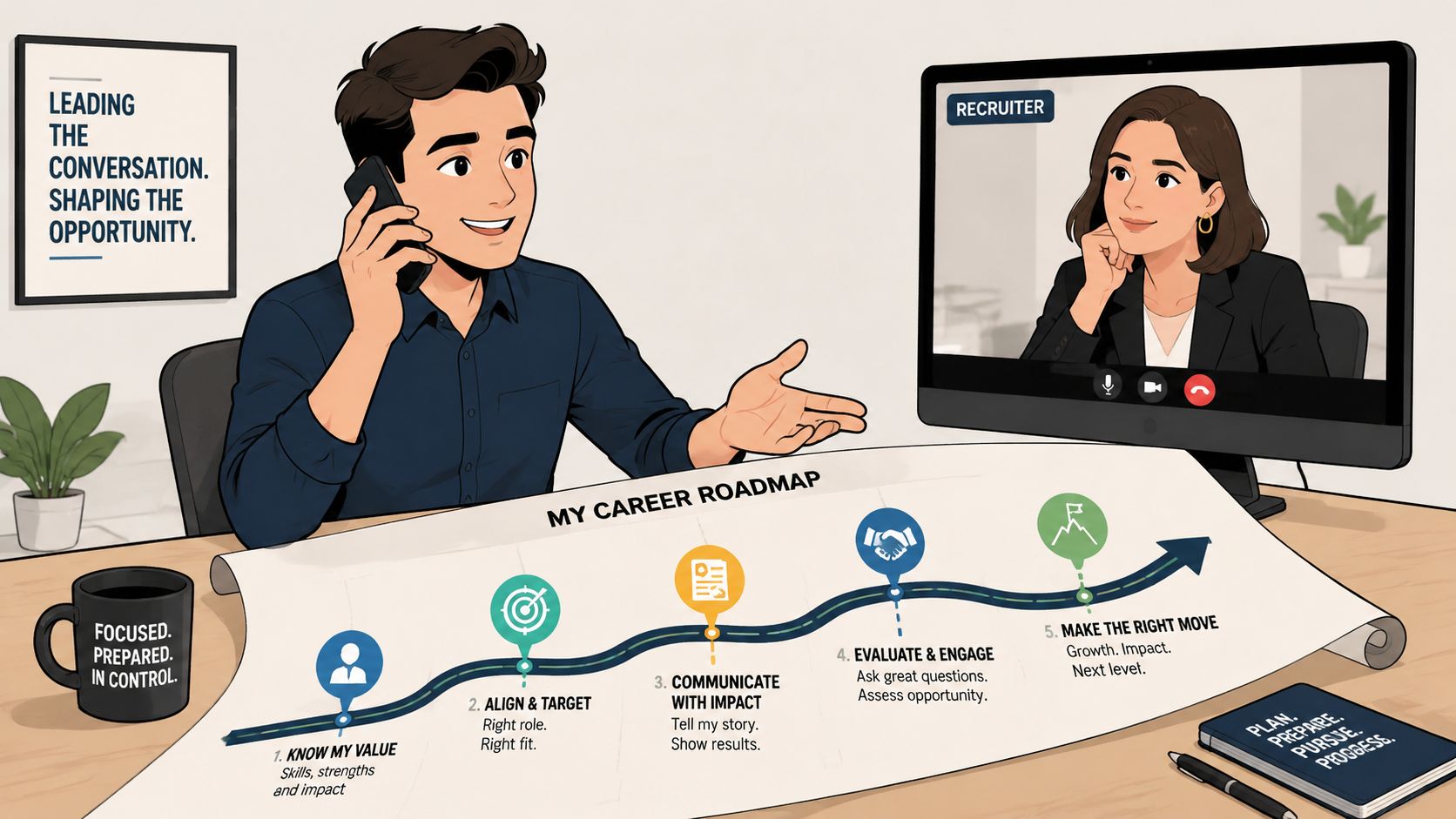
A weak recruiter conversation stays at the keyword level. A strong one gets into team shape, hiring context, and why you specifically might fit.
Ask questions like these:
If you're doing outbound outreach yourself, a useful complement is this guide on finding a recruiter to find a job, especially if you're trying to identify specialists rather than generalists.
Recruiters remember problem-solvers, not inventory lists.
Bad answer:
“I know Python, AWS, Kubernetes, Postgres, and some Go.”
Better answer:
“I've spent the last few years in backend and platform environments where the common thread was reliability under growth. Most recently I owned services tied to internal tooling and deployment workflows. The work I enjoy most is reducing operational friction and cleaning up systems that have outgrown their original design.”
That gives the recruiter positioning language.
The recruiter's job is easier when they can retell your story in one clean paragraph to a hiring manager.
For senior candidates, go one level deeper. Explain decisions. Why that architecture. Why that tradeoff. Why the team chose speed over elegance or vice versa. That's what separates a real operator from someone reciting bullets.
Before the call ends, align on mechanics.
A good close sounds like this:
That isn't being difficult. It's being clear.
Most recruiter relationships don't fail because of one major blow-up. They fade because nobody is managing them.
That's a problem for candidates because poor process is common. Only 26% of North American job seekers say they had a great candidate experience, while referral hires are filled 55% faster, according to RecruitBPM's candidate experience statistics. Trust, responsiveness, and low-friction communication matter because they keep you moving instead of stalling in silence.
If you want better opportunities, don't disappear after the first call and hope the recruiter remembers you.
A lightweight weekly check-in is enough:
Hi [Name], checking in for the week. I'm still focused on senior backend/platform roles at startup or growth-stage companies. My priorities are strong technical ownership, solid manager fit, and clear compensation. If anything new matches that, send it over. Also happy to give quick feedback on the last role you shared.
This works because it does three things at once. It reminds the recruiter you're active, re-states your criteria, and signals that you'll be easy to work with.
“Not interested” is polite, but it doesn't improve the match quality.
Useful feedback sounds more like this:
| What you send | Why it helps |
|---|---|
| “Strong company, but the role looks too support-heavy.” | Clarifies scope preference |
| “The title is fine, but I don't want to move into people management.” | Protects against future mismatch |
| “I'd consider it if the team has more product ownership than ticket work.” | Gives a condition, not just a rejection |
| “Comp looks light for the risk and stage.” | Signals compensation threshold |
The goal isn't to justify yourself. The goal is to train the search.
If several recruiters are contacting you, track everything in one place. A simple spreadsheet or Notion board is enough. Log the company, role, recruiter, date contacted, status, and whether you've authorized submission.
That prevents a common mess in tech hiring: duplicate submissions, confused ownership, and conflicting narratives around your candidacy.
A few ground rules help:
Candidates can gain an advantage. When you run the relationship professionally, recruiters tend to treat you like a serious partner rather than a speculative lead.
Not every recruiter deserves your time. Some are thoughtful operators. Some are forwarding roles they barely understand. Your job is to tell the difference quickly.
The cleanest way to evaluate a recruiter is to ask whether they add interpretation, access, and advocacy. If they don't, you're not looking at a partner. You're looking at a forwarding mechanism.
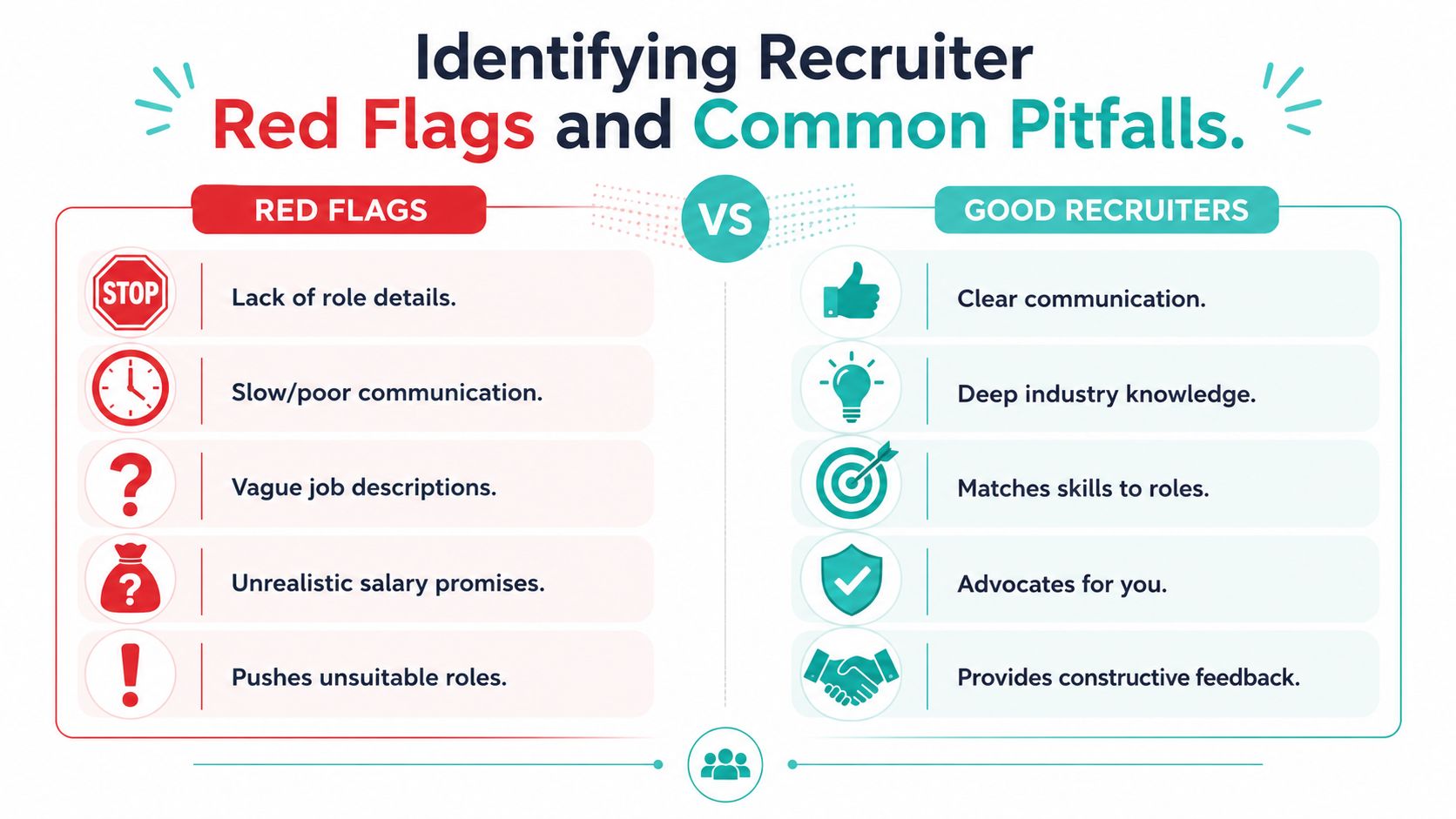
Candidates should assess recruiter quality by asking how they source roles, how often they place similar profiles, and whether they can explain fit beyond keywords, as noted by Search Wizards on working with recruiters.
Here are the patterns that should make you cautious:
A strong recruiter usually does a few practical things well:
A good recruiter doesn't just ask whether you're interested. They tell you why the company should be interested in you.
You don't need a dramatic exit. You need a clean one.
If a recruiter repeatedly sends poor-fit roles, ignores your boundaries, or treats your candidacy like inventory, stop engaging. A short note is enough: thanks, this doesn't feel aligned with the types of opportunities or process I'm looking for, so I'm going to step back.
That's part of learning how to work with a recruiter too. Partnership includes disqualification.
A lot of recruiter friction comes from the same root problem. Candidates are forced to evaluate role quality, recruiter quality, process quality, and confidentiality all at once.
That gets harder when you're employed and don't want your search to become public. For passive candidates, discretion matters because 85% of candidates are employed, and 62% withdraw from processes that lack equity transparency, based on the verified data in your brief. If you're exploring startup roles while still in your current job, you need a process that limits exposure and screens out low-information opportunities early.
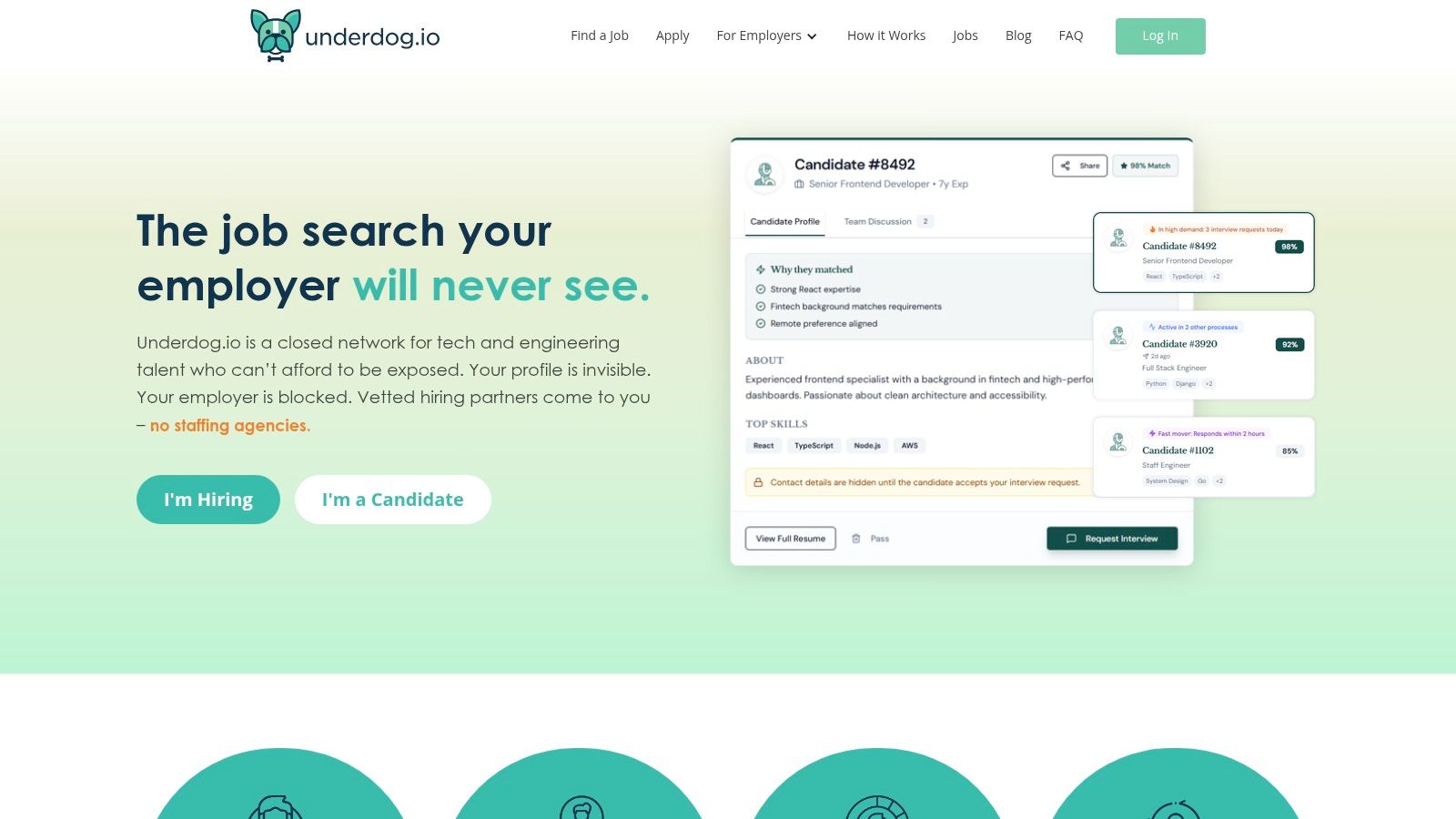
In a standard recruiter workflow, each new conversation starts from zero. You explain your background again. You re-state your target. You assess whether the recruiter understands startup hiring, technical nuance, and compensation structure.
A curated marketplace changes that by centralizing your profile and letting vetted companies come to you within a tighter frame. If you want a product overview, Underdog's own explanation of how Underdog works shows the operating model.
The key distinction is that this setup can reduce three common problems at once:
This approach makes the most sense if you already know the type of startup or growth-stage company you want and you'd rather avoid having the same screening conversation with a dozen separate recruiters.
It's also useful if confidentiality matters. Anonymous or discreet candidate presentation is more than a convenience for employed candidates. It changes how safely you can explore.
That said, a curated marketplace isn't a replacement for judgment. You still need to know your constraints, evaluate company quality, and ask hard questions about scope, manager fit, and compensation. The difference is that the top of the funnel is cleaner.
For candidates who are tired of recruiter spam, duplicate outreach, and vague startup pitches, that cleaner funnel can be the difference between an organized search and a messy one.
Working with recruiters is a skill. Once you see that, the whole process gets easier.
The candidates who do this well aren't necessarily more charismatic or more connected. They're prepared. They know how to frame their experience. They give fast, useful feedback. They vet the recruiter, not just the role. And when something feels off, they step out early instead of hoping it improves.
That shift matters. It moves you from reactive to intentional.
If you want to sharpen the rest of your search process, especially how you get into better conversations before the formal funnel starts, Aakash Gupta's interview tips are worth reading. The useful thread running through that advice and this guide is the same: better outcomes usually come from tighter positioning and smarter process, not from sending more applications.
A recruiter can open doors, but they can't define your strategy for you. That part is yours. Decide what you want, package your story clearly, preserve your advantage, and work with people who improve your odds.
If you want a more discreet way to explore startup roles, Underdog.io is one option to consider. It lets tech candidates create a single profile and get introduced to vetted companies, which can be useful if you want more structure, more privacy, and fewer low-context recruiter conversations.