You send a thoughtful message to a strong engineer. You mention the role, the stack, the company mission. It feels solid. Then nothing happens.
That silence is where most recruiting outreach dies. Not because recruiters aren't working hard, but because most messages still read from the company's point of view. They explain the opening. They list requirements. They ask for time. They rarely answer the candidate's actual question, which is simple: why should I care?
Learning how to write recruiting outreach that works starts there. Good outreach doesn't try to “announce a role.” It gives a busy, passive candidate a reason to reply now instead of later, or never.
Most outreach fails because it asks the candidate to do too much work.
The recruiter knows the role. The candidate doesn't. The recruiter knows why this hire matters. The candidate doesn't. So when the message says “we're hiring a Senior Backend Engineer at a fast-growing startup,” the candidate has to fill in every blank alone. What kind of problems? What kind of team? Why leave a good job for this one?
That gap gets wider when the market is crowded. In 2024, 77% of organizations had difficulty recruiting full-time regular positions, with the most common causes including not enough applicants at 60%, competition from other employers at 55%, and candidate ghosting at 46%, according to SHRM recruiting data summarized here. If a candidate is already getting approached often, generic outreach doesn't just underperform. It disappears.
A lot of outreach still follows this pattern:
That order makes sense internally. It doesn't work well externally.
Candidates don't open a cold message hoping to read your condensed job post. They want a fast signal that you understand their background and that the opportunity lines up with what they value.
Most candidates ignore outreach not because they're uninterested in change, but because the message makes them do the work of discovering relevance.
A better model is candidate-centered. Lead with fit, not with your hiring need. If you want a deeper argument for that shift, Underdog wrote a useful take on why cold outreach is dead in tech hiring.
The strongest outreach does three things early:
That sounds obvious. In practice, it means cutting most of what recruiters usually front-load. Less company boilerplate. Less fake excitement. More relevance.
If your first message feels self-serving, the candidate will treat it like spam even if every detail is technically accurate.
Candidate-centered outreach starts with a simple rule. Don't lead with what the company wants. Lead with what the candidate is likely to want.
That sounds basic, but many recruiting teams still personalize at the surface level. They add a first name, maybe mention a recent company, then send the same pitch about “an exciting opportunity.” Surface personalization helps you avoid looking automated. It doesn't create interest by itself.
The stronger move is to tailor the value proposition around candidate motivators that matter.
Underdog.io shared 2026 data from 12,639 candidates on the top attractors to a company. This is the cheat sheet I'd want on every recruiter's desk.
| Attractor | Percentage of Candidates |
|---|---|
| Flexible Work Environment | 11.54% |
| High Autonomy | 9.57% |
| Values Product Quality | 8.86% |
| Remote First | 8.38% |
| Transparent Management | 7.87% |
| Close-Knit Team | 5.85% |
| Inclusive Culture | 5.67% |
| Above-Market Salary | 5.55% |
| Focus on Mentorship | 4.64% |
| Meaningful Equity Compensation | 4.64% |
| New Tools | 4.18% |
| New Domains | 3.42% |
| Serves the Community | 3.32% |
| Path to Management | 3.28% |
| Velocity Over Perfection | 3.12% |
| Low-Stress Environment | 2.98% |
| Other | 7.14% |
A few things jump out.
First, salary matters, but it isn't the only thing doing the work. Second, motivators differ from the clichés recruiters often lead with. “Fast-growing” or “disrupting X” isn't on this list. Flexible work, autonomy, product quality, remote setup, and management transparency are.
If you want more context on those preferences, Underdog has a related breakdown on what candidates actually care about.
A candidate-centered message usually gets better when you swap broad hype for one specific attractor.
For example:
Personalization is useful when it supports the value proposition.
Mentioning that you saw someone “worked at Stripe” doesn't help unless it connects to why your role might fit them. The detail should bridge into a motivator. If the candidate led developer tooling work, maybe the hook is autonomy or product quality. If they've stayed in distributed teams, maybe flexible work or remote-first matters more.
Practical rule: Personalize to prove relevance, not just to prove you read the profile.
Recruiters can also borrow ideas from adjacent outbound disciplines. Some of the thinking behind cold email strategies for sales teams carries over well here, especially the emphasis on a sharp hook and a clear reason for contact. The difference is that recruiting has to respect career motives, not buyer pain.
The best outreach feels less like a pitch and more like a plausible next move for that specific person.
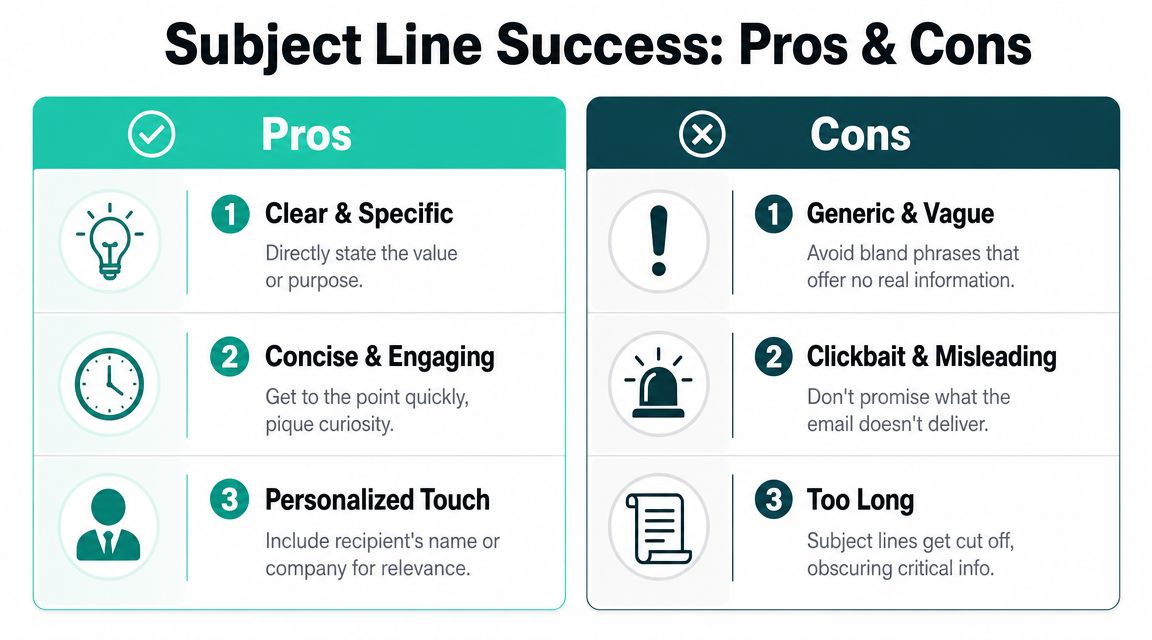
Subject lines don't win the whole conversation, but they decide whether you even get one.
Your target here isn't cleverness. It's enough relevance to earn the open without looking like marketing copy. The preview line matters too, because many candidates will judge the email from the subject and first sentence alone.
This works when you've found a real detail worth referencing.
Good examples:
Bad examples:
The good versions signal intent. The bad ones look like every mass email in the inbox.
Use this when you have a real shared reference point. Mutual investor, former colleague, portfolio overlap, recent talk, shipped product, same niche.
Good examples:
Don't fake familiarity. If the mutual context is weak, candidates can tell.
Sometimes the cleanest subject line is just a concrete opportunity with one hook.
Good examples:
This style works well when the message itself quickly earns the specificity.
Many recruiters waste the first sentence on “Hope you're doing well” or “My name is X and I'm reaching out from Y.”
Skip that.
Start with the reason this person, this role, this message. Outreach guidance for recruiters recommends personalizing at minimum with the candidate's name plus one specific detail such as a recent project or skill, and it notes that an interest-based soft CTA can double response or success rate compared with a harder ask, according to this recruiting outreach guide.
Examples:
A few patterns consistently hurt opens:
If you want a good non-recruiting parallel on concise hooks, the thinking in this piece on what is a headline that works is useful. The same principle applies. Clarity beats flair.
A passive backend engineer opens your note at 10:47 p.m. between a production issue and bedtime. A PM scans it on the way into a roadmap review. A designer reads it after three vague recruiter messages about a company that “cares about UX.” The same outreach will miss all three.
Role-specific messaging matters because each function filters opportunity through a different set of questions. Proprietary 2026 data from Underdog.io shows that tech candidates respond more when outreach matches what they value in a job, especially autonomy, flexible work, meaningful scope, and team quality. Generic personalization helps. Motivator-level relevance gets replies. For practical examples, see these data-backed cold recruiting outreach templates.
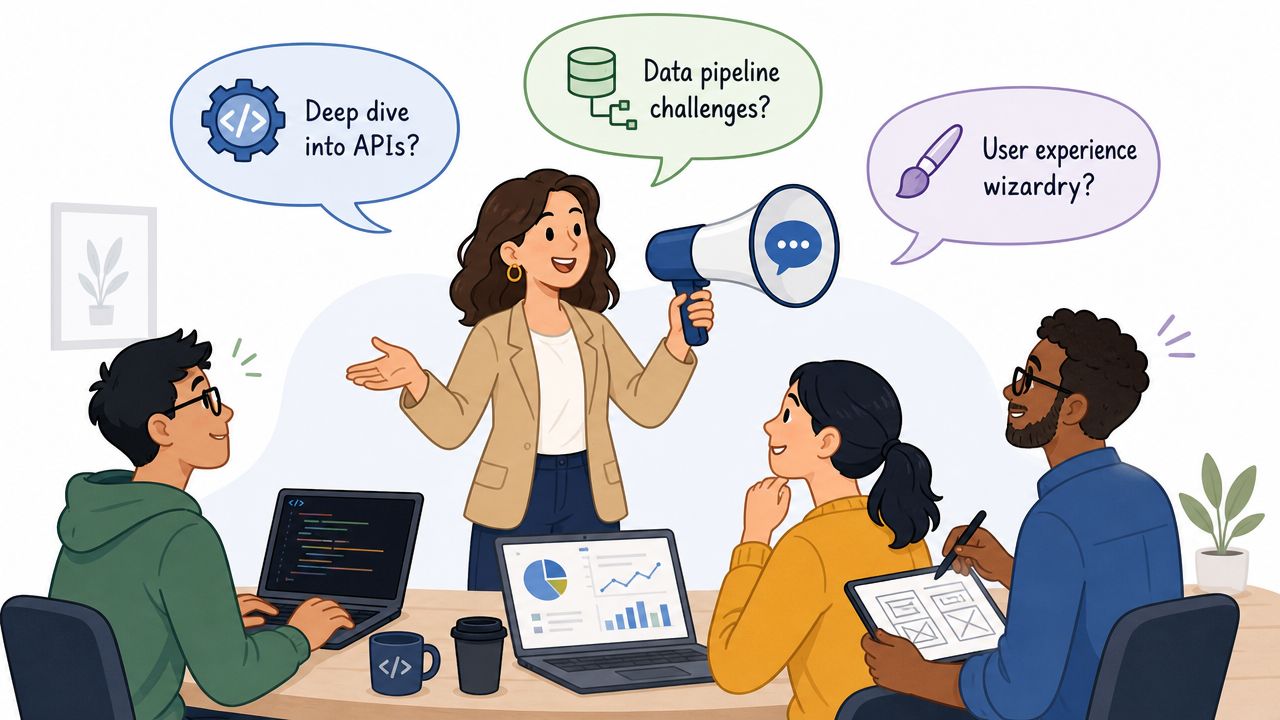
Engineers usually screen for signal fast. They want to know whether the problem is real, whether the team ships carefully, and whether they will have room to make decisions.
The message gets stronger when it includes:
Weak:
“Thought you'd be a fit for our Senior Engineer role at a fast-growing startup.”
Stronger:
“You've spent time on distributed systems and reliability. This team is rebuilding core data flows and senior engineers still make architecture calls directly. The role should fit someone who likes hard systems work without heavy process.”
Short template:
Hi [Name], your background in [specific area] stood out because this team is working on [specific technical challenge]. Senior engineers own [architecture/system area] directly, and the environment gives people room to make technical decisions. I also noticed your work on [project/company detail], which looks relevant here. If you're open, I can send a few details.
PMs read recruiter outreach through the lens of scope and decision rights. If the note sounds like a coordination job, interest drops fast.
Good PM outreach makes the product problem legible. It also shows who sets strategy, how much roadmap ownership the role has, and whether the PM will work closely with users, design, and engineering. Underdog.io's 2026 candidate data points in the same direction. PMs are more likely to engage when the opportunity offers real ownership and flexibility, not just a better title.
Use angles like:
Short template:
Hi [Name], your background in [domain or product type] made this role relevant. The PM owns a meaningful part of the roadmap and has input into strategy, not just delivery. The team is also clear about product trade-offs and gives PMs room to operate. Given your work on [specific product/project], I thought the mix of ownership and user impact could be a fit. Open to a quick overview?
Designers want proof that design has influence. If the note only says the company values craft, it reads like every other message in their inbox.
Show the operating model. Mention whether design is involved early, whether the team invests in quality, whether the role shapes systems instead of only polishing flows, and whether collaboration is healthy. Flexible work can matter here too, but only if the team still protects critique, feedback loops, and close product partnership.
The message should answer:
Short template:
Hi [Name], I was looking at your work on [specific product or system], and it seemed relevant to this team. The role has a real voice in product direction, not just execution, and the company invests in design quality through close collaboration with PM and engineering. It looked aligned with the kind of work you've done in [specific area]. If helpful, I can send more context.
Copy that works in an email often needs tightening for LinkedIn. A note sent through a niche community can assume more context than a cold outbound email. Teams that already study effective prospecting strategies usually understand this point from sales. Recruiting has the same trade-off. Relevance beats volume, but relevance takes more work.
The practical rule is simple. Write in the language of the function, lead with the motivator that matters for that role, and make the opportunity easy to evaluate in under 20 seconds. That is what gets passive engineers, PMs, and designers to reply.
A strong first message still gets ignored if it lands during a launch week, a vacation, or a deadline crunch.
That is why sequence design matters. The goal is not to repeat the same ask. The goal is to give a good candidate a few low-friction chances to engage when timing improves.

The cadence I use for passive tech talent is simple. Three touches over about two weeks is enough to test interest without turning the interaction into spam. If the role is unusually strong or the candidate is highly aligned, a fourth touch can make sense. Every follow-up needs a new reason to exist.
Start with relevance and one concrete motivator.
For senior engineers, that might be system ownership or technical scope. For PMs, it is often product influence or decision-making range. For designers, it is usually design quality, collaboration, or room to shape the product. The 2026 Underdog data provides practical insight. Candidates respond more when the outreach reflects what they screen for, especially autonomy and flexible work, instead of generic praise.
Include:
Example:
“Your experience building internal developer tools stood out. This backend role has real ownership over architecture decisions, and the team is set up for focused work with flexible hours. If that lines up with what you want next, I'm happy to share details.”
Add signal, not pressure.
A follow-up works when it helps the candidate evaluate the role faster. Share a product launch, a note from the hiring manager, a technical write-up, or a short explanation of how the team operates. Good follow-ups reduce uncertainty. Weak follow-ups just repeat the original message with a different subject line.
Example:
“One useful detail to add. The team recently rebuilt the permissions layer for a multi-product platform, so this role has meaningful backend complexity and a lot of say in how the system evolves. Happy to send the team memo if helpful.”
Close the loop cleanly.
The last touch should make it easy to reply now, later, or not at all. Passive candidates notice tone. A respectful close preserves future interest far better than manufactured urgency.
Example:
“I'll leave it here in case the timing is bad. If the scope around ownership and flexible work is relevant later this year, I'd be glad to reconnect.”
Persistence helps when each message adds context. It hurts reply rates when every touch asks for time without giving the candidate anything new to evaluate.
A good sequence does not depend on a single inbox. Email gives you room for context. LinkedIn works well for a shorter follow-up after someone has seen your name once. Referrals help when credibility is the main hurdle. Curated talent channels can also fit the mix when you want candidates who are more open to hearing about roles.
If you come from a sales outbound background, some of the sequencing logic in these effective prospecting strategies will feel familiar. The difference is restraint. Recruiting outreach should make evaluation easier, not push someone into a call.
It also helps to keep a few proven frameworks ready so recruiters are not rewriting from scratch every time. These data-backed cold recruiting outreach templates are a useful starting point, especially if you want examples built around the motivators tech candidates mention.
A recruiter sends 200 emails to senior engineers, sees a decent open rate, and assumes the campaign worked. Then only a handful reply, and almost none convert to interviews. The problem is usually not effort. It is what got measured.

Strong outreach programs treat messaging like a funnel with failure points you can diagnose. That matters even more in tech hiring, where candidate motivation varies by role and market. Underdog.io's 2026 data showed that engineers, PMs, and designers do not respond to the same promise in the same way. If autonomy, flexible work, or product scope drives interest for one segment, your measurement has to show whether your copy surfaced that motivator clearly enough to earn a reply.
Use three numbers first:
These metrics do different jobs.
Open rate helps diagnose subject lines and inbox placement. Reply rate tells you whether the message created interest. Interview conversion rate shows whether the right candidates replied and whether the follow-up process held up after first contact.
A campaign with high opens and weak replies does not have a top-of-funnel problem. It has a messaging problem. A campaign with replies but poor interview conversion usually points to targeting, screening, or a role pitch that sounded stronger in email than it did in conversation.
Aggregate numbers hide the useful signal.
Senior backend engineers often respond to different angles than product designers. PMs evaluating early-stage startups tend to scrutinize scope, manager quality, and decision rights. Remote-friendly candidates may react strongly to flexibility language, while candidates in a tight local market may care more about compensation range or team pedigree.
Review performance by segment:
| Segment | What to compare | Why it matters |
|---|---|---|
| Role family | Engineers vs. PMs vs. designers | Each group filters opportunity differently |
| Seniority | Mid-level vs. staff vs. director | Senior candidates often need stronger scope and autonomy signals |
| Geography | Remote, hybrid, local | Work model and market conditions change response behavior |
| Message angle | Ownership, flexibility, comp, mission | You can see which motivator earns replies from each audience |
A lot of recruiting teams lose clarity. They combine every outbound touch into one report, then make copy changes based on averages that mean very little.
The fastest way to stall improvement is to rewrite subject line, intro, CTA, and sequence timing all at once. Then there is no clean read on what changed performance.
Use a simple testing discipline instead:
One practical example. If engineers are opening but not replying, test whether the issue is your value proposition. Keep the same subject line and candidate pool. Then compare Version A, which leads with company background, against Version B, which leads with ownership, technical challenge, and work flexibility. That kind of test gives you something usable.
A useful external read on this gap between outreach advice and testing discipline is this analysis of the outreach testing gap.
This is the part many teams skip.
Improvement does not come from making emails sound more polished. It comes from learning which motivator gets a response from a specific candidate segment. If your 2026 outreach data shows designers respond to collaboration quality and product influence, test that angle directly. If senior engineers care more about autonomy and low meeting overhead, measure whether messages built around those points outperform generic startup pitches.
That gives recruiting teams a repeatable system. You are not asking, "Was this email good?" You are asking, "Did this message present the right reason to engage for this type of candidate?"
The recruiters who improve fastest keep score at that level. They know which subject lines get opens, which value props get replies, and which combinations lead to real interview loops.
If you're hiring engineers, PMs, or designers and want a warmer top of funnel than pure cold outbound, Underdog.io gives companies a way to reach vetted tech candidates who are already open to startup opportunities. It can sit alongside your direct sourcing work, referrals, and outbound sequences so you're not relying on one channel alone.