Most advice about hiring still treats candidate choice like a simple auction. Pay more, win more. That's incomplete, and in startup hiring it's often wrong.
Compensation matters. A lot. But what candidates care about is the full package, and they judge that package long before the offer letter hits their inbox. They're reading the role through their own career story. They're asking whether the company is stable enough to bet on, whether the work will matter, whether the people are sharp, and whether the process itself feels organized or chaotic.
Good candidates don't separate the job from the way you hire for it. They use your process as evidence. If scheduling is sloppy, feedback is vague, and timelines keep slipping, they assume internal decision-making looks the same after they join.
That's why strong recruiting teams don't just compete on cash. They compete on clarity, honesty, and execution. In practice, that means better salary conversations, tighter process design, and a much clearer story about impact and growth.
Startups lose candidates when they treat hiring like a bidding contest. Strong candidates compare upside, trust, team quality, and process quality long before they compare final numbers.
Compensation still sets the range of what is possible. But the winning company is often the one that makes the decision feel safer, sharper, and better run. Recruiters who understand that stop selling a job and start designing a decision experience the candidate can believe in. That same logic shapes how teams should present compensation and benefits in a way candidates can evaluate clearly.
The gap shows up in the process. Candidates study your company through the product you put in front of them first, your hiring flow. Every touchpoint answers a question they may not ask out loud. Is this team aligned? Do these people respect my time? Will I get clear goals once I join? Can the company make hard decisions without drama?
Candidates infer a lot from small moments:
I have seen startups lose with a strong cash offer because the process felt patched together. I have also seen them win while paying below a larger company because the candidate met impressive teammates, understood the mission, and trusted how decisions were made.
Candidates do not just choose the offer. They choose the company judgment the process reveals.
The teams that close well tend to operate with more discipline:
| What weak teams do | What strong teams do |
|---|---|
| Sell possibility in broad terms | Define scope, success metrics, and constraints |
| Dodge hard questions on runway, leveling, or pay | Answer directly and explain the trade-offs |
| Treat recruiting as scheduling and coordination | Design hiring like a user experience for the candidate |
That last point matters more than many founders think. Hiring works like a product. If the user experience is confusing, slow, or inconsistent, candidates assume the company will be too. If it is clear, responsive, and credible, you create an advantage that richer companies often waste.
Compensation is where candidate trust gets won or lost.
Before a candidate cares about upside, mission, or title, they need to know whether the role fits their financial reality and risk tolerance. Teams lose credibility fast when they rush past base salary, stay vague on equity, or dodge questions about stability. A candidate-centric process treats those topics like product design problems. Remove friction. Explain the system. Make the decision easy to understand.
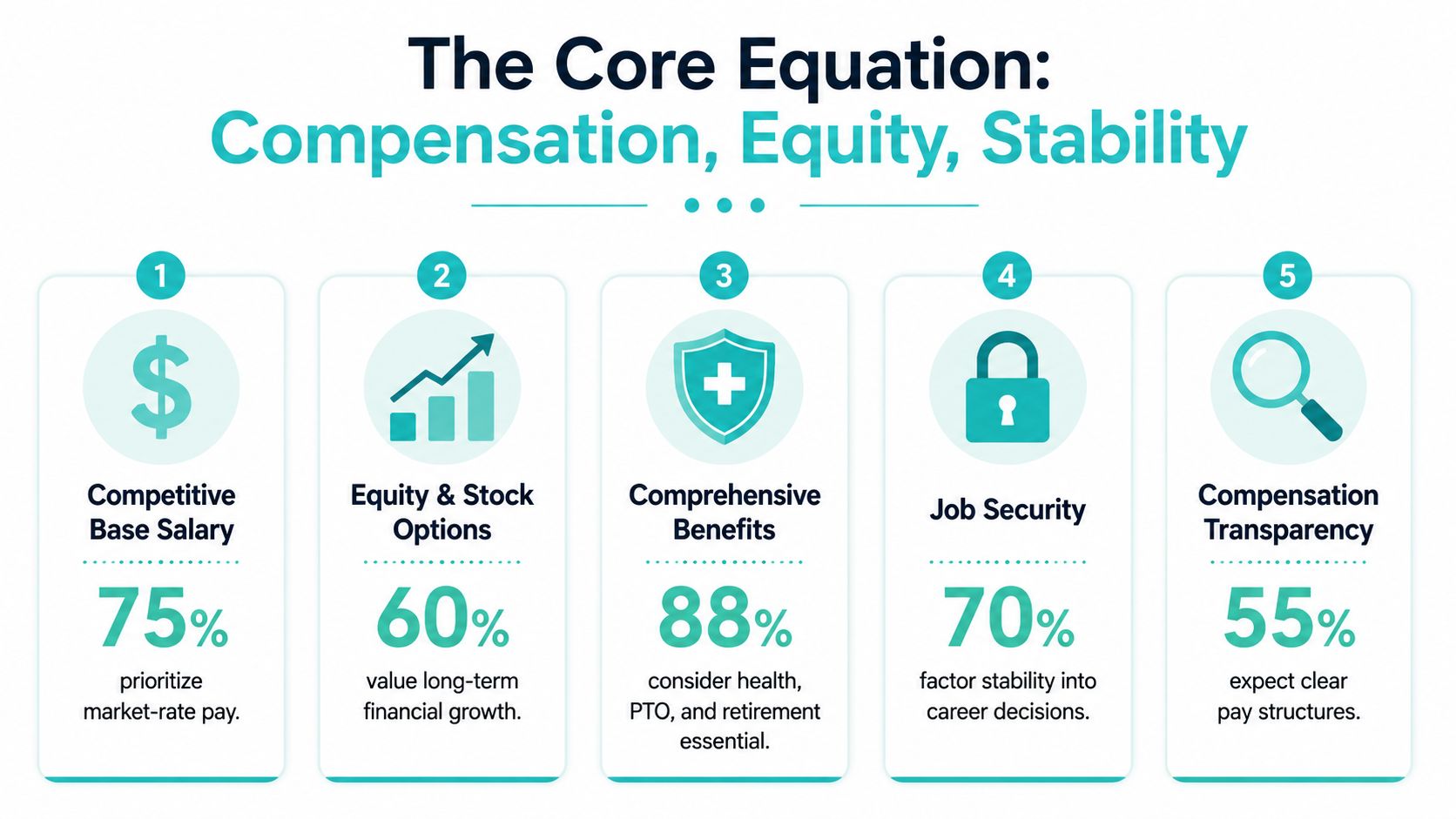
Salary sets the range of possible outcomes. If the base pay is too low, the rest of the conversation becomes noise. If the range is fair but poorly explained, candidates assume the company is disorganized or hiding something.
Strong teams do more than share a number. They explain the system behind it. That means showing how scope maps to level, how the range was built, and what would justify an offer at the top versus the middle.
A good salary conversation covers:
For a practical framework on structuring cash pay and broader rewards, see this guide to compensation and benefits.
Equity gets discounted when recruiters present it like a lottery ticket.
Candidates want the mechanics in plain English. What kind of equity is it? How many shares or options are being granted? What is the strike price, if there is one? How does vesting work? What happens in future financings? What are the realistic paths to liquidity, and what risks should they understand?
That explanation does two jobs at once. It helps the candidate assess value, and it shows that the company respects their intelligence.
I have seen candidates respond well to modest grants that were explained clearly, and reject larger-looking packages that came wrapped in hype. Legibility matters. In many cases, it matters more than the headline promise.
Practical rule: If a recruiter cannot explain the equity clearly, the candidate will mark it down.
Benefits belong in this conversation too. Health coverage, parental leave, flexibility, and time off affect how safe and workable an offer feels. Candidates compare those details through a simple lens: can I use this, and does it reduce stress in my day-to-day life?
Startups often get awkward here. They should not.
Candidates are assessing company risk throughout the process, especially if they are leaving a stable job. The right move is not to over-reassure. It is to answer the obvious questions with specificity and calm.
A useful stability conversation covers:
Hiring begins to resemble product design. A strong process reduces uncertainty at the exact points where candidates feel the most risk. Clear compensation, understandable equity, and credible stability signals do more than support the offer. They make the company easier to choose.
Top candidates do not switch for a higher number alone. They switch for a better trajectory, sharper problems, and a team that will raise their standard.
That pitch fails when it stays abstract. "Growth" means nothing unless a recruiter can tie it to real scope, real decisions, and a credible next step in the candidate's career.

Strong recruiters do more than sell the job. They explain why this role fits this person, at this point in their career.
That takes preparation. An engineer may want broader product ownership. A PM may want tighter exposure to revenue and retention metrics. A designer may want more direct founder partnership and faster feedback loops. If the recruiter can map the role to that next chapter with precision, the conversation gets stronger fast.
Candidates also notice when the move weakens their story. A role that narrows scope, adds a confusing title, or puts them further from the work they want to be known for will create hesitation, even if the compensation looks good on paper.
Candidates drawn to startups usually want proximity to decisions. They want to know what they will own, what they can change, and where their judgment will matter.
The best hiring teams explain impact in plain operating terms:
I have seen candidates lose interest the moment "impact" turns into generic startup language. If the team cannot define the work without leaning on clichés like "fast-paced" or "ownership," the role is still under-designed.
That is also why the hiring process should be treated like a product for the candidate. Every interview should answer a user question: Will this role stretch me, will my work matter, and will I learn from the people around me? Teams that want a stronger process can borrow from these candidate experience best practices.
Compensation gets attention. Team quality closes.
Candidates join for the work, then stay or leave based on the people around them. A weak process hides the team behind repetitive interviews and generic culture talk. A well-designed process gives candidates enough signal to judge whether the manager is strong, the peers are credible, and the standards are high.
Three recruiter behaviors make a measurable difference:
This is one reason the front door matters more than teams assume. If the application experience is clumsy, candidates start discounting everything that follows. If you need a cleaner intake flow, tools that help you create job application forms can remove friction before the first conversation even starts.
Candidates do not need a polished culture performance. They need evidence that the people are sharp, honest, and worth betting their next chapter on.
A lot of teams still treat hiring like an internal workflow. Top candidates experience it like a product. They judge the clarity, speed, responsiveness, and polish of every step, then infer how the company operates when outcomes are more critical.
That judgment affects conversion.
CareerPlug's 2025 reporting found that only 26% of North American job seekers said they had a great candidate experience, and it highlighted the same process features strong recruiting teams already optimize for: clear compensation and role expectations, efficient applications, consistent communication, personalization, and organized onboarding.
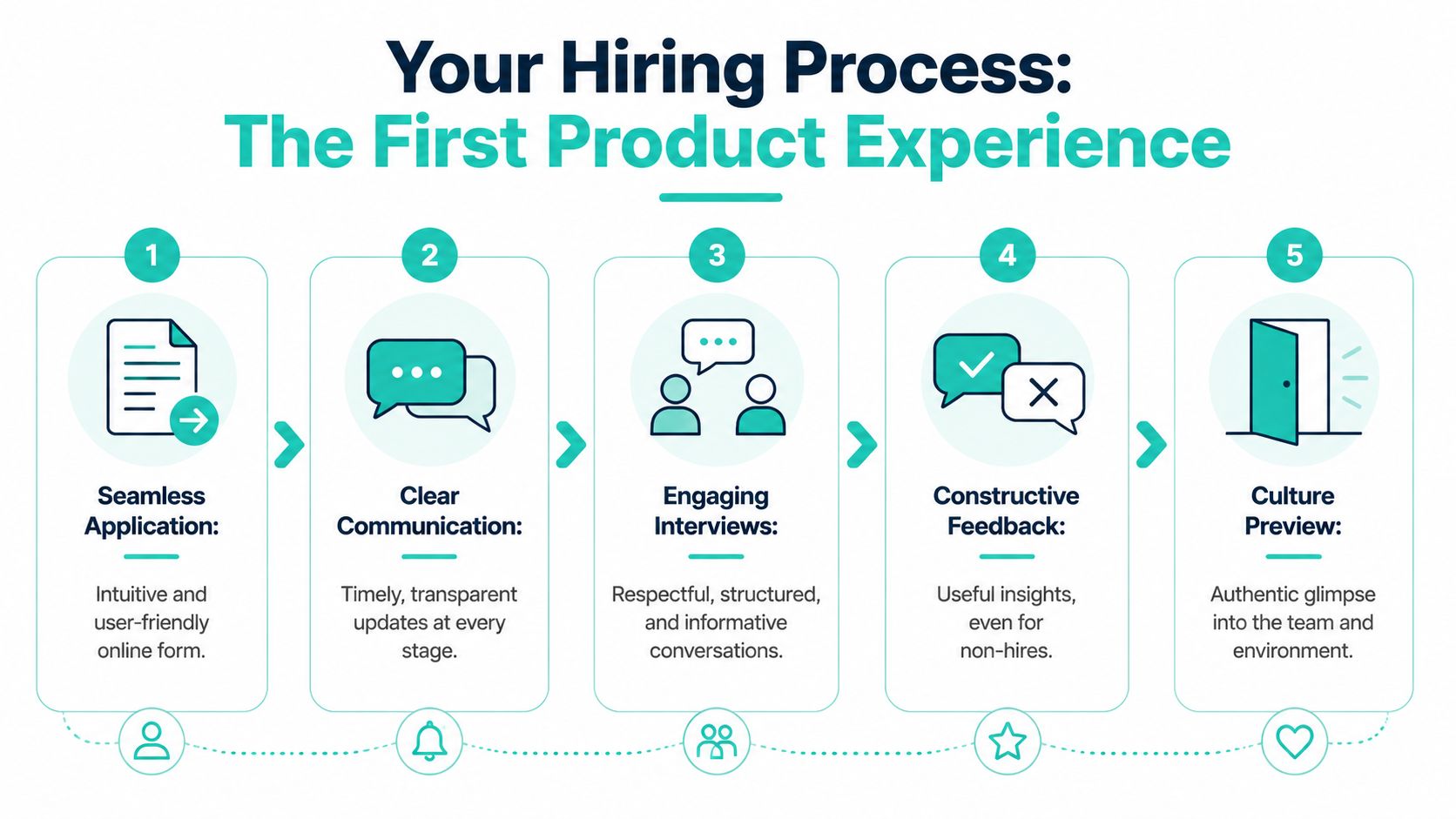
The application is the first product interaction. If it is slow on mobile, asks for the same information twice, or hides what happens next, candidates read that as a signal about decision-making inside the company.
Strong teams design for low friction and high signal. Ask for the minimum needed to decide whether a conversation makes sense. Save extra diligence for later stages, when mutual interest is real. Teams that need a cleaner intake flow can use tools that help you create job application forms to reduce friction and standardize intake without turning the process into a faceless form fill.
Small details matter here. An application that takes five minutes instead of twenty gets more qualified starts. A confirmation page with timeline expectations cuts uncertainty. A recruiter who follows up when they said they would keeps trust intact.
Candidates should never have to reverse-engineer your process.
Strong recruiters explain the hiring loop upfront: the stages, who they will meet, what each conversation is evaluating, and when updates will arrive. In tech, where strong people are often balancing several active processes, that level of specificity protects momentum. Jobylon's discussion of tech candidate expectations makes the point clearly. Speed and clarity improve engagement because timelines, responsibilities, and next steps reduce uncertainty and make the process feel fair.
A practical communication audit looks like this:
For teams tightening this part of the funnel, Underdog's guide to candidate experience best practices is a useful operational checklist.
Candidates remember whether you closed the loop.
The earlier CareerPlug reporting noted that 94% of candidates want feedback after interviews, and candidates who receive constructive feedback are more likely to apply again later. That matters for brand, referrals, and future pipeline quality. It also changes how rejected candidates talk about your company in private channels, group chats, and backchannel references.
The operational fix is simple. Standardize feedback instead of improvising it.
| Stage | What to communicate |
|---|---|
| Early screen rejection | The role fit was not close enough, plus one concrete mismatch if available |
| Post-interview rejection | A short, honest reason tied to scope, experience, or interview evidence |
| Final-stage rejection | Clear closing context, appreciation, and whether future fit seems realistic |
Candidates can handle a no. What frustrates them is vague language that protects the company and teaches them nothing.
Useful recruiter communication is direct:
That does not mean writing a legal memo. It means saying what changed, what was missing, or where another finalist was stronger. If the team needed deeper systems design experience, say that. If scope shifted during the process, own it. If timing worked against them, explain it.
A candidate-centric process does more than create goodwill. It gives your company a recruiting edge because candidates feel the company is organized, self-aware, and serious about how it treats people. That is what strong product design does. Hiring should meet the same bar.
The best offer calls don't feel like procurement. They feel like the final proof that the company understands the candidate.
By the time you present an offer, the candidate has already formed a view on the role, the manager, the team, and the company's seriousness. The offer should bring those strands together in a way that speaks to the person, not just the market.
Indeed's U.S. survey of over 4,000 adults found that 76% of employed candidates said pay would most attract them to a new job, while 51% cited a good location and 50% flexible hours. The same report notes that 54% said they abandoned a recruitment process because salary expectations were not met, and 7% rejected their most recent offer because it wasn't in the right location (Indeed on what candidates care about in a job offer).
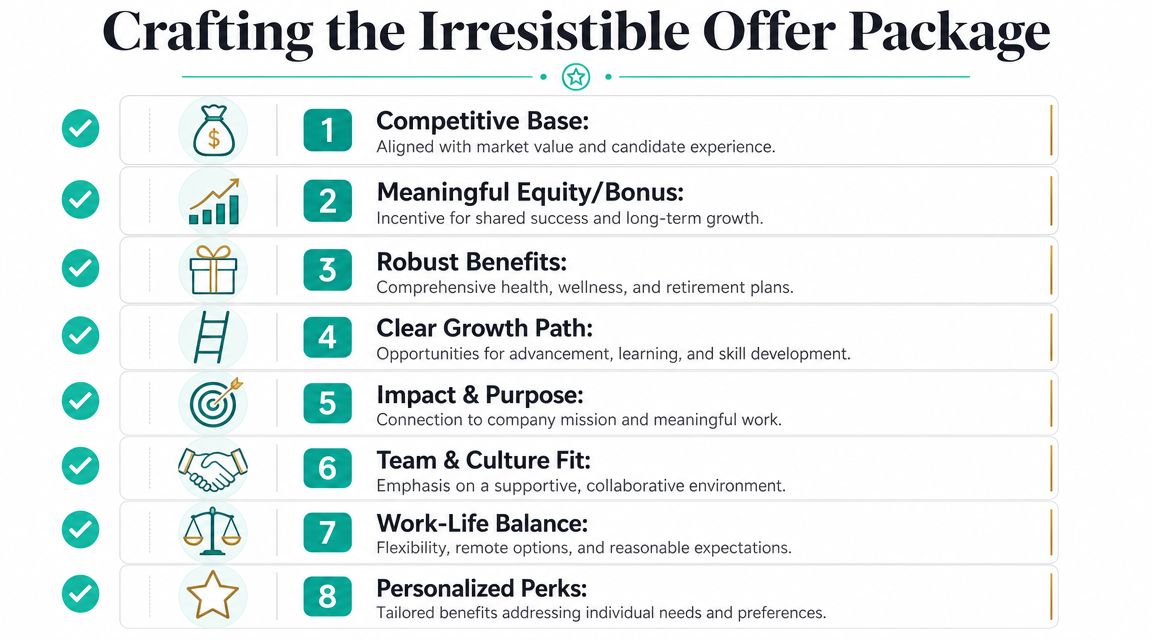
A lot of teams treat the offer like a summary of compensation. It's more useful to treat it as a response to the candidate's decision criteria.
If someone cares most about remote flexibility, don't bury that in a policy document. If commute friction is a concern, address location expectations directly. If they're trading cash for equity, make sure the rationale feels coherent.
Many startups lose ground at this point. They know the headline number but haven't mapped the candidate's actual constraints.
A practical offer package usually needs to cover:
The strongest recruiters don't jump straight into numbers. They start by reminding the candidate why this role fits.
That recap should sound something like this in substance: here's why the team is excited about you, here's the problem you'd be solving, here's why your background maps to it, and here's what success could open up. Then the financial package lands in a much clearer frame.
A great offer doesn't just answer “what do I get?” It answers “why does this make sense for my life and career?”
This is also the right moment to revisit trade-offs explicitly. Startups often can't match every enterprise perk. But they can present a cleaner role, more influence, faster learning, and a tighter connection between work and outcome. Those advantages only matter if the recruiter names them clearly and transparently.
For teams refining that broader message, examples of a stronger employee value proposition can help sharpen how the company packages role impact, growth, flexibility, and mission.
Candidates shouldn't have to reverse-engineer whether your company is flexible, whether the hiring manager is invested, or whether the growth story is real. The offer conversation should remove ambiguity.
A useful way to pressure-test the package is to ask:
The offer that sticks is usually the one that feels considered. Not inflated. Considered.
A candidate-centric process does more than help you close one search. It changes your reputation in the market.
Candidates compare notes. They remember whether your team was prepared, whether your recruiters followed up, whether your interviewers respected their time, and whether the final answer was honest. Over time, those interactions shape how people talk about your company long before they ever apply.
That compounding effect matters. A sloppy process creates silent attrition in the pipeline. Some candidates withdraw. Some accept other offers. Some decide the company isn't for them and tell peers the same. A disciplined process does the opposite. It creates trust, preserves relationships, and makes future outreach easier.
The advantage is that this moat is operational, not cosmetic. It comes from habits. Clear role definition. Fast coordination. Better interviewer prep. Honest feedback. Offer conversations built around real constraints instead of generic persuasion.
What candidates care about isn't mysterious. They want fair compensation, believable upside, meaningful work, strong teams, and a process that treats them like a person rather than a ticket in an ATS. Companies that deliver that consistently don't just hire better. They become easier to say yes to.
If you're exploring startup roles and want a more candidate-centric way to do it, Underdog.io lets tech candidates submit one short application and get introduced to vetted startups that match their background, which can make the process more transparent and less repetitive than applying company by company.