You're probably in one of two situations right now.
Either you've posted an engineering role on a big job site, watched a pile of applications come in, and realized volume isn't the same thing as quality. Or you're considering launching a niche hiring product of your own and you're trying to decide whether job board software is a real business or just another maintenance project dressed up as a marketplace.
Both are reasonable questions. I've seen founders assume a job board will solve distribution, only to learn that software doesn't create trust, curation, or demand on its own. I've also seen teams dismiss job boards too quickly, when a focused board with the right workflow can become a useful hiring channel.
At its simplest, job board software is the system that powers a hiring marketplace. Gartner defines it as a specialized digital platform that facilitates advertising, managing, and searching for job openings, serving as an online hub where employers post listings and seekers search and apply to streamline the recruitment process (Gartner definition of job board software).
A practical way to think about it is Shopify for jobs. It gives you the storefront, the posting flow, the search experience, the application mechanics, and the admin layer that keeps the whole thing running. What you still need to supply is the niche, the audience, and a reason anyone should choose your board over the default places they already know.
That matters because this isn't a tiny side category anymore. The global job board software market was valued at approximately USD 533.73 million in 2023 and is projected to reach USD 1,180.47 million by 2032, expanding at a 7.78% CAGR according to DataIntelo's job board software market report. When a category grows like that, it usually means operators are moving from improvised listings pages to dedicated infrastructure.
For founders hiring engineers, that infrastructure only helps if it improves signal. If you're still deciding where to source candidates, a curated roundup like 12 top engineering job platforms is more useful than another generic “post everywhere” playbook because it shows how fragmented technical hiring already is.
Practical rule: Don't buy or build job board software because it sounds scalable. Use it when you have a specific hiring problem, a defined audience, and a better angle than broad-market reach.
A real job board isn't just a listings page. It's an operating system with different surfaces for employers, candidates, and the team running the platform.
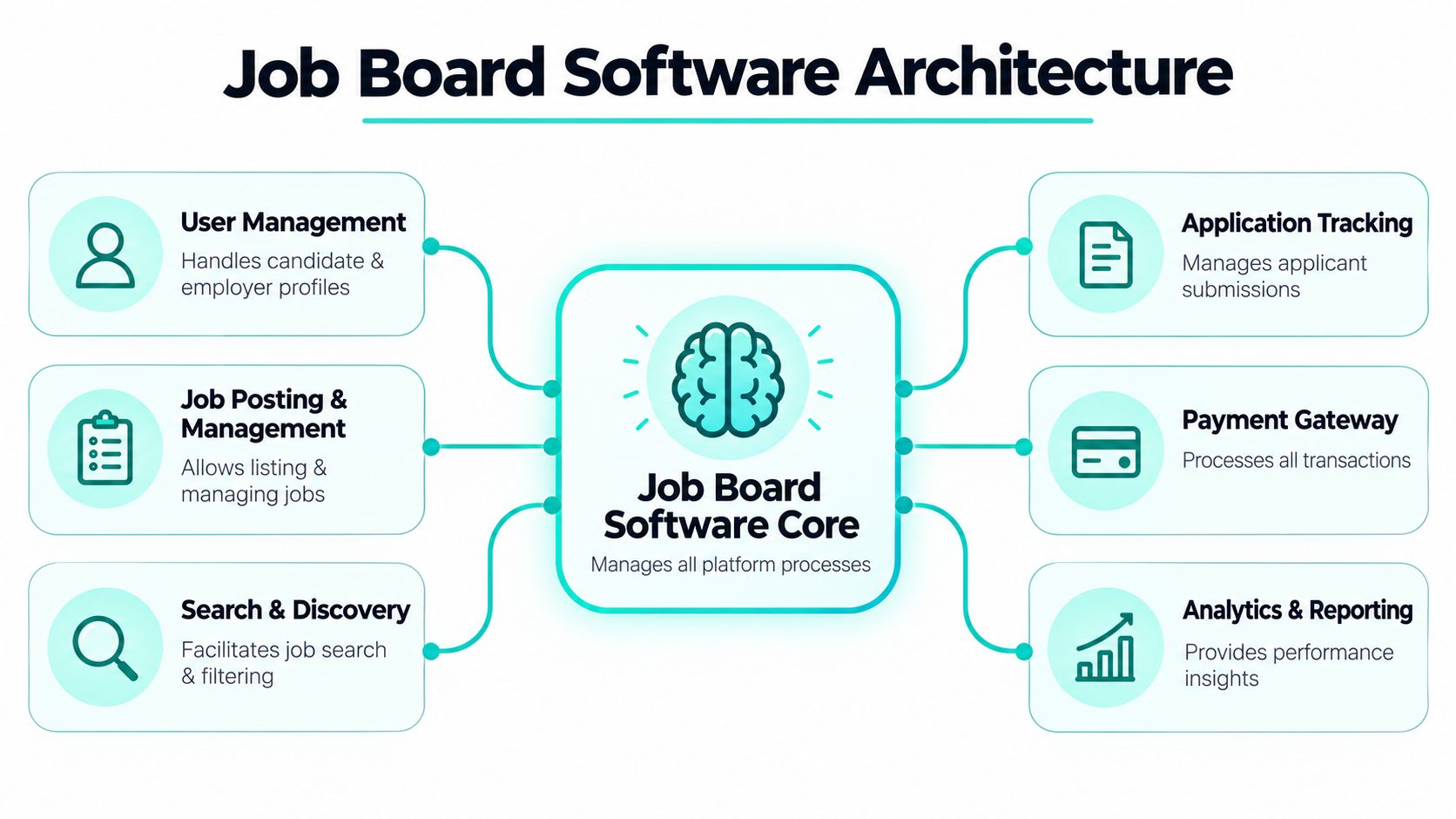
The first category is the obvious one. These are the features you need just to function.
If any of those three layers is weak, the whole system feels brittle. A smooth candidate experience won't save you if employers can't manage applications. A polished employer dashboard won't matter if candidates can't find relevant jobs.
The second category is less visible, but it's where better platforms separate themselves from template clones.
Modern scalable recruitment platforms increasingly use a microservices-based architecture and an API-first design, with components such as PostgreSQL for structured data, RabbitMQ for asynchronous jobs, and separate services for functions like resume parsing, application tracking, and payment processing, according to Abbacus Technologies on scalable recruitment platform development. That sounds technical, but the business meaning is simple. It helps the platform stay responsive when traffic spikes or when employers are reviewing applications at the same time candidates are uploading resumes.
Here's the practical distinction:
| Component type | What it does | What happens if it's weak |
|---|---|---|
| Foundational workflow | Posting, search, apply, review | Users abandon the platform quickly |
| Scalable infrastructure | Handles concurrency, async tasks, integrations | Performance breaks under real usage |
| Data and control layer | Permissions, analytics, moderation, billing | Operators can't run the business cleanly |
A lot of founders underestimate how much operational logic sits underneath “simple” hiring software. If you want a sense of how a candidate flow can be simplified at the surface while still depending on strong backend orchestration, look at how a streamlined hiring marketplace can work.
A bad job board feels crowded on the front end and fragile on the back end. Users notice both, even if they can't describe the architecture.
Feature lists are where founders get distracted. Vendors pile on AI labels, branding controls, and distribution promises. Most of that matters less than getting the basics right.
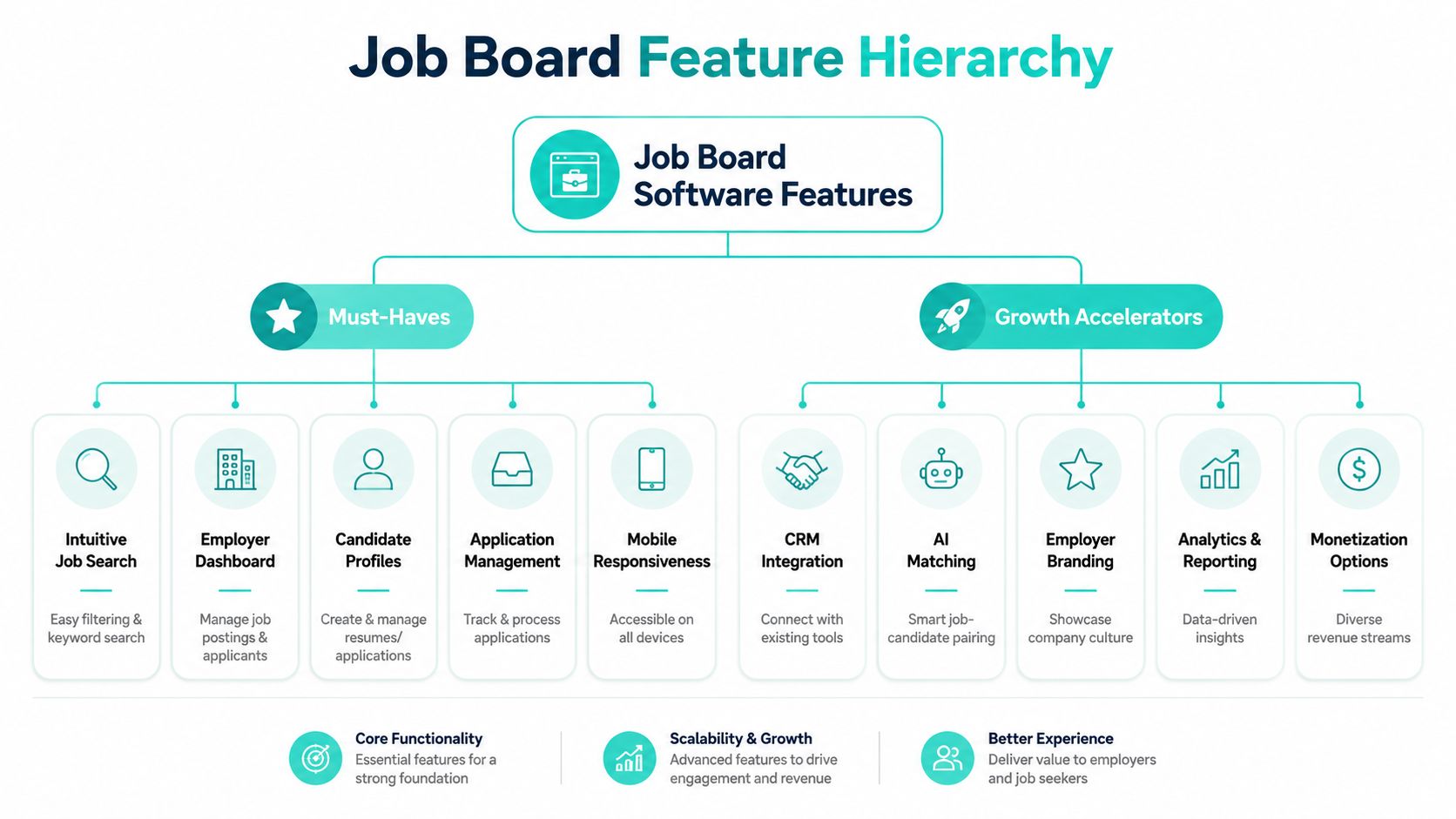
If I were evaluating job board software today, I'd start with a short list.
A useful reality check is to browse how role discovery works on a focused site such as browse jobs by location. You can see quickly whether navigation helps candidates narrow choices or just exposes more clutter.
After the basics, the next layer is about scaling. These features don't rescue a weak board, but they let a good one scale.
If you're vetting interoperability, look at the kind of ecosystem signals shown on a page like integrations and partners for hiring workflows. The point isn't to chase logos. It's to confirm the software can live inside a real recruiting process.
Some features are easy to oversell.
“AI matching” doesn't mean much if the underlying data is messy, job titles are inconsistent, and employers haven't defined the actual skills they need.
I'm not anti-automation. I'm anti-fantasy. Good software can improve routing, search, recommendations, and profile completion. It cannot fix vague job specs, undifferentiated employer branding, or a market with no trust.
One feature set that deserves more attention is skill-based role structure. TeamMeter argues that effective job architecture should map roles around required skills, optional skills, grade levels, and outcomes rather than static titles alone in its guide to job architecture and skill-based management. That matters because generic titles hide too much. The more your platform supports competency-based matching, the better your odds of connecting startups with adaptable technical talent rather than filtering only by title history.
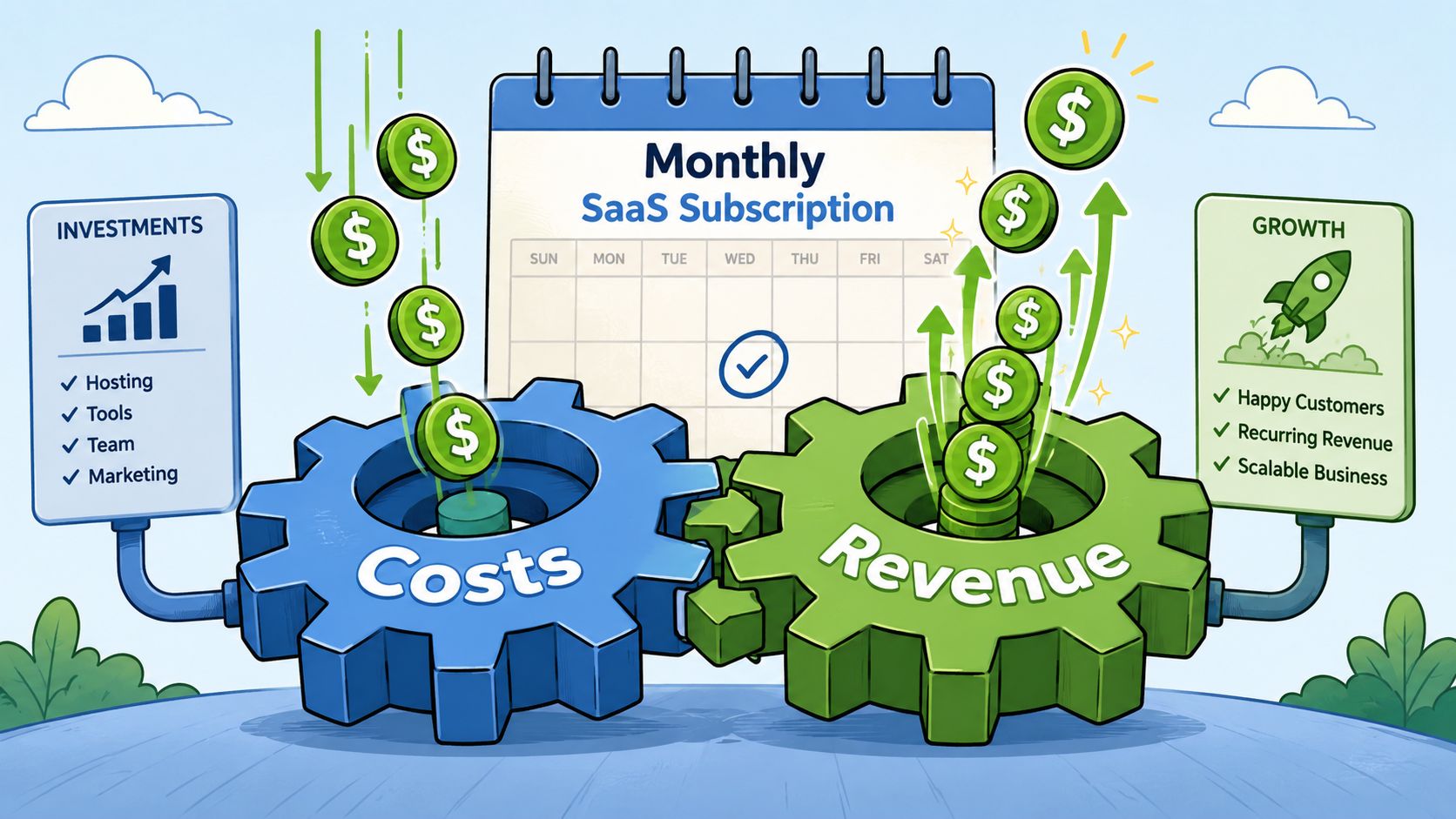
This is where enthusiasm usually meets reality. Running a job board is a software decision, a distribution decision, and a monetization decision all at once.
The first question is whether a niche exists that rewards focus.
A major strategic shift has already happened. 44% of new job board software solutions launched in 2025 explicitly catered to specialized sectors such as technology, healthcare, and remote work, according to the 2026 job board industry report on niche platform growth. That tells you broad, undifferentiated boards aren't where new entrants see opportunity.
If your concept is “a better general job board,” that's usually a warning sign. If your concept is “a trusted board for a specific hiring problem,” the economics get more interesting.
There isn't one right model. There are trade-offs.
| Model | Strength | Weakness | Best fit |
|---|---|---|---|
| Employer-paid listings | Simple to understand | Hard to justify without traffic or niche authority | New boards with focused demand |
| Employer subscriptions | Recurring revenue | Needs repeat posting behavior | Communities with many active hiring teams |
| Featured placements and sponsorships | Adds monetization without changing core workflow | Can cheapen trust if overused | Boards with real audience attention |
| Candidate-paid access | Works when curation has clear value | Tough to validate in weak niches | High-trust, scam-sensitive, curated markets |
| Success-based model | Aligns payment with outcomes | Operationally heavier | Managed, high-signal marketplaces |
One under-discussed option is candidate-side monetization. There's a contrarian but real argument for charging job seekers for curated, scam-free, exclusive, or hand-screened listings in a niche market, as discussed in the 2026 job board industry report on monetization models. That won't work everywhere, and I wouldn't start there unless the niche has obvious pain around trust or access. But it's a useful reminder that “employers always pay” is not a law of nature.
If a founder asked me whether to launch a niche board, I'd keep the first phase tight.
Pick a narrow wedge
“Tech jobs” is too broad. “Backend engineers at seed to Series B fintech startups” is clearer. Narrow beats vague.
Validate supply before polishing brand
Talk to employers first. If they won't commit attention, posting behavior, or budget, the software won't save the idea.
Seed credibility manually
Founders often expect software to solve cold start. It won't. You need early listings, direct outreach, and enough curation that first users see obvious relevance.
Choose the pricing model that fits your trust position
If you're self-serve and early, straightforward listing fees are easier to explain. If you're highly curated, outcome-based pricing can make more sense.
If you're comparing how platforms package employer value, a page like pricing for a curated hiring product is worth studying for positioning. Not because you should copy it, but because pricing always signals what part of the hiring problem you're solving.
Launching the software is the easy part. Making the board useful is where most operators stall.
The biggest operational mistake is chasing volume before relevance. Founders often think more listings make a board look alive. In practice, irrelevant listings make the board feel generic, and generic is exactly what niche operators can't afford.
A critical blind spot in this category is analytics. Cavuno points out that operators often overlook job board analytics such as Google for Jobs impressions and page experience metrics like LCP under 2.5 seconds and CLS under 0.1, even though they directly affect visibility and candidate engagement in its guide to job board analytics and SEO metrics. That's the kind of operational detail that separates a board people can find from one that disappears.
Three practical fixes matter early:
Operator note: If a listing can't win in search and can't be understood in under a minute, it's not ready to publish.
Founders hiring technical talent need to be honest with themselves. A traditional board optimizes for reach. Reach creates applications. Applications create sorting work. Sorting work falls on founders, recruiters, or hiring managers who already have too much to do.
That model can still work for broad roles or brand-heavy employers. It works far less well when the role is specialized, the company is unknown, and every interview slot is expensive.
For high-stakes technical hiring, curated pipelines often beat open pipelines. Not because curation is magical, but because it changes the ratio of review time to relevant candidates.
A focused operator should optimize around a few outcomes:
That's why many startup teams eventually move away from broad board logic. They don't need hundreds of resumes. They need a manageable set of candidates who make sense for the stage, product, and role.
At some point, every founder has to answer the question. Not “What is job board software?” but “Should we rely on a job board model at all?”
That depends on what kind of hiring problem you have.
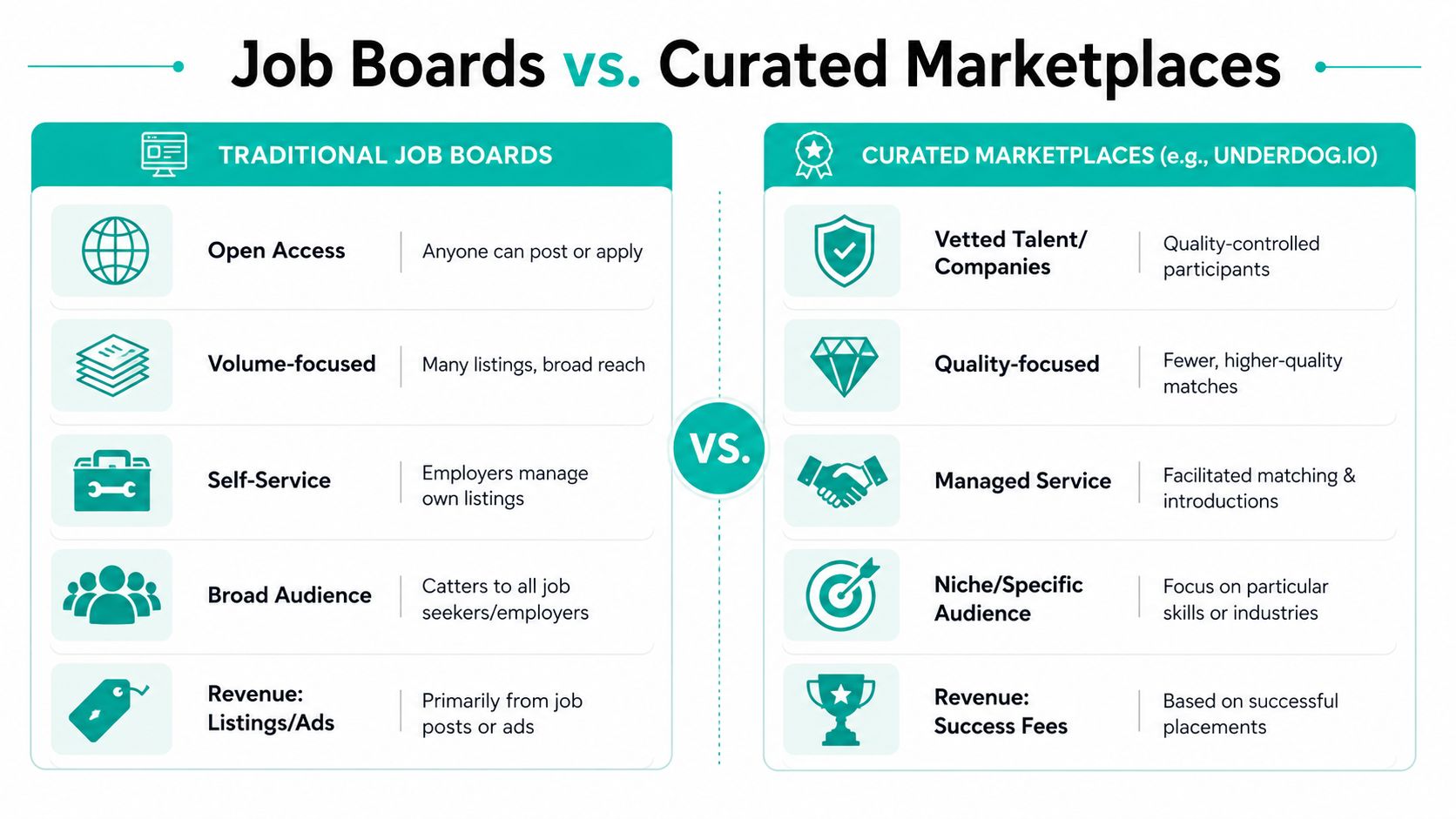
The default job board model is open access. Employers can post. Candidates can apply. The platform makes money from listings, ads, or subscriptions.
That works well when broad reach is the point. If you're filling common roles, have strong brand recognition, or need top-of-funnel demand, a board can be perfectly rational. The downside is familiar. Open access creates noise, and noise becomes labor.
The practical failure mode looks like this:
A curated marketplace flips those incentives. Participation is narrower. Matching is more selective. The value isn't the number of listings. It's the quality of introductions.
One example of that model is Underdog.io. The platform uses a reverse-marketplace approach where candidates complete a single, 60-second application and receive direct introductions from founders at early-stage to Series B companies, rather than applying one by one through a standard board, as described in Underdog.io's overview of tech job boards. That changes the posture of the whole experience. Candidates present one profile. Employers reach out.
Another important difference is selectivity. Navero notes that the platform accepts only approximately 5% of applicants through a manual vetting process, which keeps the signal-to-noise ratio high for both sides in its review of remote work platforms for startup hiring. That kind of selectivity would be a bug in a mass-market board. In a curated marketplace, it's part of the product.
A founder hiring a senior engineer usually doesn't need more applicants. They need fewer wrong ones.
Here's the simplest way I think about it.
| If you need | Traditional board | Curated marketplace |
|---|---|---|
| Maximum reach | Strong fit | Weak fit |
| High signal in a narrow niche | Weak fit | Strong fit |
| Self-serve posting | Strong fit | Depends on model |
| Reduced screening burden | Weak fit | Strong fit |
| Specialized startup talent | Often inconsistent | Usually better fit |
There's no universal winner. There's only fit.
If you're building a media property, community product, or niche content business where jobs are one monetization layer, job board software can make a lot of sense. If you're a founder trying to hire top startup talent efficiently, a curated marketplace is often the smarter tool because it reduces sorting, improves trust, and aligns the platform around quality rather than activity.
Ask these questions plainly.
Do we need reach or relevance?
If reach matters more, a board can work. If relevance matters more, look hard at curated options.
Can we create differentiated supply?
If you can't attract a unique set of candidates or employers, your board becomes a thinner version of a bigger site.
Who will do the curation work?
Open systems push filtering work to users. Curated systems do more of that work upstream.
Is the problem software or trust? If trust is the bottleneck, better UX alone won't fix it.
Are we building a product or trying to hire well?
Those are different goals. Founders often blur them.
Many teams don't need to build a hiring marketplace. They need a better route to qualified people. That's a much narrower problem, and the answer often isn't more job board infrastructure.
If you're hiring for startup and tech roles and want a higher-signal alternative to broad job boards, Underdog.io is worth a look. It gives candidates one fast application and gives startups access to a more curated pipeline, which is often the difference between drowning in applications and making a great hire.