San Francisco startups raised $111.7 billion in venture capital in the first nine months of 2025, which represented 45% of all U.S. venture capital funding in that period and marked a 245% year-over-year increase according to Growth List's 2025 San Francisco startup data. That single fact should change how most tech candidates think about the market.
A lot of hiring advice still treats San Francisco like a fading brand. It isn't. It's a dense, expensive, high-signal market where money, talent, and company formation still collide faster than almost anywhere else. For engineers, PMs, designers, and operators, that creates real opportunity. It also creates noise, inflated narratives, and a lot of bad decisions made in a rush.
The biggest mistake I see candidates make is focusing only on product buzz or base salary. In San Francisco, the sharper question is whether a startup can become something. If you can't assess exit viability, funding reality, and whether the equity means anything, you're not evaluating the job. You're gambling.
People love declaring San Francisco over. The capital flow says otherwise.
San Francisco held the #1 global startup ecosystem ranking for five consecutive years as of 2025, and the scale of venture concentration there still changes how companies hire, fundraise, and grow, as summarized in this market overview of San Francisco startups. What matters for candidates isn't civic pride. It's the practical effect of that concentration on careers.
When capital pools in one city, several things happen at once:
That's why San Francisco still rewards people who know how to read momentum early. If you wait for a company to look “safe,” the role is usually narrower, the upside is smaller, and the hiring bar is higher.
The strongest candidates don't approach San Francisco startups the way they'd approach a public company search.
What works:
What doesn't:
San Francisco gives you more shots on goal. It also gives you more ways to pick the wrong one.
San Francisco is less a city than a gravity well. Once talent, capital, and startup density reach a certain threshold, they pull more of the same into the same orbit.
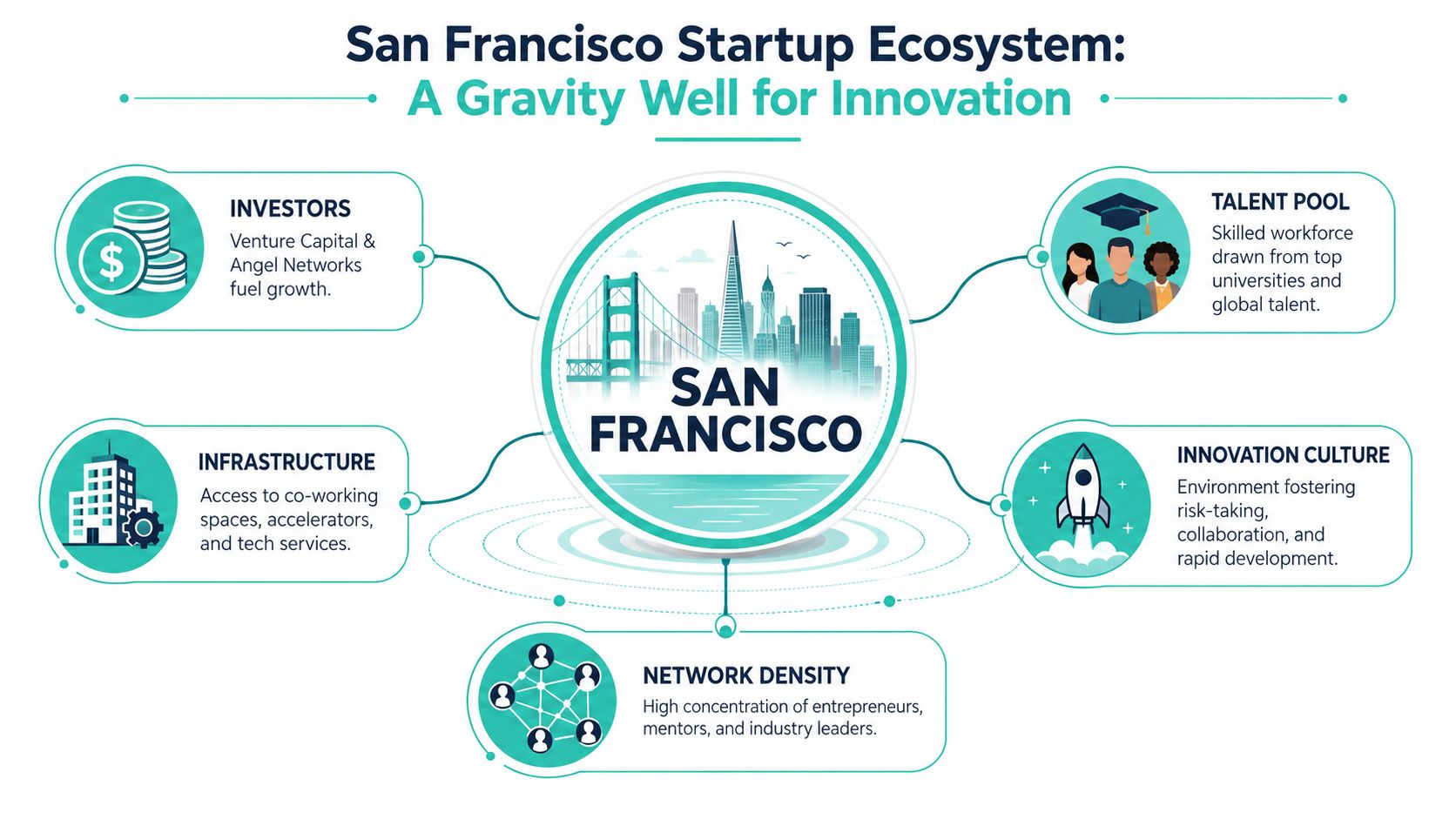
That's the part many outsiders underestimate. San Francisco currently hosts 17,298 startups, with the ecosystem growing 9.7% in 2025 to support over 8,600 active startups in the city proper, making it the largest active startup hub in the world according to StartupBlink's San Francisco ecosystem profile.
In most markets, a company has to build almost everything itself: recruiting channels, investor access, advisor relationships, customer introductions, and founder peer groups. In San Francisco, many of those inputs already exist nearby.
That doesn't make success easy. It makes iteration faster.
A candidate can interview at a seed company on Monday, meet a Series A founder through a former coworker on Wednesday, and get a warm intro to a hiring manager at an infrastructure startup by Friday. A founder can swap notes with another team down the street, compare compensation ranges, and close a key hire through shared networks instead of broad outbound.
That's also why candidates should spend time reading broader insights from Bay Area tech startups before assuming every opportunity in the region behaves the same way. The Bay Area has multiple startup clusters, but San Francisco keeps compressing the distance between company building and company hiring.
Here's the simple operating model behind the ecosystem:
This same density also produces imitation. Startups chase the same categories. Candidates pile into the same names. Hiring managers see a lot of resumes that look interchangeable.
Practical rule: In San Francisco, proximity creates opportunity. It also punishes generic positioning.
If you want to stand out in this market, your profile needs a point of view. “Full-stack engineer” is a commodity label. “Full-stack engineer who shipped internal AI tools, likes messy zero-to-one work, and can partner directly with founders” is a lot more useful.
The opportunity map in San Francisco isn't evenly distributed. Some sectors are drawing attention. Others are drawing capital, top candidates, and repeated founder conviction at the same time.
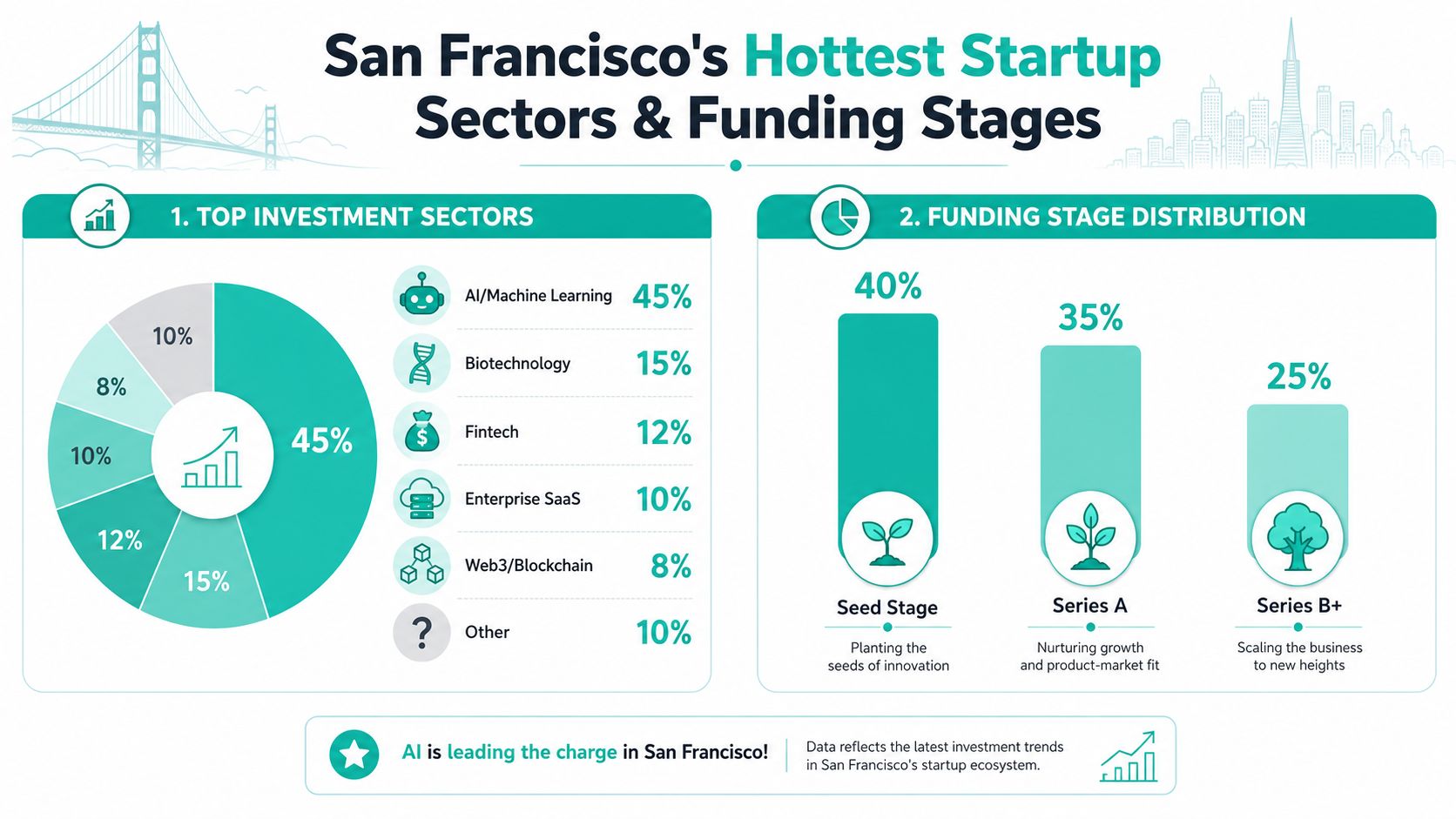
A broad consensus across industry reports confirms that AI startups represented approximately half of total venture funding in the Bay Area during 2025, with mega-rounds fueling growth specifically in AI and enterprise software companies, as noted in this Bay Area funding trends analysis. If you're evaluating San Francisco startups today, AI isn't a niche. It's the organizing layer around much of the market.
The headline sectors in San Francisco remain AI and enterprise software, but the practical hiring story is broader than that. Strong teams are also being built in developer tools, cybersecurity, fintech, biotech, and infrastructure-heavy products.
That matters because many candidates still chase category labels instead of business needs. You don't need to work at a frontier model company to benefit from the AI wave. Plenty of durable roles sit one layer down:
Most startup career advice gets this wrong by making every stage sound like a personality test. It's better to treat stage as an operating environment.
Seed companies hire for range. You join because you can build without much scaffolding.
You'll usually deal with:
Good fit: builders who like speed, ambiguity, and visible impact.
Bad fit: candidates who need tight process, polished onboarding, or stable roadmaps.
Series A is often the hardest stage to evaluate because the company has enough validation to sound credible, but not enough maturity to smooth out execution gaps.
This can be a strong point to join if you want:
This stage can also be rough if leadership is still learning how to run a company rather than just build a product.
Series B usually means the company is building repeatability. Teams get more specialized. Recruiting gets more structured. Managers start replacing pure player-coach dynamics.
This stage often works for people who want:
The trade-off is simple. Your influence may still be meaningful, but your job is less likely to be completely self-authored.
If you want maximum upside, don't just ask, “How early can I join?” Ask, “At what stage do I do my best work?”
Most candidates can compare salary. Far fewer can evaluate whether startup equity has any realistic path to value.
That gap matters more in San Francisco than in most markets. A major blind spot in hiring content is the lack of transparency around equity value and exit viability, even though ecosystem growth remains strong. The issue is especially important for the 85% of candidates who are passively looking, according to LinkedIn's discussion of startup hiring transparency. If you're making a confidential career move while employed, equity clarity isn't a nice-to-have. It's part of basic diligence.
Start with the mechanics. Then move to the business.
Ask direct questions about:
Then ask harder questions that many candidates avoid:
A zombie startup is usually not dramatic. It's a company that can keep operating, keep hiring selectively, and keep sounding alive while losing strategic momentum.
Common signs include:
Equity isn't compensation by itself. It's a contingent claim on a future outcome.
Use a framework that keeps you honest:
| Role | Seed Stage | Series A | Series B |
|---|---|---|---|
| Engineer | Highest ambiguity, broad ownership, equity matters most if company compounds | Mix of build and systems work, equity still material, process forming | More specialization, more structure, equity often lower as a share of total upside |
| Product Manager | Often founder-adjacent, little role clarity, may need to create process from scratch | Strong fit for PMs who can balance discovery with execution | Better for PMs who want cross-functional scale and clearer reporting lines |
| Designer | Can shape brand and product language early, but support may be thin | Good point to influence product system and user experience patterns | Easier collaboration model, but narrower design ownership |
| Go-to-market operator | Risky if product-market fit is still fuzzy | Can be attractive if early sales motion is emerging | Usually the clearest setup for repeatable hiring and performance expectations |
This table won't price the offer for you. It will stop you from comparing two jobs as if they're the same kind of bet.
Most candidates still run the wrong search process for San Francisco startups. They use broad job boards, submit a high volume of applications, and hope one lands with a real hiring manager. That works occasionally. It's inefficient in a market built on signal and timing.
San Francisco companies often hire through layered channels at once: referrals, founder networks, niche communities, recruiter outreach, angel and investor introductions, and selective marketplaces.
One reason this matters is that SF-based AI firms average 40% more engineering hires per $1M raised than peers elsewhere, reflecting stronger talent density and recruitment efficiency tied to specialized networks, according to UCSF innovation data on startup ecosystems. Hiring moves fast in this environment. If your search process is slow, generic, or fully reactive, you'll miss out on much of the market.
Here's the blunt version.
Useful for coverage. Weak for precision.
You'll see volume, but you'll also find stale listings, duplicate posts, and roles that already have strong internal pipelines. They're fine if you want broad market awareness. They're weak if you want to know which companies are worth your time.
Still effective when it's targeted.
If you've used the product, understand the wedge, and can explain why your background fits this specific team, a concise message can work well. If you're sending generic “would love to connect” notes, it usually won't.
These are useful when your function is niche. For example, if you're exploring crypto-adjacent or Web3 commercial roles, a live blockchain sales manager opening gives you a sharper read on how some Bay Area startups frame revenue-side hiring than a generic search result would.
It's how a lot of experienced candidates save time. Platforms that review companies before surfacing them can help reduce dead-end conversations with startups that have weak funding stories or unclear hiring plans.
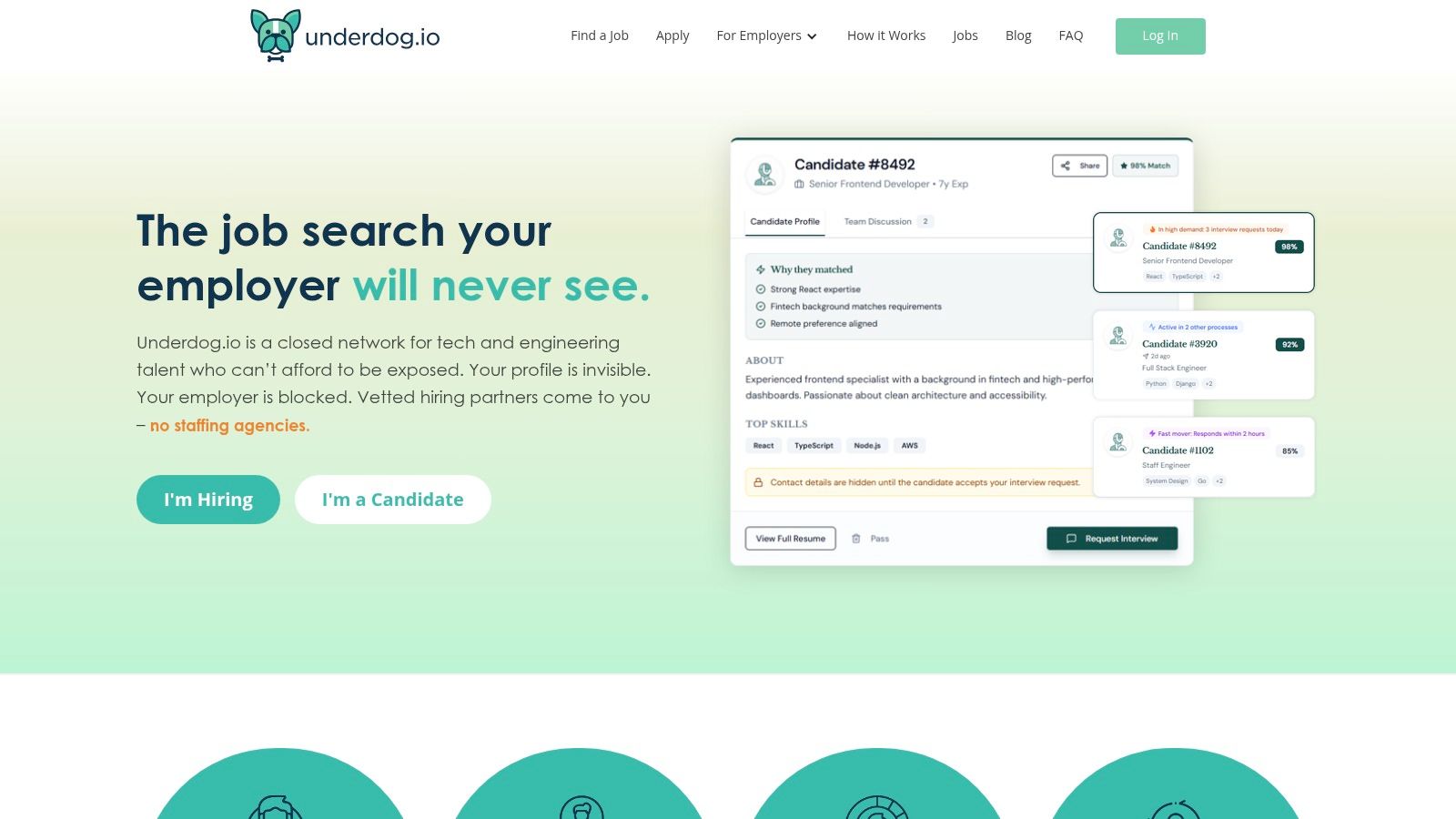
One option is Underdog.io's San Francisco startup jobs guide, and the platform itself uses a curated marketplace model where candidates submit one application and get considered by vetted startups and tech companies. That kind of setup is useful when you're employed, value discretion, and don't want to manage dozens of low-signal recruiter threads.
Three things consistently matter:
A practical routine works better than a heroic one. Keep a shortlist. Track founder names, latest round context, team quality, and why the company could matter. Then spend your energy on a small number of high-conviction conversations.
Startup interviews aren't mainly about reciting your resume. Founders and early hiring managers want to know how you think when the map is incomplete.
That changes what “good interviewing” looks like. Clean storytelling helps, but the strongest candidates also show judgment, product sense, and a willingness to own messy work without needing constant direction.
A startup interview usually probes four things:
Questions tend to sound simple and then get difficult fast. Examples:
Good answers usually include trade-offs, not just confidence.
If someone asks how you'd approach a product problem, don't jump straight to a polished solution. Start with what you'd need to validate, what you'd deprioritize, and what success would look like. That shows operational maturity.
The best startup candidates don't try to sound perfect. They show how they make decisions when resources are thin.
It also helps to prepare structured examples from your past work. If you need a practical framework for tighter interview prompts that also help reduce hiring bias, structured questioning is worth studying because good startup teams increasingly want consistency without losing speed.
Candidates often forget that interviews are due diligence.
Ask questions that reveal how the company runs:
For a broader prep checklist, Underdog.io's interview do and don't guide is a useful reference point.
The goal isn't to sound tough. It's to leave the interview understanding whether the team is disciplined, self-aware, and worth betting part of your career on.
San Francisco startups still offer unusual career advantage. That doesn't mean every offer is smart, every founder is credible, or every equity package deserves optimism.
The candidates who make strong moves here usually do four things well. They target the right stage for their own working style. They pick sectors with real hiring energy. They inspect compensation beyond salary. And they run a focused search instead of spraying resumes across the internet.
San Francisco rewards candidates who can think like operators. If you understand how the ecosystem works and you know how to evaluate risk, you won't just find more startup opportunities. You'll pick better ones.
If you want a quieter way to explore startup roles, Underdog.io lets tech candidates create one profile and get introduced to vetted startups and high-growth tech companies when there's mutual fit. It's a practical option if you're employed, want discretion, and would rather spend time on serious conversations than manage a pile of cold applications.