The Bay Area isn’t just another startup market. It holds over 14,500 active startups and raised $111.7 billion in the first nine months of 2025, representing 45% of all U.S. venture capital, according to Growth List’s San Francisco startup analysis. That single fact changes how both job seekers and hiring teams should operate.
If you’re trying to land a role, generic job search advice won’t cut it here. If you’re trying to hire, a standard recruiting process will lose candidates to faster companies with sharper positioning. The startup bay area rewards people who understand both sides of the market.
That’s the distinct edge. Candidates who understand founder constraints make stronger decisions and interview better. Hiring teams that understand candidate psychology close stronger talent. In the Bay Area, the people who win usually aren’t the loudest. They’re the ones who read the market correctly.
The startup bay area looks like one market from the outside. It isn’t. It’s a set of connected micro-markets shaped by geography, capital access, and the type of talent each area attracts.
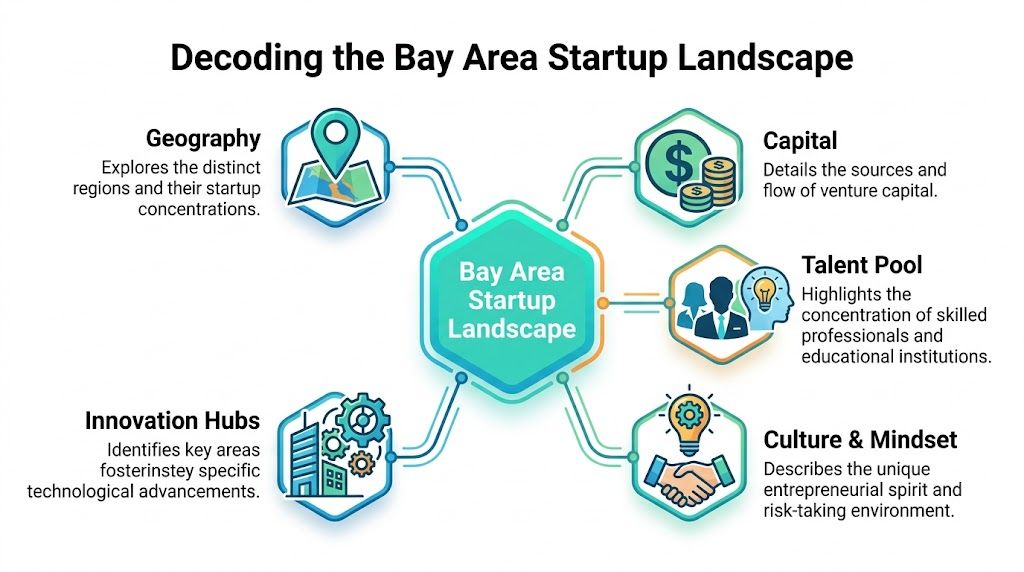
San Francisco tends to compress everything. Founders, investors, operators, and candidates all move in a tighter loop. Teams in SoMa, Mission Bay, and the Financial District often operate with a high meeting velocity, faster product iteration, and more visible competition for talent.
Silicon Valley runs differently. Palo Alto, Mountain View, Menlo Park, and nearby hubs still carry the weight of deep-tech history. The companies there often have stronger ties to research, infrastructure, semiconductors, and technically dense product work. The rhythm can feel less socially noisy but more technically specialized.
For job seekers, this matters because “Bay Area startup” is too broad a search term to be useful on its own. You need a map in your head. If you’re strong in enterprise SaaS, product-led software, or fintech-adjacent work, San Francisco may offer the tightest cluster. If your background leans toward platforms, hard engineering problems, or hardware-software intersections, the Valley may fit better.
The Bay Area’s venture density didn’t happen by accident. The region’s startup system grew from Stanford-linked company formation, including Fairchild Semiconductor in 1957 and Intel in 1968, then expanded through Sand Hill Road’s venture ecosystem, as summarized in this Bay Area startup jobs overview. That history matters because the funding logic is still visible today.
When capital is concentrated, hiring patterns follow. Startups hire ahead of revenue. Founders recruit for speed, not just coverage. Boards push companies to fill critical roles quickly after a round closes. That creates a hiring market where timing can matter as much as resume strength.
Practical rule: In the Bay Area, the best time to talk to a startup is often right before you need a job, not after.
Hiring managers need to understand the mirror image of that dynamic. Candidates in this market don’t just compare compensation. They compare conviction. If your company can’t explain why now is the right time to join, someone else will.
The Bay Area’s talent market is thick with people who’ve already been through startup cycles. That changes expectations. Candidates ask sharper questions about roadmap risk, founder-market fit, and equity. Hiring teams expect stronger ambiguity tolerance and less hand-holding.
Here’s a simple way to think about the situation:
| Area | Common company profile | Candidate implication | Hiring implication |
|---|---|---|---|
| San Francisco | Fast-moving software startups | Expect speed and broad scope | Sell mission and pace clearly |
| Peninsula | Investor-dense startup corridor | Expect founder access | Competition appears earlier in process |
| South Bay | Deep-tech and technical product work | Expect technical rigor | Need specialized sourcing |
The Bay Area also has a strong cultural through-line. People here are unusually comfortable with career risk. That’s good for company formation. It also means both sides should treat conversations less like static job matching and more like market discovery.
The hiring picture gets clearer once you stop asking “who’s hiring?” and start asking “which problems are companies paying to solve right now?” In the startup bay area, demand clusters around technical advantage. That means teams are hiring people who can build core systems, move product quickly, and reduce execution risk.
The market signal is strong. The San Francisco Bay Area commands 49% of all U.S. big tech engineers and 27% of startup engineers as of 2023, with AI startups making up 36% of the Y Combinator Winter 2023 batch, according to SignalFire’s analysis of SF hiring and talent concentration.
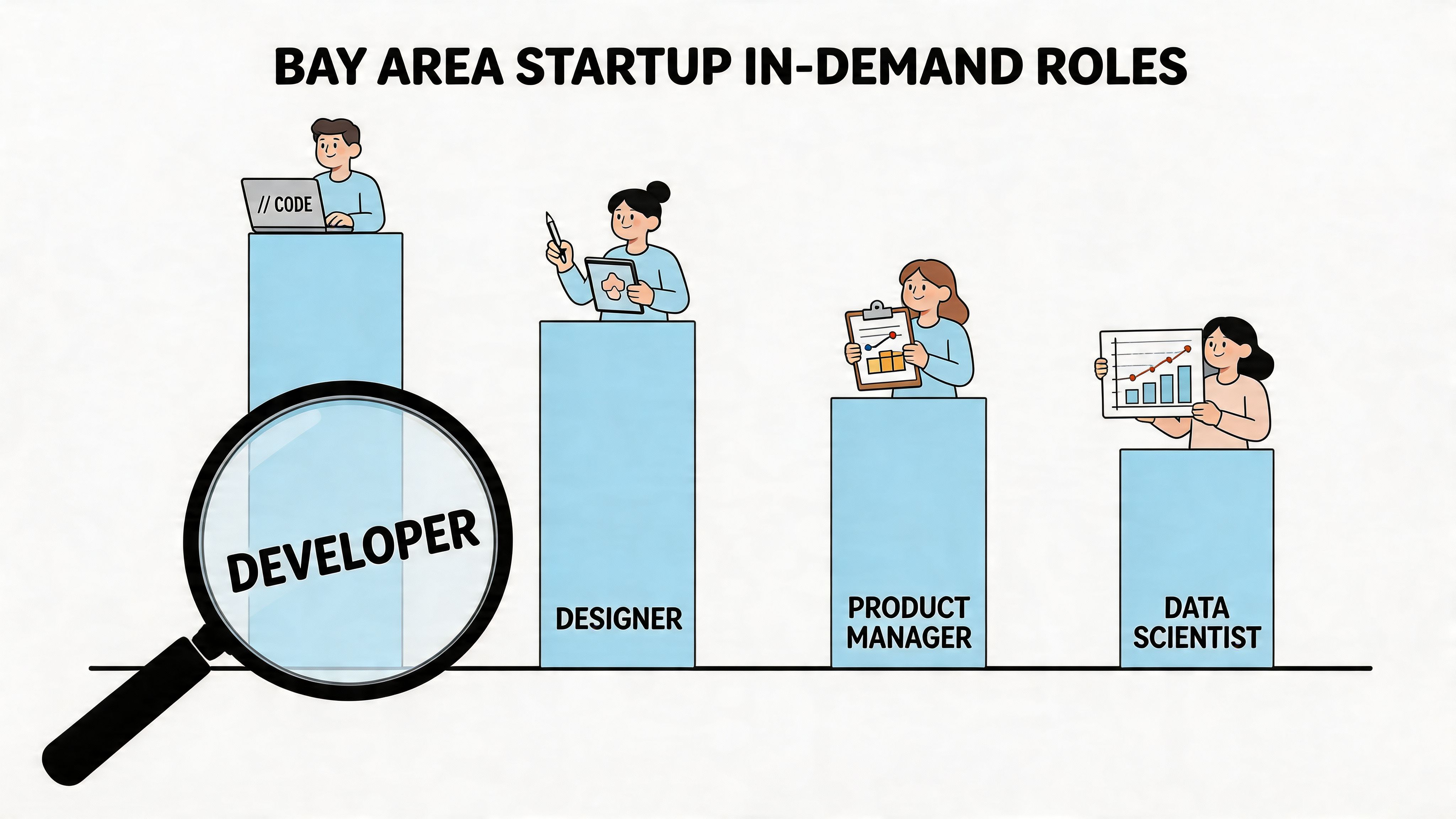
If you recruit in this market, the same categories appear repeatedly.
For candidates, this means “software engineer” is often too vague. You’ll get more traction if you position yourself around concrete startup pain points: model deployment, data quality, infra reliability, onboarding flows, developer tools, or enterprise workflow complexity.
A Bay Area startup usually isn’t looking for someone who can only operate inside a mature process. It wants evidence that you can create the process. That changes how you should present your background.
A stronger story usually includes:
If you’re searching actively, this list of startups hiring software engineers is the kind of practical market scan worth using because it helps you calibrate demand by company type, not just job title.
Bay Area startups don’t pay a premium for vague potential. They pay for speed to usefulness.
Founders often assume role demand gives them an advantage. In reality, role scarcity often gives candidates an advantage, especially for technical positions tied directly to product progress.
Three hiring mistakes show up repeatedly:
A better approach is to define the first year in practical terms. What breaks if this role stays open? What systems does this person own? Which tools do they need to be effective in your stack? Clarity beats branding.
Compensation in the startup bay area gets misunderstood in two directions. Candidates sometimes anchor too hard on cash and miss genuine upside. Founders sometimes lean too hard on upside and ignore present-day risk. Neither approach works.
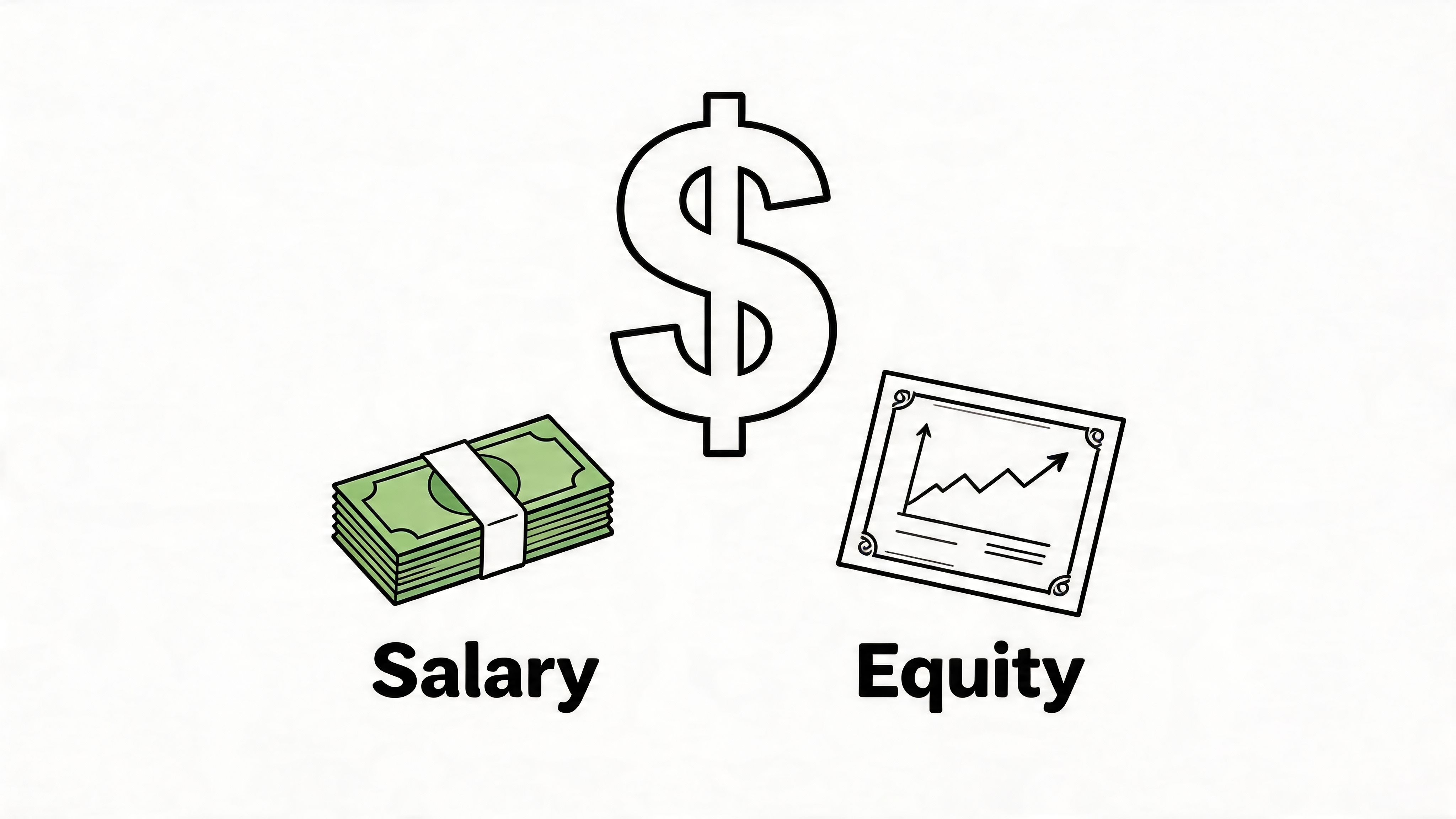
A startup offer is usually some version of cash now versus possibility later. Salary covers your life. Equity prices in the chance that the company becomes much more valuable. Both matter, but they solve different problems.
Think of salary as certainty. Think of equity as exposure to a specific company’s future. That doesn’t make equity fake. It does mean you should evaluate it with discipline.
For candidates, the right question isn’t “Is the equity large?” It’s “Is this company credible enough that I want concentrated exposure to it?” For founders, the right question isn’t “Will candidates take less for equity?” It’s “Have we explained the equity well enough that a smart person can evaluate it seriously?”
A good startup compensation review usually includes these checks:
If you need a plain-English primer, this guide to startup equity basics for job seekers is a useful starting point before you compare offers.
Candidates should ask about the option grant, vesting schedule, exercise mechanics, and refresh expectations. You don’t need to be combative. You do need enough information to understand what you’re signing.
Here’s a practical comparison:
| Compensation element | What it gives you | Main benefit | Main risk |
|---|---|---|---|
| Salary | Immediate cash | Predictability | Lower upside if company grows fast |
| Equity | Ownership stake, typically over time | Potential long-term value | May never convert into meaningful value |
| Bonus or variable comp | Performance-linked cash | Can reward execution | Often less central at early-stage startups |
Hiring note: If candidates leave your offer meeting confused about equity, that’s on the company, not the candidate.
The companies that explain compensation well tend to earn more trust, even when they can’t pay the most. The teams that lose people usually aren’t losing on money alone. They’re losing on confidence.
For candidates, compare offers in layers. First ask if the role is worth doing. Then ask if the company is worth betting on. Only then compare package details.
For hiring teams, don’t frame equity like a lottery ticket and expect discerning candidates to nod along. Explain the business, the stage, the constraints, and the logic behind the package. Adults can handle trade-offs when you respect them enough to be direct.
Interviewing in the startup bay area often feels compressed, but not always coherent. That’s the tension. Companies know they need to move fast. Many still run processes that create avoidable drag.
The backdrop matters. After a dip, the Bay Area’s share of U.S. venture capital rose to 41% by Q1 2023, and that density supports a system where companies can hire faster, as described in this Bay Area venture and innovation overview. Faster is possible. It just isn’t automatic.
A common process starts with a recruiter or founder screen, moves to a hiring manager conversation, then splits into some mix of technical evaluation, cross-functional interviews, and final decision calls. The exact order varies, but the friction points are remarkably consistent.
Candidates usually get tripped up in one of three places:
The best candidates prepare for interviews as if they’re already on the team. They study the product. They inspect the likely business model. They think about trade-offs the startup is probably facing right now.
Founders often obsess over interview rigor and neglect process design. That’s backwards. A rigorous process can still be clean, respectful, and fast.
A better loop usually includes:
For interviewers who need sharper prompts, this roundup of good interview questions is useful because it pushes beyond canned behavioral questions and into decision-making, judgment, and problem ownership.
If your interview process needs candidates to prove the same thing three different ways, your process is doing extra work without getting extra signal.
A candidate interviews with an early-stage infrastructure startup. The first call goes well, but the take-home assignment is broad and unpaid. After that, the company adds a systems interview, a product discussion, and a founder chat. Then silence.
From the candidate’s perspective, the signal is simple. The company might be smart, but it doesn’t look aligned internally. That weakens enthusiasm, even if the role is strong.
From the company’s perspective, the candidate “dropped off.” In practice, the process likely created the drop-off. Strong Bay Area candidates often interpret process quality as a proxy for operating quality. They’re usually right.
Candidates should remember that startups aren’t trying to create pain for fun. They’re trying to reduce expensive hiring mistakes. The strongest move is to make evaluation easier. Be concrete. Show your work. Ask how success will be measured.
Hiring teams should remember the inverse. Candidates aren’t withholding commitment when they ask hard questions. They’re evaluating whether your company is worth the risk. In this market, speed matters. Respect matters more.
Bay Area startup hiring runs on warm context more than broad visibility. Job seekers feel that when applications disappear into ATS queues. Hiring managers feel it when outbound response rates stay low even with a full sourcing team. Both sides get better results when they understand how the other side filters signal from noise.

Generic networking advice fails here because the market is dense and time-constrained. A founder, recruiter, or senior engineer may meet dozens of plausible people in a month. Relevance wins. Specificity gets remembered.
Broad outreach produces low-quality conversations unless you already have a strong brand in a narrow category. A better approach is to show up where your work is legible and where the right people can assess it quickly.
Use a mix like this:
If your profile and outbound basics need work, these LinkedIn networking strategies are worth reviewing. LinkedIn still matters in the Bay Area. It just works best as one channel in a focused search, not as the entire search.
One practical note from recruiting. Candidates often underestimate how much a sharp, specific follow-up changes the outcome. “Great meeting you” does little. “Your team seems to be hiring for someone who can reduce onboarding friction in a complex product. I handled a similar problem at X by doing Y” gives the other side something usable.
Sourcing usually breaks for one of two reasons. The company is reaching out to the wrong people, or it is reaching out with a weak story. More volume does not solve either problem.
Strong teams tend to do a few things consistently:
| Tactic | Why it works | Where teams go wrong |
|---|---|---|
| Referrals | Warm context improves trust and response rates | Relying too heavily on the same internal circles |
| Community sourcing | Reaches practitioners in places where real work is visible | Appearing only when there is an open role |
| Founder-led outreach | Signals commitment and gives candidates direct access to decision-makers | Sending generic notes with no company or role context |
| Curated marketplaces | Filters for mutual fit earlier in the process | Treating them like a resume database instead of a matching channel |
Underdog.io fits that last category. Candidates create one profile and can be introduced to vetted startups when there is mutual fit. That model is useful for candidates who want fewer, better conversations and for hiring teams that want stronger initial filtering than a public job board usually provides.
The strongest Bay Area networking usually looks like informed overlap. A candidate has already engaged with the product, space, or technical problem. A hiring team has already thought carefully about why this person, not just why this title.
Candidates who understand how startup teams source talent can make themselves easier to find and easier to evaluate. Hiring managers who understand how strong candidates compare risk can write better outreach, scope roles more clearly, and avoid wasting goodwill.
That is the useful shift. Networking is not separate from sourcing. In the Bay Area, they are often the same system viewed from opposite sides.
Curated marketplaces matter because they reduce wasted motion for both groups. Candidates avoid spraying resumes. Hiring teams avoid broad top-of-funnel noise. In a market where attention is scarce, that trade-off is often worth more than another hundred cold messages.
A lot of people still ask the wrong question about the startup bay area. They ask whether they have to move there. The better question is whether proximity will materially improve the type of work and opportunities they want.
For some people, the answer is yes. For others, hybrid or remote access is enough. What matters is the role, the team’s operating style, and whether the company’s important conversations happen in a room you need to be in.
Relocation tends to help most when your work depends on fast iteration with founders, high-context product decisions, or deep integration with a local network. Early-stage product roles often benefit from this. Some engineering roles do too, especially when architecture, customer feedback, and roadmap decisions are still tightly intertwined.
It also helps if you’re trying to reset your trajectory. People changing functions, moving from larger companies into startups, or rebuilding momentum after a stalled search often benefit from denser in-person access.
That said, moving blindly is a mistake. The Bay Area offers more opportunity, but it also punishes fuzzy thinking faster. If you relocate without a clear target set of companies, role families, and compensation thresholds, you can burn a lot of time and money chasing the idea of proximity instead of actual fit.
Remote work widened access. It didn’t erase trade-offs. Some startups hire remote talent comfortably. Others say they’re flexible but still reward people who are physically present for key decisions.
Candidates should ask direct questions:
Hiring teams should stop hiding the ball. If the company works best when people are together often, say so. You’ll lose some applicants and save everyone time.
The Bay Area isn’t one giant AI-and-SaaS blob. It contains sub-ecosystems with different values and hiring patterns. One of the more interesting shifts is the rise of social impact startups, with companies like Bayes Impact and Planet reflecting a broader mission-driven current, supported by state efforts such as the expanded Accelerate California hubs for underserved communities, as described by Built In SF’s look at social impact startups.
That matters because niche alignment can outperform brand chasing. A candidate who cares about climate, employability, healthcare access, or public-interest software may do better targeting that layer of the ecosystem directly. A founder hiring in one of those categories should build a narrative around the specific problem, not just the generic startup upside.
Remote or local, broad or niche, the strongest move is the same. Pick the environment that makes your strengths more legible.
The Bay Area still captures an outsized share of venture dollars, technical talent, and experienced operators. That concentration changes the odds. You can meet a founder, recruiter, potential manager, and future investor in the same week, which is still hard to replicate elsewhere.
It is still one of the strongest places to build a startup career if you want speed, repetition, and exposure to ambitious teams. It is a weaker fit if you want predictability, lower cost of living, or a job market with less whiplash. Candidates should choose based on the kind of risk they want in their career. Hiring managers should remember that candidates are making that same calculation on the other side of the table.
San Francisco startups often skew toward product, go-to-market, fintech, AI applications, and faster commercial iteration. Silicon Valley startups more often cluster around deep tech, infrastructure, enterprise systems, hardware, and research-adjacent work.
Those are patterns, not rules.
For candidates, the useful question is not which region is better. It is where your operating style will read as valuable faster. For hiring teams, the same logic applies. A company in Palo Alto hiring for urgency and customer instinct may need to recruit differently than a systems-heavy startup in Mountain View looking for technical depth and patience.
Skip the surface-level brand signals and look at who gets introductions, funding, and repeat support. Underrepresented founders still face a real capital gap, even with more focused funds, operator communities, and state programs in the region.
That has two implications. Job seekers can find strong companies outside the loudest founder circles, especially through trusted communities and targeted referrals. Hiring managers who rely on the same investor and employee networks will keep seeing the same candidate profiles. If the goal is a broader pipeline, the sourcing strategy has to change too.
A focused search can move in weeks. A scattered one can drag for months.
The difference usually comes down to calibration. Candidates waste time when they apply across every stage, every title, and every company story. Hiring teams do the same when they open a search before aligning on scope, compensation, and must-have experience. The Bay Area moves fast once both sides know what they are looking for.
Clarity.
A sharp job scorecard, a credible compensation range, and an interview loop that tests the actual work will beat a flashy brand pitch. Candidates can tolerate a demanding process if the role makes sense and every interviewer is measuring the same thing. They lose trust fast when the founding team, recruiter, and hiring manager describe three different jobs.
Usually, yes. They are useful when both sides want better filtering than a public applicant funnel or a cold outbound approach can provide.
For candidates, that can mean fewer irrelevant processes and a better read on stage, team, and role quality. For hiring managers, it can mean less resume volume and more signal. The best results come when curated marketplaces are used alongside direct outreach, referrals, and a clear employer narrative, not as a substitute for them.
If you’re exploring startup roles or hiring for one, Underdog.io is one practical option for getting in front of vetted startups and high-growth tech companies without running a noisy, high-volume process. Candidates can create a single profile and be considered by teams that are aligned on stage, function, and startup fit.