You're three weeks in. Your tracker is full, your inbox is quiet, and the two replies you did get were automated rejections for roles you could do in your sleep. You start tailoring keywords harder, grinding more algorithm problems at night, and wondering if the market has closed.
It hasn't closed. Your signals aren't landing. In 2026, a software engineer job search rewards engineers who can prove production judgment quickly, target roles deliberately, and prepare for structured evaluation. Volume alone won't do that work for you.
You send a solid application on Monday. By Friday, you've heard nothing, so you send twenty more with the same resume and a slightly rewritten summary. That's the old playbook, and it fails because every other qualified engineer is running it too.
The structural picture is stronger than your inbox suggests. The U.S. Bureau of Labor Statistics projects software developer employment to grow by 15.8% between 2024 and 2034, adding approximately 267,700 jobs and reaching roughly 1.96 million. Demand is durable. Access to that demand is uneven, because hiring teams filter for production experience, specialization, and evidence you can ship with product partners, not just code in isolation.
Hiring managers don't read your application looking for potential in the abstract. They scan for a match to a specific problem their team already has, then move on if they can't find it fast. A generic resume forces them to guess, and busy managers don't guess in your favor.
Treat your next applications differently:
Engineers coming from adjacent fields run into the same filter, which is why broader programming job hunting strategies from Blockchain Jobs are worth reviewing for transferable tactics on positioning nontraditional experience. The principle carries over. Specific evidence travels across stacks. Generic enthusiasm doesn't.
Stop counting applications sent. Start counting conversations where a hiring manager can repeat back what you'd own in your first quarter.
That's your real funnel. Everything after this point is about making that conversation easier to earn.
Don't open a job board until you've made four decisions. Skipping them is how capable engineers burn out in week six, applying to roles they'd resent by month three.
First, define the target role and level. If you've owned services end to end but never led architecture across teams, target senior roles where ownership is the bar, not staff roles where cross-team influence is. Second, pick your must-haves before emotion gets involved. Third, set a weekly time budget you can sustain. Fourth, choose a stop rule, a date or application count where you pause and debug the funnel instead of pushing harder.
| Dimension | Must-have | Nice-to-have | Deal-breaker |
|---|---|---|---|
| Role and level | Senior backend | Tech lead scope | Pure maintenance |
| Company stage | Seed to Series B | Profitable growth stage | No clear runway |
| Work model | Hybrid in NYC | Remote with quarterly onsites | Five days in office |
| Stack | Go or Python services | Event-driven systems | Legacy monolith only |
| Compensation | Meets your floor | Signing bonus | Below floor with vague equity |
Take a senior backend engineer who wants a hybrid seed-stage role in New York. Her snapshot rules out remote-only platform roles at large companies, even good ones, and forces her search toward small teams hiring for ownership. That constraint is a feature. She now writes one resume variant, prepares stories about building from zero, and ignores postings that would waste interview cycles.
Clean up what a hiring manager finds before your first call, too. It's worth taking time to remove red flags from social media using Digital Footprint Check's guidance, lock down old posts, and make sure your LinkedIn headline matches the role in your snapshot. Inconsistent positioning creates doubt you don't need.
Sequence matters more than speed here. Define the target, build evidence for it, choose channels that reach it, then run short application cycles and review results weekly. Reversing that order is how searches drift.
Your resume isn't a record of employment. It's a sales document a manager skims while deciding whether you're worth a call, and most engineering resumes fail that skim because they list responsibilities instead of results.
Cut the opening skills block that reads like a grocery list. Replace it with a two-line summary that states your level, your domain, and the kind of problems you solve. Then give each role a small number of bullets that start with what shipped and what changed because of it.
Before: "Responsible for backend services in Python. Worked on API performance and database queries. Participated in on-call rotation."
After: "Led redesign of checkout API, cutting slow queries and reducing timeout errors during peak traffic. Owned migration of billing jobs to a queued worker system, which let the team retry failures safely instead of paging at night. Mentored two junior engineers through their first production launches."
The second version contains no invented metrics, and it still wins. It shows scope, judgment, and ownership. If you have real numbers from dashboards or reviews, use them. If you don't, use concrete proxies, such as traffic patterns you handled, teams you unblocked, or manual processes you eliminated. Early-career engineers can frame serious projects the same way. Describe users, constraints, and what broke, not just the framework you learned.
For structure and phrasing you can adapt directly, review software engineer resume examples with outcome-led bullets and steal the format, not the wording. Formatting discipline matters outside tech, too. RentReboot apartment application advice makes the same point for renters that applies to you. A clean, credible one-page presentation beats a long, defensive one.
Run this final pass before sending anything:
A resume claims judgment. Evidence demonstrates it. Build a small package of artifacts a manager can review in minutes, and you'll give referrals, recruiters, and interviewers something stronger to forward than a PDF.
The frustration behind this is widespread. HackerRank's 2025 survey of 13,732 developers found that 74% of developers still struggle to secure jobs, while 66% prefer practical coding challenges and 96% believe problem-solving should matter more than memorization. You can't fix every employer's process. You can hand good employers better material to evaluate.
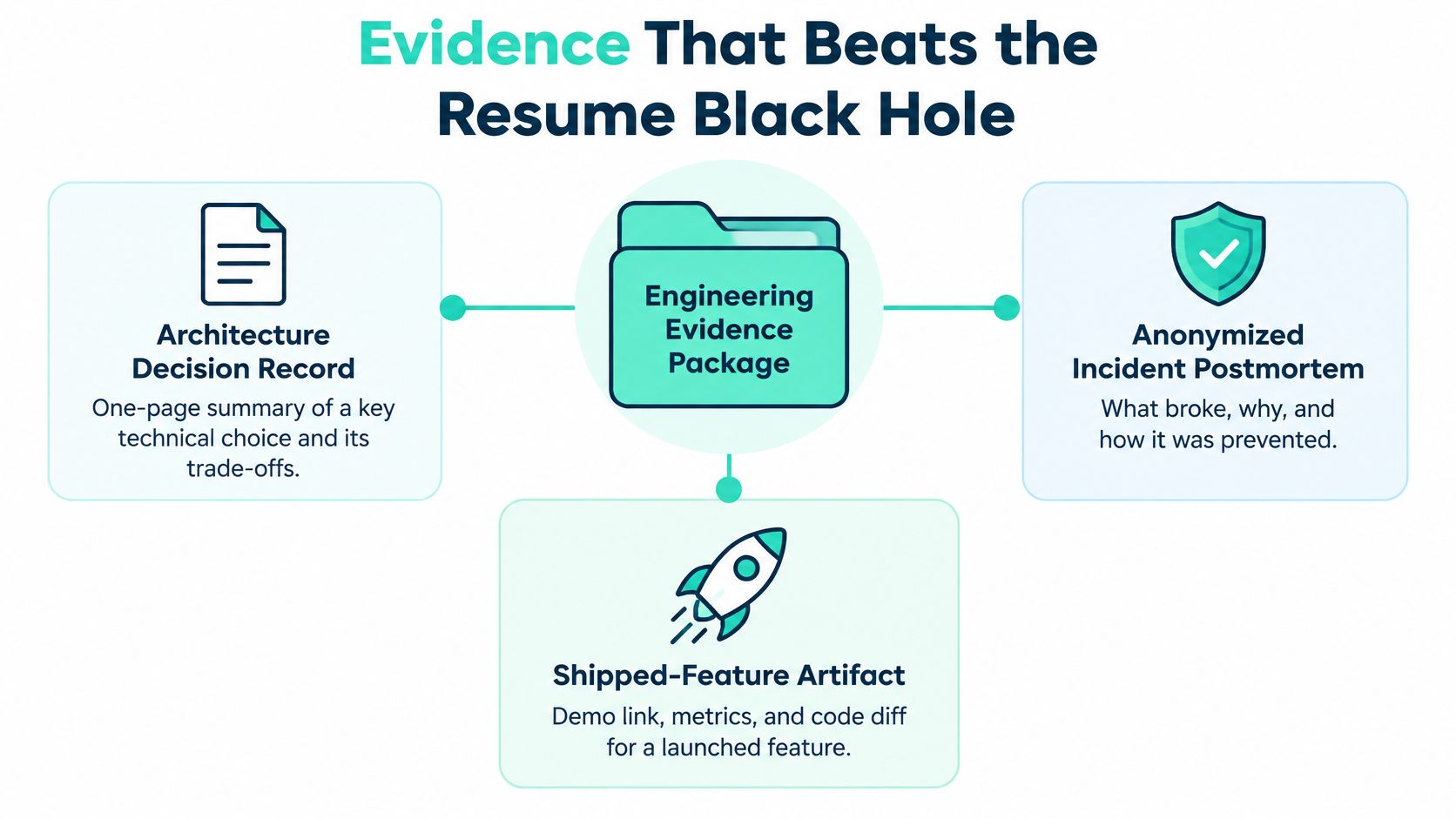
Start with a one-page architecture decision record. State the problem, the options you considered, the choice you made, and what you'd revisit now. Replace company names, internal systems, and customer details with generic descriptions. The value is your reasoning, not their roadmap.
Add an anonymized incident postmortem. Explain what failed, how you detected it, how you contained it, and what safeguard followed. Redact timestamps, revenue figures, and anything that identifies users. Managers trust engineers who can discuss failure without blaming tools or teammates.
Finish with a shipped-feature walkthrough. Include the user problem, a screenshot or demo if it's public, the hardest trade-off, and what happened after launch. Host these on a personal site or a clean Notion page, and keep a private-link version for anything you're not comfortable publishing openly.
Redaction rule: If removing a detail weakens the story, keep the decision logic and drop the proprietary fact. Judgment is yours to share. Employer data isn't.
Use the package actively. A backend engineer I advise sent a hiring manager a short note about a queues problem mentioned in a company blog post, linked his decision record on a similar migration, and skipped the standard application queue entirely. He got a screen because the manager could already picture him doing the job. That's the point. You're not adding homework. You're removing uncertainty.
Channel choice decides whether your evidence reaches a human or dies in a queue. Engineers routinely pour hours into the noisiest channel and starve the ones where someone advocates for them. Use all four, but fund them by return.
Referrals get your first hours. A former teammate who can describe how you debug, communicate, and ship gives a hiring team confidence no keyword match can. Ask for specific introductions, send a forwardable paragraph, and make it effortless to say yes.
Cold outbound works when it's targeted. Write to a hiring manager about a public technical problem their team has discussed, attach one relevant evidence artifact, and keep it short. Broad job boards still surface who's hiring. Treat them as market research first and an application channel second.
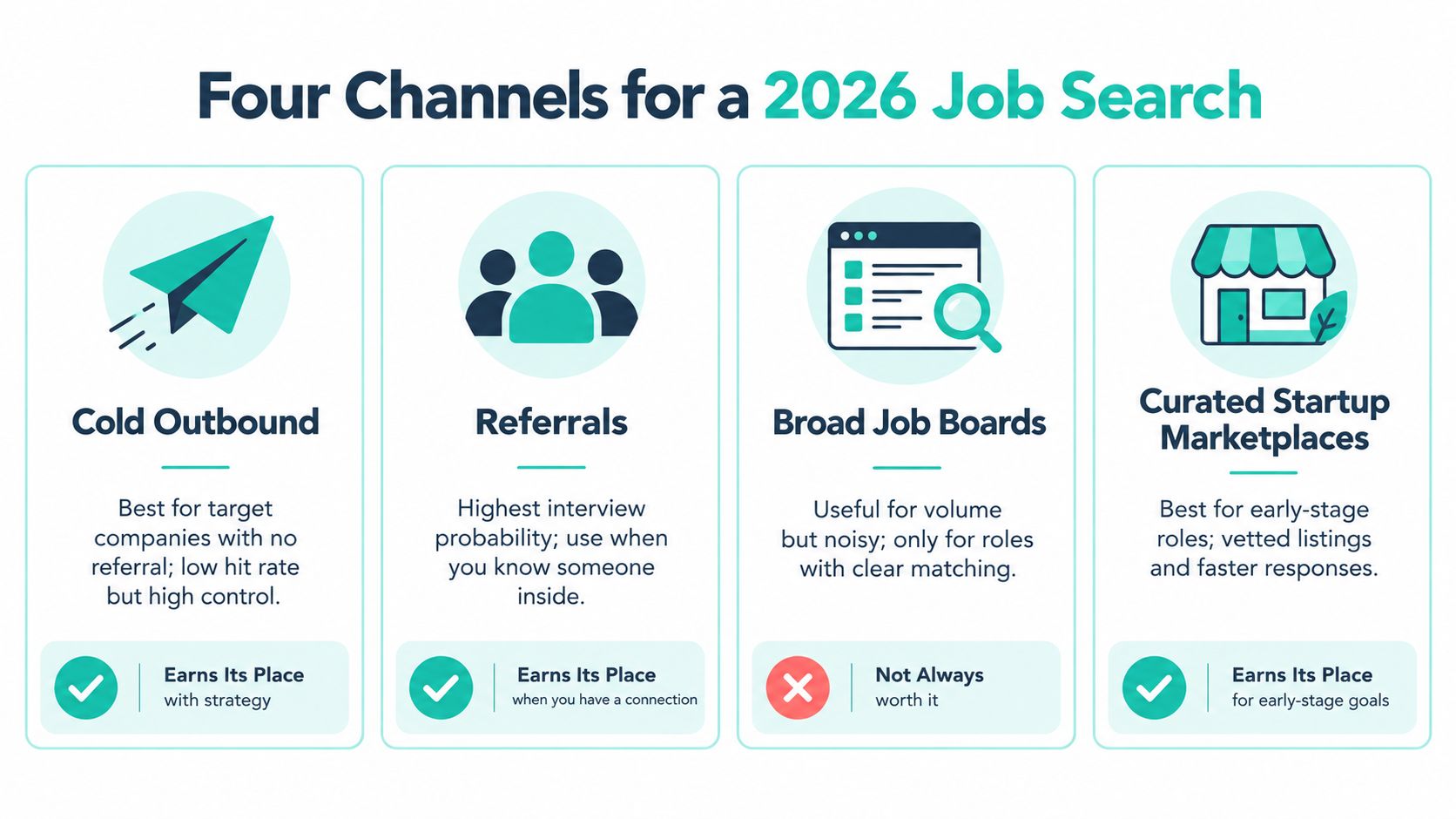
Curated startup marketplaces solve a different problem. Underdog.io connects tech job seekers with startups and high-growth firms in New York City, San Francisco, and throughout the US through a single 60-second application, exposing candidates to hundreds of vetted companies that then reach out. One profile does the work of repeated applications, which suits engineers who are employed and searching discreetly. For a breakdown of how these platforms screen and match candidates, see how curated hiring marketplaces match candidates with startups.
| Channel | Effort per opportunity | Signal quality | Best for |
|---|---|---|---|
| Referrals | Medium | High | Teams where you know an insider |
| Cold outbound | High | Medium | Specific managers with a public problem |
| Broad job boards | Low | Low | Market scanning and clear-fit postings |
| Curated marketplaces | Low after setup | High | Startup roles and discreet searches |
Position your marketplace profile like your resume's top third. State the scope you've owned, the stage you work best at, and the outcomes you're proudest of. Skip the full technology inventory. Startup managers hire for ambiguity tolerance and execution speed, so show both with examples, then let the channel work while you pursue referrals.
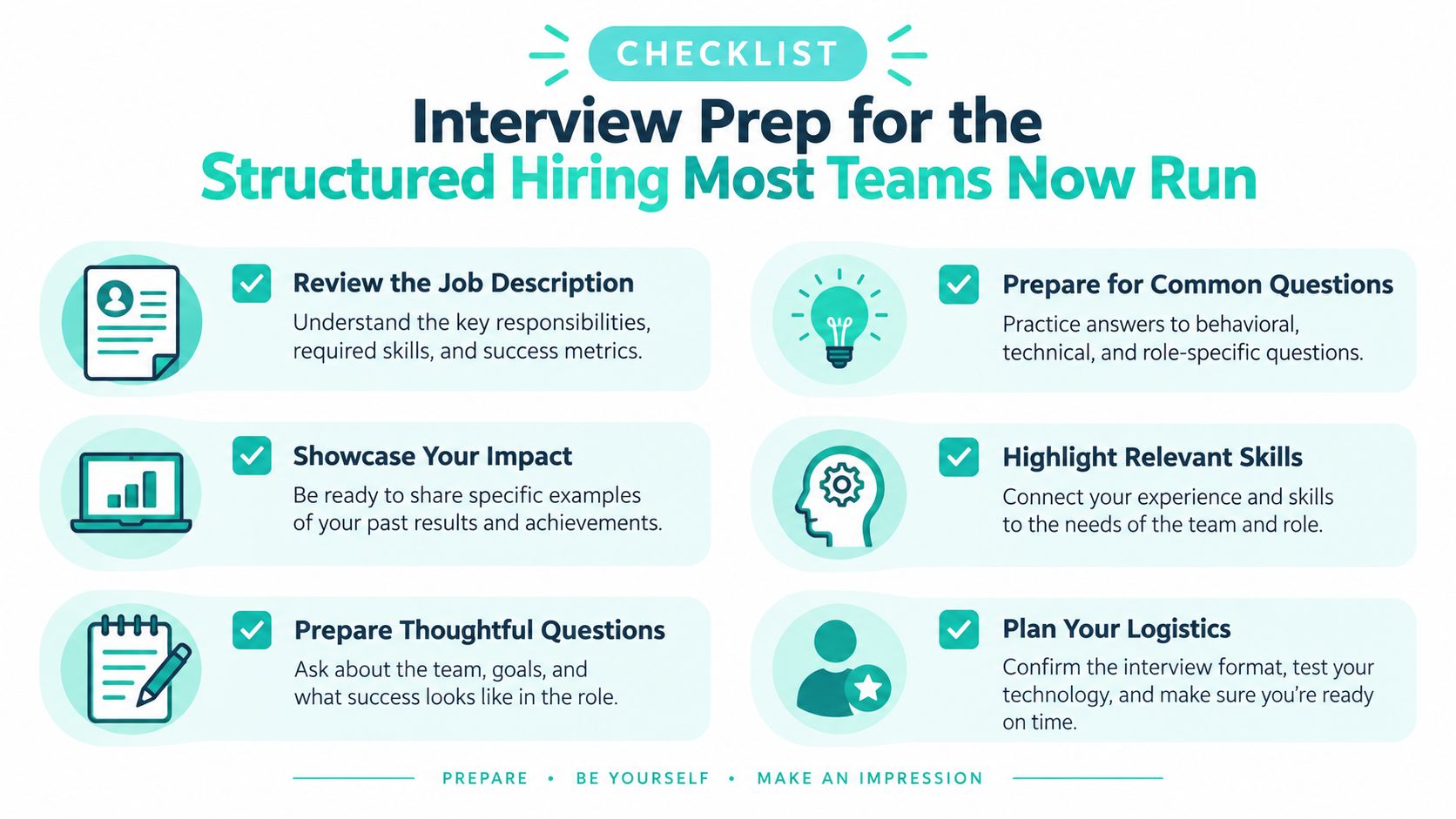
You don't need to guess what interviews will look like anymore. In 2024, 87% of engineering leaders reported using a structured interview process, up from 78% in 2020, with U.S. leaders averaging about 10 days from interview invitation to interview. Standardized questions and scoring mean preparation maps directly to performance. That ten-day average is your real budget, so start before invitations arrive.
Ask your recruiter early how each round is structured, what competencies it covers, and whether AI tools are allowed. Confirming format is expected. It removes avoidable surprises so the team scores your actual ability instead of your guesswork.
Structured scoring rewards visible reasoning. Every round is a chance to convert judgment you already have into evidence a rubric can capture, and two weeks is enough to build that habit if you practice the right way.
Spend the first week on foundations. Practice debugging unfamiliar code out loud, because interviewers score how you isolate faults, not just whether you find them. Rehearse two system design problems by drawing, stating assumptions, and defending trade-offs to a peer who pushes back. Watching polished walkthroughs alone won't build that muscle.
Spend the second week on evidence and delivery. Build a story bank covering ownership, conflict, failure, and collaboration, and practice each story until you can tell it conversationally without a script. Align every story with an artifact from your evidence package where possible. For a fuller drill plan, work through structured software engineer interview preparation by round and adapt the exercises to your target level.
On interview morning, open your story bank and reread the job description once. Then close everything and be present. Test your camera, mic, and screen share the night before, because a broken setup can end a strong candidacy before the first question. Every interview slot is too valuable to spend on a problem you could have caught in advance.
"Remote preferred" isn't a strategy. It's a preference that can shrink your options or saddle you with a role that doesn't fit your life. Decide with a framework instead.
Context helps. Stack Overflow's 2025 Developer Survey of more than 49,000 respondents found that about 82% of surveyed developers worked fully remote, in highly flexible arrangements, or in hybrid setups, while 57% of employed respondents worked for companies with fewer than 500 employees. Flexible work and smaller employers are a large part of the market. That doesn't mean every posting labeled remote is remote for you.
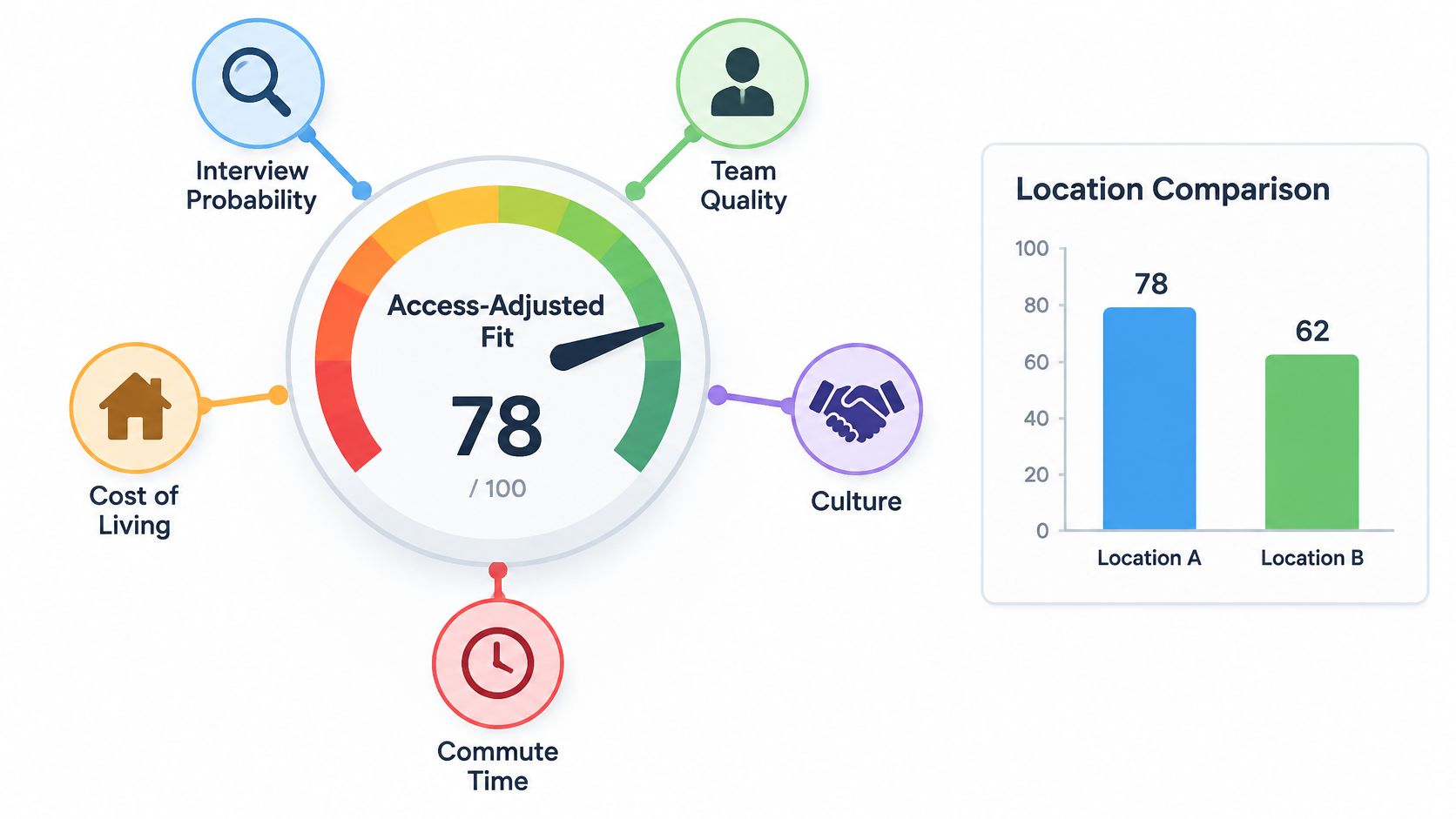
Rate every serious opportunity on five dimensions before you negotiate anything:
Early-career engineers should weight manager quality and learning velocity heavily, even if that means hybrid work near a strong team. Mentorship compounds, and proximity often accelerates it. Mid-career engineers can trade some location flexibility for scope, provided compensation after costs still works. Senior engineers should protect autonomy and decision rights. A remote title with constant synchronous oversight is worse than a hybrid role with real ownership.
Ask directly, early, and in writing where possible. Which states are you eligible to work from? How often is travel to an office expected, and who pays? What are the core collaboration hours across time zones? Can the company change your work location after hire, and what happened the last time policy shifted? How are remote engineers included in promotion decisions and high-visibility projects?
A role is only remote if it's remote from your address, under a policy that survives your first reorganization. Verify both before the final round.
Distinguish remote-first companies, where documentation and asynchronous decisions are the default, from office-first companies making individual exceptions. Exceptions get revoked. Defaults endure.
Benchmark compensation before the first number is spoken, using current market data for your level, location model, and company stage. Set a target and a walk-away floor while you're calm, not while a recruiter waits on the phone. When you do put a number forward, anchor it to scope. Try this framing: "Based on the level, the ownership we'd discussed, and current market data for comparable roles, I'm targeting this range. I'm most interested in getting the full package right."
Evaluate the whole package, not base salary alone. For equity, ask whether you're receiving options or restricted stock, what the vesting schedule and cliff look like, how many shares are outstanding, and when the company last completed a valuation. A grant described only as a percentage, with no share count or strike price, isn't information you can value. Say so politely and ask for the missing figures. Signing bonuses, relocation support, review-cycle timing, level placement, and on-call expectations all move real value, so negotiate them as a package rather than fighting over one line.
With a venture-backed offer, press on valuation recency and exercise windows, because options you must buy quickly after leaving can become a liability. With a pre-seed offer, press on runway, vesting length, and what milestones trigger your next compensation review. In both cases, trade concessions rather than stacking demands. If base salary can't move, ask about a signing bonus, an earlier review, or additional equity, and confirm the final terms in writing before you resign anywhere.
Rank your offers against your access-adjusted fit scores one last time. If the highest-paying offer scores worst on manager quality and attendance logic, believe your own framework. You built it for exactly this moment.
You don't need another hundred applications, you need vetted startup teams seeing credible evidence of your judgment and reaching out first. Underdog.io lets you submit one short application and get matched with high-growth companies in New York, San Francisco, and across the US that fit the target you've defined. Build your evidence package, set your snapshot, and put your profile in front of them this week.