The demand for talented software engineers has never been higher, yet finding the right startup role often feels like shouting into the void. Generic job boards are flooded with noise from recruiters and mismatched opportunities, making it nearly impossible to know which listings are genuine and which companies will actually respect your time and skills. Sending out dozens of applications and getting nothing but automated rejections is a frustrating, inefficient process.
This guide cuts through that clutter. We’re providing a detailed, actionable roundup of the most effective platforms where innovative startups are actively hiring software engineers right now. Forget surface-level descriptions; we’ll dive into the practical details of how to leverage each platform, what kind of engineer profile is the best fit, and specific strategies to make your application stand out. Each entry includes screenshots and direct links to get you started immediately.
Whether you’re a senior developer eyeing a high-impact role with equity or a mid-level engineer looking for a fast-paced environment to grow, this list provides the tools to connect with your next opportunity. We will specifically highlight how curated marketplaces are changing the game by putting candidates first, ensuring your profile gets seen by decision-makers at high-growth companies. Understanding how these companies operate internally can also give you an edge. For instance, knowing the types of best HR software for small businesses they use can offer insights into their operational maturity and how they support their teams from day one. This curated list is your direct path to finding a startup role where you can make a real difference.
Underdog.io flips the traditional job search on its head. Instead of having you hunt for opportunities, it brings carefully vetted startups hiring software engineers directly to you. The platform operates on a 'quality over quantity' model, acting as a curated marketplace that connects top talent with high-growth tech companies.
This approach is especially powerful for passive job seekers-engineers who are currently employed but open to compelling new roles. The platform reports that about 85% of its talent pool fits this description, making it an ideal tool for exploring the market without broadcasting your search.
The process is designed to be efficient and confidential. You create one detailed profile, which takes only about a minute. This profile is then reviewed by Underdog.io's human curation team.
The platform focuses heavily on roles in New York City, San Francisco, and remote-first environments, primarily featuring companies from early-stage through Series B.
Actionable Insight: Your Underdog.io profile is your single pitch. Treat the "Summary" section like a concise cover letter. Highlight a specific project where you solved a complex technical problem and quantify the outcome. For example, instead of "Improved API performance," write "Refactored our primary API endpoint, reducing latency by 70% and cutting server costs by 15%."
To stand out in the competitive applicant pool, focus on providing clear, impactful details.
Underdog.io is completely free for candidates. The business model involves charging companies a fee to access the curated talent pool. This alignment ensures the platform is incentivized to find you a role you'll actually love, making it a powerful ally for any software engineer looking for their next high-impact position at a top startup.
Find your next role at: https://underdog.io
Wellfound, formerly known as AngelList Talent, is a titan in the startup hiring space. It functions as a massive, searchable database where you can directly find and apply to roles at tens of thousands of startups hiring software engineers. Unlike curated marketplaces, Wellfound puts you in the driver's seat, offering a comprehensive platform to explore, filter, and connect with companies from seed stage to post-IPO.
This direct-approach model is excellent for engineers who want to actively manage their search and see the full breadth of the market. The platform's sheer volume of listings provides unparalleled access to early-stage companies that may not be visible on larger, more traditional job boards.
The process is straightforward: create a profile, upload your resume, and start searching. Wellfound's strength lies in its powerful filtering and transparency, giving you deep insights into potential employers.
While the platform is a fantastic resource, its open nature means the signal-to-noise ratio can vary. As one of the best job sites for software engineers, its vastness is both a strength and a challenge, requiring you to be more proactive in vetting opportunities. Learn more about how Wellfound compares to other platforms.
Actionable Insight: Use the "Team" section on a Wellfound company page to your advantage. Look for engineers with similar backgrounds or who attended the same university. Mentioning this common ground in your application note (e.g., "I saw that Jane Doe is on the backend team; I really admire her work on the open-source library X") can significantly increase your response rate.
Your Wellfound profile is a living document that gets you noticed. Treat it like your personal landing page.
Wellfound is completely free for candidates to use. Startups can post jobs for free, with optional paid tiers like Recruit Pro and Curated for enhanced sourcing tools. This accessibility makes it an essential tool for any software engineer's job search toolkit.
Find your next role at: https://wellfound.com
Y Combinator's "Work at a Startup" platform is the official job board for its prestigious accelerator alumni. This isn't just another job site; it's a direct gateway to thousands of vetted, high-growth startups hiring software engineers, from newly funded pre-seed companies to established, later-stage ventures. The platform is built on the principle of connecting talent with the world's most promising new companies.
For engineers specifically interested in early-stage risk and reward, this platform is unparalleled. It offers a unique concentration of opportunities at companies that have already passed YC's rigorous selection process, providing a powerful signal of quality and potential. The focus is on transparency, with many listings including clear salary and equity compensation details.
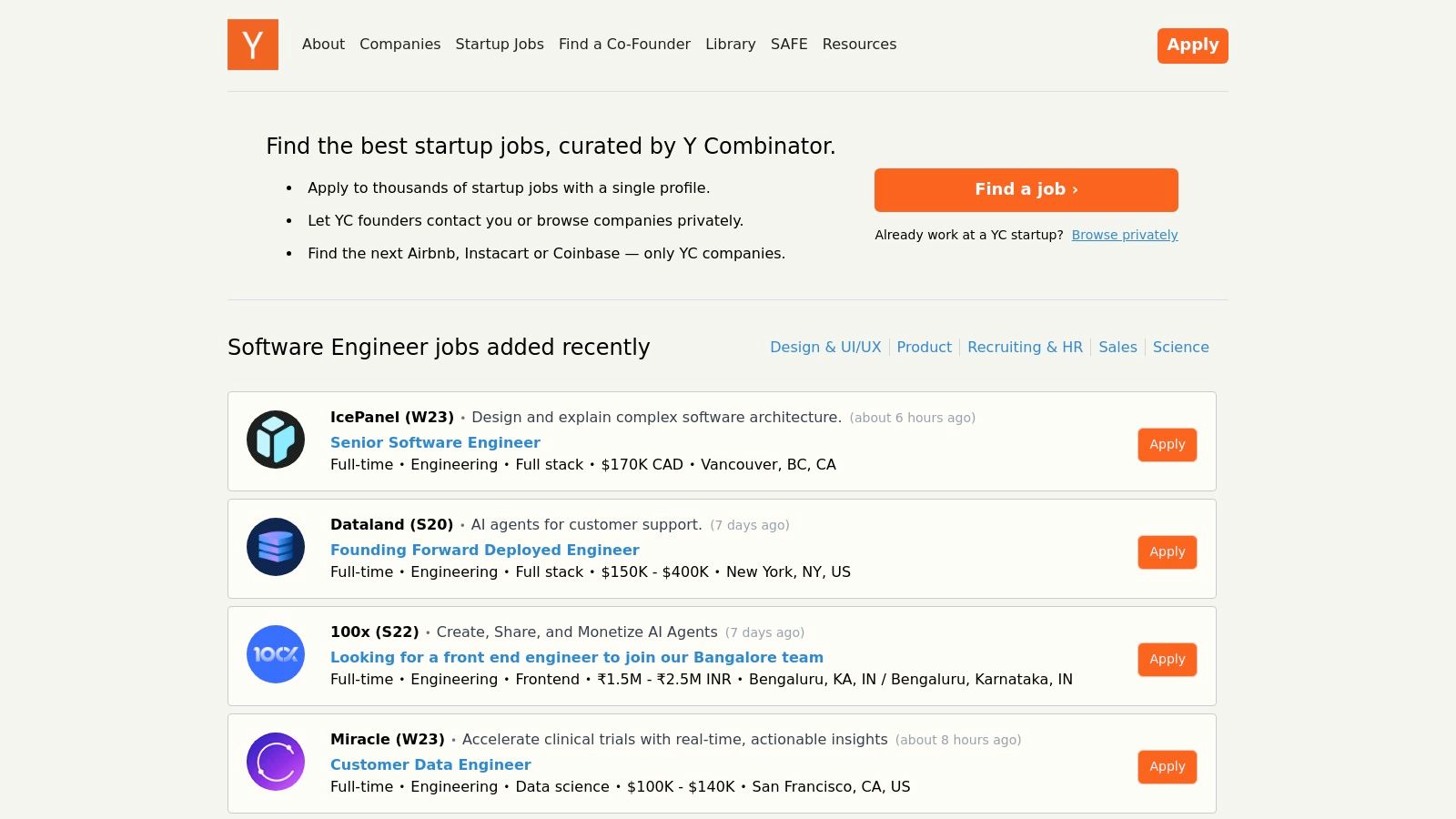
The platform streamlines the application process for the entire YC ecosystem. You create a single, comprehensive profile that acts as your universal application for any YC-backed startup on the site.
The platform is heavily populated with roles in major tech hubs like San Francisco and New York City, but it also features a robust and growing selection of remote positions, reflecting the modern startup landscape.
Actionable Insight: Use the "A little about you" section to tell a story that aligns with the early-stage startup ethos. Don't just list skills; frame your experience around autonomy, problem-solving, and impact. For instance, "I thrive in ambiguous environments where I can own a product from ideation to launch, as I did when I single-handedly built and scaled a real-time analytics dashboard for a seed-stage fintech, processing 1M events per day."
To capture the attention of busy founders, your profile needs to be concise, data-driven, and highlight your entrepreneurial spirit.
The "Work at a Startup" platform is entirely free for candidates. The value proposition for YC is to help its portfolio companies succeed by attracting top-tier talent. This makes it an incredibly efficient and high-signal channel for any software engineer looking to join a vetted startup with massive growth potential.
Find your next role at: https://www.ycombinator.com/jobs
Hired operates as a two-sided talent marketplace designed to accelerate the hiring process for tech roles. Rather than candidates applying to jobs, companies apply to candidates, flipping the traditional dynamic. This model is particularly effective for connecting active, pre-vetted engineers with startups hiring software engineers and established tech firms that need to move quickly.

The platform is known for its emphasis on transparency, especially around salary expectations. Candidates state their desired salary upfront, which helps filter for roles that meet their financial requirements from the very beginning. This transparency reduces time wasted on both sides and leads to more aligned conversations.
The process for candidates is straightforward and puts them in control. After creating a detailed profile, you go through a vetting process. Once approved, your profile becomes visible to hundreds of companies.
Hired caters to a broad range of tech roles beyond engineering and serves major tech hubs globally, including a strong presence in the US, UK, and Canada, as well as robust support for remote positions. While many platforms exist, understanding the nuances between them is key; for more details on alternatives, you can explore this comparison of Hired to other platforms.
Actionable Insight: Use the salary requirement feature strategically. Research market rates for your role, experience level, and location using tools like Levels.fyi. Set your desired salary slightly above the market average to anchor negotiations high, but keep it realistic to attract a wide range of high-quality interview requests.
Your Hired profile is a living resume that companies use to evaluate you. Make it compelling.
The Hired platform is free for candidates. Employers pay a success fee upon hiring a candidate or a subscription fee to access the talent marketplace. This model ensures Hired is motivated to help you find a great-fitting role, making it a valuable tool in the modern software engineer's job search toolkit.
Find your next role at: https://hired.com
Built In is more than just a job board; it's a community-driven platform and employer-branding hub focused on major US tech ecosystems. Instead of just listing jobs, it provides rich content, company profiles, and salary data, making it a go-to resource for engineers who want to understand the tech scene in cities like New York City, San Francisco, Seattle, Austin, and for remote-first companies.
For software engineers, this means you can find roles at startups hiring software engineers while also getting a feel for the company's culture, tech stack, and employee benefits. The platform excels at showcasing startups that are actively investing in building their employer brand, which is often a strong signal of a healthy and growing company.
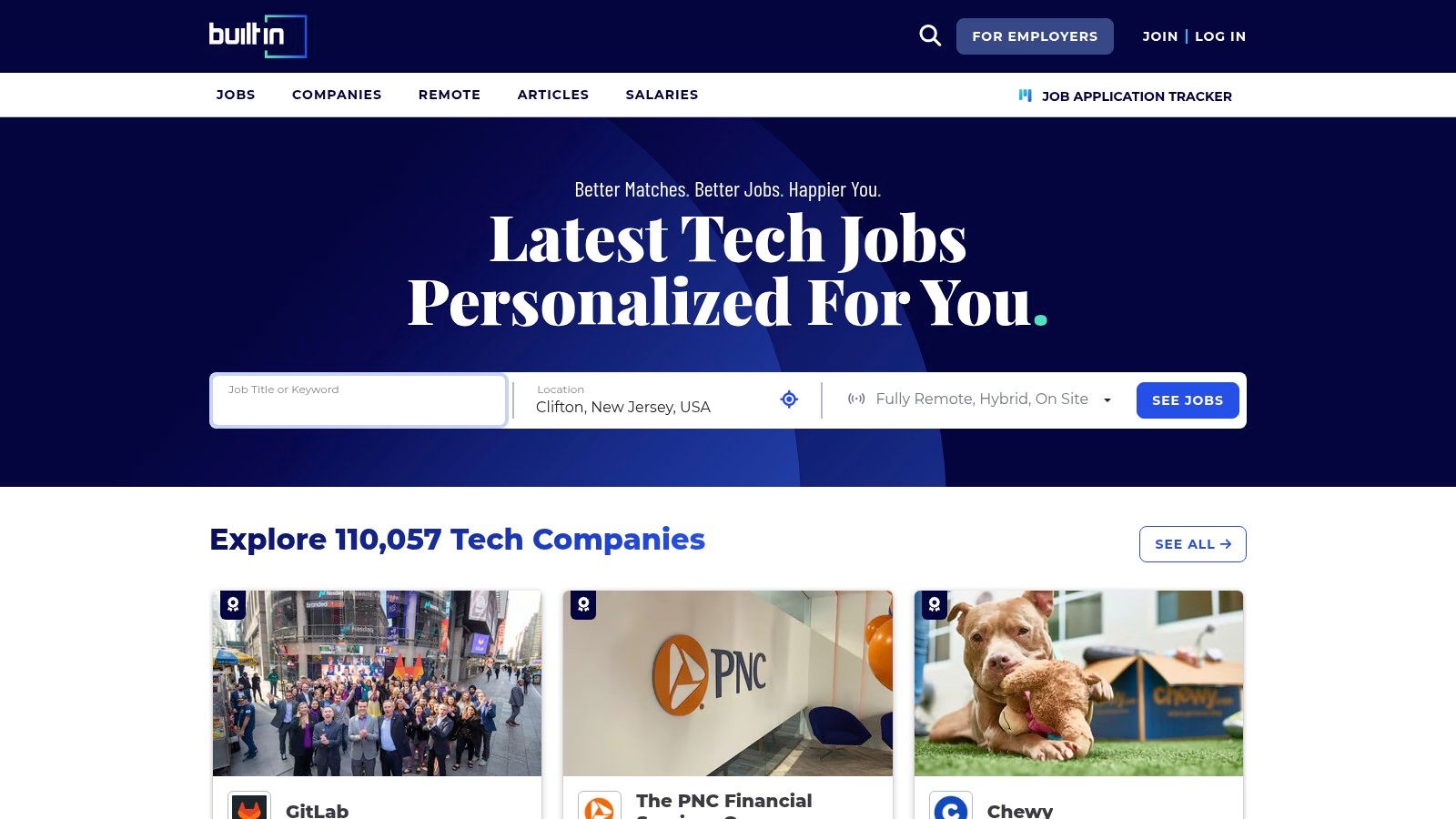
The platform allows you to search and filter jobs with high specificity, but its real power lies in the depth of information available on company profiles.
While some jobs are ingested for free, the most prominent listings are from companies with paid subscriptions, which means they are actively and seriously hiring.
Actionable Insight: Use Built In for pre-application research. Before an interview, study a startup's profile. Mention something specific you learned, like their recent feature in a "Best Places to Work" list or a detail about their tech stack from their engineering blog. This demonstrates genuine interest beyond just the job description.
To go from browser to applicant, use the platform’s features to their fullest.
Built In is completely free for job seekers. The platform makes money by selling subscription packages to employers who want to enhance their visibility and attract top talent. This model ensures that the companies you see are highly motivated to hire, making your job search more efficient and targeted.
Find your next role at: https://builtin.com
While LinkedIn is a professional networking giant, its Jobs platform is an indispensable tool for engineers targeting specific roles. It offers unmatched scale, allowing you to search for startups hiring software engineers with granular precision across any location, stage, or tech stack imaginable. It's the digital town square where almost every company, from stealth-mode ventures to late-stage unicorns, lists their opportunities.
This vastness makes it a powerful platform for both active and passive job seekers. You can set up detailed job alerts to have relevant roles delivered to your inbox, or you can leverage your network to find insider connections at companies you’re targeting. The platform’s sheer volume means you’ll find opportunities here that aren’t posted anywhere else.
The core strength of LinkedIn Jobs is its powerful search and filtering capabilities, combined with its integration into your professional profile. It’s a self-service platform where you are in complete control of your search.
The platform is a go-to for startups of all sizes, from seed-stage teams building their first engineering hires to established companies scaling rapidly.
Actionable Insight: Don't just apply; connect. Before submitting your application, find the hiring manager or a senior engineer on the team you'd be joining. Send them a personalized connection request. Mention the specific role you're applying for and a brief, compelling reason why you're a great fit. For example: "Hi [Name], I'm applying for the Senior Backend Engineer role at [Startup]. Your team's work on [specific technology or project] really caught my eye, as I recently scaled a similar system at my last company. I'd love to connect."
To turn the platform's vastness into an advantage, you need a strategic approach.
LinkedIn Jobs is completely free for job seekers. Companies pay to post and promote their listings, often on a pay-per-click basis. This means the listings you see are from companies actively investing in finding the right talent, making it an essential resource for any software engineer's job search.
Find your next role at: https://www.linkedin.com/jobs
Navigating the landscape of startups hiring software engineers can feel like searching for a signal in the noise. Throughout this guide, we've explored a curated set of platforms, each offering a distinct pathway to your next great role. We've seen how massive networks like LinkedIn Jobs provide unparalleled reach, while niche communities like Y Combinator’s "Work at a Startup" offer exclusive access to a high-potential ecosystem. The key takeaway is clear: your job search strategy should be as specialized as your technical skills.
The era of blasting out hundreds of generic applications is over. A high-signal, targeted approach yields far better results. Instead of treating your job search like a volume game, treat it like a strategic campaign. Your goal is not just to find a job, but to find the right startup where your contributions will have a significant impact and your career can accelerate.
Recapping the platforms we've covered, a clear strategic picture emerges. For engineers who thrive on active searching and want maximum visibility into the market, combining the breadth of Wellfound with the professional networking power of LinkedIn is a robust approach. If your ambition is to join a potential rocket ship at its earliest stages, dedicating your focus to the Y Combinator job board is a high-leverage move.
However, for many senior and specialized engineers, time is the most valuable asset. The traditional application process, from customizing resumes to navigating screening calls, is a significant time sink. This is where curated marketplaces like Underdog.io and Hired fundamentally change the equation. They invert the hiring model, bringing vetted opportunities directly to you and cutting through the noise of conventional job boards.
To make your next move, don't just sign up for every platform. Instead, choose one or two that align with your specific career goals and personal search style.
Consider these factors when building your job search toolkit:
By consciously selecting the right tool, you shift from a reactive applicant to a proactive candidate in control of your career trajectory. The world of startups hiring software engineers is dynamic and full of opportunity. Your success lies not in how many doors you knock on, but in choosing the right doors and having the key to open them.
Ready to skip the noise and connect directly with innovative startups actively hiring for roles that match your skills and salary expectations? Create your free profile on Underdog.io in minutes and let top tech companies apply to you. It's the most efficient way to confidentially explore the best opportunities at startups hiring software engineers.
Here are answers to common questions about the current software engineering job market and how to successfully navigate it.
What is the job market outlook for software engineers in 2026?
The market is becoming more specialized. While the U.S. Bureau of Labor Statistics still projects growth, there's a strong shift in demand. Companies are hiring less for generalist roles and more for engineers who can solve complex problems, design systems, and work effectively with AI tools . For junior roles, the market is more challenging as many companies have reduced traditional training programs, expecting candidates who can contribute immediately .
How has hiring at startups changed recently?
Startup hiring has moved from a volume-based approach to a precision model. They are not just looking for coders, but for "engineers who can think like owners" and contribute to product direction . This means your application needs to demonstrate product sense, business impact, and the ability to thrive in a fast-paced environment, not just technical skill.
What's the most effective way to find software engineering jobs at startups?
Ditch the "spray and pray" method on large job boards. The most effective strategy is a targeted campaign. This involves building a curated list of 15-20 companies you're genuinely excited about and using platforms that facilitate direct connections. Curated marketplaces can be particularly efficient, as they often flip the script by having companies apply to you after reviewing your profile .
What should I highlight on my resume for a startup?
Focus on impact over duties. Startups are obsessed with outcomes. Rewrite every bullet point using a framework like STAR (Situation, Task, Action, Result) to showcase how your work moved the needle. For example, instead of "Developed new API endpoints," write "Built 5 new REST API endpoints, reducing latency by 150ms for key user actions" .
Are remote software engineer jobs still available at startups?
Yes, remote and hybrid roles are a stable part of the landscape. The key is to distinguish between "remote-friendly" companies and "remote-first" ones. Remote-first companies build all processes for distributed teams and often offer better autonomy. When searching, prioritize platforms and filters that specifically cater to remote startup opportunities .
What skills are startups looking for in 2026?
Beyond core programming, the bar is higher for system design, architecture, and problem-solving. Proficiency with AI coding tools (like GitHub Copilot) is increasingly expected as a productivity booster . Ultimately, adaptability and continuous learning are critical, as the ability to integrate new technologies like AI into products is a major differentiator .
What are the salary ranges for software engineers at startups?
Salaries vary widely based on experience, location, and funding stage. Data from hiring platforms show ranges from approximately **$90,000 for some roles to over **$350,000 for senior, specialized positions at well-funded startups .