Landing a job in Boston’s startup world is a unique opportunity. It’s a city buzzing with chances to work in AI, biotech, and robotics, fueled by an incredible talent pipeline from top-tier universities and a very active venture capital community. For tech pros, finding a startup job here can be a game-changing career move.
Forget the usual tech hubs for a minute. Beyond its historic cobblestone streets, Boston has quietly become one of America's most dynamic and, frankly, underrated centers for innovation. This isn't just another city with a handful of cool companies; it's a full-blown ecosystem where giants like healthcare and finance are colliding head-on with groundbreaking tech.
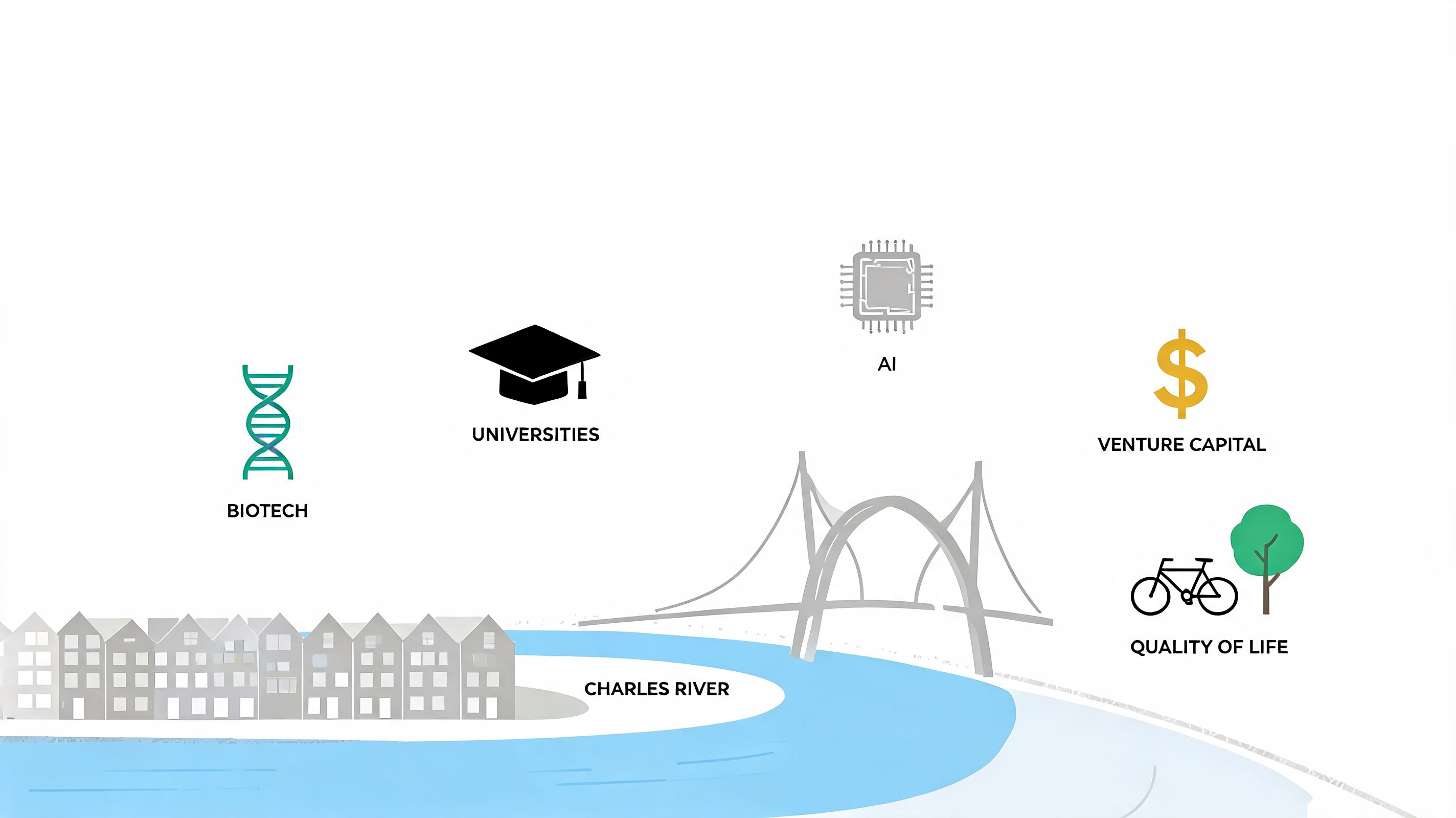
What does that mean for you? It means you can find work that actually has a purpose. For example, you could be a software engineer building AI that speeds up drug discovery, a product manager creating fintech tools to make investing more accessible, or a designer shaping the UX for a next-gen robotics platform. The roles are as diverse as they are impactful.
The secret sauce here is the sheer density of brainpower. World-class institutions like MIT and Harvard aren't just churning out ambitious graduates; they are actively spinning out cutting-edge research into venture-backed companies. This creates an incredibly fertile ground for startups built to solve complex, meaningful problems.
This environment has cultivated a distinct startup culture. Sure, the pace is fast and the expectations are high, but there's a deep-seated respect for intellectual curiosity and methodical, smart problem-solving. It’s a scene where thoughtful execution is valued just as much as explosive growth. As these companies scale, their internal operations have to adapt, which is a fascinating challenge in itself. If you're curious about that side of things, this founder's playbook by Fluidwave offers some great insights.
Boston’s startup scene provides the perfect trifecta for ambitious tech professionals: intellectually stimulating work, significant growth potential, and a quality of life that’s hard to beat in other major tech cities.
The numbers back up the buzz. A quick look at a major startup jobs board in May 2026 showed over 1,500 open roles in Boston. That's not a niche cluster; that's a broad, diversified, and hungry market. You can see the latest job counts for Boston startups to get a real-time sense of the demand.
Now, let's get into the playbook you'll need to tap into this vibrant scene and find your perfect role.
To land the right startup job in Boston, you need a map of the territory. But it's not a simple one. Boston’s tech scene isn’t one big blob; it’s a mosaic of distinct neighborhoods and industry clusters, each with its own gravity and personality.
Knowing where these pockets are is a game-changer for your job search.
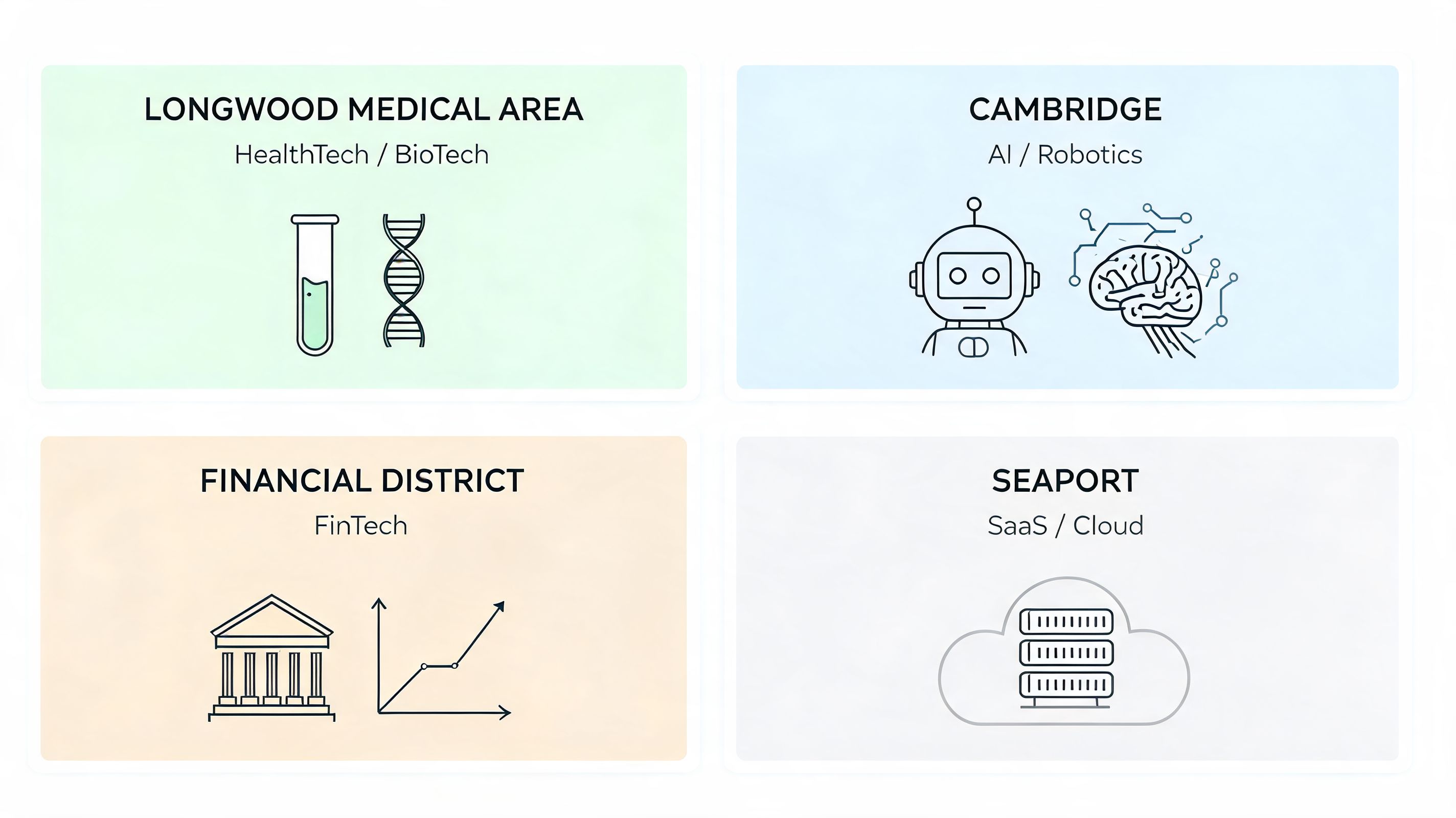
Think about it: a biotech startup in Kendall Square operates in a totally different universe than a fintech company downtown. If you can zero in on the hubs that match your skills and passions, your search becomes exponentially more effective. For example, instead of applying to all software jobs, you can focus on "Data Scientist" roles specifically within the Kendall Square biotech cluster.
To give you a clearer picture, here’s a quick breakdown of Boston’s major startup sectors.
| Sector | Key Hubs | Typical Roles in Demand | Venture Capital Focus |
|---|---|---|---|
| Biotech & Life Sciences | Kendall Square, Longwood | PhDs, Scientists, Lab Techs, Data Analysts, Bioinformatics Specialists | Drug discovery, genomics, personalized medicine, medical devices |
| AI & Robotics | Kendall Square, Seaport | Machine Learning Engineers, Robotics Engineers, Data Scientists | Autonomous systems, generative AI, enterprise automation |
| B2B SaaS | Seaport, Financial District, Back Bay | Software Engineers, Product Managers, Sales & Marketing, Cybersecurity | Martech, salestech, HR tech, dev tools, cybersecurity |
| Fintech | Financial District, Seaport | Backend Engineers, Data Analysts, Product Managers, Compliance | Wealth management, insurtech, payments, blockchain |
| Digital Health | Seaport, Cambridge | Full-Stack Engineers, Product Designers, Data Scientists, Healthcare IT | Patient platforms, EHR integrations, health data analytics |
This table is just a starting point. The lines are always blurring, but it shows where the biggest concentrations of talent and money are flowing right now. Let’s dive deeper into the two biggest magnets for tech talent.
When people talk about deep tech in Boston, they’re usually talking about Cambridge. With MIT and Harvard acting as massive talent funnels, the area is a launchpad for companies born out of academic research.
If you have a highly technical background, this is your playground. The density of talent is staggering, particularly in:
The vibe in Cambridge is often academic and intensely technical. You should expect to work alongside people with PhDs and be ready to tackle complex, research-heavy problems. It's less about flashy marketing and more about fundamental innovation.
It's a classic Boston trait, but the hiring needs here go way beyond pure software engineering. The city's dominance in biotech and deep research creates a relentless demand for analytics and data-adjacent roles. Some local job boards for data analysts get updated daily—a clear signal of constant opportunity. You can see the current data analyst openings in Boston to get a feel for the demand yourself.
If Cambridge is the lab, the Seaport and its neighbor, the Financial District, are the command center for Boston's commercial tech engine. This is where you'll find the highest concentration of B2B SaaS and fintech companies.
The atmosphere here is more commercially-driven and fast-paced. It’s a mix of scrappy, early-stage startups racing to find product-market fit and established scale-ups chipping away at legacy industries. The key sectors are:
If your expertise lies in product management, sales, or marketing, you’ll find an absolute goldmine of startup jobs in these neighborhoods. The close proximity to both VC firms and enterprise customers creates a high-energy environment laser-focused on growth.
If your job search strategy is just blasting your resume across Indeed and LinkedIn, you’re doing it wrong. Let’s be real—the best startup roles in Boston almost never show up on those massive job boards. They’re shared in much smaller, higher-signal circles where the city’s top companies are actually looking.
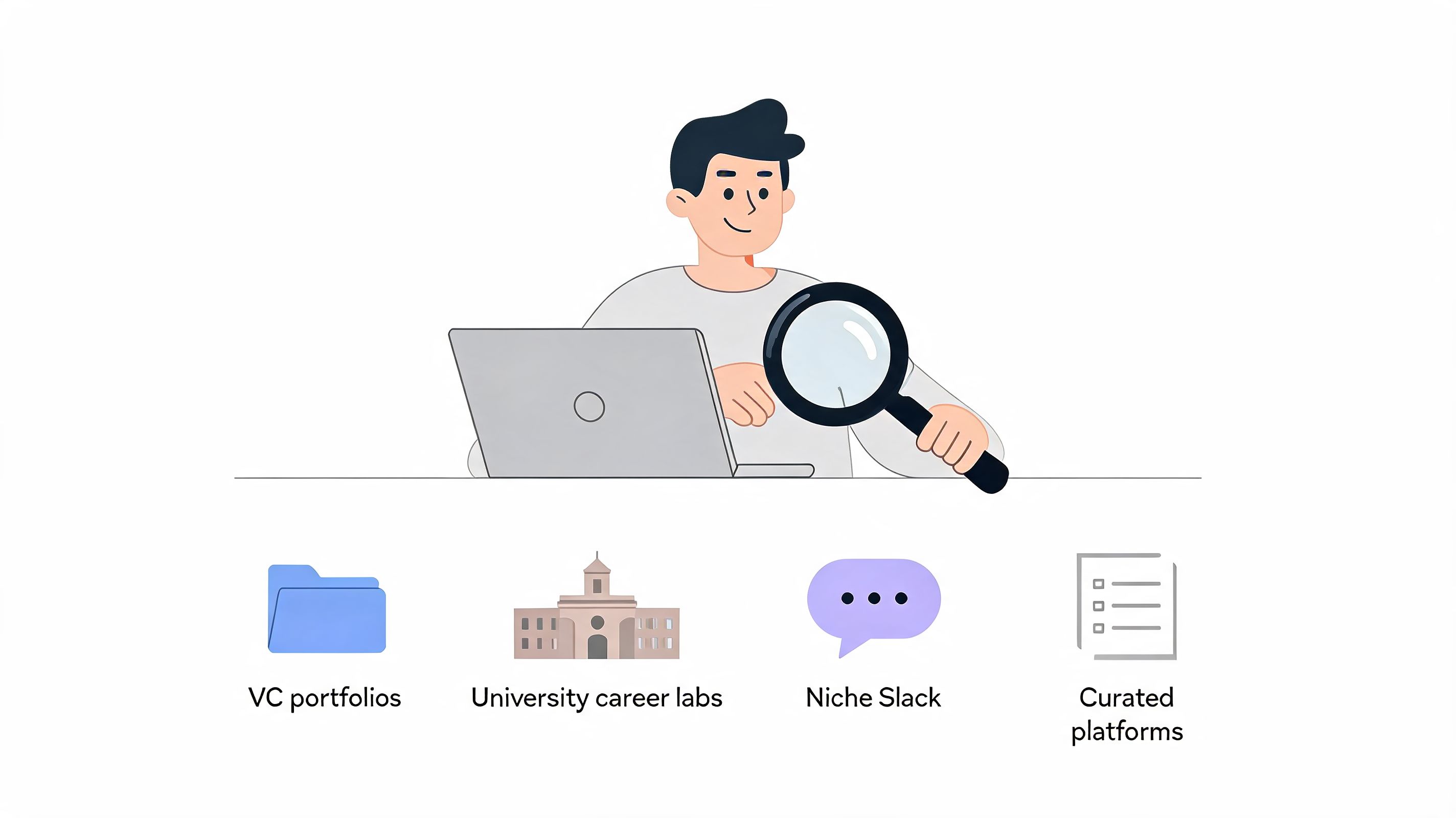
To find a genuinely great startup job here, you need to think like an insider. That means cutting through the noise and going straight to the sources that fund, launch, and connect Boston’s tech scene. A targeted approach always beats casting a wide, generic net.
Venture capital firms are the engine room of the startup world. When a VC backs a company, they have a vested interest in its success, and a huge part of that is helping it hire incredible people. This makes their portfolio company pages a goldmine for anyone on the hunt.
Instead of trying to find companies one by one, go straight to the websites of Boston’s most active VCs. You'll often find a dedicated "Jobs" or "Portfolio Careers" page listing openings exclusively at the startups they’ve funded. This gives you a pre-vetted list of companies that are funded, growing, and actively hiring.
A few to get you started:
This method does more than just uncover cool companies you’d otherwise miss. It also signals to hiring managers that you're a savvy candidate who actually understands how the ecosystem works.
Boston’s world-class universities are the lifeblood of its startup scene, pumping out both talent and new companies. The entrepreneurship centers and career labs at these schools are fantastic, and often public, resources.
For instance, the MIT Martin Trust Center for MIT Entrepreneurship and the Harvard Innovation Labs aren’t just for students. They regularly host public demo days, pitch events, and maintain job boards featuring their spin-outs. Following them on social media or getting on their newsletter lists is a great way to get a first look at new openings.
Don’t underestimate the power of local communities. Niche Slack groups or newsletters like Startup Boston's "The Hub" offer a direct line to founders, hiring managers, and other tech professionals who share exclusive job postings and insights you won't find anywhere else.
Even with a targeted search, it can still feel like you’re sending your application into a black hole. This is where a curated platform like Underdog.io flips the script entirely. Instead of you applying to hundreds of companies, vetted and growing startups apply to you.
Platforms like this turn the traditional hiring model on its head. You create one detailed profile showcasing your skills, experience, and what you’re looking for next. From there, your profile gets shown directly to decision-makers at companies that are a strong match. It's an incredibly efficient way to bypass the initial HR screen and get your profile in front of the people who matter most.
To learn more about this approach, check out our guide on finding the right startup jobs in Boston.
Let's be honest: a generic resume is a one-way ticket to the 'no' pile in Boston's startup scene. The market is just too competitive. Founders aren't just scanning for keywords; they're looking for people who genuinely get their specific corner of the world.
Your application is your first—and maybe only—chance to prove you’ve done your homework. The real trick is learning to speak their language. A data-obsessed HealthTech company in Kendall Square cares about a very different set of wins than a B2C robotics firm in the Seaport. Your job is to connect those dots for them, long before you ever get in a room together.
How you frame your background is everything. Take a project manager who just successfully shipped a big consumer mobile app. That experience is gold, but it needs to be translated.
Think about it from the hiring manager's perspective. They’re reading dozens of applications, looking for a signal.
Pitching a HealthTech company? Don't just say you "led a project." Instead, you might highlight your experience "managing a product through a complex, multi-stage development cycle with strict quality assurance protocols." That phrasing shows you understand the rigor and regulation inherent in their world.
Aiming for a B2B SaaS startup? You could frame that same experience as "driving user adoption and engagement metrics post-launch, resulting in a 15% increase in daily active users." You're speaking their language—growth, metrics, and KPIs.
This isn't about exaggerating; it’s about translating. It shows you're not just looking for any job, but for this job. For a deeper dive into this kind of strategic positioning, our guide on how to get a job at a startup has even more tactics.
This is the playbook we see work time and time again for candidates targeting Boston's best startups.
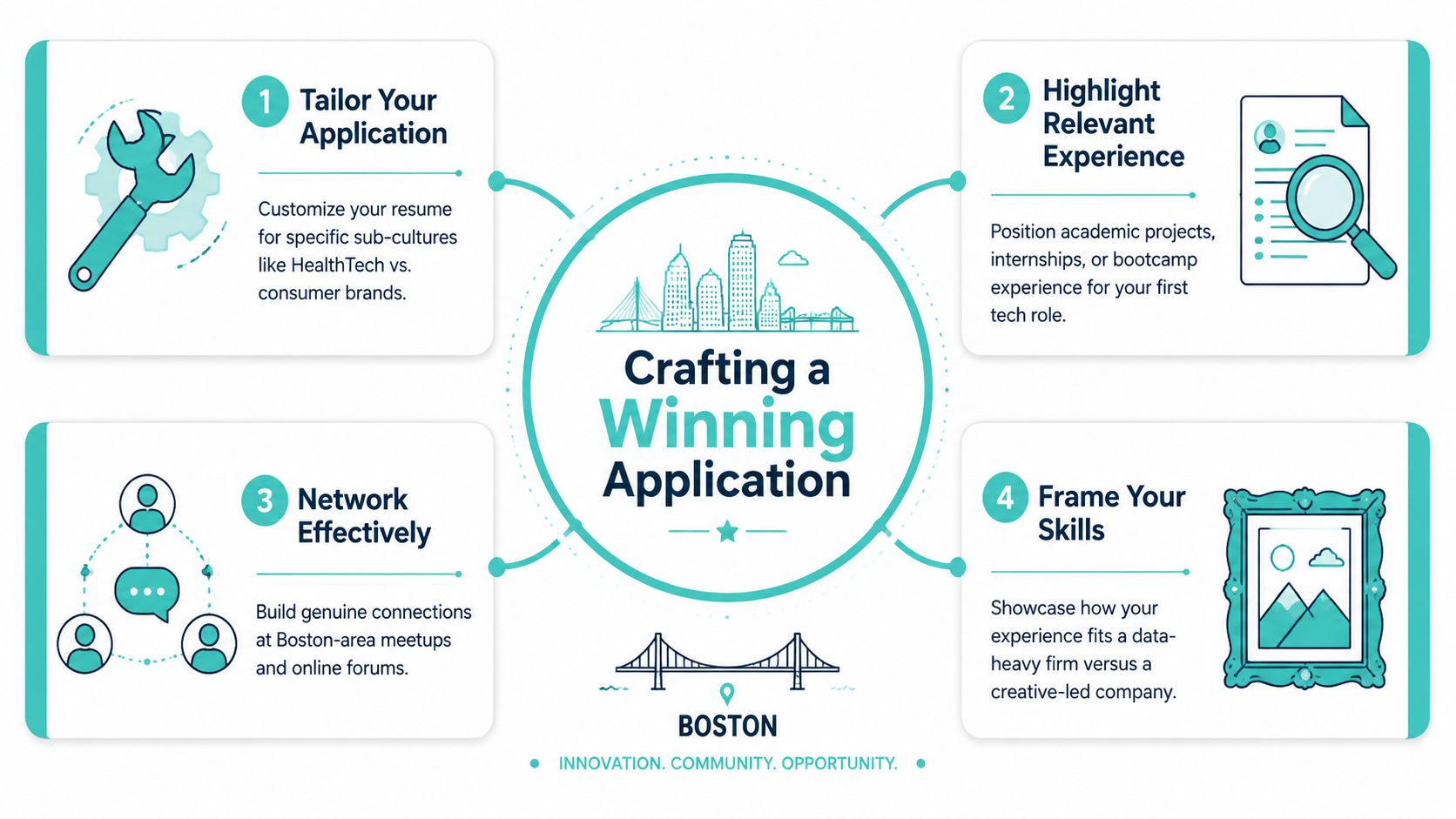
As you can see, a winning application is about more than just a list of skills. It's a combination of smart tailoring, contextual framing, and strategic networking.
If you're just starting out, don't make the mistake of discounting your academic projects, internships, or bootcamp experience. You just need to present them like a pro.
Don't just list a project on your resume. Create a mini-case study. Frame it with the problem you were solving, the tech stack you chose, the process you followed, and the outcome you achieved. For instance, describe a university project as "Developed a Python-based sentiment analysis tool for social media data, achieving 85% accuracy on a test dataset, to explore brand perception."
Boston's startup scene has a real appetite for hungry, early-career talent, especially in technical and quantitative fields. A quick search on a platform like Indeed right now shows anywhere from 103 to 168 open entry-level statistics jobs in Boston alone. That's a healthy pipeline.
This focus on data means that even a complex statistical analysis project from a university course can be a powerful talking point—if you position it correctly. Show your work, explain your thinking, and prove you have the potential to start adding value from day one.
Let's talk about the money. When you're weighing offers for startup jobs in Boston, getting the compensation piece right is non-negotiable. It’s never just a single number. Think of it as a total package reflecting the company's maturity, your role's importance, and the potential upside you're signing up for.
A question I hear all the time is how Boston stacks up against the big dogs like San Francisco and New York. While it's true that base salaries in Boston can sometimes be 5-15% lower on average, that number doesn't tell the whole story. Your dollar just goes a lot further here, thanks to a more reasonable cost of living. That’s a massive factor in your actual financial well-being.
A Senior Software Engineer at a Series B startup in Boston might see a salary that looks competitive on a national scale, but the real win is what that salary affords you in the Boston area compared to the Bay Area.
A startup’s funding stage is the biggest clue to its compensation philosophy. Early-stage companies are almost always cash-strapped, which means they lean heavily on equity. Later-stage, scaled-up companies have more cash to play with and can offer more competitive base salaries.
Here's a rough, non-guaranteed guide to what you can expect:
You have to look at the whole picture when you're evaluating an offer. A lower base salary with a hefty equity grant at a promising Seed stage company could be far more lucrative down the road than a higher salary at a stable but slower-growing Series C. To really dig in, check out more detailed guides on startup compensation benchmarks to get more context.
Equity is your piece of the pie—your ownership stake in the company. It's where the life-changing money in the startup world can come from. But it's also, without a doubt, the most complicated part of your offer. It isn't just a number; it's a promise with a lot of fine print.
Before you sign on the dotted line, you absolutely need to get your head around a few key concepts.
Ultimately, decoding your compensation package is a balancing act between your immediate cash needs and your appetite for long-term wealth potential. Don't be afraid to ask tough questions, do your own research, and model out a few different scenarios to make a decision you're confident in.
You've got questions, we've got answers. When you're trying to break into a new tech scene, a lot of the same uncertainties pop up. Here's the straight scoop on the most common questions we hear from engineers, PMs, and designers eyeing a startup job in Boston.
Not always. While a traditional CS degree is still the clearest path for hardcore, low-level engineering roles, it's far from a universal requirement. Boston's startup scene is incredibly diverse, and sectors like HealthTech, EdTech, and FinTech are hungry for talent in product management, marketing, data analysis, and design.
For many startups, what you can do is far more important than where you went to school. A strong portfolio, demonstrable skills from a bootcamp, or proven real-world experience can absolutely get your foot in the door. If you can show a hiring manager you can solve their problems, the lack of a specific degree often becomes a non-issue.
Both are part of the game, but in Boston’s tight-knit tech community, networking gives you a massive advantage. Sending your resume into the digital void of an online application is a low-percentage play. A warm introduction, on the other hand, can do what a hundred applications can’t: get a real human to actually look at your resume.
A referral isn't just about skipping the line. It's a vote of confidence from someone inside. In a community where reputation is everything, having an advocate in your corner can put your job search on the fast track. A practical step is to identify 3-5 people on LinkedIn who work at your target companies and send a concise, personalized connection request mentioning a specific project or product they launched.
Think of networking as a core part of your job search strategy, not an optional extra. Show up at local meetups, join niche Slack groups like the one from Startup Boston, or get a direct intro through a platform like Underdog.io. These are the shortcuts that bypass the HR black hole and put you directly in touch with the people who make hiring decisions.
It’s a mixed bag, but there are some common themes. Compared to the "growth-at-all-costs" vibe you might find in other tech hubs, many Boston startups foster a more balanced and intellectually curious culture. This is partly thanks to the city's deep roots in academia and research, which often leads to a more methodical and collaborative environment.
That said, culture is hyper-specific to the company. A seed-stage biotech firm in Kendall Square is going to feel completely different from a Series C SaaS company down in the Seaport. The only way to know for sure is to ask direct questions during your interviews. For instance, ask "Can you describe a recent team challenge and how you collaborated to solve it?" or "What does the onboarding process look like for a new team member?"
Absolutely. The shift to remote and hybrid work is here to stay in the Boston area. While some companies—especially in hardware, robotics, or wet-lab biotech—obviously need people on-site, a huge number of startups have embraced flexible work policies.
Software, fintech, and digital health companies are leading the charge, frequently offering fully remote or hybrid options. They see it as a critical tool for attracting and retaining top talent, allowing them to expand their search well beyond the MBTA map. Job descriptions are usually very clear about this now, so always check the posting for the company’s official policy.
Ready to stop sending your resume into a black hole and have Boston's top startups come to you? At Underdog.io, we flip the script. Create one profile and get discovered by hundreds of vetted, high-growth companies. Sign up for free today.