Trying to find your next role in San Francisco's startup market by scanning logos and funding headlines? That's the wrong filter. The better question is which companies are building products that create real hiring demand for your skill set right now.
That distinction matters more in San Francisco than almost anywhere else. The city remains the global leader in startup ecosystem strength, with more than 14,500 active startups, the highest startup density globally at 6,263 per 100,000 residents, and reported startup fundraising of $111.7 billion in the first nine months of 2025, with AI taking 52% of total funding and 268 unicorns tracked in the ecosystem, according to Growth List's San Francisco startup ecosystem overview. For candidates, that means opportunity is deep, but so is competition.
The good news is that the market still rewards people who aim precisely. Recent commentary on San Francisco startup hiring points to applied AI, healthtech, embedded finance, clean tech, and enterprise workflow automation as the sectors where companies are moving from demos into real deployment, as discussed in this San Francisco startup sector breakdown. So if you're searching for startup companies san francisco and hoping to make a smart move in 2026, focus less on hype and more on where your experience maps to actual product needs.
Perplexity is one of the few AI companies I'd tell candidates to study before they apply. Not because it's popular, but because the product makes it obvious what kinds of people it needs. If a company ships answer engines, search infrastructure, retrieval systems, and enterprise knowledge workflows, it's going to value engineers who can work across product, infra, and model behavior.
Its platform is attractive if you care about AI products that touch both consumers and enterprise buyers. That split matters for hiring. Consumer AI companies often need taste and speed. Enterprise AI companies need reliability, controls, and integration discipline. Perplexity sits in both worlds.
Candidates with experience in these areas tend to fit best:
A practical way to evaluate fit is to compare your background against its developer-facing positioning. If you've only worked on generic chatbot wrappers, that's weaker than having built tools around search, retrieval, or enterprise knowledge access. For broader context on where these roles sit in the local market, Underdog's San Francisco startup jobs guide is useful.
Practical rule: For AI-native startups, show shipped systems, not course certificates.
Another reason candidates should pay attention is market timing. One directory indexed 3,617 SaaS companies in San Francisco as of May 2026, with combined revenue of $93.9B, 346.3K employees, and $128.9B raised, according to Latka's San Francisco company directory. In that environment, companies building high-visibility AI products compete for the same talent pool.
If you apply, don't send a generic “I'm passionate about AI” note. Send a short message showing that you understand retrieval quality, source transparency, or enterprise trust. If you want a sense of adjacent tooling trends, this guide to AI productivity platforms gives useful context on how buyers compare AI products.
Anthropic is where I'd point candidates who want hard technical problems, strong research proximity, and a company story that goes beyond “we added AI to software.” It's an AI research and product company built around the Claude model family, with a reputation centered on safety and reliability.
That positioning changes how you should present yourself. At Anthropic, “fast learner” won't carry much weight by itself. The stronger signal is careful thinking under ambiguity. That could mean model evaluation, inference infrastructure, distributed systems, security, product reliability, or policy-aware product design.
If you're targeting Anthropic, the strongest angles usually come from one of these lanes:
Anthropic also benefits from San Francisco's concentration of startup and technical talent. SignalFire reports that more than half of all new startups in a recent Y Combinator batch were based in the San Francisco Bay Area, the Bay Area accounted for 26% of Seed and Series A rounds from top VCs, and the region still held 49% of all big tech engineers and 27% of startup engineers as of 2023. A YC directory also lists 2,411 startups headquartered in the Bay Area in this Y Combinator Bay Area company directory. That density is one reason companies like Anthropic can hire aggressively around research and infrastructure.
If you're trying to break in, tailor your profile around depth. The best Anthropic candidates don't just say they use AI tools. They explain what they built, where models failed, how they evaluated outputs, and what trade-offs they made. Underdog's AI engineer hiring guide is a solid reference for framing that experience.
For company-specific context from a startup operator angle, this Credit for Startups Anthropic guide is worth a quick read.
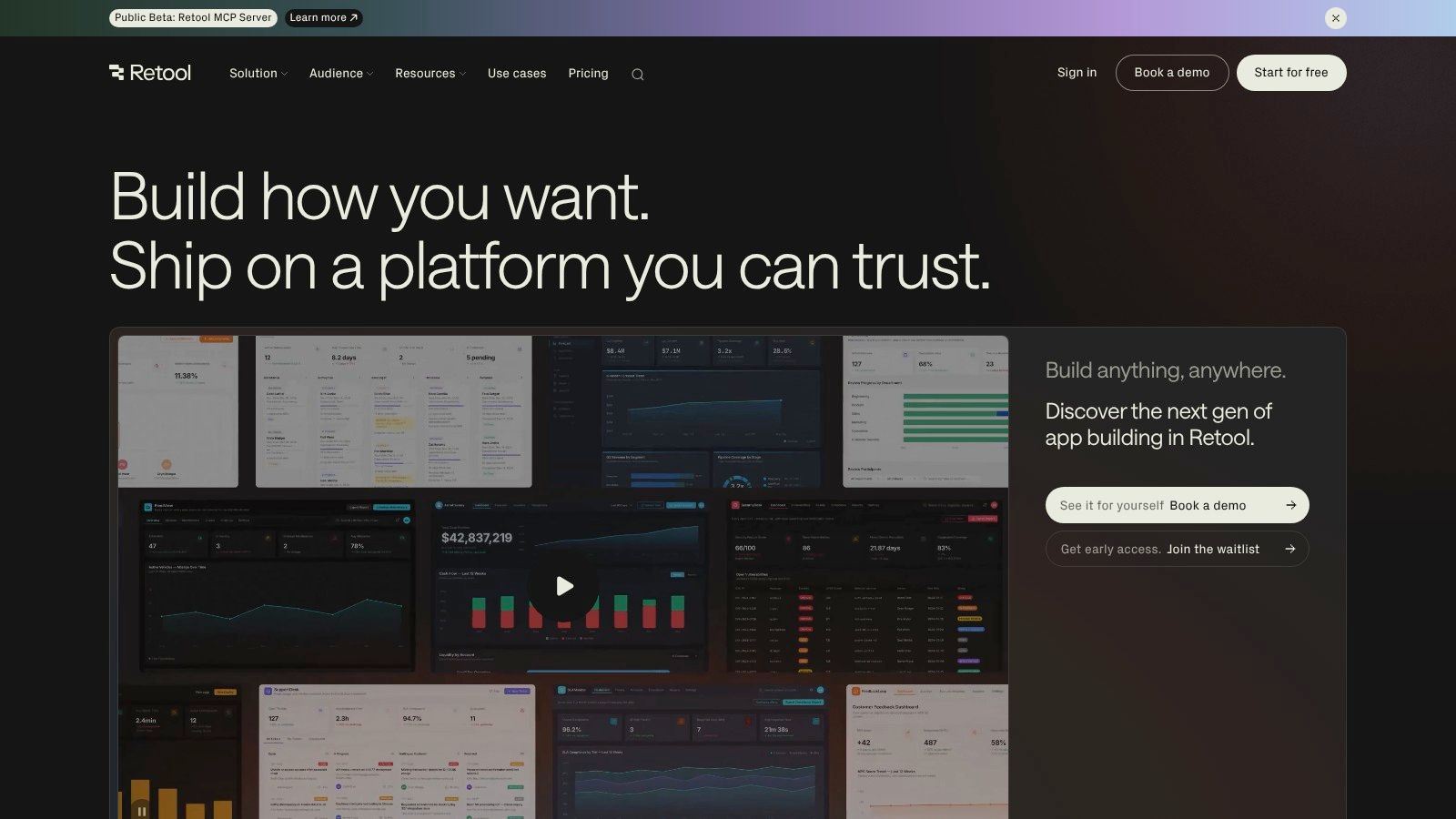
Retool is one of the clearest examples of a company that benefits from being boring in the right way. It solves a real operational problem. Teams need internal tools, workflows, dashboards, portals, and lightweight apps without rebuilding the wheel every time. Retool's platform sits directly in that gap.
For candidates, that matters because practical software companies usually hire around customer pain, not hype cycles. If you've built back-office systems, admin panels, ops automations, or data-heavy applications, Retool is easier to pitch yourself to than a startup where the job description is vague and the product is still searching for a buyer.
A lot of ambitious engineers skip companies like Retool because they want something that sounds more frontier. That's a mistake. Tools used inside companies often create durable hiring demand because customers depend on them every day.
Retool tends to be a strong target for:
Teams that buy internal tools don't care about flashy demos. They care whether the workflow breaks at 4 p.m. on a quarter-close day.
The strongest application strategy here is proof of practicality. Show examples where you reduced manual work, stitched together multiple systems, or built interfaces that non-technical teams could use. If you've supported finance, support, operations, or logistics users, say so.
Retool is also one of those companies where startup recruiting basics matter more than people think. Sharp portfolio examples, concise communication, and evidence that you've worked in fast-moving product teams all help. This guide on how to get recruited by startups covers that process well.
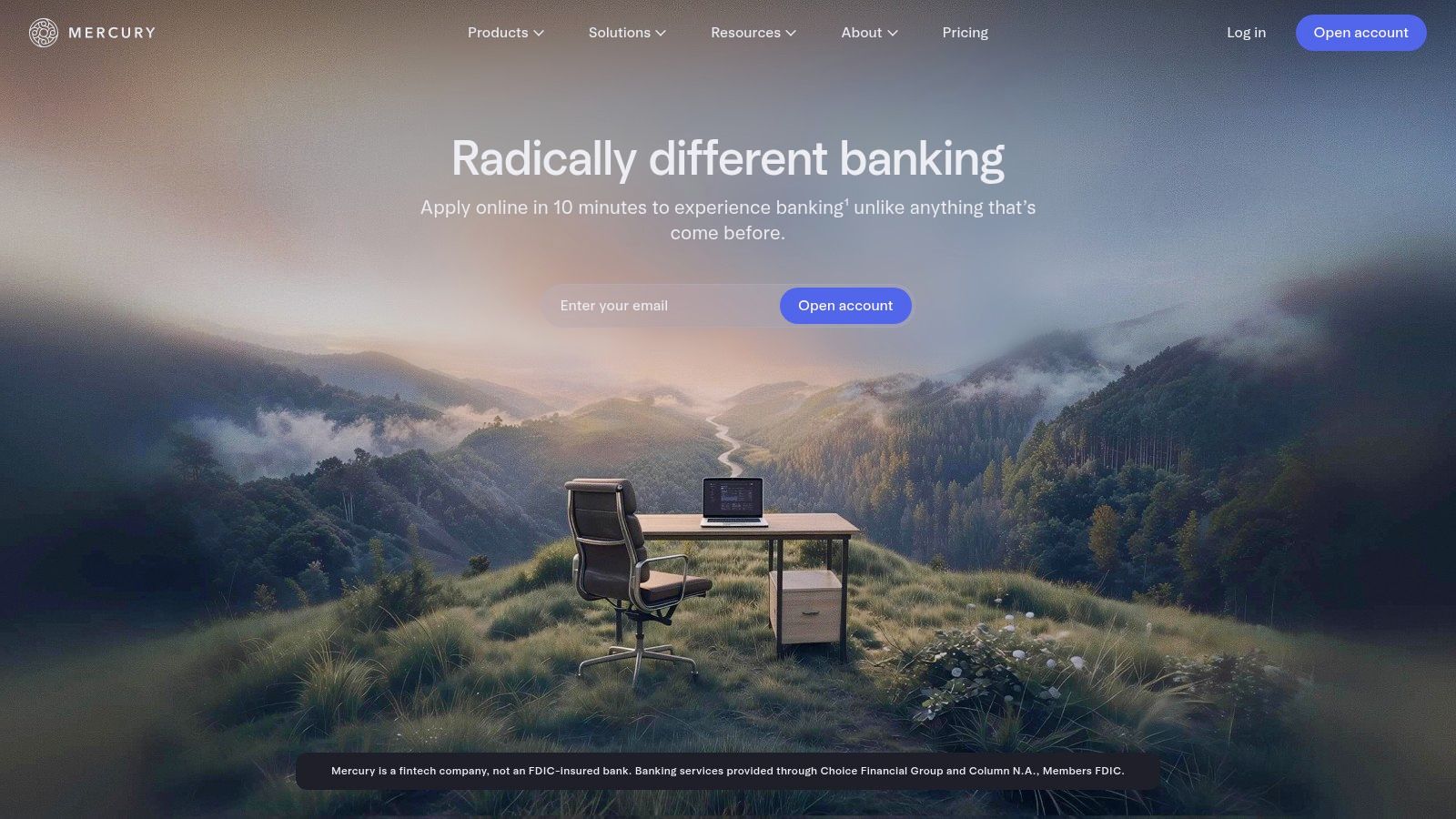
Mercury is a strong target if you want startup exposure without betting on a product that feels optional. Founders need banking, payments, cards, and financial operations. That makes Mercury relevant to companies from seed stage onward.
From a recruiting perspective, fintech platforms like this usually reward candidates who understand trust, compliance-aware product design, and operational sharpness. The work may not always look glamorous from the outside, but it often offers significant career advantage because the problems are real and recurring.
Mercury is especially compelling for people with backgrounds in:
This is also where sector selection matters more than broad startup enthusiasm. Recent commentary on San Francisco companies notes that the better opportunities increasingly sit with startups solving concrete enterprise or financial problems, rather than pure consumer novelty, in this Blumberg Capital look at San Francisco AI startups and practical value creation. Mercury fits that practical category even though it isn't an AI-first company.
If you want to stand out, don't pitch Mercury as if it's a generic neobank. Talk about startup cash management, finance workflows, payments operations, or the customer trust layer required when a platform is central to business operations. Also be careful with language. Mercury is a fintech platform, not a bank. Candidates who understand distinctions like that sound more credible fast.
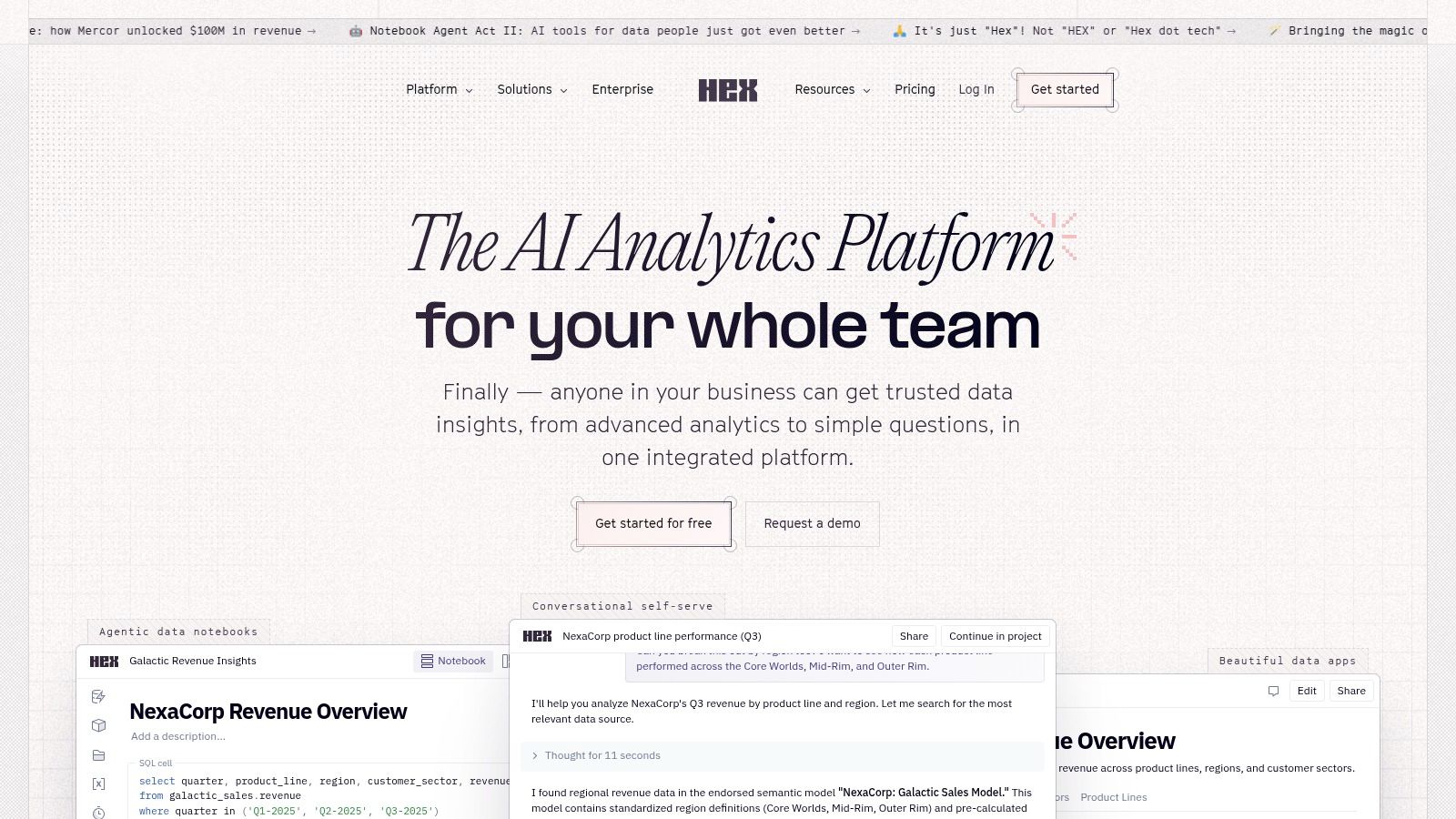
Hex is one of the better bets in startup companies san francisco if your background sits between analytics, product, and engineering. Its workspace combines notebooks, SQL, Python, collaboration, and shareable data apps. That product shape creates a very specific hiring profile.
Companies like Hex don't just want data people. They want people who can make data usable by teams that don't want to live in a notebook all day. That opens the door for candidates who can bridge technical depth and product usability.
Hex usually makes the most sense for people in these buckets:
A candidate mistake I see here is over-indexing on pure analysis. If you want Hex to notice you, show how you helped a team go from raw data to a repeatable, shared decision-making workflow. A dashboard is not the same thing as a workflow product. The latter is more persuasive.
Recruiter lens: For data startups, the strongest candidates can explain both the query and the user.
Hex also sits near sectors that continue to matter in San Francisco hiring. Applied AI and enterprise workflow automation remain important themes in the current market, which makes collaborative data tooling relevant even when budgets get tighter. If your experience includes experimentation platforms, BI modernization, notebook infrastructure, or internal analytics tooling, this is a clean target.
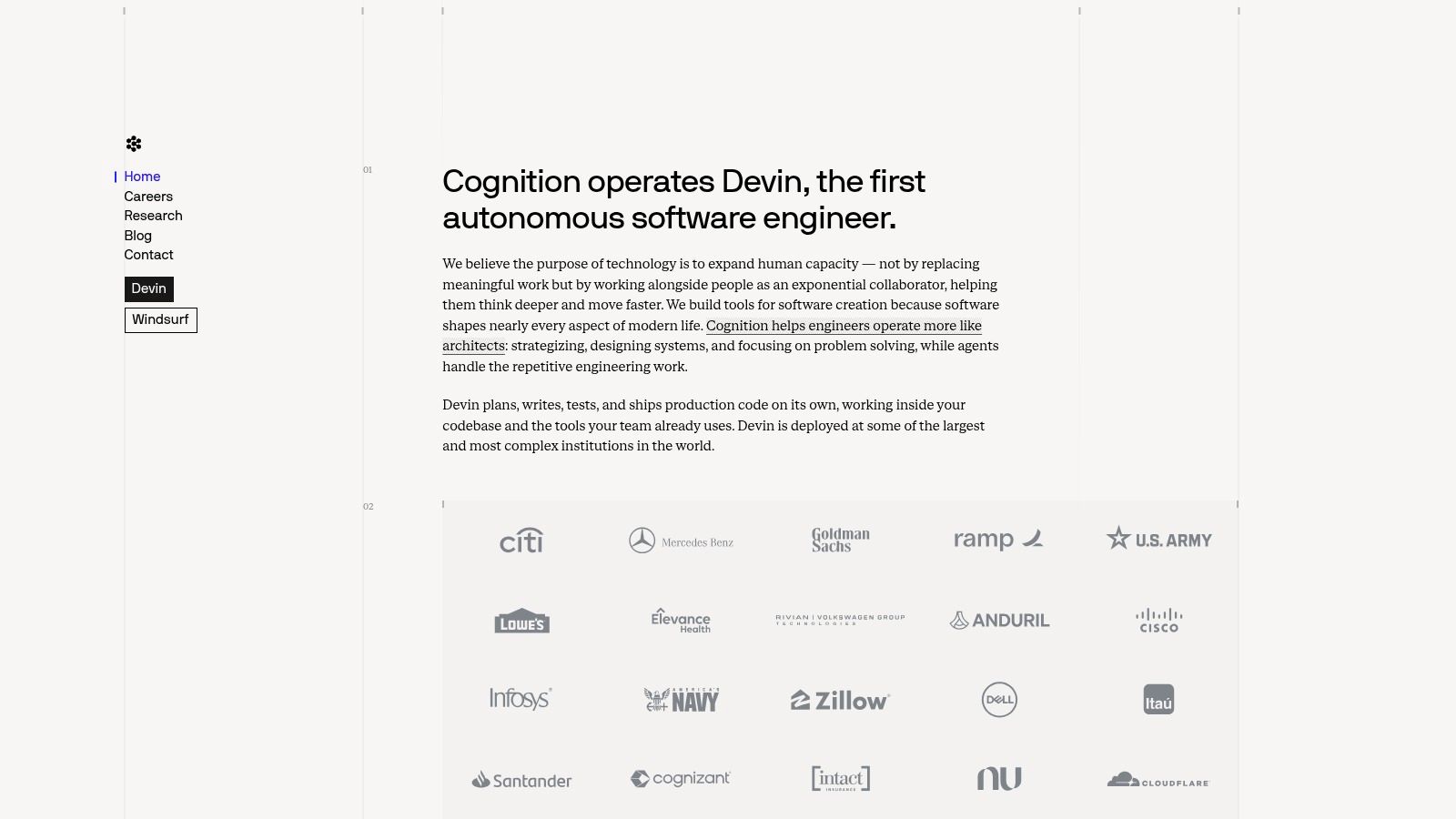
Cognition, known for Devin, is the kind of company candidates chase for obvious reasons. Autonomous software engineering is a sharp story. The company sits right at the center of developer automation and agentic tooling.
But candidates must separate excitement from fit. Frontier developer-tool startups don't need applicants who are merely curious about AI coding tools. They need people who understand engineering work at the task, workflow, and systems level. If you've never owned production software, your application will likely read too theoretical.
Cognition is best for candidates who can show one of the following:
What doesn't work is vague positioning. “I'm interested in the future of coding” is weak. “I built a system that used LLMs to triage bugs, propose patches, and route review requests across repos” is much stronger. Even if the project was internal, that's closer to the actual problem space.
For ambitious engineers, Cognition can be high-upside because the product category itself is still taking shape. If you join early and the company wins, your experience compounds fast. But you should also assume a high bar. Teams working on autonomous coding want evidence that you can handle ambiguity and still produce reliable output.
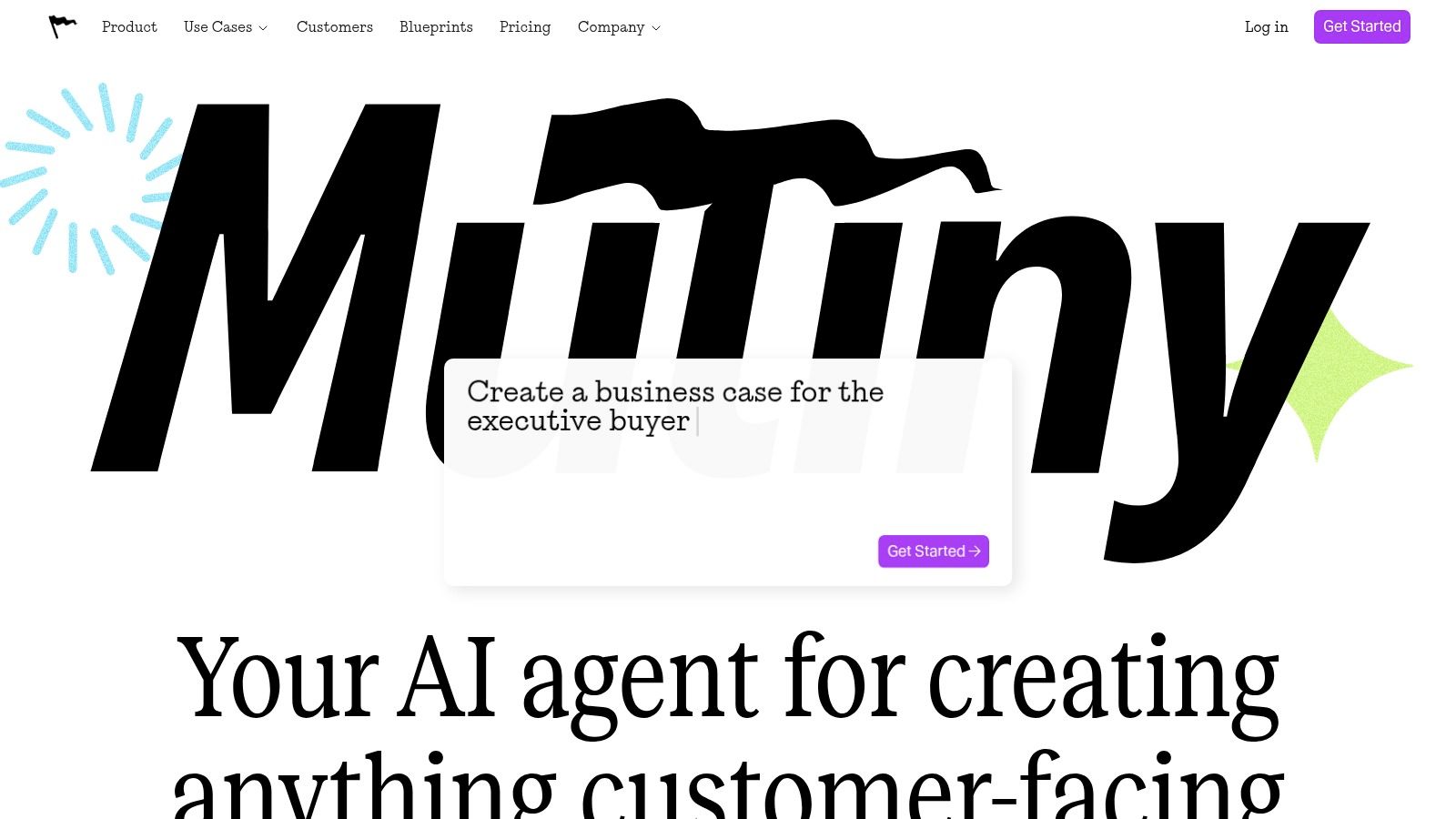
Mutiny is a smart target for candidates who want exposure to AI without joining a pure model lab. Its AI GTM platform sits in revenue workflow land, where personalization, account targeting, content generation, and sales tooling all collide.
That creates a different kind of opportunity. Companies like Mutiny often need people who understand both software and commercial reality. If your background includes growth systems, martech, personalization, CRM workflows, or B2B experimentation, you may have a stronger shot here than at a general-purpose AI startup.
Mutiny stands out because it addresses a problem buyers already recognize. Revenue teams want to create personalized pages, emails, and campaigns without adding heavy operational drag. That means the company likely values candidates who can tighten the loop between product output and customer outcomes.
Good target roles include:
A practical application angle is to talk about measurable business workflows without inventing metrics. Explain how you helped sales or marketing teams launch faster, manage cleaner account data, or operationalize experimentation. That language lands better than broad AI enthusiasm.
Mutiny is also a good reminder that startup companies san francisco aren't just hiring for core model work. Plenty of the strongest opportunities sit one layer above the models, where teams package AI into usable commercial systems.
| Product | Implementation complexity | Resource requirements | Expected outcomes | Ideal use cases | Key advantages |
|---|---|---|---|---|---|
| Perplexity AI | Low–Medium for consumer Q&A; Medium for RAG/API integrations | Moderate: API calls, retrieval infra; clear published pricing | Fast, citation-rich answers; improved search and RAG workflows | Production Q&A, RAG pipelines, knowledge apps, developer integrations | Citation-rich multi-step reasoning; transparent API and pricing |
| Anthropic | Medium for standard API use; Higher for enterprise safety tooling | Moderate–High depending on tier; team/enterprise admin needs | Safety-focused, reliable LLM outputs suitable for production | Frontier LLM deployments, safety-sensitive enterprise use | Safety-first models (Claude); clear plan tiers; research-driven |
| Retool | Low for visual apps; Medium for complex integrations/custom code | Developer seats, connectors; cloud or self-host deployment options | Rapid internal tools, dashboards and embedded customer apps | Admin panels, ops dashboards, internal workflows, embedded portals | Fast prototyping; seat-based pricing; flexible hosting options |
| Mercury | Low for basic onboarding; Medium for treasury/payment integrations | Banking partner setup, optional Plus/Pro subscriptions; compliance needs | Founder-friendly banking, payments, cards and cash flow management | Startup business banking, payments, card programs, treasury operations | Simple fees; founder-focused onboarding; strong startup network |
| Hex | Medium: notebooks, app publishing and team governance | Seats plus metered compute (hourly/GPU); compute can raise costs | Collaborative notebooks, shareable data apps, reproducible analytics | Data teams, analytics workflows, ML-adjacent experimentation | Collaborative notebooks with AI helpers; transparent seat & compute pricing |
| Cognition (Devin) | High: autonomous agent integration and enterprise rollout | Enterprise-oriented engagements; significant integration effort; limited public pricing | Automated multi-step engineering workflows; productivity gains in dev teams | Organizations piloting autonomous coding and developer automation | Agentic autonomous coding vision; early enterprise validation |
| Mutiny | Low–Medium to launch personalization; Higher for deep integrations (SSO/Salesforce) | AI credits pooling, tiered plans; enterprise features require higher tiers | Scaled personalized GTM assets and faster demand-generation workflows | B2B demand gen, ABM personalization, lean GTM teams | Fast asset generation; Account Studio for account targeting; MarTech integrations |
What gets you interviews at startup companies San Francisco candidates chase? Precise targeting, sharp positioning, and a profile that makes a recruiter's decision easy.
Blanket applying slows you down. Perplexity, Anthropic, Retool, Mercury, Hex, Cognition, and Mutiny may all sit in the same city, but they hire for very different problems, risk tolerances, and operating styles. Strong candidates show they understand the company's product, the team's likely constraints, and where they can create value fast.
Pick a lane first. Candidates with depth in infrastructure, model behavior, safety, or developer platforms should spend more time on Anthropic and Cognition. Retool and Hex tend to reward people who have built internal products, analytics workflows, or technical software for business users. Mercury is a stronger target for people who can speak credibly about payments, onboarding operations, compliance-sensitive processes, or startup finance. Mutiny fits candidates from growth, lifecycle, demand gen, and B2B SaaS marketing. Perplexity is usually strongest for people who move well in high-velocity product environments and understand AI product behavior, search intent, and user experience.
Then make your materials specific.
A startup resume should show ownership, shipped work, and outcomes tied to speed, revenue, reliability, product adoption, or cost. Outreach should answer three questions in a few lines: why this company, why this role, and why you. If a recruiter has to guess at the fit, they usually move on.
San Francisco hiring is crowded, and the primary filter is often judgment.
Underdog.io can help if you want a more efficient path into startup hiring, especially if you are open to recruiter inbound. Treat your profile like a recruiter screen in written form. Use a headline that states your function and level clearly. Make your best wins scannable. For engineering roles, include languages, systems, and scale context. For product roles, show scope, metrics moved, and how technical the work was. For GTM roles, include segment, quota, ACV, funnel stage, and channel ownership. On Underdog.io, vague profiles get ignored. Specific profiles get matched.
If you are targeting startup revenue teams, technical sales support, or early commercial roles, this SDR hiring resource is useful because it shows how hiring managers define strong revenue talent.
The candidates who get traction in SF remove doubt. They choose companies that fit their background, target roles where their story is credible, and explain their value in plain English.
If you want startup employers to reach out instead of chasing every listing yourself, create an Underdog.io profile. As noted earlier, it is a practical way to get in front of vetted startup hiring teams in San Francisco and beyond with one application.