Many candidates seeking a role at a startup commit the same error. They apply using methods designed for large corporations: a polished resume, a generic LinkedIn update, a batch of applications, followed by silence.
That approach usually fails.
Startup hiring runs on a different logic. Founders and early hiring teams aren't looking for someone who only matches a job description. They're looking for someone who can step into ambiguity, ship useful work, and make the team stronger without a lot of hand-holding. If you want to know how to get recruited by startups, you need to stop thinking like an applicant and start acting like someone startups want to pull into their orbit.
The good news is that this is learnable. You don't need a perfect pedigree. You need better signals.
A lot of strong candidates arrive at startups after getting tired of being one small part of a giant machine. The engineer who maintains an internal tool no customer ever sees. The PM whose roadmap gets diluted across five layers of approval. The designer who ships one screen after six rounds of committee feedback.
Those people often assume the move to startups is mainly about speed, mission, or equity. It isn't. The key change is about proximity to consequences. At a startup, your judgment shows up in the product, the roadmap, the customer experience, and sometimes the company's survival.
That's why startup hiring feels different from corporate hiring. A big company can afford narrow specialists, slower onboarding, and a few mismatched hires. Early teams usually can't. They hire for skills, yes, but they also hire for ownership, adaptability, and evidence that you'll keep moving when the brief is incomplete.
The candidate startups remember is rarely the most polished one. It's the one who makes the team think, “This person will figure things out.”
This changes how you should present yourself. Waiting for the perfect opening and then submitting a tidy application is passive. Startup recruiting rewards people who create visible proof of how they work. That might be a side project, sharp writing, thoughtful outreach, open-source contribution, or a reputation inside a niche community.
It also means accepting a hard truth. Plenty of talented people want startup roles. Fewer people show that they can thrive in one.
When I've seen candidates stand out with startup teams, they usually make four things obvious early:
If you build those signals consistently, recruiting starts to feel less random. You stop chasing every startup opening and start becoming visible to the right ones.
A traditional resume is often built for HR filters. A startup-ready profile is built for human pattern recognition. Founders, hiring managers, and startup recruiters scan for signs that you've solved real problems, worked across functions, and made things happen without a lot of ceremony.
That's the identity you want to forge.
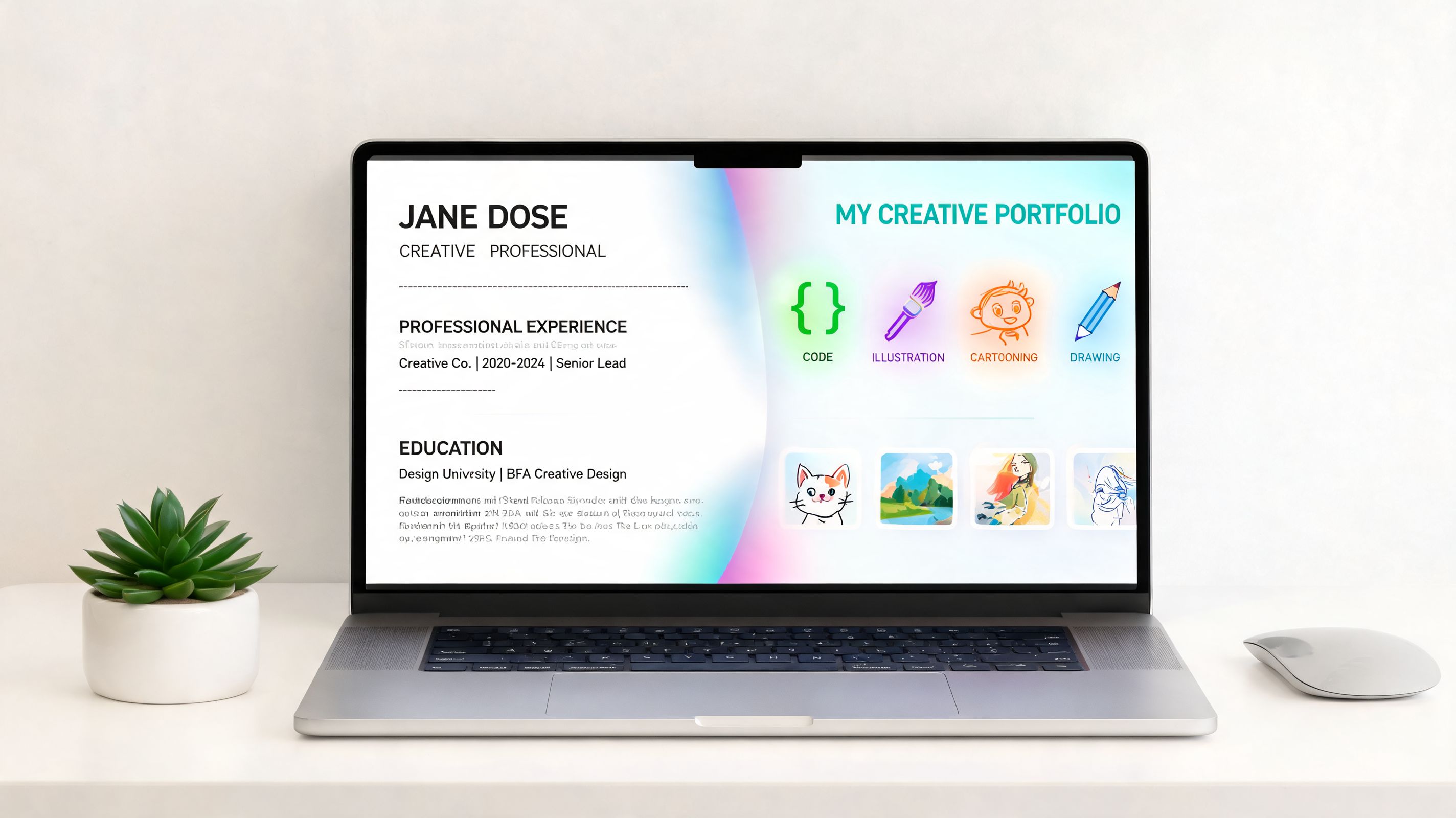
Most resumes undersell startup fit because they read like task inventories.
Bad:
Better:
If you have hard numbers you're allowed to use from your own work history, use them carefully and truthfully. If you can't share specifics, describe the operational effect in plain language. Startup teams care more about whether you improved something important than whether your title sounded impressive.
A good test is simple: if someone removed your title from the resume, would the reader still understand your level?
Startups rarely hire someone to do only one thing in one lane forever. They like people with a clear specialty and enough breadth to operate well with a small team.
A strong profile usually shows:
The same principle should shape your LinkedIn, GitHub, portfolio, and personal site. Your online presence should answer three questions fast: What are you good at? What have you shipped? What kind of problems do you like solving?
Startups often use a sharp screening funnel. Applications are frequently filtered by 2 to 3 role-aligned questions, and candidates who answer carelessly get eliminated early because that first pass acts as a quality signal, according to the Founder Institute guide to startup hiring.
That means the basics matter more than people think:
Practical rule: If a startup asks a short written question, treat it like a work sample.
If your resume still sounds like a corporate template, it's worth studying examples of how to write a tech resume for startup audiences. The same reframing applies if you're exploring niche sectors like startup remote jobs in Web3, where signal quality matters even more because the applicant pool is noisy.
| Asset | Common mistake | Better version |
|---|---|---|
| Resume | Lists duties | Shows outcomes, decisions, scope |
| Reads like an org chart | Reads like a capabilities snapshot | |
| GitHub | Sparse or uncurated | Pinned repos with context and clean README notes |
| Portfolio | Pretty but vague | Specific case studies with constraints and trade-offs |
A startup-ready identity doesn't try to look impressive to everyone. It makes the right people curious enough to reach out.
Passive applications are a losing game for most startup candidates. Not because applications never work, but because they flatten everyone into the same format. Resume in. Wait. Hope.
That's weak positioning if you want a startup to recruit you.
The better strategy is to create public signals that prove how you think and what you can build. Startups often prioritize passion and potential over polished resumes, and many bootstrapped founders recruit directly from niche communities like Reddit and Discord where they can observe initiative and problem-solving. For the 85% of tech professionals who are passively exploring, those spaces can also create visibility without publicly announcing a job search, as noted in this piece on unconventional startup hiring strategies.
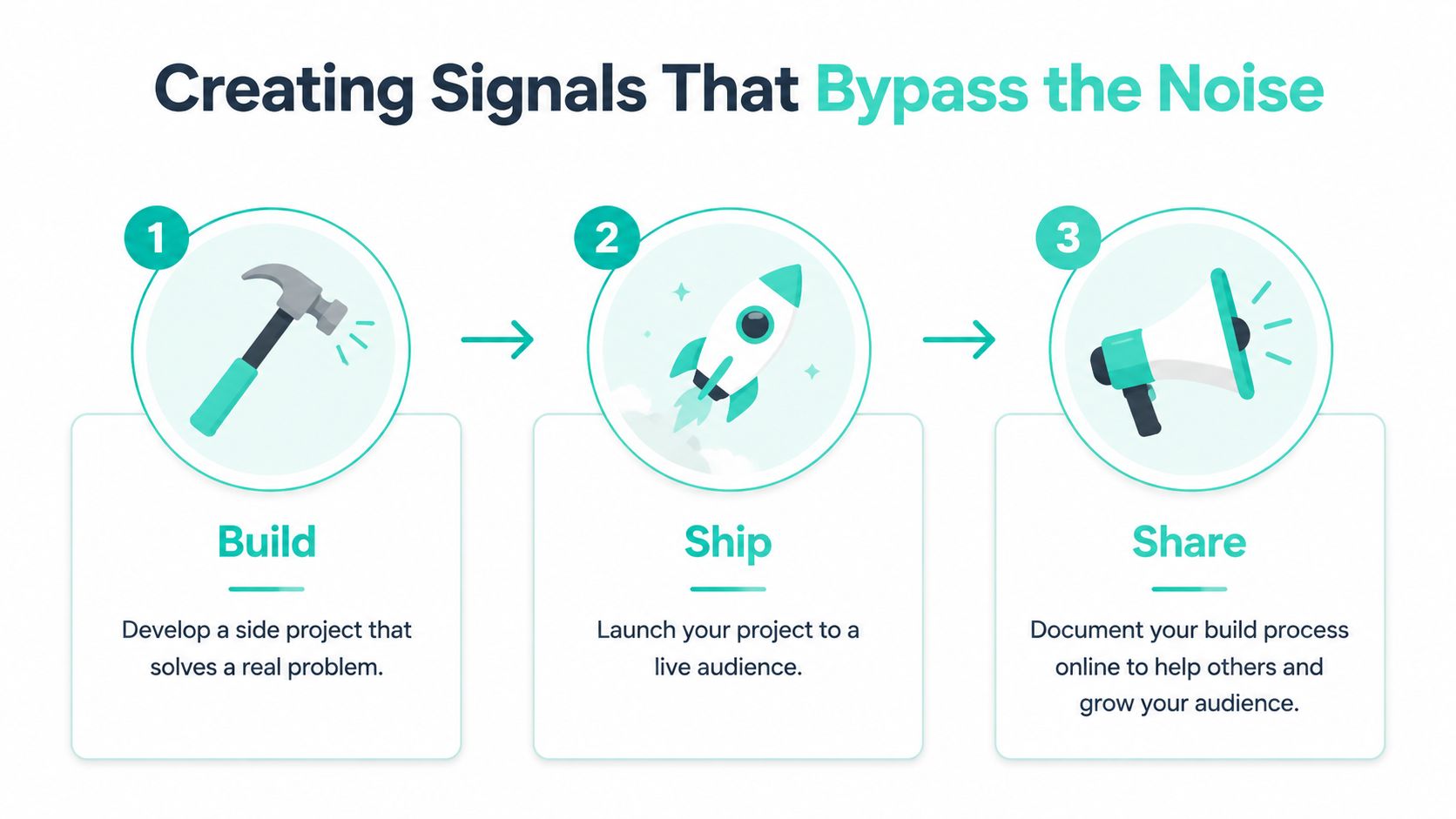
A side project only helps if it demonstrates useful traits. “Another clone app” usually doesn't. A small tool that solves a real annoyance can.
Good signal projects tend to do one of these:
The point isn't complexity. The point is visible reasoning.
A startup doesn't learn much from your idea backlog. It learns from what you release.
Candidates who get noticed often share one small thing that works instead of ten ambitious things that never left draft form. A rough live tool, a clean GitHub repo, a short write-up of a technical decision, or a public teardown of a product flow gives a hiring team something concrete to react to.
Here's what “show, don't tell” looks like in practice:
That last step matters. Restraint is a startup skill.
If you can explain why you cut scope, a good startup team will usually rate that higher than extra features.
A lot of capable candidates publish in the wrong places or publish in the wrong voice. They post generic “thought leadership” on LinkedIn and wonder why nobody serious responds.
Early startup teams usually pay more attention to places where people expose real work. That includes:
If you don't have elite credentials, this route matters even more. Public proof reduces the need for pedigree. It lets someone evaluate your curiosity, consistency, and craft directly.
| Signal | Why it works | Why it fails |
|---|---|---|
| Small shipped project | Shows initiative and execution | Too vague, no live demo, no explanation |
| Open-source contribution | Shows collaboration and technical fluency | Tiny cosmetic commits with no substance |
| Niche community participation | Shows real interest and problem-solving | Obvious self-promotion |
| Short technical writing | Shows clarity of thought | Generic advice with no firsthand insight |
The strongest startup candidates don't just say they're passionate. They leave a trail of artifacts that makes that claim believable.
Finding startups is easy. Finding the right startups, at the right moment, through the right channel, is the real skill.
A lot of candidates waste months spraying applications at companies they haven't researched. Then they assume startup hiring is chaotic and inaccessible. It's not inaccessible. It's selective, networked, and timing-sensitive.

The smartest candidates don't rely on a single route. They combine curated marketplaces, warm intros, and targeted cold outreach.
Here's how those channels differ:
| Channel | Best use | Limitation |
|---|---|---|
| Curated marketplaces | Efficient access to vetted startup roles | You still need a strong profile |
| Warm introductions | High trust, faster context | Limited by your network |
| Cold outreach | Useful when timed well and personalized | Easy to do badly |
One practical option is startup job sites and marketplaces for startup jobs, including curated marketplaces that let candidates create one profile and get seen by multiple vetted startups. In the Underdog.io model, candidates apply once, and companies reach out if there's fit. That's useful if you want quality over volume and don't want to disappear into a broad job board.
As of 2026, over 50% of venture-backed startup talent teams use AI in hiring workflows, and sourcing is the second most common hiring channel after inbound applications. The same report notes startup recruiting emails see a 19% reply rate, and reaching out to newly funded startups within 1 to 3 days of the announcement tends to work best, according to Ashby's startup hiring report.
That should shape your approach.
Don't email a founder because the company looks interesting in the abstract. Reach out when there's a hiring trigger:
If you're targeting product roles, it also helps to understand what early teams are prioritizing operationally. A good primer is this overview of startup product management strategies for 2026, because better candidate outreach usually starts with better business context.
Founders and startup hiring leads can spot a mass email in seconds. Generic interest gets ignored. A useful note does three things fast:
A simple structure works well:
Hi [Name], I saw your team is hiring after the recent funding announcement. I've spent the last few years working on [relevant domain/problem], especially around [specific challenge]. I'd be interested in speaking if you need someone who can help with [concrete outcome]. Happy to send a few relevant examples of shipped work.
Keep it short. If the message reads like a cover letter, it's too long.
Most candidates stop at the company's marketing site. That's not enough. You want to understand what the company is trying to prove right now.
Look at:
This makes your outreach sharper and your interviews better. It also helps you avoid startups that sound exciting but can't explain what they need.
Startup interviews move fast when a team is serious. Top-performing startups can reach 25 to 30 days for time-to-fill, compared with an industry average of 36 days, and startup offer acceptance rates sit around 80%, according to Dover's startup recruiting metrics. For candidates, the practical takeaway is simple: if you wait to get prepared until after the first call, you're already behind.

Startup interviews often look informal from the outside. They aren't. Good teams are trying to answer a few blunt questions:
That's why behavioral questions matter so much. A prompt like “Tell me about a time you had to make a decision with incomplete data” is rarely about the story itself. It's about whether you can show judgment, prioritization, and ownership without sounding scripted.
A strong answer usually includes:
Candidates often overfocus on impressing and underfocus on alignment. In startup interviews, that's a mistake.
For technical screens, hiring managers usually care less about elegance in the abstract and more about how you reason through trade-offs. Explain assumptions. Ask clarifying questions. State where you'd simplify for speed and where you wouldn't compromise.
For take-home assignments, set boundaries. A startup may value hustle, but a disciplined candidate doesn't burn a weekend producing unpaid consulting work with no scope control.
Use this approach:
Hiring lens: Most startup take-homes are less about perfection and more about whether you can scope, prioritize, and communicate like a teammate.
Startup candidates sometimes act as if getting the offer is the finish line. It isn't. You need to assess whether the company deserves your risk.
Ask questions that reveal operating reality:
Those answers tell you more than a polished mission statement ever will.
A startup offer is never just salary. It's salary, equity, scope, learning curve, manager quality, company stage, and your own tolerance for uncertainty.
The mistake candidates make is negotiating only one dimension. The better move is to evaluate the full structure.
Consider this framework:
| Offer area | What to ask |
|---|---|
| Base salary | Is this level aligned with the role's scope and market reality? |
| Equity | What's the vesting schedule, and how is the grant explained? |
| Role scope | Is the title matched to actual responsibility? |
| Team quality | Who will you learn from directly? |
| Company trajectory | What has to go right for this opportunity to be worth the risk? |
If you do decide to move forward, it helps to review practical guidance on how to accept a job offer so you close cleanly and maintain your advantage where it matters.
One more candid point. A startup that reacts badly to reasonable diligence is giving you useful information. Good founders don't expect blind faith. They expect informed commitment.
The people who get recruited by startups consistently don't treat the process like a one-time campaign. They treat it like reputation building.
That means they keep their profile sharp, keep shipping visible work, stay active in the right communities, and build relationships before they need them. They also understand that a rejection today can turn into a warm conversation later. Startup ecosystems are small. People change companies, raise new rounds, and remember candidates who were thoughtful, credible, and easy to talk to.
For early-stage startups, first-degree network connections deliver the highest return on investment as a sourcing channel, which is why your professional relationships matter so much over time, according to Gem's guidance on startup sourcing. If you want to know how to get recruited by startups, that's the final lesson. Don't only optimize for applications. Optimize for trust.
Build a body of work people can find, a reputation people can repeat, and relationships people want to use on your behalf.
That's how you move from chasing startup jobs to being someone startups actively try to hire.
If you want a quieter, more selective way to explore startup opportunities, Underdog.io lets you apply once and get introduced to vetted startups and high-growth tech companies if there's a fit. It's built for candidates who care more about match quality than blasting out applications.