Monday morning, you open five tabs for startups hiring in Boston. By lunch, you have 40 listings, half of them reposts, a few that have likely been sitting there for weeks, and no clear read on which companies are actively hiring.
That is the primary problem in Boston's startup market. The city has enough startup activity to support a focused search by function, stage, and company type, but volume alone does not help if the best openings are buried under stale posts and aggregator noise. A broad review of the market noted more than 1,500 startup openings in Boston in May 2026, which is useful as a demand signal, but not as a job search strategy.
The practical question is not where startup jobs exist. It is which platforms consistently surface active roles, responsive teams, and companies that still have budget and urgency behind the hire.
That's why platform choice matters.
This guide is built around seven platforms and communities that give Boston candidates a better way to find current opportunities, not a static list of companies that may stop hiring next week. The goal is to help you build a sharper search process. Use one source for curated inbound interest, another for local employer visibility, another for startup-stage filtering, and a few that are stronger for community trust or founder-led hiring. If you want a faster way to sort through the options, this guide to startup job platforms in Boston lays out the same problem from the candidate side.
The sections below explain what each platform is good at, where it falls short, and how to use it without wasting time.
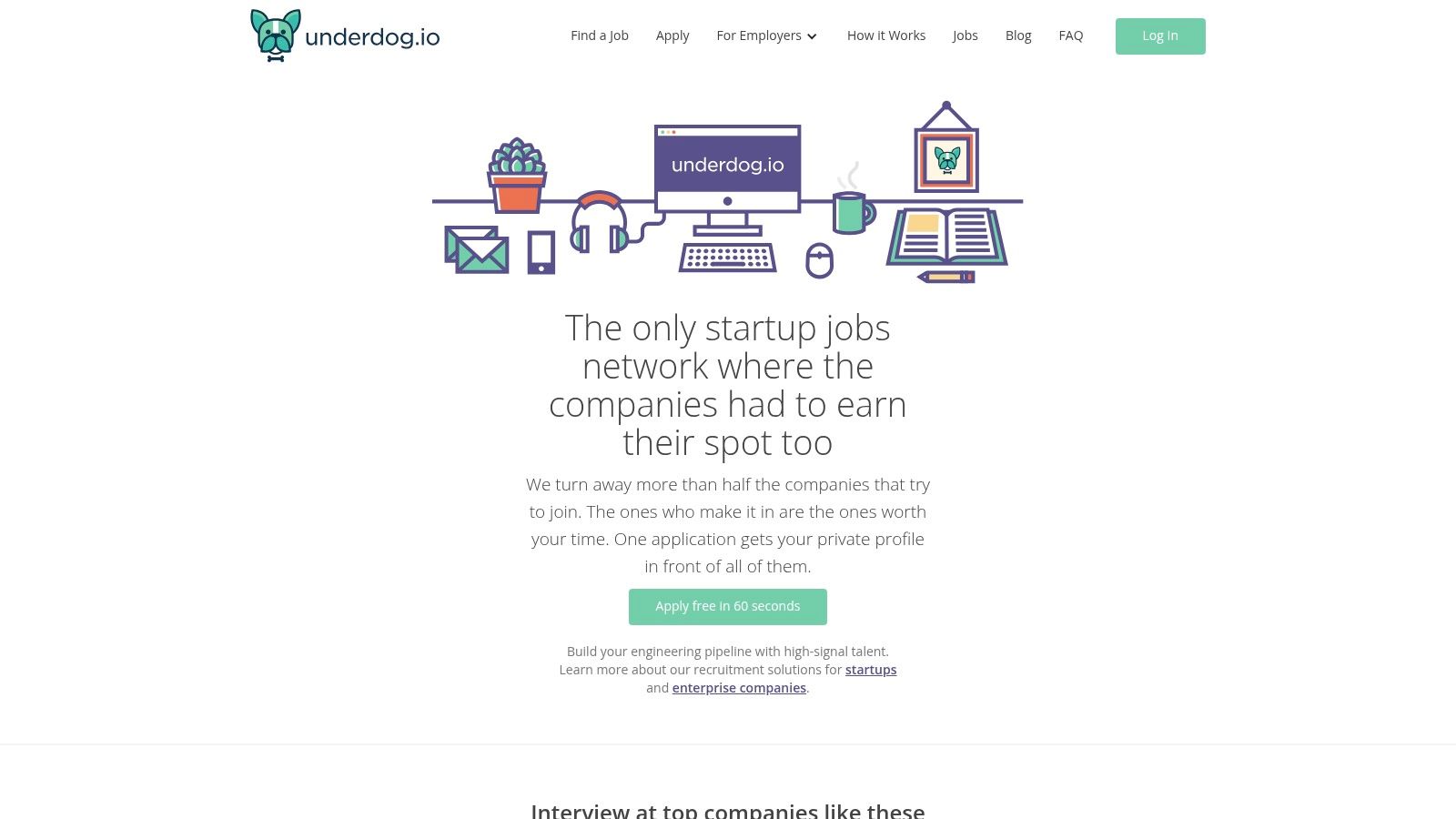
A common Boston startup search goes like this. You spend a week applying through public boards, then realize half the roles are old, some were posted for employer branding, and the hiring manager is buried under volume. Underdog.io solves a different part of the problem. It helps experienced candidates get in front of startups that are still actively hiring and willing to engage.
The model is straightforward. You create one profile, Underdog reviews it, and matched startups reach out if there is mutual fit. Profiles stay anonymous until you decide to move forward, a feature that is important for those seeking new roles discreetly while still employed.
That setup works best for candidates with a clear value proposition. If you are a backend engineer with scaling experience, a PM who has shipped in a messy environment, or a product designer who has worked close to founders, Underdog can save a lot of wasted effort. It cuts out a large share of low-signal applications and replaces them with warmer conversations.
Boston has enough startup hiring activity to support a targeted process, as noted earlier. The problem is sorting active roles from stale ones. Underdog helps by narrowing the funnel before you ever apply.
This is not a volume play. It is a quality filter.
That makes Underdog especially useful if you already know the kind of company and role you want. Seed through Series C software teams. Product roles with direct founder exposure. Engineering jobs where hiring speed matters more than a polished corporate process. If that is your lane, curated matching often beats spending nights filing out forms across five different job boards.
One useful starting point is Underdog's own Boston startup jobs guide, which gives candidates a direct path into the local market through the platform. If you want a side-by-side view of the trade-off versus a broader local board, this comparison of a Built In alternative for startup candidates is a helpful reference.
Practical rule: Use Underdog when you want fewer, stronger conversations with startups that are actually responsive. Pair it with a higher-volume board if you are junior, changing functions, or still figuring out your target.
The upside is speed and signal. You spend less time on repeat applications, you keep your search private, and you are more likely to hear from teams with real hiring intent.
The limitation is selectivity. Candidates without direct startup experience, candidates making a sharp career pivot, and very early-career applicants usually get less value here. That is the trade-off. A tighter marketplace creates better matches for the right profiles, but it will not cover every Boston job seeker equally.
Use Underdog first if you fit one of these profiles:
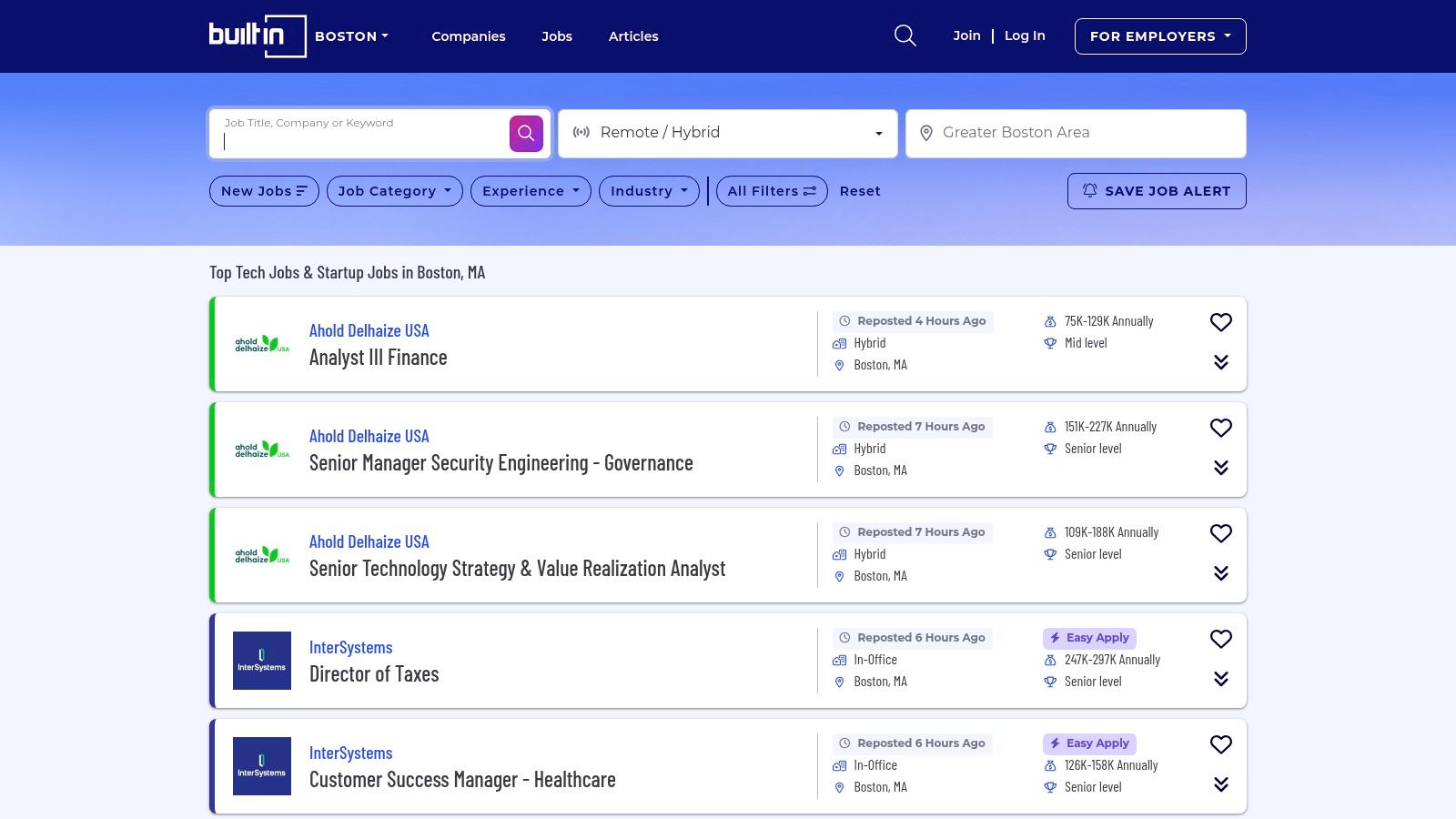
Built In Boston is where I'd send someone who wants market context, not just a job list. It's one of the better local hubs for seeing who's hiring, what kinds of companies dominate the market, and how roles are spread across functions like software, product, design, and go-to-market.
That local framing matters in Boston because the market isn't one thing. It includes venture-backed software startups, biotech, AI-heavy teams, robotics companies, and later-stage scaleups that still feel startup-ish. Built In helps you see that spread quickly.
Use Built In Boston when you want to map the ecosystem before you apply. It's especially useful if you're relocating to Boston, switching from big tech to startup work, or trying to understand whether a company is local-first or just lumped into a Boston search.
Its company profiles and editorial content can save you time. You can often tell whether a company feels like a true startup, a mature tech employer, or a brand-heavy listing with little urgency behind it.
A good comparison point is this breakdown of a Built In alternative for startup candidates, which highlights the main trade-off. Built In gives you breadth and local visibility. A curated platform gives you tighter matching and less noise.
Built In Boston is strongest when you're still narrowing the field. It's weaker when you already know you only want early-stage startups.
The main issue is mix. Built In doesn't separate early-stage startups from larger employers cleanly enough for every search. You'll need to filter aggressively if your target is seed through Series B.
I'd use it as a research and discovery layer, then move quickly to direct applications or curated channels once you find the companies that look serious.
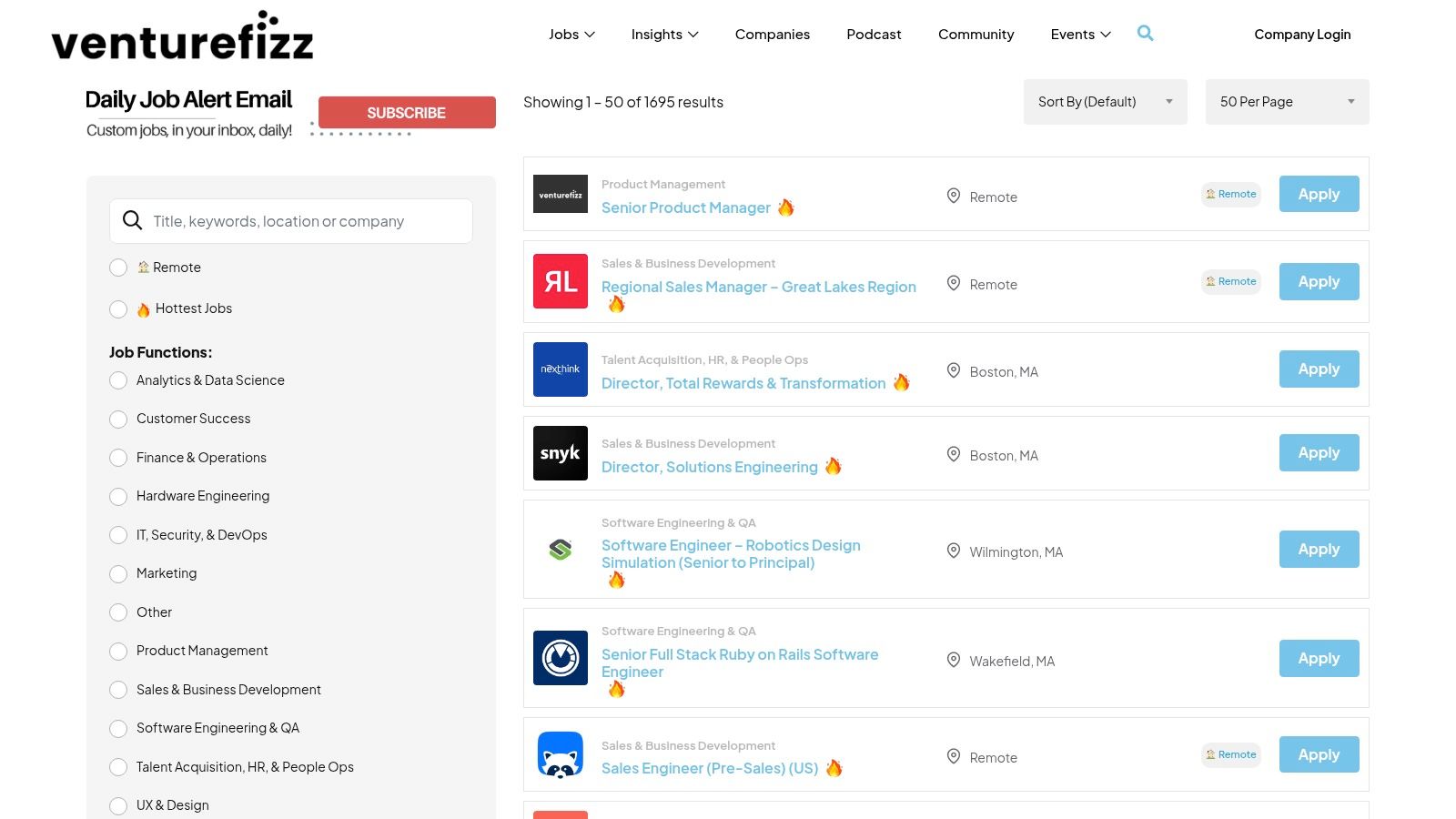
VentureFizz feels like Boston. That's its edge.
It's not trying to be a national everything-board. It's a local tech and startup community site with jobs attached, and that gives it a very different texture from broad aggregators. You'll often get more context around the companies themselves, not just a title and an apply button.
Boston startup hiring is easier when you can understand team identity fast. VentureFizz helps with that through company pages, founder interviews, videos, and culture-focused content. For candidates, that means less guessing about whether a startup has a real local presence and a real hiring team behind the listing.
A common problem with Boston startup directories is that they show volume without decision-grade guidance. Public listings are everywhere. Indeed listed 13,002 startup jobs in Boston, but sheer quantity doesn't tell you which listings are high quality, stage-appropriate, or moving fast. VentureFizz is better than most at adding local color and company context.
The strength is concentration. The weakness is inventory size.
If you only use VentureFizz, you'll miss some startups that post elsewhere first, especially companies leaning on founder networks, YC channels, or startup-specific marketplaces. But if your priority is Boston and Cambridge startup discovery, it belongs in the mix.
Use it well by doing two things:
Wellfound is still one of the default platforms for startup hiring, especially if you care about compensation transparency and startup-specific profiles. For Boston candidates, it's a reliable place to find early-stage and growth-stage teams that are used to hiring outside the old corporate playbook.
The biggest reason candidates like it is simple. Many listings include salary and equity details, and startup applicants need that context early. A vague “competitive package” wastes everyone's time.
Use Wellfound if you want to actively apply to a high volume of startup roles without leaving startup territory. It works best for candidates who are comfortable managing their own outreach, comparing multiple opportunities, and judging company quality for themselves.
Boston's startup ecosystem has enough depth to support this kind of self-directed search. YC's Boston hiring page listed 16 funded Boston startups actively hiring in May 2026, and the same market snapshot included startup salary data showing an average salary of $137,911, a 95th percentile of $236,931, and a sample of 1,791 roles. The practical takeaway isn't just comp. It's that Boston startup hiring supports serious roles, not only junior or underfunded ones.
Wellfound's biggest weakness is inconsistency. Some companies respond fast and founder-led. Others post and disappear. You can't assume equal urgency across listings.
If you use Wellfound, prioritize listings with clear salary ranges, strong company descriptions, and recent posting activity. Those usually correlate with teams that know how they want to hire.
I like Wellfound as a middle lane. More open than a curated marketplace, more startup-specific than a general board.
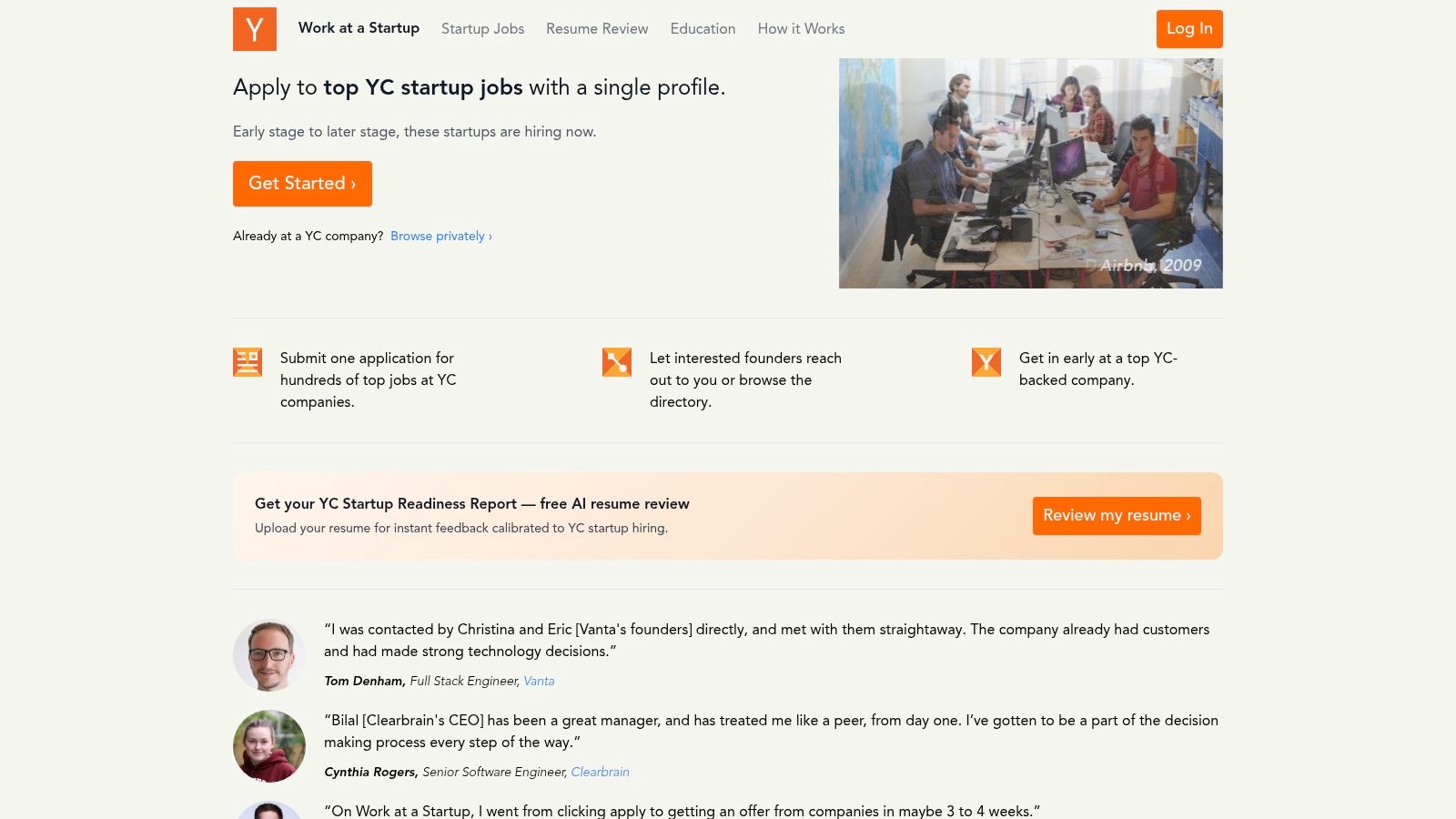
If your ideal company is early-stage, venture-backed, and still close to the founders, YC's jobs platform deserves a spot near the top of your list. The appeal is clear. You build one profile and can use it across a network of startups that already share a certain startup DNA.
That matters in Boston, where candidates often want a tighter set of bets instead of browsing every local tech employer.
YC-backed companies are often still hiring in a way that feels direct. Founders and early hiring managers may review candidates themselves. That can be a big advantage if you're strong on ownership, speed, and startup fluency but don't want to get lost in a slower hiring machine.
The Boston side of that market is active enough to matter. YC's location-based jobs view has become one of the better ways to answer whether Boston still has credible startup momentum beyond the biggest names. You can also sharpen your approach with this guide on how to get recruited by startups, especially if your resume looks more corporate than startup-ready.
Don't use YC's platform if you need certainty around process, title calibration, or polished hiring operations. Early-stage teams can move fast, but they can also change priorities fast.
Boston candidates often ask whether local startup quality is improving or just maintaining listing volume. A useful way to think about it is this. YC's Boston jobs pages show breadth and founder-backed opportunity, but candidates still need to judge hiring quality separately from listing count. That's why I'd use this platform for targeted early-stage applications, not as your only source of truth.
Welcome to the Jungle, which absorbed Otta's product, is a good complementary channel when you care about cleaner job descriptions and personalized recommendations. It's less Boston-native than Built In Boston or VentureFizz, but it's often better at relevance than broad job boards.
That matters if you're tired of searching “startup product manager Boston” and getting flooded with roles that are adjacent at best.
The user experience is candidate-first. Job summaries tend to be concise, and the platform does a decent job surfacing role context around salary, culture, and fit. For busy candidates, that means you can triage faster.
I wouldn't use it as my primary Boston startup board. I would use it as a filter layer after you've already defined your target. If you know your function, stage preference, and compensation floor, it can surface good matches without the clutter you'll get on larger boards.
The branding shift from Otta to Welcome to the Jungle still creates some confusion, and listing cadence can feel uneven depending on function. Some weeks it's excellent. Other weeks it's thin.
That said, it's worth keeping in your stack if you're targeting product, operations, design, marketing, or GTM roles where matching quality matters more than raw count.
The MassTLC job board is the most regional option on this list, and that's exactly why it can be useful. It won't give you the same startup volume as bigger platforms, but it can uncover local Massachusetts tech employers and startup-adjacent companies that don't always show up prominently elsewhere.
If your search is Boston and Cambridge specific, that regional bias helps.
MassTLC sits closer to the local ecosystem than most national platforms. That means it can be useful for discovering smaller companies, sector-specific employers, and teams connected to the broader Massachusetts innovation network.
Boston is especially strong in analytically intensive hiring, which reflects the city's concentration in biotech, AI, robotics, and data-heavy software. Indeed listed 464 startup analytics jobs in Boston, which is a good reminder that local demand isn't limited to software engineering. If you work in analytics, data science, experimentation, revenue ops, or technical BI, a regional board tied to the local tech ecosystem is worth checking.
Strong Boston searches usually include one curated platform, one broad startup platform, and one local ecosystem board. MassTLC fills that local ecosystem slot better than most.
MassTLC isn't where every early-stage startup posts first. Some member companies skew more growth-stage or established than very early. That's fine if you want a stable, local tech company with startup characteristics. It's less ideal if you only want venture-backed teams in their earliest stages.
I'd use MassTLC to discover companies, then validate urgency on their own careers pages or through founder and recruiter outreach.
| Platform | Implementation complexity | Resource requirements | Expected outcomes | Ideal use cases | Key advantages |
|---|---|---|---|---|---|
| Underdog.io | Low, single 60‑sec anonymous profile; human review | Minimal candidate time; free for job seekers; selective acceptance | High‑signal, low‑volume matches; introductions ~1–3/month | Passive or confidential candidates targeting curated early‑stage startups | Highly curated; human curation; confidential profiles; free to apply |
| Built In Boston | Low to medium, browse and apply; optional account | Moderate time for research; some sponsored listings | Broad local inventory with mixed company sizes; good research depth | Candidates wanting a Boston‑first view and salary/compensation context | Strong local signal; editorial content; compensation data |
| VentureFizz | Low, simple job board with company pages | Low time; focused, curated listings | Curated Boston startup discovery; smaller inventory than national sites | Researching Boston startups and team culture via interviews/videos | Concentration on Boston startups; company context and media |
| Wellfound (AngelList) | Low, create profile and 1‑click apply | Low for candidates; employers may use paid tools | High density of startup roles; variable response quality | Active applicants seeking startup roles with salary/equity transparency | Startup‑only inventory; compensation transparency; wide adoption |
| Y Combinator – Work at a Startup | Low, single profile applies to YC startups | Low time; focused on YC‑backed companies | High‑signal YC opportunities; availability varies by batch | Candidates targeting YC‑backed seed to Series B startups | Strong quality signal; direct founder/early‑hire access |
| Welcome to the Jungle (Otta) | Medium, personalized recommendations require account | Moderate time to set preferences for best results | Targeted, high‑relevance matches; posting cadence can vary | Candidates wanting concise job descriptions and culture insights | Candidate‑centric UX; clear role/company insights |
| MassTLC Job Board | Low, regional search and company directory | Low time; ties to local events and networks | Regional discovery with smaller inventory; sector niches | Networking and Boston/Cambridge‑centric job searches | Regional ecosystem connections; sector‑specific boards |
Finding a role with startups hiring in Boston isn't about being everywhere. It's about using the right channels for the right job.
If you want the highest-signal path, start with Underdog.io. It reduces noise, protects your privacy, and gives strong candidates access to vetted startups without forcing a hundred repetitive applications. That's especially valuable if you're already employed and want exploratory conversations with real upside.
Then add a Boston-first discovery layer. Built In Boston and VentureFizz are the two strongest options for understanding the local market, spotting who's active, and getting a feel for company identity before you invest in outreach. They're useful for different reasons. Built In gives you breadth. VentureFizz gives you local texture.
After that, use Wellfound and YC when you want direct startup applications. Wellfound is better for broad startup inventory and compensation visibility. YC is better when you specifically want founder-led, early-stage opportunities with strong startup signal. Welcome to the Jungle works well as a relevance filter, and MassTLC rounds out the stack if you want deeper access to the Massachusetts tech ecosystem.
The mistake I see most often is treating all job boards the same. They're not. Some are for discovery. Some are for direct response. Some are best when you're passive. Others only work if you're ready to drive your own process hard.
A smart Boston search usually looks like this:
If your resume also needs work, this guide to StoryCV for startup roles is worth reading before you start applying. Boston startups tend to reward clarity, ownership, and evidence that you can operate in ambiguity. Make that obvious.
The best candidates in this market don't just search harder. They search smarter.
If you want a faster way into Boston startup conversations, Underdog.io is a strong first step. One short application puts your profile in front of vetted startups and high-growth tech companies, and the platform keeps things confidential until there's mutual interest. If you'd rather spend your time talking to serious teams than sorting through noisy listings, it's one of the best tools in the stack.