Why do so many job seekers still treat Los Angeles like it's only entertainment and a few flashy consumer apps, when the city gives engineers more ways in? The better question is which tech companies in Los Angeles are hiring for the kind of work you want, because LA's labor market is deep, geographically spread out, and not limited to one neighborhood or one industry. UCLA Anderson's 2018 forecast put the L.A. metro tech workforce at 446,000, ahead of Silicon Valley and San Francisco at the time, and more recent reporting based on CBRE data said L.A. still employed 279,000 tech workers in 2025 UCLA Anderson forecast. The point is simple, Los Angeles isn't a side quest anymore. It's a serious place to build a career if you know where to look, how each company hires, and which signals matter before you apply. For a broader job search context, I'd also compare the local market with coworking in Santa Monica if you're planning an in-person move.
ServiceTitan is the right LA pick if you want enterprise SaaS with real operational complexity. It sells field service software for contractors, so the work isn't just dashboards and feature flags, it's booking, dispatch, technician mobile workflows, payments, pricing, accounting integrations, analytics, and newer AI-assisted coaching tools. That breadth matters because engineers here are building systems that have to hold up in the messy reality of HVAC, plumbing, electrical, and other field operations.
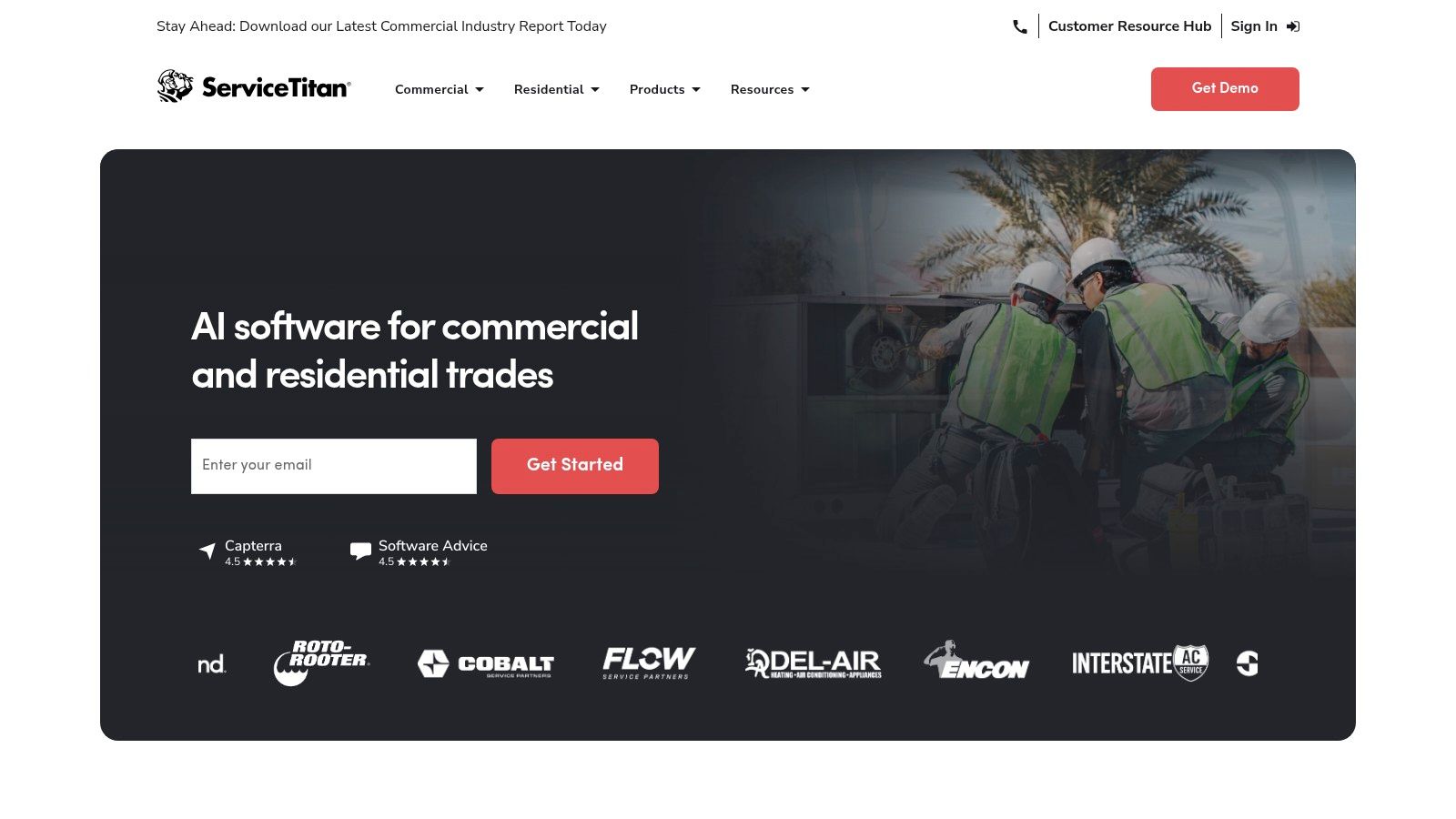
ServiceTitan tends to reward candidates who can speak to product depth, not just feature velocity. If you're applying, show that you understand integrations, data consistency, mobile reliability, and the cost of bad workflows for customers who live inside the platform all day. Enterprise SaaS interviews usually probe architecture, collaboration with product and design, and whether you can work through implementation complexity without breaking trust.
Practical rule: If your resume only says “built internal tooling,” rewrite it to show scale, integrations, and user impact. That's what hiring teams at a platform like this actually listen for.
The strongest applicants don't pretend they've worked in field service. They show adjacent experience in B2B SaaS, workflow software, payments, or data-heavy products. If you're cold-applying, use the company's product language, then show how your experience maps to those systems. ServiceTitan's startup job search advice is useful if you want to move faster than the usual application grind.
Riot Games is the LA employer for engineers who want scale plus live operations without leaving the city. Its Los Angeles headquarters supports game development, platform work, esports operations, and the Riot Games Arena, which anchors LCS and VCT Americas. That mix makes Riot different from a standard game studio. You're not just building one title, you're working across games, broadcast systems, and infrastructure that has to survive global attention.
Riot hires across engine, backend, anti-cheat, data, and broadcast tech, and that range matters. A strong candidate can explain how they'd support a live title, not just how they'd ship a feature. The interviews are typically rigorous because the company needs people who can think across gameplay, platform stability, and player-facing reliability.
The best signal before applying is whether your experience lines up with live systems. If you've handled release management, operational monitoring, latency-sensitive services, or event-driven architecture, you're speaking Riot's language. If your background is purely early-stage and improvisational, you'll need to show more discipline. Large studio hiring moves slower than startup hiring, but the tradeoff is clear, you get deeper technical problems and more durable systems.
Scopely makes sense if you want mobile game work with a sharp focus on live-ops, monetization, and analytics. Based in Culver City, it's known for free-to-play hits like Marvel Strike Force and Stumble Guys, and its teams work on scaling titles that have to stay healthy after launch, not just get to launch. That changes the nature of the engineering work. Stability, experimentation, and player retention all matter at once.
The company is especially attractive if you like the intersection of central tech and game teams. That means SDKs, tooling, analytics plumbing, and product work that supports individual titles rather than a single monolithic platform. If you're the kind of candidate who likes seeing direct revenue and engagement effects from your work, Scopely gives you that feedback loop fast.
Look closely at whether a role sits in a game team or in central technology. That distinction tells you a lot about your day-to-day reality. Central tech often means reusable systems and deeper platform ownership. Game-team roles are usually more directly tied to live events, balance changes, and monetization experiments.
Teams like this hire people who can move fast without getting sloppy. If you can talk about instrumentation, experiment design, and product tradeoffs in plain English, you'll stand out.
The risk is real, though. Free-to-play companies can create aggressive live-ops cycles, and IP-driven development can limit design freedom. Still, if you want to learn how large mobile games make money and stay relevant, Scopely is one of the strongest Los Angeles options.
GoodRx is the right Los Angeles company if you want consumer healthcare with visible product value. Its core proposition is straightforward, cheaper prescription access through coupons, subscriptions, telehealth, and mail-order options. That gives engineers and product people a chance to work on a business where the customer benefit is easy to understand, which is rare in healthcare tech.
The LA angle matters here because GoodRx sits in Santa Monica, inside a broader consumer-tech and health-tech talent pool. For candidates, that often means there are adjacent teams working on search, pricing, user experience, marketplace logic, and systems that have to handle a lot of consumer intent without making the product confusing.
GoodRx roles can look similar on the surface but vary a lot in practice. Some jobs are about consumer growth and conversion. Others are about data quality, pharmacy relationships, or platform reliability. Read the posting for evidence of whether the team is building acquisition flows, subscription experiences, or backend systems tied to healthcare operations.
Candidate-first advice: Don't pitch GoodRx as a generic health-tech brand fit. Pitch it as a product company where clarity, trust, and pricing logic matter every day.
The best applicants understand that healthcare consumer products live or die on user trust. If your work history includes search, marketplace systems, payment flows, or sensitive-data products, lead with that. If not, show how you've made complicated user journeys simpler. That's the kind of thinking this company can use.
Relativity Space is the most ambitious hardware-heavy choice on this list. Headquartered in Long Beach, it's building largely 3D-printed, reusable launch vehicles, including Terran R, and its culture revolves around software-defined manufacturing, autonomy, materials, and test cycles that blur the line between engineering disciplines. If you want aerospace work with a strong startup feel, this is the one.
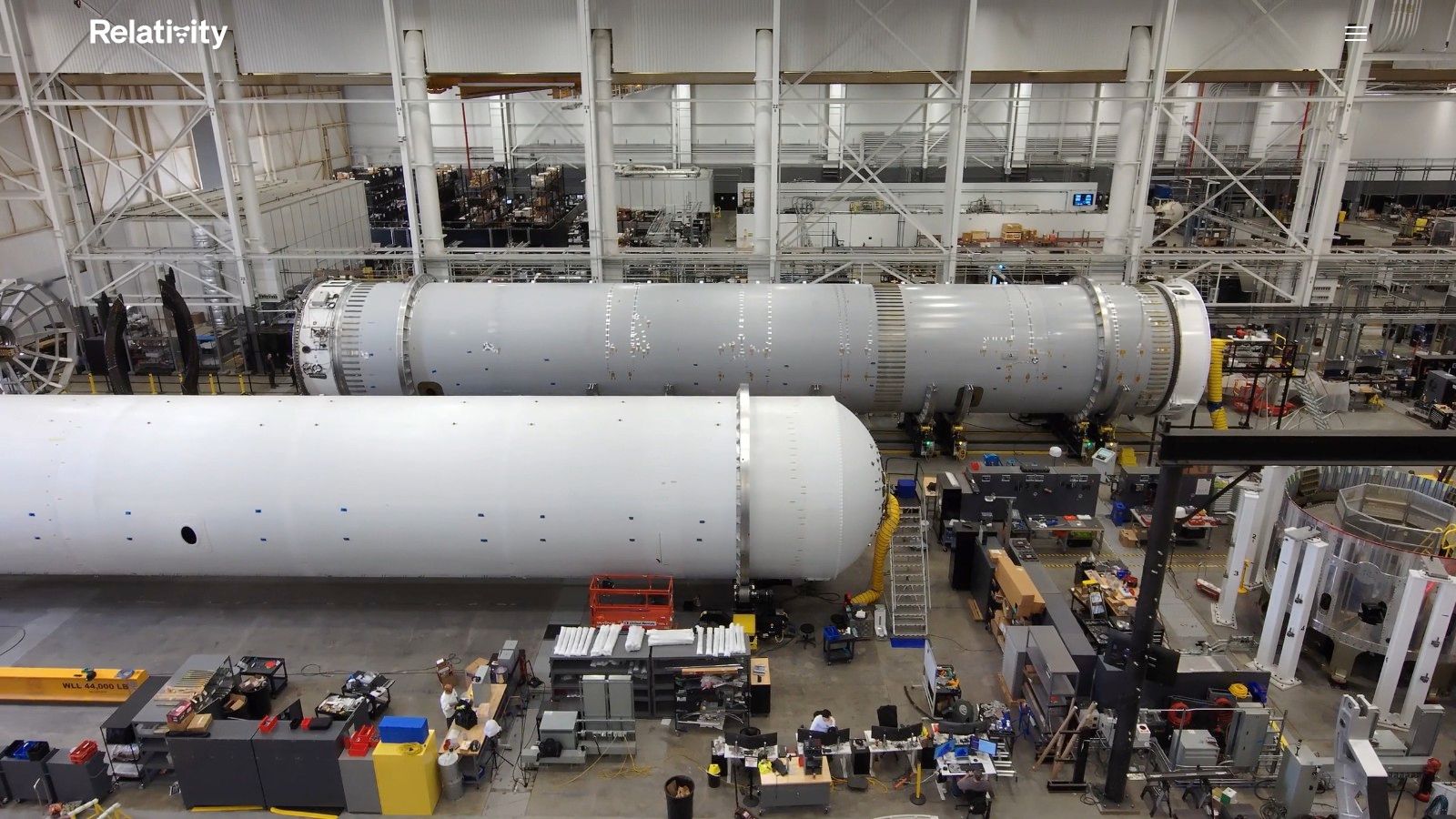
Relativity appeals to people who want end-to-end ownership. You're not just writing software for a finished product. You may be working on the systems that help design, print, test, and iterate on the vehicle itself. That makes it a strong fit for hardware engineers, software engineers, autonomy specialists, and manufacturing talent who want to see their work touch physical systems.
The hiring signal is different from consumer tech. You should emphasize discipline, testing rigor, and comfort with changing constraints. Aerospace schedules move, hardware risk is high, and the company serves enterprise and government buyers rather than consumers. If you want a neat, predictable roadmap, look elsewhere. If you want difficult problems with real-world stakes, Relativity is exactly the kind of place that can sharpen your career.
For a wider sense of engineering mobility in the region, I'd also compare the market with best cities for software engineers, because the right move isn't always the one with the loudest brand.
Snap is still one of the clearest reasons Los Angeles matters for technical talent. Headquartered in Santa Monica, it sits at the intersection of consumer social, camera systems, computer vision, machine learning, and hardware exploration through Spectacles. If you want to work on large-scale AR and visual communication products, this is the LA company that most directly fits that goal.
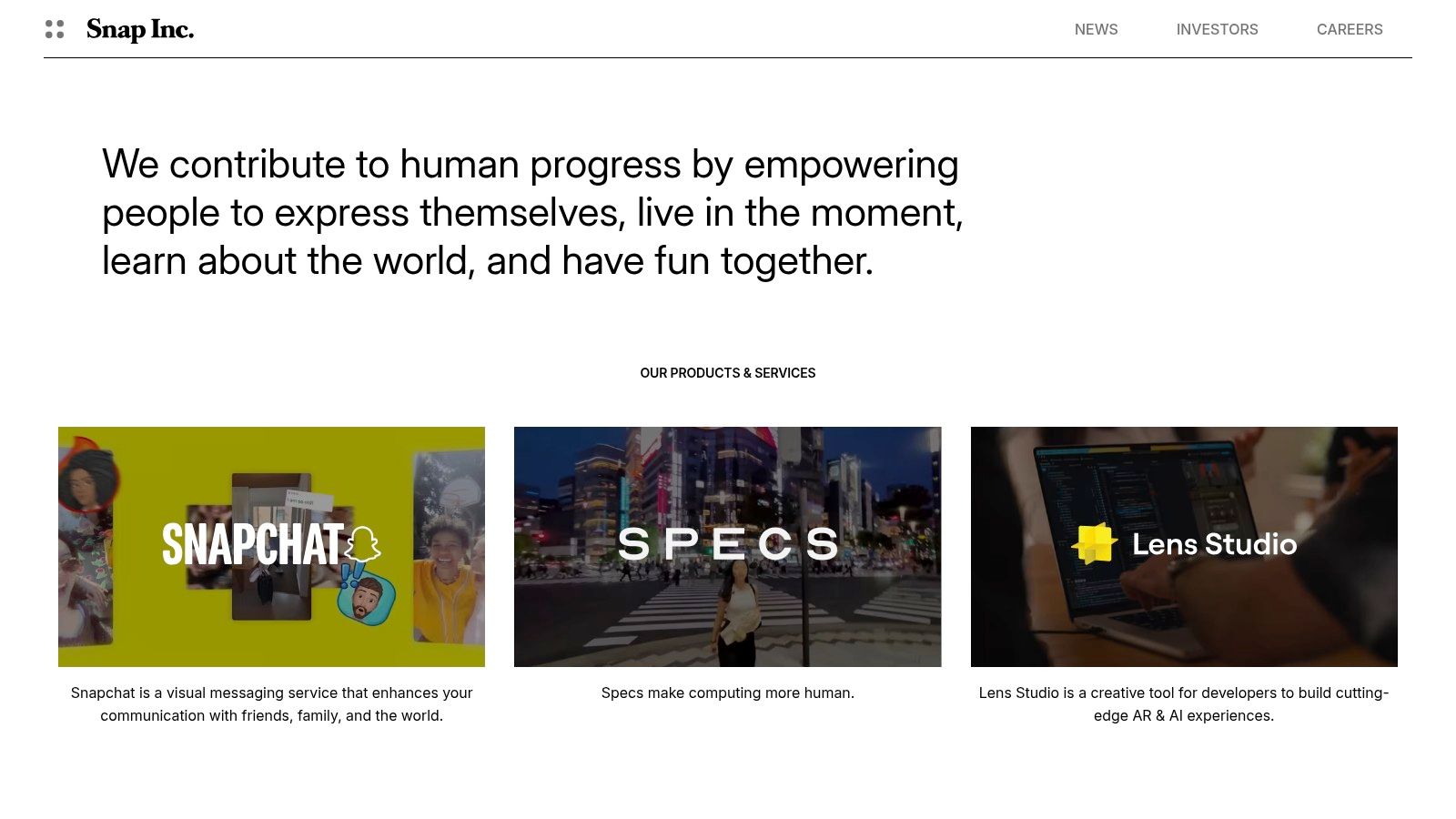
Snap likes people who can handle high-scale, low-latency systems and still care about the user experience. That matters for engineers in camera, ML, infrastructure, and product-facing roles. The company also has a serious R&D footprint, so candidates who can connect experimentation to execution tend to do better than those who only talk about shipping features.
The best pre-application signal is domain fit. If you've worked on AR, CV, ML, mobile performance, or consumer products with heavy visual components, make that obvious immediately. If you haven't, don't force it. Snap is competitive for core product and ML jobs, and the interview loop will usually expose thin experience fast.
Use the company's own roles page, then pair it with startup jobs in Los Angeles if you want to compare what's public with what's currently hiring. That combination helps you avoid wasting time on roles that are already oversubscribed.
ZipRecruiter is the best fit on this list if you want marketplace and hiring-tech problems instead of entertainment or hardware. Based in Santa Monica, it connects employers and job seekers with ML-driven matching and multi-channel job distribution. That makes it a practical place for engineers who care about search, relevance, marketplace dynamics, and product systems that directly influence hiring outcomes.
What makes it especially relevant for candidates is the product itself. You're working inside a company whose business depends on matching quality, employer economics, and job seeker experience all at once. That creates interesting tradeoffs for engineers, data scientists, and product teams because every improvement has to serve both sides of the marketplace.
Don't just ask what team you'd join. Ask how the role connects to matching quality, employer acquisition, or candidate conversion. Those are very different problems. A strong application should show that you understand marketplace products, not just general SaaS.
If you want a role where experimentation can move a real marketplace, this is the kind of company to prioritize.
ZipRecruiter also matters because it gives you a useful benchmark for LA's tech breadth. Not every serious LA employer is a consumer app or a game studio. Some are infrastructure-like marketplaces that support the broader labor market itself. That's a good reminder that the city's hiring economy is wider than its reputation.
| Company | Implementation complexity | Resource requirements | Expected outcomes | Ideal use cases | Key advantages |
|---|---|---|---|---|---|
| ServiceTitan | High, sales-led setup with extensive configuration | Significant budget, integrations, training and admin resources | Consolidated field-service platform, robust reporting and automation | Mid-to-large HVAC/plumbing/electrical contractors seeking unified ops | End-to-end feature set and mature ecosystem |
| Riot Games | Moderate–High, large codebases and live‑ops systems | Studio-scale infrastructure and multidisciplinary engineering teams | Experience with AAA live-ops, broadcast and esports operations | Engineers interested in game dev, live-ops and esports production | Established live titles and global esports footprint |
| Scopely | Moderate, live-ops and analytics driven workflows | Analytics, live-ops, monetization and partnership capabilities | Scalable free-to-play operations and revenue optimization | Mobile F2P developers focused on live-ops and monetization | Proven F2P track record and strong IP partnerships |
| GoodRx | Low–Moderate, consumer product with regulatory considerations | Pharmacy partnerships, telehealth integrations, consumer product teams | Large consumer reach and tangible prescription savings | Product and engineering roles in consumer healthcare and savings products | Clear consumer value and diversified product lines |
| Relativity Space | Very high, complex hardware, manufacturing and testing workflows | Large capital, specialized additive-manufacturing and test facilities | Rapid prototyping and end-to-end rocket development capability | Hardware, materials, manufacturing and aerospace engineers | Innovative large-format 3D printing and fast iteration |
| Snap Inc. | High, large-scale AR, CV and ML platforms | Advanced ML/CV talent, low-latency infrastructure, creator ecosystem | Consumer-scale AR features, camera/vision products and creator tools | AR, computer-vision, ML engineers and creators | Leading AR platform and strong R&D footprint |
| ZipRecruiter | Moderate, marketplace systems with ML matching | Data science, scalable infra and partner distribution network | Broad candidate reach and machine-learning-driven matching | Professionals building marketplaces and hiring-tech products | Large marketplace scale and network effects |
Stop spraying applications across LinkedIn and hoping one lands. LA hiring is too fragmented for that approach to work well. Target company career pages first, then use your network only to warm up the exact role you want. If you're coming from entertainment, gaming, aerospace, or consumer tech, lean into that cross-pollination instead of hiding it. Los Angeles employers understand adjacent experience better than generic “software engineer” branding, especially in a market where the city has about 1.4 million tech workers in 2023 and tech accounts for 10.2% of total regional employment city-industry data.
You also need to calibrate for comp reality. A lot of LA roles, especially at newer companies, will lean on equity-heavy packages. That doesn't make them worse, but it does mean you should evaluate the upside, the stage, and the likelihood of the company staying in hiring mode. The local market is large, but it's not uniform. Clustered areas like Silicon Beach, Santa Monica, and West LA are still active, while other parts of the city keep building their own pipelines. Recent reporting on Plug In South Los Angeles makes that clear, because it shows startup formation in historically overlooked neighborhoods can produce real companies and real roles, not just a branding story TechCrunch coverage.
Timing matters too. LA hiring tends to pick up after the holidays and again around back-to-school season, so don't wait for a perfect moment. Build a short list, apply early, and track the companies that fit your background instead of chasing every logo. For recruiters and job seekers alike, a practical way to sharpen search strategy is to learn boolean search with dreach, then use that logic to find roles that aren't obvious from the front page.
If you want a faster path into the right LA startups, Underdog.io is a sensible next step. It's a curated marketplace, so you submit one 60-second profile and let vetted companies come to you, which is a better use of time than fighting for attention in crowded job boards. Build the profile today, set your LA and role filters, and treat the first month as a quiet networking channel, not a transactional application dump.
Underdog.io helps candidates reach vetted tech startups and high-growth companies without the noise of a traditional job board. If you're focused on tech companies in Los Angeles, it gives you a direct way to surface roles that fit your background and lets employers come to you. Visit Underdog.io and build your profile before you send another generic application.