Where should startup-minded designers look first for UI UX jobs, and what makes one channel more useful than another? Finding strong opportunities is less about applying everywhere and more about choosing sources that match your target stage, role type, location, portfolio strength, and tolerance for startup risk. A founding product designer needs a different search strategy from a UX researcher targeting a mature technology company.
This list evaluates seven channels through a practical startup-candidate lens: listing relevance, company quality, compensation or equity visibility, portfolio expectations, and likely hiring responsiveness. Current listings change quickly, so treat each platform as a live source rather than a permanent inventory. For candidates who want a curated starting point, Underdog.io offers vetted startup opportunities through one 60-second application. Candidates exploring regional options can also compare UX designer skills, salary, and jobs in LATAM.
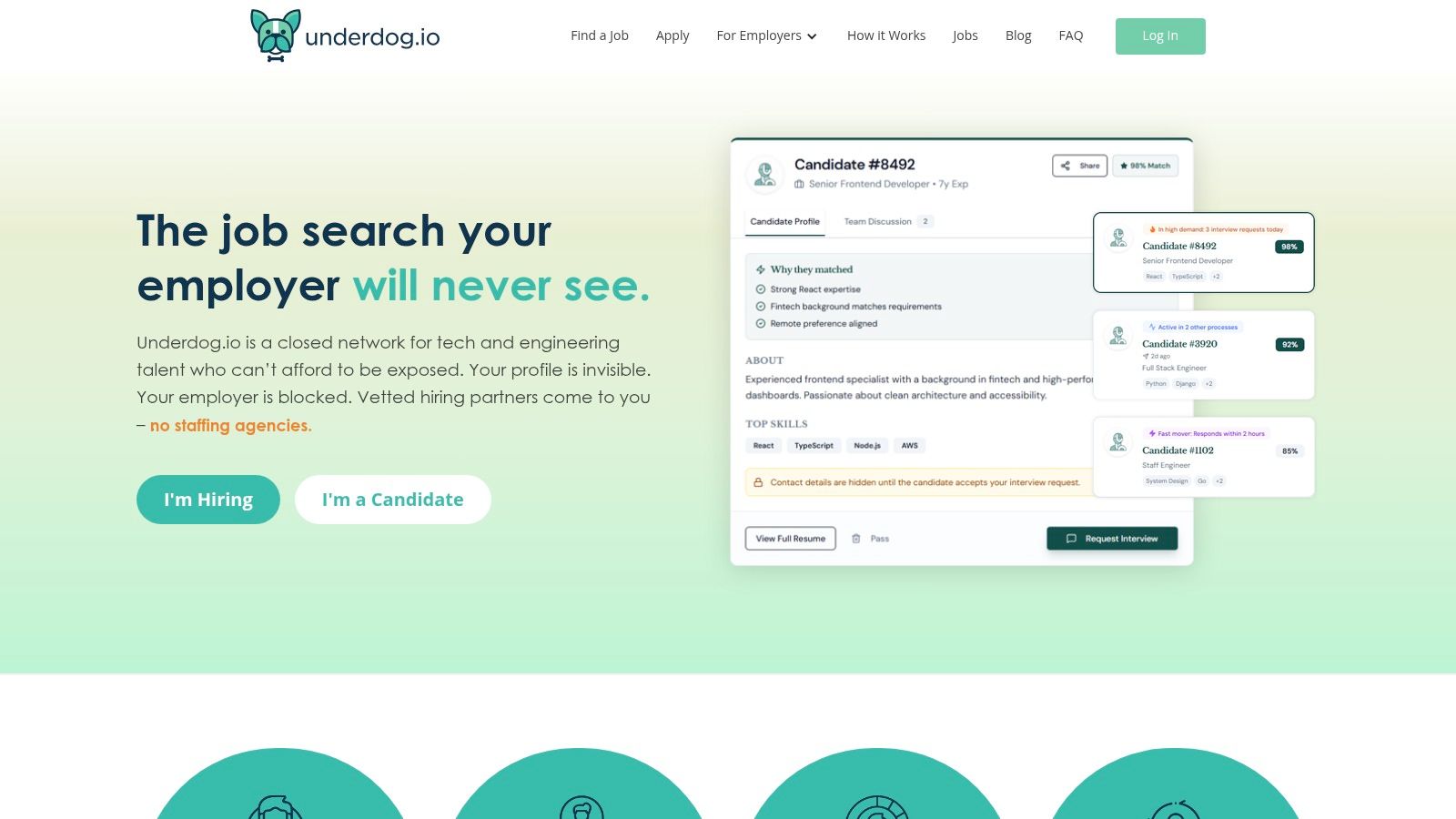
Underdog.io scores high on signal quality and low on listing volume, making it a useful first channel when startup fit matters more than application count. It connects candidates with vetted startups and technology companies across New York City, San Francisco, and remote roles in the United States. Instead of browsing a public feed, candidates submit one anonymous application, after which hiring teams can review their profile and decide whether to make contact.
Curation is the platform's main differentiator. Underdog.io reviews candidates, screens participating companies, and makes selective introductions with human judgment rather than relying only on keyword matching. About 5% of applicants are accepted, and accepted candidates typically receive 1 to 3 introductions per month. That limited flow can improve relevance, but it also means fewer chances to apply and less control over which teams see your profile.
The channel suits product designers, UI/UX designers, and candidates targeting an early design-hire role. Anonymous profiles and employer blocking support a confidential search, which helps employed designers test startup demand without publicly announcing their plans.
Portfolio quality still carries significant weight. Show shipped product work, explain the decisions behind key screens, and make your role clear when the project involved researchers, engineers, or other designers. A startup hiring its first designer will also look for evidence that you can define problems, work with product leadership, and balance research, interaction design, visual design, and production delivery.
Compensation and equity details may be more useful here than on broad boards, but candidates must assess the company beyond the role description. Ask about runway, funding, reporting lines, decision rights, and the expected scope of the position. Those answers reveal whether the opportunity offers genuine ownership or mainly execution work under an unclear product strategy.
Practical rule: Use Underdog.io for a small number of potentially relevant startup conversations. Use broader boards when you need more listings, clearer salary comparisons, or access to public-sector, agency, and international roles.
Candidates do not pay to use the platform. Employers pay through success-based hiring and recruiting services, including contingent recruiting through Hunt by Underdog. For New York candidates, the guide to design jobs in NYC provides local context.
The main trade-offs are selectivity and geographic concentration. Apply with a portfolio adapted to product ownership and startup ambiguity, then keep other channels active if you need higher volume or roles outside the United States.
Are you targeting a startup role where scope, compensation, and company risk are visible before you apply? Wellfound, formerly AngelList Talent, is a practical source for seed through Series B opportunities. Its listings commonly cover product design, UI/UX, design systems, and founding designer positions, with filters for remote work and major US cities. Company stage, investors, hiring activity, and role scope often appear alongside the job description, giving candidates more context than a generic search result.
Salary ranges and, in some cases, equity details may be posted before the application. That visibility helps you decide whether a portfolio review and interview process justify the time, while still leaving questions about equity terms, vesting, and actual decision authority. Response-time indicators and “Actively Hiring” labels can also help you focus on companies that appear engaged.
Use Wellfound when you want to compare startup opportunity against startup risk. For a product design or UI-focused role, review customer traction, funding context, product maturity, and who owns design and product decisions. A broad “UI/UX designer” title may cover interface production, research, or an early design hire expected to set the process, so judge the responsibilities rather than the title.
The trade-off is uneven listing quality and recency. Wellfound offers strong startup coverage, but fewer Fortune 500, agency, and public-sector roles, and compensation information is not consistent across postings. Use Visit Wellfound alongside other channels, tailoring each application to the company's stage and the kind of design work you want.
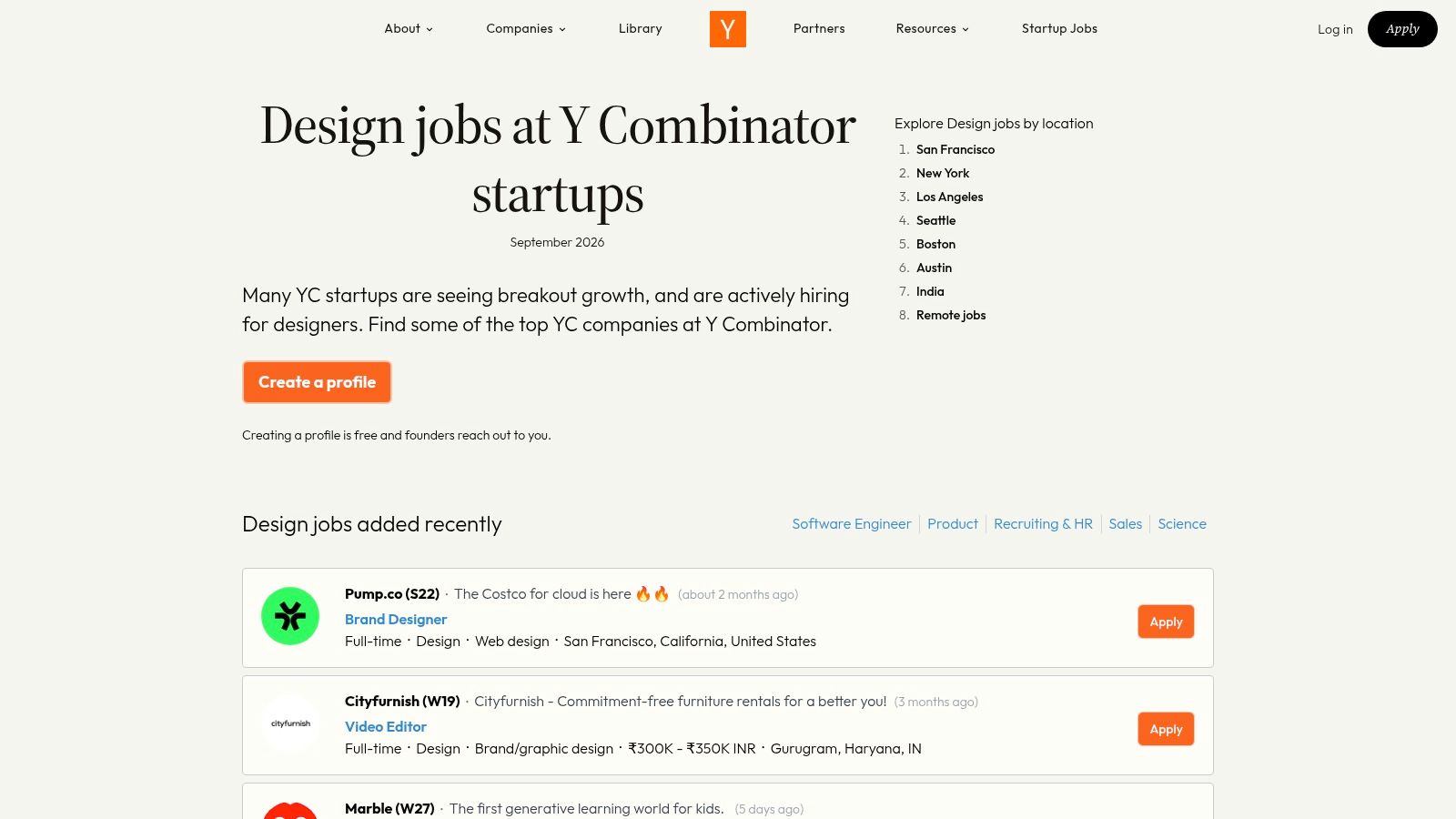
Are you looking for a UI/UX role where design decisions sit close to the founders? Y Combinator's job channels suit candidates who want early-stage responsibility and direct access to startup teams. The official Design jobs feed collects openings from funded YC startups across product design, UX, interaction design, and UI. A single profile can reach multiple founders, who may contact candidates directly.
That access raises the standard for your application. Founders often need more than polished screens. They may expect a designer to interview users, define the problem, prototype options, explain trade-offs to engineers, and make sound decisions with incomplete information. Lead your profile and portfolio with product judgment, shipped work, and the reasoning behind key choices.
YC listings can suit candidates targeting a first design hire or an early product designer role. The scope may cover research, user flows, prototyping, interface design, and parts of product definition. That breadth can accelerate learning and connect your work directly to product outcomes. It also brings trade-offs: titles may be loose, mentorship may be limited, and the role can overlap with product management or front-end work.
Review the design feed for roles that disclose equity, then assess the full offer. Ask about funding runway, revenue, the next financing milestone, design decision-making, and expected deliverables during the first months. Compensation varies across early-stage teams, so request written clarity on salary, equity, vesting, and responsibilities before committing.
Founding-designer scope can be attractive, but broad responsibility does not guarantee adequate support.
The channel's narrower volume is its main limitation. Many openings favor product generalists who can move between research, flows, prototypes, and visual execution. A candidate focused on UX research may find fewer suitable roles here and should pair YC with a broader source.
For a wider comparison of startup-focused sources, see this guide to the best sites for startup jobs. Apply selectively: reference the startup's product problem, show how your portfolio demonstrates initiative, and explain why you can work effectively with limited structure.
Which UI/UX roles deserve your application when a broad technology board mixes startups, scaleups, and enterprise employers? Built In helps candidates compare those options across US technology hubs, with listings for product design, UX research, interaction design, and related work. Its breadth is useful when your search includes both early design hires and candidates seeking more established teams.
Use the company profile before judging the role. Review the product, leadership, working model, and signs of design maturity, then compare them with the job description. A scaleup may offer stronger research support, clearer progression, and more visible compensation than an early startup. An early team may offer greater product ownership, but often with less structure and higher execution risk.
Start with a specific role family, location, and remote preference. Read the responsibilities closely because “UX designer” can describe research, service design, content design, interface production, or several of these together. For startup candidates, the strongest listings explain the product problem, design decision-making, expected deliverables, and reporting structure.
Built In's signal is less concentrated than a design-only board, so screening takes longer. The trade-off is broader market coverage and better company context. Apply selectively, tailoring your portfolio to the employer's product and showing both polished execution and evidence of product reasoning.
Explore Built In for geographic breadth and employer research rather than a stream of generic design titles.
Which startup design roles are worth pursuing on Dribbble? Start with the portfolio signal. Dribbble Jobs suits candidates whose strongest evidence is polished UI, interaction, or product design work. Employers already use Dribbble as a visual showcase, so your profile may screen your application before anyone reads a resume. That makes the channel relevant to startups and SaaS companies hiring for interface quality, rapid exploration, and detailed interaction work.
The trade-off is clear: visual polish gets attention, while product reasoning earns trust. Show the user problem, constraints, key decisions, iterations, and outcome behind each case study. A startup hiring manager choosing an early design hire needs evidence that you can shape a product, not only produce attractive screens. Candidates targeting UI or product design should make that connection explicit.
Dribbble's board is more focused than a general technology site, but its pool is smaller and less useful for research-heavy searches. Qualitative research, service design, and organizational UX candidates may find fewer relevant openings. Compensation visibility can also vary, so confirm salary, equity, scope, and reporting structure before investing time in a process.
Use the channel selectively:
Paid employer postings mean some startups will hire elsewhere, so an employer's absence from Dribbble says little about its hiring activity. Treat the board as a high-relevance supplement for visual product designers, not a complete UI/UX search plan.
If your portfolio needs stronger case studies, review these product design portfolio examples. Visit Dribbble Jobs when your work can make a fast visual impression and you want design-specific opportunities.
Could your portfolio do the first round of selling before a recruiter reads your application? Behance suits candidates who want their work and job search in one creative ecosystem. Its job board connects with Behance projects, skills, recommendations, saved searches, and alerts across desktop and mobile. That setup gives visually strong candidates a direct way to show interface work, brand-to-digital projects, prototypes, or creative-technical products.
The signal quality depends heavily on presentation. A polished project can attract attention quickly, but employers may expect more than attractive screens. Show the problem, your role, key decisions, constraints, and outcome. For UI and product design roles, include flows, interaction details, and system thinking. For an early design hire, explain how you would work with founders, product managers, engineers, and customers when processes are still forming.
Behance's wider creative audience creates useful reach, yet it also increases filtering work. Some listings may emphasize visual production, branding, or marketing rather than product ownership. UX research openings are less common than visually oriented roles. Review the employer, product stage, team structure, reporting line, and responsibilities before applying. Compensation and equity may require direct questions, and startup stability can vary.
Open each application with the project most relevant to the role. Make your contribution specific: research, flows, visual systems, prototyping, testing, or engineering collaboration. A short case study with clear decisions often communicates more than a large gallery of unrelated work.
Candidate access is free, and saved jobs and alerts make follow-up convenient. Those features do not replace employer diligence. Browse the Behance Job Board when your portfolio makes a fast visual impression and you want creative-product opportunities alongside conventional UI roles.
AIGA Design Jobs, the AIGA Career Center, gives UI/UX candidates access to employers outside the usual startup pipeline. Its US-based listings include nonprofits, universities, agencies, civic organizations, cultural institutions, and mission-driven teams. That mix suits candidates seeking public-impact work, accessibility projects, or design roles beyond venture-backed software.
The board supports filters for category, experience level, and salary range. Search results may include UI/UX, product design, interaction design, and related visual roles, but titles do not always describe the same scope. A product designer at a university may have limited engineering support, while an agency interaction designer may serve several clients without owning the shipped product. Read responsibilities, reporting lines, and team structure before applying.
AIGA is especially useful when employer purpose matters as much as startup speed. Civic and education roles can involve complex stakeholders, accessibility requirements, and long service lifecycles. Agency work can build range across industries, although client approvals may limit control over implementation. Startup candidates should assess whether each role supports the target path, whether that means UI craft, product ownership, UX research, or an early design-hire position.
Use the listing as a starting point for due diligence:
Listing volume is smaller than on major technology boards, and cadence varies by sector. That lower volume can improve relevance for candidates who value research, accessibility, communication, or community impact over startup pedigree. Apply with one case study that shows the role's core skill, then explain how your process fits the organization's constraints.
| Platform | Ease of use / Onboarding | Resource requirements (profile, portfolio & cost) | Expected outcomes (match quality & volume) | Ideal use cases | Key advantages |
|---|---|---|---|---|---|
| Underdog.io | One 60‑sec anonymous application; manual review | Free for candidates; employers pay success/contingent fees; selective acceptance (~5%) | Very high signal, low volume, few curated introductions (1–3/mo), high response rate (~65%+) | Passive or active candidates seeking curated startup roles in NYC/SF and US remote | Human curation, profile privacy, founder/hiring‑manager access |
| Wellfound (AngelList) | Standard profile and searchable listings | Free for candidates; resume/profile; many posts show salary/equity | Large volume with variable recency/quality; many early‑stage roles | Seed–Series B product design and founding designer roles | Startup signals, compensation transparency, strong filters |
| Y Combinator Jobs | Single free profile visible to YC founders | Free profile; easy founder outreach | High‑signal companies, smaller volume; strong chance for early/founding hires | Joining freshly funded YC startups or becoming first/early design hire | Direct founder access, YC‑funded company pipeline |
| Built In | Browse by city or remote; employer profiles and editorial | Standard profile/resume; free; rich company content for research | Broad inventory across startups and enterprise; requires more sifting | Product design & UX research roles in major US tech hubs and scaleups/enterprise | Deep local coverage, employer insights and editorial context |
| Dribbble Jobs | Portfolio‑first applications via Dribbble | Strong visual portfolio expected; employers pay to post | Targeted UI/visual roles, lower overall volume | Visual/UI and product designers with portfolio‑centric workflows | Recruiter visibility to portfolios, strong brand recognition in design |
| Behance Job Board | Integrated portfolio + personalized job recommendations | Behance portfolio and skills tagging; free | Good for visually led roles; mixed job quality/noise | Visually led UI/product roles and creative‑technical hybrids | Seamless portfolio integration, personalized discovery and alerts |
| AIGA Design Jobs | Niche board with filters by category/experience/salary | Tailored profile; applicant free; employer pricing visible | Smaller volume but more relevant to mission‑driven sectors | Nonprofit, education, agency, civic and cultural organization design roles | Reputable design community, targeted listings and filters |
A strong UI/UX job search doesn't require equal attention across all seven channels. Start with the source that best matches your desired environment, then add one or two complementary channels for coverage. Candidates who want curated startup matching should begin with Underdog.io. Those targeting early-stage product ownership can add Wellfound or YC, while candidates seeking broader US technology coverage should include Built In.
Your portfolio should change emphasis by channel and role. For a founding designer position, lead with ambiguity, product discovery, prioritization, and collaboration with founders. For a visual UI role found through Dribbble or Behance, bring interface craft and interaction details forward, but keep the product reasoning visible. For UX research or mission-driven work found through AIGA, emphasize methods, synthesis, accessibility, stakeholder alignment, and how insights changed the service or product.
Use the same discipline when evaluating offers. Check whether the listing is fresh, confirm the compensation range, and ask for written details about equity rather than relying on a vague promise. Startup candidates should also ask about funding, runway, reporting structure, decision rights, research access, engineering partnership, and what success means in the role.
Hiring timelines can move quickly at startups, but they also vary by founder availability, funding events, and team capacity. Don't interpret silence as a reliable signal about your fit. Track each application date, contact, role version, follow-up, and next step in a simple spreadsheet or project tool.
A practical weekly routine looks like this:
The best channel is the one that puts you in front of the right employer with evidence that matches the work. A curated marketplace may produce fewer conversations, while a broad board may produce more noise. Choose based on your stage, specialization, location, compensation needs, and willingness to take on startup uncertainty.
Underdog.io gives UI/UX candidates a curated way to reach vetted startups and high-growth technology companies through one 60-second application, with anonymous profiles and startup-focused matching. If you want a more focused alternative to sending applications across every board, visit Underdog.io and explore whether its candidate-first approach fits your search.