Top engineer salaries vary more than often anticipated. The broad U.S. engineering group had a median annual wage of $111,970 in May 2023, with the 75th percentile at $146,060 and the 90th percentile at $177,020. That spread is a key insight. Engineers who know how to benchmark by level, specialty, geography, and equity usually negotiate from a different position than people who rely on one generic average.
That's why a salary guide shouldn't just list high-paying disciplines. It should help you triangulate. You need one source for official wage baselines, another for company-specific compensation, another for city effects, and ideally a marketplace where strong companies come to you with serious offers. If you're exploring where high-paying work clusters, Eztrackr's guide to California's best jobs is a useful parallel read because it frames pay in the context of market concentration, not just job titles.
The tools below do different jobs. Used together, they give you a much better read on your true market value than any single salary page ever will.
If your target is top engineer salaries in software, platform, infrastructure, or machine learning, Levels.fyi is usually where I'd start. It's strongest when you need to answer specific questions that generic salary sites blur together. Think Staff Engineer at one company versus Senior Engineer at another, or whether a strong equity grant really closes the gap with a higher-cash offer.
The practical advantage is structure. Levels.fyi separates base, bonus, and stock, and it ties compensation to explicit company levels. That matters because a title alone often tells you very little. A “Senior Software Engineer” label can hide a wide range of scope, expectations, and pay.
Levels.fyi is best for high-paying firms where equity drives a meaningful share of total comp. It's also useful for seeing recent offer patterns and understanding how one company's leveling maps against another's.
Practical rule: Use Levels.fyi to size the ceiling, not the whole market.
That distinction matters. Crowdsourced compensation tends to skew toward people who care enough to report, and often toward the highest-paying corners of the market. That doesn't make the platform bad. It makes it specialized. For software engineers trying to decode seniority bands and total comp mechanics, that specialization is exactly the point.
If you want a complementary read on compensation mechanics before negotiating, Underdog's software engineering salary guide helps frame how ranges shift by role and market context. For top-end tech comp, Levels.fyi is still one of the fastest ways to understand whether an offer is merely good or highly competitive. Visit Levels.fyi.
Glassdoor is the broad-market counterweight to Levels.fyi. When I want a fast sense of what a title pays across cities, employers, and seniority bands, Glassdoor is often the first pass. It's less precise on equity-heavy packages, but it's useful because it covers a lot of ground quickly.
That breadth matters for engineers outside the narrow big-tech lane. If you're comparing software roles at healthcare companies, industrial tech businesses, consulting firms, or established enterprises, Glassdoor often gives a more representative middle-market read than a platform centered on elite compensation packages.
Glassdoor's biggest strength is also its biggest risk. Job titles are broad. “Software Engineer,” “Mechanical Engineer,” and “Data Engineer” can each cover very different scopes depending on the employer.
The official labor market data supports why this triangulation matters. Architecture and engineering occupations had a median annual wage of $91,420 in May 2023, compared with $48,060 for all occupations. That broad premium is real, but the spread inside engineering is wide enough that a general title average can still mislead you.
Glassdoor is useful for finding the center of the market. It's not the best tool for finding the ceiling.
That's the right way to think about it. If Levels.fyi tells you what a top-paying firm might offer, Glassdoor helps you understand whether your current employer is lagging a broader peer set. For many engineers, that's the comparison that triggers a job search in the first place. Browse Glassdoor Salaries.
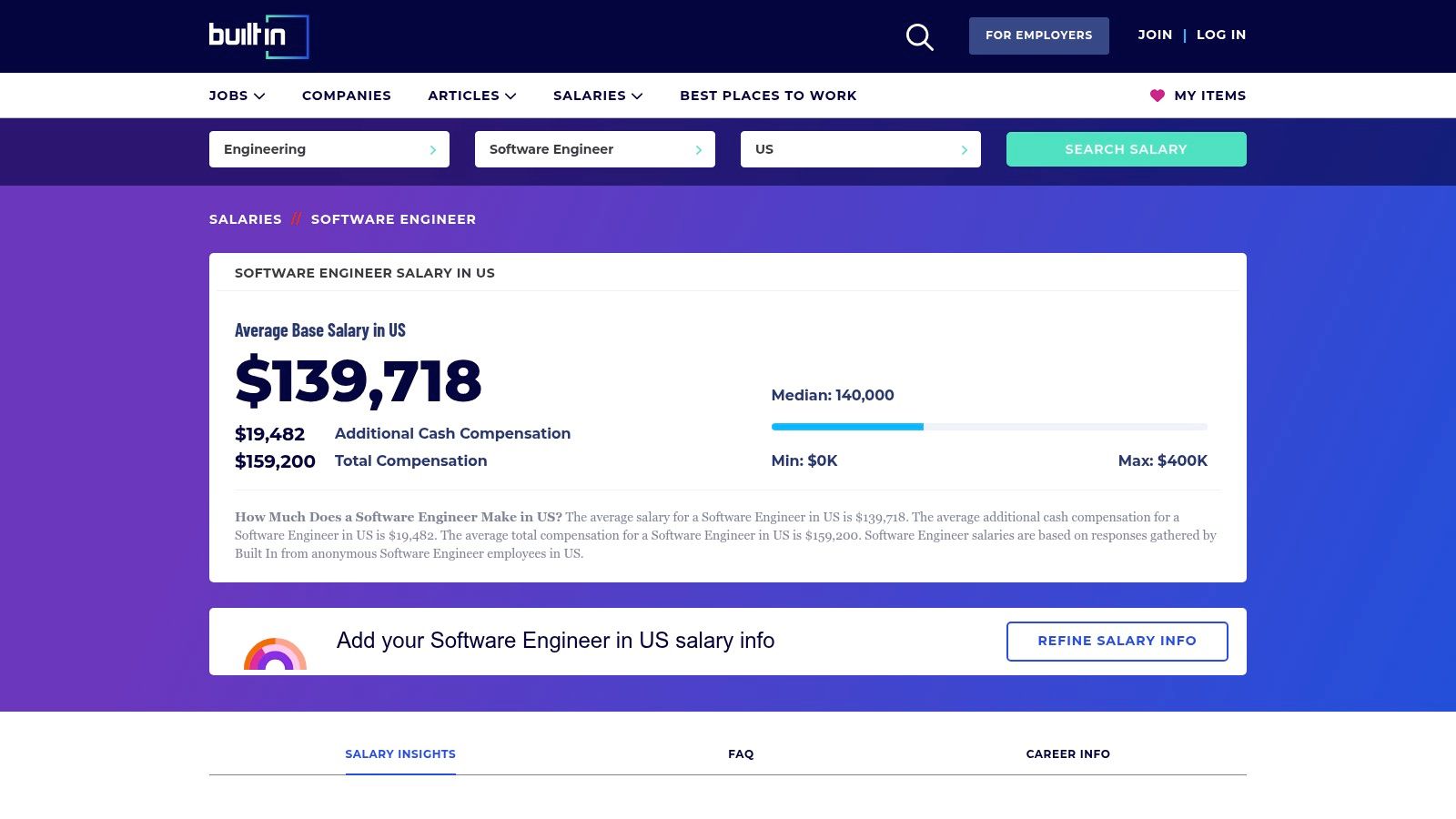
Built In is one of the cleaner tools for location-driven benchmarking in tech hubs. If you're evaluating startup and scale-up opportunities in places like San Francisco, New York, Seattle, or Los Angeles, it gives a fast read on what software engineering pay looks like in those metros without making you dig through a lot of noise.
I like it most when relocation or remote-pay strategy is part of the decision. Built In makes it easier to compare metros and think about whether a headline salary in one city really beats a lower nominal offer elsewhere.
Built In isn't trying to be an official wage database. It's better thought of as a practical market snapshot for tech ecosystems where startups and growth companies compete for engineering talent.
That last point matters because geography can distort every conversation about top engineer salaries. Public market summaries highlighted by the University of North Dakota show that Washington ranks as the top-paying state for engineers at about $115,244, with New York, Vermont, California, and Maine also ranking highly. But state-level pay alone still doesn't answer the more important question: how much value you keep after housing, taxes, and local competition.
Built In helps surface the market side of that equation. It won't solve cost-of-living analysis for you, and it won't break down equity in the way Levels.fyi does. But for fast, practical targeting, it's useful.
If you're comparing startup discovery channels alongside salary research, this Built In alternative comparison from Underdog is worth reading. Visit Built In Salaries.
OpenComp is one of the more useful tools when you care about how startups build pay bands internally. That's a different problem from merely asking what a role pays. Founders, finance teams, and candidates all need a way to compare cash and equity ranges that's closer to how startups level roles in practice.
That's where OpenComp stands out. It's oriented toward employer-side compensation design and startup benchmarking, so it's especially helpful when you're evaluating offers from early-stage and growth-stage companies that may not have famous brands but still compete hard for technical talent.
A lot of engineers focus on base salary and treat equity as a lottery ticket. That's often a mistake. With startup offers, the structure of the package is the story.
For negotiation, this matters because startup comp gets messy fast. Two offers can look similar on cash and still be very different once equity, refresh expectations, and role scope come into view. Before accepting anything, I'd strongly suggest reading Underdog's guide on how to evaluate a job offer, then using OpenComp to pressure-test whether the package is aligned with startup norms.
Field note: If a company says its equity grant is “very competitive” but can't explain level, dilution context, or refresh philosophy, the number probably isn't enough information.
OpenComp won't replace your own judgment. It does make those conversations more concrete. For startup engineers who need more than a title-based average, that's valuable. Explore OpenComp.
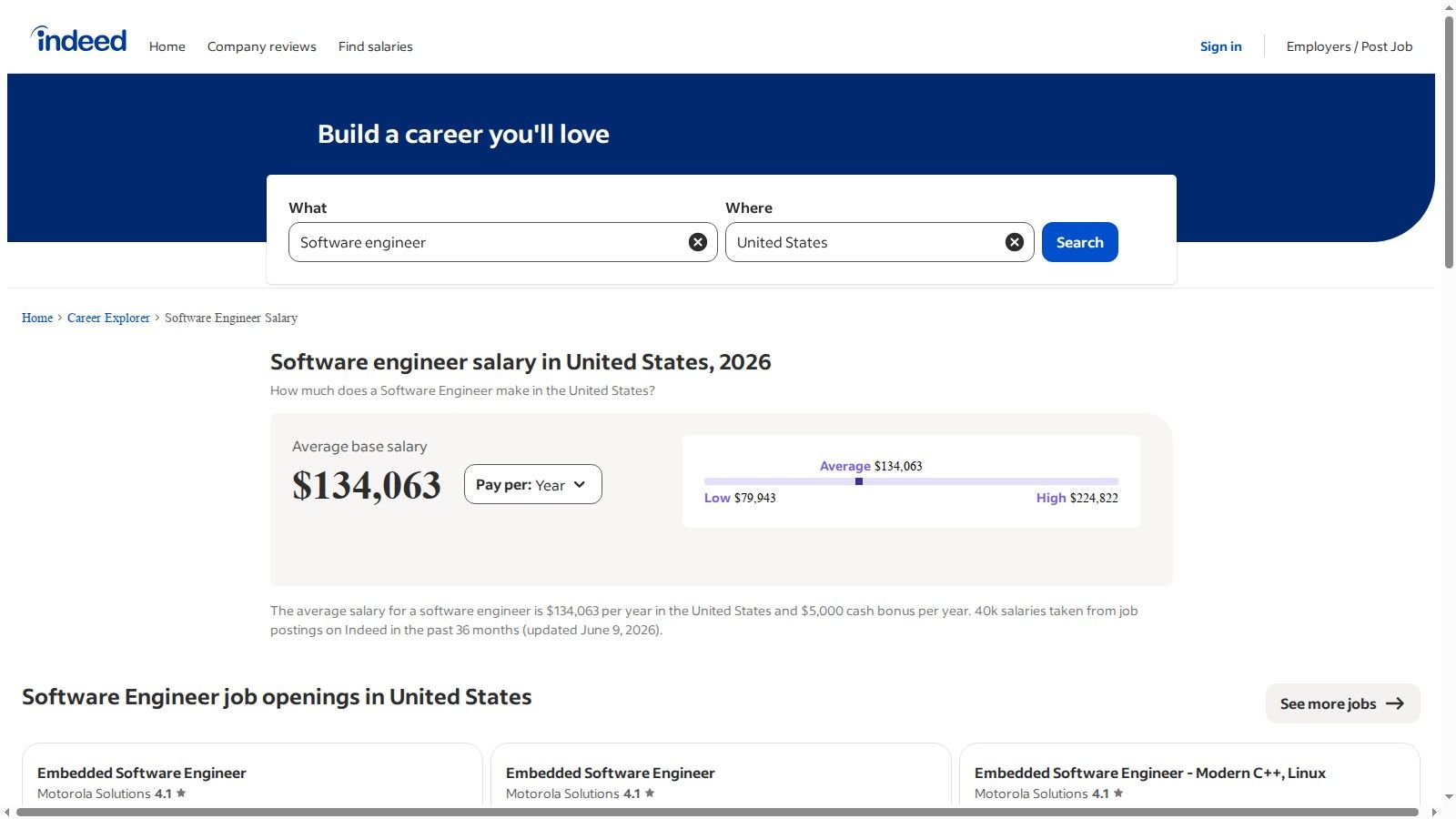
Indeed Salaries is the fastest pulse-check tool on this list. It's useful when you want to know what employers are actively advertising right now, especially outside the usual big-tech and venture-backed startup ecosystem. For engineers exploring broad national demand, that immediacy is valuable.
I wouldn't use Indeed as the final word on compensation. I would use it to see where posted ranges are clustering, which companies are publishing pay, and how live openings compare across regions or subfields.
Indeed is strongest for current-market visibility, not deep compensation design. Since it pulls from live job postings and user reports, it tends to reflect hiring activity that broader annual surveys can miss.
That's especially useful for software-adjacent and data-heavy roles. Recent job-market commentary highlighted by Indeed points to data engineers earning around $130,733 on average, with senior engineering roles often exceeding $150,000. The bigger takeaway isn't just the numbers. It's that pay premiums increasingly follow infrastructure, platform, and data skills, not only legacy engineering disciplines.
Indeed also helps reveal a practical truth about top engineer salaries. The best-paid roles aren't always the ones people associate with “engineering” first. In many hiring markets, data, platform, cloud, and software infrastructure skills are where compensation gets more aggressive.
That makes Indeed a good early filter. It shows where demand is surfacing in real time, even if you'll need another source to price the whole package. Check Indeed Salaries.
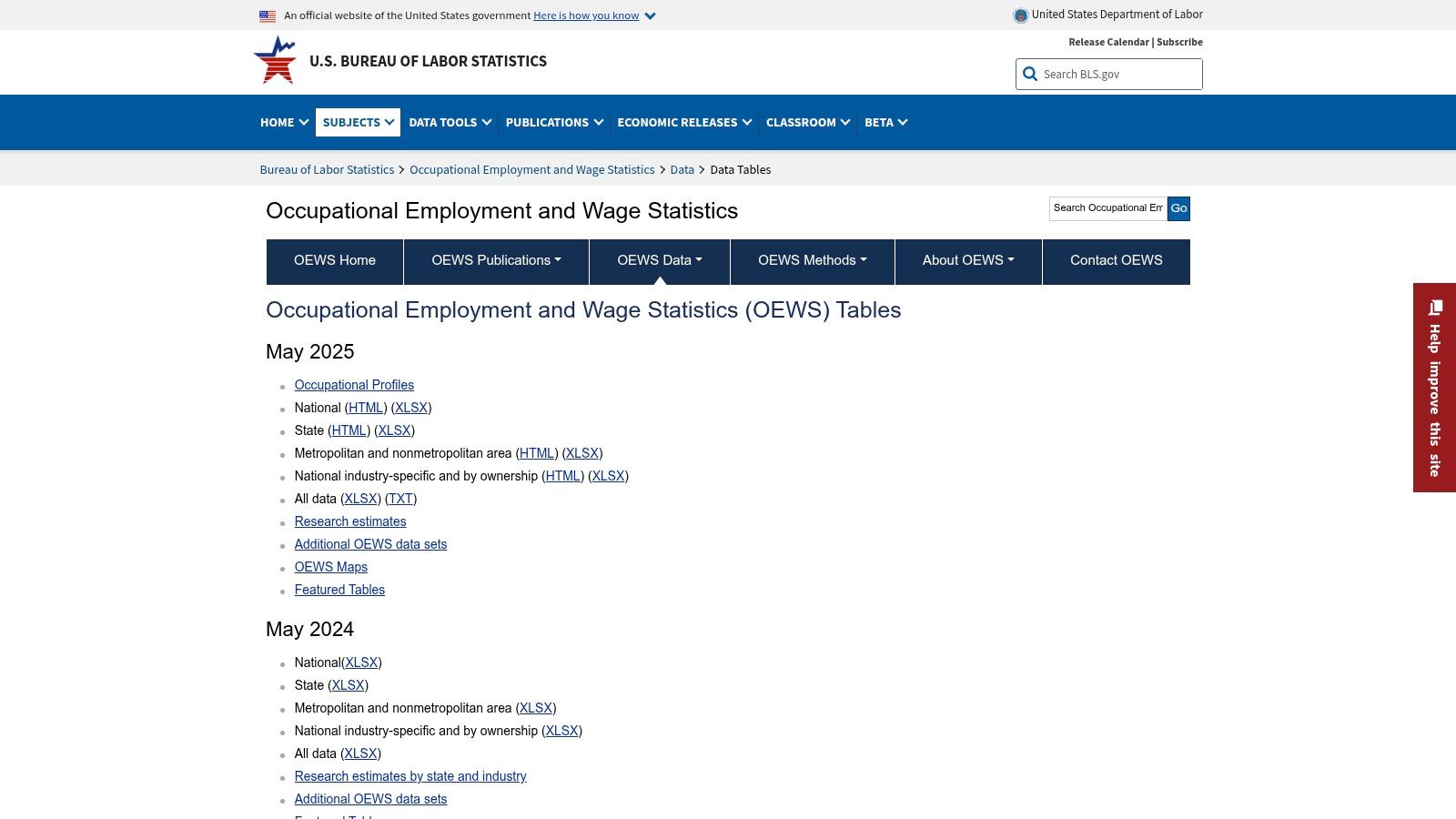
If you want a baseline that isn't influenced by startup hype, self-selection, or equity-heavy reporting, use the BLS Occupational Employment and Wage Statistics tables. This is the anchor. It won't tell you what a top-tier startup grant might be worth, but it will tell you what cash wages look like across occupations and geographies using a rigorous public method.
That makes BLS especially useful for traditional engineers, cross-state comparisons, and reality checks. Whenever private salary platforms seem too optimistic, BLS gives you a clean way to reset the conversation.
The BLS data is also where many broad compensation conversations should start. For software engineering and similar roles, private sources often mix title inflation and total comp language in ways that confuse people. BLS is simpler. It's wages.
A good example of why specialization matters comes from software. Michigan Technological University, summarizing BLS-related data, lists software engineering and software developer pay at a median of $144,570, with a 90th percentile of $211,450. That sits materially above the broader engineer baseline and helps explain why software remains the premium benchmark in many top engineer salaries discussions.
When an offer includes equity, benchmark the base against BLS first. Then decide whether the stock upside is enough to justify the risk.
That one habit prevents a lot of bad comparisons. BLS won't capture restricted stock units, startup options, or sign-on bonuses. But that's exactly why it's useful. It tells you what the stable cash floor looks like before you attach more speculative components. Browse the BLS OEWS wage tables.
A strong compensation strategy usually needs more than salary tables. Engineers who run multiple interview processes almost always negotiate from a stronger position than candidates with one offer and a stack of benchmark screenshots.
That is why Underdog.io earns a place on this list even though it is not a salary database. It is a curated hiring marketplace built for startup roles, and that makes it useful at a different stage of the process. The salary sites help you estimate your market value. A marketplace like this helps you test that value with real companies, real scope, and actual offer pressure.
The practical advantage is simple. You create one profile, stay anonymous until there is mutual interest, and get introduced to vetted startups that fit your background. For employed engineers, that matters. Discreetly building optionality is often more valuable than sending out dozens of cold applications and hoping one process turns into negotiation power.
Underdog works best after you have already triangulated your numbers from sources like Levels, Glassdoor, OpenComp, and BLS. At that point, the job is no longer just research. The job is creating enough credible demand for your skills that a company has to compete for you.
That is especially relevant in startup hiring, where compensation is rarely just base salary. Equity range, refresh policy, level scope, reporting line, and how badly the company needs to close the role all shape the final package. Generic salary pages can point you in the right direction, but they cannot replace live market feedback from actual interview pipelines.
Underdog is narrower than the salary sources earlier in this article. It will not help much if your target is a large public company, a government role, or a broad international search. It is also selective, so some qualified candidates will not be accepted.
That selectivity is part of the value for candidates who fit the market. Fewer introductions can still be better if the roles are relevant, the companies are serious, and the conversations reach hiring managers quickly. In practice, one well-matched startup process often gives you more negotiating strength than a much larger batch of low-signal applications.
Use Underdog as the execution layer, not the research layer. First estimate your cash floor, equity upside, and level using multiple data sources. Then use curated channels to test whether the market will beat your current package. That is how salary research turns into total compensation strategy.
| Source | Implementation complexity | Resource requirements | Expected outcomes | Ideal use cases | Key advantages |
|---|---|---|---|---|---|
| Levels.fyi | Low, browse and filter online | Free access; no integration | Equity-weighted total comp benchmarks for big tech | Benchmarking FAANG-style offers and leveling comparisons | Detailed equity breakdowns and recent offer reports |
| Glassdoor Salaries | Low, web search or account needed | Free; modeled estimates behind UI | Large-sample medians adjusted by location/seniority | Triangulating market medians and company pay ranges | Massive dataset and city/company granularity |
| Built In | Low, city pages and role filters | Free; employer-supplied and self-reported data | City-specific averages for base/additional cash | Startup/scale-up benchmarking and relocation decisions | Focused on tech hubs and metro leaderboards |
| OpenComp | Medium, signup and platform use | Subscription or employer participation; HRIS data access | Defensible, leveled compensation ranges for startups | Internal benchmarking, offer decisions, pay equity work | Employer-sourced, normalized HRIS/equity data |
| Indeed Salaries | Low, live job ads + reports | Free; aggregates listings and user reports | Current posted base pay and bonus snapshots | Pulse of market postings and broad nationwide reads | Up-to-date view of active job posting pay |
| BLS OEWS (U.S. Bureau of Labor Statistics) | Medium, download and analyze tables | Public data; statistical literacy helpful | Authoritative, time-series cash wage estimates by area | Policy, baseline regional cash wage comparisons | Methodologically rigorous, government-backed data |
| Underdog.io | Medium, curated application and vetting | Free for candidates; profile and screening | Curated introductions to vetted startups | Job seekers targeting early-stage startups with equity | High-quality, confidential matches and human screening |
Offer-stage execution creates some of the biggest compensation gaps in engineering. Two candidates with similar resumes can interview for comparable roles and still land very different outcomes because one anchored on a single salary figure, while the other built a case from multiple datasets and negotiated the full package.
The practical move is to triangulate, not cherry-pick. Use BLS as a conservative regional floor. Use Glassdoor and Indeed to check broad market pay and current posting pressure. Use Built In for city-level startup and tech hub comparisons. Use Levels.fyi to calibrate level and total compensation at larger tech companies. Use OpenComp to pressure-test startup ranges, especially if cash, equity, and leveling are all in play.
Then convert research into a decision framework before interviews start.
Set a cash floor. Set a target range. Set the minimum equity value and upside profile that makes a startup role worth choosing over a higher-cash alternative. Title matters too, especially for engineers who expect to re-enter the market within a year or two, because title affects recruiter outreach, leveling at the next company, and how future offers get framed.
Total compensation is where candidates often misread the deal. A strong base can hide a weak bonus target, a low refresh policy, or equity terms that look attractive until you examine dilution risk and liquidation preferences. Remote policy matters for taxes and long-term flexibility. Promotion scope matters because a slightly lower offer with a clear path to the next level can outperform a higher first-year number.
Research alone is not enough. Access matters.
Strong candidates usually run a few processes at once so they are not negotiating from urgency. That is one reason curated marketplaces continue to matter. They put engineers in front of vetted teams faster, reduce time spent on low-signal conversations, and improve the odds of reaching companies that can pay near the top of the market you identified earlier.
I have seen engineers spend days collecting screenshots and salary anecdotes, then accept the first solid-looking package because they never translated the data into a negotiation position. The better approach is disciplined and simple. Bring evidence from several sources. Know which terms you will trade and which ones you will not. Keep enough optionality in the process to walk away from an offer that misses your range.
If you also want to understand the employer side of compensation trade-offs, this perspective on how companies reduce employee expenses with hireSDR.io adds useful context.
Engineers who consistently secure standout offers do three things well. They compare multiple sources instead of anchoring on one number. They evaluate total compensation, not just base salary. They pursue hiring channels that match their actual market value.