You're probably in the same spot most aspiring developers hit at the start. You want to learn to code, but every thread, bootcamp page, and YouTube video gives you a different answer. One person says start with Python. Another says JavaScript is the only practical choice. Someone else tells you to go straight into Rust if you're serious.
That noise matters because your first language shapes more than your first tutorial. It affects what you can build fast, what kinds of teams will take your resume seriously, and how easily you can turn beginner work into a portfolio that a startup recruiter can understand. If your goal is a job at a high-growth company, you shouldn't pick a language only because it's “easy.” You should pick one that helps you ship visible work.
That's how I'd frame it as a recruiter. Founders and hiring managers rarely care that your first project was academically correct. They care that you built something useful, learned modern tools, and can explain your decisions. The best beginner language is the one that gets you from “I'm learning” to “I made this” without wasting a year on the wrong path.
These are the computer programming languages for beginners that give you the clearest routes into real projects and real startup roles. Some are broad launchpads. Some are better for specific tracks like Android, backend infrastructure, or internal tools. All of them can work. The difference is what each one sets you up to do next.
If you want the safest first bet, start with Python.
Python became a top beginner language for a reason. Arduino's guidance on first coding languages notes that Python is highly recommended for beginners, and that fits what most hiring teams already see in the market. Its syntax is close to English, which lowers the barrier when you're still learning variables, loops, functions, and basic program structure.
Python also carries unusually wide career range for a first language. You can use it in web development, automation, data analysis, and visualization. That matters in startups because early teams want people who can solve practical problems across functions, not just memorize theory.
For an entry-level candidate, Python is strong because it maps to real work quickly. TripleTen reports about 64,000 open Python positions per month in the U.S., which is a useful signal if your goal is broad employability rather than a narrow niche.
That doesn't mean Python gets you hired by itself. It means Python gives you room to build portfolio projects that are easy to explain:
Practical rule: Don't stop at syntax drills. Build one project that saves time, one that shows data, and one that works on the web.
Use Python 3, learn virtual environments early, and don't spend months in tutorial mode. If you want a recruiting-focused next step, this software engineering job guide from Underdog.io is worth reading once you have a few projects to show.
JavaScript is the fastest route to visible output.
That's why it remains one of the best computer programming languages for beginners who want startup-relevant skills. You write code, refresh the browser, and see what changed. That feedback loop helps beginners understand cause and effect far faster than working in a purely abstract environment.
Coursera notes that JavaScript is the most popular language to learn, which tracks with what hiring teams need. The web is still the easiest place to launch products, test ideas, and show your work. If you can build interfaces, handle user interaction, and connect a frontend to an API, you're already speaking the language of many startup teams.
Here's the visual side of that path:
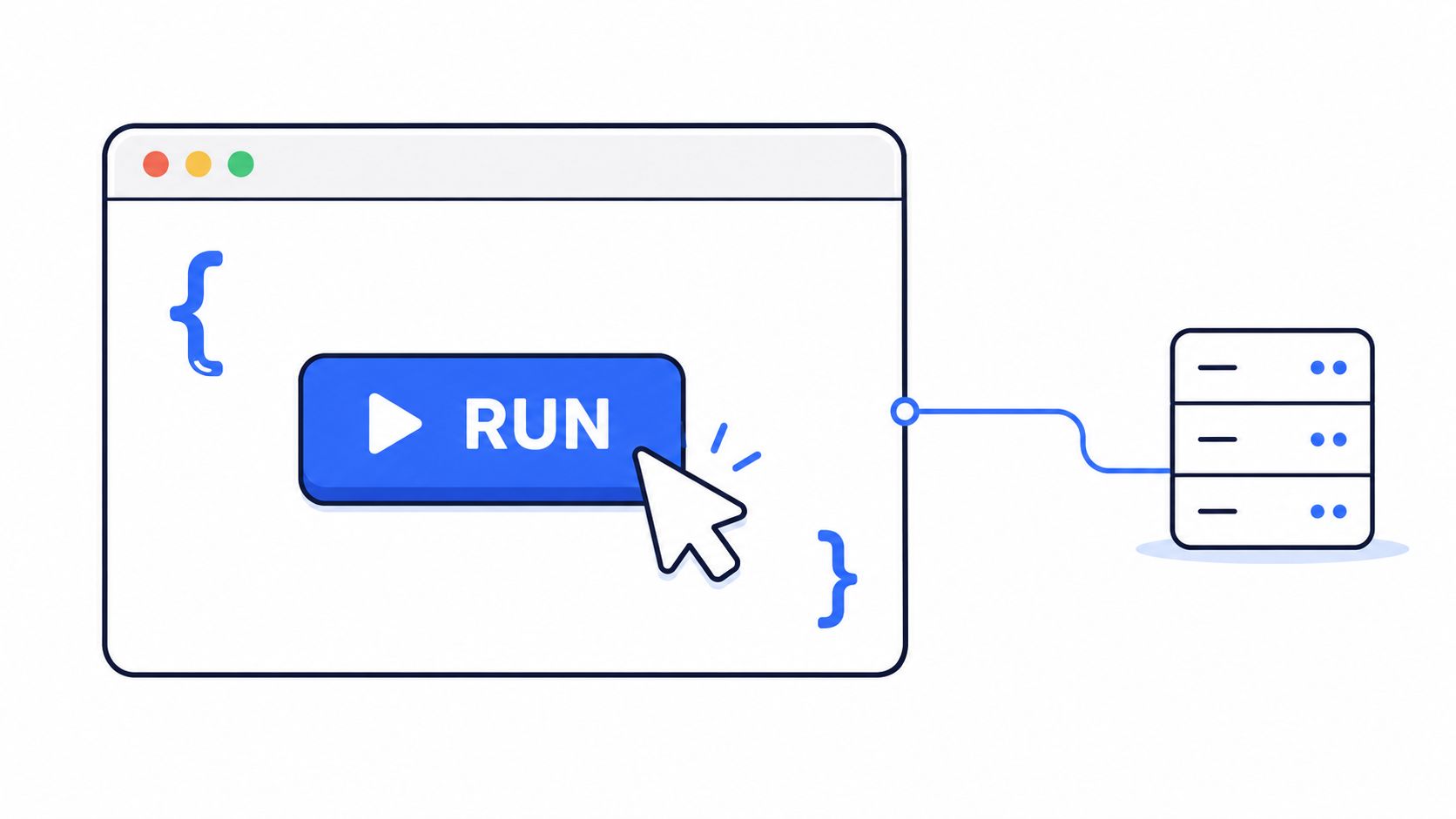
What works is starting with plain JavaScript before chasing frameworks. Learn the DOM. Learn events. Learn how forms, buttons, and asynchronous requests behave. Then move into React, because many startup frontends rely on that workflow.
What doesn't work is skipping fundamentals and becoming “a tutorial React developer” who can copy a component but can't explain state, scope, or async behavior.
A solid early progression looks like this:
If you want startup-facing roles where JavaScript matters on the server side too, browse Node developer jobs on Underdog.io. It's a useful gut check for the kinds of stacks companies hire for.
JavaScript is a great first language if you need proof of skill fast. Browser projects are easier to demo than abstract command-line exercises.
Java gets dismissed by beginners too quickly.
Yes, it's stricter than Python. Yes, it asks you to be more explicit. That's also why it teaches discipline. If you learn Java well, you usually come out with better habits around structure, types, debugging, and maintainability. In hiring, that often translates well for backend teams, fintech companies, and startups that care about reliability more than trendiness.
Java is especially useful if you think you may end up in backend engineering, Android-adjacent work, or systems that need clear architecture and stable service behavior. Startups don't always talk about Java with the same excitement they use for newer tools, but plenty of serious product and infrastructure work still depends on it.
Java forces you to think in systems earlier. That can feel slower at first, but it pays off when you need to build APIs, understand service boundaries, or work inside a larger codebase.
Learn modern Java, not the dusty version people complain about from old classrooms. Focus on Spring Boot, REST APIs, testing, and dependency management with Maven or Gradle. Those are practical skills, not resume decoration.
A beginner-friendly Java project path might include:
If you're weighing Java because you want to understand the business side of hiring too, Underdog.io's look at Java developer salary context helps frame where the skill fits in the market.
The trade-off is simple. Java usually won't give you the fastest emotional win. It often gives you stronger engineering foundations.
C# makes sense for beginners who want a polished ecosystem and a practical route into business software, cloud apps, or game development.
A lot of newcomers overlook it because they assume it's only for corporate Microsoft shops. That's outdated thinking. Modern C# with .NET is clean, productive, and cross-platform. If a startup is building internal platforms, SaaS products on Azure, or Unity-based products, C# can be a strong entry point.
It also has one of the more beginner-friendly professional toolchains. Visual Studio Community Edition is approachable, debugging is solid, and the language does a good job of nudging you toward structured code.
C# is most compelling when you already have a direction. If you want web apps, build with ASP.NET Core. If you want games, learn Unity. If you want cloud-oriented backend work, pair C# with Azure fundamentals.
That focus matters because C# is less of a “do anything casually” language than Python or JavaScript for beginners. It shines when used inside its ecosystem.
Use it well by doing a few things in order:
Don't pick C# because someone told you it's “like Java but better.” Pick it because you want the .NET ecosystem, Unity, or Microsoft-heavy startup environments.
For the right learner, C# feels less chaotic than JavaScript and less loose than Python. That's a real advantage if you prefer structure.
Go is the language I'd recommend to a beginner who already knows they like backend systems, cloud tooling, or developer infrastructure.
It doesn't have the same beginner gravity as Python or JavaScript, and that's fine. Go isn't trying to be everything. It's trying to be simple, fast, and reliable for networked services and operational tooling. That focus is exactly why startup infrastructure teams like it.
If you spend time around products like Docker, Kubernetes, and Terraform, you'll keep running into Go. That matters because those tools shape how modern startups deploy and operate software. Learning Go gives you a direct line into that world.
Here's the mental model many beginners need:
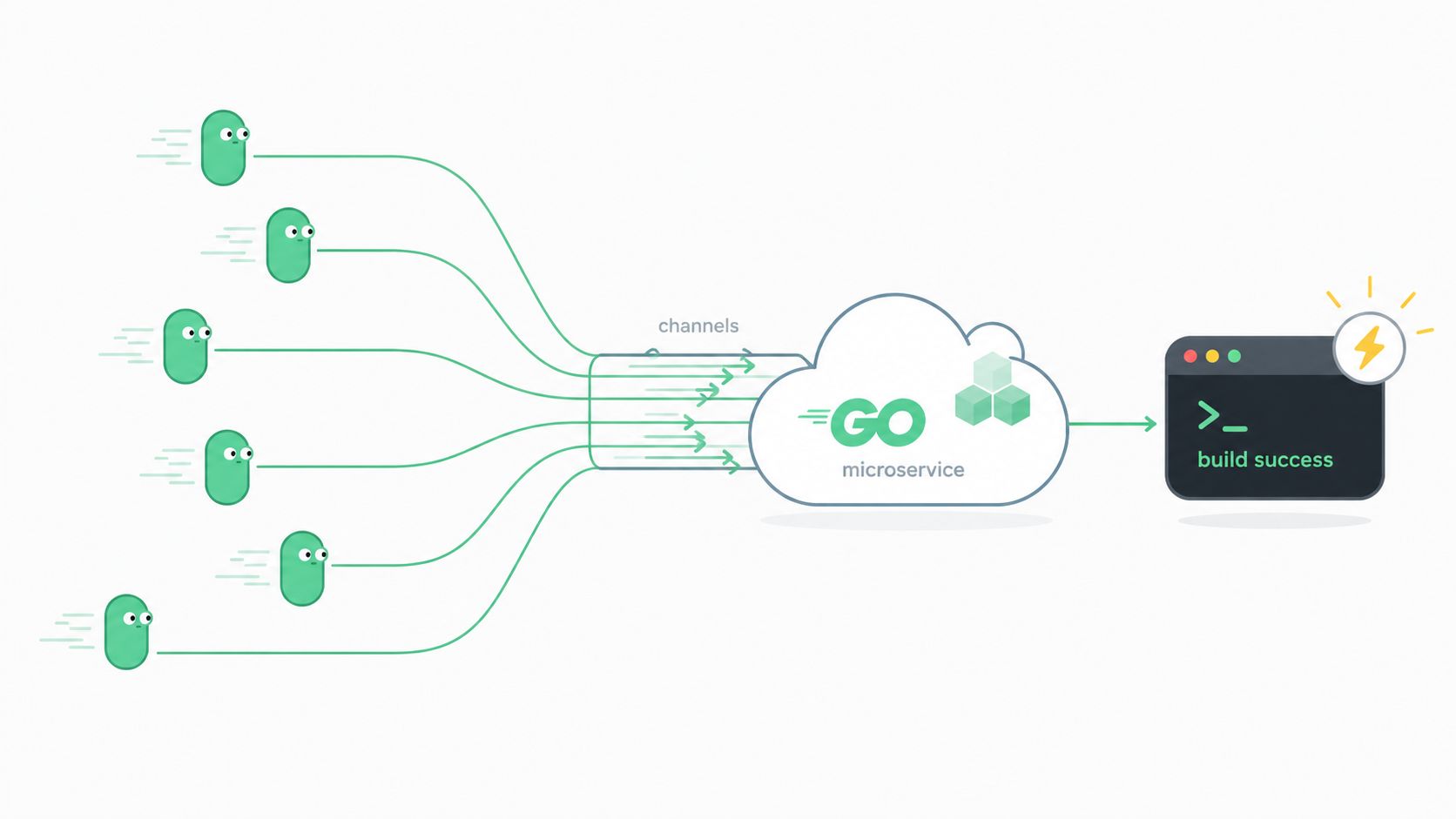
Go has a smaller surface area than many languages. That's a plus. You can learn the language itself relatively quickly and then spend your energy on how services, APIs, and concurrency work.
What works well in Go:
What doesn't work is choosing Go if you still need motivational wins from visual, interactive output. Browser apps are more immediate. Go is more satisfying when you care about what happens behind the scenes.
Use the official Tour of Go, build a simple API, and learn error handling patterns early. Go rewards straightforward engineers. Startup teams often do too.
TypeScript is where many beginners end up after they've had enough of JavaScript surprises.
It's not a replacement for learning JavaScript fundamentals. It's the layer you add when you want cleaner contracts, fewer avoidable bugs, and code that scales better as projects grow. In modern startup hiring, that matters a lot because small teams don't have time to chase preventable runtime mistakes across a frontend and backend.
TypeScript is especially useful if you're targeting product engineering roles at startups building serious web applications. React, Node.js, design systems, internal tools, and API clients all get easier to manage when types are part of the workflow.
Learn JavaScript first. Then add TypeScript once you understand variables, functions, objects, arrays, promises, and modules. If you start with TypeScript too early, you can confuse language fundamentals with tooling complexity.
Once the basics are in place, TypeScript gives you sharper professional habits:
A strong beginner portfolio project here is a React app with routing, forms, and API integration written in TypeScript. That combination feels much closer to real startup work than a toy demo.
TypeScript won't make weak JavaScript strong. It will make good JavaScript safer and easier to maintain.
If your target is startup product engineering, TypeScript is often less a bonus skill and more the modern version of showing you can work cleanly in production code.
Rust is the most exciting bad first choice for a lot of beginners.
I don't mean that as a knock on the language. Rust is excellent. It's powerful, memory-safe, and increasingly respected for systems work, performance-sensitive services, developer tools, and security-conscious engineering. The problem is fit. Pluralsight's discussion of easy coding languages points out this trade-off: newer systems languages such as Rust are growing in interest, but they have a smaller beginner-friendly ecosystem and fewer entry-level roles.
That's the point most beginner advice misses. A language can be impressive and still be the wrong starting point if it slows your ability to build and ship.
This is the performance-and-safety side Rust appeals to:
Rust can still work as a first language for a very specific beginner. You're patient, you care about low-level concepts, and you're more interested in mastery than speed. If that's you, Rust can teach deep lessons about memory, ownership, borrowing, and correctness.
For everyone else, Rust is usually better as a second language.
A practical path looks like this:
The upside is real. Rust stands out to infrastructure-focused startups and performance-heavy teams. The downside is also real. It can delay your first useful portfolio unless you're unusually persistent.
Kotlin is one of the smartest beginner choices if Android is your target.
That's the shortest version. If you want to build mobile products, especially for startups where Android still matters as a distribution channel, Kotlin gives you a more modern feel than Java while keeping access to the JVM ecosystem. It's concise, expressive, and practical.
Kotlin also works beyond mobile. Some teams use it for backend services with Spring Boot, so it can support a broader path than many people expect. Still, its strongest beginner case is mobile-first development.
General beginner guides often push “easy” over “aligned.” That's a mistake. Pluralsight's analysis also notes that beginners who choose a first language aligned with a clear project path, such as web, data, automation, or mobile, tend to progress faster than those who choose a language only because it sounds easy. Kotlin fits that logic well if your project path is Android.
The value is straightforward. You can build something users recognize immediately:
Use Kotlin Playground early, then move into official Android training. Learn coroutines once the basics click. If you only study syntax and never publish or demo an app, Kotlin loses its biggest advantage.
For mobile-minded beginners, Kotlin is one of the clearest direct paths from learning to employable work.
If you want your first language to lead to startup interviews, compare them by what they help you ship, how teams use them, and where hiring demand tends to be strongest. A beginner does not need the "best" language in the abstract. You need a language that gets you from tutorials to proof of work fast.
| Language | Learning curve | Setup and runtime needs | What you can realistically build early | Best fit for startup hiring | Key advantages |
|---|---|---|---|---|---|
| Python | Low. Readable syntax, dynamic typing | Low to moderate. Interpreter, package manager, broad library support | Scripts, APIs, data projects, automation tools, simple MVPs | Good for backend, data, AI-adjacent, internal tools | Fast to learn, broad job relevance, strong library ecosystem |
| JavaScript | Low to medium. Async concepts take time | Low. Browser runtime or Node.js, fast project setup | Interactive websites, frontends, simple full-stack apps | Strong for frontend and early-stage product teams | Runs in the browser, quick feedback loop, large hiring market |
| Java | Medium to high. More syntax and stricter patterns | Higher. JDK, JVM, IDE setup, more memory use | Backend services, business apps, larger structured systems | Good for startups hiring for backend scale, fintech, B2B platforms | Strong typing, mature libraries, proven backend track record |
| C# | Medium. Clear syntax, object-oriented patterns | Moderate. .NET SDK, good IDE support | Internal tools, APIs, desktop apps, Unity projects | Good for Microsoft-stack startups, SaaS teams, game-adjacent roles | Strong developer tools, productive framework support, Azure alignment |
| Go (Golang) | Low to medium. Small language surface, concurrency basics | Low. Fast builds, simple deployment, small binaries | APIs, CLI tools, infrastructure services | Increasingly valuable for cloud, DevOps, and backend platform teams | Simple syntax, fast compilation, easy deployment |
| TypeScript | Medium. JavaScript plus types and tooling | Moderate. Compiler, build step, editor support | Production-grade web apps, larger frontend codebases, full-stack apps | High value for startups that want frontend hires who can work cleanly in teams | Type safety, better maintainability, stronger editor support |
| Rust | High. Ownership model takes real effort | Moderate to high. Heavier compile times, low runtime overhead | Systems tools, performance-sensitive services, WebAssembly projects | Best as a long-term bet for infrastructure, security, and low-level roles | Memory safety, strong performance, concurrency without a garbage collector |
| Kotlin | Medium. Modern syntax, easier than Java for many beginners | Moderate. JVM setup, Android tooling for mobile | Android apps, JVM services, backend APIs | Good for Android-focused startups and some JVM backend teams | Null safety, concise code, smooth Java interoperability |
A recruiter or startup hiring manager usually reads this table backward. They start with use case, then ask whether a beginner could build something credible in that stack within a few months.
Python and JavaScript remain the fastest paths to visible projects. That matters on platforms like Underdog.io, where startup teams often care less about academic depth and more about whether you can point to a working app, script, or feature. Python fits automation, backend, and data-heavy projects. JavaScript fits product work, especially if you want to build something users can click through in a browser.
Java and C# are stronger picks for beginners who already know they prefer structured backend work. They ask more from you early, but they also train habits startups value when systems get more complex: clear types, maintainable code, and fewer surprises in production. I usually recommend them to candidates targeting B2B software, fintech, enterprise SaaS, or teams with longer-lived codebases.
Go, TypeScript, Rust, and Kotlin are more targeted bets. Go maps well to cloud infrastructure and backend platform work. TypeScript is often the better career move than plain JavaScript once you are serious about modern web development. Rust has real upside, but it pays off slower and suits beginners willing to accept a steeper climb for lower-level or performance-focused work. Kotlin is the practical mobile-first option if Android is your entry point.
The shortest version is simple. Choose the language that matches the kind of portfolio a startup can understand quickly. That is how a beginner choice turns into interview traction.
You finish your first few coding projects, start scanning startup jobs, and hit the key question. Which language gives you the best shot at getting interviews, not just finishing tutorials?
Treat your first language like a market entry decision. Early in your career, the language matters less as an abstract skill and more as a signal of the kind of work you can do for a small, fast-moving team. Startups hire for immediate contribution. They want to see whether you can ship a feature, clean up data, automate a manual task, or support a product that already has users.
That changes how beginners should choose.
A good first language is one that helps you produce evidence quickly. For startup hiring, that usually means a working web app, a small backend service, a data project tied to a business problem, or a mobile app someone can install and test. If a founder or engineering manager can understand the project in two minutes, you are in much better shape than the candidate who spent months chasing the theoretically best language.
I have seen this play out repeatedly with junior candidates. The ones who get traction are rarely the ones with the most theory. They are the ones who can show a GitHub repo with a clear README, a deployed project, and a short explanation of what they built, why they built it, and what they would improve with more time.
Combinations matter too. CXL's guidance on programming languages for newcomers recommends SQL, JavaScript, Python, and Bash. That lines up with what hiring teams value in early candidates. SQL is especially useful because it proves you can work with real application data, answer business questions, and do more than complete isolated coding exercises.
The same discussion references a Rice University overview that highlights SQL, Python, and R for data science, and also mentions VBA as a practical bridge for workplace automation. That does not mean beginners should try to learn everything at once. It means employability often comes from pairing one core programming language with a practical adjacent skill such as SQL, scripting, or basic analytics work.
That is often the difference between "learning to code" and being useful to a startup.
If your target is a platform like Underdog.io, keep the hiring context in view. High-growth startups usually care about fit with their stack, but they care even more about proof that you can build in ambiguity. Python and JavaScript still open the most doors for broad beginner portfolios. TypeScript gets stronger once you move from experimentation to production-style web work. Go, Kotlin, Rust, Java, and C# can all pay off, but they work best when your projects clearly match the kind of startup team that hires for them.
If you are also weighing education paths against direct software work, Access Courses Online's software engineering insights add useful context to that decision.
Pick a lane. Build two or three real projects in it. Make your work easy to evaluate. That is how a beginner becomes a candidate startup teams will call.