You're probably seeing the same pattern right now. Consumer brands get the attention, flashy AI demos dominate feeds, and every job board claims to have the “best” tech roles. But if you care about shipping products that businesses rely on every day, the better opportunities are often inside B2B SaaS companies.
That market is large and still expanding fast. Fortune Business Insights projects the global B2B SaaS market at USD 497.41 billion in 2025, rising to USD 634.39 billion in 2026 and USD 4,441.49 billion by 2034, with a 27.54% CAGR. For builders, that scale matters because it usually translates into harder product problems, more specialized infrastructure, and clearer paths to ownership across engineering, product, design, and data.
The other reason to take this category seriously is durability. B2B SaaS isn't a side lane anymore. It's the operating layer for revenue teams, developers, security orgs, support teams, and entire industry workflows. A lot of the best careers in tech are built inside products that most consumers never touch.
Here are seven B2B SaaS companies worth serious attention if you want technical depth, product advantage, and room to grow in 2026.
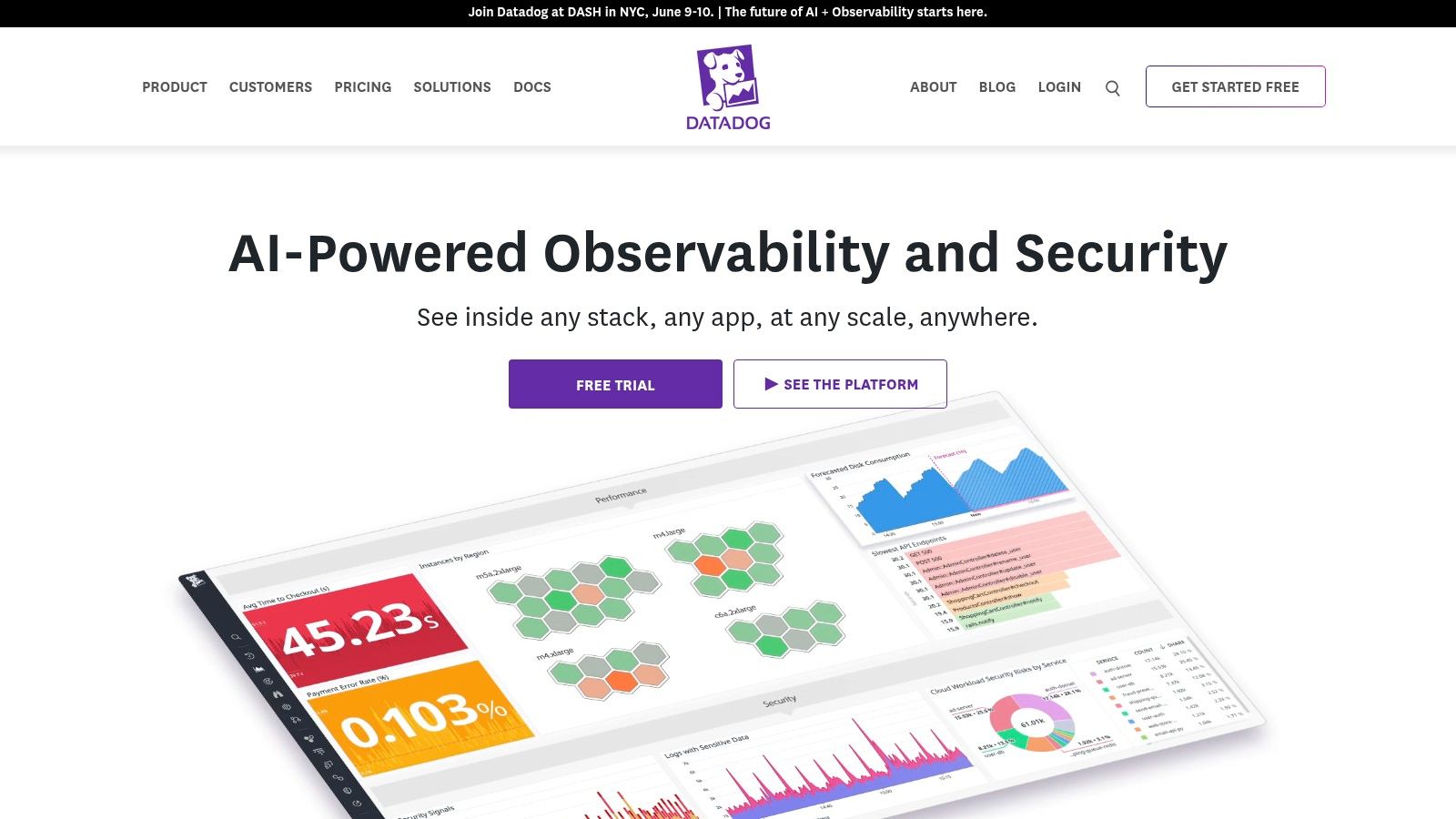
Datadog is one of the clearest examples of a product that engineers use under pressure, not just during planning. When incidents happen, teams jump between infrastructure metrics, traces, logs, front-end telemetry, synthetics, and security signals. Datadog's value is that it tries to keep all of that in one operating surface.
For builders, that creates interesting work on both sides of the product. Internally, the company has to solve ingestion, correlation, search, query performance, storage, and alerting problems at serious scale. Externally, product teams have to package that complexity into workflows that a tired on-call engineer can use in minutes.
Datadog tends to attract teams that care about cloud-native systems, distributed architectures, reliability, and observability. That means the product surface keeps expanding. It isn't just “monitoring” anymore. It spans application performance monitoring, real user monitoring, security monitoring, product analytics, and newer LLM observability use cases.
That breadth is a real advantage for career growth. Engineers can work on data-heavy backend systems, PMs can own products tied directly to uptime and cost visibility, and designers get unusually complex information architecture challenges.
Practical rule: If you want to work on infrastructure software, pick products operators open during an outage. Those products sit close to customer pain, and that usually leads to better product judgment.
Datadog's strength is also its risk. Modular expansion makes adoption easy, but usage-based pricing and a large SKU surface can create cost governance problems for customers. Inside the company, that means product decisions have to balance power with clarity.
What works well here is strong documentation, broad integrations, and a product cadence that keeps pace with how modern engineering teams work. What doesn't work as well for some buyers is uncontrolled telemetry sprawl. If you like building products where technical performance and commercial model design are tightly linked, Datadog is a strong bet.
Snowflake sits in a category that usually looks dry from the outside and turns out to be full of hard problems once you get close. The core promise is straightforward: separate compute and storage, scale them independently, and give companies a governed way to run analytics, data engineering, collaboration, and increasingly AI workloads.
That design matters for builders because it creates visible product consequences. If a team gets elasticity right, customers feel it in speed and cost control. If they get governance wrong, customers feel it in risk, friction, or runaway spend. Few product areas give engineers and PMs such a direct line between architecture and business value.
Snowflake is compelling if you like systems that aren't just technically elegant, but economically consequential. Consumption-based infrastructure changes product thinking. Teams have to care about performance, concurrency, developer experience, observability, and FinOps all at once.
For product and data talent, it also sits near a lot of strategic decisions inside customer organizations. Data platforms shape analytics stacks, machine learning workflows, sharing agreements, and internal platform standards. That gives builders a lot of influence.
If this is your lane, it's worth tracking the broader big data companies shaping modern infrastructure hiring, because Snowflake competes in a market where platform choices often affect entire engineering organizations.
Snowflake's best feature is flexibility. It's also what makes the product hard to master. Independent scaling sounds clean in theory, but in practice customers need discipline around warehouse sizing, job patterns, and spend management.
The most attractive data platforms don't remove complexity. They move it into places where teams can control it.
That's why Snowflake tends to be a good fit for builders who like platform products, governance questions, and technical decisions with financial consequences. It's less attractive if you want a simpler product surface or a narrower domain.
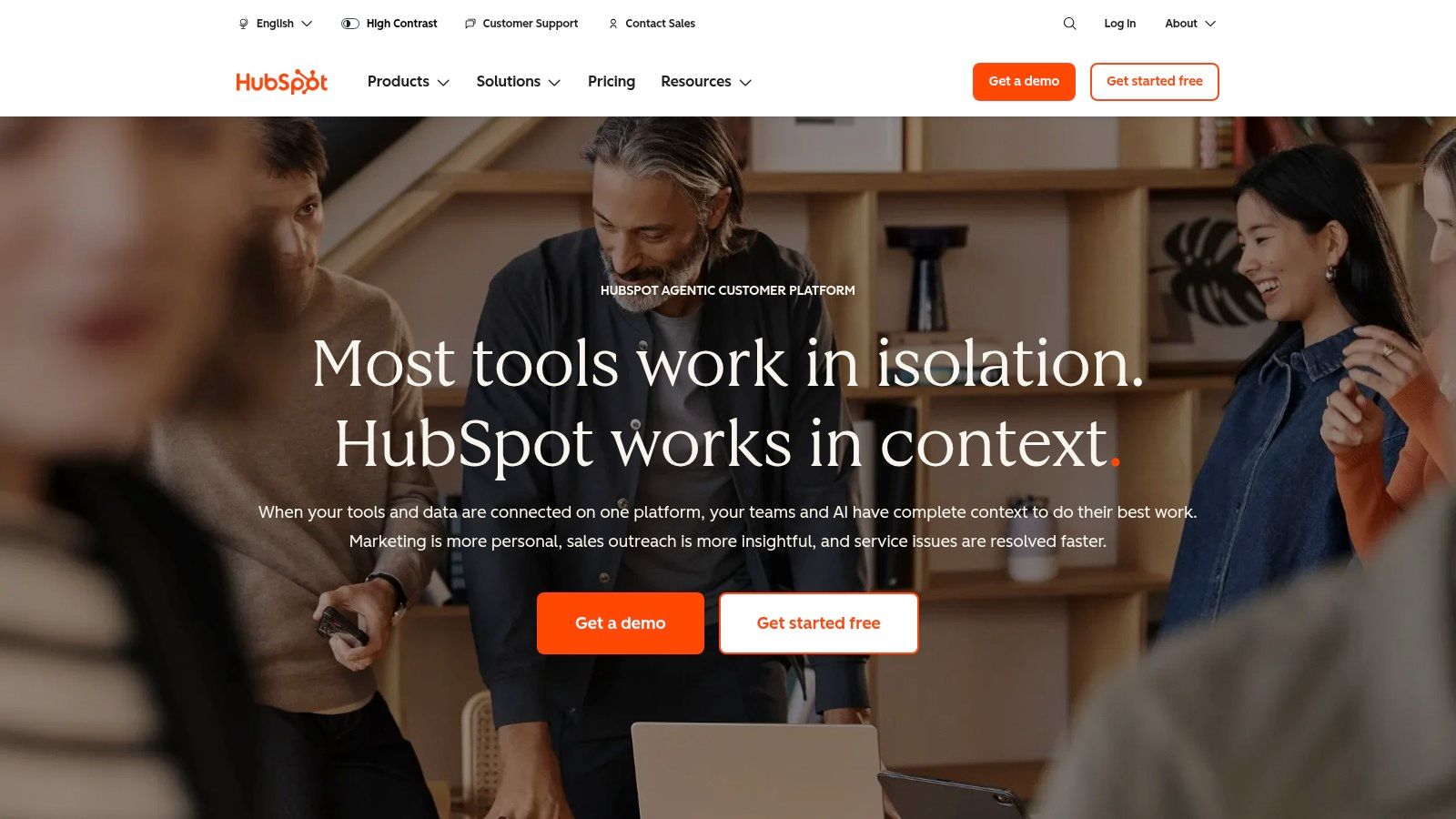
Slack looks deceptively simple. A lot of people still think of it as chat with channels. In practice, it's a coordination layer for work that spans engineering, support, sales, incident response, external collaboration, and lightweight automation.
That creates a very specific kind of product challenge. Slack has to be fast, familiar, and low-friction enough for daily communication, while also supporting integrations, governance, search, workflow tooling, AI features, and enterprise controls. Few collaboration products have to balance consumer-grade usability with enterprise-grade administration this tightly.
For designers, Slack is a lesson in restraint. For PMs, it's a lesson in behavior change. For engineers, it's a lesson in building around constant activity and integration density. The platform supports channels, huddles, canvases, lists, Slack Connect, and a large integration ecosystem, so small product decisions can ripple across how entire companies work.
That matters if you want impact you can see quickly. Communication software changes habits fast. Good product work reduces friction immediately. Bad product work creates notification noise just as quickly.
The ecosystem angle matters too. If you're evaluating workflow-heavy companies, this breakdown of Slack integration for companies gives a useful lens on why the platform sits in the middle of so many internal systems.
Slack can become noisy if teams don't establish norms. Channels multiply, notifications stack up, and search quality matters more than most leaders expect. Enterprise buyers also run into a familiar trade-off: the features that make Slack powerful at scale often live deeper in the product stack.
What works is the strong UX baseline and network effects across internal and external collaboration. What doesn't work is treating the tool as self-governing. Builders who join Slack's orbit should expect to work on product problems where the hardest part isn't feature delivery. It's shaping behavior without creating friction.
Atlassian Jira Software is one of those products people love, complain about, customize too much, and still keep using. That usually signals something important. The software solves a real operational need, even when teams argue about the implementation.
Jira sits close to how engineering organizations plan, track, and govern delivery. It supports Scrum and Kanban workflows, backlogs, roadmaps, reporting, permissions, and automation, then extends into a wider ecosystem through Atlassian products and marketplace apps. For builders, that means working on a product that's embedded in the operating system of software teams.
Jira is a strong company to study if you want to understand enterprise product reality. Buyers don't just want elegant UX. They want configurability, auditability, integration depth, and admin control. That changes how engineering, product, and design teams prioritize.
A product like Jira also creates unusual opportunities for internal mobility. You can work on collaboration surfaces, workflow engines, admin systems, reporting, enterprise governance, or adjacent DevOps and IT operations use cases. That range is valuable if you want to deepen one specialty without changing company context.
The downside is obvious to anyone who has administered Jira in a growing organization. Flexibility invites sprawl. Teams create custom fields, issue types, workflows, and naming conventions until the tool starts reflecting every local preference and none of the shared process.
If you want to build for serious operational users instead of casual ones, Jira is a useful benchmark. It shows how sticky B2B SaaS companies become when they sit inside recurring team rituals.
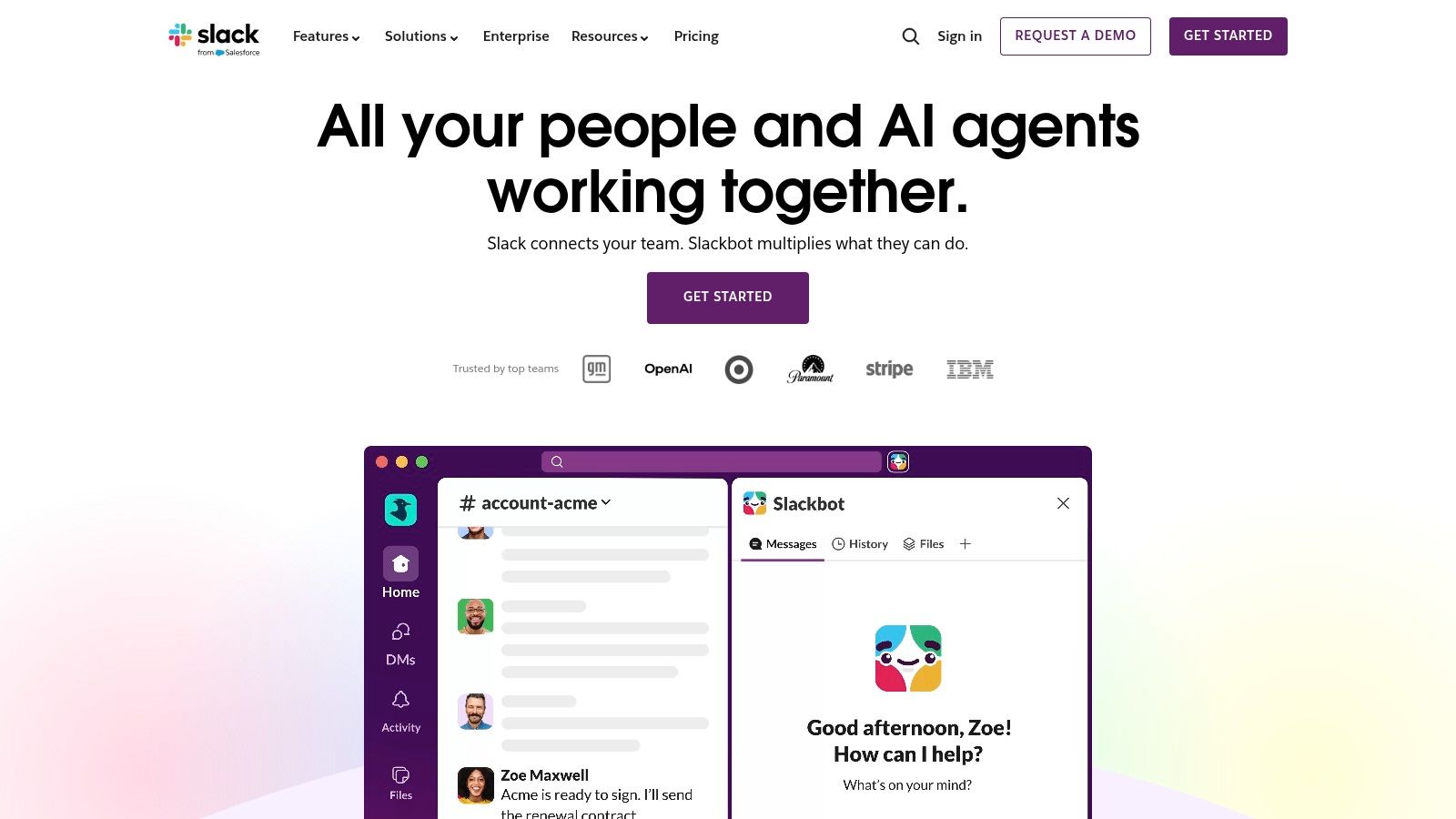
HubSpot has a reputation for accessibility, and that's exactly why it matters. A lot of enterprise software gets praised for power and tolerated for usability. HubSpot built real traction by making CRM, marketing, service, and content tooling easier to adopt without making the platform feel toy-like.
For product people, that's a strong signal. Ease of use isn't a soft benefit. It's a market strategy. HubSpot wins when companies want a unified customer platform without the implementation burden that larger systems can bring.
The product surface is broader than many candidates expect. HubSpot connects CRM data, marketing automation, sales workflows, service operations, content tools, reporting, and newer AI features across multiple hubs. That creates opportunities for teams that like workflow design, cross-product consistency, and user journeys that cut across departments.
There's also a practical talent angle. Many B2B SaaS companies are now expanding outside traditional tech buyers. A SaaStr analysis noted that about 70% of Monday.com's customers are not in tech. That broader shift matters for HubSpot-style platforms because easy-to-adopt software often travels well into less technical industries.
Products that sell beyond tech have to respect real operating constraints. The best teams don't just simplify the interface. They simplify adoption.
If you care about adjacent tooling, this look at AI customer support for HubSpot is a useful reminder that ecosystems form around products that become system-of-record candidates.
HubSpot's smooth onboarding can hide the usual scaling issues. As teams grow, seat-based pricing and higher-tier gating can become real considerations. Some advanced automation and reporting capabilities also matter most once a company is already more mature.
Still, from a builder's perspective, HubSpot is a strong place to learn how good UX, product packaging, and go-to-market alignment can outperform technically denser competitors.
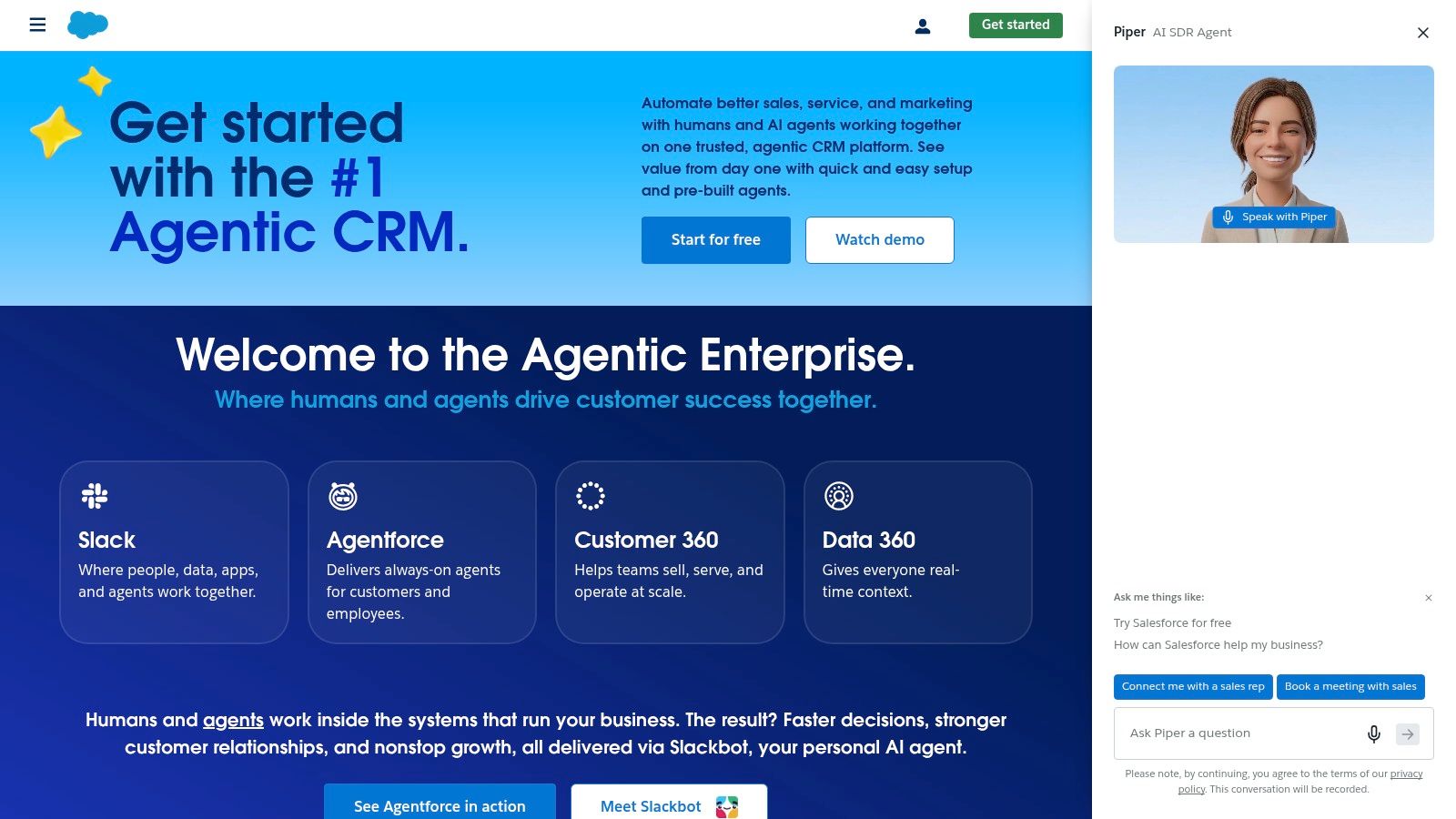
A product team inherits a sales process spread across spreadsheets, custom fields, approval rules, and handoffs between marketing, sales, support, and finance. Salesforce is often the system that ends up holding that operational complexity together.
Salesforce Sales Cloud still matters because it shaped how enterprise buyers think about software delivery and because it remains a standard system of record for revenue teams. For builders, that creates a specific kind of opportunity. The work is less about a single polished feature and more about designing software that can survive customization, governance, and years of expansion across large organizations.
Salesforce is a serious platform company, not just a CRM vendor. Engineers can work on APIs, data models, permissions, workflow engines, integrations, and infrastructure that has to support both internal product teams and outside developers. Product managers and designers run into a different challenge than they would at a narrower SaaS company. They have to make powerful tools usable for admins, operators, and end users with very different levels of technical fluency.
That mix is why Salesforce stays relevant on a builders-first list. The product surface is broad, the customer stakes are high, and small decisions can ripple through sales operations, forecasting, service workflows, and executive reporting.
There is also a career compounding effect. People who learn this category tend to build durable instincts around enterprise buying, change management, and platform design. Those skills travel well, whether you stay inside large SaaS companies or use a curated hiring platform for product, engineering, and design talent to find a team working on the next generation of B2B infrastructure.
Salesforce can frustrate builders who prefer products with tighter boundaries. Complexity accumulates fast. Customer requests often push toward more configuration, more controls, and more exceptions, which can create heavy admin experiences and implementation overhead.
That trade-off is also the point. Enterprise software rarely wins by staying minimal. It wins by handling messy org structures, approval chains, territory rules, compliance requirements, and years of internal process drift without breaking the business.
For engineers, PMs, and designers who want product depth over startup gloss, Salesforce remains one of the clearest examples of what mature B2B SaaS looks like under real enterprise pressure.
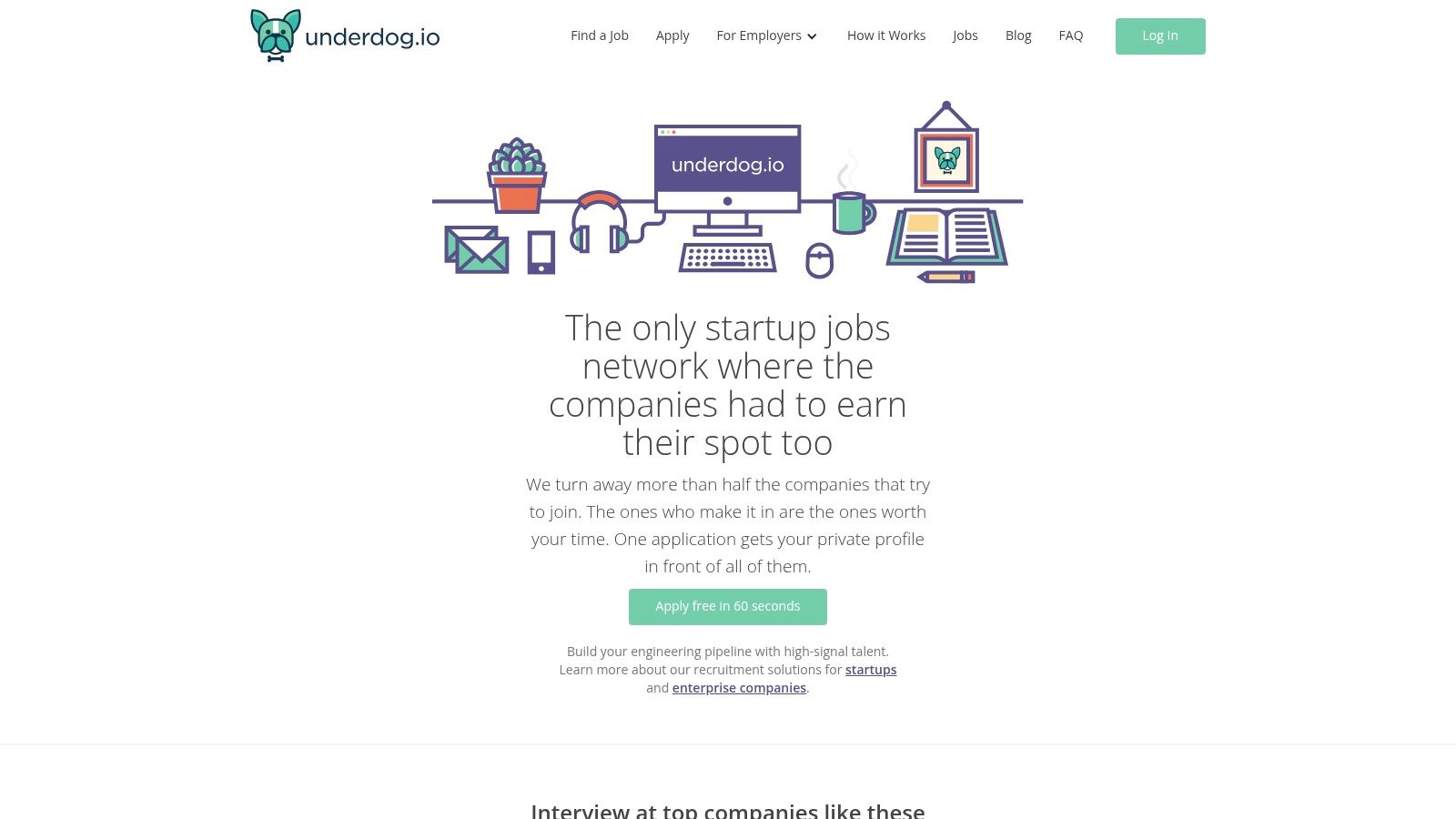
You are a strong engineer, PM, or designer with a solid job already. Recruiter inbox traffic is noisy, public applications disappear into ATS queues, and the interesting teams rarely explain the actual scope of the work up front. That is the hiring problem Underdog.io is built to address.
It earns a place on this list because builders do not just need examples of successful B2B SaaS companies. They need a practical route into them. Underdog.io sits one step closer to the career decision itself by curating startup and growth-stage companies, then matching them with technical talent through a confidential profile and a single application flow.
The product value is curation. Underdog says only about 5% of applicants are accepted after manual review, and more than half of employers that apply are turned away. For technical candidates, that matters more than a huge jobs database. Lower volume usually means better filters, clearer expectations, and fewer conversations with companies that are not ready to hire thoughtfully.
It also serves a specific type of candidate. The platform notes that many candidates are already employed, which fits the way experienced builders search. They are often comparing a good current role against a better one, not scrambling for any offer they can get.
Good talent marketplaces improve match quality. They protect attention.
That same logic shows up in B2B SaaS go-to-market. Broad segmentation and generic positioning often stall traction, while sharper market fit is more effective, as discussed in this analysis of what stops B2B SaaS companies from growing traction. Recruiting works the same way. A narrower pool with stronger screening tends to produce better outcomes than a platform trying to serve everyone.
Underdog is strongest for builders who want startup and scaleup roles with visible product impact. The platform focuses on high-growth tech companies, including roles in major US tech hubs and remote jobs. The confidential profile model also makes sense for passive candidates who want to explore without signaling to their current employer.
There are clear trade-offs. Selectivity cuts both ways. Candidates who want broad market coverage, large enterprise employers, or roles outside tech will find the platform narrow by design. That is not a flaw in the model. It is the product decision.
For engineers, PMs, and designers who care about scope, team quality, and the chance to shape a product early, Underdog.io is useful because it filters for those conditions before the first conversation starts.
| Product | Implementation complexity | Resource requirements | Expected outcomes | Ideal use cases | Key advantages |
|---|---|---|---|---|---|
| Datadog | Moderate, quick to instrument but requires tuning across modules | Moderate–High, agents, data ingestion, and governance to control costs | Unified observability and faster incident detection/correlation | Cloud-native apps, SRE, full-stack monitoring | Broad telemetry coverage, cross-telemetry correlation, modular expansion |
| Snowflake | Low–Moderate, SQL-native onboarding but needs data pipeline work | Variable, separate compute/storage consumption; FinOps discipline required | Scalable analytics, secure data sharing, ML-ready data platform | Analytics, data engineering, cross-org data collaboration, ML workloads | Elastic compute/storage, high concurrency, Snowpark and marketplace |
| Slack | Low, easy to adopt with minimal setup | Low–Medium, seats, integrations, and light administration | Improved real-time and asynchronous team coordination | Team collaboration, cross-functional communication, integration hub | Familiar UX, large integration ecosystem, strong network effects |
| Atlassian Jira Software | Moderate–High, extensive configuration and workflow setup | Medium, admin overhead and governance; marketplace apps | Structured issue tracking, release planning, governance | Agile engineering teams, scaled software delivery, IT/DevOps | Highly configurable workflows, rich reporting, large ecosystem |
| HubSpot (Smart CRM Platform) | Low, fast time-to-value; complexity grows with scale | Low–Medium, free CRM start; seat-based and tiered costs as you scale | Unified go-to-market tooling and faster marketing/sales operations | Startups and scaleups wanting unified marketing/sales/service | Intuitive UI, free entry tier, integrated Hubs and automation |
| Salesforce (Sales Cloud) | High, deep customization and enterprise implementation | High, licenses, implementation partners, admins, add-on costs | Enterprise-grade CRM with end-to-end customer operations | Large organizations with complex sales/service processes | Extremely feature-rich, extensible, large partner ecosystem |
| Underdog.io | Low for candidates, simple application; Moderate for employers | Minimal for candidates; companies pay success-based fees | Highly curated, confidential matches with selective introductions | Tech candidates (passive) and startups hiring vetted talent | Extremely curated marketplace, fast 60s application, candidate privacy |
The companies on this list show why B2B SaaS remains such a strong category for skilled tech talent. Some products sit deep in infrastructure, like Datadog and Snowflake. Others shape how teams communicate, plan, and sell, like Slack, Jira, HubSpot, and Salesforce. In every case, the common thread is their amplifying power. The work affects core business operations, and good decisions compound across entire customer organizations.
That's a meaningful difference from many consumer roles. In B2B SaaS, a strong engineer might improve reliability for thousands of production systems. A PM might redesign a workflow that changes how revenue teams operate every day. A designer might simplify a product that sits inside the weekly routine of entire departments. The impact is often less public and more durable.
The market backdrop supports that opportunity. A broader SaaS market snapshot cited by Zylo says the global SaaS market was valued at $408.21B in 2025 and is forecast to reach $465.03B in 2026, with a projected 13.32% CAGR from 2025 to 2034. The same roundup notes North America remains the largest market while Asia-Pacific is the fastest-growing region. For candidates, that means demand isn't tied to a single narrow trend. It's rooted in a software model that keeps expanding across regions, functions, and industries.
A practical job search should reflect that reality. Sending resumes into broad funnels usually wastes time, especially if you already have in-demand experience. A curated path is often better because it narrows the field to companies with actual hiring intent and a reasonable bar for quality. That's where platforms like Underdog.io become useful. They create a cleaner route between strong candidates and serious companies.
If your next move is into B2B SaaS, prioritize substance over brand recognition. Look for technical depth, product surface area, customer intensity, and room to own outcomes. If you want support along the way, services like AI engineer placement also reflect how much more specialized technical hiring has become. The best roles usually don't come from the loudest channel. They come from the channel with the best filter.
If you want a faster, quieter way to find strong startup and growth-stage roles, create a profile on Underdog.io. You apply once, stay confidential until there's mutual interest, and get introduced to vetted companies that match your background.