Read Time: 7 min read
The software engineering job market is a crowded space. Endless scrolling through generic job boards often leads to application fatigue and the frustrating experience of sending resumes into a void. To land a role that truly aligns with your skills and career goals, a more strategic approach is necessary. It’s not about applying everywhere; it’s about being seen on the right platforms. This guide cuts through the noise to deliver a curated, in-depth analysis of the best job search sites for software engineers.
We move beyond surface-level descriptions to give you actionable insights. For each platform, you'll find a breakdown of its core strengths, honest limitations, and specific use-case scenarios. We'll explore whether a site is better suited for finding a role at a high-growth startup, a remote-first company, or a large enterprise. Each profile includes screenshots for a real-world look and direct links to get you started immediately.
This resource is designed to help you stop the spray-and-pray method and start targeting your job search with precision. We'll equip you with practical tips to optimize your profile and stand out to hiring managers. To truly stand out on these platforms, understanding what employers are looking for is key; delve into how to write a job description from an employer's perspective to better tailor your applications. Your next great opportunity is out there; this guide will help you find it efficiently.
Underdog.io is an exclusive, curated hiring marketplace that fundamentally reverses the traditional job search dynamic. Instead of endlessly applying to companies, you create a single, anonymous profile in about 60 seconds and let vetted, high-growth tech companies apply to you. This platform is a clear standout among the best job search sites for software engineers who are targeting ambitious startups and want to avoid the noise of massive job boards. Its core philosophy revolves around quality over quantity, for both candidates and employers.

The platform specializes in connecting talent with early-stage to Series B startups, ensuring that every opportunity presented is within a dynamic, growth-focused environment. This sharp focus means you won't be sifting through listings from large, slow-moving enterprises.
What truly sets Underdog.io apart is its human-centric, high-signal matching process. Every candidate application is manually reviewed by an in-house team, with only about 5% being accepted into the marketplace. This rigorous vetting maintains a high-quality talent pool, which in turn attracts serious, well-funded startups.
Underdog.io is completely free for job seekers; its revenue comes from the companies that hire through the platform.
To maximize your chances of acceptance, it's crucial to present a compelling and specific profile. Clearly articulate your technical achievements and career aspirations. For instance, instead of listing "Developed APIs," describe the scale and impact: "Designed and implemented RESTful APIs for a fintech platform, handling over 100,000 daily transactions and reducing latency by 30%." This level of detail helps the human reviewers understand your value.
Website: https://underdog.io
LinkedIn Jobs transcends being a simple job board; it's an integrated ecosystem where your professional identity, network, and job search converge. For software engineers, this means your profile, skills endorsements, and professional connections directly fuel your search. Its sheer scale makes it an indispensable tool, offering the widest possible lens on the market from stealth-mode startups to FAANG companies.
The platform’s key differentiator is the powerful synergy between networking and job discovery. You don't just apply for a role; you can see who works there, find a mutual connection for an introduction, and research the company’s recent activity and culture all in one place. Setting the ‘Open to Work’ signal privately notifies recruiters of your availability without alerting your current employer, creating a passive but powerful channel for inbound opportunities.
LinkedIn is most effective for engineers who want to leverage their existing network and build new connections as part of their job search strategy. It’s a must-have for researching company culture and the backgrounds of potential team members before an interview.
Actionable Tip: Don't just rely on "Easy Apply." After applying, find the hiring manager or a senior engineer on the team and send a concise, personalized connection request or InMail message. Mention your application and one specific reason you're excited about the role or company. For example: "Hi [Name], I just applied for the Senior Backend Engineer role. I was particularly excited to see your team is using Go for microservices, as I've spent the last two years architecting a similar system. Looking forward to the possibility of connecting." This simple step can dramatically increase your visibility among a sea of applicants.
Pros:
Cons:
Website: https://www.linkedin.com/jobs/
Indeed operates as one of the largest job search engines, functioning as a massive aggregator that pulls listings from thousands of company career pages and other job boards. For software engineers, this translates into an unparalleled volume of opportunities in one place. Its powerful, straightforward search functionality and extensive filtering options make it a go-to for broad, high-level market research or highly specific, targeted searches.
The platform’s core strength is its sheer scale and simplicity. While it lacks the deep networking features of other sites, it excels at providing a comprehensive, real-time snapshot of who is hiring. The ability to set up granular job alerts for specific technologies, roles, and locations ensures you never miss a new opening that fits your criteria, making it a powerful tool for both active and passive job seekers.
Indeed is ideal for software engineers who want the widest possible net for their search, especially for roles outside of major tech hubs or within non-tech industries. It’s perfect for setting up daily alerts to monitor the market for specific keywords like "Senior Go Engineer," "Remote," or a particular company name.
Actionable Tip: Use the advanced search feature to filter by exact phrases (e.g., "principal software engineer") and exclude terms you don't want (e.g., -manager, -lead) to clean up your results. Save these precise searches as alerts to get highly relevant daily digests, turning a noisy firehose into a focused lead generator. This strategy is a key part of learning how to get a job in software engineering. For example, a search string like "remote staff software engineer" (python OR golang) -recruiter -devops can yield highly targeted and relevant results.
Pros:
Cons:
Website: https://www.indeed.com/
Glassdoor Jobs carves out a unique niche by blending job listings with a vast repository of user-generated company insights. For software engineers, it serves as a critical due diligence tool, offering transparency on compensation, interview processes, and workplace culture before you even apply. It allows you to peer behind the corporate curtain, transforming your job search from a shot in the dark into an informed decision.
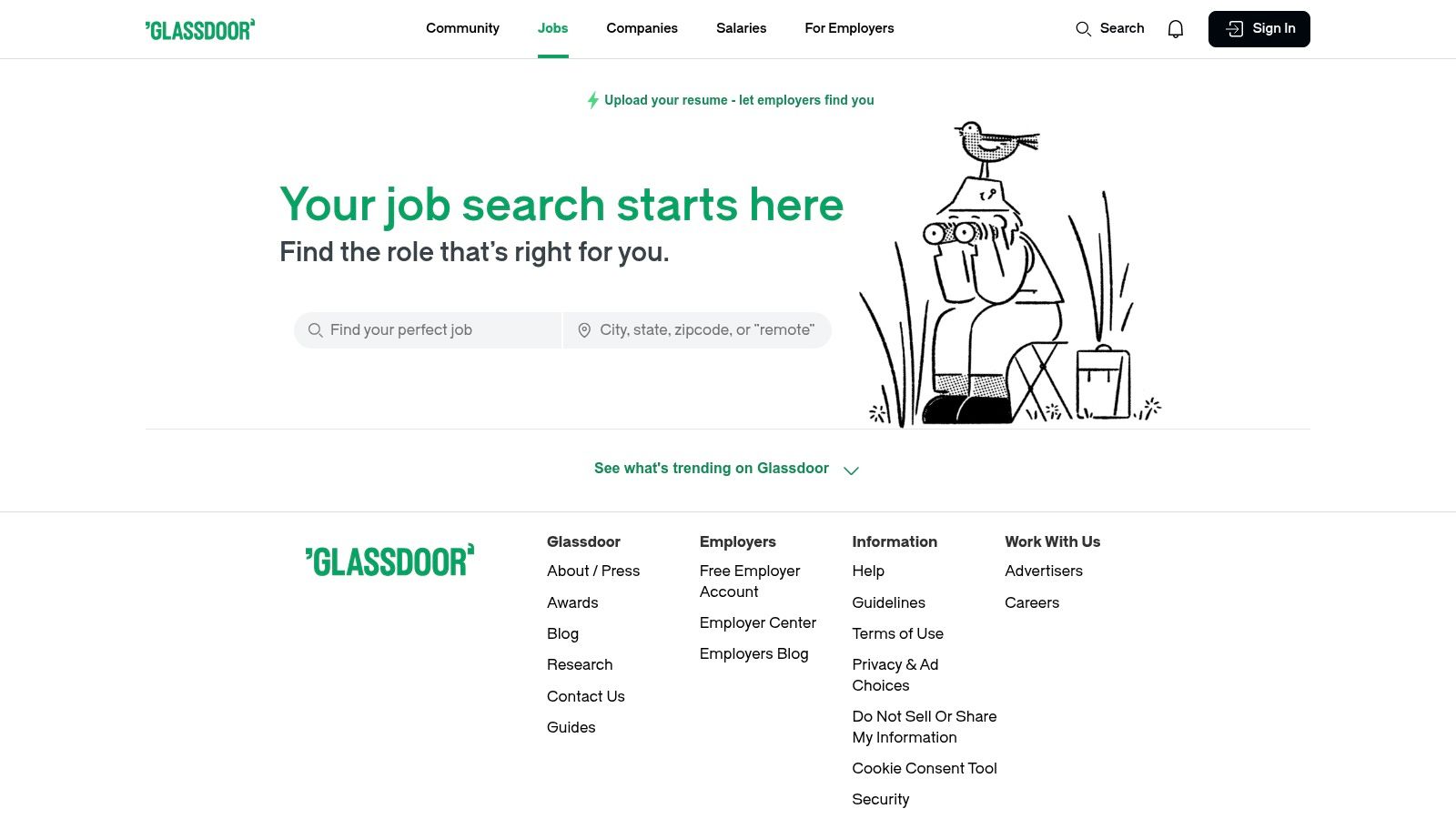
The platform’s core value lies in its rich data set. You can search for "Software Engineer" roles and simultaneously see salary reports for that title at specific companies, read about their technical interview loops from past candidates, and gauge team morale from employee reviews. This is invaluable for setting salary expectations, preparing for challenging interviews, and avoiding companies with a poor engineering culture, making it one of the best job search sites for software engineers who prioritize transparency.
Glassdoor is indispensable for the research phase of any job search, particularly when comparing multiple offers or preparing for interviews. It helps you formulate specific, insightful questions about a company’s culture, work-life balance, and engineering practices based on real employee feedback.
Actionable Tip: Before an interview, filter reviews by "Engineering" to understand the specific pros and cons relevant to your department. Use the "Interviews" section to find recently posted questions for your role and tech stack. For example, search for "Senior Software Engineer interview" at the company and look for questions about system design, specific algorithms, or their cloud architecture. Mentioning that you've done this research ("I saw on Glassdoor that the team is focused on migrating to Kubernetes, could you tell me more?") shows genuine interest.
Pros:
Cons:
Website: https://www.glassdoor.com/Job/index.htm
ZipRecruiter functions as a powerful job aggregator and matching engine, casting an exceptionally wide net across the U.S. market. For software engineers, its main appeal lies in its simplicity and AI-driven personalization. The platform excels at learning your preferences from your resume and search behavior, delivering a steady stream of relevant roles directly to your inbox with impressive accuracy.
The key differentiator is its emphasis on a responsive and mobile-first user experience. The AI assistant, "Phil," actively suggests roles you might have missed, and the system provides real-time notifications when your application is viewed. This feedback loop, though simple, can be a welcome relief from the "apply and forget" black hole common on other large job boards, making it one of the more engaging job search sites for software engineers who value active updates.
ZipRecruiter is ideal for engineers who want to automate their search with a broad-market tool that provides a high volume of opportunities and fast feedback. It's particularly effective for roles at mid-to-large-sized companies in major U.S. tech hubs where hiring volume is high.
Actionable Tip: Upload a well-keyworded, machine-readable resume (PDF or DOCX). ZipRecruiter's matching algorithm heavily relies on parsing your resume content to find and suggest jobs. Ensure your core languages, frameworks, and skills (e.g., "Java," "Spring Boot," "AWS," "Microservices") are explicitly listed multiple times in relevant contexts to maximize the quality of your AI-powered recommendations.
Pros:
Cons:
Website: https://www.ziprecruiter.com/
Dice is a veteran in the tech recruiting space, offering a job board laser-focused on technology professionals. For software engineers, this specialization cuts through the noise of generalist job sites, presenting a concentrated marketplace for roles in engineering, DevOps, security, and data science. Its long-standing reputation means it's a go-to platform for US-based recruiters and companies specifically seeking technical talent.
The platform’s primary strength lies in its tech-specific filters and content. You can narrow your search by skills, security clearance, and employment type, but more importantly, by visa sponsorship status, which is a critical feature for international engineers. This focus makes it a highly efficient tool for engineers who know exactly what they are looking for and want to avoid sifting through irrelevant, non-technical positions.
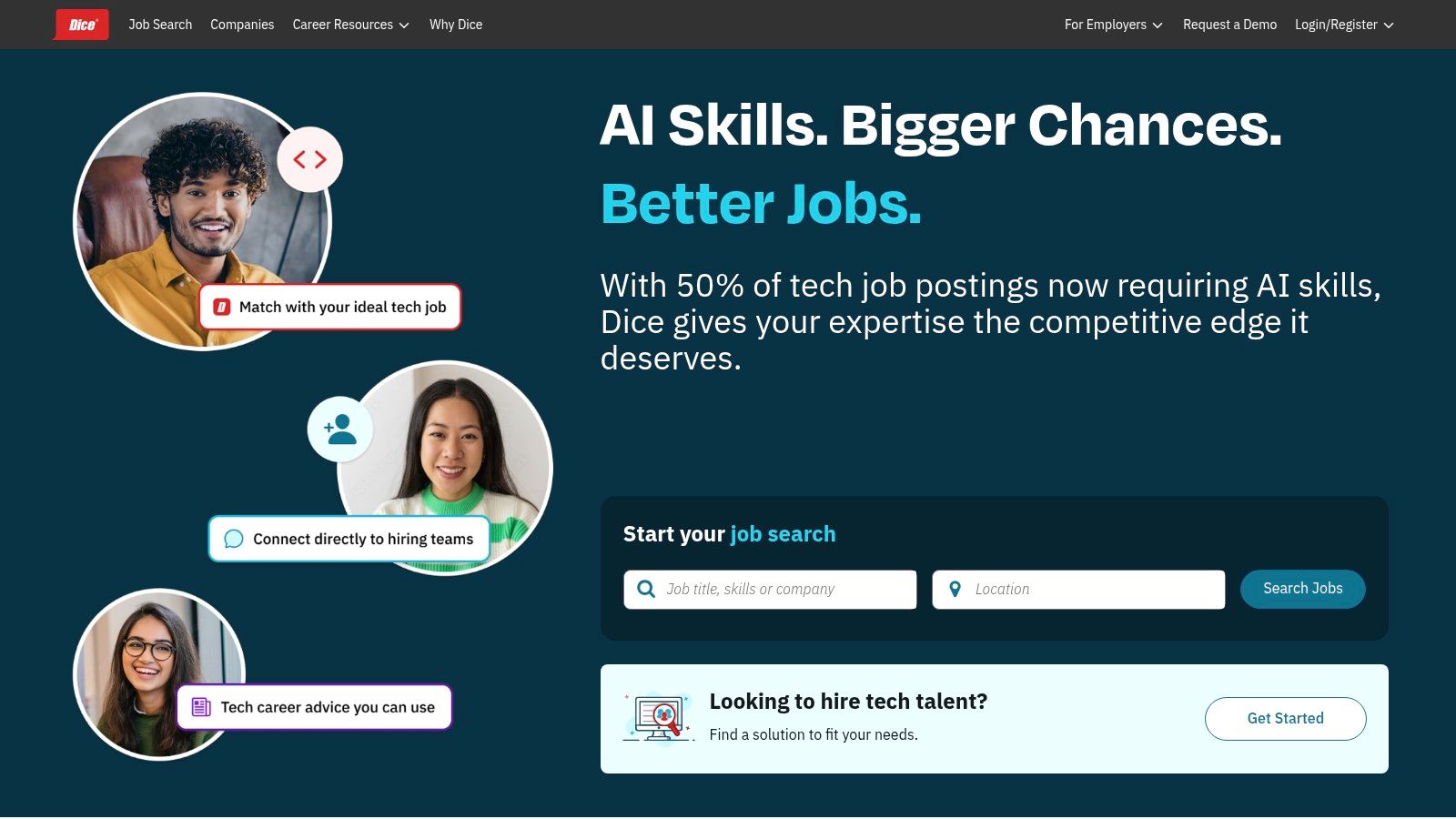
Dice is ideal for software engineers in the US market who want a direct, no-frills search experience focused purely on tech roles, especially those needing visa sponsorship. It's particularly useful for connecting with third-party recruiters who often have access to roles not advertised elsewhere.
Actionable Tip: Create a detailed profile highlighting your specific tech stack and skills. Since many users are third-party recruiters searching by keyword, a well-optimized profile that reads like a resume summary can significantly increase the number of relevant inbound messages you receive. For instance, a profile summary could start with: "Senior Software Engineer with 8+ years of experience in distributed systems, specializing in Java, Kafka, and Kubernetes. Open to remote roles or positions in the NYC area."
Pros:
Cons:
Website: https://www.dice.com/
Built In is a hybrid platform that blends a tech-focused job board with rich editorial content, creating a hub for engineers interested in the startup and scale-up scene. It is particularly strong for those targeting specific US tech ecosystems like Austin, NYC, or Chicago, offering a localized view of the market that generalist sites lack. The platform excels at providing context beyond a simple job description.
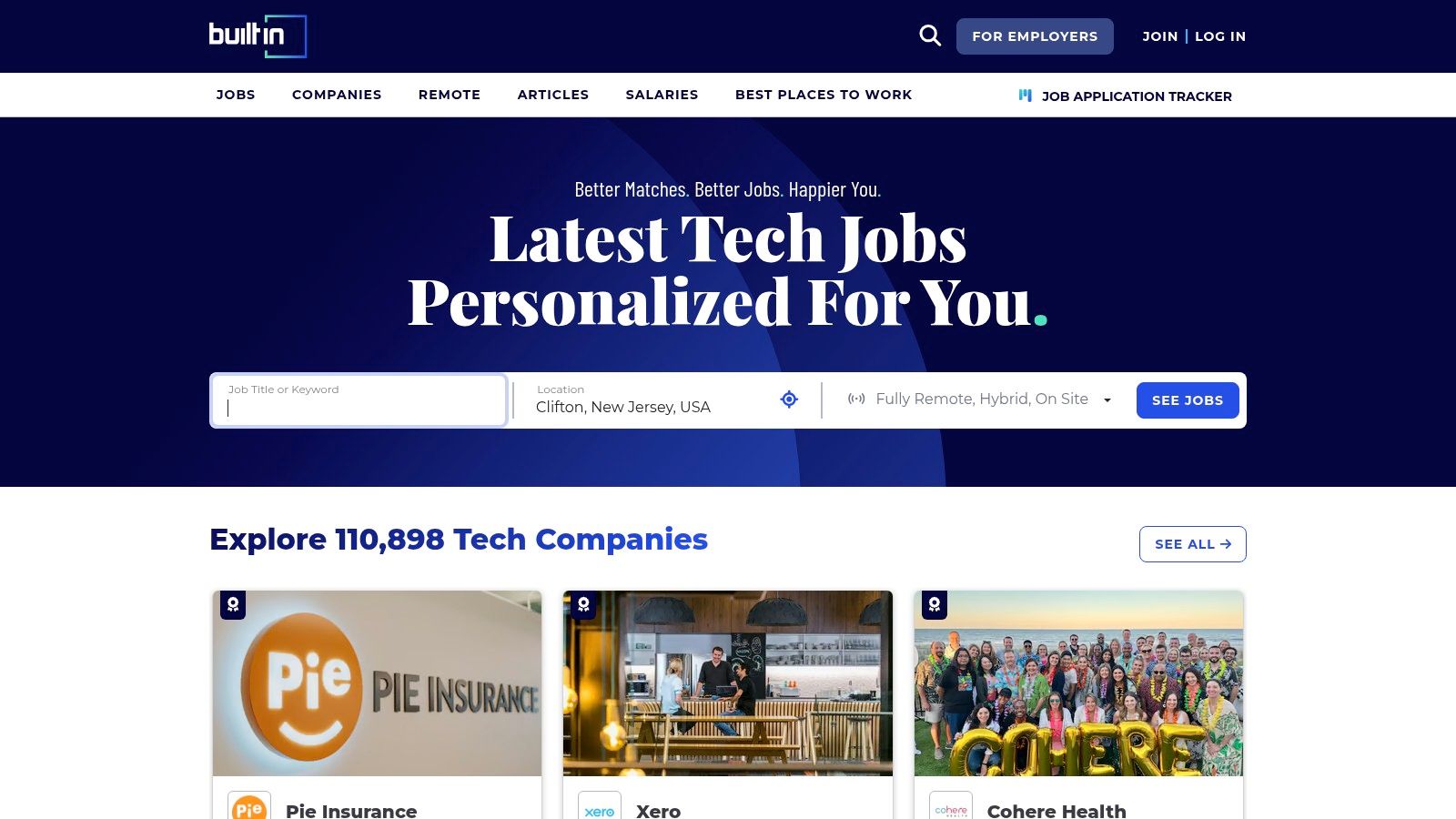
The key differentiator for Built In is its deep integration of company culture and employer branding. Its annual ‘Best Places to Work’ lists and detailed company profiles, often including employee benefits and tech stacks, give engineers a more holistic view of potential employers. This makes it more of a research tool than just an application portal, helping you vet companies before you even apply.
Built In is ideal for engineers who are geographically focused on a major US tech hub or are specifically seeking remote roles at venture-backed startups and growing tech companies. It's a fantastic resource for discovering companies that are hiring aggressively but may not have the brand recognition of a FAANG giant.
Actionable Tip: Use the "Best Places to Work" lists not just to find open roles, but to build a target list of companies. Even if a company on the list isn't hiring for your exact role now, follow them on LinkedIn or set a job alert for their name. These companies often have great engineering cultures and are worth tracking for future openings. This proactive approach turns your search from reactive to strategic.
Pros:
Cons:
Website: https://builtin.com/
Wellfound, born from AngelList Talent, is the definitive hub for software engineers drawn to the startup ecosystem. It carves a niche by focusing exclusively on early-stage to growth-stage companies, making it one of the best job search sites for software engineers who want to join innovative, founder-led teams. The platform’s DNA is built around transparency, especially concerning equity and salary, which are often displayed upfront.
What sets Wellfound apart is its startup-first filtering and direct line to decision-makers. You can bypass traditional HR gatekeepers and often connect directly with founders or engineering leads. The entire experience is tailored for those who value high-impact roles, are comfortable with the unique challenges of a startup, and want to understand their potential stake in the company from day one. It’s less about corporate structure and more about mission, product, and team.
Wellfound is ideal for engineers targeting seed to Series C startups and prioritizing compensation transparency, especially equity. It excels for those seeking remote-first roles or opportunities in major tech hubs. The platform is less suited for finding stable, large-enterprise positions.
Actionable Tip: Create a rich profile highlighting your startup-relevant skills, like adapting to fast-paced environments or building products from scratch. Use the filters to narrow your search by funding stage (e.g., "Seed," "Series A"), company size, and tech stack. When you apply, your message goes directly to the team, so personalize it to show you understand their specific product and mission: "I've been following your progress in the AI-powered logistics space and was impressed by your recent launch. My experience building scalable data pipelines in Python seems like a great fit for the challenges you're tackling."
Pros:
Cons:
Website: https://wellfound.com/jobs
Y Combinator's "Work at a Startup" platform is a direct pipeline to opportunities within the world's most famous startup accelerator ecosystem. It’s not a traditional job board; instead, it’s a centralized talent hub where creating a single profile puts you on the radar of founders from hundreds of vetted, high-growth YC companies. This model flips the typical application process, emphasizing inbound interest from founders over outbound applications.
For software engineers specifically interested in the startup scene, this provides an unparalleled, high-signal channel. The companies listed have all passed YC's rigorous selection process, which often translates to a higher bar for engineering culture, product vision, and funding potential. The platform streamlines the discovery process, allowing you to filter by stage, industry, and tech stack, with many listings transparently including compensation bands.
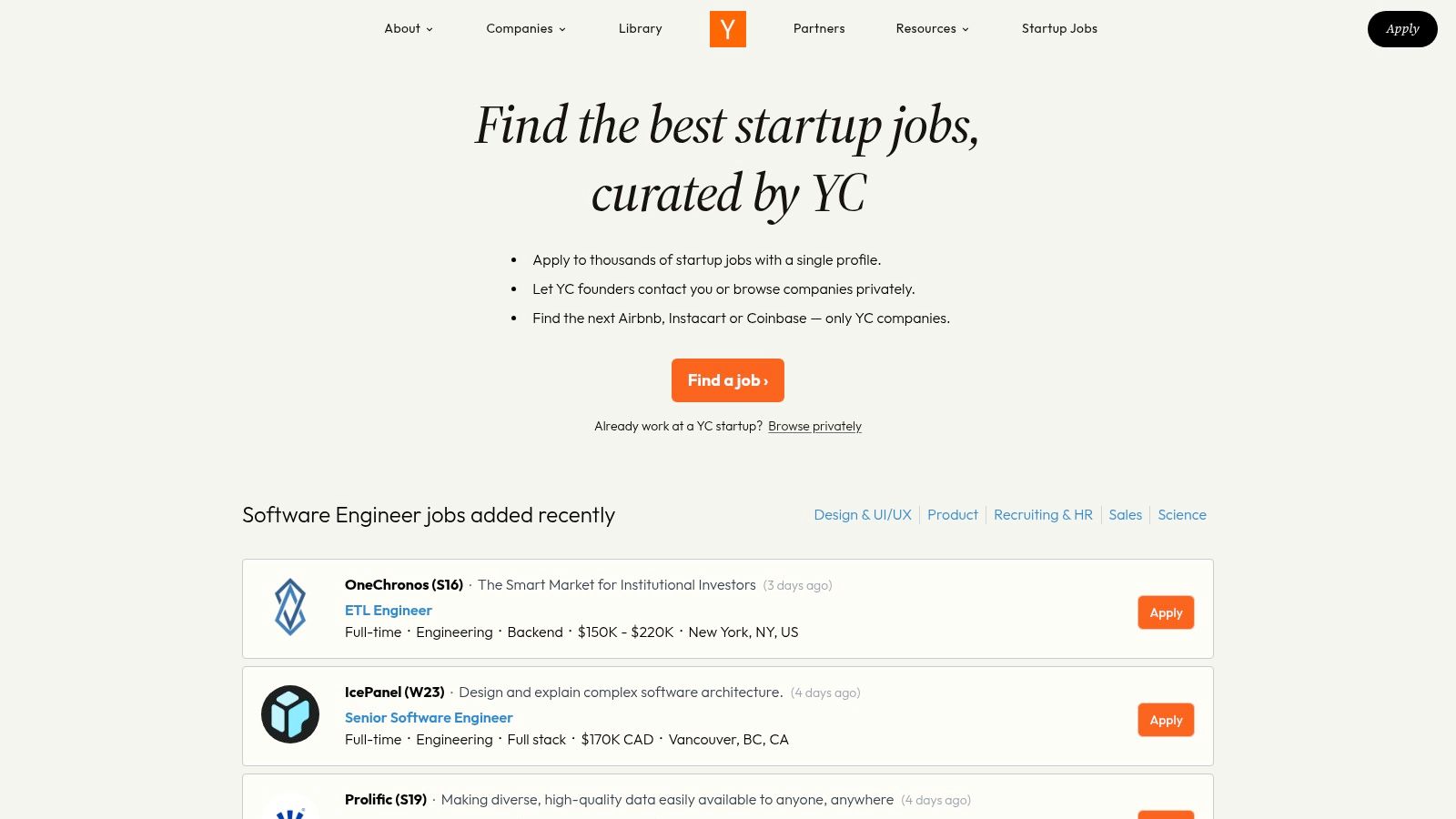
This platform is ideal for engineers actively targeting early-stage to growth-stage startups and who prefer to be discovered rather than mass-applying. It’s particularly effective for those wanting to join a company with strong venture-backing and a certain level of prestige. The single-profile approach makes it a low-effort, high-impact tool for passive job searching.
Actionable Tip: Treat your profile as your primary resume. Go beyond listing technologies and detail your impact with metrics. In your bio, explicitly state what kind of challenges you're looking to solve and the stage of company you're most interested in (e.g., "Seeking a founding engineer role at a seed-stage FinTech startup to build a scalable, secure payment infrastructure from the ground up."). This helps founders quickly qualify you.
Pros:
Cons:
Website: https://www.ycombinator.com/jobs?utm_source=openai
Levels.fyi started as a compensation transparency tool and has evolved into an essential resource that integrates salary data directly into the job search. For software engineers, it flips the traditional model on its head; instead of applying and hoping for a good offer, you can start your search with a clear understanding of your market value. The platform aggregates verified and self-reported salary, bonus, and stock data, providing a powerful benchmark.
Its job board is a natural extension of this data-first approach. Many listings, particularly from major tech companies, include detailed compensation bands, allowing you to filter out roles that don’t meet your financial expectations from the very beginning. This transparency is its core differentiator, making it one of the best job search sites for software engineers focused on maximizing their earning potential.
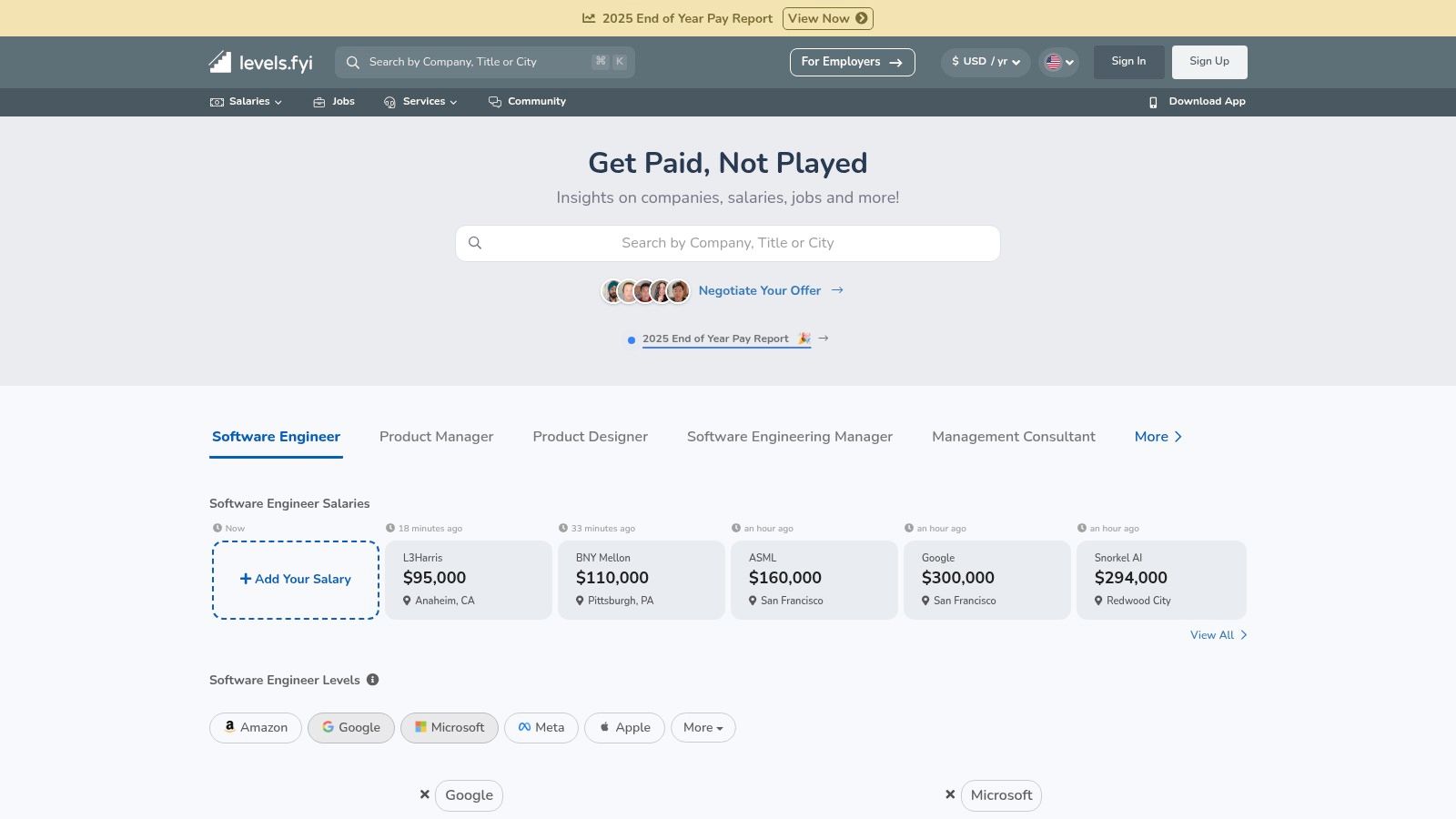
Levels.fyi is indispensable for engineers in the late stages of their search, specifically when preparing for salary negotiations or comparing multiple offers. It is also excellent for initial research to set realistic compensation targets before even starting to apply. The platform helps you understand how much money software engineers make at different levels and companies.
Actionable Tip: Before an interview or negotiation, look up the company and role level (e.g., Google L5, Microsoft 63) on Levels.fyi. Filter by location and recent submissions to get the most accurate data. Use this information to anchor your salary expectations high but realistically. For example: "Based on recent data for this level and location, roles are compensating between $X and $Y total compensation. I'm targeting the upper end of that range based on my experience with [specific relevant skill]." Be prepared to reference market data if you receive a lowball offer.
Pros:
Cons:
Website: https://www.levels.fyi/index.html?utm_source=openai
As one of the original and largest remote-only job boards, We Work Remotely (WWR) has established itself as a go-to resource for location-independent roles. For software engineers specifically seeking to cut through the noise of hybrid or on-site listings, WWR provides a highly curated feed. Its focus is entirely on positions that can be performed from anywhere, making it a highly efficient platform for those committed to the remote lifestyle.
The site is straightforward, presenting a chronological list of jobs that can be filtered by specific programming categories like backend, frontend, and DevOps. This no-frills approach, combined with its long-standing reputation, attracts a healthy mix of established remote-first companies and emerging tech startups looking for talent globally, a key reason it's among the best job search sites for software engineers.
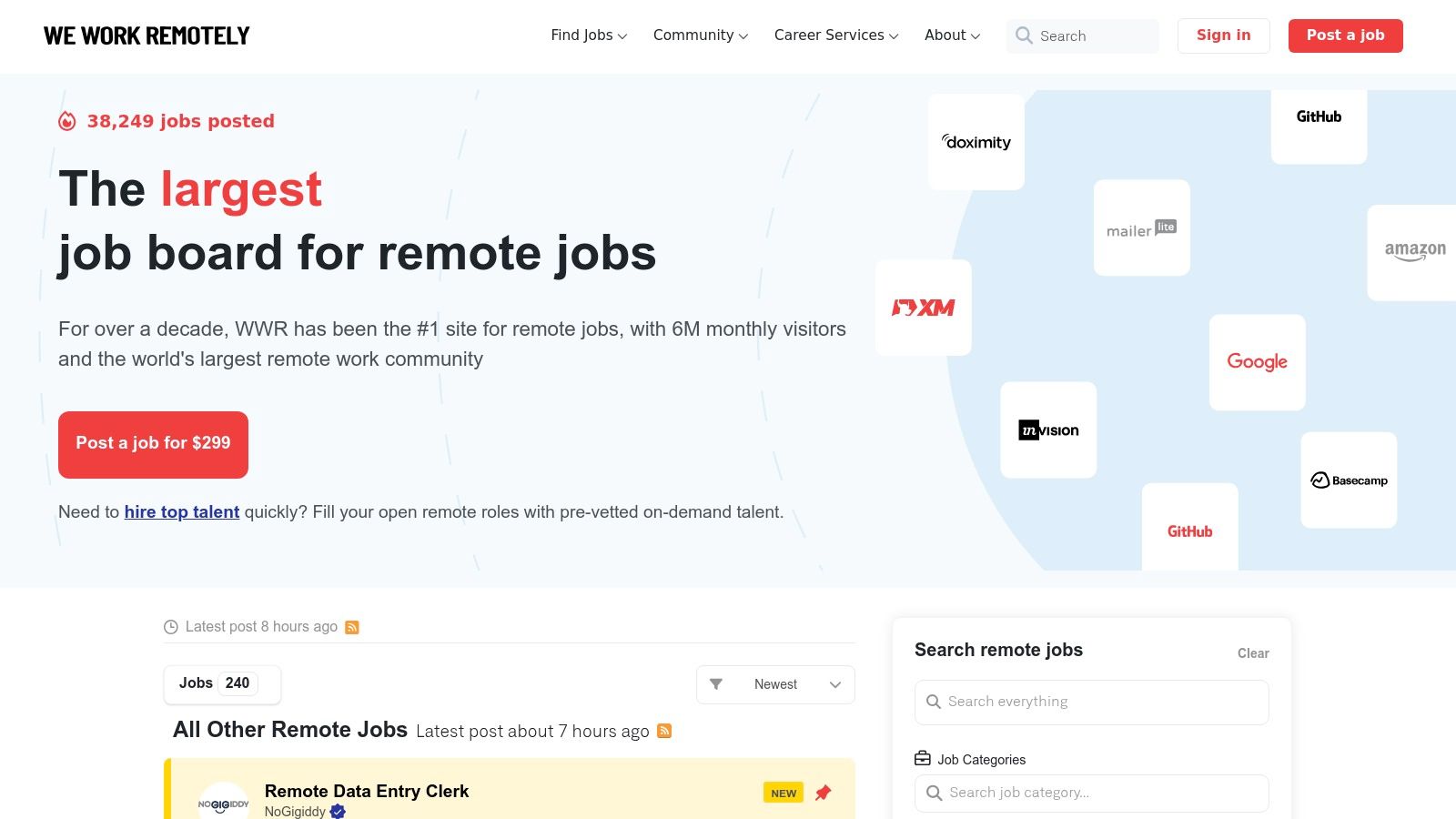
We Work Remotely is ideal for engineers who have decided that their next role must be 100% remote. It's particularly effective for finding full-time and contract roles at startups and mid-sized tech companies that have a mature remote culture. The platform is less about networking and more about direct application to high-quality, pre-vetted remote openings.
Actionable Tip: Set up keyword-specific email alerts (e.g., "Senior Python Remote," "React Native Contract"). Since WWR is a high-traffic board, the best roles can get filled quickly. Timely alerts allow you to be among the first to apply, which is a significant advantage. Additionally, pay close attention to any time-zone restrictions (e.g., "Americas Only," "CET +/- 3 hours") listed in the job description to avoid applying for roles that are a poor logistical fit.
Pros:
Cons:
Website: https://weworkremotely.com/
Arc distinguishes itself by focusing exclusively on remote developer roles and incorporating a rigorous vetting process to connect engineers with high-quality opportunities. Instead of a traditional job board, it operates as a curated talent network where developers are pre-screened for technical and communication skills. This vetting elevates a candidate's profile, making them more visible to a select group of US startups and established tech companies actively seeking remote talent.
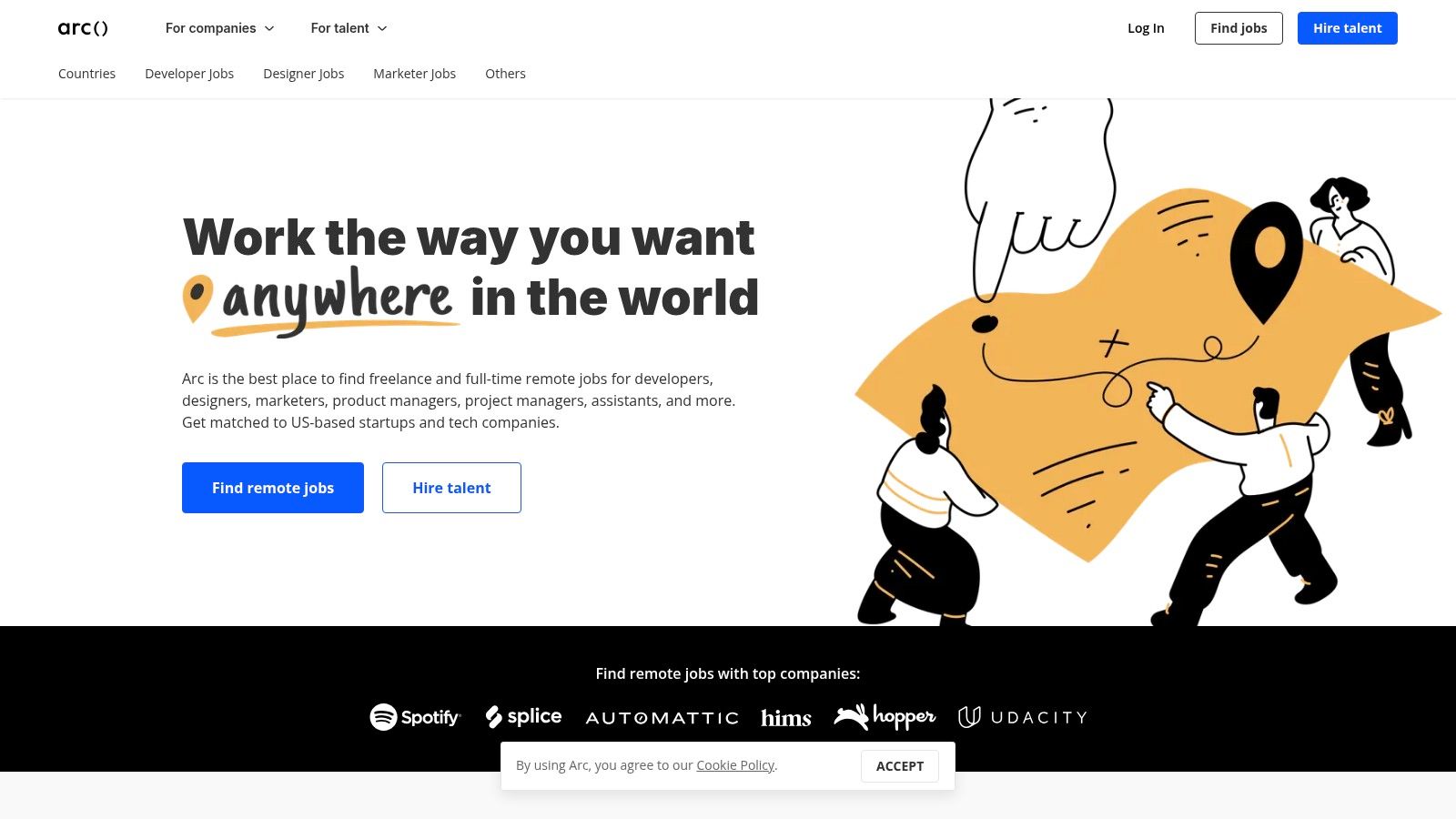
The platform is designed to reverse the typical application dynamic; once vetted, companies apply to you with interview requests. Arc provides support throughout the interview and hiring process, offering both full-time and freelance contract positions. Its focus on quality over quantity makes it a standout choice for experienced engineers tired of navigating the noise on larger, more generalized job search sites for software engineers.
Arc is ideal for senior-level engineers who are confident in their skills and are specifically targeting remote-first roles at US-based tech companies. It’s also excellent for those who prefer curated introductions over sending out hundreds of applications into the void. The vetting process itself can serve as valuable preparation for technical interviews.
Actionable Tip: Invest time in the vetting process. A strong performance on the technical assessment and communication screening is your primary lever for attracting top-tier companies. Treat it as the first stage of your interview process, as this is what gets your profile in front of hiring managers. Before starting, review common data structures and algorithm patterns, as the coding challenge is a key gatekeeper to the platform's top opportunities.
Pros:
Cons:
Website: https://arc.dev/developers?utm_source=openai
Navigating the vast landscape of job search sites can feel like compiling code from a dozen different libraries. Each platform we've explored offers a unique set of functionalities, strengths, and ideal use cases. Your task now isn't to pick just one, but to architect a job search strategy that leverages the distinct advantages of several. The search for the best job search sites for software engineers is less about finding a single silver bullet and more about building a powerful, multi-pronged toolkit.
Think of it as assembling your personal job search stack. For casting the widest possible net and tapping into the sheer volume of enterprise and mid-market roles, giants like LinkedIn Jobs and Indeed are indispensable. They provide the scale and breadth necessary to understand the full scope of the market. However, volume often comes with noise, requiring you to implement strong filters and keywords to find relevant listings.
For a more targeted and efficient search, particularly within the dynamic startup ecosystem, specialized platforms are your core components. Wellfound (formerly AngelList Talent) and Y Combinator's Work at a Startup board offer direct access to venture-backed companies where your impact can be immediate and substantial. These platforms are built for engineers who thrive in fast-paced, high-growth environments.
Similarly, if your priority is finding a role that matches a specific lifestyle, like remote work, niche sites like We Work Remotely and Arc are essential. They cut through the clutter of hybrid and location-specific roles, connecting you directly with companies that have a remote-first culture baked into their DNA.
The most effective job search strategy combines these different platform types to cover all your bases. Here’s a practical, actionable plan to get started:
By combining a high-volume platform for market awareness, a niche platform for targeted opportunities, and a data tool for compensation, you create a comprehensive system. This approach respects your time, maximizes your exposure to the right kinds of roles, and positions you for success. Your next great role isn't just on one site; it's at the intersection of a well-executed, multi-platform strategy.
A good site for engineers offers strong technical filters for programming languages, frameworks, and role types (e.g., backend, ML, DevOps). It should provide transparency with salary ranges and detailed company tech stack information. Platforms that facilitate direct contact with technical hiring managers or founders are often more effective than those that funnel applications into a generic HR system.
Niche boards can be significantly more effective for targeted searches. While general sites have volume, niche platforms focused on startups, remote work, or specific tech ecosystems (like Python or JavaScript) tend to have higher-quality, more relevant listings. They often attract companies that are specifically looking for engineers, reducing the noise of unrelated postings.
Curated platforms, like Underdog.io, flip the traditional model. Instead of you applying to hundreds of companies, you create a detailed profile, and vetted companies apply to you. This saves immense time, provides access to "hidden" opportunities not listed on public boards, and ensures a higher level of mutual interest from the start.
For startup roles, dedicated platforms are key. Sites like Wellfound (AngelList Talent), Y Combinator's job board, and Built In (for specific cities) are excellent. They list equity details, funding stages, and often allow you to apply directly to founders, which is ideal for engineers seeking high-impact roles in fast-growing companies.
Extremely important. Salary transparency saves time and sets clear expectations. Platforms that list salary bands (often due to pay transparency laws or company policy) help you target roles that match your compensation needs and provide valuable data for negotiation. This feature is a strong indicator of a modern, candidate-friendly platform.
A hybrid strategy is best. Use 1-2 curated or niche platforms for high-quality, targeted leads. Complement this with one large general board (like LinkedIn Jobs) to monitor the broader market and network. Having profiles on multiple sites increases your visibility but manage your activity to avoid burnout from maintaining too many applications.
Be wary of sites with outdated job postings, listings with vague or generic job descriptions, and platforms that don't filter out recruitment agencies masquerading as direct hires. A lack of technical detail in the job description or no clear company information are also signs that a posting may be low-quality.
Ready to skip the endless searching and have curated startup opportunities come to you? Let Underdog.io flip the script on your job search. Sign up in minutes to get your profile in front of hundreds of top tech companies and hiring managers who are actively looking for talent like yours.