Most advice about how to engineer robotics careers is too broad to be useful. The title looks unified from the outside, but employers hire for separate problems, separate budgets, and separate timelines. If you apply to every robotics role with the same resume, you'll lose to candidates who picked a lane and built proof that they can ship.
The first mistake candidates make is treating robotics engineer like one job. It isn't. In the market, the title splits into at least two very different tracks, software-heavy roles that sit near perception, autonomy, and AI, and hardware-focused roles that sit near integration, controls, electrical work, test, and factory deployment.
The split matters because the day-to-day work is different. A software robotics candidate needs to be comfortable with data pipelines, model behavior, and debugging systems that fail in edge cases. A hardware or integration candidate spends more time on fixtures, wiring, motion limits, robot cells, PLCs, and the ugly details that make a machine safe and repeatable in production.
Practical rule: if your portfolio only shows simulation wins, you're probably closer to software. If your portfolio shows commissioning, calibration, and failure recovery, you're closer to integration.
The title also hides hiring variance. A startup might use “robotics engineer” for someone writing ROS2 nodes, while a manufacturer uses the same title for someone responsible for a robot cell that has to run all week without stopping production. That's why generic career advice fails here, it ignores the actual problem the employer needs solved.
For candidates, the fastest way to get serious is to choose the track that matches your strengths and then speak in that language. If you enjoy perception, autonomy, and behavior under uncertainty, lean software. If you're strongest when a system touches the physical world, lean hardware and integration. The market rewards clarity more than broadness.
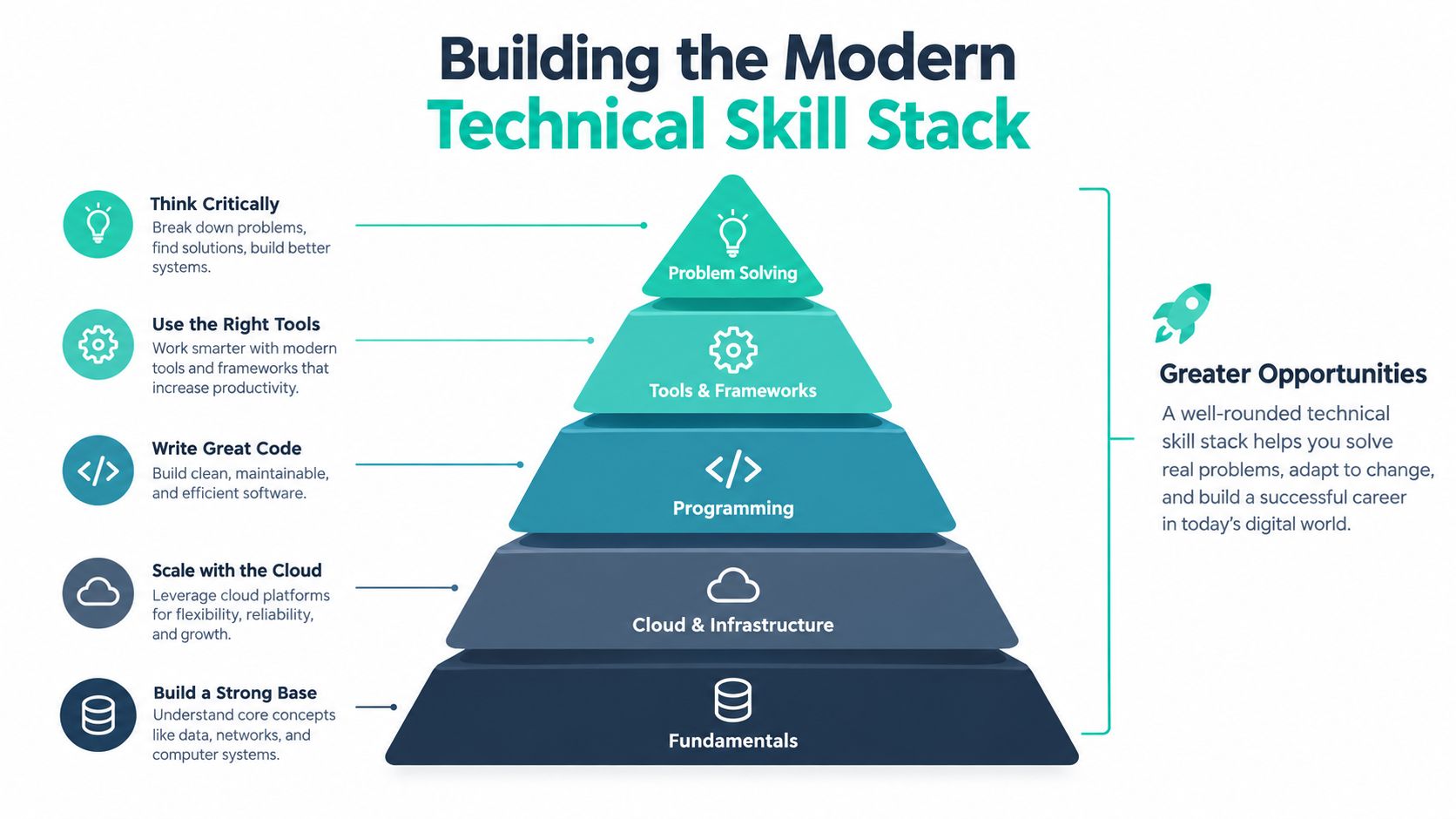
Modern robotics work sits on top of a layered skill stack. At the base, you need programming discipline, usually Python, C++, and enough Linux comfort to survive debugging at 11 p.m. Above that sits ROS2, because it's the most common coordination layer candidates are expected to understand. Above that comes perception, motion, controls, and finally deployment judgment, where the cost of mistakes shows up.
For software-heavy roles, computer vision and sensor fusion matter because the machine has to understand what it's looking at before it can act. For systems integrators, the skill stack shifts toward motion planning, calibration, field debugging, and safety behavior in real cells. The people who get hired fastest can explain both sides without pretending they're the same job.
Engineering reality: a clever demo that works once is weak evidence. A robot that keeps working after a fixture changes, lighting shifts, or a part tolerance drifts is strong evidence.
Modern manipulation work is also becoming more data-driven. RoboMIND reports 107,000 real-world demonstration trajectories across 479 tasks and 96 object classes, while ARMBench includes 235,000+ pick-and-place activities on 190,000+ unique objects in a warehouse setting, which shows why broad object diversity matters for reliability. The point for candidates is simple, broad data exposure beats a tiny demo set when the job involves deployment, not a lab benchmark. RoboMIND and ARMBench dataset details
A clean simulation project is useful, but it won't impress a startup founder by itself. They want proof that you understand sim-to-real problems, robot embodiment differences, and the limits of sensor data under imperfect factory conditions. That means learning to describe what broke, why it broke, and how you fixed it.
If you're building for a perception role, focus on object detection, pose estimation, dataset curation, and failure analysis. If you want a systems integration role, focus on calibration, coordinate frames, safety logic, and the mechanics of getting a robot to repeat a task under real cycle-time pressure. If you want a quick comparison of adjacent AI engineering skill expectations, the AI engineer career guidance gives a useful contrast.
A practical portfolio should also show that you can think about safety and control, not just outputs. The industry is leaning harder on control-loop tuning, latency awareness, and reliability under constraints, which is why benchmark simplicity is increasingly out of step with deployment reality. For a structured adjacent learning path, Ace Aviation's drone AI syllabus at Ace Aviation is a useful reference point for anyone who wants to see how autonomy skills get sequenced in a technical curriculum.
The best candidates don't list tools. They show how the tools behaved when the system got messy.
Degrees help, but startups hire proof. They want to see that you can turn theory into a robot that does something useful without falling apart the first time reality drifts. If your portfolio looks like a class assignment, expect class-assignment reactions.
Start by documenting one project end to end. Use a repo structure that makes the system easy to inspect, then add a readme that explains the goal, hardware, software, failure modes, and what you would do differently. If the project touched a real robot, include calibration steps, sensor setup, and a short section on what happened when the system met a physical environment instead of a clean demo scene.
Keep your explanation honest. Employers trust candidates who name what failed more than candidates who only describe what worked.
A strong robotics portfolio usually includes three things.
The hiring signal changes fast when you describe a project like an engineer rather than a student. That means talking about trade-offs, not just results. It also means showing that you understand how brittle real systems can be, especially when the environment changes and the robot doesn't get the memo.
For a useful outside benchmark on how employers scan technical work, the GitHub portfolio guidance for hiring managers is a helpful mirror. And if you want to see how another technical field frames presentation and proof, Sculpty's portfolio tips for 3D artists and designers can help you think more sharply about structure and evidence.
If you can show that, you stop looking like another applicant and start looking like someone who can ship.
The market doesn't pay evenly across robotics specialties, and candidates who ignore that usually underprice themselves. Software-heavy robotics roles are generally easier to hire for when the company wants autonomy, perception, or ROS2 depth. Hardware, integration, and controls roles often take longer to fill because they depend on narrower experience and more on-site judgment.
That hiring split shows up in labor data. Recent reporting says the field has acute shortages in ROS2 developers, computer vision engineers, robot systems integrators, and safety/compliance specialists, with open positions in U.S. robotics reportedly reaching 340,000+ by end-2025 and year-over-year growth of 42%. That doesn't mean every candidate gets hired instantly. It means the market is fragmented, and the scarcest profiles get the strongest attention. Robotics job openings and specialty shortages
| Specialty | Hiring Velocity | Market Demand | Primary Focus |
|---|---|---|---|
| Software robotics and AI | Faster | Strong | ROS2, perception, autonomy, data pipelines |
| Controls engineering | Moderate | Strong | Motion tuning, feedback loops, reliability |
| Systems integration | Slower | Consistent | Commissioning, cell design, deployment |
| Safety engineering | Slower | High trust role | Standards, risk reduction, safe operation |
The compensation picture also tilts by specialty. One 2026 industry report places Robotics / Automation Engineer demand at +33% and gives a U.S. median salary estimate of about $101,000, which is useful as a baseline, not a promise. Industrial automation and robotics report
For broader market context, the robot control system market is estimated at about US$9.5 billion in 2026 and projected to reach US$17.31 billion by 2036, which signals continued investment in control architectures, sensing, and industrial automation. Robot control system market projection
A lot of candidates still compare robotics roles to generic software jobs. That's the wrong comparison. Robotics roles sit closer to systems engineering, where timing, safety, and physical constraints shape both salary and hiring speed. If you want a parallel on how specialized technical roles are screened, the guide for hiring sales engineers is surprisingly relevant because it shows how employers evaluate translation skills and technical credibility together.
Negotiation rule: if you can explain how your work reduces deployment risk, you have more leverage than a candidate who only claims strong coding ability.
Job boards are noisy for robotics. Founders post a role, get flooded, and spend too much time filtering people who can't do the work. That's why early-stage companies often prefer curated sourcing, referrals, and targeted marketplaces where candidates are pre-screened for fit.
For robotics candidates, a curated marketplace is usually a better first move than a general job board. You're more likely to reach a startup that knows whether it needs a software robotics engineer, a controls specialist, or an integration lead. You're also less likely to get buried under automated filters that treat robot work like generic backend work.

They usually care about speed, clarity, and judgment. They want to know if you can work with incomplete specs, communicate trade-offs, and keep moving when the robot cell doesn't behave as planned. They also care whether you can talk to mechanical, electrical, and software teammates without turning every meeting into a jargon contest.
A marketplace like Underdog.io fits that dynamic because it curates startup-facing candidates and matches them with companies looking for specialized talent. That's useful when you want to be seen by founders who are hiring for real execution, not just resume keywords. For a deeper look at the recruitment side, see how startups recruit candidates.
When you're weighing options, use this rule. If the role is enterprise integration, a specialized staffing firm like nexusITgroup.com can make sense because those searches often need narrower industry coverage and stakeholder coordination. If the role is startup robotics, curated marketplaces and referral-driven channels usually move faster.
If you want startup visibility, don't act like a general applicant. Act like a candidate who already understands the environment.
Robotics interviews at startups don't reward trivia. They reward system thinking. If you can talk through how a robot fails, how you'd isolate the fault, and how you'd keep people safe while fixing it, you'll usually do better than someone who memorized algorithms and can't explain a commissioning decision.
Expect questions about hardware-in-the-loop debugging, sensor trade-offs, and system latency. A good answer names the failure mode first, then the diagnostic steps, then the fix. If the interviewer asks about camera choice, don't just recite specs. Explain what the sensor does to downstream perception and why the choice matters for motion, cost, or reliability.
A strong robotics candidate doesn't defend a perfect design. They defend a design that survives uncertainty.
Safety comes up too, and it should. In the U.S., OSHA says there are currently no specific OSHA standards for the robotics industry, so candidates should be familiar with voluntary standards like ANSI/RIA R15.06 and ISO 10218 for manufacture, integration, and safe design. OSHA robotics standards guidance
Internationally, the newest industrial robot safety framework is split between ISO 10218-1:2025 for robots and ISO 10218-2:2025 for robot applications and robot cells, both focused on eliminating or reducing hazards through inherent safe design, protective measures, and information for use. ISO 10218 industrial robot safety standard
You should also be ready to discuss risk assessment and control-system safety in practical terms. The referenced framework includes ISO 12100 for risk assessment and risk reduction and ISO 13849 for safety-related performance of control systems, along with safety distances, emergency stops, and safe human-robot collaboration. Fraunhofer safety framework overview
The best interview move is to keep your answers tied to deployment. Founders want to know whether you can build something that people will trust around machinery, not just admire in a demo.
Robotics careers compound when you build amplifying influence, not just breadth. The engineers who move up fastest usually become the person who can translate between software, hardware, and operations without flattening the differences between them. That makes them more valuable than a narrow specialist who can only talk inside one team's vocabulary.
The long game is to become credible in one specialty and literate in the adjacent ones. A software robotics engineer who understands control failure modes is stronger than one who only ships models. A systems integrator who understands perception limitations is stronger than one who only knows wiring diagrams. That cross-functional range is what turns a junior contributor into someone founders trust with production decisions.
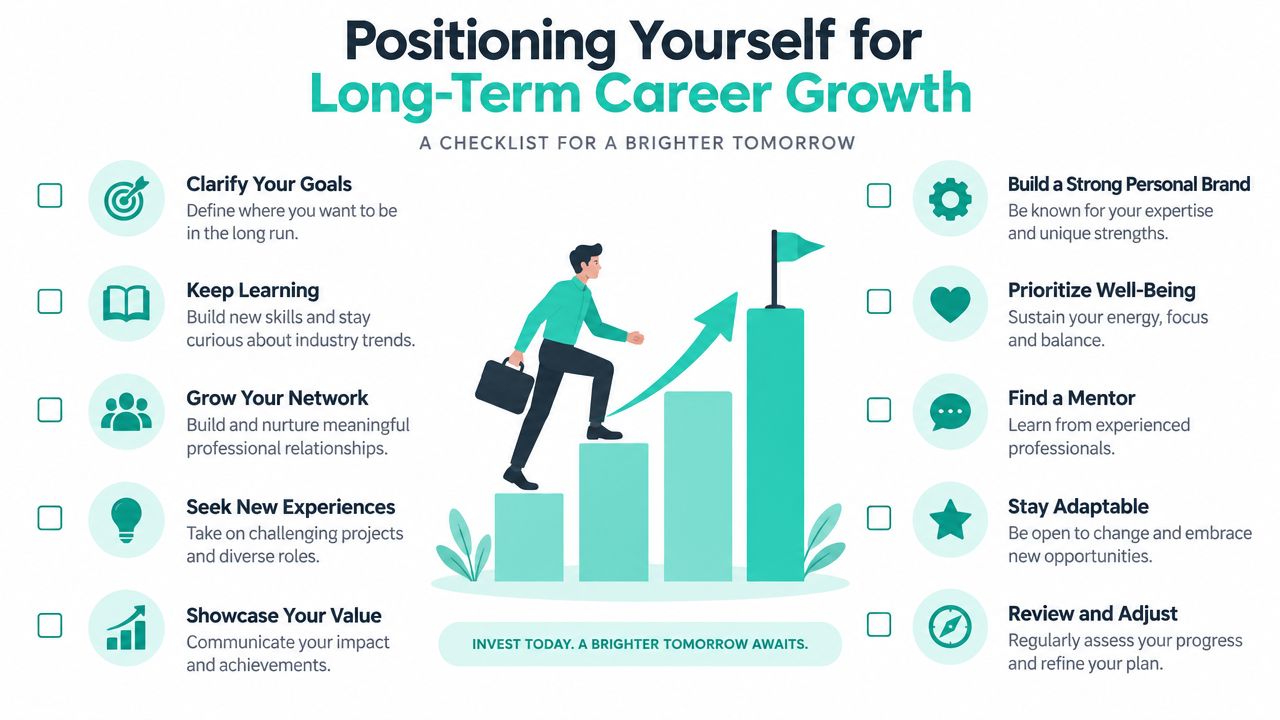
The network piece matters because startup robotics hiring is still relationship-heavy. People remember the candidate who speaks clearly about trade-offs and doesn't oversell a fragile prototype. They also remember the one who can explain how a system behaves when reality gets in the way, because that's most of the job.
Keep learning, but don't keep drifting. The market rewards candidates who specialize, document real work, and apply through channels where decision-makers look at them. If you want a cleaner way to surface in that kind of search, explore Underdog.io and position yourself for startup roles that value practical robotics experience, not just polished resumes.
Underdog.io helps robotics candidates get in front of vetted startups through a curated hiring marketplace, which is a better fit than spray-and-pray job boards when you're targeting early-stage teams. If you want a faster path to roles where software, controls, integration, and safety are evaluated by real people, visit Underdog.io and see how startup matching works.