You're probably staring at the same tabs every software engineer eventually opens during a search: LinkedIn, a few startup career pages, a giant spreadsheet, and a pile of job descriptions that all sound vaguely the same. “Fast-paced environment.” “Rockstar engineer.” “Competitive compensation.” Half the listings feel stale, the other half ask for five different specializations in one role, and a good chunk never reply.
That frustration is real. It's also fixable.
The mistake most engineers make is treating the search like a volume problem. They apply to everything, track too little, and spend most of their energy on noisy channels where signal is weak. Startup hiring punishes that approach. High-growth companies move quickly, filter hard, and usually want a specific kind of person, not just a generic “software engineer” with a stack of keywords.
The better approach is narrower and more deliberate. If you want strong job vacancies for software engineers, especially at startups, you need to know where good roles show up, how hiring teams evaluate talent, and how to avoid wasting time on openings that were never a fit in the first place.
The headlines have made a lot of engineers more cautious than they need to be. Hiring did slow across parts of tech, but software engineering demand didn't disappear. The U.S. Bureau of Labor Statistics projects employment for software developers, QA analysts, and testers to grow 15% from 2024 to 2034, with about 129,200 openings per year on average, and lists a median annual wage of $133,080 for software developers in May 2024 on its software developer occupation outlook.
That matters because it changes the right question. The question isn't “Are there still jobs?” There are. The actual question is “Which openings are worth your time, and which channels consistently lead to interviews?”
Large job boards create a strange illusion of abundance. You see pages of listings, but many aren't current, aren't aligned with your level, or hide constraints until late in the process. Startups also tend to write lean job descriptions. That sounds efficient, but it often leaves candidates guessing about team size, interview expectations, work mode, ownership, and whether the company knows what it wants.
The result is predictable:
Practical rule: Treat your search like engineering triage. Remove low-probability work first.
A startup search works better when you optimize for relevance, not reach. Strong candidates usually don't struggle because they lack ability. They struggle because they don't package that ability for the market they're targeting.
That means shifting from “Where can I submit the most applications?” to “Where do serious companies look for candidates who match what I do?”
If you want a good snapshot of how this shift is affecting startup hiring behavior, the Underdog view of current tech hiring trends is useful context. The useful takeaway isn't hype. It's that teams are more selective, more role-specific, and less willing to sort through broad applicant pools than they were when money was cheaper and hiring was looser.
A lot of job vacancies for software engineers still exist. The catch is that they're fragmented. Some are on portfolio pages. Some sit inside niche communities. Some are handled by curated networks. Some only make sense if your location, authorization status, and specialization line up cleanly.
That's why a modern search needs targeting from day one.
The easiest way to waste a month is to rely on giant public boards as your primary source of startup roles. They're useful for market scanning, but weak as a main pipeline. Startups hire around urgency. By the time a role gets syndicated everywhere, it often has a crowded funnel.
Recent labor-market reporting described software engineering job postings as rebounding, with postings up 18% since May 2025 and employment at its highest level since November 2023, according to the 2025 software hiring rebound summary. That doesn't mean every channel is equally good. It means there are opportunities if you look where other engineers don't spend all their time.
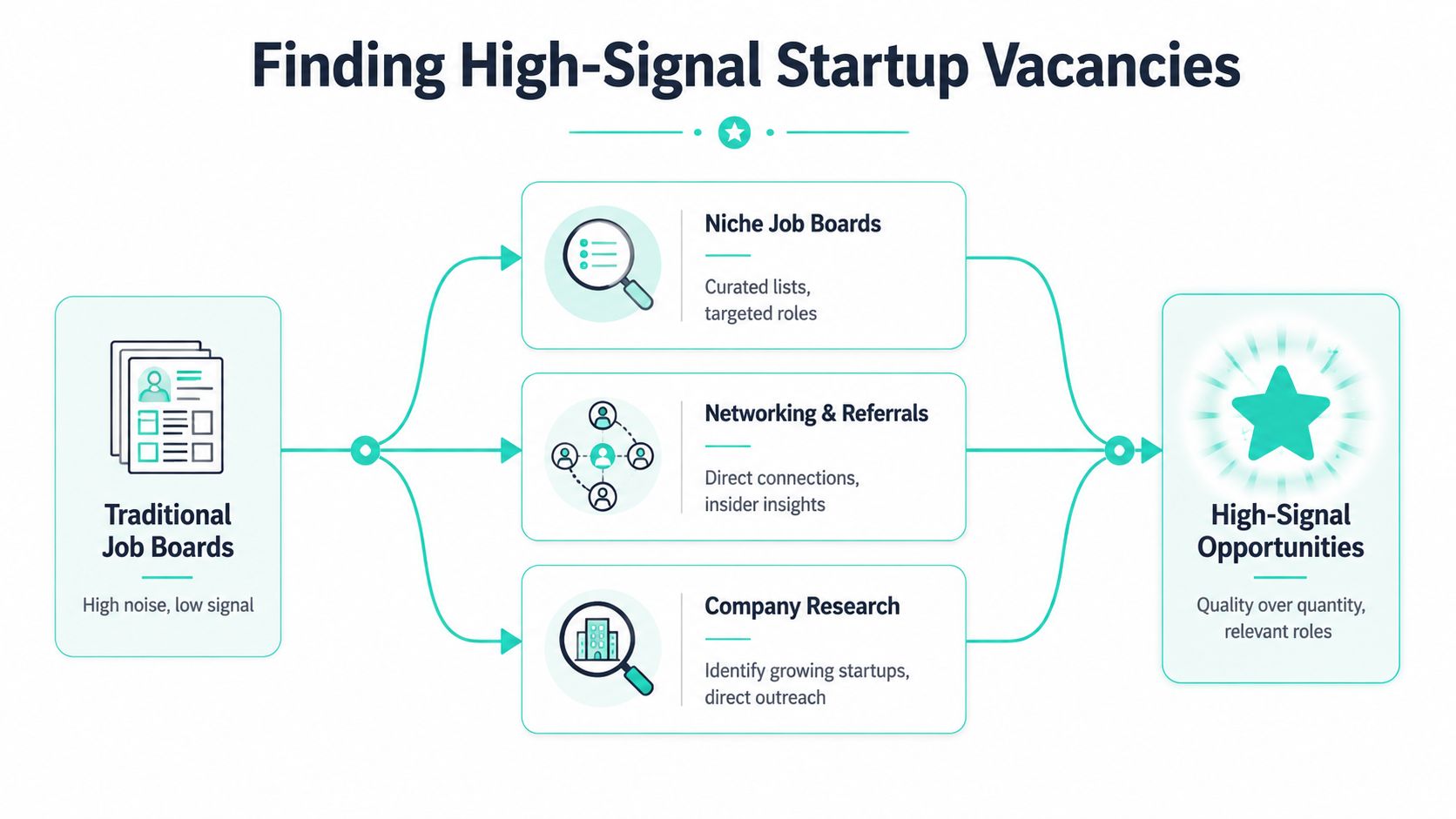
I'd organize startup job discovery into three tiers.
These are the channels where some filtering has already happened before you ever see the role. That matters more than people think. A curated marketplace or vetted talent network reduces noise on both sides. You're less likely to see random enterprise roles disguised as startup jobs, and companies are less likely to receive a flood of loosely relevant applicants.
One practical resource worth bookmarking is job search sites for software engineers compared by channel type. Use it to separate broad discovery tools from narrower, startup-focused ones.
When you use curated channels, pay attention to whether they screen companies, whether they focus on startups specifically, and whether they let you signal what kind of role you want beyond title alone.
VC portfolio pages are still one of the cleanest ways to find serious startup openings. You're looking at companies that have usually raised capital, built enough structure to hire intentionally, and often need engineers who can handle ambiguity.
Look for firms whose portfolios match your preferred stage. A seed company and a growth-stage company may both need backend engineers, but the work can be very different. One needs breadth and speed. The other may need someone to harden systems, own platform reliability, or scale internal tools.
A simple way to use these pages well:
Community-driven hiring channels often tell you more about a team than a polished job ad does. Hacker News “Who is hiring?” threads are still useful because they show how founders and engineering leaders describe problems when they're not writing corporate copy.
You can learn a lot from a short post:
| Signal | What to look for |
|---|---|
| Team clarity | Do they describe what the engineer will own? |
| Technical specificity | Are they hiring for actual needs, or listing every buzzword? |
| Hiring maturity | Do they explain process, expectations, or constraints? |
The best startup listings read like a team asking for help with a real problem, not a recruiter pasting a generic template.
This is the biggest mindset shift in finding job vacancies for software engineers in startups. Stop treating all openings as interchangeable. High-signal vacancies usually come from channels where someone has already done at least part of the filtering, or where the hiring team is close enough to the role to describe it clearly.
Once you're looking in the right places, your profile has to do one job well. It needs to answer, fast, “Why would this engineer be useful on a small team with real product pressure?”
That's different from a big-company resume. Startups usually care less about prestige phrasing and more about whether you've shipped, owned decisions, and improved something that mattered.
A practical benchmark helps here. One software engineering market snapshot put average time-to-hire at 42 days and noted that 67% of roles were remote or hybrid in that sample, which is why a profile that clearly signals specialization and work preferences can speed up matching in the software engineering hiring pipeline overview.
Most resumes undersell good engineers because the bullets describe activity instead of value.
Bad:
Better:
You don't need numbers for every bullet. You do need consequence. A hiring manager should be able to see the problem, your action, and the resulting business or team benefit.
A startup-friendly profile usually signals four things quickly:
If you're targeting remote roles, it helps to pair your profile with narrower remote sources rather than relying on generic search filters. A good example is RemoteFast's remote job collections, which are useful when you want to compare role types and work setups without digging through unrelated listings.
Hiring teams will check GitHub, LinkedIn, personal sites, and whatever else is easy to find. They're not always looking for polished open source fame. Often they want proof of taste and consistency.
A strong GitHub profile doesn't need a viral project. It should show signs of real engineering habits:
If your profile makes a reviewer work to understand what you do, you've already lost part of the advantage.
A concise startup-facing profile also helps on platforms built for matching rather than pure application volume. If you want to see what startup recruiters usually look for in those profiles, how startups recruit candidates through a structured profile is a useful reference.
The spray-and-pray approach feels productive because it creates motion. In practice, it creates admin work, weak applications, and a lot of false hope.
The biggest problem isn't just low response rates. It's mismatch. Many job vacancies for software engineers come with hidden constraints around work authorization, timezone overlap, location, or stack expectations. Public posting data also reflects that some openings remain active while many individual listings narrow access through requirements like U.S. work authorization, which is why a shotgun strategy often burns time on roles you were never realistically eligible for in the Indeed software development posting series at FRED.
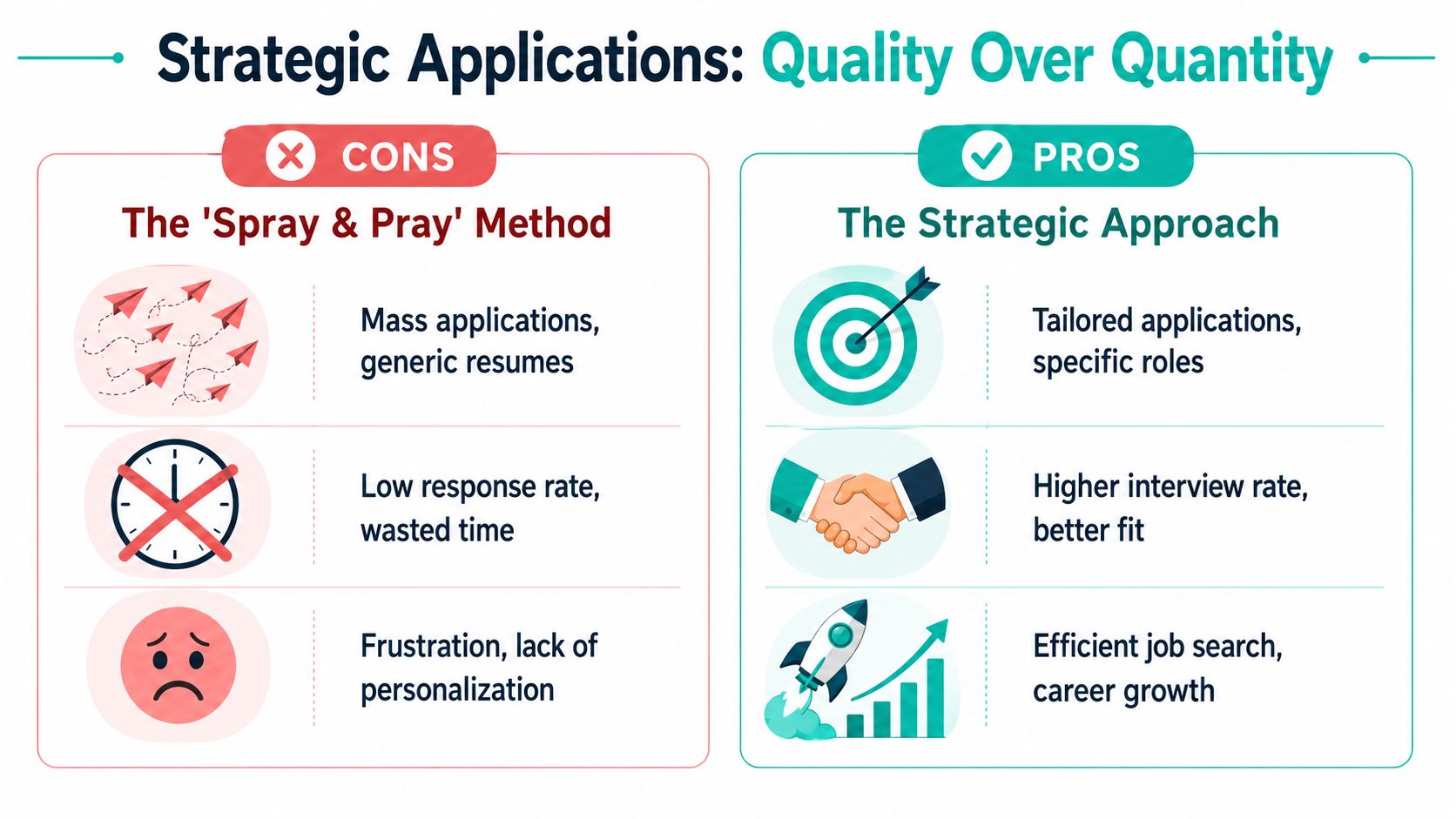
A good startup application is rarely long. It's specific.
Instead of writing a full generic cover letter, send a short note that proves three things:
A basic structure works well:
For example, if a startup is building workflow tooling for support teams, don't say you're “passionate about innovation.” Say you've built internal systems for operations teams, you understand the pain of brittle workflows, and you'd like to talk about product engineering or platform work depending on what they need most.
Most low-yield applications share the same problems.
Here's a simple comparison:
| Approach | Likely outcome |
|---|---|
| Mass applying to every relevant title | High effort, weak fit, little learning |
| Applying only after a fit check | Fewer submissions, stronger conversations |
| Reusing the same message everywhere | Faster at first, worse over time |
A startup doesn't need to believe you're good at everything. It needs to believe you're good at what it needs next.
The smartest application strategy is often reducing how often you apply at all. In curated environments, companies can approach candidates whose profile already matches location, seniority, and role shape. That changes your workload. Instead of filling out repeated forms, you spend your time refining your profile and preparing for real conversations.
That's a better use of engineering energy. Job search effort should go into fit, clarity, and interview readiness, not retyping the same employment history into another applicant tracking system.
Startup interviews often look familiar on the surface but feel different once you're inside them. The technical screen matters, of course. So does system design. But startups also test something bigger: can you join a small team and make useful decisions with incomplete information?
That's why specialists often stand out. Current hiring pages continue to show demand for profiles like BI developers, ETL developers, and platform engineers, not just broad full-stack roles, as seen in current software engineering category listings that highlight specialty roles. If your background has depth, don't hide it behind generic language.

A typical process may include an intro conversation, a coding or take-home exercise, a technical discussion, and a team or founder round. The shape varies, but the evaluation usually clusters around these questions:
In startup interviews, context matters. If the company is hiring for platform work, they care less that you can reverse a binary tree from memory and more that you can talk through service boundaries, observability, developer workflows, and the trade-offs of moving fast without creating future pain.
Startups want engineers who can do more than execute tickets. You may need to clarify requirements, flag risks early, or push back on a bad shortcut. Good answers usually include reasoning, not just conclusions.
Communication becomes evident. Can you explain technical choices clearly? Can you talk to product people without sounding annoyed? Can you identify what matters now versus what can wait?
Deep skill gets you into the room. Clear judgment is what usually gets you the offer.
Interviewing a startup without asking hard questions is a mistake. You're evaluating whether the environment will help or hurt your next few years.
Ask about:
Startup compensation can include salary, equity, and sometimes variable components. The mistake is treating the equity headline as guaranteed value or ignoring it entirely. Neither is smart.
Use a simple framework:
| Component | What to clarify |
|---|---|
| Base salary | What's fixed and when compensation is reviewed |
| Equity | What type, vesting schedule, and exercise implications |
| Scope | What you'll own in practice, not just on paper |
If you're comparing two offers, I'd weigh role quality heavily. A slightly lower-cash role can still be the stronger move if the team is sharper, the problem is more valuable, and your ownership is meaningfully higher. Early in a startup career, learning curve and scope often matter as much as headline compensation.
A good startup search isn't about becoming a better applicant. It's about becoming a better filter.
That means finding fewer but better openings. It means writing a profile that shows how you think, what you've owned, and where you're strongest. It means refusing to spend your evenings feeding generic applications into systems that can't tell the difference between a strong fit and a random keyword match.
If you work this way, the search gets lighter. Not easier in the sense that every interview becomes simple, but cleaner. You stop chasing every title that vaguely resembles your background. You start building a pipeline around fit, timing, and actual team needs.
Some engineers get stuck because they define the market too broadly. “Any software role” is not a strategy. A tighter target works better. Product backend at seed to Series B. Platform engineering at developer-tools startups. Data infrastructure at companies with messy internal systems. That kind of specificity makes every decision easier.
If your specialty is more niche, specialized talent markets can also sharpen your positioning. For example, teams hiring in blockchain infrastructure often evaluate very differently from a general SaaS company, so browsing resources like Solana smart contract developers for hire can be useful just to understand how narrowly some companies define fit and technical depth.
Keep it simple:
This is how you regain control. You stop acting like a passive candidate in an overcrowded market and start behaving like an engineer making good bets under constraints.
If you want one practical way to reduce noise, create a profile on Underdog.io. It's a curated hiring marketplace for startup and high-growth tech roles where companies reach out to candidates whose background matches what they need, which can save a lot of time compared with repeating the same application flow across generic boards.