Over 26,000 additional tech jobs were cut in early 2025, and California's share of U.S. tech roles fell from 19% to just over 16% according to this 2025 hiring outlook. Some might interpret that as a reason to spray applications everywhere. That's the wrong takeaway.
Jobs at Silicon Valley still exist. They've just become harder to access through lazy search habits. Broad applications, generic resumes, and vague startup enthusiasm don't work when hiring teams are screening for risk. Founders want proof that you can execute, handle ambiguity, and join a company that has a shot.
The bigger problem is that many candidates still evaluate startup roles the same way they would evaluate a public company job. They compare base salary, glance at the title, and ignore the cap table, funding story, and product viability. That's how people end up choosing bootstrapped fantasies over real growth opportunities.
A smart search in Silicon Valley now has two tracks. First, find signal in a noisy market. Second, vet the company as hard as the company vets you.
Hiring slowed, but the bigger change is how startups decide who is worth the risk.
Early-stage teams are more selective about headcount, and they are far less forgiving of candidates who look good on paper but need a lot of structure to perform. A recognizable startup brand no longer signals stability. A busy careers page does not automatically mean the company is staffed to interview quickly, fund the role, or keep it open through the quarter. Demand is still concentrated in a few areas, as noted earlier, but the shift is operational. Founders are hiring against immediate business pressure, not abstract future potential.
That changes how candidates should position themselves.
Inside a startup hiring meeting, the question is usually simple. Can this person solve a real problem in the next 90 days without creating drag for the team?
That standard favors candidates who can point to shipped work, clear judgment, and comfort with imperfect information. In my experience placing candidates at venture-backed startups, the strongest applicants do not pitch themselves as “generalists” and stop there. They show where they stepped outside their formal lane, what trade-offs they made, and how they handled constraints across product, engineering, revenue, or operations.
A founder will often forgive an imperfect resume. They rarely forgive weak signal.
A stronger search process starts with tighter targeting and better company diligence, not more applications. Resources like startup job boards and curated startup hiring platforms can help surface relevant roles, but sourcing is only half the work. The harder and more valuable skill is filtering out companies that should never make it onto your list.
Use this screen early:
Candidates skip this work all the time. They spend weeks refining outreach, then take calls with startups that cannot clearly describe their runway, their next financing milestone, or how the role affects company outcomes. If you want a fast way to spot surface-level compensation marketing, you can find Angellist company perks, then compare that packaging against what the company can explain about cash position and equity structure.
The candidates who win in this market are not just better at interviewing. They are better at identifying which startups deserve their time in the first place.
Where you search shapes what you see. It also shapes how much noise you have to fight through.

Here's the practical breakdown:
| Channel | What it's good for | Where it breaks |
|---|---|---|
| Mass-market job boards | Broad discovery across companies and functions | High application volume, weak filtering, low context on startup quality |
| Direct company applications | Useful when you already know the company is worth pursuing | Time-intensive research, uneven response rates |
| Warm networking | Better odds of real conversations and internal context | Slow to build if you haven't maintained relationships |
| Curated startup marketplaces | Stronger signal, tighter fit, more startup-specific matching | Narrower funnel, stricter candidate screening |
Mass boards such as LinkedIn and Indeed are still useful for top-of-funnel scanning. They help you spot hiring clusters, repeated openings, and titles that companies are using. They're weak as a primary strategy because most candidates use them passively. Same resume. Same click path. Same outcome.
Direct applications work better when you've already done real diligence. If you know the team, understand the product, and can tailor your pitch to their current stage, this route can be effective. If you're applying blind, it turns into unpaid administrative work.
Curated startup platforms make more sense when your goal is quality control, not maximum exposure. For startup candidates, that matters because many listings still hide the details that determine whether a role is attractive.
One useful starting point is this roundup of best sites for startup jobs, which is helpful for comparing focused platforms against broader boards. If you're evaluating startup roles, also take time to find Angellist company perks so you can compare what companies disclose publicly before you invest in a long process.
A curated marketplace can also filter for startup relevance in a way general boards can't. For example, only about 5% of applicants are accepted onto platforms like Underdog.io, based on discussion of the platform's screening process in this candidate vetting thread. That kind of threshold won't suit everyone, but it does tell you something important. The platform is trying to protect signal on both sides.
Most startup candidates don't have a job search problem. They have a filtering problem.
If you're serious about jobs at Silicon Valley, allocate effort roughly by signal:
The goal isn't to be everywhere. It's to spend your best attention where startup signal is highest.
Startup resumes fail for a predictable reason. They read like internal promotion documents instead of evidence that you can build under pressure.

In Silicon Valley's 2025 market, hiring for AI/ML roles surged 163% and cybersecurity roles climbed 124%, and employers are prioritizing end-to-end execution capabilities over isolated tool expertise, according to Robert Half's technology demand analysis. That should change how you write every application artifact you own.
Founders don't hire for task completion alone. They hire for judgment.
If your bullets are packed with tool names but light on decision-making, your profile looks interchangeable. “Used Databricks, Kafka, Python, and AWS” says almost nothing. “Built the data workflow that moved a manual reporting process into production and coordinated rollout with analytics and ops” is better because it shows scope.
Use this test on every bullet: would a hiring manager understand the problem, your role, and the outcome without guessing?
A lot of strong candidates undersell themselves because their background comes from larger companies. That experience can still play well if you remove the layers of process that obscure your contribution.
For example, a senior engineer at a large company might describe a feature in terms of sprint participation, cross-team alignment, and architecture review. A startup recruiter wants the compressed version. What broke, what did you decide, what shipped, and what changed because of it?
Your application should answer one quiet question. If this person joined a small team next month, would they create momentum or wait for structure?
Your LinkedIn headline shouldn't be a keyword dump. Your portfolio shouldn't read like a museum label. Both should make it easy for someone to see what kind of startup problems you solve.
A good startup-facing profile usually includes:
If you're applying for jobs at Silicon Valley, your materials should sound like someone who can execute in a smaller room, not someone waiting for a larger org chart.
The strongest networking often looks quiet from the outside.
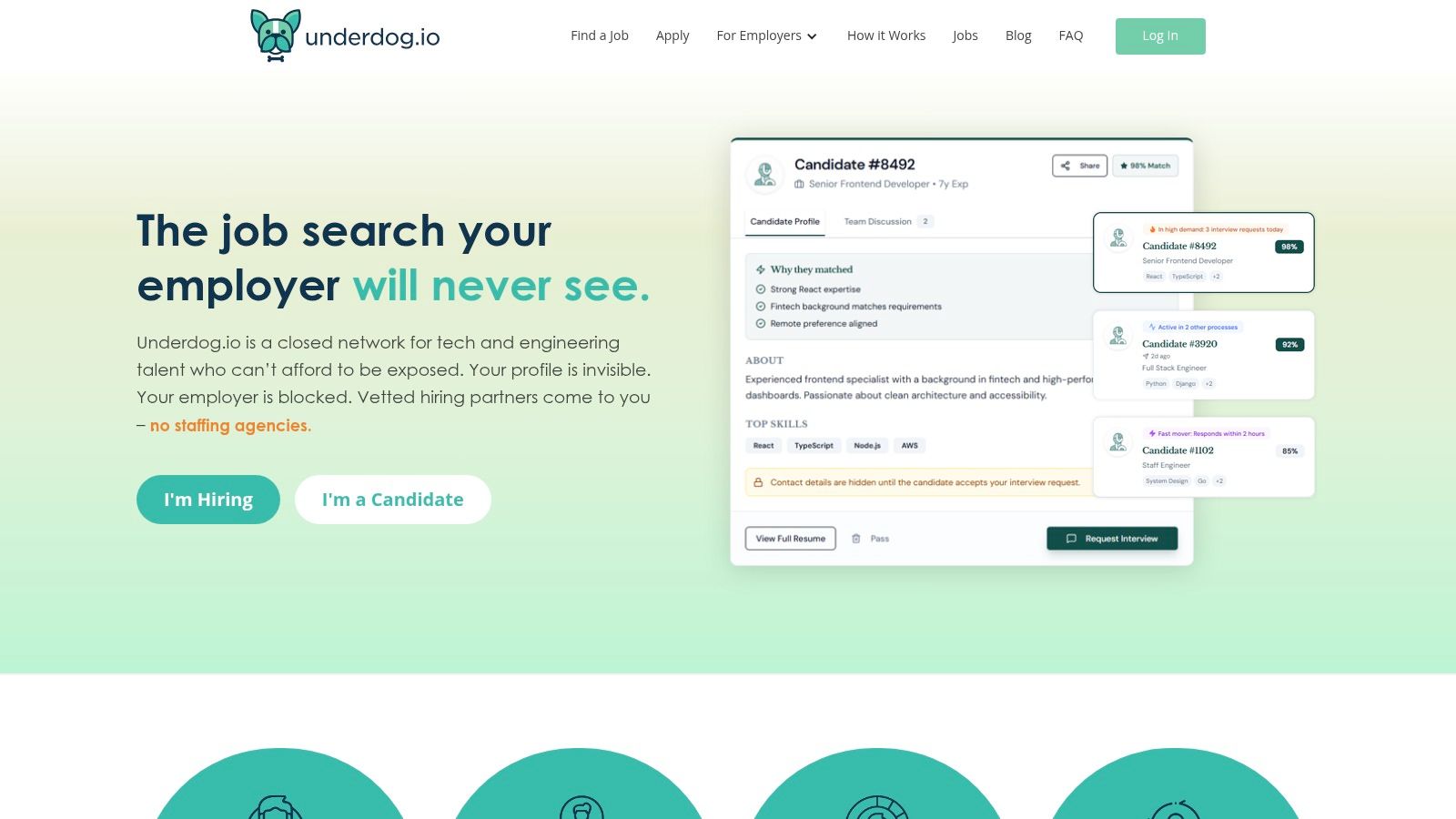
Over 61% of tech job candidates in the U.S. market report being currently employed, which means passive talent dominates the startup hiring pool and often needs confidential exploration before interest becomes mutual, according to Underdog's year-in-review post. That matches what many recruiters already see in practice. Most attractive startup candidates aren't loudly “on the market.” They're testing signal carefully.
Take a product engineer who's employed at a stable mid-size SaaS company but wants a stronger ownership role. Broadcasting “open to work” creates risk. Sending cold messages to fifty recruiters creates noise. A better approach is controlled visibility.
That candidate can start by reaching out to former teammates, alumni, and operators at startups one or two stages ahead of seed. The message isn't “Can you refer me?” It's “I'm exploring teams where product and engineering still work closely. I'd value your read on how your company makes roadmap decisions.”
That gets better responses because it respects context. It gives the other person something specific to answer. It also surfaces useful details that public listings never show.
Use a layered approach:
Here's a simple outreach note that works better than most:
I'm not running a broad search, but I am exploring startup teams where engineering owns product outcomes, not just delivery. Your company came up through two separate conversations. If you're open, I'd like your candid read on what the team is optimizing for this year.
Networking fails when candidates confuse attention with traction.
Avoid these habits:
Smart networking for jobs at Silicon Valley is less about reach and more about selective conversation. Done well, it gives you exactly what a listing can't. Context, candor, and private signal.
Startup interviews test more than technical strength. They test whether you can operate when the company doesn't have complete information, mature process, or extra layers to absorb mistakes.
A typical loop usually includes a recruiter or founder screen, a functional interview, some kind of practical exercise, and a final conversation focused on team fit and working style. The names vary. The underlying questions don't.
This stage is usually about compression. Can you explain your background clearly, connect it to the company's current needs, and show that you understand why this startup exists?
Good answers are compact. You don't need to recite your whole career. Focus on role fit, operating style, and the kind of problems you've solved in environments that resemble theirs.
Questions worth preparing for include:
You should ask questions too. Not generic culture questions. Sharp ones.
Many candidates overprepare for abstract challenge questions and underprepare for startup reality. Founders usually care less about whether you can perform polished textbook answers and more about whether you can make sound trade-offs under imperfect conditions.
If the company gives a take-home, evaluate it like a collaborator, not a test taker. State assumptions. Flag open questions. Show where you'd move fast and where you'd slow down. If it's a live exercise, narrate your reasoning.
A strong response often includes:
If you want a useful prep companion, this set of engineer interview questions is a practical way to pressure-test your examples before the loop.
Startups don't expect perfect certainty. They expect useful judgment.
Many technically strong candidates drift into vagueness. They talk about collaboration in broad terms instead of showing how they handle conflict, ambiguity, and changing priorities.
If you need sharper prep material, these effective communication interview questions are useful because they force you to answer in behaviors, not slogans.
Prepare stories around moments like these:
What you're proving here isn't likability alone. You're proving that other people can trust your thinking under pressure.
A startup interview should also help you decide whether the company is worth your time.
Ask about operating reality:
Those questions reveal more than polished culture statements ever will. They show whether the team has self-awareness, whether leaders are honest, and whether the role is built around real work instead of aspirational hiring.
Most candidates negotiate startup offers backward. They negotiate salary first, glance at equity second, and investigate company viability last. That order makes no sense.
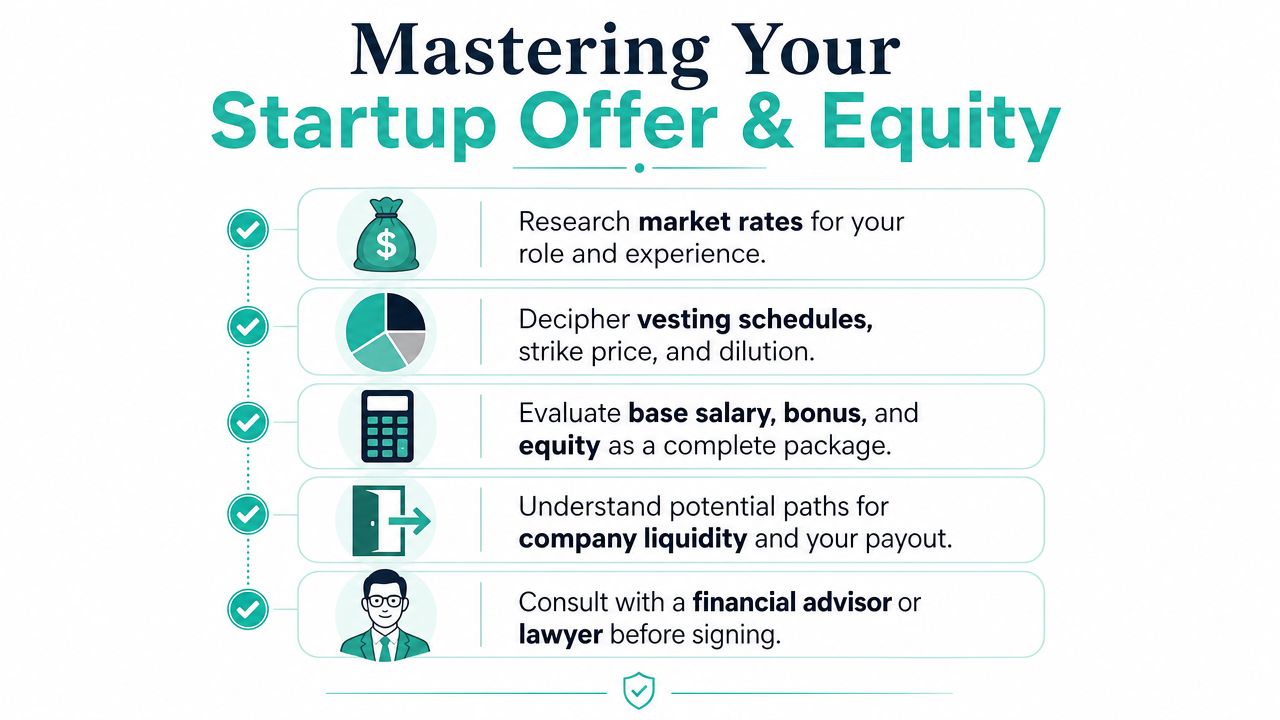
A major blind spot in jobs at Silicon Valley content is equity transparency. Working Partnerships USA notes that subcontracting jobs grew three times faster than overall Silicon Valley employment, yet job boards rarely provide equity details, which leaves candidates unable to assess the actual shape of compensation in startup and adjacent work, as outlined in this analysis of tech's invisible workforce. If you don't ask better questions, you can't tell a meaningful equity grant from a decorative one.
You should still negotiate base compensation. Know your floor, know your alternatives, and know what kind of risk premium you need to leave a stable job. But early-stage offers aren't cleanly comparable on salary alone.
A strong offer review includes:
For a structured way to think through the whole package, this guide on how to evaluate a job offer is useful as a checklist.
Before you negotiate terms, confirm that the company deserves negotiation at all.
Look at the basics first. Is the startup funded, or is it presenting itself like a venture-backed company while operating as a bootstrapped business with unstable hiring plans? Do the founders have relevant domain credibility? Is the team shipping? Can you explain the product and customer in one or two sentences after your interviews? If not, that's a warning sign.
Use public tools such as Crunchbase, the company website, leadership profiles, and product reviews to verify the story. Then ask direct questions in the offer stage.
Here are the questions serious candidates should ask:
A healthy startup can answer those without sounding defensive. A weak one usually responds with branding language.
If leadership can't explain the company's next proving ground clearly, your equity is probably harder to trust than your salary.
Candidates often get intimidated by this. Don't.
You are allowed to ask how the equity works. In fact, you should. The point isn't to demand impossible precision. The point is to understand whether the grant is structured in a way that could matter.
Ask these questions directly:
You don't need to become a securities lawyer to spot the difference between a real offer and a vague one. You do need enough confidence to keep asking until the package becomes legible.
When I coach candidates through startup offers, I usually push them to write a one-page decision memo for themselves. Not a spreadsheet alone. A written memo.
Include:
That exercise is useful because startup decisions are not purely financial. They are portfolio decisions for your career.
A flashy title at a weak company can slow you down. A slightly less obvious role at a funded, honest, well-scoped startup can accelerate everything.
The candidates who land strong startup roles rarely win by doing more of the same. They win by filtering better, presenting sharper evidence, interviewing with range, and treating company diligence as part of the job search itself.
That's the shift in jobs at Silicon Valley. The challenge isn't only getting seen. It's avoiding weak companies, reading hidden risk, and choosing teams where your work can compound. Mass applications can't do that for you. Better judgment can.
If you take one lesson from this playbook, make it this. Don't separate job search strategy from company vetting. They're the same skill now. The strongest candidates know how to market themselves, but they also know how to interrogate an opportunity.
Use that standard everywhere. In the first message. In the interview loop. In the offer conversation. In the equity questions that most candidates are still too hesitant to ask.
If you want a more selective path into startup hiring, Underdog.io is one place to start. It's a curated marketplace for tech candidates and startups, and it fits the kind of search this guide argues for: fewer low-signal applications, more vetted opportunities, and a process built around mutual fit instead of application volume.