You've been bookmarking startup jobs for software engineers between meetings, updating the same resume for different companies, and wondering whether the silence means startups stopped hiring. A few applications disappear into automated systems, while the roles that look genuinely interesting ask for broad ownership, production judgment, and evidence that you can contribute before a team has time to train you.
The better question isn't “Are startups hiring?” It's which engineering level and signal mix are startups hiring for now? That distinction changes where you search, how you present your work, and how you decide whether an offer is worth the risk.
“Are startups even hiring?” is the wrong opening question. Hiring hasn't disappeared, but it has become sharply selective by seniority, technical scope, and proof of execution.
A 2026 industry report cited by a recruiting analysis found that engineering hiring at early-stage startups was up 7% versus 2019, while new-grad and entry-level hiring at those same startups was down roughly 76% over that period. At the largest technology companies, engineering hiring was down 11% from 2019, compared with a 25% decline in overall hiring. The figures are summarized in this analysis of the software engineer shortage.
That split explains why a senior backend engineer with production ownership can still attract serious interest while a capable junior engineer receives little response. Lean teams need people who can make decisions, debug ambiguous systems, and ship without a long apprenticeship. AI-assisted development has reinforced that preference, but the underlying issue is broader: startups have less room for unproven capacity.
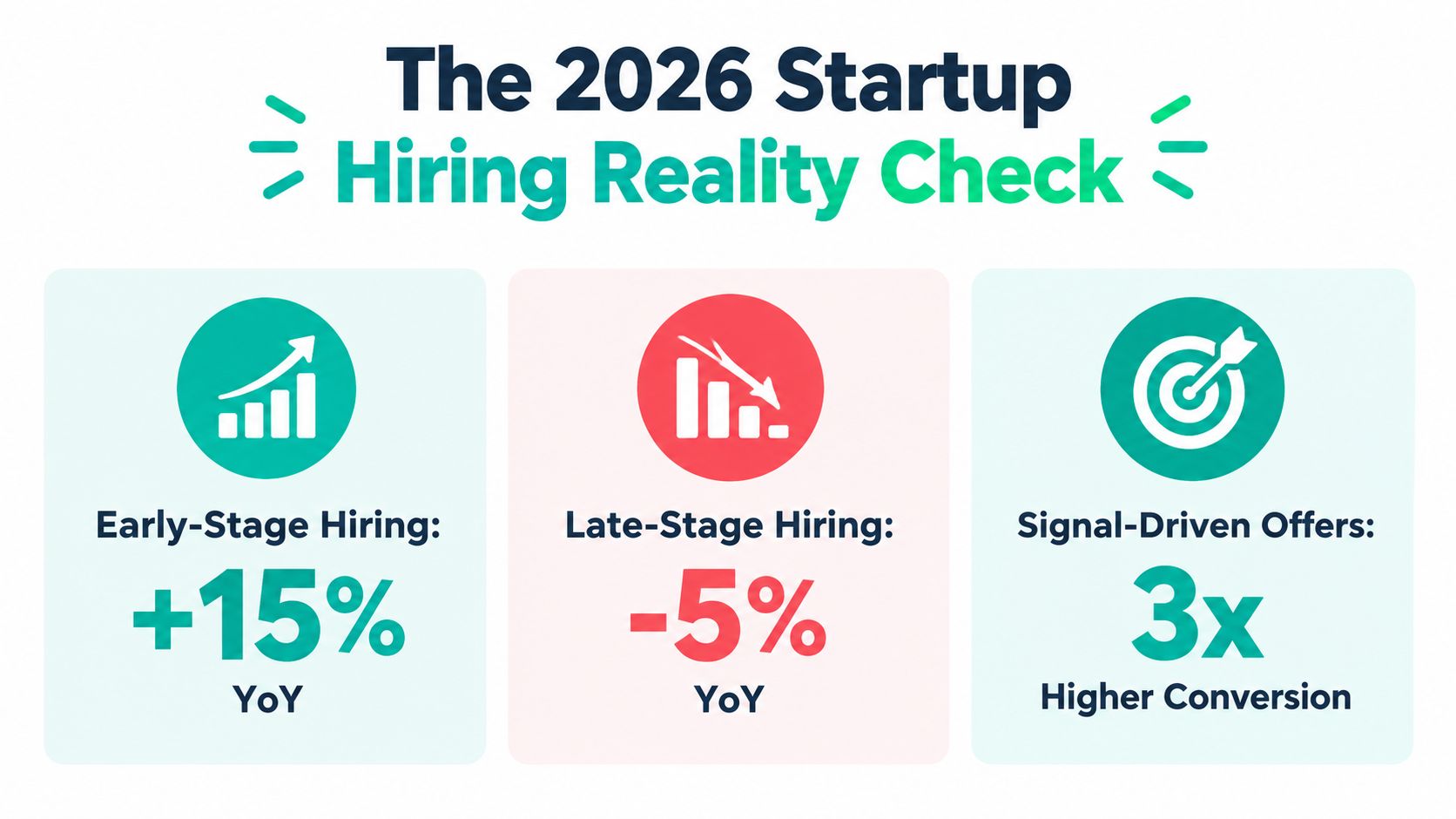
Startup software engineering remains a large hiring category. A 2026 startup job tracker reported 1,479,127 startup jobs posted in the last 12 months, up 27% year over year, with 57,212 Software Engineer postings and 18,993 Senior Software Engineer postings. The United States accounted for 766,576 jobs in the same period, according to the startup software engineering hiring tracker.
The volume is real, but volume doesn't mean equal access. Founders are filtering for a signal mix that may include:
The tactics that worked during the hiring binge, including mass applications, isolated LeetCode preparation, and generic cold outreach, now underperform because they produce little differentiation. A curated marketplace such as Underdog.io's technology hiring trends guide is one channel to consider, but it isn't a substitute for a strong profile or a clear target.
Practical rule: Treat your search as a signal-matching problem, not an application-volume problem.
The rest of this guide is built for passive job seekers and active candidates navigating a tighter market. It focuses on the evidence hiring managers inspect, the sourcing channels that fit different profiles, and the trade-offs that matter after an offer arrives.
A startup hiring manager often decides whether to continue within the first scan of your resume or profile. The document doesn't need more adjectives. It needs a fast answer to three questions: What did you own? What did you ship? What changed because of your work?
Rewrite responsibility bullets with a simple structure: owned X, shipped Y, moved Z. “Responsible for backend services” says almost nothing. “Owned the billing API, shipped usage-based invoicing, and reduced payment reconciliation work for the finance team” gives a reviewer a surface to investigate. Add a real measurement when you have one, but never manufacture precision.
Strip out phrases such as “results-driven,” “passionate technologist,” and “worked in an agile environment.” Replace them with context and decisions:
Your GitHub profile should make the same argument. Pin one or two production-grade repositories, not a dashboard of forks. Each pinned project should have a README that explains the problem, architecture, local setup, trade-offs, testing approach, and what you'd change with more time. A small but complete service is stronger evidence than a large unfinished experiment.
LinkedIn should position you rather than merely label you. “Software Engineer” is a title. “Backend engineer building data infrastructure for fintech” tells a founder where to place you. Put a working example, architecture write-up, or talk in the Featured section so the profile leads directly to evidence.
| Surface | Weak Signal | Strong Signal |
|---|---|---|
| Resume summary | “Full-stack developer with a passion for innovation” | “Backend engineer focused on data infrastructure, reliability, and product delivery for fintech teams” |
| Experience bullet | “Responsible for API development” | “Owned the customer API, introduced versioned contracts, and coordinated the migration with client-facing teams” |
| GitHub | Many forks with little context | One or two complete repositories with clear READMEs and design decisions |
| LinkedIn headline | “Software Engineer at Company” | “Backend engineer building data infrastructure for fintech” |
| Featured section | No supporting work | Case study, architecture note, technical talk, or project walkthrough |
| Personal site | Technology list and biography | One case study covering the problem, decisions, outcome, and a short Loom walkthrough |
A portfolio case study doesn't need to reveal confidential company information. Redact names and sensitive values, then explain the system boundary, constraints, alternatives rejected, and how you knew the change worked. That format helps a hiring manager assess judgment before the interview begins.
The right channel depends on the signal you can already prove and the startup level you want to enter. A senior backend engineer who has operated production infrastructure needs a different search path from a recent bootcamp graduate. Neither candidate should depend on one platform.
Senior engineers with shipped systems should start with warm referrals, VC talent networks, open-source communities, and curated marketplaces. Rust, PostgreSQL, Hugging Face, and Elixir communities can connect you with founders who already understand your technical area. Accelerators and demo-day networks provide early-stage access, but hiring may be less structured and role definitions less settled.
A mid-level generalist usually needs several channels working together. Use LinkedIn or a startup-focused board to find openings, then turn promising listings into conversations with engineers, founders, or former colleagues. Y Combinator's Work at a Startup can fit candidates who want direct founder access and are comfortable with the company stage.
Recent bootcamp graduates face a different test: making progress and reliability visible without overstating seniority. Open-source contributions, small deployed products, local engineering communities, and carefully chosen referrals create stronger evidence than anonymous applications. Finished work and thoughtful feedback loops matter more than a crowded profile.
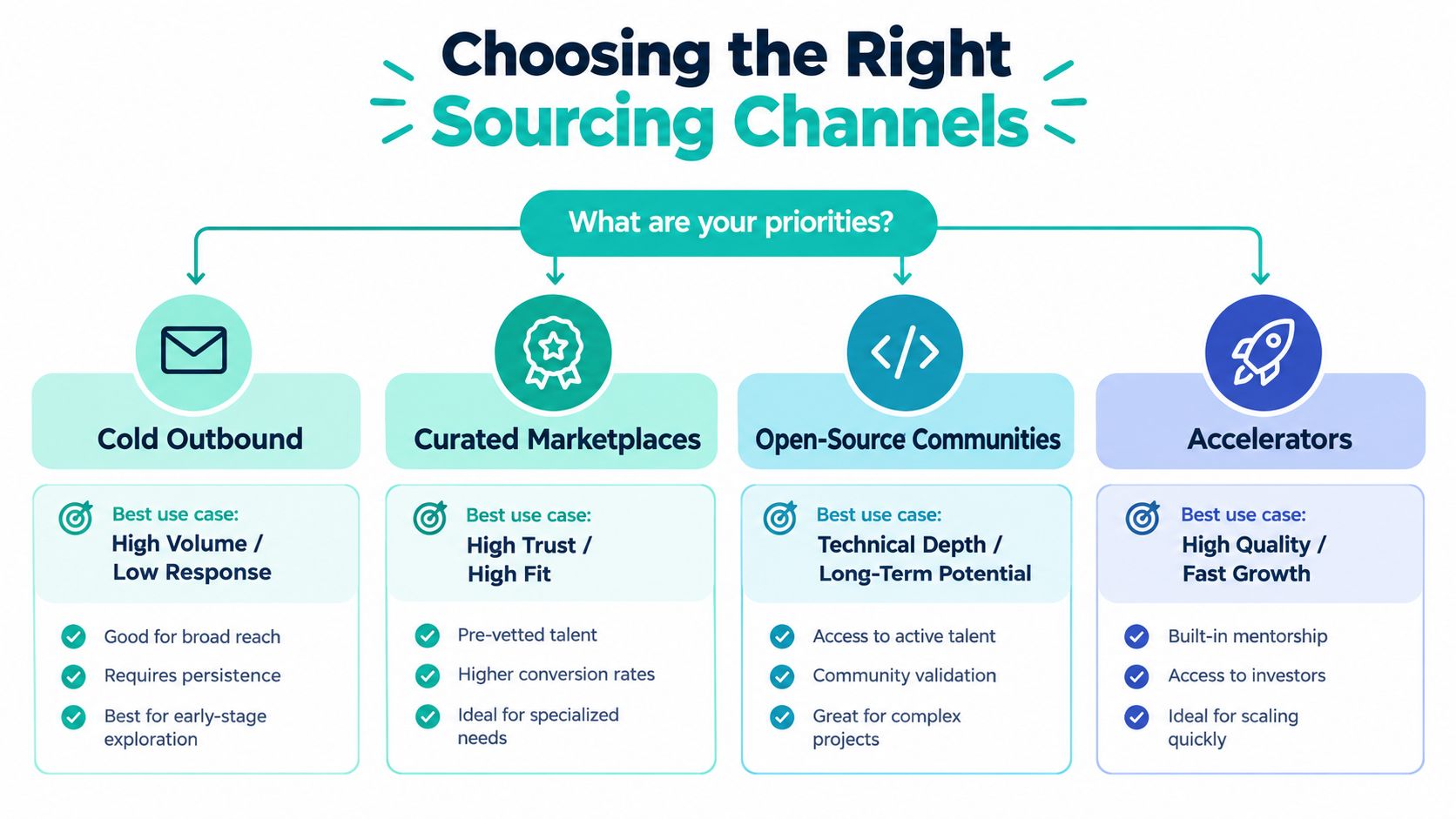
Channel performance varies sharply. Cold outbound reply rates typically sit near 1% to 5%, curated marketplace screens can reach 15% to 25%, and warm referrals routinely clear 40%, according to startup sourcing channel benchmarks. Treat those figures as directional, not promised results. Positioning, timing, and the quality of the match still decide whether a conversation continues.
| Candidate profile | Highest-impact channels | What to show |
|---|---|---|
| Senior backend or staff engineer | Referrals, open source, VC networks, curated marketplaces | System ownership, incident judgment, architecture decisions |
| Mid-level generalist | Targeted applications, founder outreach, alumni networks | Range, delivery examples, ability to learn a domain quickly |
| Recent bootcamp graduate | Open source, community projects, referrals, apprenticeships | Finished work, collaboration, feedback loops, technical fundamentals |
A Series A company with two engineers cannot respond thoughtfully to hundreds of inbound applications. Curated screening reduces irrelevant introductions, while referrals add context a resume cannot provide. For passive candidates, that distinction matters because a focused introduction can test fit without turning the search into a second full-time job.
Use several channels, but assign each a purpose. Build a referral-grade network before you need it, contribute where your target engineers already gather, and reserve cold outreach for a small number of unusually strong matches. The goal is a signal mix that matches the startup's hiring level, not the largest possible application count.
A startup interview loop rewards judgment as much as coding speed. In the opening 30-minute recruiter screen, expect questions about role scope, location, compensation alignment, availability, and the company's immediate problem. Skip the resume recital. Choose two or three decisions that show how you operate with limited context, shifting priorities, and a small team.
The next filter is often a 60-minute technical phone screen or take-home assignment. During a live screen, state assumptions before coding, clarify constraints, and test edge cases aloud. For a take-home, submit a coherent product slice with a README, tests for important behavior, and a short note about deliberate omissions. A smaller, well-prioritized solution usually says more than exhaustive polish.
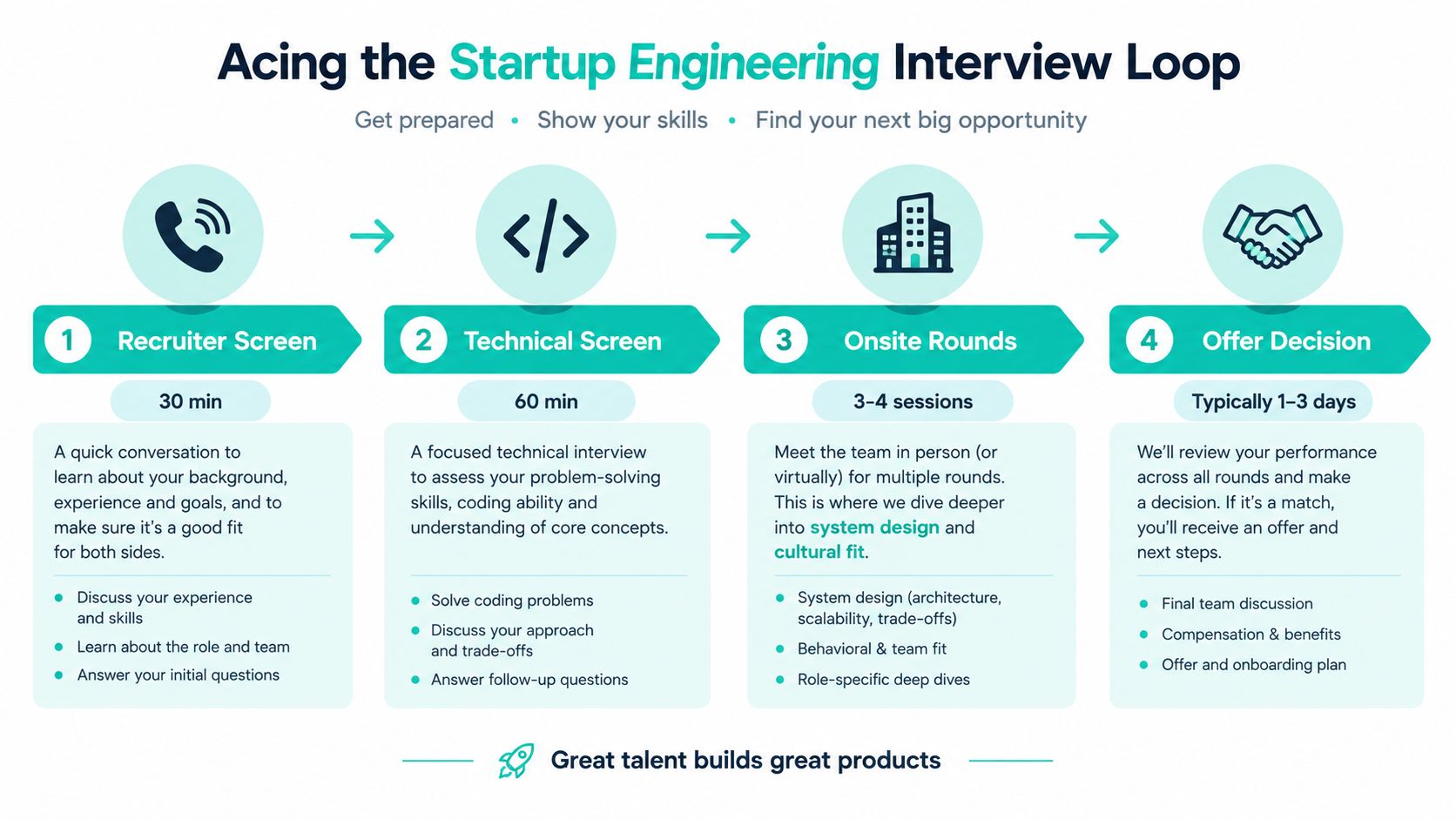
At the onsite stage, expect three to four sessions covering coding, system design, debugging or a hiring-manager discussion, and values or cross-functional collaboration. A smaller startup may fit those conversations into one day. A later-stage company may add specialized evaluation. A detailed walkthrough of the stages is available in our guide to the startup interview process.
The common mistake is answering for the company you wish existed. Candidates over-engineer design exercises, give generic mission statements for “why this startup,” or treat the hiring-manager conversation as a personality check. Research the product, identify a concrete technical or customer problem, and ask how the team will measure success in the first few months.
Hiring speed affects your options. Engineering roles take a median of 41 days to fill, while the slowest 10% of technical hires can take up to 82 days. Technical hiring teams also conducted about 40% more interviews per hire in 2024 than in 2021, according to technical hiring process statistics. If you are a passive candidate, ask about the remaining stages and decision timeline before committing evenings to an assignment.
Ask one useful question after every round: “What concern, if any, would prevent you from moving me forward?” The answer can reveal an objection while you still have time to address it.
Send a brief follow-up that names a specific discussion point and clarifies any answer you would improve. That demonstrates reflection and technical communication more effectively than a generic thank-you.
Startup compensation is not a single number. It's a package of cash, ownership, vesting conditions, risk, scope, and the probability that the company can keep hiring and funding the role.
The market is also compressing titles and concentrating budget. Independent market coverage notes that companies are increasingly combining two mid-level requisitions into one senior role, while equity refreshes have compressed at Series B and later. The same coverage says staff and founding engineer searches can reach offer in 3 to 5 weeks, while broad mid-level generalist searches can stretch to 6 to 8 weeks, as described in coverage of the 2026 technology job market.
Ask for the number of options or shares, the fully diluted share count, the exercise or strike price, the vesting schedule, the cliff, and the company's latest valuation context. A percentage without the denominator is not enough information.
You also need to understand tax treatment. ISOs and NSOs can create different tax consequences at exercise, an 83(b) election has a limited filing window after receiving restricted stock, and post-termination exercise periods vary by company. Down rounds can create a strike-price reset problem, while later financing can dilute your ownership even when the company is progressing.
The offer should show what you receive now and what the company has historically done for refreshes. Don't treat projected exit value as compensation. Treat it as a scenario with a probability you must judge through product traction, financing, leadership quality, and runway disclosures.
The requested market ranges aren't available in the verified data, so the table below uses a decision framework rather than invented salary figures.
| Stage | Base Salary Range | Equity (4-yr) | Total Comp Range | Cash vs Equity Split |
|---|---|---|---|---|
| Seed | Must be assessed against personal cash needs | Ask for grant size, dilution context, and exercise terms | Model conservative, expected, and failure cases | Usually more risk concentrated in equity |
| Series A | Compare cash against your current obligations | Review vesting, strike price, and refresh policy | Value only what you can explain and defend | Mixed package, with meaningful uncertainty |
| Series B | Check whether refreshes are available | Examine dilution and later-stage equity compression | Greater emphasis on realizable value | Often more cash-weighted than seed |
| Growth stage | Compare against established-company alternatives | Ask about liquidity, refresh cadence, and grant type | More predictable, but upside may be narrower | Usually cash and equity are more balanced |
| Big Tech equivalent | Use the complete public-company package | Evaluate liquid equity and vesting terms | Benchmark for cash flow and stability | More predictable compensation structure |
Startups can beat Big Tech when you join before Series B, believe the company has a credible path to a much larger outcome, and negotiate future refreshes. They usually lose for candidates who need dependable cash flow, join late without meaningful equity, or enter an unprofitable company with no clear financing plan.
Small-company negotiation is personal. The CEO may be your hiring manager, the recruiter may be the only people operator, and a careless threat can travel quickly through the founder network.
Start before the offer. Set your minimum base, minimum equity grant, acceptable vesting schedule, remote or relocation terms, and title in writing. Your walk-away criteria should exist before an enthusiastic founder tells you how important you'll be. That prevents the emotional call from rewriting your finances.
Give a specific target rather than saying “I'm looking for the market rate.” Tie it to scope, comparable responsibilities, and the value you expect to own:
“For the scope we discussed, including ownership of the data platform and production reliability, I'm targeting a base of X and an equity grant that reflects early technical ownership. I'm open to discussing how you balance cash and equity.”
If cash is constrained, trade scope deliberately. A larger technical mandate, a documented title, an earlier compensation review, or additional equity may matter, but only if the terms are written into the offer.
Ask specifically about refresh grants and sign-on equity. A startup that can't move on base may have flexibility elsewhere, though you should never accept vague promises such as “we'll take care of you later.”
If the company says, “This is our best and final,” respond without turning the call into a contest:
“I appreciate the clarity. I'm going to compare the complete package against the criteria I set before starting the search. If there's no flexibility, could you clarify which part of the package is fixed and whether scope or review timing can change?”
When you need time, ask directly:
“I'm excited about the role. I'd like 48 hours to review the equity documents, tax questions, and practical terms carefully. I'll give you a clear answer by [date].”
Mention competing offers only when they exist. You can say, “I'm evaluating another offer with a different cash and equity balance,” without inventing a deadline or bluffing about numbers.
Decline with respect: thank the team, state the decisive reason briefly, and ask whether they'd be comfortable referring you to another portfolio company. A clean decline protects the relationship and leaves room for a future role when the company's needs change.
A job search works better when it runs like a small operating system. Give each phase one job, keep the workload compatible with your current employment, and measure conversations rather than raw applications.
The hiring process itself can move quickly at smaller companies. Startup hiring data cited by startup recruiting benchmarks puts average time to fill at about 12 days for startups, compared with 42 days for bigger companies. That makes preparation valuable before the right role appears.
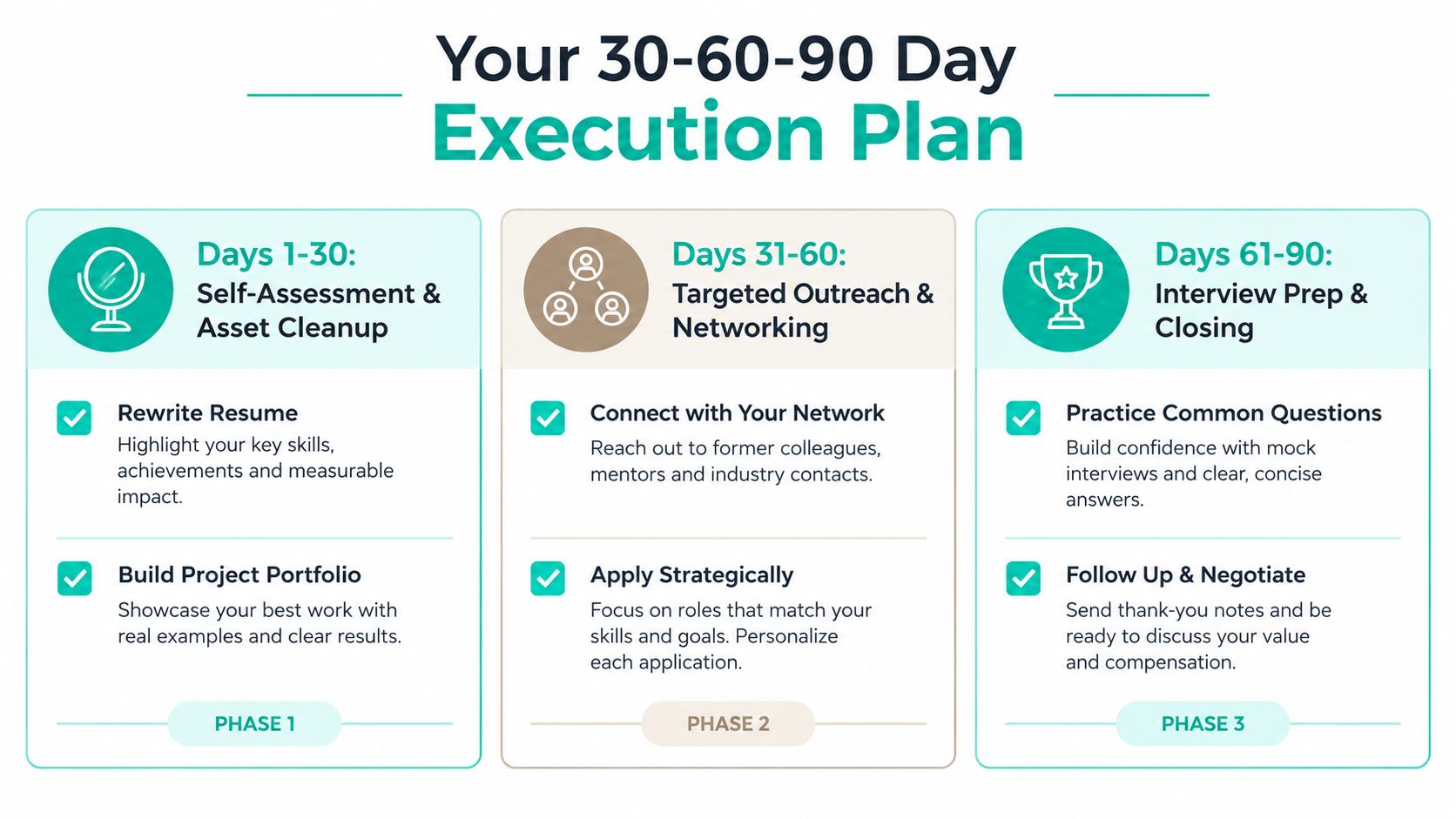
Audit your profile without protecting your ego. Decide whether the evidence currently places you in a senior-leaning, domain-specialist, platform or infrastructure, AI-adjacent, mid-level generalist, or early-career bucket.
Then clean the assets:
Ask two trusted engineers to identify the strongest and weakest signals in your profile. Don't ask whether they “like” the resume. Ask what role they'd associate with you after a quick scan.
Build a target list of 40 to 60 startups by stage, domain, location, technical problem, and funding context. Request three warm introductions from people who can speak credibly about your work, then submit a focused profile to a curated marketplace such as Underdog.io if its candidate model and target companies fit your search.
Keep daily applications capped at a level you can personalize and sustain. Track the company, role, source, contact, stage, next action, and reason for declining. A simple spreadsheet is enough. The point is to prevent an interesting conversation from disappearing in an overloaded inbox.
Rehearse system design around products you understand well. Run mock coding interviews with another engineer, practice explaining one production incident, and prepare a specific answer for why each target startup is worth your attention.
Before accepting an offer, stress-test two or three realistic scenarios: the company grows slowly, the next round takes longer than planned, or your role expands without a title change. Review the equity documents with a qualified tax professional when the grant is material.
Candidate vetting is not only the company's responsibility. A tech-startup vetting article reports that 46% of new hires fail within their first 18 months because of inadequate screening, while structured vetting can reduce time to hire by 50% to 70% and manual evaluation workload by up to 40%, according to the analysis of talent vetting in technology startups.
Start this week with the profile audit, not another application. Choose one target role, rewrite your evidence for that role, and ask three people for introductions who have personally seen you ship under pressure.
Underdog.io offers software engineers a curated marketplace where a single profile can be reviewed for startup and high-growth technology roles, including opportunities from companies that contact candidates directly. If you're a passive candidate who wants a more selective channel alongside referrals and targeted outreach, visit Underdog.io and create a profile that shows the systems you've owned and the products you've shipped.