You're probably in the middle of the same loop most startup PM candidates hit. You've read a stack of interview guides, you've memorized a few frameworks, and you still don't feel ready for the moment when a founder asks, “What would you do with our product in the next quarter?” Startup interviews feel different because they are different. The team isn't looking for someone who can recite polished answers. They're looking for someone who can think clearly, operate with partial information, and become the right PM for your tech startup.
Beyond Frameworks: How to Win a Startup PM Role. The product manager interview at a high-growth startup is different. It's less about reciting frameworks and more about demonstrating how you think, adapt, and create value in a fast-paced, ambiguous environment. They aren't just filling a seat; they're looking for a partner to help build the future of their company. This guide provides seven actionable tips designed to prove you're that partner.
That changes how you prepare. Generic enterprise advice can still help, but startup teams care more about speed, judgment, ownership, and whether you can work well when the roadmap, team shape, and even the market are still moving. Some startup hiring teams also prefer collaborative interview behavior over polished one-way answers, according to Fireside PM's discussion of workshop-style PM interviews.
The fastest way to sound unprepared is to discuss a startup like it's a category instead of a specific business. Founders and hiring managers can tell within minutes whether you looked at the homepage or whether you studied the company.
Start with the product itself. Open it, sign up, click around, and try to complete one meaningful workflow. If they sell to finance teams, build a sample budget. If they sell to developers, go through docs and onboarding. If they run a marketplace, inspect supply-side and demand-side flows separately.
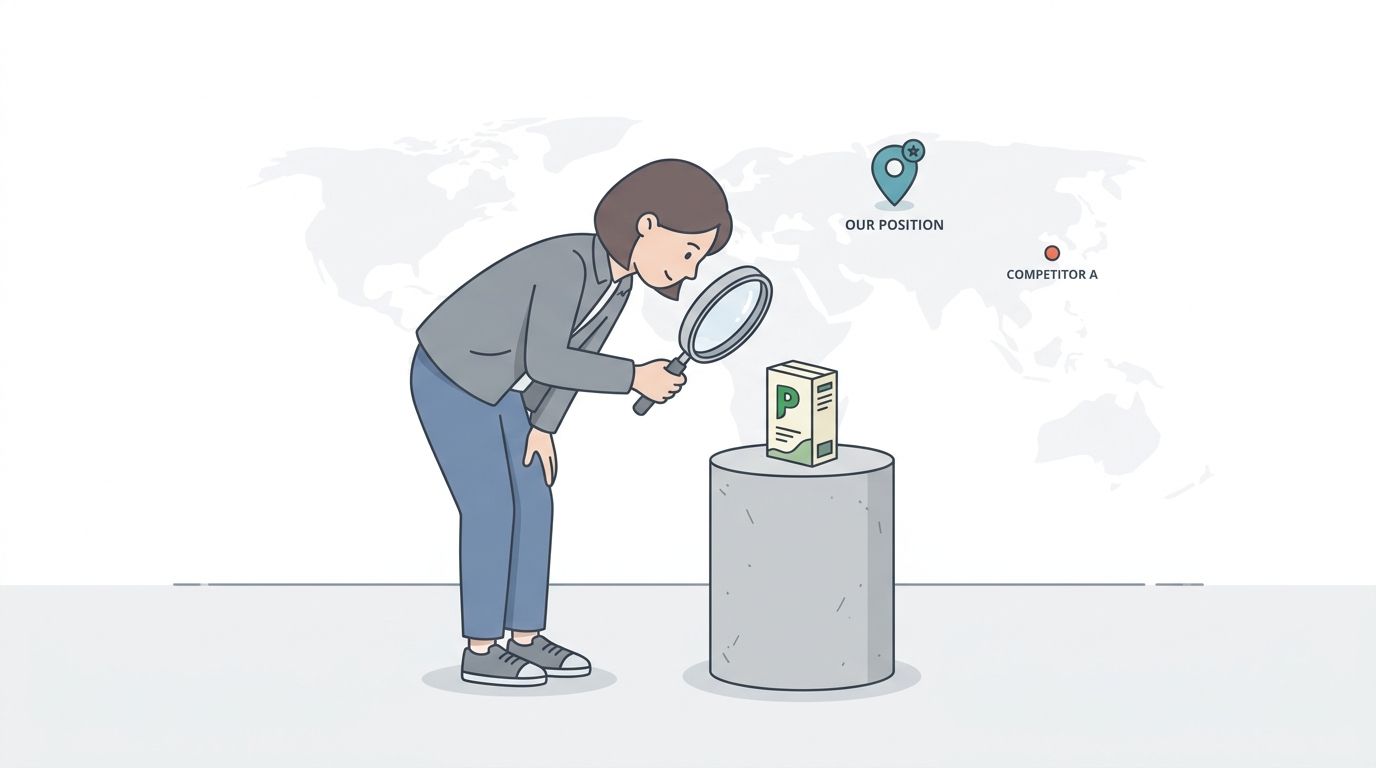
A startup PM candidate should understand three things before the first call: who the user is, what painful job the product is solving, and why this company might win instead of a better-funded alternative. That means reading customer language, founder interviews, release notes, and whatever public signals the market gives you.
A useful prep move is to compare what the company says about itself with what users seem to care about. If the homepage talks about automation but reviews complain about setup friction, that tension is interview material. You don't need to “catch” the company doing something wrong. You need to show you can spot product opportunities.
Practical rule: Don't ask, “What does your product do?” Ask a question that shows you already understand the basics and want to discuss the hard part.
For example, instead of asking, “What does your platform do?”, ask something like: “I noticed the product seems positioned for mid-market teams rather than very small businesses. Where do you see the hardest trade-off between configurability and ease of onboarding?”
Research isn't about collecting trivia. It's about forming an opinion you can defend. If you tested a feature and found the setup flow confusing, say that directly and explain what signal you'd want before changing it. If you noticed a sharp contrast between the founder's vision and the current product UX, bring that up thoughtfully.
A simple prep stack usually works well:
Candidates who do this stand out because they talk like future teammates, not applicants trying to survive a quiz.
A founder asks, “Tell me about a time you had to ship without enough data.” You start with a polished story about collaboration, then get interrupted two minutes in. “What did you cut? Who disagreed? What moved after launch?” That is the startup version of a PM interview. Broad claims fall apart fast. Specific decisions hold up.
STAR is still the right structure because it keeps your answer grounded. State the situation clearly, define the task, walk through your actions, and close with the result. In startup interviews, that last part matters most if it shows judgment, not just output. I want to hear what you chose, what you deferred, and what you learned when conditions were messy.
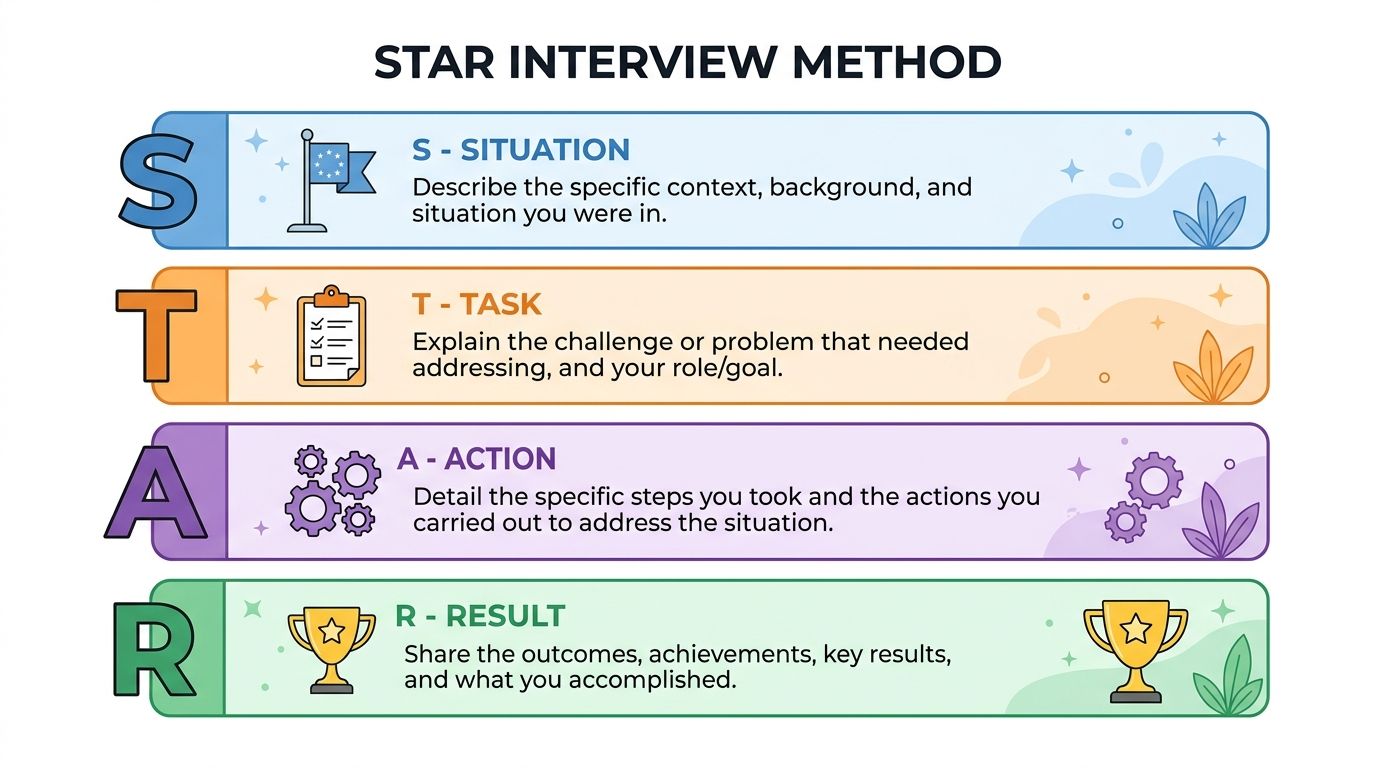
Good startup stories carry tension. The team lacked engineering time. The founder had a strong opinion. Users were complaining, but the evidence was incomplete. The market window was small. Those are the conditions early-stage PMs deal with every week.
A strong answer does more than prove you can run a process. It shows that you can make a call when every option has a cost. For example: “Activation dropped after onboarding changes. I owned figuring out whether the issue was acquisition quality, setup friction, or weak initial value. I reviewed funnel data, listened to support calls, and cut two planned features so the team could rebuild onboarding first. That gave us a cleaner read on where users were stalling, and we saw activation recover after release.”
That kind of answer works because it shows prioritization, diagnosis, and trade-offs in one story.
Over-rehearsed answers create a different problem. If every story sounds memorized, interviewers may assume you are good at prep and weak in ambiguity. Startup hiring teams are listening for clear thinking under pressure, not stage performance.
You do not need twelve stories. You need four or five that can flex across multiple prompts. Coursera's product management interview prep guide recommends preparing STAR examples across leadership, conflict, stakeholder management, data-driven decisions, and failure. That maps well to startup interviews, but the better filter is this: pick stories where resources were constrained and the answer was not obvious.
A launch story can become a prioritization story if you focus on scope cuts. The same example can become a conflict story if you focus on a disagreement with design or engineering. A failed experiment can become a leadership story if you explain how you reset the team and changed the next decision.
Use this checklist when tightening each example:
The same discipline that helps in tips for budget allocation interviews helps here too. Make your reasoning easy to follow, especially when the outcome was uncertain.
If your examples are specific enough that an interviewer can picture you making the call, you are in good shape. That is the standard.
Most candidates waste the question portion of the interview. They ask for information they could've found online, or they default to soft questions about culture that don't reveal how the company functions.
A better approach is to ask questions that surface pressure. Pressure shows you the truth of the role. Is the company struggling with prioritization? Is engineering capacity tight? Is the founder too involved in roadmap decisions? Is growth outrunning product quality? Those answers matter more than any polished culture statement.
Good PM questions are specific enough to show maturity and open enough to invite a real answer. For a startup, I'd rather hear a candidate ask, “Where do product decisions get stuck today?” than “What's the culture like?”
Here are the kinds of questions that usually produce useful signal:
These questions also help you avoid a common startup mistake. Candidates assume ambiguity means freedom. Sometimes it means chaos.
Startup teams increasingly want candidates who work through ambiguity with them, not in isolation. Some hiring teams prefer people who check in, clarify assumptions, and self-correct visibly instead of presenting a polished but closed-off answer, according to Stanford Online's PM interview discussion.
That should shape how you ask questions during the interview itself. Don't save every clarifying question for the end. If a product case is underspecified, ask who the user is, what constraints matter, and what success means. You're not interrupting the process. You're demonstrating how you'd work with a real team.
The best startup PM candidates don't perform certainty. They reduce ambiguity in public.
If the hiring manager leaves the conversation feeling they already collaborated with you, you've done more than answer questions well.
A lot of candidates say they're data-driven. Fewer can explain what they measured, why they picked that metric, what trade-offs they watched, and what they did next when the signal was messy.
That gap matters because data and metrics questions now make up a major part of PM interviews, with emphasis on defining success metrics, avoiding vanity metrics, diagnosing issues, and making evidence-based decisions, according to Jobaaj's overview of product manager data and metrics interviews. Startup teams want PMs who can make decisions without hiding behind dashboards.

When you discuss product analytics, start with the product goal. Then map the user journey. Then choose the primary metric that best reflects success, followed by supporting metrics and guardrails. That structure is what strong candidates use because it makes your reasoning inspectable.
For example, if a startup asks how you'd evaluate a new onboarding experience, don't just say “retention.” Say which user behavior indicates the user reached value, what drop-off point would worry you, and what guardrail would keep you from improving activation at the expense of support burden or product quality.
A sharp answer covers the what, why, how, trade-offs, and next action. That's what interviewers tend to care about most.
Your examples don't need to sound fancy. They need to sound real. Good startup PM stories often include imperfect instrumentation, partial funnel visibility, and decisions made before all the data was in.
Try language like this:
“Activation looked healthy at a top-line level, but the team was still hearing frustration from new users. I broke the flow into smaller steps, found where users were stalling, and paired that with customer conversations before recommending a narrower onboarding change instead of a full redesign.”
That answer shows sequence. You noticed something, investigated it, combined quantitative and qualitative input, and made a targeted recommendation.
A few habits separate credible analytical answers from weak ones:
A startup doesn't need a PM who knows every statistical term. It needs a PM who can turn signal into decisions.
If you're interviewing for a startup PM role, expect some version of this question even if it's never asked directly: Why this environment?
Many candidates answer badly. They say they “like wearing many hats” or they want to “move fast.” That's too shallow. Startup work isn't just broad. It's constrained, ambiguous, political in a different way, and often under-instrumented. If you want it, you need to show you understand the trade.
Startup PMs often inherit fuzzy strategy, limited capacity, and a product that's still finding its shape. Strong candidates can explain how they bring order without pretending they'll have perfect information.
A compelling answer usually includes a moment where you entered confusion and created a usable decision framework. Maybe you narrowed a roadmap after customer calls. Maybe you reset expectations when engineering bandwidth changed. Maybe you discovered the company was building for too many personas and forced a choice.
That kind of story matters because startup hiring teams often prize adaptability and mission alignment over methodology or resume prestige, according to Underdog's guide to startup jobs pros and cons.
Your motivation should sound specific, not romantic. Good reasons include wanting tighter feedback loops, more direct ownership, more visible trade-offs, and a closer connection between product decisions and company outcomes. Weak reasons include glamour, title inflation, or vague excitement about disruption.
A grounded answer might sound like this:
“I like environments where product decisions are still shaping the company, not just optimizing a mature machine. I'm comfortable making calls with partial data, but I also like being accountable for the consequences.”
That tells the interviewer you understand what the role demands.
This is also where you should show maturity about startup risk. Equity can matter, but it isn't guaranteed value. Team quality, mission clarity, and execution discipline matter too. If you can discuss those trade-offs calmly, you'll sound like someone who chose startup work on purpose.
For candidates considering the broader early-stage trade, it can help to read about how startup roles differ from larger-company paths and how teams build MVP apps faster when speed and constraints drive product choices.
A startup doesn't just hire execution. It hires judgment. The team wants to know how you decide, what trade-offs you default toward, and whether your instincts fit the stage of the company.
That's your product philosophy. Not a manifesto. Just a small set of principles you consistently use when problems are unclear.
A useful product philosophy has edges. “Be user-centric” is too vague by itself. Better principles sound like this: solve the core job before adding edge cases, prefer the smallest test that reduces uncertainty, protect trust even when growth pressure is high, or don't let stakeholder volume replace evidence.
If you're asked how you'd improve the company's product, connect principle to context. Product sense answers are stronger when you define a North Star metric and prioritize around what drives the business, using a framework such as CIRCLES when useful, as discussed in IGotAnOffer's product manager interview guide.
For example, if you were interviewing at a workflow product like Notion or Linear, you might say your default is to reduce friction in the primary loop before expanding feature surface area. If you were interviewing at a trust-heavy fintech startup, you might emphasize clarity, reliability, and user confidence over aggressive experimentation in sensitive flows.
Don't keep it abstract. Pick one challenge the startup likely faces and show how you'd reason through it. Maybe the company is broadening from a single-user tool to team adoption. Maybe the onboarding is elegant but underpowered for admins. Maybe the product has strong love from a niche but weak expansion into adjacent users.
A good answer sounds grounded:
“My bias is to solve the core user job cleanly before layering complexity. For your product, that likely means tightening the path to first value for the primary persona before adding more configuration for secondary use cases.”
That tells the interviewer what decisions you'd make when the room gets noisy.
Founders often hire PMs they can imagine debating hard product choices with. A clear philosophy helps them imagine that conversation.
Startup PMs don't need to be the best engineer in the room. They do need enough technical fluency to earn trust, scope intelligently, and understand the cost of their own ideas.
That means you should be able to talk about APIs, data flow, system constraints, instrumentation, technical debt, and why some “simple” requests are expensive in practice. If you can't, engineering interviews get uncomfortable fast.
Technical depth questions often test how you reason, not how many terms you know. Exponent's overview of common PM interview questions notes that candidates may be asked to define a North Star metric, analyze scenarios where one metric rises while another falls, resolve stakeholder conflict, and, in some frontier companies, answer AI-specific prompts such as how to fix a model that is confident but wrong, in its roundup of top product manager interview questions.
That should tell you what to practice. If an interviewer asks about real-time personalization, don't bluff a systems design answer. Talk about the product trade-off between latency, infrastructure cost, implementation complexity, and user impact. If they ask about analytics reliability, discuss what you'd want to know about event definitions, batch processing, and where the current data pipeline can mislead decisions.
You can prepare this without becoming an engineer. Pick products you've worked on and trace how they function. How does data move? Where are events logged? What can be updated instantly and what depends on a later job? What did the engineering team worry about that commercial teams overlooked?
A few strong prep moves:
Good startup PMs don't fake depth. They show enough literacy to ask sharp questions and make better product decisions.
If engineers leave the interview feeling you'll respect complexity without hiding from it, you're in strong shape.
| Item | Implementation complexity | Resource requirements | Expected outcomes | Ideal use cases | Key advantages |
|---|---|---|---|---|---|
| Research the Startup's Product, Mission, and Market Position | Moderate, time-intensive research | Time, product access, market databases (Crunchbase, news) | Clear positioning insight; tailored talking points | Early-stage interviews; initial company assessment | Demonstrates genuine interest; enables targeted questions and roadmap value |
| Prepare Concrete Examples Using the STAR Method for Product Scenarios | Low–Moderate, structured prep and rehearsal | Time to craft and rehearse 6–8 stories; measurable results | Concise, memorable evidence of impact | Behavioral and product-scenario interviews | Reduces rambling; shows measurable problem-solving |
| Ask Thoughtful Questions About Their Hiring Manager's Core Challenges | Low, question design and tailoring | Role research and active listening in interview | Reveals priorities, uncovers fit and risks | Manager-level interviews; final rounds | Shows strategic thinking; surfaces red flags and alignment |
| Demonstrate Data-Driven Decision Making with Specific Analytical Examples | Moderate–High, requires analytic preparation | Access to metrics, analytics tools, experiment examples | Demonstrates rigor; links actions to business impact | Data-focused PM roles; experiment-driven teams | Builds credibility; aligns with modern decision-making |
| Address Startup Complexity and Why You Want Early-Stage Work | Moderate, narrative plus examples | Examples of ambiguity handling; understanding equity/runway | Signals adaptability and realistic expectations | Early-stage startups; roles with broad scope | Reduces hiring risk; shows readiness for chaos and trade-offs |
| Articulate Your Product Philosophy and How You'd Approach Their Specific Challenge | Moderate, thoughtful framing and tailoring | Well‑defined principles, past decisions, company context | Demonstrates strategic maturity and decision framework | Senior PM roles; culture and strategy discussions | Differentiates you; provides a framework for trade-offs |
| Prepare for Technical Depth Questions and Demonstrate Engineering Literacy | High, technical study and practice | Technical knowledge (APIs, DBs, scalability), architecture familiarity | Earns engineering trust; enables feasible trade-offs | Tech-heavy products; close collaboration with engineering | Prevents naive proposals; improves cross‑functional credibility |
You walk into a startup PM interview expecting a polished loop. Instead, the founder asks how you would handle a slipping roadmap, the lead engineer pushes back on scope, and the designer wants to know what user problem you would prioritize first. That is often what startup hiring looks like. The interview is a compressed version of the job.
Generic PM prep breaks down in that environment. Frameworks still help, but they are only the starting point. What gets candidates through startup loops is visible judgment under ambiguity. Can you make a call with incomplete information? Can you explain the trade-off clearly? Can you show that you know when speed matters more than precision, and when it does not?
That is the thread running through all seven tips in this guide. Research the company like you already own part of the outcome. Bring examples that hold up under follow-up questions. Ask about the hiring manager's current bottlenecks, not just team structure and process. Explain metrics in a way that shows you can separate signal from noise. Be honest about why early-stage work fits you, because startup teams can tell when a candidate wants the title but not the mess. Share a product philosophy that helps people predict your decisions. Show enough technical depth that engineering trusts you to make grounded calls.
Startup interviews are also one of the fastest ways to evaluate the company. A strong team will speak plainly about priorities, constraints, and what is not working yet. A weaker team will hide behind vague ambition. Use the interview to test for founder clarity, decision quality, and whether the PM role has actual ownership or just leftover coordination work.
When you are ready to put that preparation to work in the market, curated platforms like Underdog.io can make the search more targeted by connecting candidates with vetted startups.
Good prep should make you sound credible in a room where the questions are messy, the constraints are real, and the team needs someone who can contribute quickly. That is what startup hiring managers are screening for.