Are you applying everywhere and still hearing nothing back? For a lot of engineers, the problem isn't the résumé. It's channel strategy. A good software engineer job board doesn't just show openings. It helps you spend time on roles that are current, relevant, and likely to lead to a real conversation.
That distinction matters more now because the market got weird. Software hiring in major English-speaking markets went through a sharp boom and pullback. The Pragmatic Engineer reported that software developer listings in February 2025 were still above February 2020 overall, but software developer-specific listings were well below the January 2020 baseline and far below the mid-2022 peak. The same analysis noted that the number of software engineers dropped in 2023 for the first time in 20 years after layoffs and hiring slowed down, according to The Pragmatic Engineer's 2025 market analysis.
That doesn't mean engineering is a bad career bet. It means lazy job-search tactics work worse than they used to. In the U.S., software development is still a large, well-paid occupation, with a median annual wage of $133,080 in May 2024 and projected employment growth of 15% from 2024 to 2034, according to the U.S. Bureau of Labor Statistics software developers outlook. If you're serious about landing a better role, it also helps to clean up your public presence before recruiters and hiring managers check it. This guide pairs board selection with smarter positioning, including a quick Digital Footprint Check on employment.
The playbook below gets practical fast. Use aggregators for coverage. Use startup boards for fit. Use curated marketplaces when you want fewer, better conversations.
LinkedIn Jobs is still the default starting point for most engineers, and that's exactly why you need to use it selectively. It's the broadest mix of job board, recruiter database, and professional identity layer. If you want passive discovery, direct outreach, and fast scans across companies, it's hard to beat LinkedIn Jobs.
The upside is obvious. Recruiters live there, hiring managers often check profiles before replying, and many roles let you apply without leaving the platform. The downside is just as obvious. Easy Apply creates huge applicant piles, so a cold application on LinkedIn often behaves like a lottery ticket.
Use LinkedIn for three things: finding companies, finding people, and spotting fresh openings. Don't treat it as your only application channel. If a role looks strong, check whether you know anyone at the company, whether the hiring manager is visible, and whether the post links back to the company site.
A good rhythm is to discover on LinkedIn, then qualify elsewhere. For startup-heavy searches, I'd pair it with a more focused guide like Underdog's take on the best job boards for engineers.
Apply cold only when the role is fresh and your profile is unusually close to the posting. Otherwise, use LinkedIn to create a warmer path.
A few practical trade-offs matter:
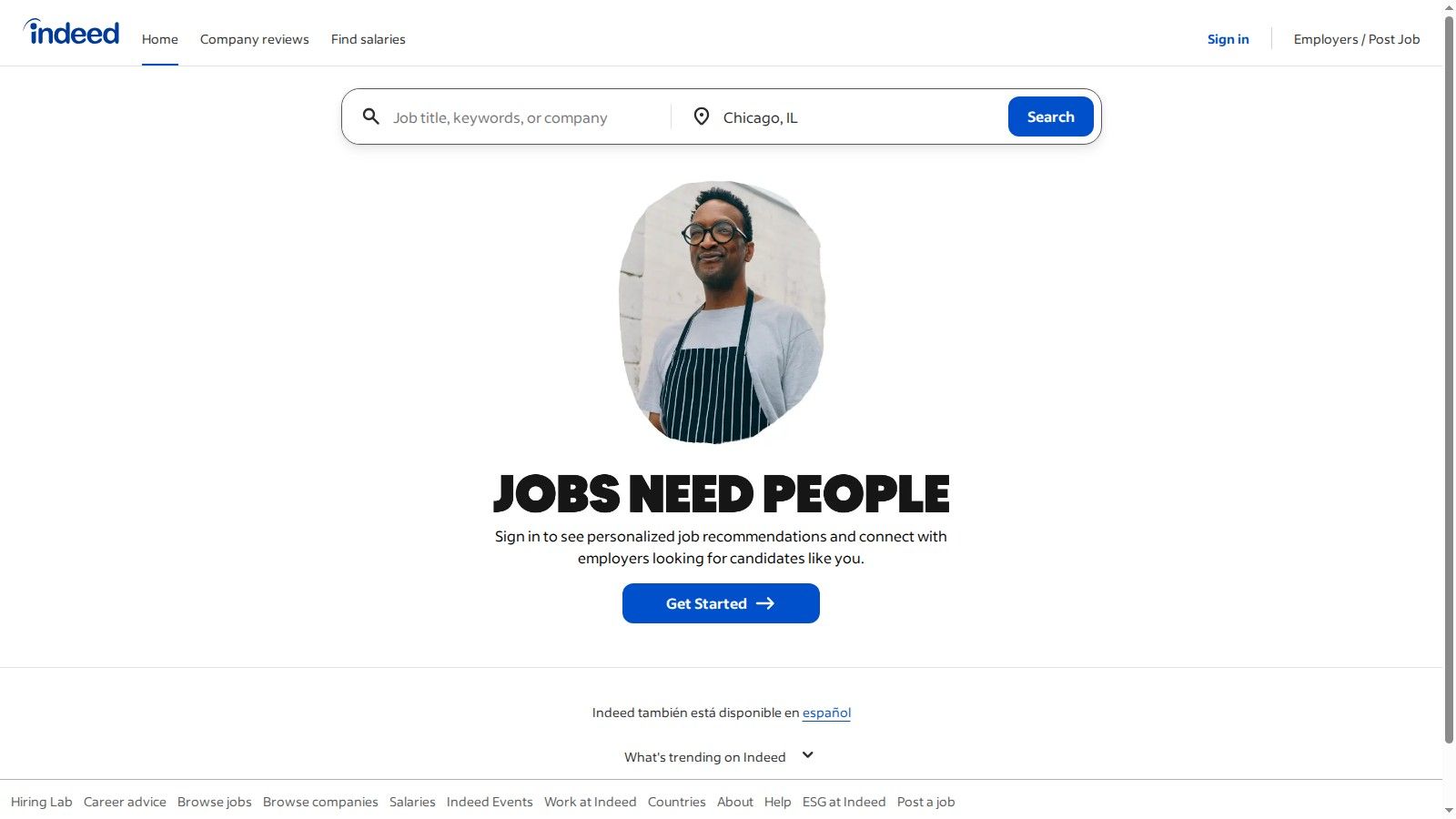
Indeed is the sweep-the-market board. When you want broad coverage across tech companies, banks, healthcare systems, manufacturers, consultancies, and internal engineering teams that don't market themselves well, Indeed is the fastest way to map the terrain.
That breadth is its superpower and its biggest flaw. You'll find software roles that never get much visibility elsewhere, but you'll also run into duplicates, stale posts, and jobs that look current until they send you into a dead ATS.
Indeed is strongest when you're searching by title plus constraint. Think “backend engineer Go remote,” “staff platform engineer hybrid Chicago,” or “embedded software engineer medical devices.” It's especially useful if you're open to sectors outside consumer tech.
The board also helps with employer triage because company reviews and salary estimates are nearby, even if you shouldn't treat them as precise. For confidential searches, use a separate routine and don't spray your résumé everywhere. If you're searching while employed, this guide on how to job search confidentially as a software engineer is worth following.
Practical rule: Save Indeed for breadth, not conviction. It's where you discover opportunities you'd otherwise miss, then verify them before investing real application time.
If you use Indeed well, you'll do two things differently from others:
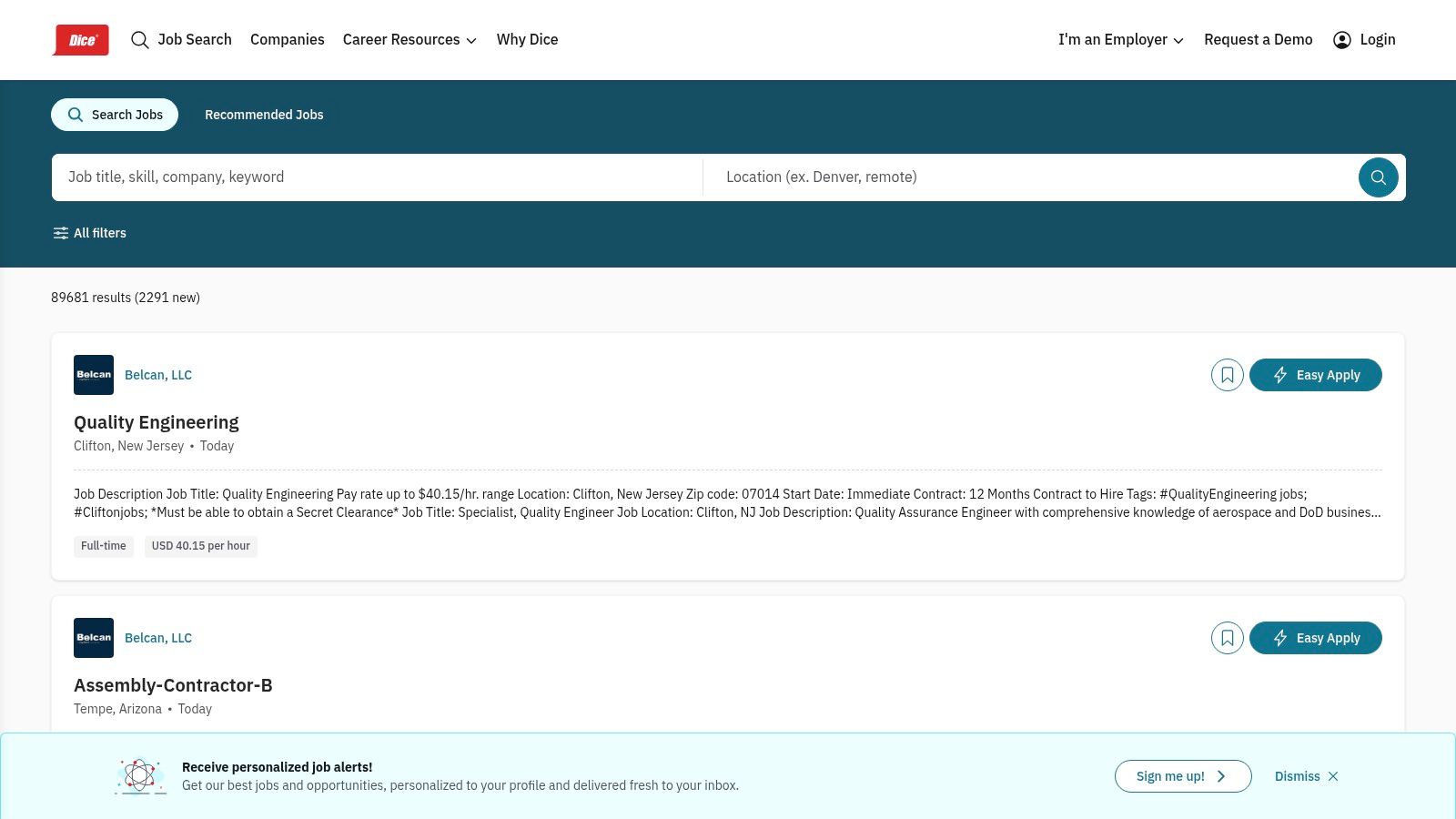
Dice has been around long enough that some engineers dismiss it as old-school. That's a mistake. For enterprise engineering, infrastructure, cloud, security, data, and contract-heavy technical work, Dice Jobs is often more relevant than trendier boards.
It doesn't sell aspiration particularly well. It sells technical roles. If you care more about stack, domain, and employer type than polished branding, that's a feature.
Dice is a strong software engineer job board for engineers who sit adjacent to classic IT hiring funnels. That includes backend platform engineers, DevOps and SRE candidates, cloud specialists, systems engineers, and people open to contract or contract-to-hire paths.
The trade-off is context. You usually get less company storytelling and less startup energy than on founder-driven platforms. In exchange, you get less lifestyle fluff and more technical specificity.
What works on Dice:
What doesn't:
If you want startups, skip the broad-market guesswork and go straight to Wellfound. It remains one of the cleaner places to search for engineering roles at seed through growth-stage companies, especially when you care about equity, team size, and what the company is building.
That startup concentration changes how you should use it. On LinkedIn or Indeed, filtering is the main task. On Wellfound, fit is the main task. The question isn't “is this a real software role?” It's “is this startup worth joining?”
A lot of engineers see startup branding and jump too fast. Slow down and check company stage, product maturity, team composition, and whether the role is broad because the company is lean or broad because no one has defined the work.
Wellfound is strongest when you already know you want a startup environment. It's weaker if you're trying to compare startup roles against enterprise roles side by side. The signal is better, but the slice of the market is narrower.
One thing I like here is that compensation and equity context often show up more clearly than on general boards. Not every post is transparent, but the platform nudges companies toward the details engineers value.
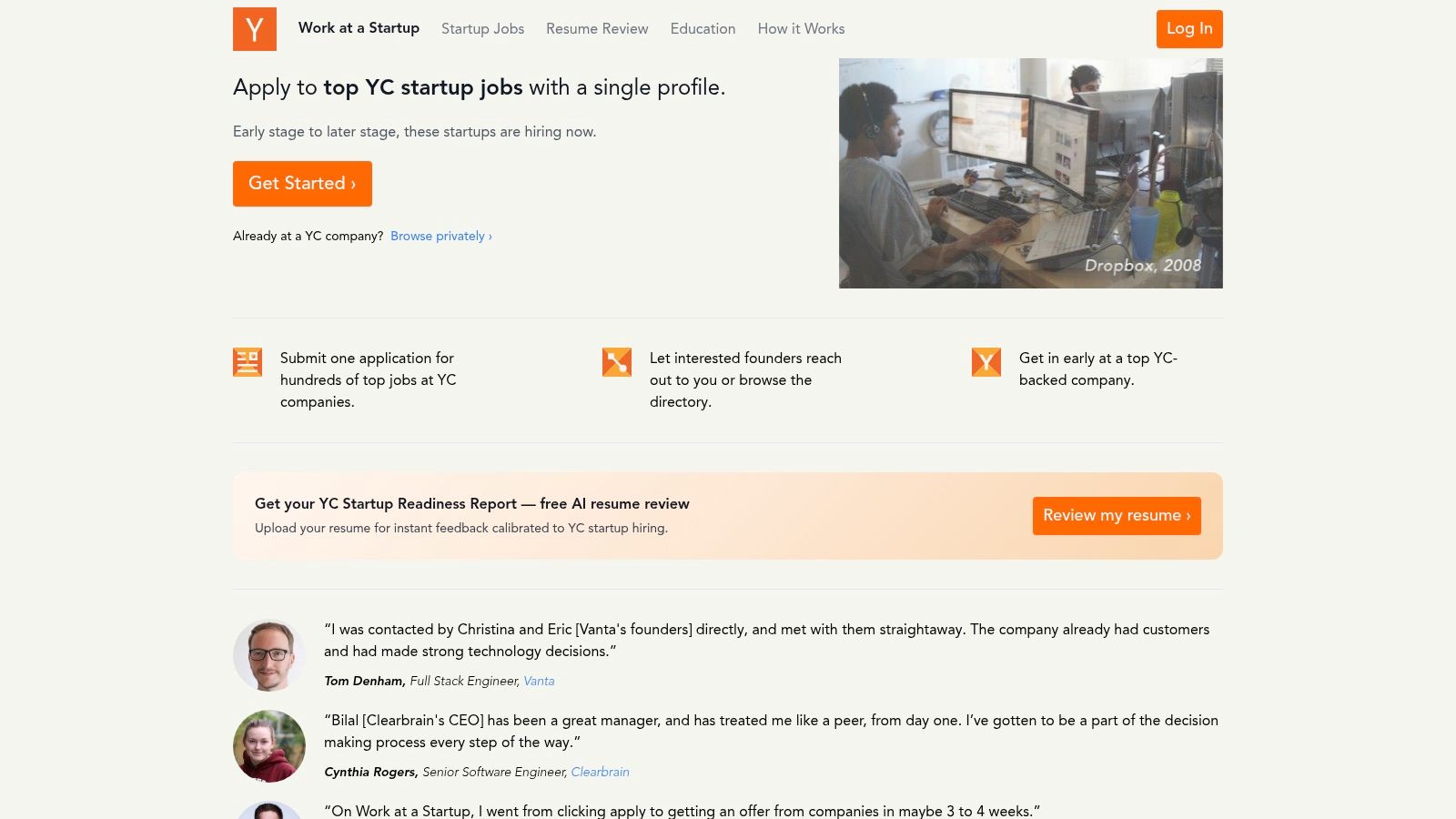
YC's Work at a Startup is one of the most direct paths into the Y Combinator ecosystem. If your target is founder-led product companies and you're comfortable with ambiguity, this board is efficient in a way broad platforms aren't.
The big advantage is its efficiency. One candidate profile can put you in front of multiple YC companies, which is a better use of time than filling out separate application flows for dozens of near-identical startups.
This board rewards engineers who can operate with range. Startups in this ecosystem often want people who can build across boundaries, move quickly, and work close to product. If your résumé only makes sense in a tightly scoped big-company ladder, your profile may read weaker here than it would elsewhere.
Recent market commentary also points to a shift many engineers are feeling already. Hiring is still happening, but AI-era screening and role design are changing expectations, especially for junior work. The more useful profile is increasingly the engineer who can handle larger systems and use AI tools well, as discussed in this commentary on AI-era software-engineer hiring.
The strongest YC candidates usually don't pitch themselves as “just backend” or “just frontend.” They show they can own outcomes.
The trade-off is straightforward:
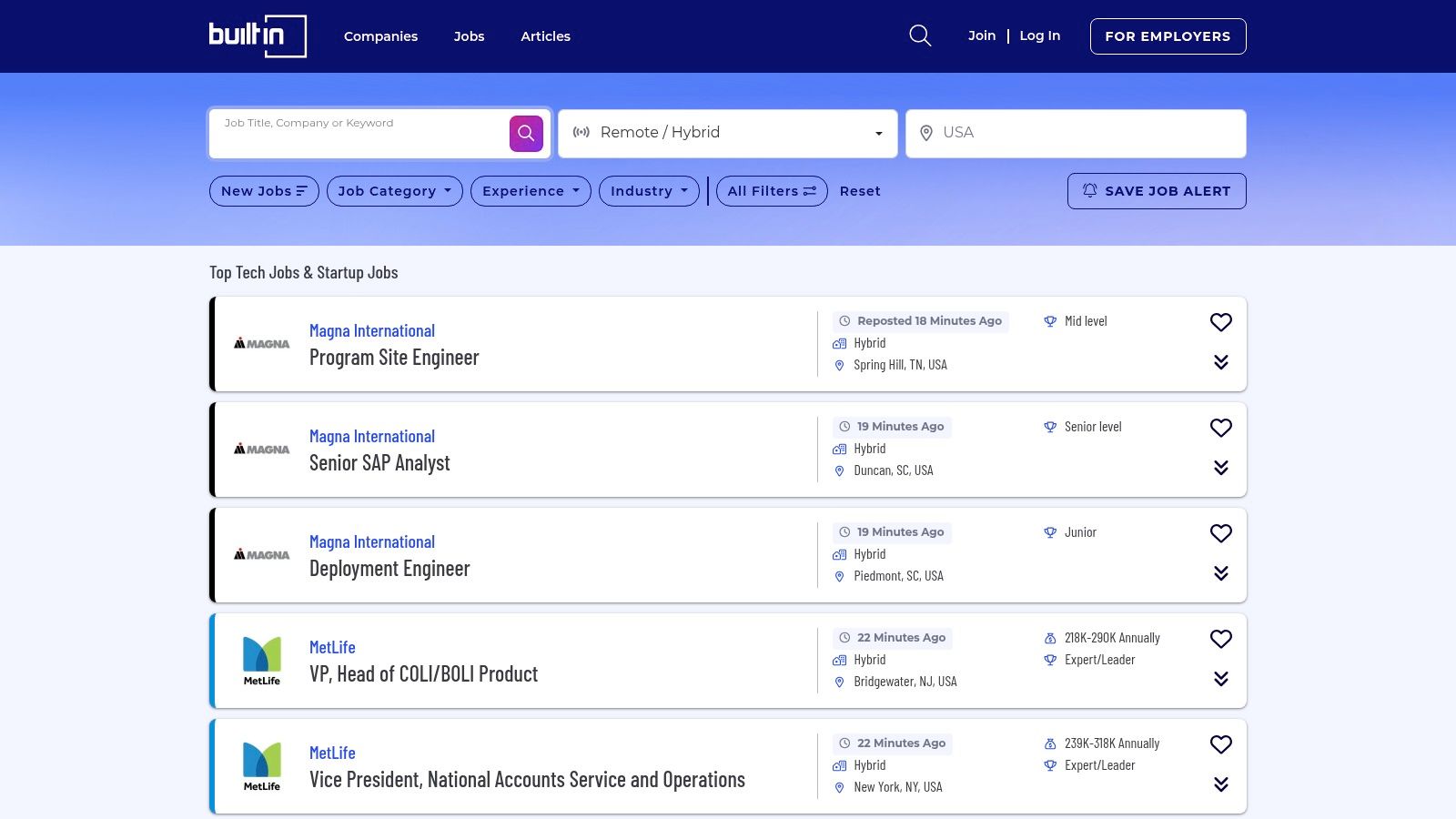
Built In sits between job board and employer-branding media, and that combination is more useful than it sounds. On Built In Jobs, you often get enough context around the company, culture, stack, and work model to decide whether a role deserves your time.
That makes it one of the better platforms for avoiding blind applications. If you care about a specific city, a hybrid setup, or tech-community visibility in major hubs, Built In often gives you a cleaner first pass than a giant aggregator.
Use Built In when you're not just asking “who's hiring?” but “what kind of engineering environment is this?” That's especially helpful for mid-level and senior candidates who can get interviews, but want to avoid wasting them on teams with weak product direction or vague role definitions.
Hiring is increasingly tilted toward experienced talent. One 2025 market analysis found employers favored mid-level and senior engineers, while junior listings remained more constrained. The same analysis said postings for developers with 0 to 3 years of experience had increased since late 2023, but that the strongest opportunities still clustered in startups, mid-sized firms, and contract or freelance channels, according to MEV's software engineer job market analysis.
Built In won't give you the raw volume of LinkedIn or Indeed. It will often give you better context per listing, and that's a useful trade.
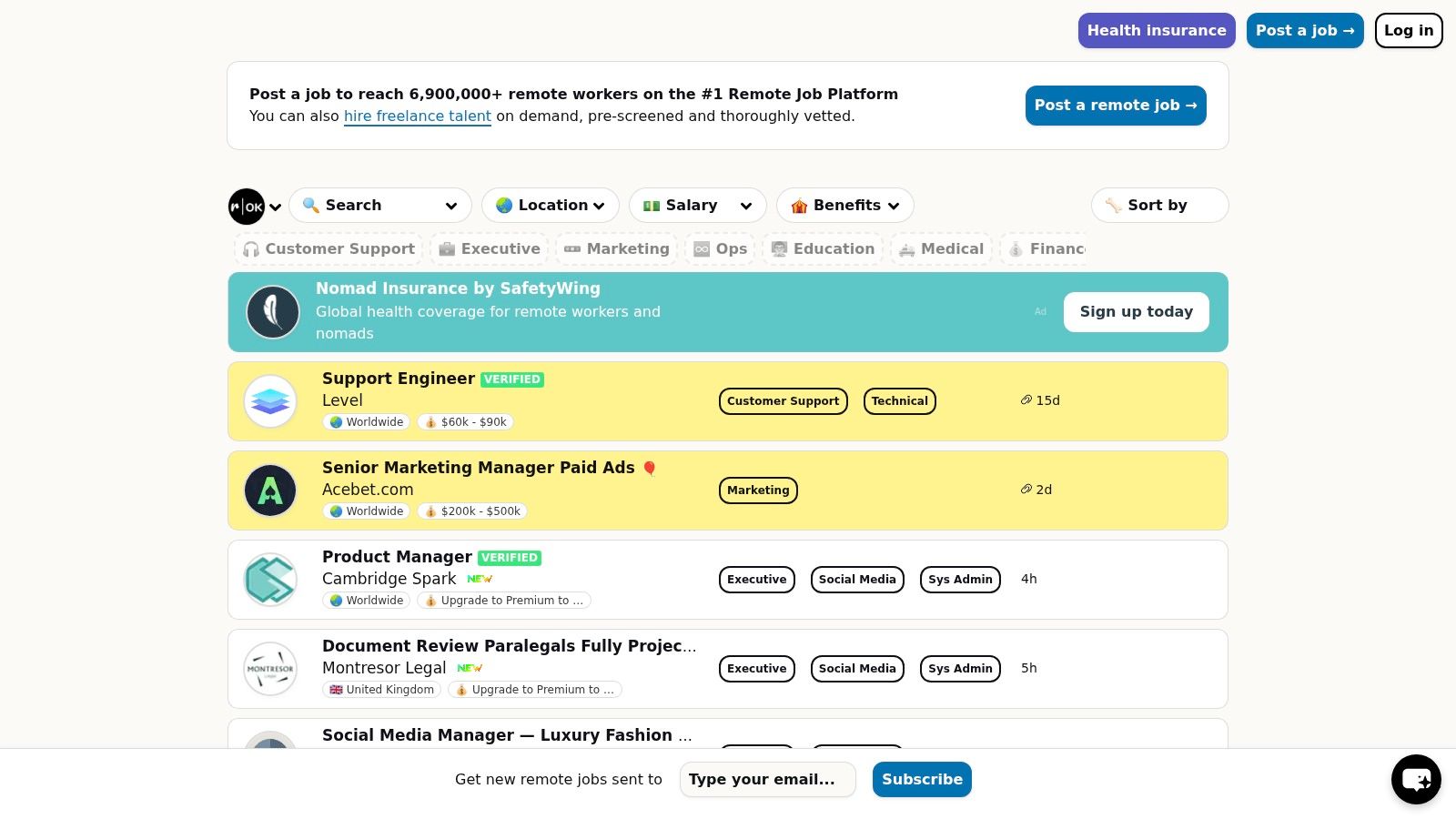
If remote work is a requirement, Remote OK is a better software engineer job board than trying to force remote filters on generalist sites. It's built around remote-first discovery, and the engineering mix tends to skew toward startups and tech-forward companies rather than generic “remote” office work.
That matters because remote listings on broad boards are magnets for noise. You'll see reposts, location mismatches, and roles that say remote but function like region-locked hybrid jobs. Remote OK is usually cleaner.
The best filter on Remote OK isn't title. It's work constraint. Time zone overlap, country restrictions, compensation visibility, and company stage matter more than whether the title says software engineer, backend engineer, or full-stack engineer.
You should also read remote startup roles a bit skeptically. Some postings are broad because the team needs a flexible engineer. Others are broad because they haven't scoped the job. Those are not the same thing.
Levels.fyi Jobs is what I recommend when an engineer tells me, “I'm getting interviews, but I don't know if the role is at my level.” That's where Levels.fyi Jobs stands out. It's less about sheer discovery and more about compensation and leveling clarity.
That focus is valuable because many engineers undersell themselves by applying one level too low or negotiating without a market frame. Levels.fyi helps anchor expectations before you spend weeks in process.
This isn't the board I'd use for maximum inventory. It's the board I'd use when level, title calibration, and total compensation matter a lot. That includes staff-track searches, large-company transitions, and any search where you're trying to compare multiple ladders across employers.
It also pairs well with compensation research before recruiter screens. If you want a practical baseline, this breakdown of how much money software engineers make is useful as a companion.
Worth remembering: The best-paying role on paper isn't always the best role. But if you don't understand level mapping, you can't evaluate the trade-off clearly.
Main trade-offs:
Otta is for engineers who are tired of sorting junk. It leans into curated matching, startup and growth-stage roles, and a cleaner candidate experience than most broad platforms.
That sounds soft, but it solves a real problem. Recent guidance for engineers keeps returning to the same issue. The hard part isn't finding places that list jobs. It's finding boards that surface fresh listings, salary transparency, and some level of vetting because too many platforms are full of stale or low-signal posts, as noted in Arc's guide to software developer job boards.
Otta reduces noise by showing fewer roles with more context. If you know you want a startup or growth-stage company and don't want to babysit giant search feeds all day, that's appealing.
The trade-off is speed. You may not catch every posting the moment it appears. If your strategy depends on being one of the first applicants on high-demand roles, Otta can feel slower than LinkedIn or Indeed. If your strategy is to make better applications to better-fit companies, it can feel much better.
A practical way to use Otta:
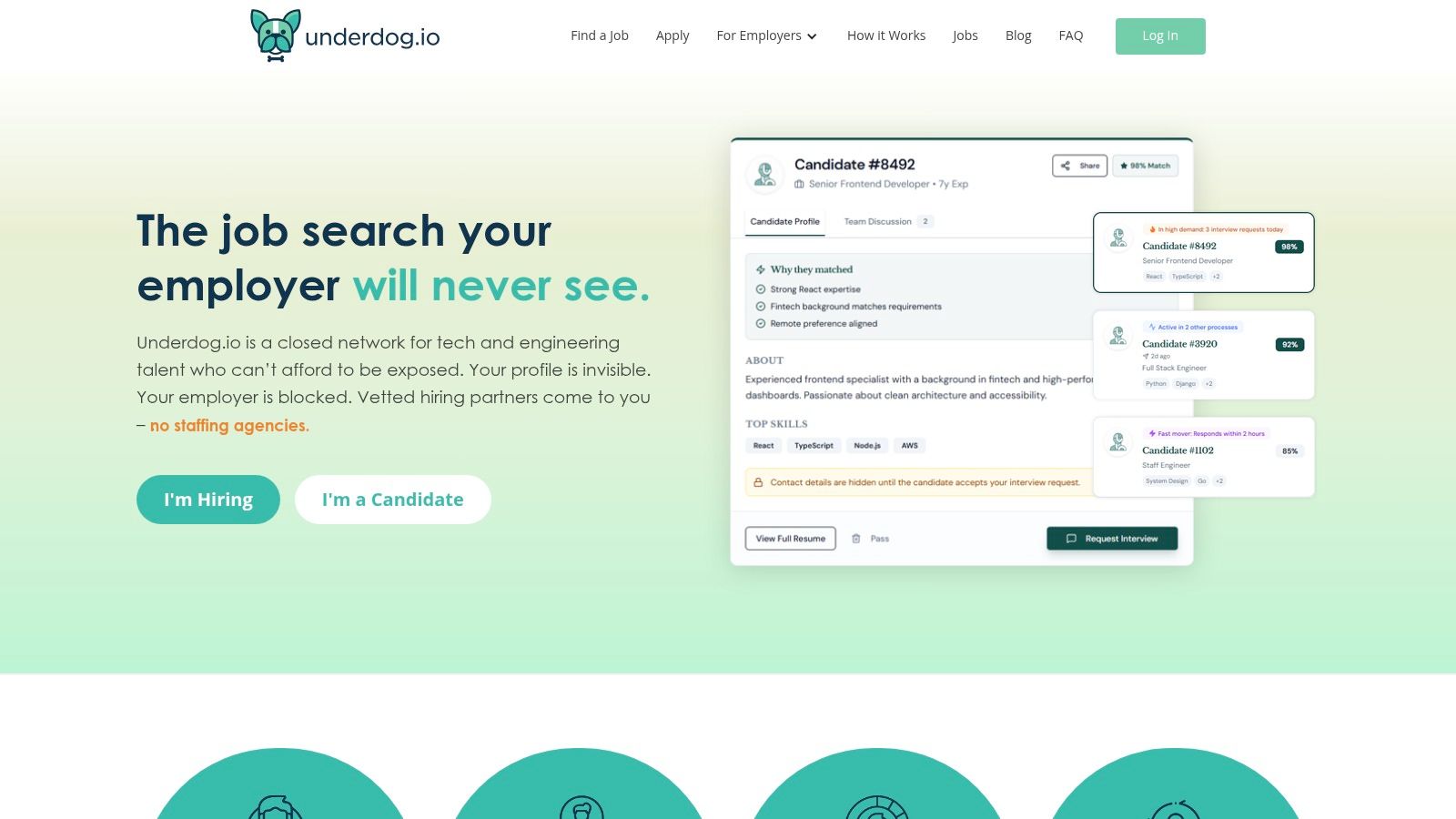
Underdog.io solves a different problem from most job boards. Instead of asking you to chase listings, it lets vetted startups and high-growth tech companies reach out to you. For engineers who are tired of dead-end applications, Underdog.io is one of the more interesting alternatives because it behaves more like a curated hiring marketplace than a classic board.
That distinction matters. Most platforms optimize for listing count. Underdog optimizes for match quality, privacy, and startup relevance.
Candidates complete a short application, and accepted profiles get introduced to a network of vetted startups and tech companies in places like New York City, San Francisco, and remote-friendly U.S. roles. The profile is anonymous at first, which is useful if you're exploring while still employed. Your current employer can be blocked, and companies reach out only when there's a potential fit.
The curation is the differentiator. Underdog manually reviews candidates, only accepting about 5% of applicants, and screens companies too, turning away over 50% of them. That selectivity won't appeal to everyone, but it creates a much higher-signal environment than mass-application boards. Most talent on the platform is passive, and accepted candidates usually receive a small number of targeted matches each month rather than endless algorithmic spam.
If you're already employed and don't want your search visible all over the internet, this is one of the few approaches that actually respects that constraint.
Underdog is strongest for engineers who want startups without startup-board chaos. It works well if you care about talking directly to founders and hiring managers, avoiding staffing-firm layers, and seeing companies that have already been screened for legitimacy and fit.
For employers, the model is also more outcome-driven than job-slot-driven. Candidates use the platform for free. Employers pay via hiring-related fees or enterprise solutions, which keeps the candidate side low-friction and aligns the marketplace around actual hiring outcomes. The platform also advertises a response rate above 65% and offers precision search, unlimited hiring posts, and contingent recruiting support through Hunt by Underdog.io.
That said, the trade-offs are real:
For the right engineer, though, Underdog fixes the exact thing that makes a traditional software engineer job board frustrating. You stop lobbing applications into a black hole and start having conversations with companies that already know why they want to talk to you.
| Platform | Target audience & focus | Core features | UX & quality metrics | Pricing / value | Key differentiator |
|---|---|---|---|---|---|
| LinkedIn Jobs | Broad professionals, passive discovery, recruiters | Easy Apply, recruiter visibility, promoted listings | Massive reach, high competition, variable comp details | Free for job seekers, employers pay for ads/tools | Unmatched network & networking capabilities |
| Indeed | Mass-market job seekers, cross-industry | Aggregated listings, salary estimates, company reviews | Huge volume, duplicates/mixed signal | Free + sponsored listings / PPC for employers | Breadth of listings and fast discovery |
| Dice | Tech & IT professionals, enterprise roles | Tech-focused search, AI matching, employer resume DB | Higher relevance for engineering/infra, employer-centric tools | Employer-paid listings and sourcing | Tech-only focus with strong infra/security coverage |
| Wellfound (AngelList) | Startup-minded candidates, seed–growth startups | Startup filters, funding/team info, equity visibility | Clean startup signal, strong NYC/SF & remote presence | Free employer posts with paid upgrades | Dense startup marketplace with equity transparency |
| YC Work at a Startup | Candidates targeting YC portfolio startups | Single discoverable profile, portfolio browsing | Efficient one-to-many exposure, variable response rates | Free to use (for candidates) | Direct access to YC-backed companies & founders |
| Built In | Tech communities in US hubs, engineers | Company profiles, editorial content, tech stack & perks | High-signal role context, fewer total listings | Employer branding/paid listings | Rich editorial + company context to assess fit |
| Remote OK | Remote-first engineers, startups & web3 firms | Remote filters, timezone/salary filters, employer-paid posts | Good remote signal, sponsored posts can dominate | Employer-paid postings with add-ons | Strong remote engineering job focus |
| Levels.fyi Jobs | Comp-conscious engineers across levels | Compensation-first filters, leveling & comp data | Excellent for comp research, smaller role volume | Free to browse; some redirections to employer ATS | Integrated crowdsourced compensation and leveling |
| Otta | Curated startup/growth candidates (US/UK/EU) | Curated daily batches, salary transparency, filters | Low-noise UX, quality over quantity, smaller inventory | Free for candidates; employers pay | Curated, candidate-first discovery with transparent pay |
| Underdog.io | Early-stage → Series B startups, passive startup talent | 60s application, manual profile review, anonymous profiles, human-powered matching | Very high signal, personalized intros (1–3/mo), | Free for candidates; employers pay success-based/enterprise fees | Recommended, curated, human-reviewed marketplace focused on startup fit, privacy, and high-quality matches |
The best software engineer job board isn't the one with the most listings. It's the one that helps you spend your effort where it has a real chance to convert. That usually means using more than one type of platform and giving each one a specific job.
Use LinkedIn and Indeed for market coverage. They're good at showing you what exists, what titles are being used, and which companies are active. They're not good at filtering noise for you, so you need to do that yourself. That means checking recency, verifying company sites, and avoiding the trap of measuring progress by application count.
Use Dice when your profile lines up with enterprise, infrastructure, security, data, or contract-heavy technical hiring. Use Built In when you care about engineering context and local tech ecosystems. Use Remote OK when remote is a hard requirement, not a preference you might compromise on later.
If your target is startups, split the search further. Wellfound and YC Work at a Startup are strong when you want density and direct access to startup roles. Otta is better when you want a cleaner, more curated candidate experience. Levels.fyi Jobs is what you add when title and compensation calibration become just as important as discovery.
The pattern behind all of this is simple. Don't ask one board to do every job. A broad board should help you discover. A niche board should help you focus. A marketplace should help you get matched. Once you assign each platform a role, the search gets less random and much more manageable.
I'd also be blunt about what doesn't work. Spraying the same résumé across every listing on a single platform usually creates false momentum. So does spending hours polishing applications for roles that were probably stale before you saw them. Better results usually come from a smaller set of higher-conviction applications, paired with channels where recruiter visibility, warm outreach, or curated matching increase the odds of a real response.
If you're early in the search, start broad for a short period and gather signal. Which titles fit your background? Which companies keep showing up? Which boards have the least junk for your target role? Then narrow hard. Build a repeatable routine instead of relying on bursts of motivation.
A smart search stack for most engineers looks like this: one aggregator, one niche board aligned with your target market, and one curated platform that reduces application spam. That combination covers volume, relevance, and quality. It also protects you from the biggest mistake in modern job hunting, which is confusing more activity with more progress.
If you want startup opportunities without the resume black hole, try Underdog.io. It gives software engineers one fast application, anonymous profile protection, and access to vetted startups and high-growth tech companies that reach out when there's a real fit.