A Series A SaaS company gets its first strong product-market-fit signal. The board wants headcount to triple within nine months. Then three promising candidates reject offers because competitors moved faster, each decision arriving before the startup had finished its internal approvals.
That situation isn't unusual. In 2024, the global average time-to-fill reached 43 days, up from 36 days in 2019, while global average cost-per-hire rose 18% over the same period to $4,683, according to PIN's State of Talent Acquisition report. At a high-growth startup, an unfilled senior role can delay a product milestone, overload an existing team, and consume equity and culture capital.
A practical talent acquisition strategy doesn't require a large People team or an enterprise recruiting stack. It requires clear hiring priorities, disciplined sourcing, fast decisions, honest positioning, and a small set of metrics that connect recruiting activity to business outcomes.
Early startup hiring often works through personal trust. A founder knows an engineer from a previous company, an investor introduces a sales leader, and a job post fills the remaining gap. That model can work while the team is small and the founders personally control every decision.
Past roughly 30 employees, the weaknesses become obvious. Founders become bottlenecks, referrals cluster around existing networks, hiring managers describe different versions of the same role, and candidates wait while the company debates compensation or interview steps. Reactive job posts produce applications, but they don't necessarily produce the specific passive candidates needed for technical, product, or leadership roles.
The business cost is larger than a vacant seat. If a senior engineer owns a critical product area, the vacancy can delay other engineers, complicate roadmap decisions, and force the founder into operational work. If a head of sales is missing, the company may postpone territory design, manager hiring, and revenue process improvements. The role isn't empty. The work around it loses momentum.
Practical rule: Treat every critical hire as a business dependency, not an isolated requisition.
A deliberate system compounds in several ways:
The market has also made manual recruiting less defensible. SHRM reported AI adoption at 43% of organizations by 2025, while industry coverage projected that 99% of hiring managers would use AI in some part of hiring in 2026, as summarized by JobScore's recruitment statistics coverage. The useful lesson isn't to automate judgment. It's to remove repetitive work so founders and hiring managers can spend more time evaluating capability, motivation, and fit.
A hiring plan should begin with the operating target, not a list of attractive job titles. Start with the milestone the company must reach, then identify the capacity required to reach it.
Write down the next major product, revenue, or activation milestone. For each function, ask:
A founder can run the basic model in a spreadsheet:
Required capacity = forecast workload ÷ sustainable capacity per employee
Then add ramp time, known attrition risk, and a contingency for roles with long search cycles. Don't treat the result as an automatic approval. Use it to expose assumptions. If customer support capacity looks like the constraint, check whether activation improvements or better self-service could reduce the need for immediate hiring.
Create a simple matrix with business impact on one axis and talent scarcity on the other. A role with high impact and scarce talent belongs at the front of the hiring sequence. A low-impact role with an accessible talent pool can wait, even if the job description has already been drafted.
Critical-path roles deserve special attention. A technical leader may need to arrive before several engineers because that person defines architecture and interview standards. A sales leader may need to start before account executives because territory design, forecasting, and enablement depend on the leader's decisions.
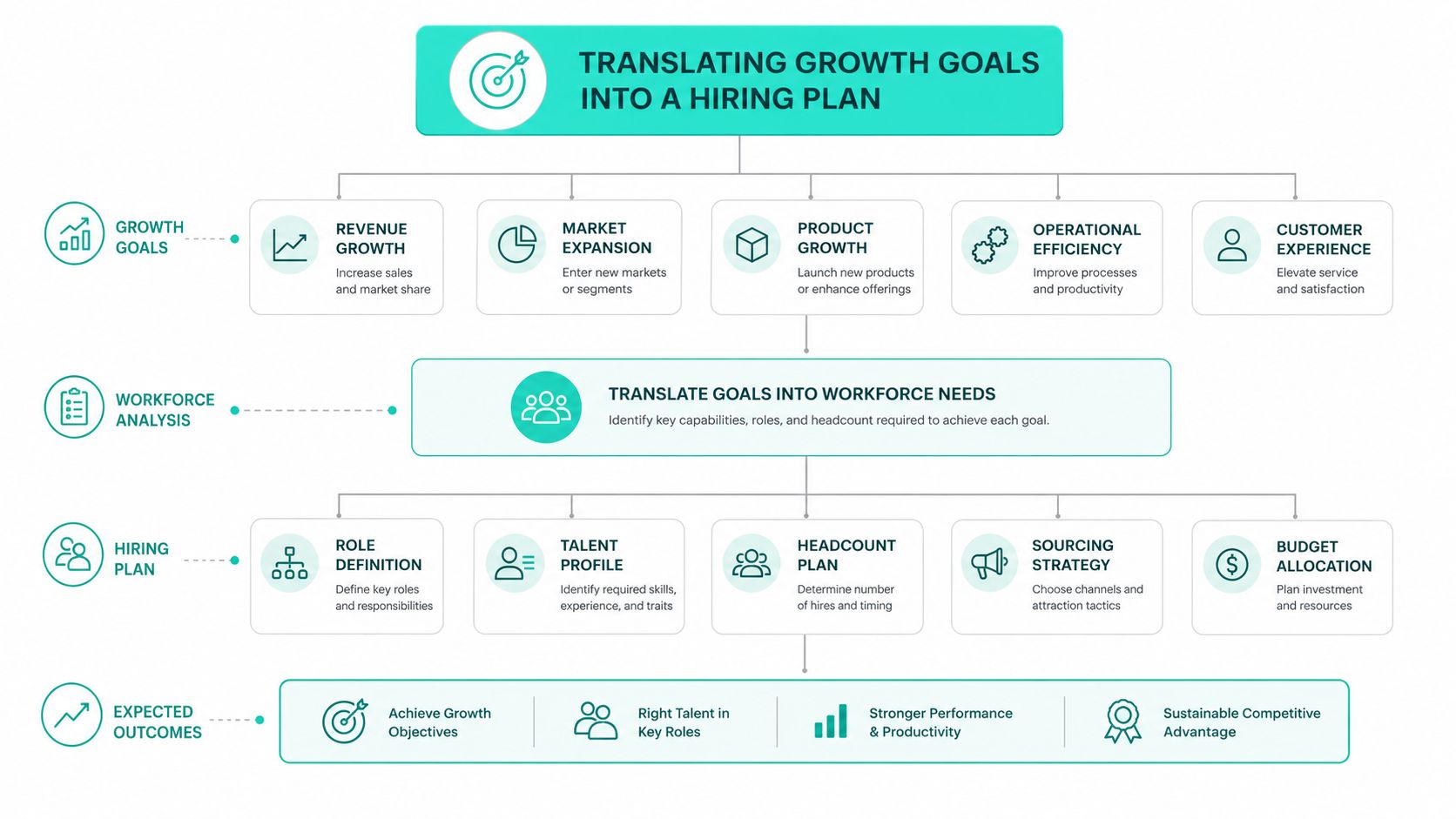
Tie each hiring wave to a cash or operating milestone. A startup shouldn't hire ahead of demand just because funding creates temporary confidence. At the same time, waiting until the need is urgent can create a vacancy that lasts longer than the team can absorb.
Use a hiring plan with these columns:
The recruitment planning guidance from Underdog.io is useful here because it frames hiring as a planning exercise rather than a series of disconnected vacancies. The strongest plans also separate “needed now” from “valuable later,” protecting runway while keeping future pipeline work active.
No sourcing channel wins for every startup. The right mix depends on role scarcity, hiring volume, internal credibility, budget, and how much founder time the company can spend on outreach.
Inbound channels, such as a careers page, search-oriented content, and a talent network, create durable visibility but take time to mature. Outbound sourcing through LinkedIn Recruiter, GitHub, or targeted email can reach passive candidates faster, but it demands strong research and personalized messaging. Referrals often produce trust quickly, yet an unstructured referral program can reproduce the same demographic and professional networks.
Curated marketplaces sit between inbound and agency sourcing. They can reduce the initial screening burden by presenting candidates who have already passed a qualification process. Underdog.io fits this model for early-stage and Series B technology companies looking for engineering, product, design, data, marketing, and business talent. For a startup with limited recruiting capacity, that can be more practical than paying an enterprise search firm before the role justifies it.
| Channel | Best Stage | Best For | Avg. Cost per Hire | Time to Hire |
|---|---|---|---|---|
| Careers page and inbound content | Series A onward | Brand-led, recurring roles | Low after setup | Slower to build |
| Founder and employee referrals | Seed to Series B | Trust-sensitive and leadership roles | Moderate referral spend | Often faster when networks are strong |
| LinkedIn Recruiter, GitHub, and cold email | Any stage | Passive engineering, product, and executive talent | Tool cost plus internal time | Variable |
| Curated marketplace | Seed to Series B | Vetted startup technology candidates | Success-based or marketplace fee | Faster shortlist creation |
| Specialist agency or RPO | Series A onward | Scarce leadership or revenue roles | High fee | Can accelerate urgent searches |
For sales hiring, the channel decision changes with the role. A founder may source the first sales leader personally, while a repeatable appointment-setting function can justify a specialist resource. The Hire Appointment Setter guide offers a useful reference point when deciding whether to build that capability internally or seek targeted external support.
Use a stage-based mix:
Layer channels when the role is critical and the market is uncertain. Swap channels when source-level conversion shows that one route produces activity without qualified interviews. The talent pipeline framework from Underdog.io reinforces the operating principle: build relationships before the requisition becomes an emergency.
For a 15-person startup hiring five engineers and a head of sales, I'd use employee and founder referrals for the leadership role, targeted outbound for both role families, a curated marketplace for engineers, and a focused careers page to capture warm inbound. I wouldn't engage a broad agency until the company had tested its message, compensation position, and interview speed.
Employer brand and candidate experience are the same operating system viewed from different sides. A candidate sees the careers page, the outreach message, the interview behavior, the rejection email, and the offer explanation. Each touchpoint either confirms the company's story or exposes a gap.
Start with a minimum viable brand kit.
Your careers page should sound like the team, not like a larger company borrowing startup language. Explain what the business is solving, what has changed recently, how decisions get made, and where the company accepts trade-offs.
Add three employee narratives. Each should answer a practical question: What did this person own? What was difficult? What changed because they joined? A public engineering or product writing cadence can provide additional evidence, but only if the company can maintain it.
Candidates also need compensation clarity. A short page can explain salary philosophy, equity mechanics at a high level, location rules, and how the company approaches progression. Equity-driven compensation is common in startups, but vague equity language makes candidates compare an uncertain promise with a competitor's concrete offer.
Set a 48-hour response SLA for applications and track exceptions. The point isn't to promise a decision in two days. It's to acknowledge receipt, explain the next step, and prevent silence.
Create a rejection template that is direct and respectful. If the company can share useful feedback, do so. If it can't, explain the decision without hiding behind generic language. Candidate-experience research reported that 55% of candidates would reject an offer after a poor hiring process, while 70% of candidates who receive feedback after rejection would apply again, according to the 2025 State of Candidate Experience report.
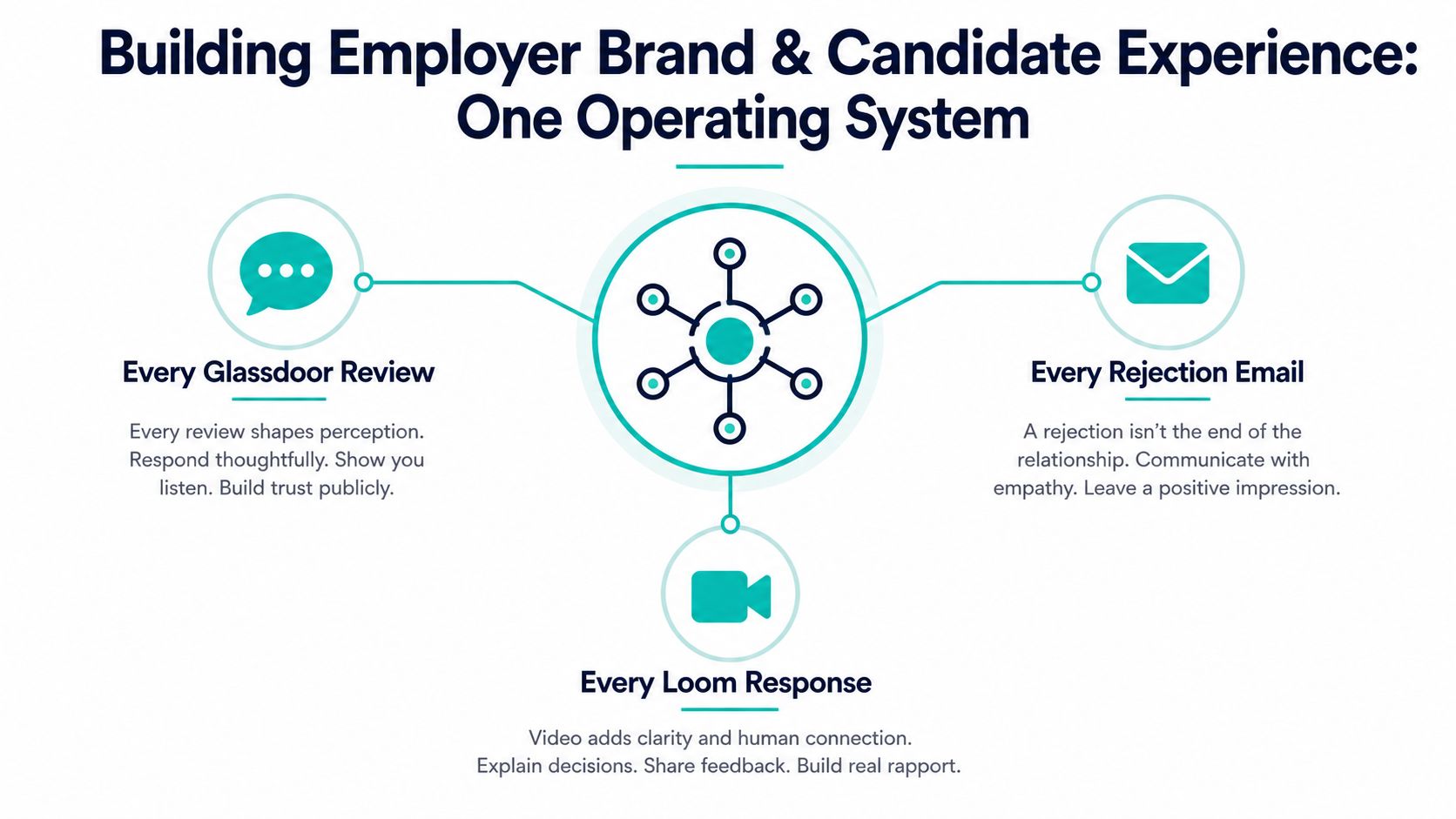
Assign one owner to review candidate feedback each week. A short pulse survey for rejected finalists can reveal whether the problem is compensation, unclear expectations, slow decisions, or an interviewer's behavior. The candidate experience practices from Underdog.io can help shape that workflow without requiring a dedicated employer-brand team.
Ship this in one week:
A startup interview process should collect enough signal to make a confident decision without turning a candidate's week into unpaid project work. The process becomes repeatable when the team defines evaluation criteria before sourcing begins.
List three to five outcomes the person must deliver in the first phase of the role. Tie each outcome to a business need. For an engineering manager, that might include improving delivery predictability, coaching technical leads, and raising hiring quality. For a product manager, it could involve customer discovery, prioritization, and shipping a defined product outcome.
Add knockout criteria before candidates arrive. These might include required work authorization, willingness to work in the role's location or schedule, or a skill that the team can't teach in time. Don't add new requirements after seeing a candidate you like. That creates inconsistency and makes the process vulnerable to enthusiasm-driven exceptions.
A practical four-stage funnel looks like this:
Write down the owner, evidence, and decision at every stage. The hiring manager shouldn't ask a panel to “share thoughts” without a decision deadline. Run a focused debrief that ends in hire, no-hire, or hold, with the reasoning attached to scorecard traits.
| Role-Defining Trait | Interview Question | Strong Answer Signal | Weak Answer Signal | Score (1-4) |
|---|---|---|---|---|
| Ownership | “Tell me about a result you owned when the plan changed.” | Names decisions, trade-offs, and outcome | Describes team activity without personal accountability | 1-4 |
| Product judgment | “How would you prioritize conflicting customer requests?” | Uses evidence, strategy, and explicit constraints | Defaults to the loudest stakeholder | 1-4 |
| Technical depth | “Walk through a system or problem you designed.” | Explains alternatives and operational consequences | Lists technologies without design reasoning | 1-4 |
| Communication | “Describe a disagreement with a partner team.” | Shows listening, clarity, and resolution | Blames others or avoids the conflict | 1-4 |
Skills-based hiring broadens access, but a wider funnel can lower signal if the assessment is vague. LinkedIn's March 2025 analysis found that expanding searches by relevant skills can increase the eligible worker pool by a median 6.1x, as reported in Hays' summary of the skills report. Use that broader pool only when the scorecard and work sample are tight. Randstad's implementation guide recommends defining core skills, testing practical ability, using structured interviews, and applying a standardized scorecard.
Red flags include vague ownership answers, inflated scope, inability to explain trade-offs, a work sample that relies on unsupported claims, and repeated changes to the candidate standard. A fast process isn't useful if the team can't explain why it chose the person.
A seed or Series A company needs a compact operating view, not a dashboard packed with activity counts. Track the measures that answer five operating questions: How long will this hire take? Will candidates accept? Are new hires succeeding? Which sources deserve more attention? What does the process cost?
Time-to-fill supports workforce planning. Count the days from approved requisition to accepted offer, then separate approval, sourcing, interviews, and closing. That breakdown shows where speed is being lost and whether the fix belongs with the hiring manager, recruiter, or compensation process.
Offer acceptance rate surfaces compensation and process problems. Divide accepted offers by total offers, then segment by role and source. For a startup competing for passive candidates, a weak explanation of equity may affect acceptance more than a small difference in cash compensation.
Quality of hire works best as a practical proxy. Combine 90-day retention with a manager assessment tied to the original scorecard. APQC recommends tracking requisition-approval-to-offer-acceptance cycle time, 12-month new-hire retention, and total process cost in its cross-industry benchmark framework.
Source yield shows whether activity produces useful outcomes. Record qualified screens, interviews, offers, and accepted offers by source. Application volume can hide a weak channel, a problem highlighted by recruiting benchmark guidance from Metaview. For hard-to-reach startup talent, compare referrals, targeted outreach, curated marketplaces such as Underdog.io, and agencies by downstream results rather than lead count.
Cost-per-hire is a sanity check, not the target. Include agency fees, marketplace or referral payments, recruiting software, advertising, and a reasonable estimate of internal time. The global average cost-per-hire reached $4,683 in 2024, according to PIN's talent acquisition data. Use that figure as context, not as a universal startup budget.
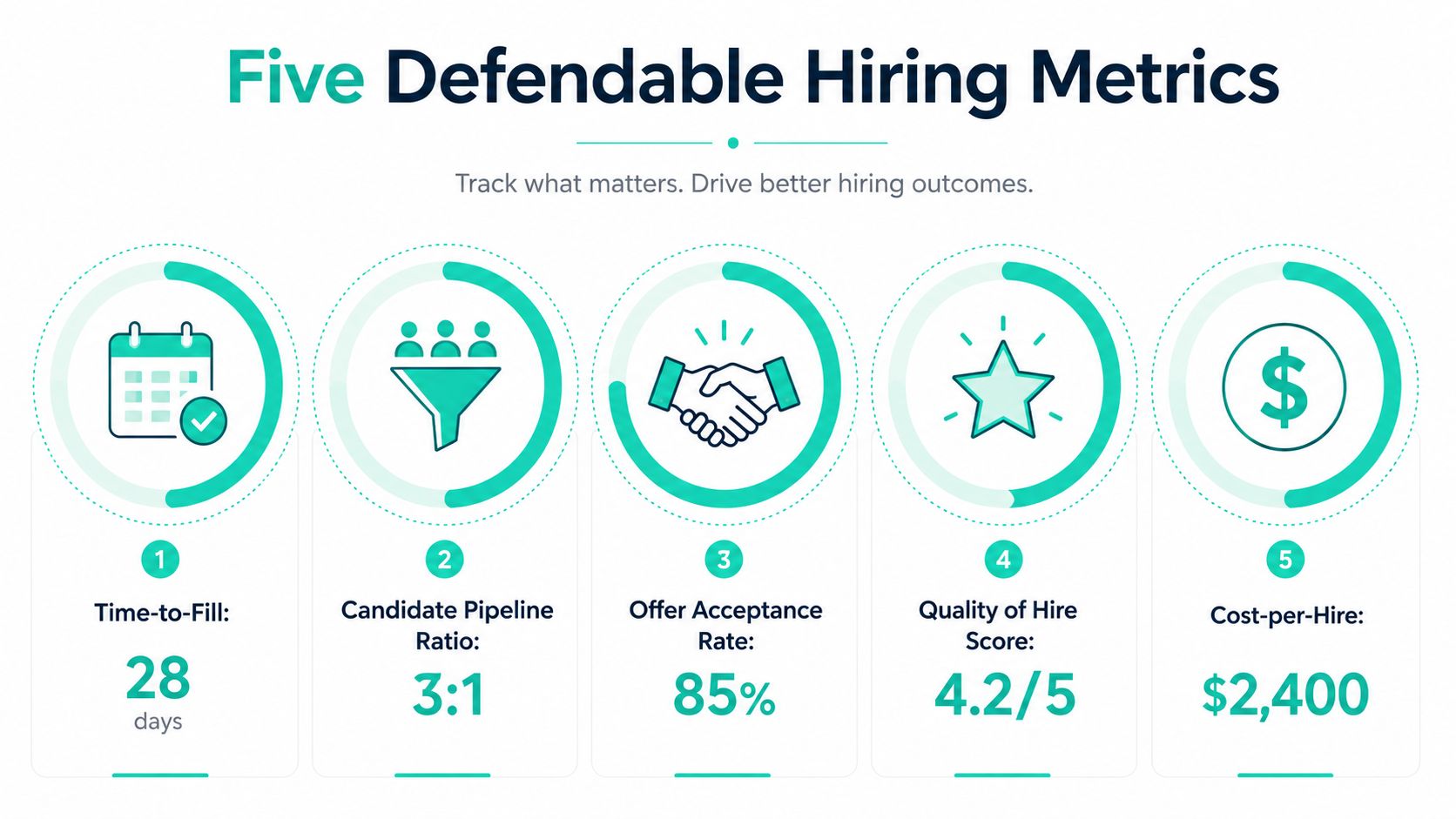
Review the dashboard weekly with the hiring manager. For each open role, record the current stage, next action, aging risk, source performance, and budget used. Allocate spend by role criticality. Use internal sourcing for accessible roles, targeted tools for passive talent, referrals where trust matters, and external recruiting support only when the expected business cost of delay exceeds the fee.
The first quarter should turn scattered hiring effort into a repeatable operating rhythm. The plan below works for a founder-led team, a first talent hire, or a small recruiting function supporting several hiring managers.
Lock the foundations:
Don't over-hire ahead of revenue or product pull. A funding event can support hiring, but it doesn't prove that every planned role should open immediately.
Publish the employer-brand basics, calibrate the interview loop, and start the dashboard. Run a mock interview with the hiring manager and panel before candidates enter the process. Compare how each interviewer interprets the scorecard, then remove questions that don't produce useful evidence.
Check equity ranges during this phase. Startup candidates often evaluate ownership, risk, cash compensation, role scope, and growth together. If those ranges drift from one conversation to the next, the company loses credibility even when the total package is competitive.
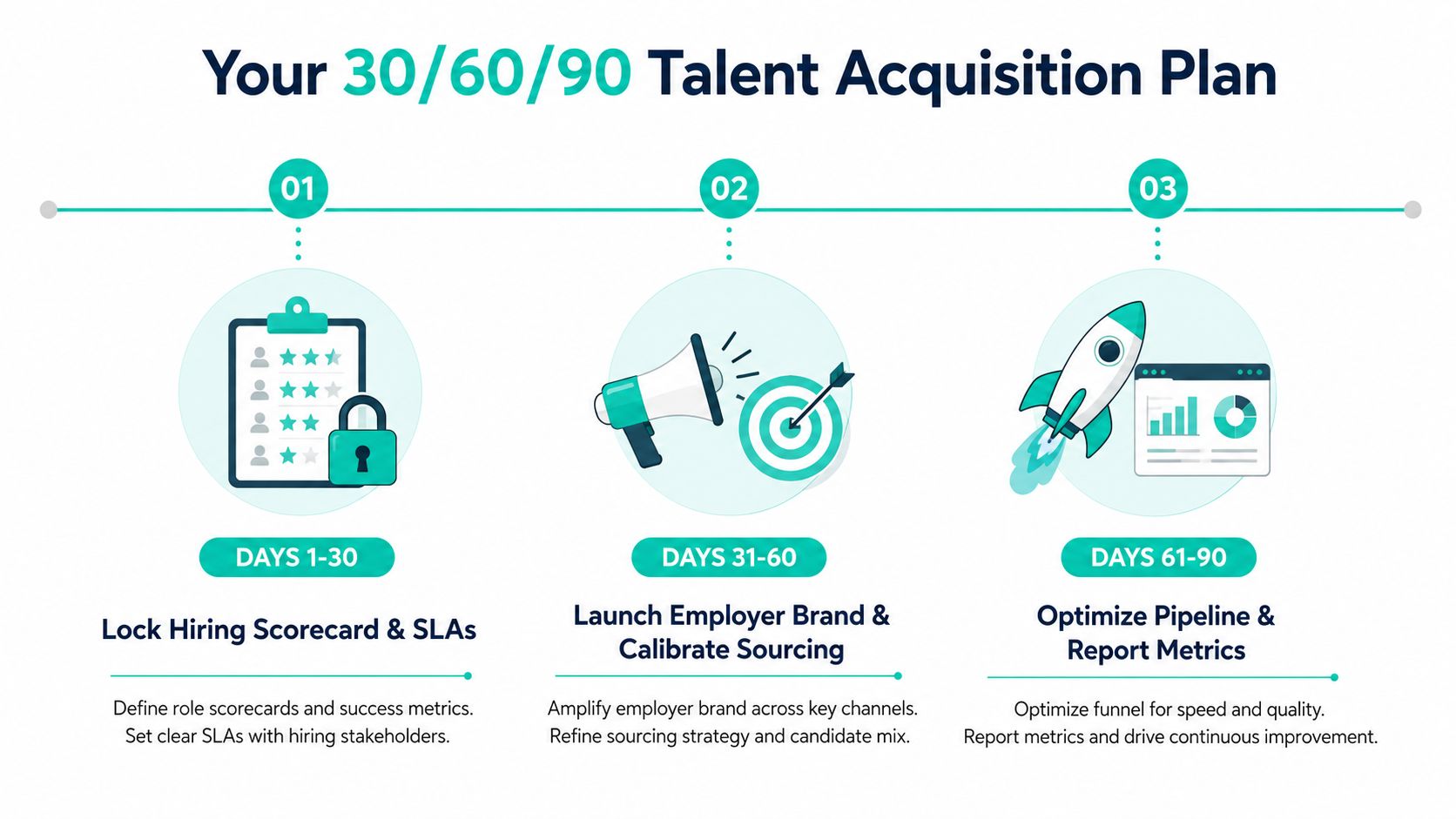
Run two pipeline reviews each week. One review should focus on active candidates and next actions. The other should examine channel yield, passive-candidate follow-up, aging roles, and upcoming capacity needs.
Retire channels that generate noise without qualified movement. Keep nurturing passive candidates who aren't ready now, because a good conversation can become a future hire or referral. Don't skip references just because the company is moving quickly. Use a consistent reference structure tied to the scorecard.
At the end of the quarter, the founder or talent lead should have:
The objective isn't process for its own sake. It's a hiring cadence that protects runway, gives candidates a credible experience, and lets a small startup compete with companies that have larger recruiting teams.
Underdog.io offers a curated marketplace that connects startups with vetted technology candidates, giving founders another sourcing channel when passive engineering, product, or design talent is difficult to reach. Visit Underdog.io to review the marketplace and consider whether its candidate-matching model fits your next critical hire.