A growth-stage startup is a company that has proven product-market fit and is scaling a validated, repeatable business model. It typically raises Series A through Series C, has established customers and measurable revenue growth, and hires more specialists as informal startup practices become operating systems.
The popular advice says a large funding round means a startup has “made it.” That advice is unreliable. A Series B company can still be searching for repeatable demand, burning cash without clear unit economics, or routing every important decision through its founders. Another company with a different financing history may already have the systems, customers, and operating discipline that define genuine growth.
For an engineer comparing a seed-stage offer with a Series B offer, the Series B role may offer clearer ownership, larger technical problems, and more specialized teammates. It may also bring more process, less autonomy, equity dilution, and pressure to deliver against business metrics. The useful question isn't only about which round the company raised. It's whether the company has moved from proving that its product works to scaling a business that works repeatedly.
Consider two offers. Startup A has a handful of customers, a founder who closes most deals, and an engineering team that changes priorities whenever a prospect makes a request. Startup B has raised a Series B, but its sales pipeline depends on one executive, retention data is unclear, and hiring plans seem disconnected from revenue. The second company has more capital, but the first question remains unanswered: has either business demonstrated a repeatable way to grow?
A growth-stage startup has moved beyond proving that its product could work. It has a marketable product, an established customer base, measurable revenue or usage growth, and performance milestones that reduce, but don't eliminate, uncertainty. The company's management problem changes from “Do customers want this?” to “How do we acquire, serve, and retain more customers without breaking the product or the organization?”
The Congressional Research Service describes startup development through factors such as revenue growth, company age, and product maturity. In that framework, growth-stage financing commonly begins around Series A and extends through Series B, Series C, and later rounds. Series A generally supports the transition from product validation to expansion, while Series B is associated with increasing market share and improving operational efficiency.
Practical rule: Treat the funding round as a clue, not a conclusion.
For candidates, the distinction affects the daily job. A pre-seed engineer may work across product, infrastructure, customer support, and hiring. A growth-stage engineer may own a defined platform, security, data, or reliability area and be expected to improve a measurable business or technical outcome. The role can offer valuable scaling experience, but it can also expose gaps in architecture, management, and communication.
This guide to Series B startups is useful context, but the label shouldn't end your diligence. By the end of this article, you'll know how funding stages fit together, which operating metrics matter, what changes for employees, and which questions reveal whether a startup is genuinely scaling or merely well-funded.
Funding rounds work like rungs on a ladder, but the ladder doesn't have identical steps for every company. A software business, a biotech company, and a marketplace may reach comparable milestones through different timelines and capital requirements. The round tells you something about investor expectations, not everything about operational maturity.
At pre-seed, founders usually develop the initial concept, prototype, or technical foundation. The company may be testing a problem, interviewing prospective customers, and deciding whether the product deserves further investment. The work is exploratory, and the team often consists of broad generalists.
Seed funding typically helps the company build and test the product with early users. The central question is whether a real customer will use the product and pay for it, or whether the team can observe meaningful usage in a non-commercial model. A seed company may have early revenue, but it hasn't necessarily shown that acquisition and retention can repeat without founder intervention.
Series A marks a shift. Investors generally expect clearer evidence of product-market fit and a credible plan to begin expansion. The company starts building sales capacity, improving onboarding, hiring managers, and turning successful founder behavior into documented processes.
Series B usually funds a more proven model. The business may expand into new segments, grow market share, strengthen infrastructure, and add operational leadership. Later rounds can support broader geographic expansion, larger enterprise programs, acquisitions, or preparation for a public offering. None of these outcomes is automatic.
A startup funding stages overview can help orient you, but don't confuse the sequence with a universal checklist. Startup milestones vary by industry and geography, and there isn't a single headcount threshold that turns a company into a growth-stage business.
Think of the process as building a restaurant business.
The analogy also shows why a funded company may not be growth-stage. A restaurant can raise money for several locations before proving that customers return, margins support expansion, or managers can operate without the owner. Capital can accelerate a working system, but it can't substitute for one.
Carta data cited for Q1 2025 found that the median company raising a Series B had waited 2.8 years after its Series A, the longest median interval in that dataset, according to this stage-by-stage funding analysis. That interval reinforces the point. A round is an event. Growth stage is an operating condition that develops between events.
Funding tells you how much outside capital a company has secured. Operating metrics tell you whether that capital is building a durable business. A candidate doesn't need access to every dashboard, but a serious company should be able to explain the direction and meaning of its key numbers.
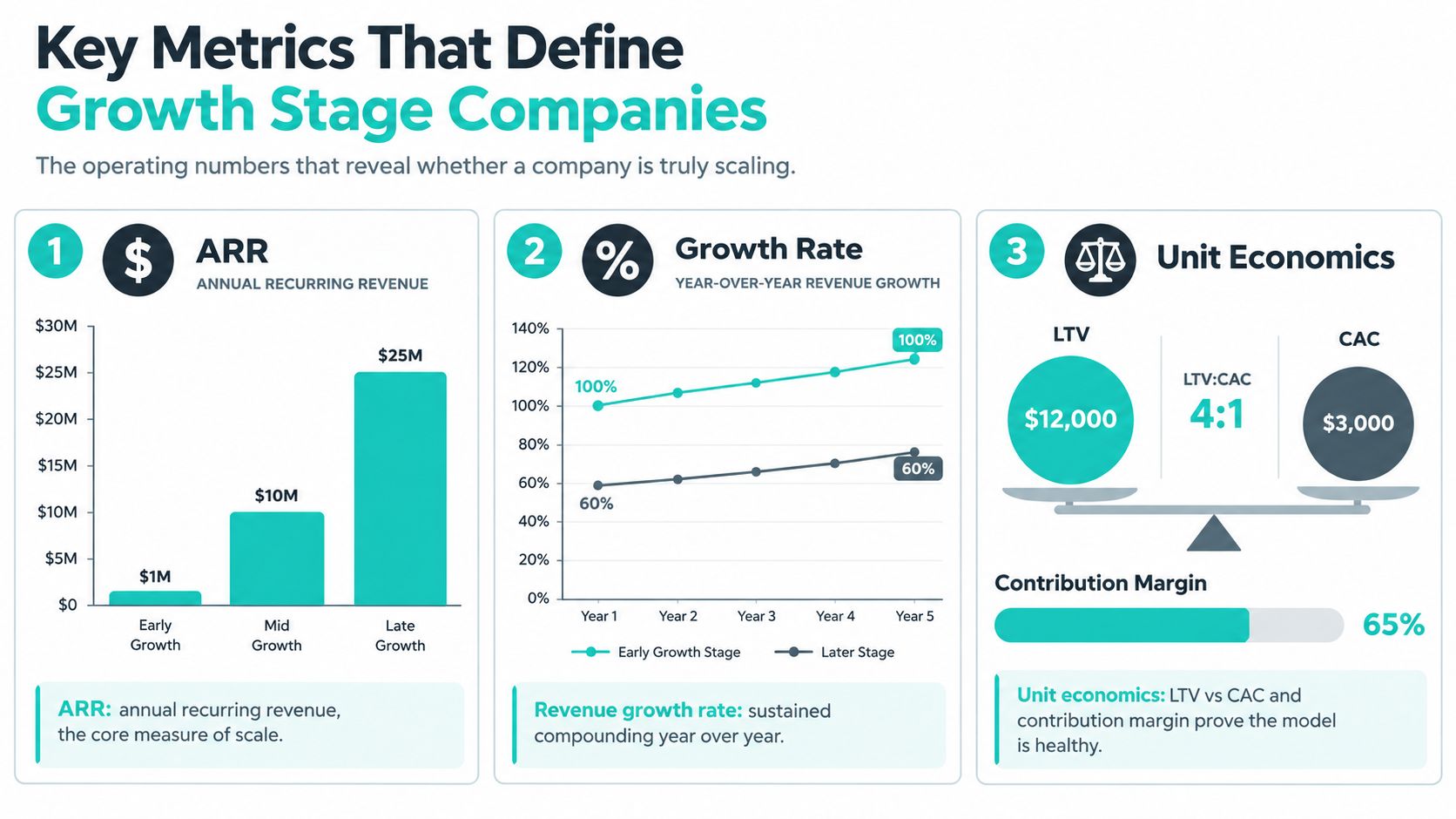
For a subscription business, annual recurring revenue, or ARR, represents the annualized value of recurring contracts. If a company has recurring contracts worth $1 million on an annualized basis, its ARR is $1 million. ARR isn't the same as cash collected, total bookings, or guaranteed future revenue. Ask how the company defines it and whether customers renew.
Revenue growth rate adds the time dimension. A business that moves from $1 million to $2 million in annual revenue has doubled, but the source matters. Did one large customer sign? Did existing customers expand? Did the company acquire customers through a channel that another sales team can reproduce? A growth-stage business should be able to separate durable demand from a temporary spike.
The OECD high-growth firm framework offers a cross-company yardstick: at least 10 employees at the beginning of a measurement period and average annualized growth above 20% for three consecutive years, measured through employment or turnover. This is a benchmarking definition, not a universal startup admission rule. It helps distinguish sustained expansion from a single strong quarter.
Unit economics ask whether each additional customer can create value after the costs of serving and acquiring that customer.
Suppose a hypothetical company estimates that a customer produces $12,000 in lifetime gross profit and costs $3,000 to acquire. Its LTV to CAC ratio is 4:1. That sounds healthy on its face, but you should also ask how long the company waits to recover the acquisition cost, whether the calculation includes support and infrastructure, and whether the result changes by customer segment.
Contribution margin offers another lens. If a subscription generates $100 after direct delivery costs and leaves $65 before sales, marketing, and overhead, the contribution margin is 65%. A high margin doesn't rescue a business with weak retention, but a declining margin can show that scale is making service delivery more expensive.
Payback period connects the calculation to cash. If the company spends $3,000 to acquire a customer and recovers that amount gradually through monthly contribution, the length of that recovery period affects runway and hiring capacity. Ask whether the business can fund planned hiring while waiting for new customers to pay back their acquisition cost.
Ask for definitions, not just dashboard screenshots. A metric is useful only when leaders can explain what it includes, how often they review it, and what decision it changes.
Revenue per employee provides a practical operating test. A 2026 benchmark compilation citing SaaS Capital, ICONIQ Growth, and High Alpha/OpenView reported median revenue per employee of approximately $130,000 for Series A companies, $158,000 for Series B companies, and $249,000 for companies generating more than $100 million in revenue, as reported by this revenue-per-employee benchmark compilation. Calculate annual revenue divided by full-time-equivalent headcount, then interpret the result against the company's model. A falling ratio may mean hiring is outpacing revenue. A rising ratio can indicate improving efficiency, although the timing of revenue and hiring matters.
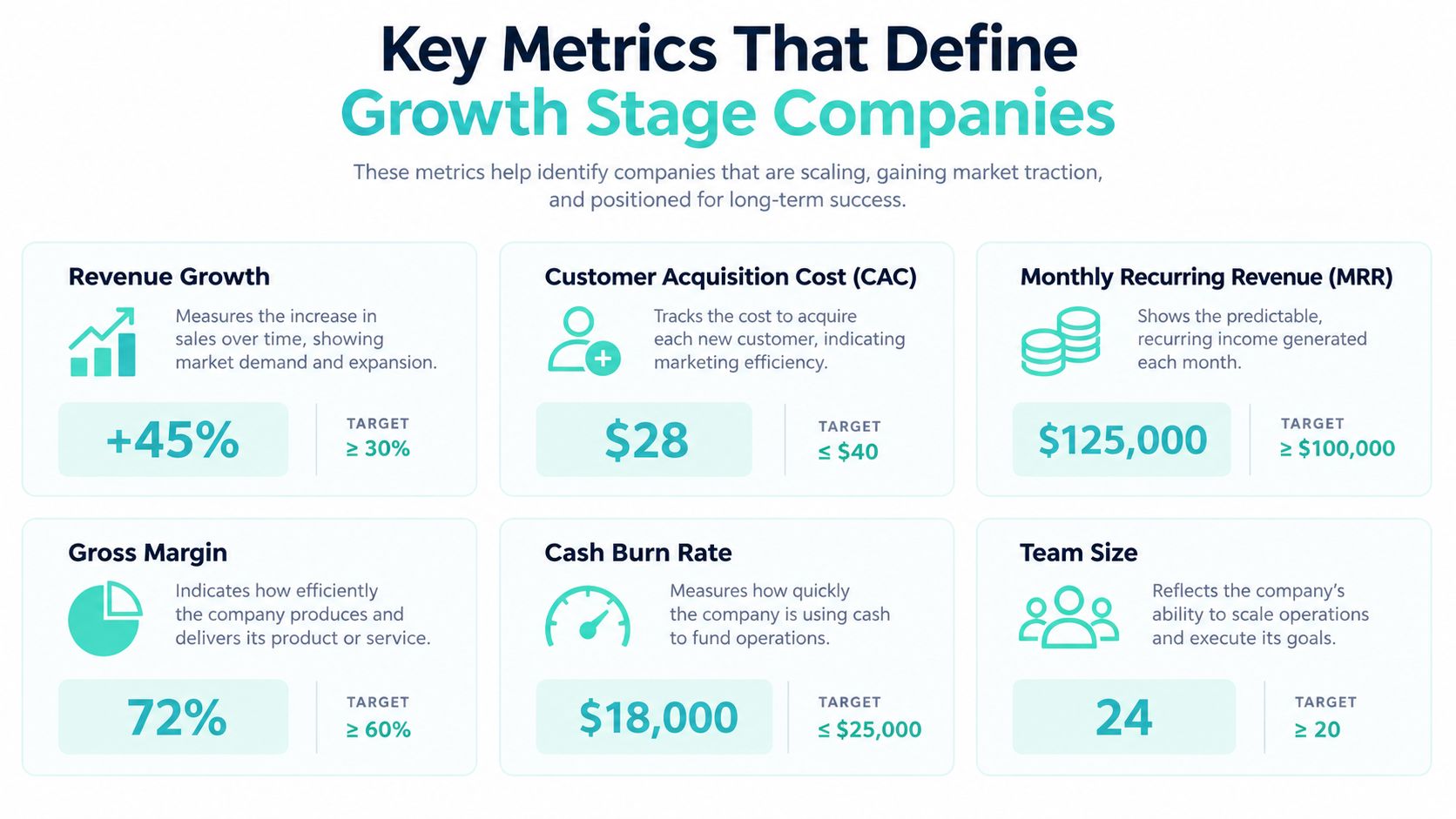
A growth-stage company feels different from the inside because the founder can no longer be the company's operating system. Product-market fit becomes meaningful when customers arrive through repeatable channels, remain active or renew, and receive consistent value without a founder personally rescuing every account.
The signals are behavioral. Sales representatives can explain who the ideal customer is and why those customers buy. Marketing can identify channels that produce qualified demand. Customer success can recognize adoption and retention risks before renewal. Product and engineering can prioritize work using customer evidence rather than whichever prospect has the loudest request.
Early employees often cover several functions. An engineer may build features, investigate production problems, speak with customers, and help recruit. Growth creates enough complexity to make that arrangement expensive. The company begins adding focused roles in platform engineering, security, data infrastructure, revenue operations, and people management.
This specialization isn't bureaucracy for its own sake. A platform engineer can remove reliability constraints that slow product teams. A security specialist can turn informal practices into controls that enterprise customers can evaluate. A revenue operations lead can give marketing, sales, and customer success one consistent view of the funnel. A people leader can establish hiring, performance, and management systems before every decision becomes a founder escalation.
Customer research also needs discipline. Teams should avoid bias in user research, because leading questions can make weak demand look like validation. A growth-stage company needs evidence that reflects what customers do, not only what they say in a friendly interview.
Hiring quickly can signal demand, but it can also hide organizational strain. If new people don't know who owns decisions, which metrics matter, or how work moves from idea to production, additional headcount may increase coordination cost faster than output.
McKinsey reports that 78% of companies that have achieved product-market fit still fail to scale, identifying the move from founder-led execution to repeatable, industrialized processes as a central challenge in this overview of startup stages. The implication for an employee is concrete. Expect more defined responsibilities, clearer performance expectations, and greater accountability for measurable outcomes, but check whether the company has built the management systems needed to support those expectations.
Growth-stage work offers a distinctive trade-off. The company has more evidence than an experiment, but it still carries material execution and financing risk. Candidates and investors should evaluate the upside and exposure together.
| Potential reward | Question behind the reward |
|---|---|
| More defined ownership | Does the role have a real decision area, or is the title ahead of the organization? |
| Scaling experience | Will you work on systems that serve more customers, or mainly repair rushed foundations? |
| Equity participation | What does the grant represent on a fully diluted basis? |
| Specialized career development | Will experienced managers and peers help you grow? |
A growth-stage role can give an engineer experience with reliability, security, data volume, technical leadership, and cross-functional planning that a smaller company can't offer. It may also provide a clearer path from individual contributor to staff, manager, or technical lead.
The risks are just as practical. Process may arrive unevenly. A company can add managers before defining decision rights, hire teams before identifying bottlenecks, or cut planned roles when a financing process changes. A large equity percentage can also create a misleading impression of value.
Carta's Head of Insights reported that dilution commonly reaches roughly 20% in a seed round and another 20% in a Series A round, as described in this discussion of startup valuations and dilution. Ask whether your grant is calculated on a fully diluted basis, how many shares or options it represents, the strike price, vesting schedule, and the company's financing history.
Investors face selection risk before they assess individual companies. Raising seed capital doesn't guarantee that a startup reaches Series A or later. Stripe's summary reports that only 16% of startups that raised at least $1 million in a 2024 seed round had subsequently raised Series A or a later-stage round, with a median interval of approximately 18 months between seed and Series A. The same source cites another benchmark in which roughly one in three startups receiving seed or pre-seed funding eventually raises Series A or beyond, showing how outcomes vary by cohort and measurement method. These figures appear in Stripe's startup statistics overview.
For investors, the lesson is to underwrite the operating transition, not just the round. For talent, it means a later-stage label reflects a selective path, but doesn't guarantee that the next stage will be successful. Review retention, acquisition repeatability, margins, runway, and leadership capacity before treating funding as validation.
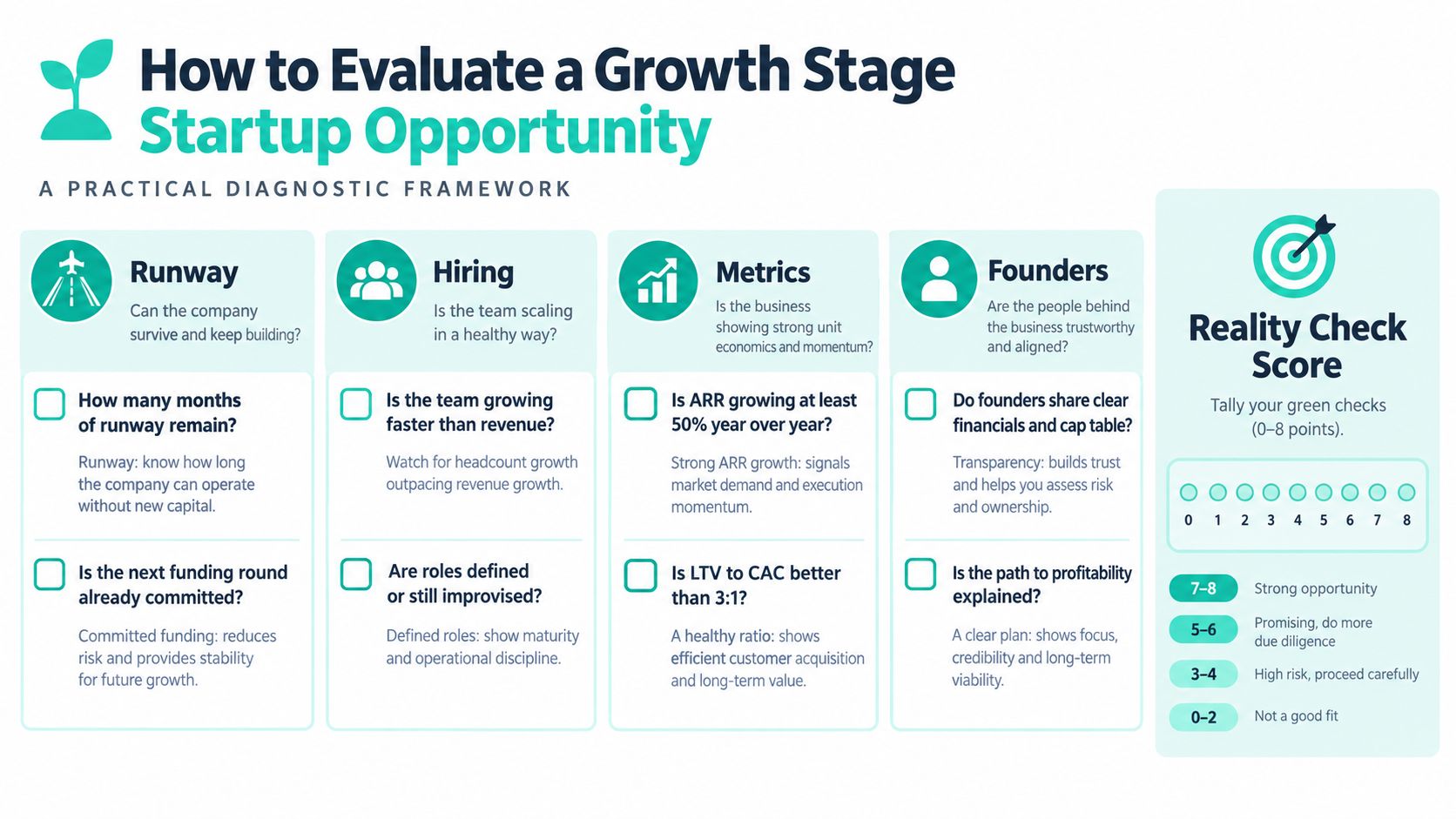
A well-funded startup isn't automatically a good job, investment, or partnership. Use the interview and diligence process to test whether capital is supporting a repeatable system.
Ask leadership to explain the following in plain language:
If you're evaluating an offer, ask for a concrete example of a recent decision that moved from founder approval to team ownership. If leaders can't name one, the company may have added people without institutionalizing authority.
A hiring plan without a measurable constraint is a warning. So is falling revenue per employee, an acquisition channel that works only through founder relationships, or a leadership team that can't explain retention by customer segment. A company that says “we'll figure out the economics after we scale” may be postponing the central growth-stage question.
Capital markets can add pressure. Carta reported that in Q3 2023, Series B transactions fell 41% quarter over quarter to 132, while cash raised fell 45% to $2.7 billion, the lowest level in five years, according to Carta's state of private markets report. Those figures don't predict every company's outcome, but they show why runway and capital efficiency deserve direct questions.
Candidates reviewing an offer can model dilution with a resource such as Capstacker's dilution modeling tool, then verify the assumptions with the company. Founders can use the same discipline when planning headcount. Every planned hire should connect to durable revenue, customer demand, reliability, compliance, or another validated constraint.
Hiring momentum isn't evenly distributed across startups. Mercury's 2025 startup economics report found that 65% of respondents said talent-acquisition costs increased over the prior year, while 68% of AI-using companies were actively scaling team size compared with 13% of non-AI adopters, as reported in this startup economics research. If a company is hiring aggressively because its category is attracting capital, ask whether the role solves a validated operating need or just follows market enthusiasm.
For a broader diligence process, use this startup due diligence checklist alongside financial, customer, and equity questions.
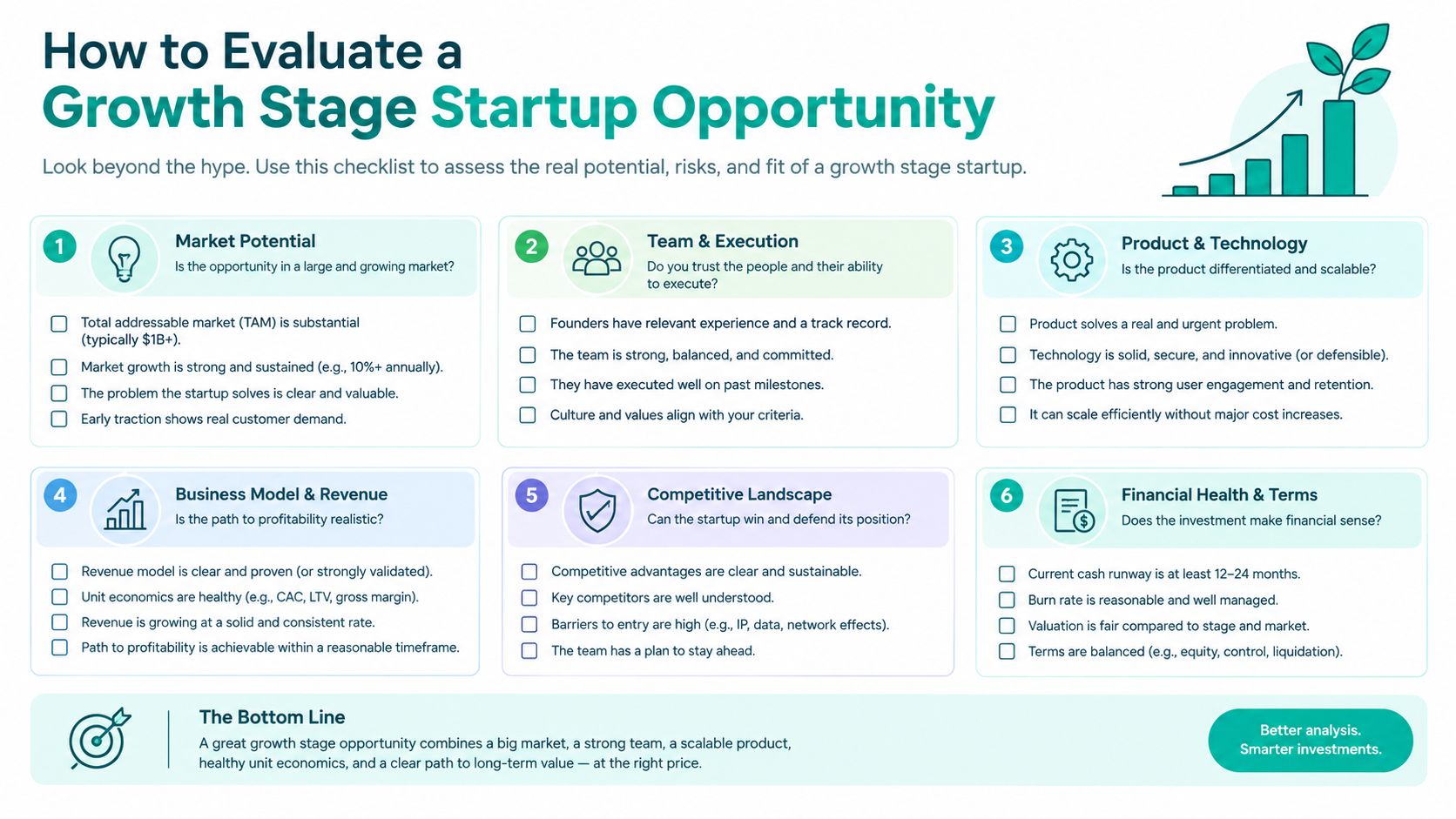
Candidates should prepare for interviews as if they're evaluating a system, not just a job description. Ask how the company acquires and retains customers, which metric defines success for the role, how managers make decisions, what process exists today, and what the equity grant means after future financing. If your resume needs a clearer presentation of scaling experience, you can create your resume online before applying.
A curated marketplace such as Underdog.io lets candidates submit one application for consideration by vetted startups and high-growth technology companies. Candidates should still perform their own diligence, but a screened pipeline can reduce time spent on opportunities that don't match their experience or expectations. For founders, the hiring principle is the reverse: forecast roles against durable demand, establish management capacity before teams become unwieldy, and hire people who can convert informal habits into documented, repeatable systems.
Growth-stage companies matter beyond individual careers. The U.S. Bureau of Labor Statistics found that only about 2% of firms qualified as high-employment-growth firms during the 2009–2012 period, yet those firms accounted for 35% of gross job gains among firms that expanded employment, according to the BLS analysis of high-employment-growth firms. That concentration helps explain both the opportunity and the risk. A genuinely scaling company can create unusual learning and career momentum, but you need to judge it by traction, economics, and readiness rather than by a Series letter in a press release.
Underdog.io connects technology candidates with vetted startups and high-growth companies, using a curated hiring marketplace rather than a broad job board. Visit Underdog.io to explore opportunities where the company's funding stage, operating maturity, and role expectations can be part of a more informed career decision.