Follow the biggest audience, and you'll find the best media job. That's the popular advice, and it's a poor way to choose among media start ups. A large free audience doesn't prove a company can pay for reporting, product work, or audience operations month after month. What matters is how attention becomes revenue, and whether that revenue is concentrated in one fragile stream.
Media careers are built around more than reporting. A startup in this category can offer work in editorial, audience development, product, events, research, subscriptions, sponsorships, or community operations. The right opportunity depends on the company's revenue model, editorial promise, current stage, and route to sustainable growth. If you can't explain who pays, why they pay, and what would happen if that payer left, you don't yet understand the job you're applying for.
This roundup profiles seven distinct companies, from global newsrooms to specialist publications and creator-economy ventures. Rather than ranking them by fame or follower count, it looks at what each company sells, how it differentiates its content, where careers may exist, and what you should investigate before applying. Use each profile to test fit against your own advantage, whether that's a beat, a format, a commercial skill, or experience building a product from a small base.
Semafor is an independent global news company founded in 2022, covering business, politics, technology, and world affairs. Its audience is aimed at decision makers rather than general consumer readers, and that choice shapes everything from story selection to events. The company announced a profitable year and new financing in January 2026, alongside plans to expand editorial operations and events.
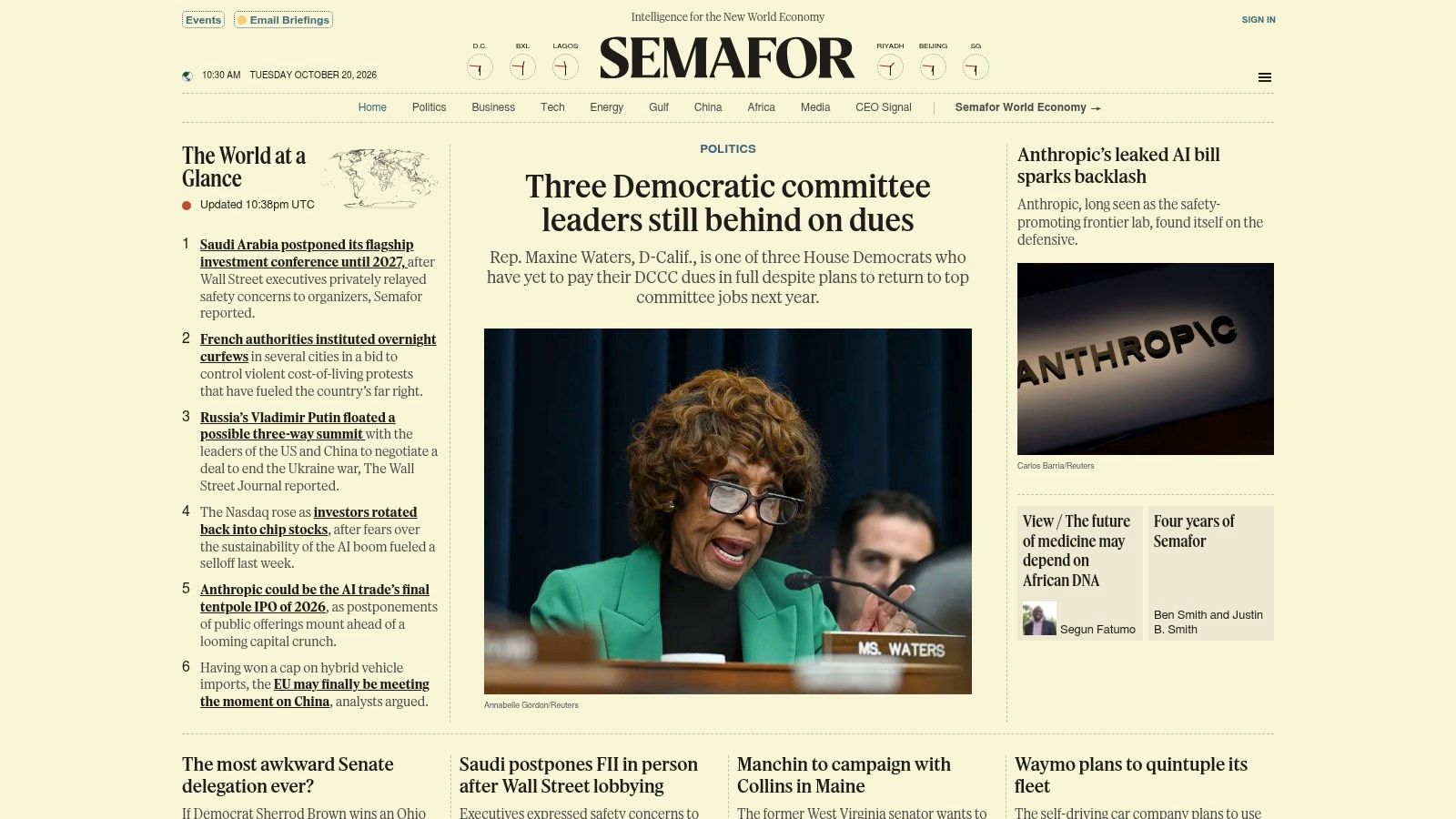
Semafor's best known editorial device is the Semaform, a structure that separates facts, analysis, opinion, and competing perspectives inside a single article. For a reporter, that's not cosmetic. It forces you to label what you know, what you're inferring, and where credible people disagree. For an editor or product manager, it creates a repeatable template that can be tested for completion, trust, and return visits.
The company combines reporting with newsletters and live journalism events. Its careers page lists editorial, analytics, people operations, and other functions, which signals a broader operating model than a newsletter alone. Candidates with experience in adjacent business software contexts may find useful comparison points in how B2B SaaS companies organize product, data, and go to market teams, because Semafor also has to sell a defined professional audience to sponsors and event partners.
Practical check: Read three Semaform articles on the same topic and note where analysis ends and perspective begins. In an interview, explain how you'd preserve that separation under deadline pressure.
Before applying, ask which revenue line funds your team, how events are staffed, and whether your role would be measured on reach, registrations, sponsor value, or subscriber retention.
Puck bets that readers will pay for specific journalists, not for an undifferentiated bundle of news. The journalist-led publication covers the people and business behind entertainment, politics, finance, media, technology, and other fields where access and interpretation matter. Its promise is insider reporting organized around prominent writers and their specialist areas.
That model changes the work. A writer isn't just filing copy into a homepage. They're carrying a franchise with newsletters, articles, podcasts, and archives, plus direct author emails for subscribers. Audience and product staff have to think in terms of individual talent, churn by writer, and what happens to a subscription when a reader's favorite byline goes quiet.
Puck offers corporate memberships, with group subscriptions starting at 10 seats. That's a meaningful clue about unit economics. A single corporate sale can be worth many individual conversions, but it also requires procurement friendly packaging, seat management, and renewal proof. If you're interviewing for a sales, partnerships, or customer success role, ask how group usage is reported back to buyers and who owns renewals.
For individual readers, eligible subscriptions include a 14-day trial. Trials only work if onboarding gets a new reader to a second and third valuable read quickly. That's why lifecycle email, podcast sampling, and archive discovery matter as much as the paywall itself. Candidates comparing startup employers more broadly can use perspectives on the best startups to work for as a prompt to ask Puck specific questions about team size, manager span, and growth paths, rather than relying on brand prestige.
The tradeoffs are clear. Puck has a sharp writer-led identity and multiple formats beyond newsletters. Much of the full offering requires paid membership, however, and its insider orientation won't suit readers or employees who want general interest news with broad cultural reach.
If Semafor sells global breadth and Puck sells bylines, The Ankler sells depth inside one industry. Ankler Media is an independent, multi-platform company focused on Hollywood's business and the intersection of entertainment, media, and technology. It covers television, dealmaking, AI, and audience trends for people whose jobs depend on understanding power in entertainment.
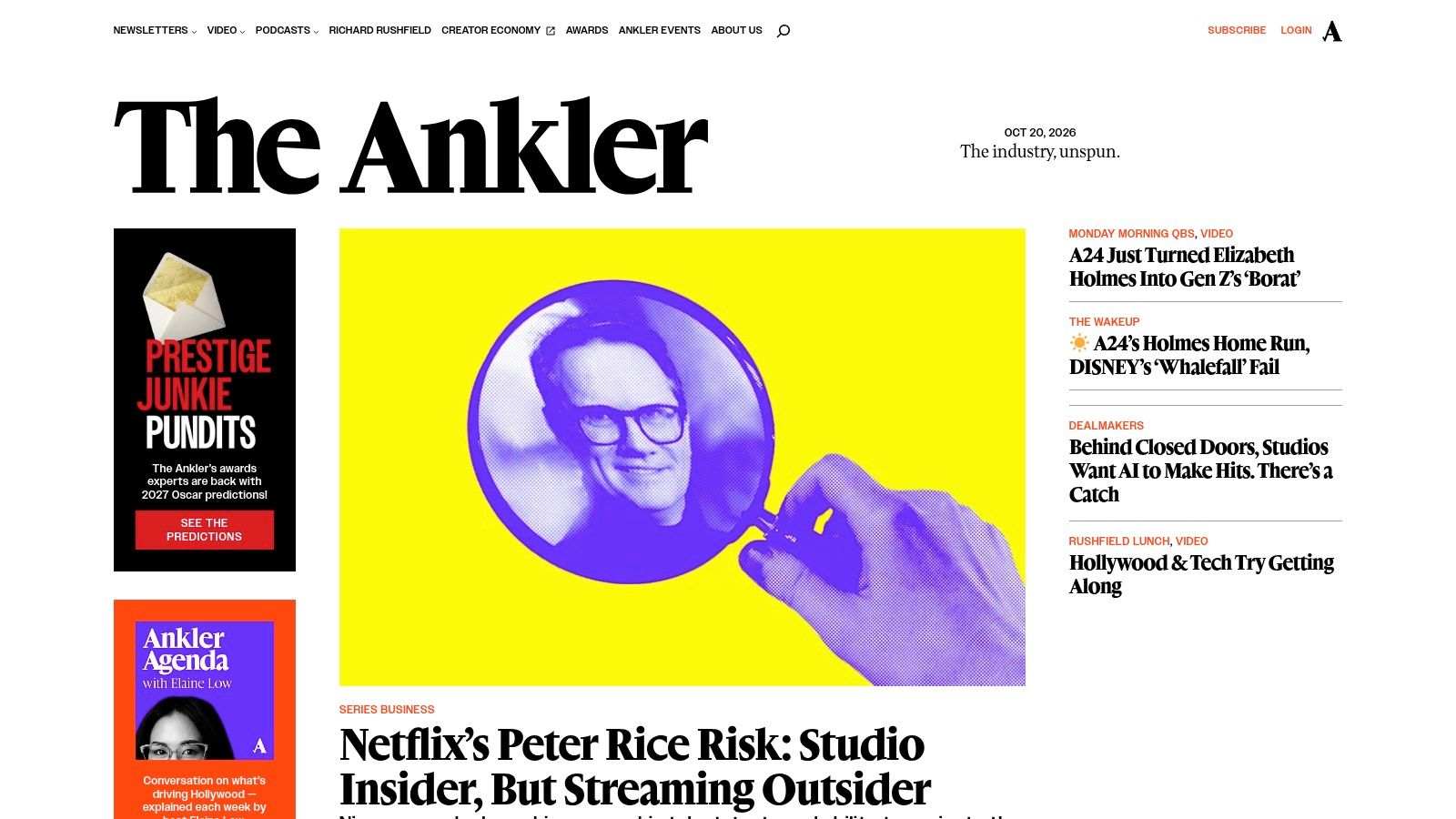
Its newsletters and reporting verticals include The Wakeup, Series Business, Dealmakers, and Reel AI. That structure is more than a single trade newsletter. Each vertical can serve a different professional reader, sponsor category, and event conversation. For editorial candidates, the question is whether you can learn an industry's deal language quickly enough to spot what a press release is hiding.
The company has moved from Substack to its own website and subscription infrastructure. Owning that infrastructure supports a direct subscriber relationship and gives the team more control over packaging, data, and discovery. It also creates operational work in payments, retention, and product maintenance that a hosted platform would otherwise absorb. Readers who work in regulated or specialist sectors may recognize a parallel in how health tech companies must balance domain expertise with product execution. Specialist knowledge alone doesn't retain subscribers if onboarding and account management are weak.
Ankler offers group subscriptions and an early-career discount program, both sensible for an industry audience with assistants, junior executives, and teams sharing intelligence. The strengths are relevance to Hollywood and a platform built for direct relationships. The limits are equally clear. Its narrow entertainment focus may not suit people outside the industry, and much of its in-depth reporting is paywalled, so free discovery has to do more work.
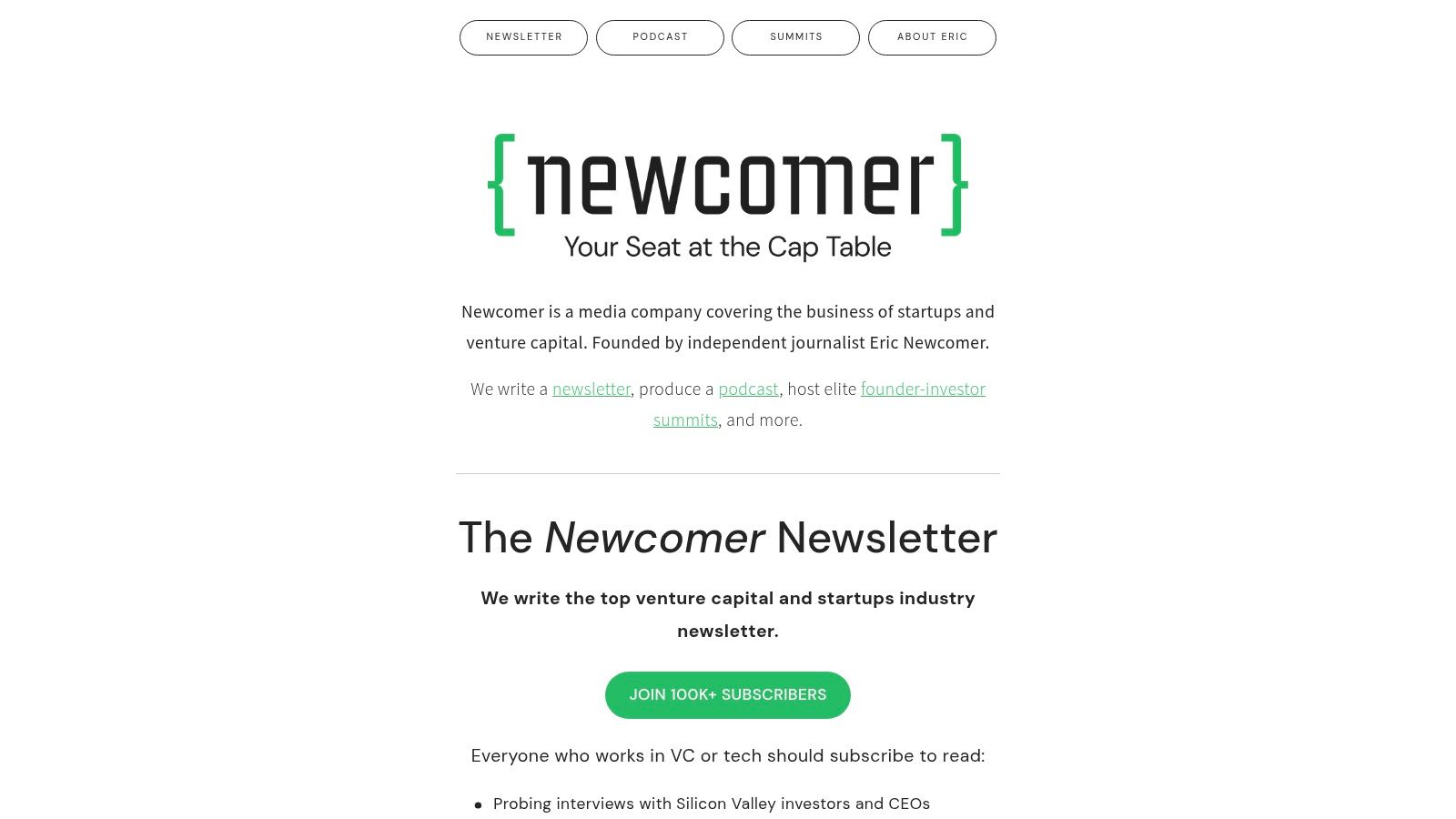
Newcomer covers startups and venture capital for the people inside that system. It's an independent media company with a newsletter, podcast, and founder-investor events. Instead of treating technology mainly as product news, it reports on funding activity, investor conversations, and the people behind technology companies.
That positioning matters for career fit. A Newcomer reporter or producer needs to understand rounds, valuations, fund incentives, and why a founder might tell one story to employees and another to limited partners. An events hire needs to curate rooms where founders and investors want to talk to each other. An audience hire needs to reach a small, influential readership without wasting spend on broad technology traffic.
Don't evaluate a venture focused publication by headline funding totals alone. Capital for media start ups is uneven. A database tracking recently funded digital media companies reported 608 companies, approximately $1.4 billion in tracked funding, and an average of $57.2 million per company across eight countries. Averages like that can hide concentration, so ask any employer in this space how much revenue comes from readers, sponsors, and events, not how much the wider category raised.
Newcomer's pros are strong subject fit for founders, investors, and startup employees, plus multiple formats for readers who want reporting and conversation. It's more specialized than general technology publications. The cons are that its venture-backed focus may not cover the full technology job market, and subscription pricing and current hiring information weren't clearly verified in the reviewed information. Confirm both directly before you invest time in a custom application.
Bring one funding story and rewrite its angle for three readers, a founder raising now, an investor defending a markup, and an employee holding options. That exercise shows whether you understand Newcomer's audience.
404 Media starts from a different premise. Technology coverage shouldn't stop at launches, funding, and executive strategy. This independent, journalist-founded digital newsroom examines online platforms, privacy, digital rights, AI, and technology's effects on people and society. Internet culture isn't treated as color. It's evidence.
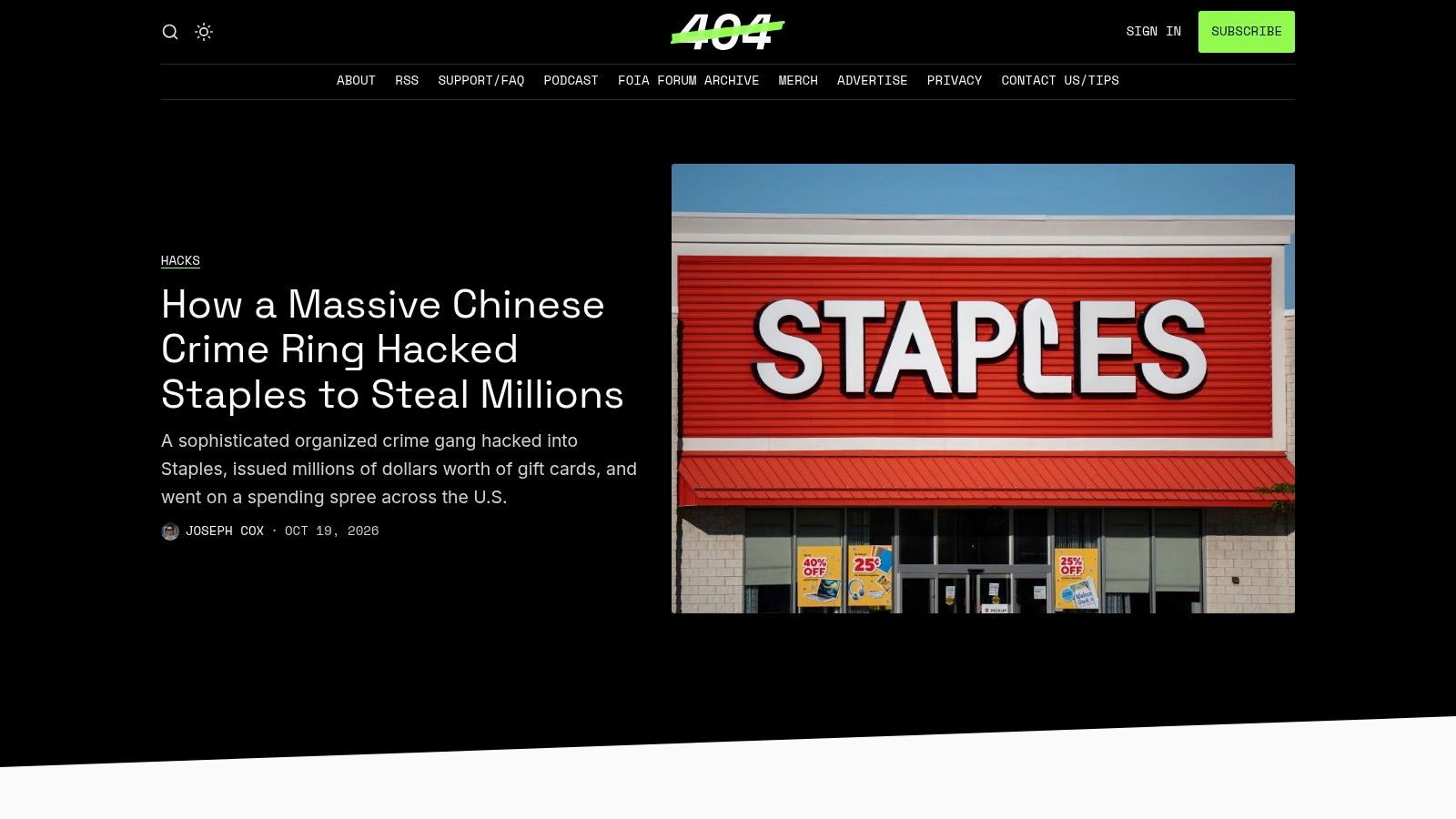
A clear niche helps a small newsroom compete without matching larger outlets story for story. If readers know 404 Media will investigate a platform's hidden labor, scraping practices, or moderation failures, they have a reason to seek it out directly. Direct habit matters because discovery is increasingly mediated elsewhere. The Reuters Institute's 2025 report, based on more than 97,000 online news consumers across 48 markets, found weekly social video consumption rose from 52% in 2020 to 65% in 2025. A text led newsroom still needs a plan for clips, audio cuts, and platform native summaries that lead back to owned relationships.
404 Media publishes articles and newsletters, produces a podcast, and offers paid subscriptions on monthly and annual terms. That gives readers several ways to follow the work and gives the team several surfaces for conversion. For candidates, the useful question is which surface produces paying readers, not which produces the most impressions.
Its strengths are a distinct editorial position in a crowded market and independent reporting with a recognizable point of view. Its subject matter is narrower than general technology or business coverage, and subscription pricing wasn't confirmed in the reviewed information. If you're applying, show you can turn documents, datasets, or platform experiments into a story a nontechnical reader can follow. That skill travels better than generic enthusiasm for tech accountability.
Upstarts Media is a newer company focused on the startup ecosystem, with a flagship newsletter covering emerging companies, investors, and technology trends. Its stated aim is to report on startups before they become household names. That early signal promise is appealing, but it's also hard to deliver consistently. Anyone can spot a company after a major round. Fewer teams can explain why an unknown company matters before consensus forms.
A newsletter makes coverage easy to follow and relatively inexpensive to distribute. It also puts pressure on list quality. Opens, replies, forwards, and paid conversion by cohort tell you more than raw subscriber count. Reuters coverage of creator publishing noted that paid conversions are commonly around 3% to 5% of total audience, citing Similarweb data on Substack. Treat that range as a planning benchmark, not a guarantee. If a small newsletter projects subscription revenue, ask what conversion rate and churn assumption sit underneath the forecast.
Upstarts has described plans for video, podcasts, and live events, and it invites sponsorship and collaboration inquiries. Those plans could create interesting generalist work for someone who wants to build formats rather than inherit them. They also raise the central risk for newer media start ups. Announced formats aren't the same as active products with audiences, sponsors, and production calendars.
Before applying, check publication cadence over the last two months, confirm which products are live, and ask who owns sponsorship delivery today. At a very small company, your job description will expand. Make sure it expands toward skills you want.
Scalable covers the creator economy as a business sector, including the technology and companies behind digital creators and their platforms. Its announced format includes a newsletter, podcast, research, and in-person events. That mix positions it less as a fan publication and more as a specialist source for operators who build, fund, or sell to creators.
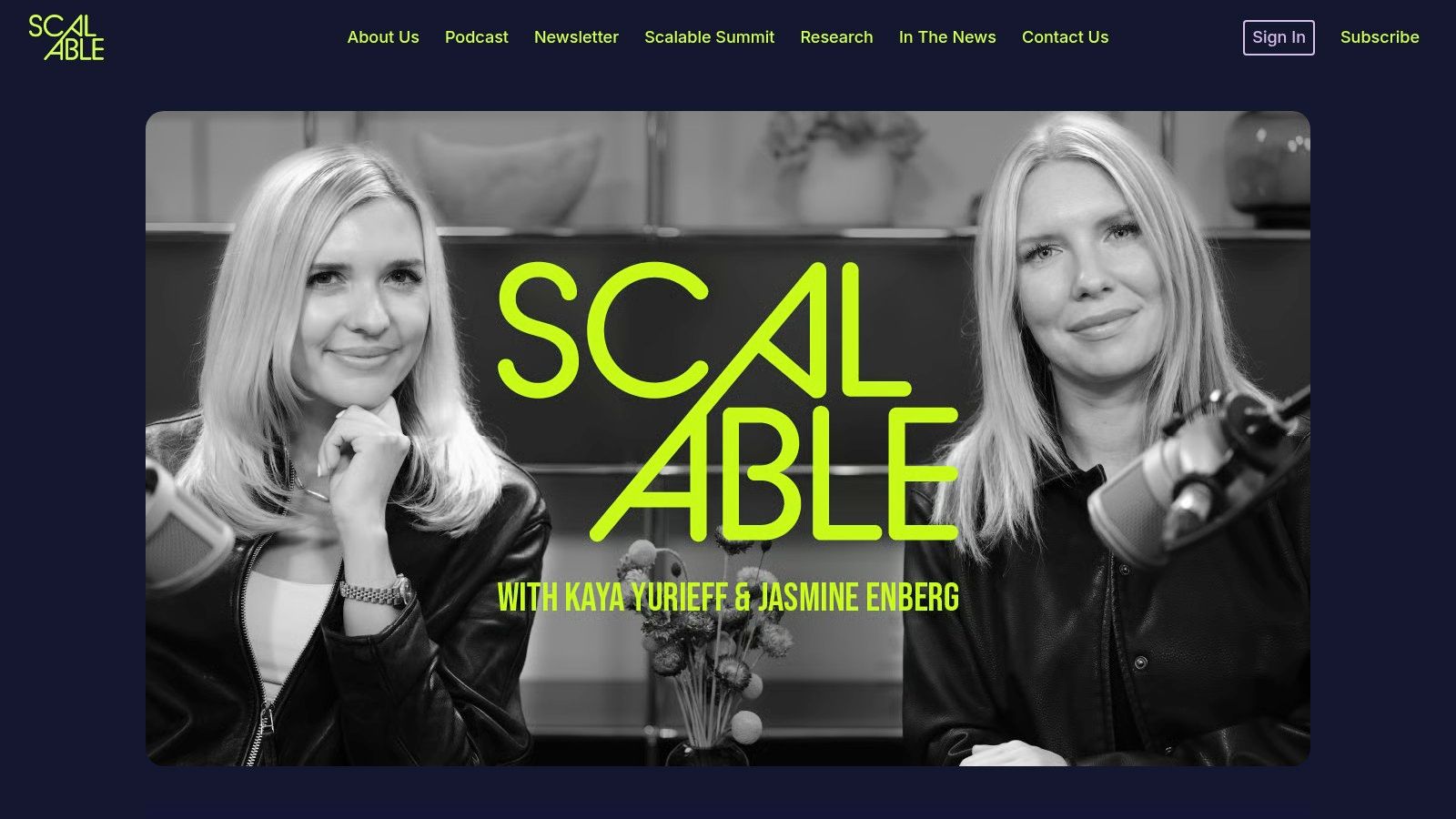
Creator coverage often treats funding growth as broad based. The numbers in the verified research point to concentration instead. One 2026 tracker reported approximately $58 million across nine disclosed creator-economy equity deals from January through May, compared with roughly $807 million across 11 deals in the comparable 2025 period. That doesn't mean the sector is empty. It means a publication covering it needs to separate durable creator businesses and useful infrastructure from headline driven rounds.
That's where research and events can help. A newsletter builds habit, a podcast builds intimacy, research can be sold or sponsored, and events create a room that platforms and service providers may pay to reach. The same multi-format logic shows up among creators building interview practice tools, where content has to connect to a product or service, not just attention. For Scalable, candidates should ask which of those formats already has paying customers and which is still an ambition.
The pros are a distinctive beat connecting media, technology, and business, plus varied editorial and commercial work if the planned formats mature. It's relevant if you're interested in creator platforms and digital publishing. The cons are a less established track record and scale than larger publishers. Confirm which products and events are currently active on the official site, who the intended paying audience is, and whether research is a revenue product, a marketing asset, or both.
| Company | Coverage Focus | Formats | Access / Business Model | Ideal Audience | Key Distinction or Caveat |
|---|---|---|---|---|---|
| Semafor | Global business, politics, technology, and world affairs | Articles, newsletters, live events | Journalism alongside events and sponsorship | Readers seeking global news and multiple perspectives | Separates facts, analysis, opinion, and perspectives in its article format |
| Puck | Entertainment, politics, finance, media, and technology | Articles, newsletters, podcasts | Paid memberships, including corporate plans | Readers seeking expert-led, insider coverage | Coverage is organized around individual journalists; much of the offering requires a membership |
| The Ankler / Ankler Media | Hollywood business and the intersection of entertainment, media, and technology | Newsletters and reporting across specialist beats | Paid subscriptions, group plans, and an early-career discount | People working in or following the entertainment industry | Specialized Hollywood focus; in-depth reporting is often paywalled |
| Newcomer | Startups, venture capital, and startup finance | Newsletter, podcast, events | Subscription details were not clearly verified | Founders, investors, and startup employees | Focuses on funding and investor activity rather than technology product news |
| 404 Media | Technology, internet culture, privacy, digital rights, and AI | Articles, newsletters, podcast | Monthly and annual paid subscriptions | Readers interested in technology's effects on society | Journalist-founded outlet with a defined social-impact focus |
| Upstarts Media | Startups, venture capital, and technology trends | Newsletter; video, podcasts, and events are planned | Newsletter-led; invites sponsorship and collaboration | Founders and people following emerging startups | Newer and smaller operation; some formats may still be planned |
| Scalable | Creator economy, platforms, and creator-focused businesses | Newsletter, podcast, research, and events announced | Business model and active offerings should be confirmed | Readers interested in creators, platforms, and digital publishing | Specialist beat; scale and track record are less established |
The strongest career choice isn't necessarily the most recognizable publication. Start with the operating model you want to work inside. Do you want to build a newsletter, develop subscriptions, organize events, sell sponsorships, manage communities, produce research, or report on a beat you already understand? Semafor and Puck reward different strengths. The Ankler and 404 Media both depend on specialist trust, but they sell that trust to very different readers. Newcomer, Upstarts Media, and Scalable show how a defined professional audience can support several formats, provided the team doesn't confuse interest with willingness to pay.
Audience growth is only the first phase. A durable company needs a portfolio. The Reuters Institute's 2025 publisher survey found that 77% planned to focus on subscriptions or memberships, while 69% focused on display advertising and 59% on native advertising. Most publishers used three or four revenue streams rather than relying on one model. Use that as your interview lens. Ask which streams exist now, which are planned, and how each is measured for revenue per user and contribution margin.
Then test the subscription assumption. Across 20 wealthier countries in the Reuters Institute's 2025 dataset, only 18% of respondents paid for online news, with the United States at 20%, Norway at 42%, and the United Kingdom at 10%. Most users remain satisfied with free offerings, so a paywall alone won't create willingness to pay. Look for differentiated value such as specialist analysis, creator access, events, tools, community, or an ad-light experience. Ask how the company tracks conversion by cohort, acquisition source, content category, and price tier.
Distribution risk deserves the same scrutiny. Media-for-equity research examined 382 unique investments in companies founded in 2000 or later and found more than 30 specialized funds by the time of the research, compared with fewer than a handful roughly a decade earlier. Access to audiences can materially affect growth. But borrowed distribution isn't owned distribution. Ask how much traffic and revenue depend on one platform, one sponsor, one star writer, or one event series. Stronger media start ups capture email, account, and consented behavioral data so they can keep monetizing when referral algorithms change.
Make your application specific to a visible business problem. Propose a repeatable sponsor workflow, a clearer subscriber onboarding path, a research product for an underserved segment, or a short video format that repackages reporting without cheapening it. Connect your past work to that problem with evidence, not adjectives. Guidance from StoryCV on startup storytelling is useful here if you need to turn scattered projects into a clear narrative about outcomes, scope, and judgment. Editors and hiring managers can spot generic passion for media in seconds. They pay attention when you show you understand their reader, their payer, and their constraint.
Finally, verify stage and stability for yourself. Check active roles, leadership backgrounds, publication cadence, product quality, and whether announced formats are live. Talk to former employees when you can. Ask about manager quality, workload during launches and events, and how success is measured after 90 days. Readers exploring broader startup roles can also use Underdog.io to discover curated opportunities at vetted high-growth technology companies, while checking each media company's own hiring materials for current openings and fit. Choose the company where your advantage solves a real problem, and where the business model gives that problem time to matter.
If you're weighing media start ups against other early stage technology roles, Underdog.io connects vetted candidates in engineering, product, design, data, and marketing with curated startups through a single application and human powered matching. Create your profile to explore relevant opportunities confidentially and let suitable companies reach out when there's a genuine fit.